Skin Cancer Clinic Vaughan: Mole Assessment, Biopsy & Removal Guide
A skin cancer clinic Vaughan patients can access without a doctor's referral is The Minor Surgery Center's Vaughan location, which offers mole assessment, biopsy, and surgical removal for basal cell carcinoma (BCC), squamous cell carcinoma (SCC), and melanoma[3]. York Region residents can also reach OHIP-covered, referral-based dermatology through clinics like Thornhill Dermatology Centre in Concord[1]. Most suspicious mole visits run 20-40 minutes, and same-day biopsies are often possible when a lesion looks concerning.
Key Takeaways
No-referral option available: The Minor Surgery Center's Vaughan clinic assesses and treats skin cancer without needing a family doctor referral first[3].
Three main cancer types treated: basal cell carcinoma, squamous cell carcinoma, and melanoma, each with a distinct treatment pathway[7].
Biopsy comes before treatment: a small tissue sample is sent to pathology to confirm what a suspicious mole actually is before any removal surgery is planned[3].
Referral-based dermatology exists in Vaughan too: Thornhill Dermatology Centre in Concord offers OHIP-covered skin checks with a family doctor referral, or private mole mapping without one[1].
Mole mapping isn't free: Thornhill Dermatology Centre charges a flat CAD $600 for full mole mapping, dermoscopy, and same-visit removal when needed[1].
Free seasonal screening exists: Melanoma Canada's Mole Mobile Tour runs May 1 to October 31 and makes stops across Ontario, including near Vaughan[12].
Vaughan sits inside a four-clinic GTA network: patients booking at The Minor Surgery Center's Vaughan address can also use Toronto, Oakville, and Mississauga locations[3][7].
Warning signs follow the ABCDE rule: Asymmetry, Border irregularity, Color variation, Diameter over 6mm, and Evolution over time.
Nationally recognized: Melanoma Canada's dermatologist directory lists The Minor Surgery Center as a rapid-access, surgeon-led option for Vaughan patients[5].
What Is a Skin Cancer Clinic and What Do They Do?
A skin cancer clinic is a medical facility focused specifically on finding, diagnosing, and treating cancerous and precancerous skin lesions, rather than general skin care. Unlike a walk-in clinic, a dedicated skin cancer clinic typically handles the full pathway: visual assessment, dermoscopy, biopsy, pathology review, and surgical removal, often under one roof.
In Vaughan, this model looks a bit different depending on which clinic a patient chooses. The Minor Surgery Center runs a rapid-access, surgery-focused model: patients can book directly, get assessed, and if something looks suspicious, move to biopsy and surgical treatment without waiting on a referral[3]. Its broader conditions page describes a specialization in malignant skin conditions using current surgical techniques aimed at minimizing scarring and optimizing recovery[7]. This is a meaningfully different structure than a traditional dermatology practice, which usually requires a referral for medically necessary visits.
By contrast, Thornhill Dermatology Centre in Concord (technically part of Vaughan) runs a multi-physician specialist dermatology model. It handles skin cancer screening, mole mapping, and treatment for suspicious moles and sun damage, but medically necessary (OHIP-covered) visits generally require a family doctor's referral faxed in advance[1].
Choose a rapid-access surgical clinic if: a mole or lesion is changing quickly, bleeding, or already looks concerning and a patient wants to avoid a multi-week referral wait.
Choose a referral-based dermatology clinic if: the concern is more routine, OHIP coverage matters, and there's time to get a family doctor referral sorted first.
Mole assessment in Vaughan means a clinician physically examines a suspicious spot, often with a handheld dermatoscope, to decide whether it needs a biopsy, monitoring, or no action at all. This is the first and most important step before any treatment decision gets made.
A proper assessment usually checks several things at once:
Shape and border of the mole compared to normal moles on the same patient
Color pattern, including whether there are multiple shades in one lesion
Size, tracked against any prior photos if available
Texture changes, such as crusting, scaling, or a raised surface that wasn't there before
Symptoms, including itching, bleeding, or tenderness
Vaughan patients have two broad routes for this. The Minor Surgery Center's Vaughan clinic, located at 2701 Rutherford Road (Building C), offers direct-access assessment as part of its rapid-access skin cancer service, meaning a patient with a worrying mole doesn't need to wait for a referral to get looked at[10]. A detailed June 2026 review of Vaughan's skin cancer options names this clinic as the leading local pick, citing experienced surgical teams, same-day procedures, OHIP coverage for medically necessary work, and a comfort-focused outpatient setup[2].
The second route is specialist dermatology mole mapping, such as the program at Thornhill Dermatology Centre in Concord, which photographs and tracks moles over time for high-risk patients or those with a strong family history of melanoma[1]. This is closer to a preventive surveillance tool than an urgent-concern pathway.
"A mole that has changed in the last few months deserves a professional look, not a wait-and-see approach." This is the standard clinical guidance behind most skin cancer screening protocols.
For a general overview of what a full-body check involves anywhere in the GTA, this guide to full body skin exams and skin cancer screening covers the process step by step. Vaughan residents specifically comparing their local options may also find this roundup of the best mole removal clinics in Vaughan useful for narrowing down where to book first.
What Are the Warning Signs I Should Get Checked?
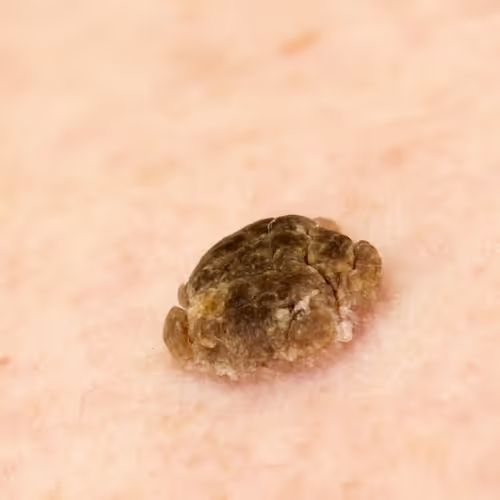
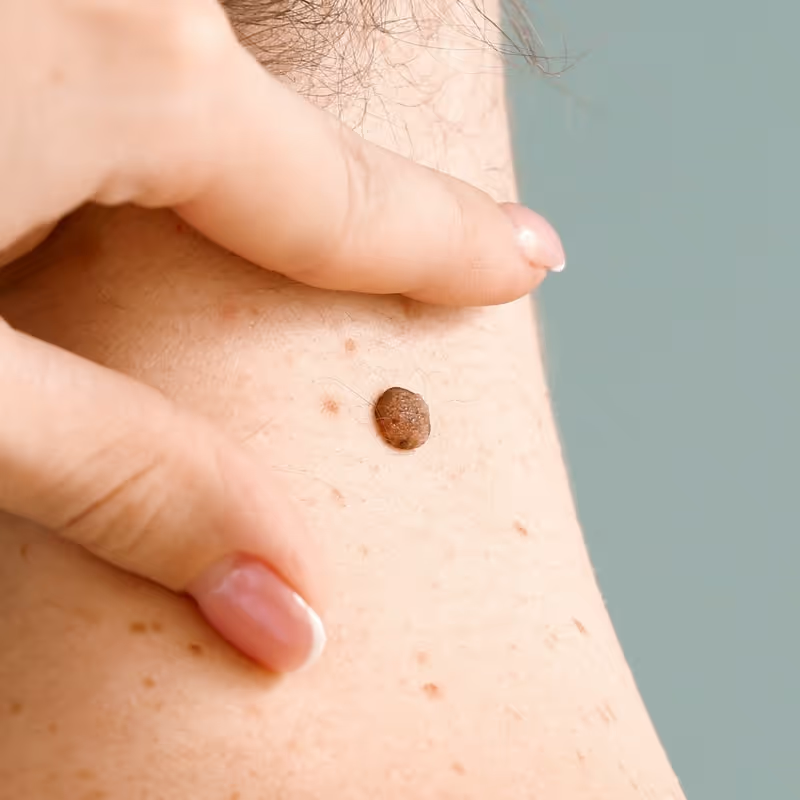
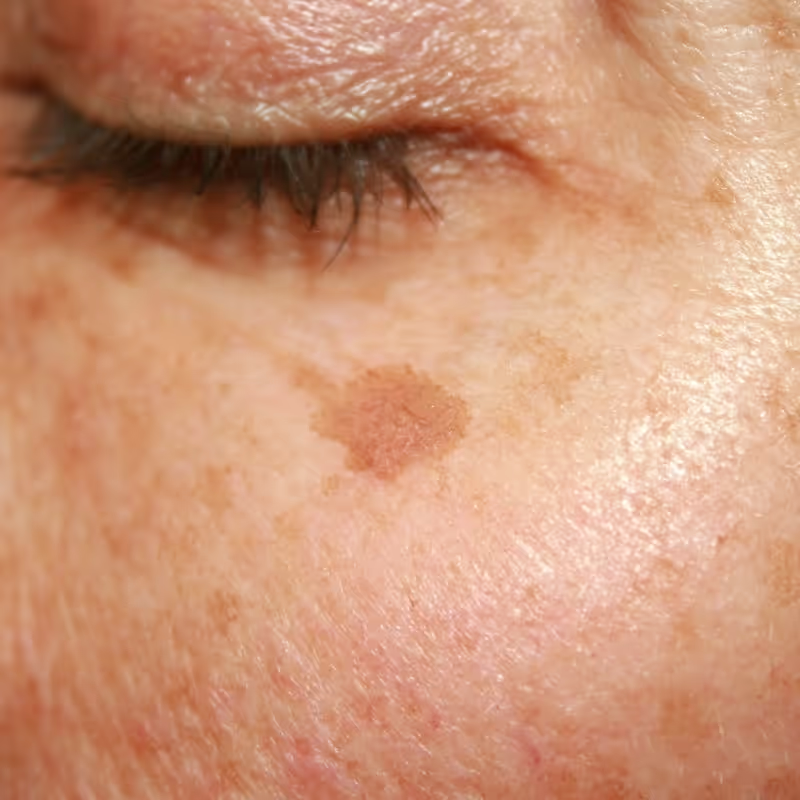
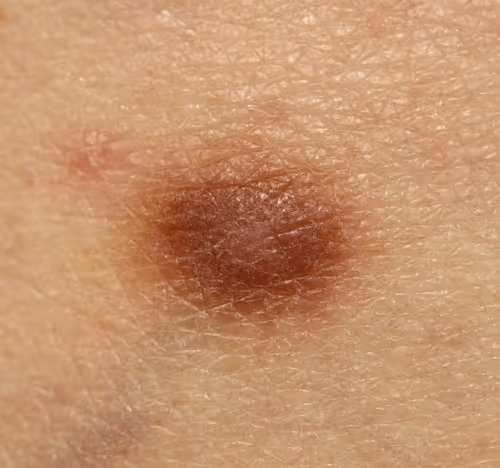
The warning signs that a mole needs professional evaluation include rapid changes in size, shape, or color, a border that looks blurred or jagged, and any new bleeding, crusting, or itching. Any single one of these signs is reason enough to book an assessment rather than wait.
Dermatologists commonly use the ABCDE rule to describe what to watch for:
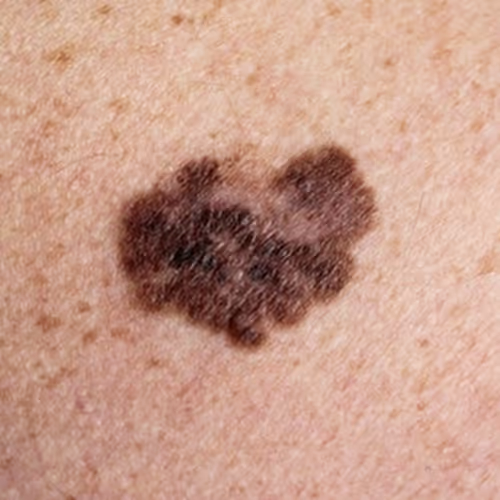
SignWhat to look forA, AsymmetryOne half of the mole doesn't match the other halfB, BorderEdges are ragged, notched, or blurred instead of smoothC, ColorUneven shading, or multiple colors (brown, black, red, white, blue) in one spotD, DiameterLarger than about 6mm (roughly the size of a pencil eraser)E, EvolvingAny change in size, shape, color, or symptoms over weeks or months
Beyond ABCDE, other red flags include:
A sore that doesn't heal within a few weeks
A spot that looks different from every other mole on the body (the "ugly duckling" sign)
Bleeding without an obvious injury cause
A new firm, pearly, or scaly bump, especially on sun-exposed skin
Common mistake: assuming a bleeding mole is automatically cancer, or automatically nothing. Bleeding can come from simple irritation (a mole caught by clothing or shaving), but it can also be an early cancer sign. The only way to tell the difference reliably is a professional look, which this guide on moles that bleed versus irritation versus cancer red flags explains in more detail.
Edge case: flat moles can still be melanoma. Not every dangerous lesion is raised or bumpy, so a flat spot with color changes still warrants a check, as covered in this piece on flat mole removal.
Do They Offer Biopsies and Mole Removal?
Yes. A skin cancer clinic Vaughan patients visit for a suspicious mole will typically offer both a biopsy to confirm diagnosis and, once results come back, removal surgery if the lesion is cancerous or precancerous. These two steps are usually separate visits.
Here's the general sequence:
Visual and dermoscopic assessment, the clinician examines the lesion, sometimes with magnification tools.
Biopsy, a small sample (or the entire lesion, depending on size and location) is removed and sent to a pathology lab.
Pathology report, results typically come back within one to two weeks, confirming whether the lesion is benign, precancerous, or a specific cancer type.
Treatment planning, if cancer is confirmed, the clinic maps out a removal approach based on type, size, and location.
Surgical removal, performed under local anesthesia in most cases, often as a same-day outpatient procedure.
The Minor Surgery Center's Vaughan location handles all five steps for BCC, SCC, and melanoma without requiring a physician referral to start[3]. This matters for anyone who wants to avoid the typical multi-week wait for a dermatology referral appointment.
Decision rule: choose direct biopsy and removal at a rapid-access clinic if a lesion looks concerning now and the patient wants pathology results and a treatment plan without a referral delay. Choose a referral-based dermatology pathway if the lesion is being monitored over time and there's no urgency.
For patients who are unsure whether their situation calls for a biopsy at all, this comparison of skin lesion assessment services in Toronto explains what typically triggers a biopsy recommendation versus ongoing monitoring. It's also worth knowing that removing a mole, even a benign one, does not cause cancer, a common myth addressed directly in this article on whether removing a mole causes cancer.
What Types of Skin Cancer Do They Treat? BCC, SCC, and Melanoma
The three skin cancer types treated at Vaughan clinics are basal cell carcinoma (BCC), squamous cell carcinoma (SCC), and melanoma, and each one follows a different treatment path based on how aggressive it is. BCC and SCC are far more common and generally slower-growing; melanoma is less common but spreads faster if untreated.
Basal Cell Carcinoma (BCC)
BCC is the most common skin cancer type and usually shows up as a pearly or waxy bump, often on the face, ears, or neck. It rarely spreads to other parts of the body but can grow locally and damage surrounding tissue if left alone. Treatment is almost always surgical excision, and cure rates are high when caught early. More detail on this specific cancer type is available on this page about basal cell carcinoma removal and treatment.
Squamous Cell Carcinoma (SCC)
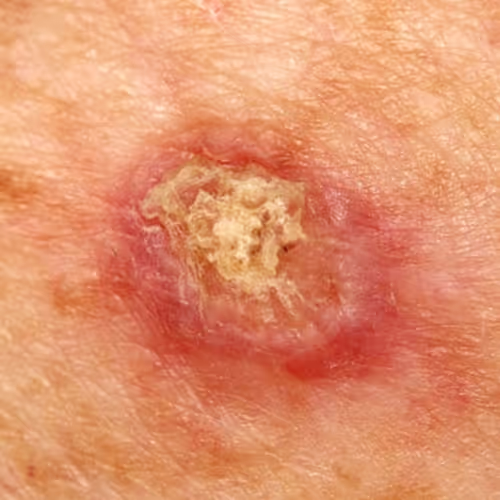
SCC often appears as a scaly, red patch or a firm bump that may crust or bleed. It's slightly more likely than BCC to spread if untreated, especially in patients with weakened immune systems. Precancerous patches called actinic keratosis can sometimes progress toward SCC over time, which is why early evaluation matters, this progression is explained further in this article on actinic keratosis and pre-cancerous lesions. For a side-by-side look at how these two common cancers differ, this comparison of BCC versus SCC covers the key distinctions.
Melanoma
Melanoma develops in pigment-producing cells and is the most dangerous of the three because it can spread to lymph nodes and other organs relatively quickly. Early-stage melanoma, caught before it grows deep into the skin, has a much better outlook than advanced-stage disease. This is why clinicians stress rapid biopsy for any changing mole rather than a wait-and-watch approach. The stages of progression, along with what early detection changes, are outlined in this guide to early-stage skin cancer and this overview of advanced melanoma stages.
Quick answer to a common question: is skin cancer curable? Most BCC and SCC cases are curable with prompt surgical removal, and even melanoma has a strong survival outlook when caught early. This is discussed in more depth in this article on whether skin cancer is curable.
Who Performs Assessment vs Removal at a Skin Cancer Clinic Vaughan
Assessment is typically done by a physician, nurse practitioner, or trained clinician using visual exam and dermoscopy, while removal surgery is performed by a surgeon or physician trained in minor surgical procedures. These are often, but not always, the same person, depending on the clinic's staffing model.
At a surgical rapid-access model like The Minor Surgery Center's Vaughan clinic, the same clinical team generally handles both the initial assessment and, if needed, the biopsy and removal, which keeps the process efficient and reduces handoffs between providers[3][7]. This is part of why the clinic is positioned as a "surgeon-led" service in national directories like Melanoma Canada's dermatologist listing[5].
At a multi-physician dermatology practice, assessment might be done by a general dermatologist, with more complex removals referred internally to a colleague with surgical training, or externally to a plastic surgeon for cosmetically sensitive areas like the face.
Common mistake: assuming any clinician who can look at a mole can also remove a cancerous one competently. Assessment skill and surgical skill are related but distinct. Before booking removal, it's worth confirming the provider has specific training in skin cancer excision, not just general skin checks.
Skin Cancer Clinic Vaughan Locations, Hours & How to Book
Vaughan patients have a direct-access surgical option at 2701 Rutherford Road, Building C, run by The Minor Surgery Center, alongside referral-based dermatology at Thornhill Dermatology Centre in nearby Concord[1][10]. Booking at the rapid-access clinic can typically be done by phone or an online form without waiting for a referral[11].
Here's a practical breakdown of how booking differs by clinic type:
StepRapid-access surgical clinicReferral-based dermatology clinicBooking methodPhone or online form, directFamily doctor faxes referral firstWait for first appointmentOften days, not weeksCan be several weeks depending on demandSame-day biopsy possibleOften yes, if lesion warrants itLess common on first visitOHIP coverageYes, for medically necessary assessment and treatmentYes, for medically necessary visitsCosmetic/mapping servicesMay be available separatelyOften available without referral
Can I get same-day appointments for skin cancer concerns? Same-day or next-day appointments are often possible at rapid-access surgical clinics when a lesion looks urgent, though availability depends on current booking volume. Patients with a rapidly changing or bleeding mole should mention this when calling, since many clinics prioritize based on how concerning the description sounds.
Vaughan's clinic sits within a broader four-location GTA network that also includes Toronto, Oakville, and Mississauga, so patients who work outside Vaughan can book at whichever site fits their schedule[3][7]. Full contact and hours details for each site are listed on the clinic locations page, and the Vaughan clinic page has specific address and booking information for this location.
Edge case: if a patient needs OHIP-covered specialist dermatology (not surgical excision) and doesn't have a family doctor, some walk-in clinics can issue a referral, though this adds a step. Patients weighing referral versus no-referral routes may find this comparison of no-referral and walk-in dermatology clinics helpful for understanding the tradeoffs before booking.
How Much Does Skin Cancer Screening Cost at Vaughan Clinics? Does Insurance Cover It?
Medically necessary skin cancer assessment, biopsy, and removal are generally covered by OHIP in Ontario, meaning no out-of-pocket cost for the diagnostic and treatment portions when a lesion is genuinely suspicious. Elective or purely cosmetic services, like full mole mapping for peace of mind rather than medical necessity, usually carry a separate private fee.
For example, Thornhill Dermatology Centre in Concord charges a flat CAD $600 for its all-inclusive mole mapping package, which covers imaging, a dermatologist review, dermoscopy, and same-visit lesion removal if something needs to come off[1]. This is a private-pay service and separate from OHIP-covered medical visits, which require a referral at that particular clinic.
At The Minor Surgery Center's Vaughan location, medically necessary skin cancer assessment and treatment fall under OHIP coverage, consistent with its positioning as a rapid-access clinic for cancer removal[3]. Patients should confirm current coverage details directly with the clinic when booking, since coverage specifics can shift and depend on whether a service is classified as medically necessary versus elective.
Quick cost comparison logic:
Suspicious mole, doctor recommends biopsy → typically OHIP-covered
Routine mole mapping for peace of mind, no referral, no acute concern → typically private-pay (around $600 at some Vaughan-area clinics)[1]
Cosmetic mole removal with no medical concern → typically private-pay
Common mistake: assuming all mole-related visits are automatically free under OHIP. Coverage generally depends on medical necessity, not just the fact that a mole exists. A mole someone simply dislikes cosmetically, with no suspicious features, may not qualify for public coverage the same way a changing, bleeding lesion would.
For a broader sense of what mole removal can cost across the region when it isn't OHIP-covered, this mole removal cost guide breaks down typical pricing factors.
What Should I Expect During My First Visit? Screening Process and Timing
A first visit to a skin cancer clinic typically involves a health history review, a visual and dermoscopic exam of the area of concern (or a full-body check if requested), and a decision about whether biopsy is needed. Most first visits run between 20 and 40 minutes, though a full-body skin exam can take longer.
Here's a typical first-visit checklist:
Intake and history, questions about sun exposure, family history of skin cancer, and any personal history of previous lesions.
Visual exam, the clinician examines the mole or area of concern, sometimes photographing it for the record.
Dermoscopy, a handheld magnifying tool with polarized light helps the clinician see patterns not visible to the naked eye.
Decision point, the clinician either reassures the patient it looks benign, recommends monitoring with a follow-up photo comparison, or proceeds to biopsy.
Biopsy (if needed), can sometimes happen the same visit, using local anesthetic, taking just a few minutes.
Next steps discussion, timeline for pathology results and what happens depending on outcome.
What to bring: a list of current medications (especially blood thinners, since these affect biopsy planning), and photos of the mole from a few months ago if available, since this helps show change over time.
Common mistake: wearing makeup, nail polish, or heavy lotion to a full-body skin check. These can hide subtle changes in skin color and texture that a clinician needs to see clearly.
For anyone specifically nervous about pain during biopsy or removal, this article on whether skin cancer hurts addresses what sensations to actually expect during the process. General expectations for the exam itself are also covered in this guide to mole check and skin cancer screening.
Skin Cancer Clinic Vaughan vs Dermatologist: Which Is Better?
Neither option is universally "better", a rapid-access skin cancer clinic in Vaughan tends to be faster for a specific concerning lesion, while a general dermatologist may be a better fit for broad, ongoing skin health management. The right choice depends on urgency, referral access, and whether the concern is one spot or a general skin issue.
Choose a rapid-access skin cancer clinic if: a specific mole is changing, bleeding, or looks visually alarming, and getting seen fast matters more than seeing a general dermatologist first.Choose a general dermatologist if: the concern is part of a broader skin issue (like widespread acne, eczema, or rosacea) alongside a mole check, or ongoing mole mapping over years is the goal.
Some practical differences worth knowing:
Referral requirement: rapid-access surgical clinics like The Minor Surgery Center's Vaughan location don't require a referral for skin cancer concerns[3], while many dermatology practices, including Toronto Dermatology Centre, ask new or long-lapsed patients for a family doctor referral before booking a skin check[6][9].
Scope of practice: dermatologists typically manage a wider range of skin, hair, and nail conditions beyond cancer. A rapid-access surgical clinic is more narrowly focused on cancer detection, biopsy, and removal.
Continuity of care: a dermatologist relationship over years may better track subtle mole changes through repeated mole mapping, while a surgical clinic is often a faster in-and-out for a specific, current concern.
Surgical capability: a rapid-access clinic built around minor surgery may offer faster same-visit or same-week excision once a diagnosis is confirmed[2].
Example: a patient notices one mole on their back has darkened and grown over three months, with no other skin concerns. A rapid-access skin cancer clinic is the more efficient choice here, since the concern is singular and time-sensitive. A patient managing chronic acne who also wants a general mole check might get more value from an ongoing dermatologist relationship.
Areas Served: Vaughan, Woodbridge, Maple, Concord, Richmond Hill, Thornhill
Vaughan-area skin cancer clinics generally serve the whole surrounding York Region, including Woodbridge, Maple, Concord, Richmond Hill, and Thornhill, since these communities sit within a short drive of the main Vaughan clinic locations. Patients in any of these neighborhoods can typically book at the same Vaughan address without needing a separate local clinic.
Maple: a short drive north, served by the same Vaughan network, with dedicated minor surgery services through the Maple mole and cyst removal clinic.
Concord: home to Thornhill Dermatology Centre's referral-based skin cancer screening and mole mapping program[1], plus mole and cyst removal services at the Concord mole and cyst removal clinic.
Richmond Hill: adjacent to Vaughan, patients here commonly travel to the same Vaughan or nearby Markham clinics for skin cancer concerns; the Markham mole, cyst, and minor surgery clinic is another nearby option.
Thornhill: straddles Vaughan and Markham, giving residents flexible access to either Vaughan's surgical clinic or Concord's dermatology-based screening.
Decision rule: if travel time is a concern, patients in Woodbridge, Maple, or Concord are generally closest to the main Vaughan clinic address, while Richmond Hill and Thornhill residents may find Markham equally convenient depending on exact location.
Skin Cancer Clinic Vaughan Reviews and Ratings
Vaughan's leading rapid-access skin cancer option has been independently recognized in multiple third-party roundups rather than relying solely on self-reported ratings. This kind of cross-source recognition is a more reliable signal than a single review platform alone.
Notable mentions include:
A dedicated June 2026 review naming The Minor Surgery Center as the top pick for skin cancer treatment in Vaughan, citing experienced surgical teams, same-day procedure availability, and OHIP coverage[2].
Inclusion in a broader April 2026 roundup of skin cancer screening options across Toronto and the GTA, specifically naming the Vaughan address as one of its accessible locations[10].
A national listing in Melanoma Canada's "Find a Dermatologist" directory, which describes the clinic as a rapid-access, surgeon-led service offering same-day management for skin conditions across its GTA locations, including Vaughan[5].
A March 2026 comparison of no-referral and walk-in dermatology clinics in Toronto that designated the clinic its "preferred pick" for skin cancer concerns specifically because of direct booking access and board-certified surgical staff[11].
What this means for patients: when evaluating a clinic, third-party directory listings and independent review roundups (rather than just star ratings on a single platform) tend to give a clearer picture of consistency across locations and time. For a full sense of how Vaughan's option stacks up against other Toronto-area choices, this list of best skin cancer clinics in Toronto is a useful cross-reference.
What Are Skin Cancer Prevention Tips From Vaughan Clinics?
The most effective prevention strategy combines daily sun protection, regular self-checks, and periodic professional screening, especially for anyone with fair skin, many moles, or a family history of skin cancer. None of these steps alone fully replaces the others.
Daily habits ☀️:
Apply broad-spectrum SPF 30+ sunscreen daily, even on cloudy days
Reapply every two hours when outdoors, and after swimming or heavy sweating
Wear a wide-brimmed hat and UV-protective clothing during peak midday sun (roughly 11am, 3pm)
Avoid tanning beds entirely, they meaningfully raise skin cancer risk
Self-check routine:
Do a full-body self-check once a month, using a mirror for hard-to-see areas
Take dated photos of any moles that seem borderline, to track subtle change over time
Pay extra attention to sun-exposed areas: face, ears, scalp, neck, hands, and forearms
Know personal risk factors, since skin type affects baseline risk, this Fitzpatrick skin type guide explains how skin type correlates with UV sensitivity
Professional screening:
Fair-skinned individuals or those with many moles should consider annual professional skin checks
Anyone with a first-degree relative who had melanoma should discuss earlier or more frequent screening with a clinician
Free seasonal screening is available through Melanoma Canada's Mole Mobile Tour, which runs May 1 through October 31 each year with stops across Ontario, giving Vaughan-area residents an additional low-cost option alongside dedicated clinics[12]
Common mistake: only checking skin visually and skipping touch. Some early skin cancers feel different (rough, scaly, firm) before they look dramatically different. A combined look-and-feel self-check catches more early changes than a visual scan alone.
Frequently Asked Questions
Do I need a referral to see a skin cancer clinic in Vaughan? No, not always. The Minor Surgery Center's Vaughan location accepts direct bookings for skin cancer assessment, biopsy, and removal without a physician referral[3]. Some dermatology practices in the area, like Thornhill Dermatology Centre, require a referral only for OHIP-covered medical visits, not for private mole mapping[1].
How long does it take to get biopsy results back? Pathology results typically return within one to two weeks after a biopsy, though timing can vary by lab volume and the specific test ordered. The clinic performing the biopsy will confirm the expected timeline at the time of the procedure.
Is skin cancer screening painful? The visual exam and dermoscopy portion of screening cause no pain at all. If a biopsy is needed, local anesthetic is used, so patients typically feel pressure rather than sharp pain during the actual sampling.
Can a mole be removed the same day it's assessed? Sometimes, yes. If a lesion clearly needs removal and there are no complicating factors like blood thinner use, some rapid-access clinics can perform biopsy or removal during the same visit as the initial assessment.
What's the difference between a biopsy and full removal? A biopsy takes a small sample (or occasionally the whole visible lesion) purely to get a pathology diagnosis. Full removal, done after diagnosis, aims to take the entire cancer plus a margin of healthy tissue to prevent recurrence.
Does OHIP cover skin cancer treatment in Vaughan? Yes, medically necessary assessment, biopsy, and removal of skin cancer are generally covered under OHIP in Ontario[3]. Elective services like cosmetic mole mapping without medical necessity are usually private-pay[1].
What if my mole isn't cancerous but I still want it removed? Cosmetic mole removal for moles with no suspicious features is possible at most clinics, but it's typically billed privately rather than through OHIP, since it isn't medically necessary.
Are there free skin cancer screening options near Vaughan? Yes. Melanoma Canada's Mole Mobile Tour offers free skin checks at various Ontario stops between May 1 and October 31 each year, giving Vaughan-area residents a no-cost screening option in addition to paid clinic visits[12].
Can lipomas or other lumps be mistaken for skin cancer? Lipomas are benign fatty lumps and are almost never cancerous, but any new or changing lump under the skin should still be evaluated, since the two can sometimes be confused without a proper exam. This guide on lipomas versus cancerous lumps explains the key differences.
What happens if my biopsy comes back positive for melanoma? The clinic will typically schedule a wider surgical excision to remove the cancer with a safety margin, and may recommend additional imaging or lymph node evaluation depending on how deep the melanoma has grown. Early-stage cases generally have a strong treatment outlook.
Book Your Skin Cancer Consultation in Vaughan Today
Anyone with a mole that's changed, bled, or simply looks different from the rest deserves a professional look sooner rather than later. A skin cancer clinic Vaughan patients can book directly, without a referral, is the fastest way to get a suspicious lesion assessed, biopsied if needed, and treated with minimal delay[3].
Booking is simple: call or use the online booking form for the Vaughan clinic location, mention any specific concerns (changing size, color, or bleeding), and ask whether same-day assessment is available. For patients weighing their full range of local options, this practical roundup on finding the best skin cancer clinic in Vaughan is a useful next read before deciding where to book.
Conclusion
Vaughan residents worried about a suspicious mole have real options that don't require weeks of waiting. A rapid-access surgical clinic can assess, biopsy, and treat basal cell carcinoma, squamous cell carcinoma, and melanoma without a referral, while referral-based dermatology practices in nearby Concord offer a more traditional, OHIP-covered pathway alongside private mole mapping. The right next step depends on urgency: a changing or bleeding mole warrants a fast-track booking, while routine peace-of-mind checks can go through either route.
Practical next steps:
Do a quick self-check using the ABCDE rule this week.
If anything looks concerning, book directly with a rapid-access skin cancer clinic in Vaughan rather than waiting on a referral.
Bring a list of medications and any past photos of the mole to the first visit.
Ask directly about OHIP coverage versus private fees before booking, especially for mole mapping.
Set a reminder for an annual full-body check, even if nothing looks wrong today.
Early detection remains the single biggest factor in successful skin cancer treatment, and getting a fast, direct-access assessment is one of the simplest ways to act on that early.
Promote healthy skin and limit the spread of disease through targeted removal procedures.
Book a Free Consultation
You can book your free consultation with The Minor Surgery Center in three easy ways: online through Cortico, by phone, or by requesting a callback from our team.
The initial consultation is free. During this consultation, one of our board certified surgeons will examine your condition and recommend a suitable solution.
Directly Online
Request a Callback
By Phone
By Text
Hours
Sunday
Closed
Monday
9 am — 4 pm
Tuesday
9 am — 4 pm
Wednesday
9 am — 4 pm
Thursday
9 am — 4 pm
Friday
9 am — 4 pm
Saturday
Toronto & Oakville Open Vaughan & Mississauga Closed




%20Treatment.avif)