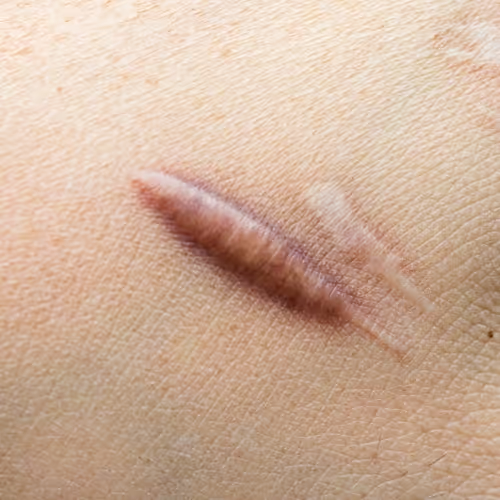
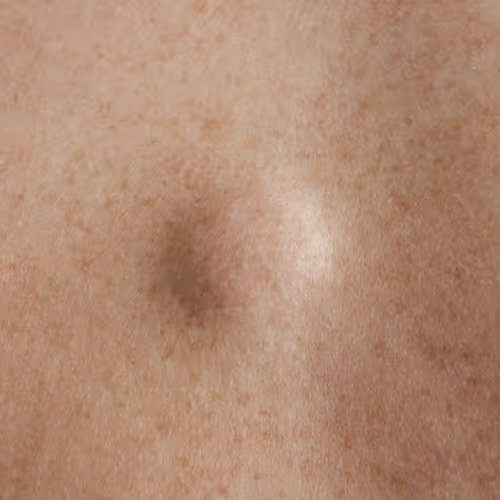
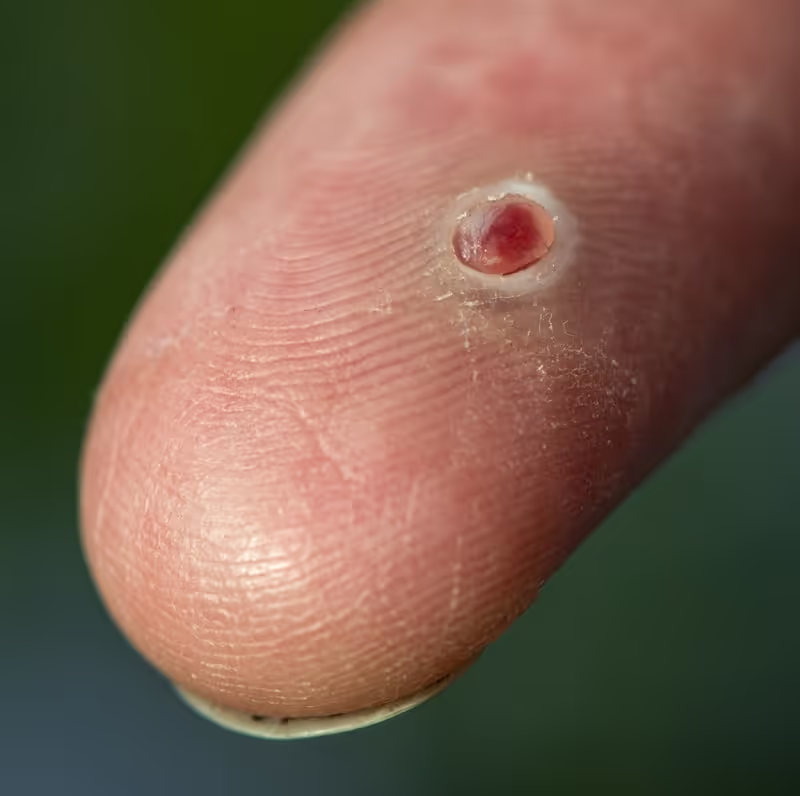
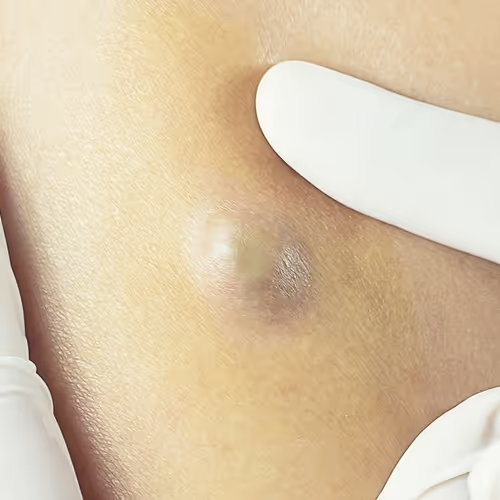
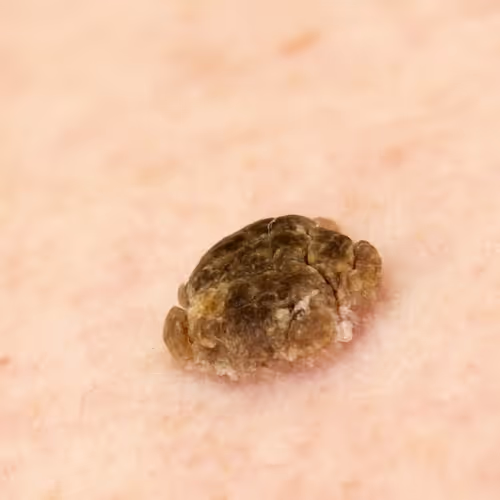
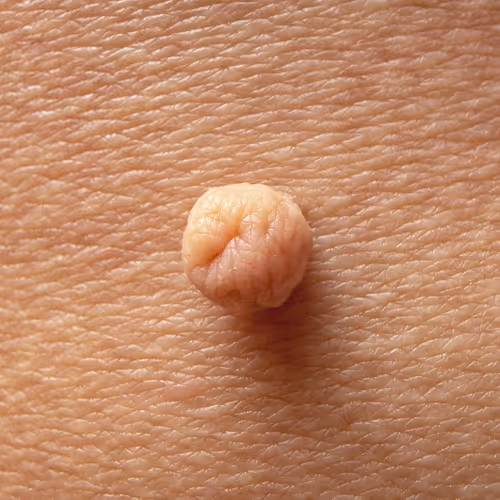
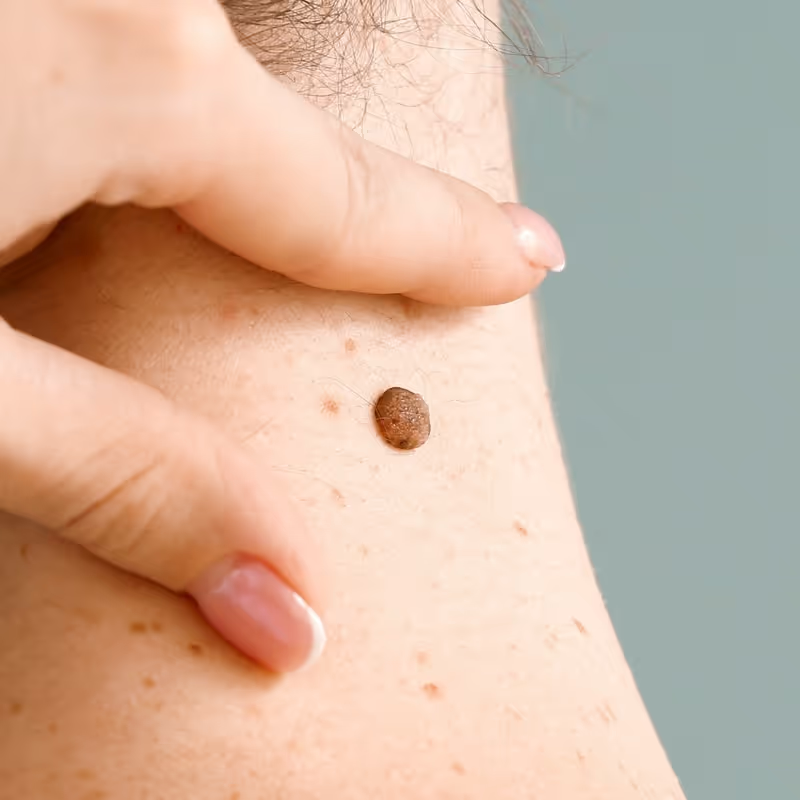
Concerned about a new, changing, painful, bleeding, or unusual spot on your skin? The Minor Surgery Center offers physician-led skin lesion assessment in Toronto, Vaughan, Mississauga, and Oakville. Our team can assess moles, cysts, skin tags, bumps, growths, and suspicious lesions, then explain whether monitoring, biopsy, removal, or referral is the right next step.
Quick Answer: A skin lesion assessment in Toronto is a physician-led examination of any unusual spot, bump, growth, or sore on the skin. The physician reviews your history, examines the lesion visually and often with a dermoscope, then recommends monitoring, biopsy, removal, or referral. The Minor Surgery Center offers this service across Toronto, Vaughan, Mississauga, and Oakville, with no referral required for most private consultations and same-day treatment available after assessment in many cases.
Key Takeaways
A skin lesion is any area of skin that looks or feels different from the surrounding tissue — it may be a mole, cyst, skin tag, keratosis, sore, or growth.
Not every lesion is dangerous, but some require biopsy or removal to rule out skin cancer.
Warning signs that demand prompt assessment include rapid growth, irregular borders, bleeding without injury, colour change, and failure to heal.
A physician or surgeon experienced in skin lesions can assess most common lesions — a dermatologist referral is not always required.
Private skin lesion assessment in Toronto typically costs $100 to $300 or more depending on the clinic and complexity; OHIP may cover medically suspicious lesions in certain pathways.
Same-day biopsy or removal is possible at some Toronto clinics after an initial assessment, including at The Minor Surgery Center.
People over 40, those with fair skin, heavy sun exposure history, or a personal or family history of skin cancer should get regular assessments.
Online or virtual assessments can help triage a concern but cannot replace an in-person dermoscopic examination for suspicious lesions.
What Is a Skin Lesion?
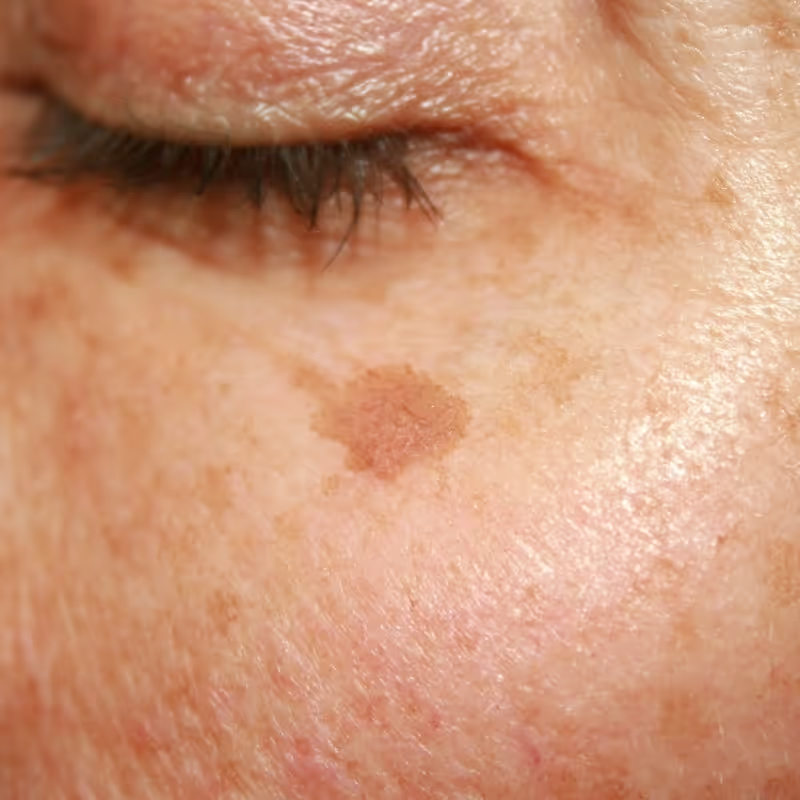
A skin lesion is any patch, bump, sore, or growth on the skin that looks or feels different from the skin around it. It may be flat or raised, dark or pale, smooth or scaly, painless or tender. Some lesions are present from birth; others appear over time.
The term "skin lesion" covers a wide range of conditions:
Most people who notice a new or changing spot on their skin don't know which category it falls into. That uncertainty is exactly why a skin lesion assessment Toronto clinic visit is the right first step — a physician can tell you what you're dealing with and what, if anything, needs to happen next.
Types of Skin Lesions We Assess
The Minor Surgery Center assesses and treats a broad range of skin lesions, including:
If you're not sure what you have, that's fine. The point of an assessment is to find out.
Differences Between Benign and Malignant Skin Lesions
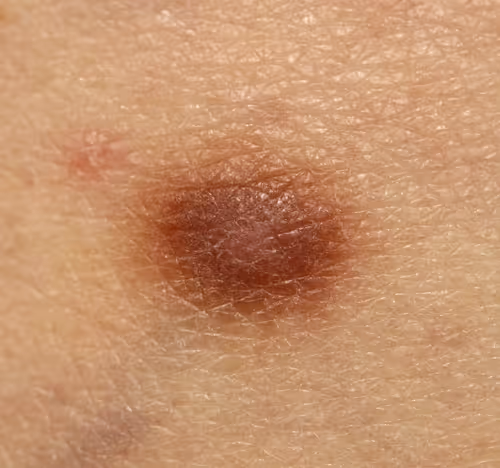
Most skin lesions are benign, but distinguishing them from malignant ones requires clinical examination — not guesswork. Benign lesions are typically stable in size, have smooth or regular borders, and don't bleed or cause persistent symptoms. Malignant lesions tend to grow, change, bleed, or fail to heal.
FeatureBenign LesionMalignant / Suspicious LesionGrowthStable or very slowNoticeable growth over weeks or monthsBorderRegular, well-definedIrregular, ragged, or blurredColourUniformMultiple shades, uneven pigmentSurfaceSmooth or predictably texturedCrusted, ulcerated, bleedingSymptomsUsually noneItching, pain, tenderness, bleedingHealingN/A (not a wound)Non-healing sore or recurring scab
Key point: Even experienced physicians cannot always distinguish a benign from a malignant lesion by appearance alone. A biopsy — sending a tissue sample to a pathology lab — is the only definitive test. If a physician recommends a biopsy, that is standard medical practice, not a cause for alarm.
What Are the Signs That a Skin Lesion Might Be Cancerous?
Several warning signs indicate a lesion should be assessed promptly. Any single one of these is enough reason to book an appointment rather than wait.
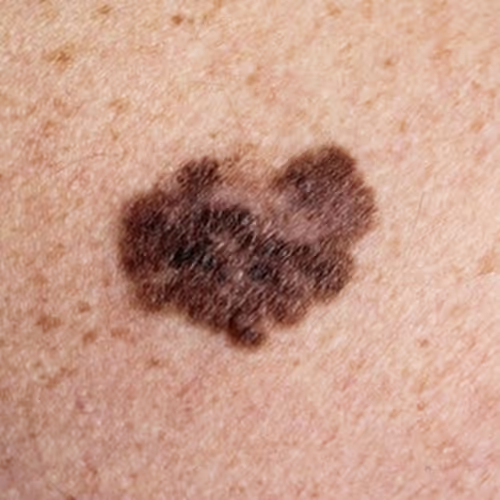
The ABCDE criteria are widely used for moles and pigmented lesions:
A — Asymmetry: One half doesn't match the other
B — Border: Edges are uneven, notched, or blurred
C — Colour: Multiple shades of brown, black, red, white, or blue within one lesion
D — Diameter: Larger than 6 mm (about the size of a pencil eraser), though melanomas can be smaller
E — Evolution: Any change in size, shape, colour, or symptoms over time
Additional warning signs that apply to all lesion types, not just moles:
The lesion bleeds without being scratched or injured
A sore does not heal within four weeks
The lesion crusts, scabs, or oozes repeatedly
The lesion is painful, itchy, or tender without an obvious cause
A new bump appears suddenly, especially in a person over 50
Pigment spreads beyond the edge of the lesion
The lesion looks distinctly different from all your other spots (the "ugly duckling" sign)
You have a personal or family history of skin cancer
The Toronto Dermatology Centre notes that warning signs for skin cancer include mole surface changes, scaling, oozing, bleeding, new bumps, spread of pigment, itchiness, tenderness, and pain [7]. These are the same signs that should prompt a skin lesion assessment Toronto visit without delay.
Warning Signs You Should Get a Skin Lesion Looked at Immediately
Some situations call for urgent assessment, not a routine booking weeks away. Seek prompt evaluation if:
A lesion has doubled in size over a few weeks
A previously flat spot has become raised or developed a lump underneath
A lesion bleeds spontaneously or with minimal contact and does not stop
You notice a completely new dark spot that was not there a month ago
A sore on the lip, ear, scalp, or back of the hand is not healing after a month
A lesion on the face is growing visibly and has a pearly or translucent edge (possible basal cell carcinoma)
A red, scaly patch on sun-exposed skin is thickening or becoming painful
Do not wait for a family doctor referral if you are concerned. Many Toronto clinics, including The Minor Surgery Center, accept patients without a referral for private consultations. Getting assessed quickly is always the right call when a lesion is changing fast.
What Happens During a Professional Skin Lesion Examination?
A professional skin lesion assessment follows a structured process. At The Minor Surgery Center, the assessment is physician-led and covers the following steps:
Medical history review — When did the lesion appear? Has it changed? Do you have a history of skin cancer, significant sun exposure, or immunosuppression?
Symptom review — Is the lesion painful, itchy, or bleeding? Has it ever scabbed over and returned?
Visual examination — The physician examines the lesion under good lighting, noting size, shape, colour, border, and surface texture.
Dermoscopic assessment — A dermoscope is a handheld magnifying device with polarized light that reveals structures beneath the skin surface not visible to the naked eye. This is a key tool for distinguishing benign from suspicious lesions. Palmerston Mole Scan Clinic, for example, offers single-lesion dermoscopy assessments for $149 per lesion [4].
Risk stratification — The physician weighs clinical findings against your personal risk factors.
Recommendation — The outcome is one of four paths: monitor (watch and re-check), biopsy (send tissue for pathology), remove (excise the lesion), or refer (to a dermatologist or oncologist for specialist care).
The entire assessment typically takes 15 to 30 minutes. If biopsy or removal is recommended and appropriate, some clinics can proceed the same day.
How Do Dermatologists in Toronto Assess Different Types of Skin Lesions?
Dermatologists and experienced physicians use a combination of clinical history, visual inspection, dermoscopy, and biopsy to assess skin lesions. The approach varies by lesion type.
For pigmented lesions (moles, melanoma concerns): Dermoscopy is the primary tool. Physicians look for specific dermoscopic patterns — atypical pigment networks, regression structures, blue-white veils — that correlate with malignancy risk. The Toronto Dermatology Centre uses a team of dermatologists and plastic surgeons to ensure timely diagnosis and management [7].
For non-pigmented lesions (cysts, lipomas, skin tags): Diagnosis is usually clinical. A cyst feels like a smooth, mobile lump under the skin; a lipoma is soft and rubbery; a skin tag is a soft, flesh-coloured pedunculated growth. Biopsy is rarely needed for these unless the appearance is atypical.
For keratotic or scaly lesions (actinic keratoses, seborrheic keratoses, squamous cell carcinoma): The physician assesses the degree of scaling, thickness, and tenderness. Actinic keratoses on sun-damaged skin in older adults are treated as pre-cancerous. A biopsy confirms whether a thickened lesion has progressed to squamous cell carcinoma.
For vascular lesions (cherry angiomas, pyogenic granulomas): These are usually identified clinically. Pyogenic granulomas bleed easily and grow quickly; they typically require removal and pathology confirmation.
The Skin Lesion Clinic in Markham, staffed by board-certified dermatologists and plastic surgeons who are members of the Royal College of Physicians and Surgeons of Canada, specializes in this full range of assessments [1]. The Minor Surgery Center offers a comparable physician-led pathway without the referral wait times common in hospital-based clinics.
How Much Does a Skin Lesion Assessment Cost in Toronto?
The cost of a skin lesion assessment in Toronto varies depending on the clinic, the type of lesion, and whether the visit is covered by OHIP.
Private clinic pricing (approximate, 2026):
Single-lesion dermoscopy assessment: approximately $149 per lesion at some clinics [4]
General physician consultation for a skin lesion: typically $100 to $250 at private clinics
Full-body skin examination with dermoscopy: $200 to $400 depending on the provider
Spot treatments for minor benign lesions (cherry angiomas, small skin tags): starting around $50 per spot at some clinics [10]
What affects the price:
Number of lesions assessed
Whether dermoscopy is included
Whether a biopsy is taken at the same visit
Whether the clinic is OHIP-enrolled or fully private
The Minor Surgery Center operates on a private-pay model for most cosmetic and elective lesion assessments. Pricing is transparent and confirmed at booking.
Can I Get a Skin Lesion Check Covered by OHIP?
OHIP coverage for skin lesion assessment depends on the clinical context, the physician's billing pathway, and whether the lesion is medically suspicious.
What OHIP typically covers:
Assessment of a lesion that a physician determines is medically suspicious for skin cancer
Biopsy of a suspicious lesion ordered as part of a medically necessary assessment
Surgical excision of a confirmed malignant lesion
What OHIP typically does not cover:
Cosmetic removal of benign lesions (skin tags, seborrheic keratoses, lipomas, cysts with no infection)
Routine mole mapping or preventive skin screening without a specific clinical concern
Assessment of lesions deemed cosmetic in nature
The Skin Lesion Clinic in Markham, for example, states that the initial consultation is usually covered by OHIP with a referral, but coverage for procedures depends on the diagnosis — malignant or suspicious growths are typically covered, while most benign growths are not [1].
Practical advice: If you're booking a private consultation at The Minor Surgery Center without a referral, expect to pay privately. If your family physician refers you through the OHIP system to a dermatologist or hospital clinic, the assessment may be covered but wait times are longer. Confirm your specific situation before booking.
Are Online Skin Lesion Assessments as Good as In-Person Checks?
Virtual or online skin assessments are a useful first step for triaging a concern, but they cannot replace an in-person examination for suspicious lesions. Some Toronto clinics, including some minor surgery centres, offer virtual assessments where patients submit photos for review by a physician [5]. This can be helpful for:
Determining whether a lesion warrants urgent in-person assessment
Getting a preliminary opinion before booking a procedure
Patients in remote areas or with mobility limitations
The limitations of virtual assessment are significant:
Photos cannot replicate dermoscopic examination
Lighting, angle, and image quality affect accuracy
Depth, texture, and firmness cannot be assessed remotely
A virtual review cannot result in a biopsy or removal
The bottom line: Use a virtual assessment to triage and plan, but if a lesion is changing, bleeding, or concerning, an in-person skin lesion assessment Toronto visit is the appropriate standard of care. No photograph-based review should be the final word on a suspicious lesion.
Skin Lesion Assessment vs Mole Check: What Is the Difference?
A mole check and a skin lesion assessment overlap but are not identical.
A mole check focuses specifically on one or more moles. It uses the ABCDE criteria and dermoscopy to assess whether a mole is benign, atypical, or suspicious. It may lead to monitoring, biopsy, or mole removal. For more detail, see the Mole Check Toronto page.
A skin lesion assessment is broader. It covers any unusual spot, bump, growth, or sore — not just moles. This includes:
Cysts, lipomas, and skin tags
Scaly or crusted patches
Non-healing sores
Vascular lesions
Lesions the patient cannot identify
The skin lesion assessment is the right choice when you don't know what you have. It helps determine whether the lesion is benign, pre-cancerous, or malignant, and what the appropriate next step is: monitoring, biopsy, excision, or referral.
Can a Skin Lesion Be Removed the Same Day?
In some cases, yes — but assessment must come first. At The Minor Surgery Center, same-day treatment after consultation is available for many lesions. Whether same-day removal is appropriate depends on:
The type and size of the lesion
Whether the physician determines removal is appropriate without further testing
Whether a biopsy is needed first (some suspicious lesions should be biopsied before excision to guide surgical margins)
The complexity of the procedure
When same-day removal is commonly possible:
Skin tags
Small, clearly benign cysts
Lipomas with a straightforward presentation
Seborrheic keratoses
Small, stable moles with no suspicious features
When same-day removal may not be appropriate:
Lesions that appear clinically suspicious for malignancy (biopsy first)
Large or complex lesions requiring pre-operative planning
Lesions near sensitive structures (eyelid, lip, nose)
Cases where pathology results will change the surgical approach
This aligns with The Minor Surgery Center's positioning around reduced wait times and same-day surgery after consultation. For skin tag removal, cyst removal, and lipoma removal, same-day treatment is frequently possible.
Do I Need a Dermatologist for a Skin Lesion?
No, not always. A dermatologist is a specialist in skin disease and is important for complex cases, high-risk patients, and ongoing skin surveillance. However, a physician or surgeon experienced in skin lesion assessment can examine many common skin lesions and recommend monitoring, biopsy, removal, or referral when needed.
See a dermatologist if:
You have a confirmed or suspected melanoma requiring specialist management
You have multiple atypical moles or a history of dysplastic nevus syndrome
You need ongoing surveillance for a high-risk skin condition
Your family physician has recommended a specialist referral
A physician-led clinic is appropriate if:
You have a new or changing spot and want it assessed promptly
You have a benign-appearing lesion you want removed
You do not want to wait months for a dermatology appointment
You need a biopsy or excision without a long referral pathway
If you're looking for specialist options, the Find a Dermatologist in Toronto resource can help you identify the right provider for your situation.
Which Toronto Clinics Specialize in Melanoma Detection?
Several Toronto-area clinics and hospitals offer melanoma-focused assessment and treatment.
Hospital-based options:
Princess Margaret Cancer Centre — a leading cancer centre with dedicated melanoma oncology services
Sunnybrook Health Sciences Centre — offers dermatology and surgical oncology for skin cancers
SickKids Genodermatoses Clinic — provides coordinated assessments for patients with suspected genetic skin disorders, including genetic testing and counseling in a single visit [6]
Private and rapid-access clinics:
The Minor Surgery Center — physician-led assessment with biopsy and excision capability; treats benign and malignant skin lesions across Toronto, Vaughan, Mississauga, and Oakville. See the Skin Cancer Clinic in Toronto page for details.
Toronto Dermatology Centre — dermatologist and plastic surgeon team with skin cancer assessment and treatment services [7]
Important: If melanoma is suspected or confirmed, prompt specialist referral is essential. The Minor Surgery Center can assess and biopsy suspicious lesions and refer appropriately when malignancy is confirmed.
How Often Should I Get a Skin Lesion Screening in My 40s?
Adults in their 40s should have a skin lesion assessment at least once a year if they have any risk factors, and every one to two years if they have no specific concerns. The frequency increases with risk.
Annual or more frequent screening is recommended if you:
Have fair skin, light eyes, or red or blonde hair
Have a history of significant or repeated sunburns
Have more than 50 moles, or any atypical moles
Have a personal or family history of melanoma or other skin cancers
Work or spend significant time outdoors
Have used tanning beds
Are immunocompromised
Every one to two years is reasonable if you:
Have no personal or family history of skin cancer
Have darker skin with naturally more UV protection
Have few moles and no atypical-appearing spots
Practice consistent sun protection
In your 40s, new lesions appear more frequently and sun-damaged skin from earlier decades begins to show clinical changes. Actinic keratoses, which can progress to squamous cell carcinoma, become more common in this decade. Catching them early makes treatment simpler and outcomes better.
Who Should Definitely Get Regular Skin Lesion Assessments?
Some groups face a meaningfully higher risk of skin cancer and should not skip regular assessments.
High-priority groups:
Anyone with a previous diagnosis of melanoma, basal cell carcinoma, or squamous cell carcinoma
People with a first-degree relative (parent, sibling, child) who had melanoma
People with more than 100 moles, or multiple atypical (dysplastic) moles
Organ transplant recipients and others on long-term immunosuppressive medications
People with significant cumulative sun exposure (outdoor workers, athletes, farmers)
People with a history of tanning bed use, especially before age 35
People with xeroderma pigmentosum or other genetic conditions affecting DNA repair
People with albinism or other conditions affecting skin pigmentation protection
Moderate-priority groups:
Adults over 50 with fair skin
People who had severe blistering sunburns in childhood or adolescence
Anyone who notices a new or changing spot and has not had a skin check in over two years
Regular assessment is not about anxiety — it is about catching problems when they are small and treatable. Skin cancer, including melanoma, has excellent outcomes when found early.
Common Mistakes People Make When Checking Their Own Skin Lesions
Self-examination is a useful habit, but several common errors lead people to either miss concerning lesions or worry unnecessarily about harmless ones.
Mistake 1: Only checking visible, easy-to-see areas. Melanoma commonly appears on the back, scalp, behind the ears, and between the toes — areas that are hard to see without a mirror or another person's help.
Mistake 2: Assuming a lesion is fine because it doesn't hurt. Most early skin cancers, including basal cell carcinoma and early melanoma, are painless. Pain is a late sign, not an early one.
Mistake 3: Watching a changing lesion for too long. A lesion that has changed noticeably over four to eight weeks should be assessed now, not in six months. Waiting is the most common reason skin cancers are caught at a later stage.
Mistake 4: Relying on a smartphone app for diagnosis. Consumer-facing AI skin apps are not regulated medical devices and have variable accuracy. They can provide false reassurance for genuinely suspicious lesions.
Mistake 5: Assuming only dark lesions matter. Basal cell carcinoma is often pink, pearly, or flesh-coloured. Squamous cell carcinoma may appear as a red, scaly patch. Not all skin cancers are dark brown or black.
Mistake 6: Dismissing a non-healing sore as a pimple or ingrown hair. Any sore that does not heal within four weeks should be assessed by a physician, regardless of how minor it seems.
Why Choose The Minor Surgery Center for Skin Lesion Assessment Toronto?
The Minor Surgery Center offers a physician-led skin lesion assessment pathway designed for people who need answers quickly and without navigating a long referral queue.
Key advantages:
Locations in Toronto, Vaughan, Mississauga, and Oakville
No referral required for most private consultations
Rapid-access appointments — no months-long wait
Physician-led assessment with experience in both benign and malignant skin lesions
Dermoscopic assessment available
Biopsy and excision capability on-site
Same-day surgery may be available after consultation
Full range of lesion types treated: moles, cysts, lipomas, skin tags, keratoses, skin cancer, and more
Board-certified surgeons including plastic and reconstructive surgeons
The clinic treats the full spectrum from clearly benign lesions requiring simple removal to suspicious lesions requiring biopsy and pathology, with referral pathways in place for complex or confirmed malignant cases.
For patients comparing options, the Best Mole Check Clinics in Toronto guide provides a broader look at rapid-access providers across the city.
Frequently Asked Questions
Where can I get a skin lesion checked in Toronto? The Minor Surgery Center offers physician-led skin lesion assessment at clinics in Toronto, Vaughan, Mississauga, and Oakville. No referral is required for most private consultations. Hospital-based dermatology clinics and the Toronto Dermatology Centre are also options, though wait times are typically longer.
What is considered a skin lesion? A skin lesion is any area of skin that looks or feels different from the surrounding skin. This includes moles, cysts, skin tags, lipomas, keratoses, sores, bumps, and growths — both benign and potentially malignant.
Should I worry about a new spot on my skin? Not every new spot is dangerous, but any spot that is growing, changing colour, bleeding, or not healing should be assessed by a physician. New spots appearing after age 40 deserve attention, particularly in people with sun damage or a history of skin cancer.
What kind of doctor checks skin lesions? A family physician, general surgeon, plastic surgeon, or dermatologist can assess skin lesions. For complex or high-risk cases, a dermatologist or surgical oncologist may be the appropriate specialist. The Minor Surgery Center's team includes board-certified surgeons experienced in skin lesion assessment and treatment.
Do I need a dermatologist for a skin lesion? Not always. A physician or surgeon experienced in skin lesion assessment can evaluate most common lesions and recommend the right next step. Dermatologist referral is most important for confirmed or strongly suspected melanoma, multiple atypical moles, or ongoing high-risk surveillance.
Can a walk-in clinic check a skin lesion? A walk-in clinic physician can provide an initial opinion and refer you onward, but most walk-in clinics do not have dermoscopy equipment or on-site biopsy capability. For a thorough assessment, a clinic that specializes in skin lesion assessment is more appropriate.
Can a skin lesion be biopsied? Yes. A biopsy involves removing a small sample of the lesion (or the whole lesion) and sending it to a pathology lab for analysis. It is the only definitive way to determine whether a lesion is benign or malignant. The Minor Surgery Center can perform biopsies on-site. Dermapure in Toronto also offers minimally invasive surgical biopsies [2].
Can a skin lesion be removed the same day? In many cases, yes — particularly for benign lesions like skin tags, cysts, and lipomas. Suspicious lesions may require biopsy before removal, or the physician may choose to excise and send the entire lesion for pathology in one step. Confirm with the clinic at the time of booking.
Is skin lesion removal covered by OHIP? Removal of a malignant or medically suspicious lesion is typically covered by OHIP when performed through the appropriate referral pathway. Cosmetic removal of benign lesions (skin tags, seborrheic keratoses, cysts, lipomas) is generally not covered and is private pay [1].
What does a suspicious skin lesion look like? Warning signs include asymmetry, irregular or blurred borders, multiple colours within one lesion, diameter larger than 6 mm, and any change over time. Non-pigmented suspicious lesions may appear as pearly bumps, red scaly patches, or non-healing sores.
What does basal cell carcinoma look like? Basal cell carcinoma often appears as a pearly or translucent bump, a pink growth with a rolled border, a flat scar-like lesion, or a sore that heals and returns. It is most common on sun-exposed areas like the face, ears, and neck. See the Basal Cell Carcinoma Removal and Treatment page for more detail.
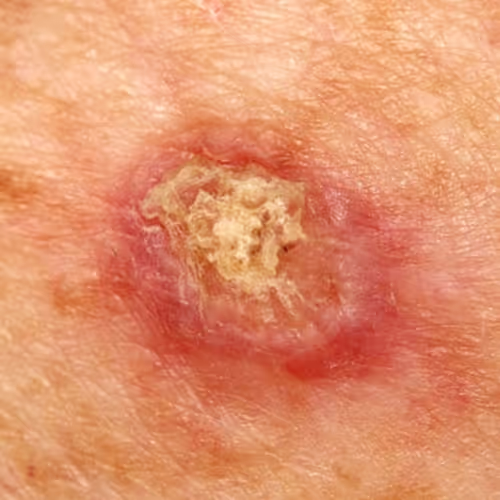
What does squamous cell carcinoma look like? Squamous cell carcinoma typically presents as a firm, red nodule, a flat lesion with a scaly, crusted surface, or a new sore on an old scar. It commonly appears on the lips, ears, face, and hands.
Can a non-healing sore be skin cancer? Yes. A sore that does not heal within four weeks is a recognized warning sign for both basal cell carcinoma and squamous cell carcinoma. Any non-healing sore should be assessed by a physician promptly.
Should a bleeding skin lesion be checked? Yes, immediately. Spontaneous bleeding from a skin lesion — bleeding without scratching or injury — is a red-flag symptom that warrants prompt medical assessment.
What is the difference between a mole and a skin lesion? A mole is a specific type of skin lesion — a cluster of pigmented cells (melanocytes). A skin lesion is the broader category that includes moles, cysts, skin tags, keratoses, sores, and any other abnormal area of skin.
What happens after a skin lesion biopsy? The tissue sample is sent to a pathology laboratory. Results typically return within one to two weeks. If the lesion is benign, no further treatment is usually needed. If it is malignant or pre-malignant, the physician will discuss next steps, which may include wider excision, referral, or additional treatment.
How fast should I get a suspicious skin spot checked? Within two to four weeks for most concerning spots. Immediately — as in the same week — if the lesion is bleeding spontaneously, growing visibly fast, or dramatically changing. Do not wait months for a routine appointment if the lesion is actively changing.
Conclusion
A skin lesion assessment is one of the most straightforward and high-value medical steps a person can take. Most lesions turn out to be benign, and knowing that is reassuring. The ones that are not benign are far easier to treat when caught early.
Actionable next steps:
If you have a spot that is growing, changing, bleeding, or not healing, book a skin lesion assessment now — do not wait for a routine appointment.
If you have not had a skin check in over two years and have any risk factors, schedule a preventive assessment, particularly if you are over 40.
If you are unsure whether your lesion needs attention, a physician-led assessment will give you a clear answer and a defined next step.
If you want rapid access without a referral, The Minor Surgery Center offers skin lesion assessment Toronto appointments across four locations with same-day treatment available in many cases.
If you need specialist care, the clinic can refer you to the appropriate dermatologist or oncologist based on your assessment findings.
The most common regret among people diagnosed with skin cancer is waiting too long. Getting a lesion checked is quick, straightforward, and, in many cases, completely reassuring. Book the appointment.
Promote healthy skin and limit the spread of disease through targeted removal procedures.
Book a Free Consultation
You can book your free consultation with The Minor Surgery Center in three easy ways: online through Cortico, by phone, or by requesting a callback from our team.
The initial consultation is free. During this consultation, one of our board certified surgeons will examine your condition and recommend a suitable solution.
Directly Online
Request a Callback
By Phone
By Text
Hours
Sunday
Closed
Monday
9 am — 4 pm
Tuesday
9 am — 4 pm
Wednesday
9 am — 4 pm
Thursday
9 am — 4 pm
Friday
9 am — 4 pm
Saturday
Toronto & Oakville Open Vaughan & Mississauga Closed




%20Treatment.avif)