Mole Check Toronto | Skin Cancer Screening & Mole Assessment
Looking for a mole check in Toronto? Our physicians assess suspicious moles, changing skin lesions, and other skin concerns. No referral is required, and appointments are available quickly at our Toronto, Vaughan, Oakville, and Mississauga clinics.
Full Body Skin Exam Toronto | Skin Cancer Screening & Mole Assessment
Last updated: June 17, 2026
Quick Answer: A full body skin exam in Toronto is a physician-led, head-to-toe assessment of your moles, lesions, and skin spots to identify early signs of skin cancer. The Minor Surgery Center offers this service across Toronto, Vaughan, Mississauga, and Oakville — no referral required. If a suspicious lesion is found, the same team can recommend monitoring, biopsy, or removal.
Key Takeaways
A full body skin exam covers the entire skin surface, including the scalp, back, hands, feet, and other commonly missed areas — it is not the same as checking one mole.
No referral is needed to book a private full body skin exam at The Minor Surgery Center.
Most full body skin exams are not covered by OHIP unless a physician deems the assessment medically necessary; private pay options are widely available in Toronto.
The exam typically takes 20 to 45 minutes depending on the number of lesions present and the level of dermoscopic assessment required.
People with more than 50 moles, a family history of melanoma, a history of tanning bed use, or frequent sun exposure are considered higher risk and should be checked annually.
A full body skin exam and mole mapping are different services: one is a clinical physician assessment, the other uses imaging technology to photograph and track moles over time.
If a suspicious lesion is found, next steps may include monitoring, biopsy, surgical removal, or referral — and in many cases, biopsy or removal can happen rapidly after the initial assessment.
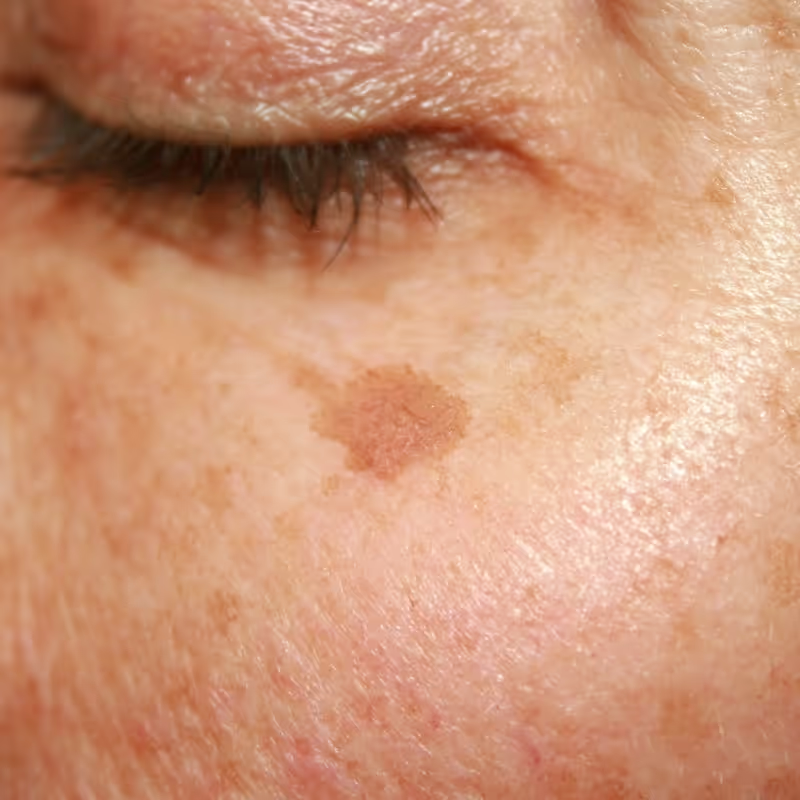
Skin cancer can appear as a small, flat, or pale spot — it does not always look dramatic or raised.
Tattoos and sensitive skin are not barriers to a full body skin exam, though they may affect which areas can be assessed visually.
Early detection is the single most important factor in skin cancer outcomes, particularly for melanoma.
What Is a Full Body Skin Exam Toronto Patients Should Know About?
A full body skin exam is a physician-led visual assessment of the entire skin surface, performed to identify moles, lesions, or abnormal spots that may indicate skin cancer or precancerous changes. Unlike an appointment focused on one specific mole, a full body skin exam reviews the skin from the scalp to the soles of the feet — including areas that are easy to overlook, such as the back, behind the ears, between the toes, and under the nails [5][8].
The goal is early detection. Skin cancers found at an early stage are significantly more treatable than those caught late. A full body skin exam is one of the most practical tools available for that purpose [9].
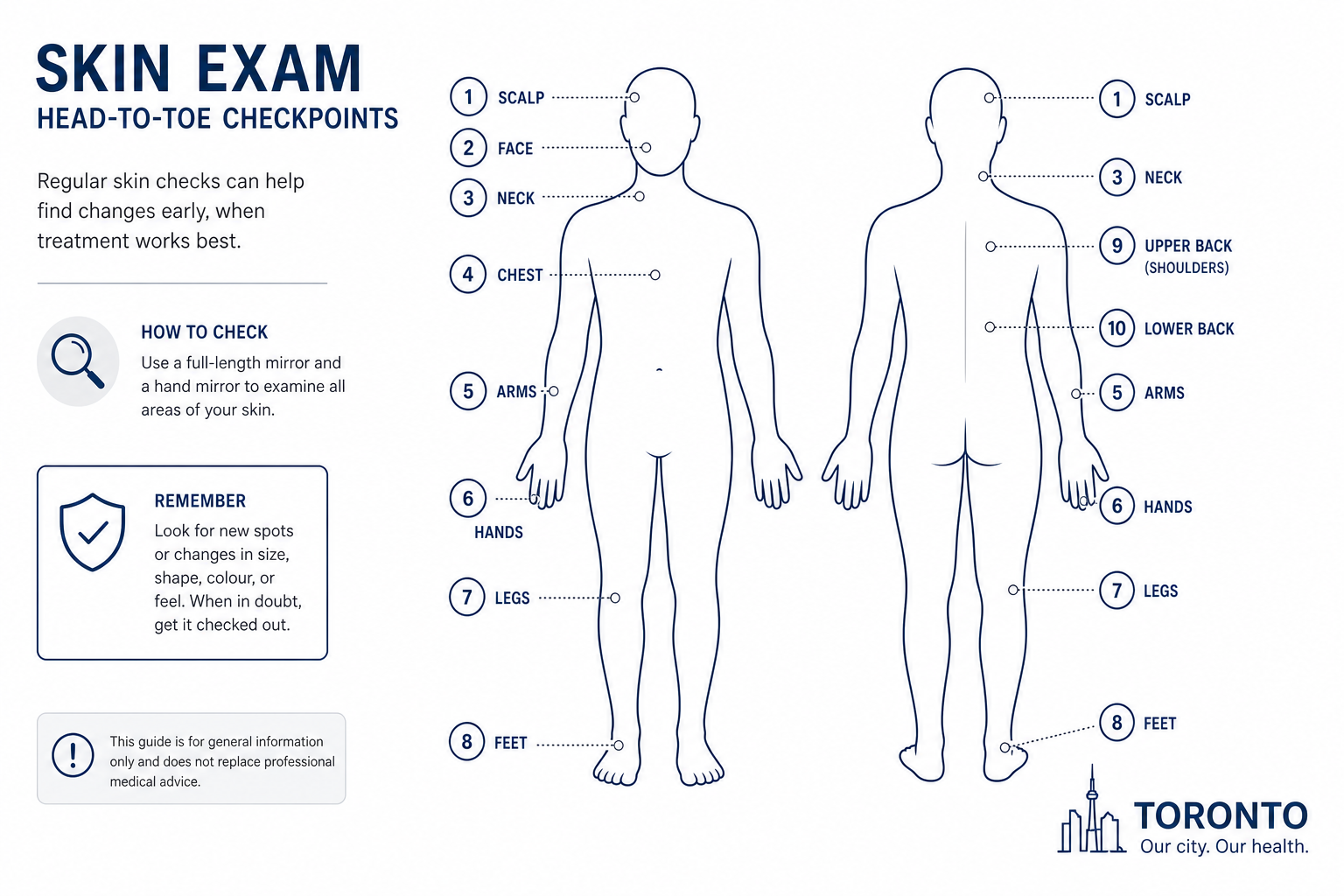
What gets examined during a full body skin check:
Scalp and hairline
Face, ears, and neck
Chest and abdomen
Upper and lower back
Arms, elbows, and hands (including fingernails)
Legs, knees, and feet (including toenails and the soles)
Genital and perianal area (examined when clinically appropriate and with patient consent)
The physician may use a dermoscope — a handheld magnifying device with polarized light — to examine specific lesions more closely. Dermoscopy improves the accuracy of identifying suspicious features that are not visible to the naked eye [8].
A full body skin exam is different from mole mapping, which uses specialized cameras to photograph and digitally track moles over time. Both serve a purpose, but they are not interchangeable services [1].
Who Should Get a Full Body Skin Exam Every Year?
Annual full body skin exams are most important for people with identifiable risk factors for skin cancer. That said, anyone who has not had their skin checked in several years can benefit from a baseline assessment.
Higher-risk groups who should consider annual skin checks:
People with more than 50 moles on their body
Anyone with a personal history of melanoma, basal cell carcinoma, or squamous cell carcinoma
People with a first-degree relative (parent, sibling, child) diagnosed with melanoma
People with fair skin, light eyes, or red or blonde hair
Anyone with a history of significant sunburns, especially blistering burns before age 18
People who used tanning beds, even occasionally
People who work outdoors or have had high cumulative sun exposure over their lifetime
Organ transplant recipients (immunosuppression increases skin cancer risk)
Anyone who has noticed several changing, itching, or bleeding spots
General population: Even without specific risk factors, a full body skin exam every one to three years is a reasonable preventive step for adults over 40. Skin cancer is the most common cancer in Canada, and many cases are found incidentally during routine skin checks [9].
For people who are unsure of their risk level, our guide to mole check clinics in Toronto covers what to expect and how to choose the right type of appointment.
What Exactly Happens During a Full Body Skin Check?
A full body skin exam at The Minor Surgery Center follows a structured, step-by-step process. The appointment is clinical and professional, and patients are given a gown to wear for privacy and access.
Step-by-step breakdown:
Medical history review. The physician asks about your personal and family history of skin cancer, your sun exposure habits, any history of tanning bed use, and any spots you are currently concerned about.
Patient-reported concerns. You point out any moles or spots that have changed in size, shape, color, or texture, or any that bleed, itch, or crust.
Head-to-toe visual examination. The physician systematically examines the entire skin surface in a well-lit room, working from the scalp downward.
Dermoscopic assessment. When a lesion looks atypical or warrants closer inspection, the physician uses a dermoscope to examine its internal structure, borders, and pigment patterns.
Identification and documentation. Suspicious or notable lesions are identified and noted for follow-up, monitoring, or further action.
Recommendation and next steps. The physician explains findings and recommends one of the following: monitoring at a set interval, biopsy for pathological analysis, surgical removal, or referral to a specialist if needed.
Common mistake to avoid: Many patients only mention the one spot they are most worried about and forget to mention others. Before the appointment, do a self-check and make a list of every spot that has changed or that you are uncertain about. Bring that list to the appointment.
How Long Does a Full Body Skin Exam Take?
Most full body skin exams take between 20 and 45 minutes. The exact time depends on the number of lesions present, how many require dermoscopic assessment, and how much time is spent on discussion and documentation.
For patients with many moles or complex skin histories, the appointment may run closer to 45 to 60 minutes. For a straightforward assessment with few concerning spots, 20 to 30 minutes is typical [5][9].
What affects appointment length:
Total number of moles and lesions across the body
Number of spots requiring dermoscopy
Complexity of the patient's skin cancer history
Time needed to discuss findings and answer questions
Patients should plan to undress to their undergarments and wear a gown, so comfortable, easy-to-remove clothing is practical on the day of the appointment.
How Much Does a Full Body Skin Exam Cost in Toronto?
The cost of a full body skin exam in Toronto varies depending on the type of provider and whether the visit is billed through OHIP or paid privately.
Private pay options in Toronto (approximate ranges as of 2026):
For context, Palmerston Mole Scan Clinic in Toronto offers FotoFinder ATBM Master full body mole mapping at $599 plus HST, which includes high-resolution imaging and a comprehensive report [2]. Maple's mole mapping service, also using FotoFinder technology, is similarly positioned for patients who want digital imaging alongside their dermatologist assessment [6].
A physician-led clinical assessment at a minor surgery center is typically less expensive than full mole mapping and is appropriate for most patients who want a thorough skin check without the imaging component.
OHIP coverage note: See the dedicated section below on OHIP coverage for full details.
Are Full Body Skin Exams Covered by OHIP?
OHIP does not routinely cover full body skin exams performed purely for screening purposes. However, coverage may apply when a physician deems the assessment medically necessary — for example, when a patient presents with a symptomatic or clinically suspicious lesion.
What OHIP typically covers:
Assessment of a specific lesion that a physician determines requires evaluation
Biopsy of a suspicious lesion (when medically indicated)
Follow-up visits related to a diagnosed skin condition
What OHIP typically does not cover:
Routine or preventive full body skin screening with no specific complaint
Private mole mapping or full-body imaging services
Cosmetic mole assessment or removal
For patients who want a comprehensive skin check without a specific complaint, private pay is the standard route in Toronto. Many patients find the cost reasonable given the peace of mind and the clinical value of catching something early.
If you are unsure whether your situation qualifies for OHIP coverage, it is worth calling the clinic ahead of your appointment to clarify. The Minor Surgery Center's team can advise on this during the booking process.
Do I Need a Referral for a Skin Cancer Screening in Toronto?
No referral is required to book a private full body skin exam or skin cancer screening at The Minor Surgery Center. Patients can book directly and be seen quickly, without waiting for a family physician to initiate the process.
This matters because wait times for dermatologist appointments in Ontario can stretch to several months. For patients who have noticed a changing mole or who simply want a comprehensive skin check, direct access to a physician-led assessment is a practical alternative [1].
When a referral might still be useful:
If you want to see a specific dermatologist through the public system and your family doctor has a preferred referral pathway
If your case is complex enough to warrant subspecialty dermatology care (e.g., a confirmed melanoma requiring staging)
If OHIP coverage is a priority and your family physician can document medical necessity
For most patients with general skin cancer concerns or a desire for a full body skin check, a direct-access private appointment is the fastest route. You can also review our skin cancer clinic page for more detail on what TMSC offers for both screening and treatment.
What Is the Difference Between a Mole Check and a Full Body Skin Exam?
A mole check typically focuses on one or a small number of specific lesions that a patient is concerned about. A full body skin exam reviews the entire skin surface systematically, regardless of whether the patient has identified a particular concern.
Both are valuable, but they serve different purposes.
FeatureMole CheckFull Body Skin ExamScopeOne or a few specific molesEntire skin surfacePatient concern requiredUsually yesNot necessarilyDermoscopy usedOftenWhen appropriateImaging technologyNot standardAvailable at some clinicsBest forKnown suspicious spotGeneral screening, many molesNext stepsMonitor, biopsy, remove, referSame, applied across the body
Choose a mole check if: You have one or two specific spots that have changed and you want them assessed promptly.
Choose a full body skin exam if: You have many moles, have not been checked in years, have risk factors for skin cancer, or want a comprehensive baseline assessment of your entire skin.
For patients who want both — a full body review plus long-term photographic tracking of individual moles — mole mapping with FotoFinder technology (offered at clinics like Palmerston and through Maple) adds a digital monitoring layer that a standard clinical exam does not provide [2][6].
Skin cancer does not always look alarming. Many early-stage lesions are small, flat, or only slightly different from surrounding skin — which is exactly why a physician-led exam is more reliable than self-monitoring alone.
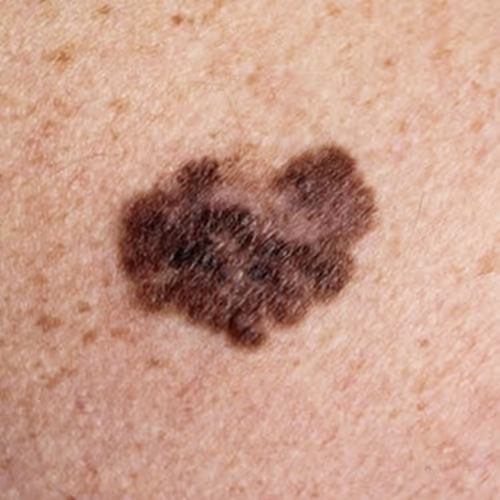
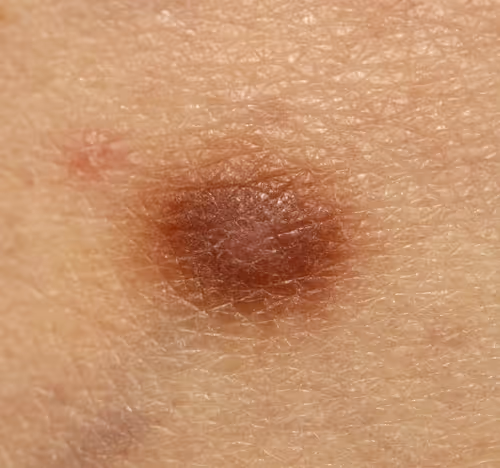
The ABCDE rule for moles:
A — Asymmetry: One half of the mole does not match the other
B — Border: Edges are irregular, ragged, notched, or blurred
C — Color: Uneven color with shades of brown, black, red, white, or blue
D — Diameter: Larger than 6 mm (about the size of a pencil eraser), though melanomas can be smaller
E — Evolution: Any change in size, shape, color, or a new symptom like bleeding or itching
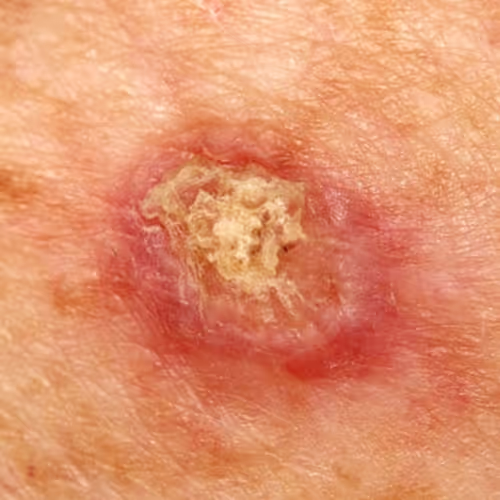
Other warning signs that are commonly missed:
A sore that does not heal within four weeks
A shiny, pearly, or translucent bump (often basal cell carcinoma)
A flat, flesh-colored or brown scar-like lesion
A red or pink growth with raised edges and a crusted center
A dark streak under a fingernail or toenail
Any spot on the scalp, sole of the foot, or between the toes that looks unusual
Skin cancer can appear on any part of the body, including areas that rarely see sun. Melanoma, in particular, can develop in less expected locations [8][9]. For a visual reference, our article on early-stage skin cancer provides photo examples and clinical descriptions.
Full Body Skin Exam Toronto: What Happens if Something Suspicious Is Found?
If a physician identifies a suspicious lesion during a full body skin exam, the next step depends on the clinical appearance and the patient's overall risk profile. Finding something suspicious is not a diagnosis — it is the beginning of a clear, structured process.
Possible next steps after a suspicious finding:
Monitoring: If a lesion looks atypical but not immediately alarming, the physician may recommend a follow-up in three to six months to assess for change.
Biopsy: A small tissue sample is taken and sent to a pathology lab. Results typically return within one to two weeks and confirm or rule out malignancy.
Surgical removal: If the lesion is suspicious enough to warrant excision, or if the patient prefers removal over monitoring, the physician can arrange this. In some cases, removal may happen rapidly after the initial consultation.
Referral: If the findings suggest a complex case — such as a confirmed melanoma requiring staging or a lesion in a surgically sensitive location — referral to a dermatologist or oncologist is arranged.
The Minor Surgery Center is specifically structured to reduce the gap between assessment and treatment. Patients who need a biopsy or removal do not have to restart the process at a new clinic — the same team manages the next step [1].
The right frequency depends on your individual risk level. There is no single universal guideline that applies to every adult, but the following framework is practical and widely used.
Recommended frequency by risk level:
Risk LevelRecommended FrequencyLow risk (no personal/family history, few moles, limited sun exposure)Every 2–3 yearsModerate risk (some risk factors, 20–50 moles)Every 1–2 yearsHigh risk (personal/family history of melanoma, 50+ moles, tanning bed use, immunosuppression)Annually or as directed by physicianPost-treatment (previously diagnosed skin cancer)Every 6–12 months as directed
Practical rule: If you have never had a full body skin exam, book one now regardless of your risk level. Use that baseline to establish a monitoring schedule with your physician.
Melanoma Canada's 2026 Mole Mobile Tour, launched May 1, 2026, is offering free full body skin screenings across all 10 Canadian provinces through October 31, 2026, with a focus on rural and Indigenous communities that have limited access to dermatology services. This initiative underscores the growing recognition that access to skin cancer screening needs to improve across the country [1].
Can I Get a Skin Exam if I Have Sensitive Skin or Tattoos?
Yes. Sensitive skin and tattoos are not barriers to a full body skin exam, though they are worth mentioning to the physician before the exam begins.
Sensitive skin: The exam is entirely visual and non-invasive unless a biopsy is recommended. No products are applied to the skin during a standard assessment. If you have a known skin condition such as eczema, psoriasis, or contact dermatitis, inform the physician so they can distinguish between your baseline skin condition and any new or suspicious lesions.
Tattoos: Tattooed skin can obscure lesions underneath or within the ink. A physician can still examine the tattooed area, but changes in a mole hidden within a tattoo may be harder to detect visually. If you have moles within or near a tattoo, mention this specifically so the physician pays particular attention to those areas.
Edge case: Patients with very dark skin tones or certain Fitzpatrick skin types may have lesions that present differently than in lighter-skinned patients. Skin cancer in people with darker skin is often diagnosed later because it tends to appear in less sun-exposed areas (palms, soles, under nails) and may not match the classic descriptions taught for lighter skin. A physician experienced in assessing diverse skin types is important in these cases.
What Are Common Mistakes People Make During Skin Screenings?
Several avoidable errors reduce the effectiveness of a full body skin exam. Knowing them ahead of time leads to a better appointment.
Mistake 1: Only mentioning the one spot you are most worried about. Patients often focus on a single lesion and forget to mention others. Bring a written list of every spot that has changed, itched, bled, or looked unusual — even if you think it is probably nothing.
Mistake 2: Wearing nail polish. Nail polish covers the nail beds and nail folds, which are areas where melanoma can develop. Remove nail polish from fingers and toes before a full body skin exam.
Mistake 3: Not mentioning family history. A family history of melanoma significantly changes risk stratification and the level of scrutiny applied during the exam. Always disclose it, even if it feels unrelated.
Mistake 4: Waiting until a spot looks "serious enough." Melanoma in its earliest stage (Stage 0 or Stage I) is often nearly invisible to the untrained eye. Waiting until a lesion looks dramatic delays detection and worsens outcomes.
Mistake 5: Skipping the scalp. Scalp melanomas are among the most dangerous because they are often found late. Ask the physician specifically to examine the scalp, and if you have thick hair, consider parting it in sections before the appointment.
Mistake 6: Assuming a small spot cannot be cancer. Skin cancer can appear as a small, flat, or pale spot. Size alone is not a reliable indicator of severity.
Is a Full Body Skin Exam Painful or Uncomfortable?
A standard full body skin exam is not painful. The examination is entirely visual, and no instruments touch the skin except the dermoscope, which rests lightly against the skin surface without pressure or discomfort.
Patients sometimes feel mild self-consciousness during the exam because of the level of undress required. This is normal and expected. Physicians who perform these exams regularly are trained to conduct them efficiently and professionally, using gowns and draping to maintain privacy throughout.
If a biopsy is recommended: A local anesthetic is injected before any tissue is taken, so the biopsy itself is not painful. There may be mild soreness at the biopsy site for a few days afterward.
If removal is recommended: Minor surgical removal under local anesthetic is similarly well-tolerated. Most patients describe it as pressure and movement rather than pain. Post-procedure discomfort is typically mild and managed with over-the-counter pain relief.
Do I Need a Dermatologist for a Full Body Skin Exam in Toronto?
Not always. A dermatologist is a specialist in skin disease and is appropriate for complex cases, high-risk patients, or patients requiring ongoing surveillance for a known condition. However, a physician experienced in skin lesion assessment can competently perform a full body skin exam, identify suspicious lesions, and initiate the appropriate next steps — including biopsy, removal, or referral.
The practical difference in Toronto is access. Wait times for a dermatologist through the public system can extend to six months or more. A physician-led assessment at a minor surgery center can often be arranged within days to weeks.
Choose a dermatologist if:
You have a confirmed or highly suspected melanoma requiring staging
You have a complex inflammatory or autoimmune skin condition alongside your screening needs
You require long-term specialist surveillance for a high-risk condition
A physician-led assessment at a minor surgery center is appropriate if:
You want a thorough skin check without a long wait
You have a specific mole or lesion you want assessed promptly
You want a full body review and a clear next step if something is found
Why Choose The Minor Surgery Center for a Full Body Skin Exam in Toronto?
The Minor Surgery Center is structured specifically to reduce the gap between concern and action. Most skin cancer screening services in Toronto stop at the assessment — if something is found, the patient is sent elsewhere. TMSC offers assessment and treatment under one roof.
What sets TMSC apart:
Locations across the GTA: Toronto, Vaughan, Mississauga, and Oakville — reducing travel time for patients across the region
No referral required: Book directly for a private assessment without waiting for a family physician appointment
Rapid access: Appointments available significantly faster than the public dermatology wait list
Physician-led assessment: Every exam is conducted by a qualified physician, not a nurse or technician alone
Integrated biopsy and removal pathway: If a suspicious lesion is found, the same team can perform a biopsy or removal — often within days of the initial assessment
Experience with benign and malignant lesions: TMSC treats moles, cysts, lipomas, skin tags, basal cell carcinoma, squamous cell carcinoma, and melanoma
Board-certified surgeons: The surgical team includes FRCSC-certified plastic and general surgeons
For patients who have already been assessed elsewhere and received a diagnosis, TMSC also offers surgical treatment for skin cancers including melanoma surgery and basal cell carcinoma removal.
Frequently Asked Questions
Where can I get a full body skin exam in Toronto? The Minor Surgery Center offers physician-led full body skin exams across Toronto, Vaughan, Mississauga, and Oakville. No referral is required, and appointments are available on a rapid-access basis. Other options in Toronto include Palmerston Mole Scan Clinic (mole mapping with FotoFinder) and various dermatology clinics, though wait times vary [2].
Do I need a referral for a full body skin exam? No. The Minor Surgery Center accepts patients directly without a referral for private assessments. If you prefer to see a dermatologist through the public system, a referral from a family physician is typically required.
Is a full body skin exam covered by OHIP? Routine preventive skin screenings are generally not covered by OHIP. Coverage may apply when a physician determines that a specific lesion requires medical assessment. Private pay is the standard route for comprehensive skin checks in Toronto.
What areas are checked during a full body skin exam? A thorough exam covers the scalp, face, ears, neck, chest, abdomen, back, arms, hands (including nails), legs, feet (including soles and toenails), and, with patient consent, the genital and perianal area [5][9].
How long does a full body skin exam take? Most appointments take 20 to 45 minutes. Patients with many moles or complex histories may need up to 60 minutes.
Is a full body skin exam the same as mole mapping? No. A full body skin exam is a clinical physician assessment. Mole mapping uses imaging technology to photograph and digitally track moles over time. Both are useful, but they serve different purposes [1].
Do I need a dermatologist to check all my moles? Not necessarily. A physician experienced in skin lesion assessment can perform a thorough full body skin exam and initiate biopsy, removal, or referral if needed. Dermatologists are most important for complex or high-risk cases.
What happens if a suspicious mole is found? The physician will recommend monitoring, biopsy, surgical removal, or referral depending on the clinical appearance and risk profile. At TMSC, the biopsy or removal can often be arranged quickly after the initial assessment.
Can a mole be biopsied during the same appointment? In some cases, yes. If the physician determines that an immediate biopsy is appropriate and the patient consents, this can sometimes be performed during the same visit. In other cases, a separate appointment is scheduled shortly after.
Can a suspicious mole be removed the same day? Same-day removal may be possible depending on the clinical situation, the physician's assessment, and scheduling availability. TMSC is designed to minimize the gap between consultation and treatment.
How often should I get a full skin check? Every one to three years for low-risk individuals; annually for those with risk factors such as a personal or family history of melanoma, more than 50 moles, or significant sun or tanning bed exposure.
Should I get checked if I have more than 50 moles? Yes. Having more than 50 moles is a recognized risk factor for melanoma. Annual full body skin exams are recommended for this group, and mole mapping may be an appropriate addition for long-term monitoring.
Can skin cancer appear as a small spot? Yes. Early-stage melanoma and basal cell carcinoma can appear as small, flat, or only slightly discolored spots. Size alone is not a reliable indicator of whether a lesion is benign or malignant [8].
What is the difference between a mole check and a full body skin exam? A mole check focuses on one or a few specific lesions. A full body skin exam reviews the entire skin surface systematically, regardless of whether a patient has identified a specific concern.
Can I get a full body skin exam if I have tattoos? Yes. Tattoos may obscure lesions within the ink, so it is important to mention any moles located within or near tattooed areas so the physician can pay close attention to those spots.
Conclusion
A full body skin exam is one of the most practical steps a person can take for their long-term health. Skin cancer is the most common cancer in Canada, and early detection changes outcomes dramatically — particularly for melanoma, where stage at diagnosis is the strongest predictor of survival.
For Toronto residents, the barrier to getting checked is lower than many people realize. No referral is required for a private assessment. Appointments at The Minor Surgery Center are available across four GTA locations, and if something suspicious is found, the same team can move directly to biopsy or removal without sending the patient to start over somewhere else.
Actionable next steps:
Book a full body skin exam if you have not had one in the past two years, or sooner if you have risk factors.
Before the appointment, remove nail polish, prepare a list of any spots that have changed, and wear easy-to-remove clothing.
Ask the physician specifically to examine your scalp, the soles of your feet, and any areas within or near tattoos.
If a suspicious lesion is found, do not delay the recommended next step — monitoring intervals and biopsy timelines exist for a reason.
Establish a regular screening schedule based on your risk level and stick to it.
Skin cancer found early is almost always treatable. A full body skin exam in Toronto is how that early detection happens.
Promote healthy skin and limit the spread of disease through targeted removal procedures.
Book a Free Consultation
You can book your free consultation with The Minor Surgery Center in three easy ways: online through Cortico, by phone, or by requesting a callback from our team.
The initial consultation is free. During this consultation, one of our board certified surgeons will examine your condition and recommend a suitable solution.
Directly Online
Request a Callback
By Phone
By Text
Hours
Sunday
Closed
Monday
9 am — 4 pm
Tuesday
9 am — 4 pm
Wednesday
9 am — 4 pm
Thursday
9 am — 4 pm
Friday
9 am — 4 pm
Saturday
Toronto & Oakville Open Vaughan & Mississauga Closed




%20Treatment.avif)