Skin Cancer Clinic Oakville: Mole Assessment, Biopsy & Removal
A skin cancer clinic in Oakville is where suspicious moles and skin lesions get assessed, and where biopsies or surgical removals happen when a spot needs closer inspection. GP Dermatologists typically handle the visual assessment and dermoscopy, while plastic surgeons perform the biopsy, excision, or removal once a concerning lesion is identified. Most Oakville residents can access this care without leaving Halton region, and many clinics accept walk-in referrals or self-referrals for a suspicious spot.
Key Takeaways
Skin cancer assessment in Oakville usually starts with a GP Dermatologist evaluating a mole or lesion by eye and with a dermatoscope.
Biopsy and removal are surgical steps, typically done by a plastic surgeon once a lesion is flagged as concerning.
The three most common skin cancers assessed are basal cell carcinoma (BCC), squamous cell carcinoma (SCC), and melanoma.
A mole check (assessment) is different from mole removal (a surgical procedure), one doesn't automatically lead to the other.
Referral requirements, wait times, and coverage vary between clinics, so it's worth confirming details before booking.
Oakville clinics generally serve nearby communities including Burlington, Milton, and the wider Halton region.
OHIP typically covers medically necessary biopsies and removals of suspicious lesions; cosmetic removal of benign spots is usually not covered.
What Is a Skin Cancer Clinic and What Do They Treat?
A skin cancer clinic is a medical facility focused on identifying, diagnosing, and treating abnormal skin growths that could be cancerous or pre-cancerous. It's not the same as a spa or a general cosmetic clinic, the focus is medical, not aesthetic.
These clinics typically handle:
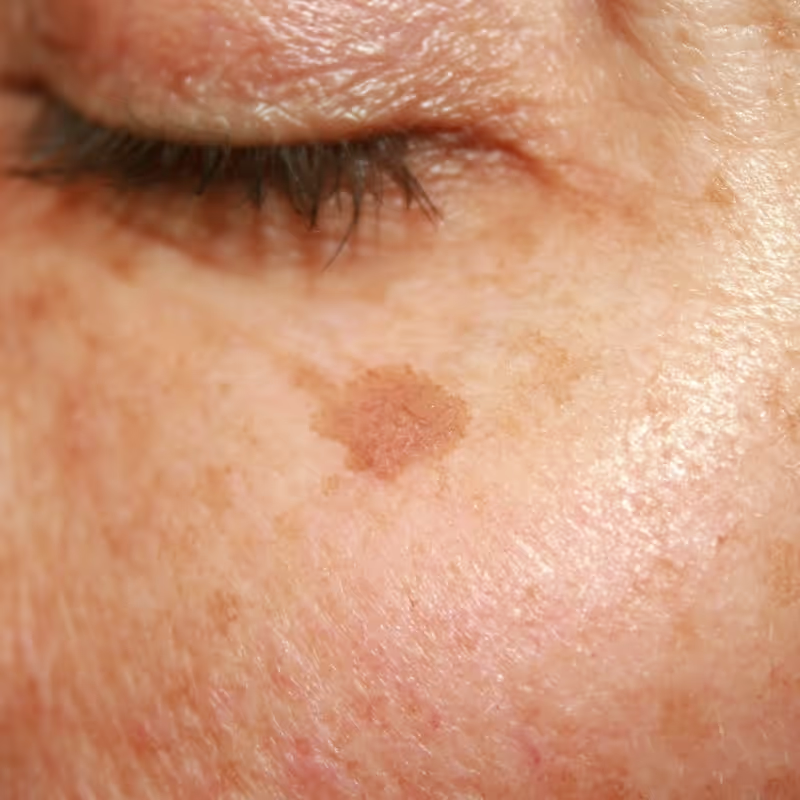
Suspicious moles that have changed shape, size, or colour
New or unusual skin lesions, bumps, or patches
Pre-cancerous growths like actinic keratosis
Confirmed skin cancers such as basal cell carcinoma, squamous cell carcinoma, and melanoma
Post-biopsy follow-up, including excision if pathology comes back abnormal
Some patients arrive with a single spot they're worried about after noticing a change. Others are referred by a family doctor who spotted something unusual during a routine check. Either path is normal. A well-run clinic will have a clear process: assessment first, then biopsy or removal only if it's medically warranted. For a broader look at what these clinics cover across the region, this guide to skin cancer screening and treatment clinics in Toronto breaks down what to expect from intake to pathology.
Not every unusual spot needs a biopsy. Assessment comes first, removal only happens when there's a real medical reason for it.
Skin Cancer Clinic Oakville: What This Clinic Offers
A skin cancer clinic in Oakville typically offers lesion assessment by a GP Dermatologist, with biopsy and surgical removal available through a plastic surgeon when a spot warrants it. This two-step model, assess, then treat if needed, keeps the process focused and avoids unnecessary procedures.
Here's what patients can generally expect from an Oakville-based clinic:
ServiceWho typically provides itWhat it involvesMole/lesion assessmentGP DermatologistVisual exam, dermoscopy, discussion of changesBiopsyPlastic surgeonSmall tissue sample sent for pathologyExcision/removalPlastic surgeonSurgical removal of confirmed or suspicious lesionPathology reviewLab + referring physicianConfirms diagnosis, guides next steps
Decision rule: choose an Oakville-based clinic if travel time matters to you and your concern is a single lesion or a small number of spots. If a full-body mapping program or highly specialized melanoma surgery is needed, a Toronto-based specialty center may be the better fit, more on that comparison below.
Suspicious Moles and Skin Lesions: When to Get Checked
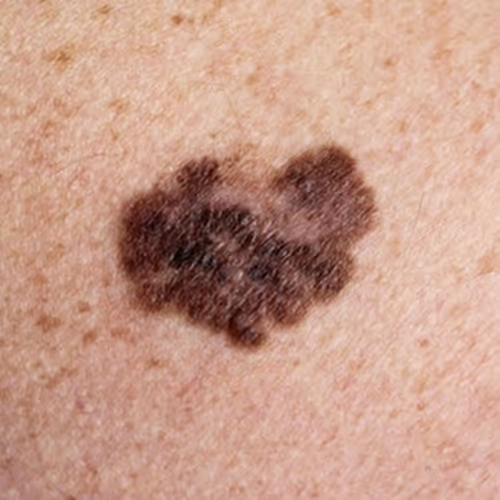
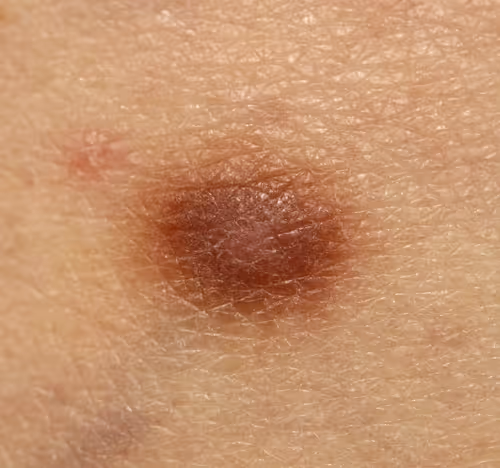
A mole or lesion is worth getting checked when it changes, in size, shape, colour, border, or texture, or when it bleeds, itches, or won't heal. The well-known ABCDE rule is a simple way to screen your own skin before booking an appointment.
ABCDE warning signs:
A, Asymmetry: one half looks different from the other
B, Border: edges are irregular, notched, or blurred
C, Colour: uneven shading, or new dark, red, or white patches within the mole
D, Diameter: larger than 6mm (about the size of a pencil eraser), though smaller ones can still matter
E, Evolving: any change over weeks or months, this is often the most important sign
Other reasons to get a lesion checked:
A sore or spot that hasn't healed in 3-4 weeks
A new growth that appeared after age 40
A mole that bleeds without being bumped or scratched
A family history of melanoma, especially in a first-degree relative
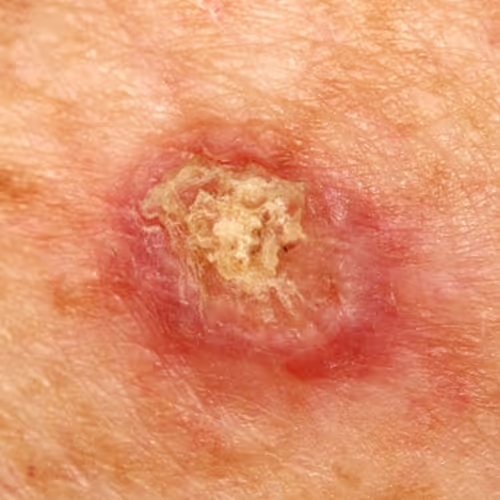
A patch of skin that's scaly, crusty, or persistently red
Common mistake: waiting to "see if it goes away" for months. Most benign spots stay stable. If something is actively changing, that's the signal to book, not to wait another season. For a closer look at what early changes can look like, see first-stage skin cancer pictures and this explainer on whether skin cancer typically hurts (spoiler: many early lesions don't).
Mole Check vs. Mole Removal: What's the Difference?
A mole check is an assessment, a doctor looks at the spot, sometimes with a dermatoscope, and decides whether it looks benign, needs monitoring, or needs a biopsy. Mole removal is a surgical procedure that physically takes the lesion off the skin, either for medical reasons or, in some cases, for cosmetic ones.
These two things get confused a lot, so here's the breakdown:
Mole CheckMole RemovalPurposeEvaluate riskPhysically remove the lesionWho performs itGP Dermatologist (typically)Plastic surgeon (typically)Involves cutting?NoYesSent for pathology?Not alwaysOften, if medically indicatedTypical outcomeReassurance, monitoring plan, or referral for biopsyLesion removed, sample sometimes tested
Not every mole check leads to removal. In fact, most don't, the majority of moles assessed turn out to be benign and simply get monitored over time. On the flip side, not every removal starts with a formal "check" appointment; sometimes a GP dermatologist assesses and refers directly for excision in the same visit if the lesion clearly warrants it.
Choose a mole check first if: you're unsure whether a spot is concerning, or you want a professional opinion before deciding on next steps. Choose removal (via referral) if: a lesion has already been assessed as suspicious, or it's causing repeated irritation, bleeding, or catching on clothing.
For readers comparing options across the region, mole check services in Toronto outline a similar assessment-first model that Oakville clinics tend to follow too.
Dermatologist vs. Skin Cancer Specialist: Who Does What?
A GP Dermatologist typically leads the visual and dermoscopic assessment of a mole or lesion, while a plastic surgeon typically performs the biopsy or excision when tissue needs to be removed. Neither title is "better", they're different roles in the same care pathway.
Here's how the roles usually break down:
GP Dermatologist: examines the skin, uses dermoscopy to look at pigment patterns, decides if a lesion looks low-risk, needs monitoring, or needs biopsy
Plastic surgeon: performs the biopsy or full excision, closes the wound, and manages healing, especially important for lesions on the face or other cosmetically sensitive areas
Pathologist: examines the removed tissue under a microscope and issues the diagnosis (this happens in a lab, not during the visit)
Some clinics use the term "skin cancer specialist" loosely to describe either role, or a physician who has extra training in lesion assessment. It's worth asking directly: "Will this doctor be assessing the mole, or performing the removal?" That one question clears up most confusion.
Edge case: a lesion on the nose, ear, or eyelid often needs a surgeon experienced in facial reconstruction, not just removal, because the wound closure matters as much as the excision itself. Surgeons like Dr. Monica Yu, a plastic and reconstructive surgeon, handle these more technically demanding removals.
What Types of Skin Cancer Are Assessed and Treated?
Oakville-area clinics generally assess and coordinate treatment for the three most common skin cancers: basal cell carcinoma (BCC), squamous cell carcinoma (SCC), and melanoma. Each behaves differently, and the assessment approach reflects that.
Basal Cell Carcinoma (BCC)
The most common form of skin cancer
Usually grows slowly and rarely spreads to other parts of the body
Often looks like a pearly bump, a flat scaly patch, or a sore that won't heal
Quick example: a slow-growing pearly bump on the nose that's been there for eight months is more consistent with BCC. A dark, irregular spot that appeared three weeks ago and is changing fast needs urgent assessment, that pattern is more consistent with melanoma and shouldn't wait.
The Skin Cancer Screening Process: What to Expect
A typical skin cancer screening visit involves a visual exam of the specific area of concern, dermoscopy if available, and a conversation about the lesion's history. It's usually quick, not painful, and doesn't require special prep.
Step-by-step, here's what usually happens:
Intake: you describe when the spot appeared, whether it's changed, and any relevant family history
Visual exam: the physician looks at the lesion directly, sometimes using a dermatoscope (a lighted magnifying tool) for a closer view of the pigment pattern
Risk assessment: based on the ABCDE criteria and dermoscopic features, the physician decides: monitor, biopsy, or refer for removal
Discussion: you're told the plan in plain language, what happens next and why
Booking next steps: if a biopsy is needed, it's scheduled (sometimes same-day, sometimes a follow-up visit)
What it is not: a full-body mole-mapping session with photographic documentation of every mole on your body. That's a specific, separate service offered at select clinics, if that's what you're after, confirm with the clinic directly rather than assuming it's included. Some Toronto-based centers do offer full body skin exams for cancer screening as a distinct service, which is worth knowing if you want comprehensive mapping rather than a single-lesion check.
Common mistake: assuming a screening visit automatically includes removal. If the lesion looks concerning, the visit usually ends with a referral or biopsy booking, not an on-the-spot excision, since that requires proper planning and sometimes a separate surgical appointment.
Biopsy and Pathology: How Diagnosis Actually Works
A biopsy removes a small sample (or the entire lesion) so it can be examined under a microscope by a pathologist. This is the only way to confirm whether a spot is cancerous, a visual exam alone, no matter how experienced the physician, is an assessment of risk, not a diagnosis.
Common biopsy types:
Shave biopsy: a thin slice of the top layer of skin is removed, quick, minimal downtime
Punch biopsy: a small circular tool removes a deeper sample, sometimes with a stitch
Excisional biopsy: the entire lesion is removed with a margin of healthy skin around it, often used when melanoma is suspected
What happens after the biopsy:
The tissue sample goes to a pathology lab
Results typically take one to two weeks, though this varies by lab and clinic
The referring physician (or the surgeon) reviews the report and explains the result
If the margins aren't clear (meaning some abnormal cells extend to the edge of the removed tissue), a second, wider excision may be recommended
Edge case: if pathology confirms melanoma, a wider excision with specific margin measurements (based on how deep the melanoma has grown) is usually needed, and sometimes additional evaluation of nearby lymph nodes. This is a more involved surgical step than a routine BCC or SCC removal, which is one reason a plastic surgeon's involvement matters for complex cases.
When Is Removal Recommended?
Removal is typically recommended when a lesion has been assessed as suspicious, when a biopsy confirms cancer or a pre-cancerous change, or when a benign lesion is causing repeated symptoms like bleeding, catching, or irritation. Removal isn't automatic just because a mole exists.
Removal is usually recommended when:
A biopsy or strong clinical suspicion confirms BCC, SCC, or melanoma
A lesion shows clear ABCDE warning signs on dermoscopy
A benign-looking mole repeatedly bleeds, gets irritated by clothing, or causes discomfort
Removal is usually not medically necessary when:
The mole is stable, symmetric, and unchanged over years
There's no family or personal history of skin cancer
The concern is purely cosmetic and the lesion shows no warning signs (this may still be an option, but it's a different conversation than medically indicated removal)
Decision rule: if a physician has assessed a lesion and recommended monitoring rather than removal, that's a legitimate outcome, not a missed diagnosis. Monitoring with a plan to recheck in a set number of months is a standard, evidence-based approach for low-risk spots.
Skin Cancer Removal Treatment Options at Oakville Clinics
The main removal method used for confirmed or highly suspicious skin cancer is surgical excision, performed by a plastic surgeon, with the sample sent to pathology to confirm clear margins. The specific technique depends on the lesion's size, location, and type.
Typical options:
Standard excision: the lesion plus a margin of healthy tissue is removed and the wound is closed with stitches
Wider excision for melanoma: margins are larger and measured precisely based on how deep the melanoma has grown (this is a pathology-guided decision, not a one-size approach)
Shave removal: used for some superficial lesions, though less common for confirmed cancers
Reconstructive closure: for lesions on the face, ears, or other cosmetically important areas, a plastic surgeon plans the closure to minimize scarring while ensuring the cancer is fully removed
Recovery generally involves keeping the site clean and protected, avoiding sun exposure on the area, and a follow-up visit to check healing and remove stitches if needed (usually within 1-2 weeks). For a sense of what recovery looks like after a common procedure, this guide on basal cell carcinoma recovery walks through the typical timeline.
Quick example: a confirmed BCC on the forearm might be excised in a single 20-30 minute visit with local anesthetic and a few stitches. A suspected melanoma on the cheek involves more planning, biopsy first, pathology review, then a scheduled excision with attention to both margin clearance and cosmetic outcome.
How Long Does Skin Cancer Treatment Take at an Oakville Clinic?
Most individual appointments, assessment, biopsy, or a standard excision, take 20 to 45 minutes, but the full process from first visit to final pathology result typically spans two to six weeks, depending on biopsy turnaround and whether follow-up surgery is needed.
Rough timeline:
Initial assessment visit: 15-30 minutes
Biopsy (if needed): 15-30 minutes, usually a separate or same-day appointment
Pathology results: 1-2 weeks
Excision/removal (if confirmed): 20-45 minutes, scheduled after results
Follow-up/wound check: 10-15 minutes, roughly 1-2 weeks after removal
What speeds things up: having a clear description of when the lesion appeared and how it's changed, and bringing any prior photos of the spot if you have them. What slows things down: delaying the initial visit, or needing a second, wider excision because margins weren't clear the first time.
Edge case: a lesion strongly suspected to be melanoma may be fast-tracked, with biopsy and excision planning happening faster than the typical timeline above, this depends on the individual clinic's process and how the assessing physician flags urgency.
Do You Need a Referral for a Skin Cancer Clinic in Oakville?
Referral requirements vary by clinic. Some skin cancer clinics accept self-referrals for a suspicious mole or lesion, while others prefer or require a referral from a family doctor, especially for OHIP-covered assessment and removal. It's always worth confirming directly with the specific clinic before booking.
General patterns worth knowing:
Many minor surgery and lesion assessment clinics accept patients without a GP referral for an initial mole check
OHIP-covered biopsy or removal of a medically necessary lesion sometimes still benefits from a referral, since it documents medical necessity for billing
If you don't have a family doctor, some clinics can still see you directly for an assessment, ask when booking
Walk-in style access tends to be faster for a single concerning spot; formal referral pathways are more common when a GP has already flagged something during a routine exam
For a referral-free path elsewhere in the GTA, mole checks without a referral in Toronto show how a no-referral model typically works, a similar structure often applies at Oakville-area clinics, but always confirm current policy directly since this can change.
Common mistake: assuming every clinic requires a referral and delaying a visit because you don't have one lined up. Many clinics can see new patients directly for a suspicious lesion, a quick phone call clears this up in under five minutes.
Cost and Insurance: What's Covered for Skin Cancer Care in Oakville
OHIP typically covers medically necessary assessment, biopsy, and removal of a suspicious or confirmed skin cancer lesion in Ontario, including Oakville. Costs that aren't OHIP-covered usually involve purely cosmetic removal of benign spots, which is billed privately and priced per lesion.
What's usually covered by OHIP:
Assessment of a mole or lesion flagged as potentially cancerous
Biopsy of a suspicious lesion
Surgical excision of a confirmed or strongly suspected skin cancer
Follow-up visits related to the above
What's usually a private, out-of-pocket cost:
Removal of a benign mole purely for appearance (no medical indication)
Some cosmetic-only consultations, depending on the clinic's policy
Decision rule: if a lesion shows any ABCDE warning signs, has changed recently, or a physician has flagged it as concerning, that assessment and any resulting biopsy or removal generally falls under OHIP-covered medical care rather than private cosmetic pricing. Confirm exact figures directly with the clinic, since coverage details and any private fees can change and vary by individual case, this article doesn't quote specific dollar amounts because pricing depends on the lesion, the clinic, and current OHIP billing codes at the time of your visit.
Skin Cancer Clinic Oakville: Location, Hours & Booking
Oakville-based clinics are generally positioned to serve residents without requiring a trip into downtown Toronto, with booking typically available by phone or through an online request form. Exact hours and address details should always be confirmed directly, since they can change.
What to check before booking:
Current clinic address and whether parking is available on-site
Hours of operation, including whether evening or weekend slots exist
Whether a same-day or urgent booking is possible for a rapidly changing lesion
Whether the visit will be with a GP Dermatologist (assessment) or a plastic surgeon (removal), so you know what to expect
Patients can view full details for the Oakville clinic location, including current hours and how to request an appointment. For a wider view of all clinic locations across the GTA, the full clinic directory shows Toronto, Vaughan, and Oakville options side by side, which is useful if a work schedule makes one location easier to reach than another on a given day.
Skin Cancer Clinic Oakville vs. Toronto Options
Choosing between an Oakville clinic and a Toronto-based one usually comes down to travel time, appointment availability, and whether you need a highly specialized service like full-body mole mapping. Both can offer the same core assessment-and-removal pathway.
FactorOakville ClinicToronto ClinicTravel time (from Halton)ShorterLonger, depending on trafficCore services (assessment, biopsy, removal)AvailableAvailableFull-body mole mappingConfirm availability directlyMore commonly offered at specialty centersAppointment volume/waitOften shorter waitCan vary, more options overallSpecialty reconstructive casesMay require referral onwardMore concentrated specialist access
Choose Oakville if: your concern is a single lesion or a small number of spots, and reducing travel time matters. Choose a Toronto option if: you specifically want comprehensive full-body screening, or your case needs a highly specialized reconstructive surgeon for a complex facial removal.
Areas Served: Oakville, Burlington, Milton & Halton
Oakville-based skin cancer clinics generally serve the broader Halton region, including Burlington, Milton, and surrounding communities, not just Oakville itself. This matters because residents outside Oakville's core often don't realize a closer option exists compared to driving into Toronto or Mississauga.
Typical coverage area includes:
Oakville, including downtown and surrounding neighbourhoods
Burlington, a short drive along the QEW or Lakeshore corridor
Milton, accessible via Highway 407 or Derry Road
Halton region broadly, including smaller communities within the region
If you're closer to Mississauga instead, it's worth knowing that region has its own dedicated resources too, including guides on skin biopsy and skin cancer screening in Mississauga and general dermatologist options in Mississauga. The right clinic is usually the one that balances shortest travel time with the specific service you need, assessment-only versus assessment-plus-removal in one location.
Skin Cancer Clinic Oakville: Reviews and Ratings
Patient reviews for skin cancer and mole clinics tend to focus on wait times, how clearly the physician explained findings, and how comfortable the biopsy or removal process felt. When researching reviews, look for specific mentions of the assessment-to-removal pathway, not just general clinic atmosphere.
What to look for in reviews:
Comments on how quickly a suspicious lesion was assessed and, if needed, biopsied
Mentions of clear communication about pathology results and next steps
Feedback on the removal or excision experience itself, including recovery
Whether the reviewer needed a referral or was seen directly
Where to check: Google Business listings, the clinic's own website testimonials, and general directories that compile multiple GTA clinics, like this roundup of top skin cancer screening and treatment clinics in Toronto, which gives a sense of how different clinics across the region are evaluated by patients on similar criteria.
Common mistake: judging a skin cancer clinic purely on general cosmetic-procedure reviews. A clinic that's excellent for skin tag removal isn't automatically the best choice for a suspected melanoma, check for reviews specific to lesion assessment and cancer-related care.
Skin Cancer Clinic Oakville: Frequently Asked Questions
Does a mole check hurt? No. A standard mole check is a visual and dermoscopic exam, the physician looks at the lesion, sometimes with a magnifying tool, without cutting or touching the skin in a way that causes pain.
How do I know if a spot needs urgent attention rather than a routine booking? Rapid change over weeks (not months), bleeding without injury, or a dark irregular spot that's clearly evolving are signs to call the clinic and ask about an urgent or same-week slot rather than waiting for the next routine opening.
Can a GP Dermatologist remove a mole, or only assess it? Assessment is typically the GP Dermatologist's role, while biopsy and surgical removal are typically performed by a plastic surgeon. This division exists because removal is a surgical procedure requiring different training and setup.
Is skin cancer screening covered by OHIP in Oakville? Medically necessary assessment, biopsy, and removal of a suspicious lesion is generally covered by OHIP in Ontario. Purely cosmetic removal of a benign spot is typically a private, out-of-pocket cost. Confirm specifics directly with the clinic.
What's the difference between BCC, SCC, and melanoma in simple terms? BCC is the most common and usually slow-growing. SCC grows a bit faster and has a slightly higher chance of spreading if untreated. Melanoma is less common but has the highest potential to spread, which is why fast assessment of changing dark spots matters most.
How long does it take to get biopsy results? Most pathology results come back in one to two weeks, though this can vary by lab and by how the specific clinic processes samples.
Do I need a referral to book a skin cancer assessment in Oakville? Not always. Many clinics accept direct bookings for a suspicious mole without a GP referral, though some prefer a referral for OHIP billing purposes. Always confirm with the specific clinic.
What happens if a mole turns out to be benign after assessment? Nothing further is usually needed beyond routine self-monitoring, unless the physician recommends a follow-up check in a set number of months to watch for any future change.
Can I get a full-body skin check at an Oakville skin cancer clinic? This depends on the individual clinic, not every location offers comprehensive full-body mapping. If that's specifically what you need, ask directly, or look at clinics that explicitly advertise full body skin exams as a dedicated service.
What should I bring to my first appointment? A list of any changes you've noticed in the lesion, roughly when it appeared, and any relevant family history of skin cancer. Photos of the spot over time, if you have them, are genuinely helpful for the assessing physician.
Book Your Skin Cancer Consultation in Oakville
If a mole or spot has been on your mind, the next step is simple: book an assessment and let a physician tell you whether it's low-risk, needs monitoring, or needs a closer look. Waiting rarely makes the picture clearer, and an assessment visit is quick and low-stress.
Before you book, have this ready:
When the spot first appeared or when you first noticed it
A skin cancer clinic in Oakville gives Halton-region residents a local path to get a suspicious mole or lesion properly assessed, without automatically assuming every spot needs removal. GP Dermatologists handle the visual and dermoscopic assessment, plastic surgeons step in for biopsy and excision when it's medically warranted, and pathology confirms the diagnosis before any major decision gets made.
The most useful thing to take from this: don't wait on a changing spot, but also don't panic that every mole needs surgery. If a lesion is stable and symmetric, monitoring is often the right call. If it's evolving, bleeding, or shows ABCDE warning signs, book an assessment soon and let the process, check, then biopsy if needed, then removal if confirmed, run its normal course.
Next steps:
Do a quick self-check using the ABCDE criteria on any spot that's been bothering you
Call or book online with an Oakville-area clinic for an assessment
Ask directly whether the visit is with a GP Dermatologist or a surgeon, so expectations are clear
Follow through on any biopsy or removal recommendation without delay
Promote healthy skin and limit the spread of disease through targeted removal procedures.
Book a Free Consultation
You can book your free consultation with The Minor Surgery Center in three easy ways: online through Cortico, by phone, or by requesting a callback from our team.
The initial consultation is free. During this consultation, one of our board certified surgeons will examine your condition and recommend a suitable solution.
Directly Online
Request a Callback
By Phone
By Text
Hours
Sunday
Closed
Monday
9 am — 4 pm
Tuesday
9 am — 4 pm
Wednesday
9 am — 4 pm
Thursday
9 am — 4 pm
Friday
9 am — 4 pm
Saturday
Toronto & Oakville Open Vaughan & Mississauga Closed




%20Treatment.avif)