Skin Cancer Screening Toronto: Full Body Skin Exams & Mole Assessment
Looking for skin cancer screening in Toronto? The Minor Surgery Center offers physician-led assessment of suspicious moles, changing skin lesions, and skin cancer concerns across Toronto, Vaughan, Oakville, and Mississauga. No referral is required for private assessment, and appointments are available quickly.
Skin Cancer Screening Toronto: Early Detection, Assessment & Treatment
Last updated: June 16, 2026
Quick Answer: Skin cancer is the most common cancer in Canada, and 1 in 6 Canadians is expected to develop it in their lifetime [4]. Skin cancer screening in Toronto involves a full-body examination by a trained physician to identify suspicious moles, lesions, and early-stage cancers before they progress. The Minor Surgery Center provides skin cancer assessments, suspicious mole checks, skin biopsies, and treatment options across multiple GTA locations. No referral is required, and appointments are often available within days.
Key Takeaways
Skin cancer screening is a head-to-toe skin examination designed to detect suspicious lesions as early as possible, before they spread.
No referral is needed to book a skin cancer check at The Minor Surgery Center.
Melanoma, the deadliest form of skin cancer, has a five-year survival rate exceeding 98% when caught at the earliest stage.
The ABCDE rule (Asymmetry, Border, Color, Diameter, Evolving) is the most reliable self-check framework for identifying suspicious moles.
Dermoscopy, a magnified skin imaging technique, significantly improves detection accuracy compared to the naked eye alone.
OHIP may cover medically necessary assessments and biopsies; cosmetic or routine screening visits may not be covered.
Canada faces a national shortage of dermatologists, with only about 800 specialists serving a population of 40 million, making specialized screening clinics a practical alternative [7].
In 2025, Ontario's Mole Mobile screened 4,726 individuals, identifying 606 suspicious lesions and diagnosing 152 melanomas, the highest provincial total in Canada [2].
Full-body exams regularly find cancers on areas patients never thought to check, including the scalp, soles of the feet, and between the toes.
If something suspicious is found, biopsy, pathology review, and treatment can often be coordinated at the same clinic.
What Is Skin Cancer Screening?
Skin cancer screening is a systematic, head-to-toe examination of the skin performed by a trained physician to identify lesions that may be cancerous or pre-cancerous. The goal is detection at the earliest possible stage, when treatment is most effective and outcomes are best.
Screening is distinct from treatment. A screening visit focuses on assessment, risk evaluation, and identifying lesions that need further investigation. Treatment, such as surgical removal or biopsy, follows if something suspicious is found.
Early detection matters because skin cancer behaves very differently depending on when it is caught. Melanoma detected at Stage 1 carries a five-year survival rate above 98%. Detected at Stage 4, that rate drops sharply. For basal cell carcinoma and squamous cell carcinoma, early removal is typically straightforward and curative. Delayed diagnosis allows these cancers to grow deeper into tissue, potentially requiring more extensive surgery.
Screening vs. treatment at a glance:
Screening: Examination, risk assessment, dermoscopy, biopsy recommendation if needed
Patients often choose specialized skin clinics because appointments are available sooner and screening, biopsy, and treatment can often be coordinated in one location. Canada has a national shortage of approximately 800 dermatologists for a population of 40 million [7], which means wait times through the public system can extend for months. Clinics like The Minor Surgery Center fill this gap by offering rapid-access assessments without requiring a referral from a family doctor.
Who Should Get Skin Cancer Screening?
Anyone can develop skin cancer, but certain factors significantly increase risk. A skin cancer check in Toronto is particularly important for people who have one or more of the following:
Previous diagnosis of skin cancer
Family history of melanoma
Fair skin, light eyes, red or blonde hair
Frequent or prolonged sun exposure
History of working outdoors (construction, landscaping, farming)
Tanning bed use, even occasional
More than 50 moles on the body
History of blistering sunburns, especially in childhood
Immunocompromised status (transplant recipients, HIV, long-term immunosuppressant use)
Age over 50 (risk increases with cumulative UV exposure)
People with darker skin tones are not immune. While melanoma is less common in individuals with higher Fitzpatrick skin types, it is often diagnosed at a later stage because it tends to appear in less-examined areas such as the palms, soles, and under the nails.
Signs You Should Book a Skin Cancer Check
Most people book a skin cancer assessment in Toronto because they have noticed something on their skin that concerns them. The ABCDE rule is the most widely used framework for evaluating a mole.
The ABCDE Rule
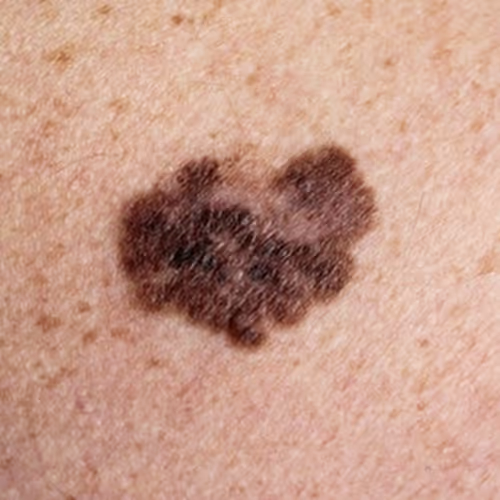
A — Asymmetry: One half of the mole does not match the other half in shape.
B — Border: The edges are irregular, ragged, notched, or blurred rather than smooth and well-defined.
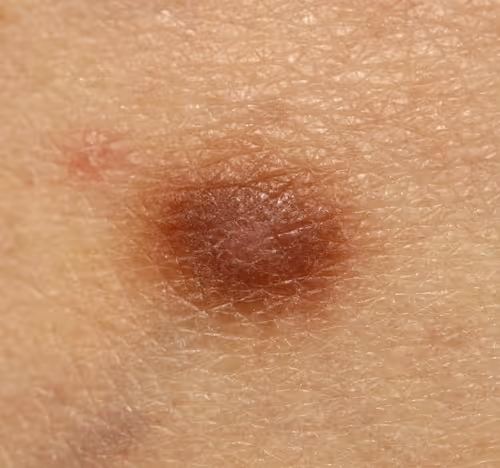
C — Color: The mole has multiple shades of brown, black, red, white, or blue rather than a uniform color.
D — Diameter: The lesion is larger than 6 mm (about the size of a pencil eraser), though melanomas can be smaller when first detected.
E — Evolving: Any change in size, shape, color, or any new symptom such as bleeding or itching is a red flag.
Additional Warning Signs
Beyond the ABCDE rule, book a skin cancer check if you notice:
A lesion that bleeds without injury
A sore that does not heal after several weeks
Rapid growth of any skin lesion
A crusty or scaly patch that keeps returning (learn more about crusty spots on skin)
A new mole appearing after age 30
The "ugly duckling" sign: a mole that looks noticeably different from all others on the body
Any one of these signs warrants a professional assessment. Do not wait for multiple signs to appear.
What Exactly Happens During a Skin Cancer Screening?
A skin cancer screening at a Toronto clinic typically follows these steps and takes 20 to 45 minutes depending on the extent of the examination.
Medical history review: The physician asks about personal and family history of skin cancer, sun exposure habits, tanning bed use, current medications, and any specific concerns.
Full skin examination: The physician examines the entire body surface, including areas the patient cannot easily see, such as the scalp, back, behind the ears, soles of the feet, and between the toes.
Dermoscopy: A handheld device called a dermoscope is used to magnify and illuminate suspicious lesions, revealing structural patterns not visible to the naked eye.
Risk stratification: The physician categorizes lesions as benign, low-risk, moderate-risk, or high-risk based on clinical and dermoscopic findings.
Biopsy if necessary: If a lesion is suspicious, a small tissue sample is taken and sent to a pathology lab for analysis.
Follow-up recommendations: The physician advises on surveillance intervals, self-examination habits, sun protection, and any required treatment.
Are skin cancer screenings painful? The examination itself is painless. If a biopsy is performed, local anesthetic is used so the procedure causes minimal discomfort. Most patients describe it as a brief pinch.
What Is Dermoscopy and How Accurate Is It?
Dermoscopy is a non-invasive imaging technique that uses a handheld magnifying device with polarized light to examine the deeper layers of the skin. It allows physicians to evaluate pigment patterns, vascular structures, and architectural features that are invisible during a standard visual inspection.
Studies have consistently shown that dermoscopy improves diagnostic accuracy for melanoma compared to the naked eye alone. In experienced hands, dermoscopy can increase sensitivity for melanoma detection significantly and reduce unnecessary biopsies of benign lesions. The Toronto Dermatology Centre uses computerized mole mapping systems such as FotoFinder to create image databases of all body moles, allowing changes to be tracked over time [4].
Why dermoscopy matters for melanoma: Early melanoma can look nearly identical to a benign mole to the naked eye. Dermoscopy reveals internal structures, such as atypical pigment networks and regression structures, that indicate malignancy before the lesion becomes visually obvious.
Common mistake: Assuming a mole looks "fine" visually means it is fine. Dermoscopy regularly identifies lesions that appear benign on the surface but show concerning internal features.
Full Body Skin Cancer Screening
A full-body skin examination covers every surface of the skin from scalp to soles. This is the standard of care for skin cancer screening because patients frequently have no idea a suspicious lesion exists on an area they cannot see.
Areas commonly missed during self-examination:
Scalp (hidden by hair)
Upper back and shoulders
Behind and inside the ears
Soles of the feet
Between the toes
Under the nails
Genitals and buttocks
A physician-performed full-body exam finds cancers in these hidden locations regularly. Patients are often surprised to learn that their most concerning lesion was not the one they came in about.
For a mole check in Toronto focused on a specific lesion, the examination may be more targeted, but a full-body screen is always recommended when risk factors are present.
Early Warning Signs of Melanoma: What Does It Look Like?
Melanoma is the most dangerous form of skin cancer because it can spread to other organs if not caught early. It most commonly appears as a new or changing mole, but it can also develop in existing moles or in skin that looks otherwise normal.
Early signs of melanoma include:
A mole that has grown, changed color, or changed shape over weeks or months
A dark streak under a fingernail or toenail
A dark patch on the palm or sole of the foot
A lesion that looks different from all other moles on the body (ugly duckling sign)
A mole with multiple colors, particularly shades of black, red, or white within the same lesion
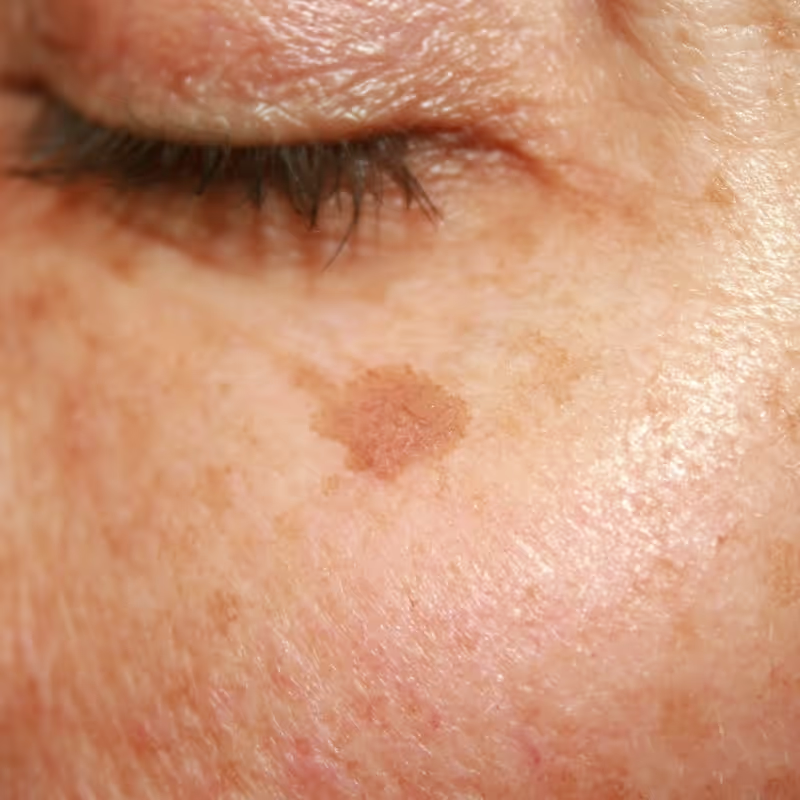
Melanoma does not always look dramatic in its early stages. Some early melanomas are flat, lightly pigmented, and easy to dismiss. For a visual reference, the first stages of skin cancer guide provides clinical images that illustrate what early lesions can look like.
Why changing moles matter: A mole that has been stable for years and then begins to change is a red flag. The change itself, not just the appearance at any single point, is often the most important clinical signal.
Am I at High Risk for Melanoma?
High-risk individuals benefit from more frequent professional screening, typically every six to twelve months rather than annually.
You are at elevated risk if you have:
A personal history of melanoma or any skin cancer
A first-degree relative (parent, sibling, child) diagnosed with melanoma
More than 50 common moles or any atypical (dysplastic) moles
A history of severe, blistering sunburns
Spent significant time in high-UV environments (tropical climates, high altitude, reflective surfaces like snow or water)
Used tanning beds, particularly before age 35
Who should be screened more frequently: fair-skinned or darker-skinned people? Fair-skinned individuals (Fitzpatrick Types I and II) carry a significantly higher statistical risk of melanoma and should be screened more frequently. However, people with darker skin tones should not skip screening. In darker-skinned individuals, melanoma is more likely to appear in atypical locations (palms, soles, mucous membranes) and is more often diagnosed at a later stage, which worsens outcomes. Both groups benefit from professional assessment.
Types of Skin Cancer Screened For
Melanoma
Melanoma develops from melanocytes, the pigment-producing cells of the skin. It accounts for a minority of skin cancer cases but the majority of skin cancer deaths. Early detection is critical because melanoma spreads to lymph nodes and internal organs faster than other skin cancers. For detailed information on diagnosis and treatment, see the melanoma surgery and treatment page.
Basal Cell Carcinoma (BCC)
Basal cell carcinoma is the most common skin cancer. It grows slowly, rarely spreads to other organs, and is almost always curable when removed early. It typically appears as a pearly or waxy bump, a flat flesh-colored lesion, or a bleeding sore that heals and returns. Despite its low mortality rate, untreated BCC can grow deeply into surrounding tissue and bone.
Squamous Cell Carcinoma (SCC)
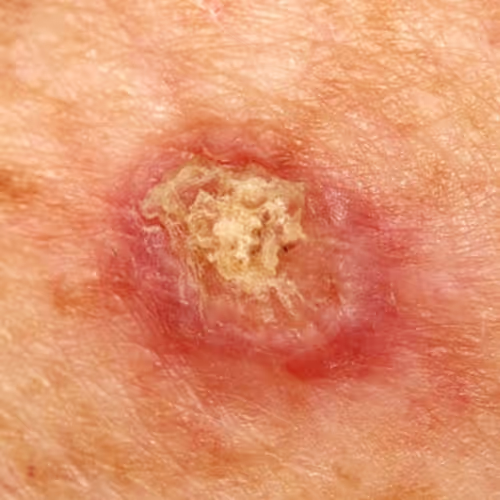
Squamous cell carcinoma develops in the outer layers of the skin and is more likely to spread than BCC, though still far less aggressive than melanoma. It often appears on sun-damaged skin as a firm red nodule, a flat lesion with a crusted surface, or a sore that does not heal. Learn more about squamous cell carcinoma surgery in Toronto.
Melanoma Screening Toronto
Melanoma screening in Toronto deserves specific attention because melanoma incidence in Canada has been rising steadily over the past three decades [4]. Ontario has among the highest melanoma diagnosis rates in the country, and the 2024 Ontario Health Cancer System Quality Index identified ongoing challenges in ensuring timely access to follow-up care [5].
In 2025, Melanoma Canada's Mole Mobile screened 4,726 individuals in Ontario alone, identifying 606 suspicious lesions and diagnosing 152 melanomas, the highest provincial total in the country [2]. In 2026, the Mole Mobile Coast to Coast Tour has expanded to over 130 stops across all 10 provinces, running from May 1 to October 31, with multiple Ontario locations included [1].
On May 27, 2026, the Canadian Dermatology Association, in partnership with Melanoma Canada, offered free skin cancer screenings on Parliament Hill to highlight the urgency of accessible early detection [3].
For patients in the GTA who want rapid access to melanoma screening without waiting for a public program, The Minor Surgery Center offers direct-booking melanoma assessments. For guidance on finding the right specialist, the best melanoma specialists in Toronto resource is a useful starting point.
Skin Cancer Screening vs. Mole Check: What Is the Difference?
These two services are related but not identical.
Skin Cancer Screening:
Full-body assessment of the entire skin surface
Searches for all suspicious lesions, not just known moles
Evaluates overall skin cancer risk
Recommended for high-risk individuals or those with no recent skin check
Takes 20 to 45 minutes
Mole Check:
Focuses on one or several specific moles
More limited in scope
Often prompted by a particular patient concern
Can be completed more quickly
May miss lesions in areas the patient did not identify
For most patients presenting with a concern about a specific mole, a mole check is the starting point. For anyone with multiple risk factors or no prior skin examination, a full-body skin cancer screening is the more appropriate choice.
Can I Do a Self Skin Check at Home?
Yes, and monthly self-examinations are strongly encouraged between professional screenings. A home skin check is not a substitute for a professional assessment, but it is an effective way to notice changes early.
How to perform a home skin check:
Use a well-lit room and a full-length mirror.
Use a hand mirror for areas like the back, scalp, and soles.
Examine every surface systematically from head to toe.
Note any moles or spots that are new, changing, or different from others.
Apply the ABCDE rule to any lesion that catches your attention.
Book a professional assessment if anything raises concern.
The City of Toronto's #BeSunSafe program, reintroduced in partnership with Toronto Public Health in 2024, provides free sunscreen dispensers in select parks and promotes sun safety awareness as a first line of prevention [6].
Do I Need a Referral for Skin Cancer Screening in Toronto?
No. Most patients can book directly with The Minor Surgery Center for skin cancer screening and suspicious lesion assessment without a referral from a family doctor.
This is a significant practical advantage. In Ontario, wait times to see a dermatologist through a GP referral can extend to six months or longer. Canada's national shortage of roughly 800 dermatologists for 40 million people means that patients who wait for a referral pathway may wait months before being seen [7].
Specialized skin clinics that accept direct bookings provide faster access, which matters most when a lesion is changing rapidly or when a patient has no regular family physician.
How Much Does a Skin Cancer Check Cost in Toronto?
The cost depends on the nature of the visit and whether OHIP coverage applies.
What OHIP may cover:
Medically necessary skin assessments where a physician documents a clinical concern
Skin biopsies performed as part of a diagnostic workup
Follow-up visits related to a confirmed or suspected skin cancer diagnosis
What OHIP typically does not cover:
Routine or preventive full-body skin cancer screening in the absence of a specific documented concern
Cosmetic mole assessments
Some administrative or facility fees at private clinics
Practical guidance: If a patient presents with a specific lesion of concern, the visit is more likely to be considered medically necessary. Patients should confirm coverage and any out-of-pocket costs when booking. Biopsy and pathology costs are generally covered when medically indicated.
Private screening packages, where a patient pays directly for a comprehensive full-body assessment, are also available at many Toronto skin clinics and typically range from $150 to $350 depending on the scope of the examination and whether dermoscopy is included.
What Happens If Something Suspicious Is Found?
This is where the clinical pathway matters most, and where having a clinic that handles the full continuum of care is a genuine advantage.
Step 1 — Assessment: The physician documents the lesion, photographs it, and evaluates it with dermoscopy. If the lesion is clearly benign, no further action is needed.
Step 2 — Biopsy: If the lesion is suspicious, a biopsy is performed. This involves removing a small tissue sample under local anesthetic. The sample is sent to a pathology laboratory.
Step 3 — Pathology review: A pathologist examines the tissue under a microscope and issues a report, typically within one to two weeks.
Step 4 — Diagnosis: The physician reviews the pathology result and confirms whether the lesion is benign, pre-cancerous (e.g., actinic keratosis, dysplastic nevus), or malignant.
Step 5 — Removal and treatment: If cancer is confirmed, the physician recommends an appropriate treatment. For most early-stage skin cancers, surgical excision is the primary treatment. More advanced cases may require referral to oncology.
Step 6 — Follow-up surveillance: After treatment, regular follow-up appointments are scheduled to monitor for recurrence and check for new lesions.
The Minor Surgery Center can manage this entire pathway, from initial screening through biopsy, diagnosis, and surgical treatment, without requiring the patient to navigate multiple separate referrals. For more on what to expect from the skin cancer clinic in Toronto, the clinic's conditions page provides a full overview.
How Often Should I Get My Skin Checked for Cancer?
The right interval depends on individual risk level.
Low risk (no personal or family history, fair to medium skin, minimal sun exposure): Annual full-body skin examination
Moderate risk (one or two risk factors, multiple moles, occasional sunburns): Every six to twelve months
High risk (personal history of melanoma, multiple atypical moles, strong family history): Every three to six months, as directed by the physician
After a skin cancer diagnosis, surveillance frequency is set by the treating physician based on cancer type, stage, and treatment outcome. Ontario Health's 2024 Cancer System Quality Index highlighted the importance of timely follow-up appointments as a key quality indicator for melanoma care in Ontario [5].
Why Choose The Minor Surgery Center for Skin Cancer Screening?
The Minor Surgery Center offers several practical advantages for patients seeking skin cancer screening across the GTA.
No referral required: Book directly without waiting for a GP referral.
Multiple GTA locations: Clinics in Toronto, Vaughan, Oakville, Mississauga, Richmond Hill, and Brampton.
Rapid appointments: Most patients are seen within days, not months.
Experienced physicians: Assessments performed by physicians with specific experience in skin lesion evaluation.
Dermoscopy available: Enhanced visual examination for more accurate lesion assessment.
Skin biopsies on-site: No need to visit a separate facility for biopsy.
Skin cancer treatment available: Surgical excision and treatment performed at the same clinic.
Continuity of care: From initial screening through diagnosis, removal, and follow-up surveillance, all coordinated in one place.
Where can I get skin cancer screening in Toronto? The Minor Surgery Center offers skin cancer screening at multiple GTA locations including Toronto, Vaughan, Oakville, Mississauga, Richmond Hill, and Brampton. No referral is required and appointments are typically available within days.
How much does skin cancer screening cost in Toronto? Cost depends on the nature of the visit. Medically necessary assessments and biopsies may be covered by OHIP. Routine preventive full-body screening without a specific documented concern may not be covered. Private screening packages typically range from $150 to $350.
Is skin cancer screening covered by OHIP? OHIP may cover assessments where a specific clinical concern is documented, as well as biopsies and follow-up care for confirmed or suspected cancers. Routine preventive screening and cosmetic assessments are generally not covered.
Do I need a referral for skin cancer screening in Toronto? No. The Minor Surgery Center accepts direct bookings for skin cancer screening and suspicious lesion assessment without a referral from a family physician.
How long does a skin cancer screening take? A full-body skin cancer screening typically takes 20 to 45 minutes, depending on the number of lesions examined and whether dermoscopy is performed.
What does melanoma look like? Early melanoma often appears as a mole that is asymmetric, has irregular borders, contains multiple colors, is larger than 6 mm, or has recently changed. It can also appear as a dark streak under a nail or a dark patch on the palm or sole.
What if a mole is changing? Any mole that changes in size, shape, color, or texture, or that begins to bleed or itch, should be assessed by a physician promptly. Change is one of the most important warning signs.
How often should I get a skin cancer check? Low-risk individuals should have an annual full-body exam. High-risk individuals, including those with a personal or family history of melanoma, should be screened every three to six months as directed by their physician.
Can skin cancer occur without a mole? Yes. Basal cell carcinoma and squamous cell carcinoma frequently develop on skin that has no pre-existing mole. They can appear as a persistent sore, a red patch, a pearly bump, or a crusty lesion on sun-exposed skin.
Is dermoscopy accurate? In experienced hands, dermoscopy significantly improves the accuracy of melanoma detection compared to visual inspection alone. It reduces both missed diagnoses and unnecessary biopsies of benign lesions.
What age should skin cancer screening start? There is no universal minimum age. Screening is recommended whenever risk factors are present. Young adults with a history of tanning bed use, blistering sunburns, or a family history of melanoma should begin regular screening in their twenties.
Can I book a skin cancer screening online? Yes. The Minor Surgery Center accepts online bookings. Appointments can be scheduled directly through the clinic website without a referral.
What happens after a biopsy? The tissue sample is sent to a pathology laboratory and results are typically available within one to two weeks. The physician then reviews the results with the patient and recommends next steps, which may include surgical removal, further investigation, or routine surveillance.
Can skin cancer be removed the same day as the screening? In some cases, a small suspicious lesion may be biopsied or removed during the same visit. More commonly, removal is scheduled as a separate procedure once the clinical assessment is complete.
Are skin cancer screenings painful? The examination itself is painless. If a biopsy is performed, local anesthetic is administered first, making the procedure minimally uncomfortable for most patients.
Conclusion
Skin cancer is highly treatable when caught early, and that is precisely why skin cancer screening in Toronto matters. A 20-to-45-minute full-body examination can identify lesions that a patient would never notice on their own, and dermoscopy adds a layer of diagnostic precision that visual inspection alone cannot provide.
The barriers that once made skin cancer screening difficult in Ontario, long wait times, referral requirements, and limited specialist availability, are addressable. Clinics like The Minor Surgery Center provide direct-access screening, on-site biopsy, and treatment across multiple GTA locations, so patients do not need to navigate a fragmented referral system when time may be critical.
Actionable next steps:
Perform a home skin check using the ABCDE rule and note any lesions that concern you.
Review the risk factors listed above and honestly assess your personal risk level.
Book a skin cancer screening appointment directly, no referral needed.
If a lesion is found, stay with the same clinic through biopsy, pathology, and treatment for continuity of care.
After your first professional screening, establish a regular check-up interval based on your physician's recommendation.
Do not wait for a lesion to become obvious. The earlier a skin cancer is found, the simpler and more effective the treatment.
Promote healthy skin and limit the spread of disease through targeted removal procedures.
Book a Free Consultation
You can book your free consultation with The Minor Surgery Center in three easy ways: online through Cortico, by phone, or by requesting a callback from our team.
The initial consultation is free. During this consultation, one of our board certified surgeons will examine your condition and recommend a suitable solution.
Directly Online
Request a Callback
By Phone
By Text
Hours
Sunday
Closed
Monday
9 am — 4 pm
Tuesday
9 am — 4 pm
Wednesday
9 am — 4 pm
Thursday
9 am — 4 pm
Friday
9 am — 4 pm
Saturday
Toronto & Oakville Open Vaughan & Mississauga Closed




%20Treatment.avif)