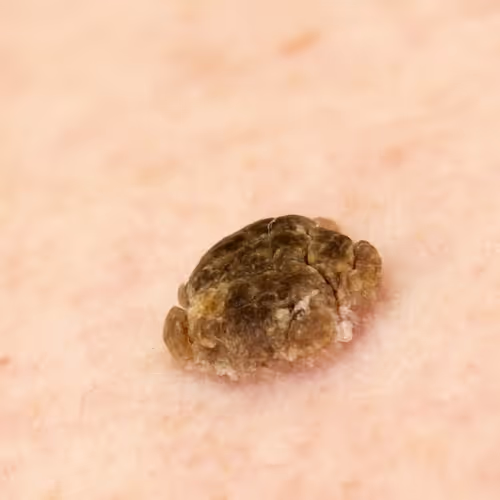
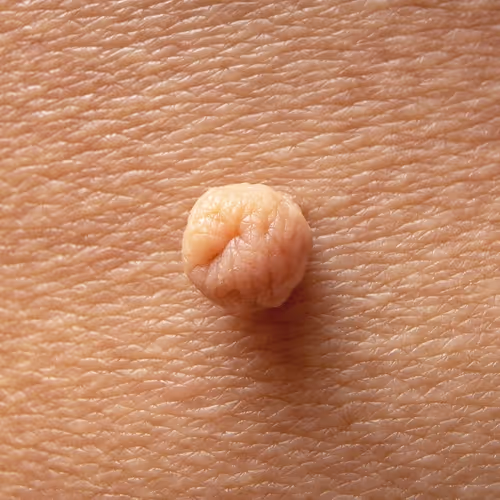
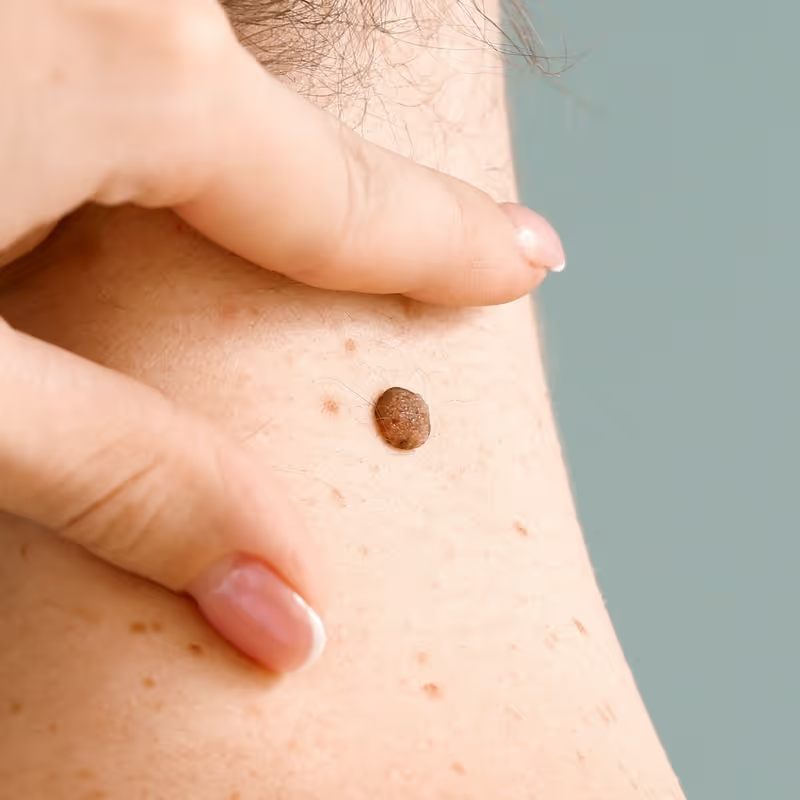
Concerned about a changing, bleeding, itchy, irregular, or unusual mole? The Minor Surgery Center offers mole checks in Toronto, Mississauga, Vaughan, and Oakville without a referral for private assessment. Our physicians can assess the mole and explain whether monitoring, biopsy, removal, or referral is the right next step.
Quick Answer: Yes, you can book a private mole check in Toronto without a referral. Private clinics such as The Minor Surgery Center offer direct-access appointments across Toronto, Mississauga, Vaughan, and Oakville, where a physician assesses your mole and recommends the appropriate next step: monitoring, biopsy, removal, or onward referral. No family doctor is required to get started.
Key Takeaways
A mole check without referral Toronto is available through private clinics; no family doctor appointment is needed to book.
OHIP-covered dermatology typically requires a referral, while private mole assessments are generally self-pay.
Warning signs that warrant prompt assessment include a mole that is changing in size, colour, or shape, or one that bleeds, itches, or crusts.
The ABCDE criteria (Asymmetry, Border, Colour, Diameter, Evolution) are the standard framework physicians use during a professional mole examination.
A typical mole check appointment takes 15 to 30 minutes depending on the number of lesions assessed.
Same-day or rapid mole removal may be possible at minor surgery clinics if the physician determines it is appropriate after assessment.
Suspicious lesions can be sent to pathology after biopsy or excision, even without a prior dermatologist referral.
Online AI mole screening tools exist but are not a substitute for a physician-led clinical examination.
Private mole checks generally cost between $100 and $350 in Toronto, depending on the clinic and scope of assessment.
Patients with a personal or family history of melanoma, fair skin, or significant sun exposure history are at higher risk and benefit most from proactive screening.
Can You Get a Mole Check Without a Referral in Toronto?
Yes. Private clinics in Toronto allow patients to book a mole check directly, without needing a referral from a family doctor or walk-in clinic. This is the clearest answer to one of the most common questions people ask when they notice a changing or unusual mole.
The public dermatology system in Ontario operates differently. OHIP-covered dermatologist visits typically require a referral from a family physician or walk-in clinic doctor, and wait times for non-urgent dermatology appointments can stretch several months. For patients who do not have a family doctor, who cannot get an appointment quickly, or who simply want faster access, a private no-referral mole check is a practical alternative.
Clinics such as The Minor Surgery Center offer mole checks in Toronto without requiring a referral, with appointments available across Toronto, Mississauga, Vaughan, and Oakville. Other private providers in the city, including MolePatrol and Palmerston Mole Scan Clinic, also accept patients without a mandatory referral, though some may recommend one [1][3][4].
Key distinction: A no-referral private mole check is not the same as an OHIP-insured visit. Patients pay out of pocket for private assessments, but they gain faster access and a clear clinical pathway for next steps.
What Are the Signs You Should Get a Mole Checked Out?
Any mole that has changed recently, looks different from your others, or causes physical symptoms warrants prompt assessment. Waiting to see if it resolves on its own is one of the most common and costly mistakes patients make with suspicious skin lesions.
The following symptoms are reasons to book a mole check without delay:
The mole has grown in size over weeks or months
The colour has changed or become uneven (multiple shades of brown, black, red, or white within one lesion)
The border looks irregular, scalloped, or poorly defined
The mole bleeds without any injury or trauma
The lesion itches, stings, or causes persistent discomfort
The surface crusts, oozes, or does not heal
The mole looks noticeably different from your other moles (the "ugly duckling" sign)
A new mole has appeared in adulthood, particularly after age 40
You have a personal or family history of melanoma or skin cancer
Toronto Dermatology Centre reinforces the ABCDE framework as the standard clinical tool for identifying suspicious moles: Asymmetry, Border irregularity, Colour variation, Diameter greater than 6mm, and Evolution (change over time) [5].
Edge case: Not every dangerous mole looks dramatic. Some melanomas are flat, lightly pigmented, or appear as a new pink patch rather than a dark mole. If something looks new or different and has been there for more than four to six weeks without explanation, that is reason enough to have it assessed.
How Much Does a Private Mole Check Cost in Toronto?
Private mole check costs in Toronto generally range from approximately $100 to $350, depending on the clinic, the scope of the assessment, and whether imaging technology such as dermoscopy or mole mapping is used.
Here is a general breakdown of what patients can expect:
Service TypeEstimated Cost RangeNotesSingle mole assessment (physician)$100 - $175Visual and dermoscopic examMulti-mole or full-body skin check$150 - $300More lesions assessedFull-body mole mapping with imaging$250 - $350+High-resolution digital imagingBiopsy (if recommended)Additional feePathology lab costs may applyMole removal (if same-day)Varies by methodQuoted separately after assessment
These figures are estimates based on publicly available clinic information in 2026 and may vary. Patients should confirm pricing directly with the clinic before booking.
OHIP coverage note: Routine preventive mole checks and cosmetic mole mapping are not covered by OHIP. A medically necessary mole assessment, biopsy, or excision may qualify for partial OHIP coverage depending on the clinical context and the physician's determination. Patients should ask about OHIP eligibility when booking [1][9].
Private health insurance plans sometimes reimburse a portion of physician-led assessments. Checking with your insurer before the appointment is worthwhile.
What Happens During a Professional Mole Examination?
A professional mole examination follows a structured clinical process that takes 15 to 30 minutes for a focused assessment of one or a few lesions, or longer for a full-body skin check.
Here is what to expect at a physician-led appointment:
Medical history review: The physician asks about when the mole first appeared, whether it has changed, any symptoms such as bleeding or itching, your sun exposure history, and any personal or family history of skin cancer.
Visual inspection: The mole is examined with the naked eye under good lighting. The physician looks at size, shape, colour, border, and surface texture.
ABCDE assessment: Each criterion (Asymmetry, Border, Colour, Diameter, Evolution) is evaluated systematically.
Dermoscopic examination: A dermoscope is a handheld magnifying device with polarized light that allows the physician to see structures beneath the skin surface not visible to the naked eye. This significantly improves diagnostic accuracy.
Clinical decision: Based on findings, the physician recommends one of four pathways: monitor the mole over time, perform a biopsy, remove the mole, or refer to a dermatologist or specialist for further evaluation.
Documentation: The mole's characteristics are recorded for future comparison if monitoring is recommended.
The Minor Surgery Center describes this process in detail, noting that physicians assess mole history, size, shape, colour, border, surface texture, and ABCDE warning signs before recommending biopsy or excision when findings are suspicious [1][9].
Choose a physician-led assessment if: you have a mole with any ABCDE feature, a lesion that has changed recently, or a personal or family history of skin cancer. A nurse or aesthetician-led skin check is not an appropriate substitute for a clinical mole assessment.
Referral vs. No-Referral Mole Check: Which Path Is Right for You?
The right pathway depends on how urgently you need access, whether you have a family doctor, and the nature of your concern.
No-referral private mole check:
Book directly with the clinic, no GP appointment needed
Faster access, often within days
Private pay (not typically OHIP-covered for routine checks)
Best for one mole or a few concerning lesions
Can lead to biopsy, removal, monitoring, or specialist referral
Useful for patients without a family doctor or those who cannot wait
Referral-based dermatology pathway:
Starts with a family doctor or walk-in clinic visit
May be covered by OHIP when medically necessary
Better for complex or widespread dermatology conditions
Wait times for specialist appointments can be several months in Ontario
Appropriate when there is no urgency or when multiple skin conditions need management
Decision rule: Choose the no-referral private pathway if your mole has changed recently, you are worried about a specific lesion, or you cannot access a family doctor in a reasonable timeframe. Choose the referral pathway if your concern is non-urgent, you have a family doctor available soon, and cost is a significant factor.
Who Is Most at Risk for Skin Cancer and Mole Changes?
Certain individuals face a meaningfully higher risk of developing melanoma or other skin cancers, and should consider proactive mole screening rather than waiting for a visible change.
Higher-risk groups include:
People with fair skin, light eyes, or red or blonde hair
Individuals with a history of significant or repeated sunburns, particularly blistering burns in childhood
People with more than 50 moles, or any atypical (dysplastic) moles
Those with a personal history of any skin cancer
Individuals with a first-degree relative (parent, sibling, child) diagnosed with melanoma
People who have used tanning beds
Immunocompromised individuals, including organ transplant recipients
Those with prolonged occupational or recreational sun exposure without adequate protection
The Minor Surgery Center notes that 1 in 6 Canadians will be diagnosed with skin cancer in their lifetime, making proactive screening particularly relevant for higher-risk individuals [9].
Practical note: Higher-risk patients benefit from annual full-body skin checks even when no specific mole is causing concern. A skin cancer screening appointment provides a systematic baseline and makes it easier to detect changes over time.
Can You Do a Self Mole Check at Home First?
A self-examination at home is a useful first step, but it is not a substitute for a professional assessment. Home checks help patients notice changes early and decide when to book an appointment.
How to perform a basic self-check:
Use a well-lit room and a full-length mirror, plus a hand mirror for hard-to-see areas.
Examine your entire body systematically, including the scalp (use a comb to part the hair), between fingers and toes, the soles of the feet, and the back.
Look for any mole that meets one or more ABCDE criteria.
Look for the "ugly duckling" sign: a mole that stands out as clearly different from your others.
Note any mole that has changed since your last self-check.
Photograph concerning moles with your phone to track changes over time.
Are online AI mole screening tools legitimate?
Browser-based AI tools such as ScanSkinAI allow users to upload a photo of a mole and receive a preliminary screening result within seconds [6]. These tools can be a useful prompt to seek professional care, but they carry important limitations:
Photo quality, lighting, and angle significantly affect results
AI tools cannot perform dermoscopy or assess subsurface features
A negative AI result does not rule out a suspicious lesion
These tools are not approved as diagnostic devices by Health Canada
Bottom line: Use home self-checks and AI screening tools to decide whether to book a professional appointment, not to replace one. If a tool or self-check raises any concern, book a clinical assessment.
Are Online Mole Screening Services Legitimate?
Online mole screening services vary widely in quality and clinical validity. Some are useful triage tools; others provide false reassurance. Understanding the difference matters.
Legitimate uses of online screening:
Helping patients decide whether a mole warrants an in-person visit
Tracking moles over time with photo documentation
Providing general education about ABCDE warning signs
Limitations that make online screening insufficient as a standalone tool:
Standard smartphone photos lack the resolution and polarized lighting of a dermoscope
Skin tone, hair, and photo angle introduce significant variability
No online tool has regulatory approval as a diagnostic device in Canada
Liability and follow-up pathways are unclear with consumer-facing AI tools
Toronto Dermatology Centre specifically cautions against relying on non-medical assessments and emphasizes the importance of professional evaluation [5].
Practical guidance: If an online tool flags a mole as potentially concerning, treat that as a prompt to book an in-person appointment, not as a diagnosis. If an online tool says a mole looks fine but you are still worried, book an appointment anyway. Clinical peace of mind requires a physician.
What Is the Difference Between a Benign and Cancerous Mole's Appearance?
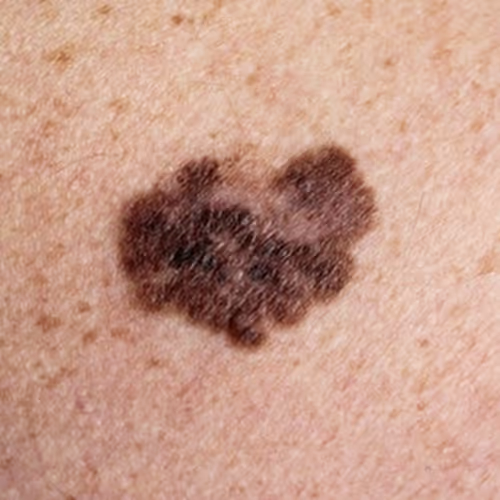
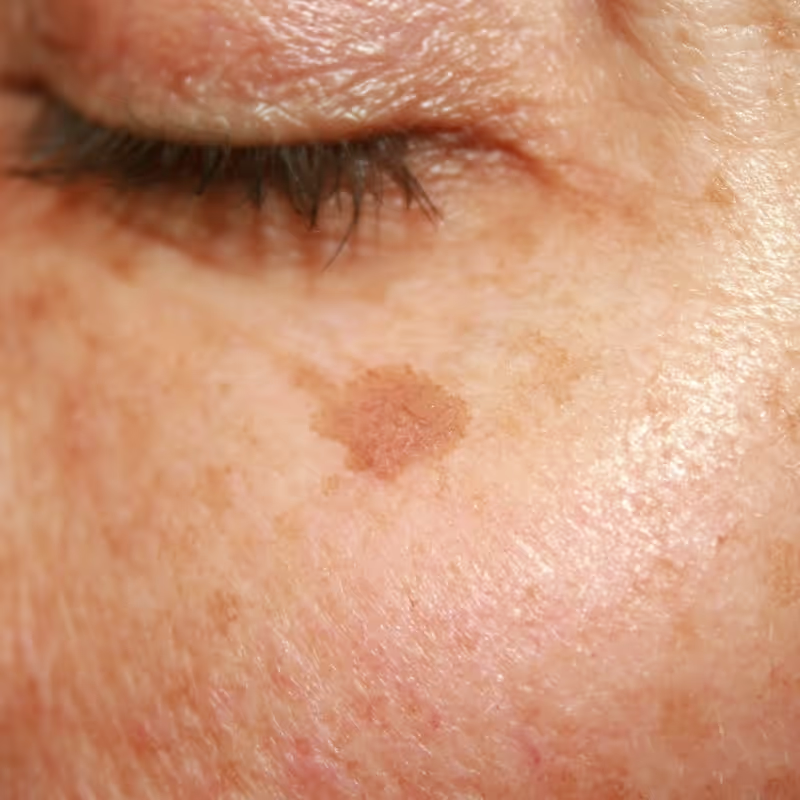
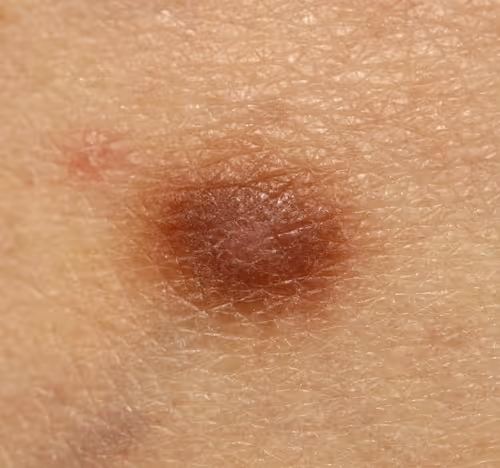
Most moles are benign (non-cancerous) and remain stable throughout a person's life. The visual features that distinguish a potentially cancerous mole from a benign one follow the ABCDE framework, which physicians use as a starting point for clinical assessment.
FeatureBenign MolePotentially Suspicious MoleAsymmetrySymmetrical; both halves matchOne half does not match the otherBorderSmooth, well-defined edgeIrregular, ragged, notched, or blurredColourSingle, uniform shade of brown or tanMultiple shades: brown, black, red, white, or blueDiameterUsually less than 6mm (pencil eraser)Greater than 6mm, or growingEvolutionStable over yearsChanging in size, shape, colour, or symptoms
Important caveat: Some melanomas do not follow these classic patterns. Nodular melanoma, for example, can grow quickly as a raised pink or red bump without the typical pigmentation changes. Amelanotic melanoma lacks dark colour entirely. This is why a physician's assessment, including dermoscopy, is more reliable than appearance alone.
Common mistake: Patients often assume a mole is safe because it has been present for years. Long-standing moles can still undergo malignant change, particularly in older adults or those with cumulative sun damage.
How Long Does a Typical Mole Examination Take?
A focused mole examination for one or two lesions typically takes 15 to 20 minutes. A more thorough multi-mole assessment or full-body skin check takes 30 to 45 minutes.
The appointment time breaks down roughly as follows:
Medical history and symptom review: 5 to 10 minutes
Visual and dermoscopic examination: 5 to 15 minutes (depending on number of lesions)
Discussion of findings and next steps: 5 to 10 minutes
If the physician recommends a biopsy or removal during the same visit, additional time is required for the procedure, local anesthetic, and wound care instructions. Same-day procedures at minor surgery clinics can add 20 to 45 minutes to the appointment.
Average wait time for mole screening in Toronto clinics: Private no-referral clinics in Toronto generally offer appointments within a few days to two weeks. OHIP-covered dermatology referrals can take several months for non-urgent cases. For patients with a rapidly changing or bleeding mole, private access is significantly faster.
Can a Mole Be Removed the Same Day as the Check?
Same-day mole removal is possible at some minor surgery clinics, but it depends on the physician's assessment findings, the type of mole, and the clinic's setup.
The Minor Surgery Center states that same-day or fast removal may be available depending on the mole and clinical findings, and that the clinic treats both benign and malignant skin lesions with the option of surgery on the same day as consultation [1].
When same-day removal is appropriate:
The mole is clinically suspicious and the physician recommends prompt excision
The mole is benign but the patient wants it removed for comfort or cosmetic reasons
The clinic has the surgical setup and time available during the appointment
The patient is medically suitable for local anesthetic and minor surgery
When same-day removal is not appropriate:
Further imaging or specialist consultation is needed before a decision
The lesion's location or size requires a more complex surgical plan
The patient needs time to consider options
Suspicious lesions removed during the appointment can be sent to a pathology laboratory for analysis. This is an important step: excision alone is not a diagnosis. Pathology confirms whether the tissue is benign, dysplastic, or malignant, and whether surgical margins are clear.
For more on what the removal process involves, see the mole removal clinic guide for detailed information on techniques, recovery, and what to expect.
What Medical Credentials Should a Mole Check Professional Have?
Not all mole checks are equal. The qualifications of the person performing the assessment directly affect the reliability of the result.
Appropriate credentials for a clinical mole check:
MD (Medical Doctor): A licensed physician can perform a clinical mole assessment, order a biopsy, and recommend treatment.
FRCSC (Fellow of the Royal College of Surgeons of Canada): Indicates board certification in a surgical specialty such as plastic surgery or general surgery. Surgeons with this credential can perform excision and biopsy.
Dermatologist (MD with dermatology specialty training): The highest level of skin-specific expertise, appropriate for complex or widespread skin conditions.
GP with dermatology training: A general practitioner with additional training in dermoscopy and skin lesion assessment can perform competent mole checks.
What to avoid:
Aestheticians or beauty therapists performing mole assessments (they are not licensed to diagnose)
Clinics that offer mole removal without a prior clinical assessment
Any provider who cannot send a suspicious lesion to pathology
The Minor Surgery Center's physicians include board-certified plastic and reconstructive surgeons with FRCSC credentials, providing a high level of clinical competence for both assessment and surgical management [1][2].
Tip: When booking, ask whether the assessment will be performed by a physician and whether biopsy or excision can be arranged at the same clinic if needed.
Common Mistakes People Make When Monitoring Skin Moles
Monitoring moles at home is valuable, but several common errors reduce its effectiveness and can delay necessary care.
Mistake 1: Only checking moles you can easily see. Melanoma frequently develops in areas that are difficult to self-examine: the scalp, back, back of the legs, between the toes, and under the nails. A full-body check requires a mirror, good lighting, and sometimes a second person's help.
Mistake 2: Relying on memory instead of photos. Human memory is unreliable for subtle changes in size or colour. Photographing moles with a ruler or coin for scale, and dating the photos, makes comparison much more accurate.
Mistake 3: Assuming a stable mole is safe indefinitely. A mole that has been unchanged for years can still undergo malignant transformation. Annual checks are appropriate for higher-risk individuals even when nothing appears to have changed.
Mistake 4: Dismissing symptoms because the mole "doesn't look that bad." Itching, bleeding, or crusting are symptoms that warrant assessment regardless of how the mole looks visually. Symptom-based warning signs are as important as appearance-based ones.
Mistake 5: Waiting too long because of referral barriers. Many patients delay assessment because they assume they need a family doctor's referral first. As this page explains, that is not the case for private mole checks in Toronto.
Mistake 6: Attempting home removal. Cutting, burning, or applying caustic substances to a mole at home destroys the tissue needed for pathological analysis and can cause scarring, infection, or incomplete removal of a potentially malignant lesion.
Where Can You Get a Mole Checked Quickly in Toronto Without a Referral?
Several clinics in Toronto and the GTA offer private mole checks without requiring a referral. Here is an overview of the main options:
The Minor Surgery Center Multiple locations across Toronto, Mississauga, Vaughan, and Oakville. Physician-led assessments with biopsy and same-day removal options. No referral required [1][9]. For a full comparison of providers, the best mole check clinics in Toronto guide is a useful resource.
MolePatrol Offers full-body mole mapping and skin screening with high-resolution imaging and dermatologist-supported assessments. No referral required [3].
Palmerston Mole Scan Clinic Uses the FotoFinder ATBM Master system for advanced skin imaging. A referral from a GP is recommended but not required [4].
The Centre for Minor Surgery Mole removal performed by Royal College-certified plastic surgeons without a referral requirement, with an emphasis on minimal scarring [2].
Toronto Dermatology Centre Offers mole examination and removal. Professional assessment is emphasized, with caution against non-medical removal approaches [5].
Walk-in clinics: Some walk-in clinics in Toronto can perform a basic mole assessment and initiate an OHIP referral to dermatology if needed. However, wait times for the dermatology appointment itself may still be several months, and walk-in assessments may not include dermoscopy.
Choosing between providers:
Choose a minor surgery clinic if you want assessment plus the option for same-day biopsy or removal.
Choose a mole mapping clinic if you want full-body baseline imaging for ongoing monitoring.
Choose a walk-in clinic if cost is the primary concern and you are willing to wait for a specialist referral.
Why Choose The Minor Surgery Center for a No-Referral Mole Check in Toronto?
The Minor Surgery Center offers a direct-access pathway that addresses the most common barriers patients face when trying to get a mole assessed quickly.
Key advantages:
No referral required: Book directly without a family doctor or walk-in visit first
Multiple GTA locations: Toronto, Mississauga, Vaughan, and Oakville, with additional locations in surrounding communities
Physician-led assessment: Board-certified surgeons perform the examination
Integrated biopsy and removal: If the physician recommends a biopsy or excision, it can often be arranged at the same clinic without additional referrals
Pathology pathway: Suspicious lesions can be sent to a laboratory for analysis
Rapid access: Appointments typically available within days, not months
Experience with both benign and malignant lesions: The clinic treats a full range of skin lesions, from cosmetic moles to confirmed skin cancers
The clinic's approach means that a patient who books a mole check without referral in Toronto can, in a single visit, receive a physician assessment, a dermoscopic evaluation, and, if appropriate, same-day removal with pathology follow-up. That is a meaningfully different experience from the multi-step referral pathway.
Frequently Asked Questions
Can I get a mole checked without a referral in Toronto? Yes. Private clinics such as The Minor Surgery Center allow patients to book a mole check directly without a referral from a family doctor or walk-in clinic. You pay privately for the assessment, but access is significantly faster than the OHIP referral pathway.
Do I need a family doctor to check a mole? No. While a family doctor can initiate an OHIP-covered referral to a dermatologist, you do not need one to access a private mole check. Many Toronto residents without a family doctor use private clinics for this reason.
Do I need a dermatologist referral for a mole check? Not for a private assessment. OHIP-covered dermatology visits typically require a referral, but private clinics offer direct booking without one.
Is a private mole check covered by OHIP? Routine preventive mole checks and cosmetic mole mapping are generally not covered by OHIP. A medically necessary assessment, biopsy, or excision may qualify for coverage depending on the physician's clinical determination. Confirm with the clinic before booking.
Where can I get a mole checked quickly in Toronto? The Minor Surgery Center, MolePatrol, and Palmerston Mole Scan Clinic all offer no-referral mole checks in Toronto with relatively fast appointment access. Private clinics typically offer appointments within days to two weeks.
Can a walk-in clinic check a mole? Yes, a walk-in clinic physician can perform a basic mole assessment and initiate a referral to a dermatologist if needed. However, walk-in clinics may not have dermoscopy equipment, and dermatology wait times remain long even after a referral is issued.
What happens if my mole looks suspicious? The physician will explain the findings and recommend the appropriate next step: monitoring with a follow-up appointment, a biopsy to sample the tissue, full excision, or referral to a dermatologist or oncologist. A suspicious mole does not automatically mean cancer, but it does mean the lesion needs further evaluation.
Can a mole be biopsied without a dermatologist? Yes. A licensed physician, including a GP with appropriate training or a board-certified surgeon, can perform a mole biopsy. The tissue is then sent to a pathology laboratory for analysis. A dermatologist is not required for the biopsy itself, though complex cases may benefit from specialist involvement.
Can a mole be removed the same day as the check? In some cases, yes. Minor surgery clinics that offer integrated assessment and removal can perform same-day excision if the physician determines it is appropriate and the clinic has the capacity. Not every mole should be removed immediately; the physician's recommendation guides the decision.
How fast should I get a changing mole checked? A mole that has changed noticeably in size, colour, or shape within a few weeks should be assessed within days to a few weeks, not months. A mole that is bleeding, crusting, or causing symptoms warrants prompt attention.
Is a bleeding mole urgent? A mole that bleeds without injury is a warning sign that requires prompt medical assessment. It does not guarantee cancer, but it is a clinical red flag that should not be dismissed or monitored at home. Book an appointment as soon as possible.
What does a suspicious mole look like? Suspicious moles typically show one or more of the ABCDE features: asymmetry, irregular or poorly defined borders, multiple colours within one lesion, a diameter greater than 6mm, or visible change over time. Some dangerous lesions, however, do not follow these patterns, which is why physician assessment is more reliable than visual self-diagnosis alone.
Should I choose a dermatologist or a minor surgery clinic? Choose a minor surgery clinic if you need fast access, want assessment and potential same-day removal in one visit, or do not have a referral. Choose a dermatologist for complex, widespread, or recurring skin conditions, or when a minor surgery clinic recommends specialist follow-up after assessment.
What is the difference between a mole check and mole removal? A mole check is a clinical assessment to determine whether a mole is benign, suspicious, or requires treatment. Mole removal is a procedure that physically excises or destroys the lesion. Assessment comes first; removal follows only if the physician recommends it.
Can I book directly with The Minor Surgery Center? Yes. The Minor Surgery Center accepts direct bookings without a referral. Patients can contact the clinic to schedule a mole check appointment at any of their Toronto, Mississauga, Vaughan, or Oakville locations.
Conclusion
A changing, bleeding, or unusual mole should not have to wait months for attention simply because of referral barriers. In Toronto, a mole check without referral is accessible through private clinics that offer physician-led assessment, dermoscopic examination, and a clear pathway to biopsy or removal when needed.
Actionable next steps:
Perform a basic self-check at home using the ABCDE criteria and photograph any mole that concerns you.
If you notice any warning signs (change in size, colour, border, bleeding, itching, or a new mole in adulthood), book a private mole check without waiting for a family doctor appointment.
Choose a physician-led clinic that offers dermoscopy and has the capacity to biopsy or remove a lesion if the assessment warrants it.
Ask about pricing and OHIP eligibility before your appointment so there are no surprises.
If the assessment is reassuring, establish a monitoring schedule based on your risk level, typically annually for higher-risk individuals.
For patients across the GTA, The Minor Surgery Center provides rapid-access, no-referral mole checks at multiple locations. For a broader view of available providers, the best mole check clinics in Toronto guide and the skin cancer screening clinic page are useful starting points.
Early assessment is the single most effective action a person can take when a mole raises concern. The referral system should not be the reason that action is delayed.
Promote healthy skin and limit the spread of disease through targeted removal procedures.
Book a Free Consultation
You can book your free consultation with The Minor Surgery Center in three easy ways: online through Cortico, by phone, or by requesting a callback from our team.
The initial consultation is free. During this consultation, one of our board certified surgeons will examine your condition and recommend a suitable solution.
Directly Online
Request a Callback
By Phone
By Text
Hours
Sunday
Closed
Monday
9 am — 4 pm
Tuesday
9 am — 4 pm
Wednesday
9 am — 4 pm
Thursday
9 am — 4 pm
Friday
9 am — 4 pm
Saturday
Toronto & Oakville Open Vaughan & Mississauga Closed




%20Treatment.avif)