Carpal Tunnel Surgery Oakville: Treatment, Recovery & OHIP Coverage
Carpal tunnel surgery Oakville patients can access open carpal tunnel release at clinics like The Minor Surgery Center's Oakville location on Hospital Gate, and the procedure is covered by OHIP when medically necessary.[1][6] Surgery is typically considered after 6-8 weeks (and often 3-6 months) of conservative treatment fails, or immediately if there's thenar muscle wasting or constant numbness.[2][7][10] Most patients see symptom improvement in over 90% of cases, though recurrence is possible if underlying causes aren't managed.[2][7]
Key Takeaways
Open carpal tunnel release is the standard surgical technique offered in Oakville: a small wrist incision divides the carpal ligament to free the median nerve.[6]
OHIP covers medically necessary carpal tunnel surgery in Ontario, including at Oakville clinics like TMSC's Hospital Gate location.[1][6][9]
Conservative care first: most Oakville physiotherapy and chiropractic clinics recommend 6-8 weeks (up to 3-6 months) of splinting, activity changes, and nerve-gliding exercises before surgery for mild-moderate cases.[2][4][7][10]
Surgery works for most people: symptom improvement occurs in more than 90% of patients after release surgery, though total relief isn't guaranteed for everyone.[2]
Recurrence risk sits at an estimated 30-50% if biomechanical or ergonomic triggers aren't corrected afterward.[7]
Red flags that push toward faster surgical referral include constant numbness, night pain that never resolves, and visible thumb muscle wasting.[2][4][7][10]
Recovery allows light desk work within days to a couple of weeks for many patients, while manual labour needs longer.
TMSC Oakville at 3075 Hospital Gate, Unit 109, offers consultation and surgical treatment with board-certified plastic surgeons, often in the same visit.[1][9][12]
Carpal Tunnel Symptoms: How to Know It's Not Just a Tired Wrist
Carpal tunnel syndrome causes tingling, numbness, or burning in the thumb, index, middle, and part of the ring finger, usually worse at night or after repetitive hand use. It happens when the median nerve gets squeezed as it passes through the carpal tunnel in the wrist.
The symptoms usually build gradually rather than appearing overnight:
Tingling or "pins and needles" in the thumb, index, and middle fingers
Weak grip strength, dropping small objects like keys or a coffee cup
A dull ache running up the forearm
Clumsiness with fine motor tasks like buttoning a shirt or typing
Symptoms often flare with driving, holding a phone, or using a keyboard for long stretches. If left unaddressed, these carpal tunnel flare-ups tend to get more frequent over months, not less.
Common mistake: People often blame wrist symptoms on arthritis or a pinched neck nerve instead of the median nerve. If the tingling is limited to the thumb, index, and middle fingers rather than the whole hand, carpal tunnel is more likely than cervical radiculopathy or general tendonitis.
What Is Carpal Tunnel Surgery and How Does It Work
Carpal tunnel surgery, also called carpal tunnel release, is a procedure that cuts the transverse carpal ligament to relieve pressure on the median nerve. The standard technique used at Oakville-area clinics is open carpal tunnel release, involving a small incision at the base of the palm or wrist.[6]
Here's how the procedure generally works:
Local anesthesia numbs the wrist and palm area (most patients stay awake).
A roughly 2-inch incision is made at the wrist crease or palm.[6]
The surgeon divides the carpal ligament (the flexor retinaculum), which widens the tunnel space and takes pressure off the median nerve.[6]
The incision is closed with sutures, and a bandage or light splint is applied.
The whole procedure typically takes 15-30 minutes and is done as day surgery, meaning patients go home the same day.
Unlike endoscopic release (which uses a camera and smaller incisions), open release gives the surgeon a direct, full view of the nerve and ligament. It remains the most common approach used in general surgical and plastic surgery practices across Ontario, including for patients referred from Oakville, Burlington, and Milton.[6][12]
Quick example: A 52-year-old office worker in Oakville with six months of unresolved night numbness and a positive nerve conduction study might go from consultation to scheduled open release surgery within a few weeks, with the actual procedure done in under half an hour.
Surgery becomes necessary when conservative treatment fails after 6-8 weeks (sometimes up to 3-6 months) for mild-moderate cases, or sooner if there's nerve damage evidence like thenar muscle wasting or constant numbness.[2][4][7][10] It's rarely the first step.
Local Oakville-area clinics generally agree on the decision path:
SituationTypical Next StepMild symptoms, occasional tinglingSplinting, ergonomic changes, exercises[2][10]Moderate symptoms, 6-8+ weeks of no improvementPhysiotherapy escalation, possible nerve conduction study[7]Constant numbness or weaknessSurgical referral considered sooner[2][4][7]Visible thumb muscle wasting (thenar atrophy)Surgery generally recommended promptly[7]Severe CTS confirmed on nerve testingOpen or endoscopic release considered necessary[7]
Decision rule: Choose surgical referral if symptoms persist past 3-6 months of consistent conservative care, or immediately if there's constant (not just nighttime) numbness or visible muscle wasting at the base of the thumb.[7]
Edge case: Some patients with diabetes experience carpal tunnel symptoms that overlap with diabetic neuropathy, which can complicate the timeline for surgical decision-making. Reviewing carpal tunnel in diabetics with a specialist before assuming surgery is the answer helps rule out other nerve issues first.
What Happens If You Don't Get Carpal Tunnel Surgery
Without treatment, carpal tunnel syndrome can progress from occasional tingling to permanent nerve damage, muscle wasting at the base of the thumb, and irreversible loss of hand function. Many mild cases do improve with conservative care alone, so surgery isn't automatically the outcome of skipping treatment, but ignoring worsening symptoms is risky.[2][4][7]
What tends to happen if CTS goes untreated long-term:
Grip strength keeps declining, making tasks like opening jars or turning keys harder
Numbness becomes constant instead of only at night
Thenar muscle atrophy can develop, and this is often not fully reversible even after later surgery[7]
Some mild cases genuinely do resolve on their own, especially when triggered by temporary factors like pregnancy or short-term repetitive strain. For a closer look at which situations actually improve without intervention, see can carpal tunnel go away on its own.
Carpal Tunnel Surgery vs Non-Surgical Treatment
Non-surgical treatment (splinting, physiotherapy, ergonomic changes) is the first-line approach for most mild-to-moderate carpal tunnel cases in Oakville, while surgery is reserved for cases that don't respond or that involve confirmed nerve damage.[2][7][10] Neither option is universally "better", the right choice depends on severity and how long symptoms have lasted.
FactorNon-Surgical TreatmentSurgical TreatmentBest forMild-moderate CTS, early symptoms[7]Severe CTS, confirmed nerve compression[7]Typical duration6-8+ weeks trial[2][10]Single procedure, ~15-30 min[6]Short-term outcomesOften comparable or better for mild cases[7]Better for severe/long-standing cases[7]DowntimeNone to minimalDays to weeks depending on job typeRecurrence riskDepends on ergonomic correction30-50% if root causes unaddressed[7]
Non-surgical options commonly used in Oakville include:
Physiotherapy and occupational therapy techniques, detailed in this treatment guide
Sleep position changes, since certain positions worsen nighttime compression (sleeping positions guide)
"Physiotherapy often produces better short-term outcomes than surgery for many patients with mild-to-moderate carpal tunnel syndrome.", a framing used by Oakville-area physiotherapy providers when guiding treatment decisions.[7]
Carpal Tunnel Surgery for Mild Cases
Surgery is generally not recommended as a first step for mild carpal tunnel syndrome. Mild cases usually respond well to splinting, activity modification, and exercises within 6-8 weeks, and jumping straight to surgery isn't standard practice.[2][7][10]
Choose non-surgical treatment if:
Symptoms are intermittent (not constant)
There's no visible muscle wasting
Nerve conduction testing (if done) shows mild compression only
Symptoms started recently (under 3 months)
Choose surgical evaluation if:
Symptoms persist beyond 6-8 weeks of proper conservative care
Numbness is now constant rather than occasional
Grip strength is measurably declining
Carpal Tunnel Surgery in Oakville: What to Expect at TMSC
Carpal tunnel surgery Oakville patients can receive open carpal tunnel release at The Minor Surgery Center's Oakville clinic, located at 3075 Hospital Gate, Unit 109.[1][9] Board-certified plastic surgeons at this location provide consultation and, in many cases, treatment planning during the same visit.[1][9][12]
What the pathway typically looks like:
Referral or self-booking for an initial consultation
Assessment, sometimes including a nerve conduction study to confirm severity[2][10]
Discussion of conservative vs surgical options based on symptom duration and severity
Scheduling the open release procedure if surgery is appropriate
Day-surgery appointment, typically completed in under an hour including prep and recovery
Follow-up visit for suture removal and to check healing progress
The Oakville clinic generally operates 9 a.m. to 4 p.m., Monday through Saturday, which gives Halton-region patients more flexible scheduling than some downtown hospital-based clinics.[1][9][12] For a closer look at the physical clinic and location details, visit the TMSC Oakville clinic page.
Patients who've already had a carpal tunnel release elsewhere and are experiencing returning symptoms should also read about why carpal tunnel surgery symptoms can come back before assuming a repeat procedure is the only fix.
Best Carpal Tunnel Surgeon in Oakville: Choosing a Specialist
The best carpal tunnel surgeon for a given patient is one who is board-certified, has hand/wrist surgical experience, and can offer both consultation and treatment without long referral delays. Oakville patients have more than one specialist option within the same medical complex.
Key things to check when choosing a surgeon in Oakville:
Credentials: Board certification in plastic surgery or orthopedic surgery for hand and wrist procedures
OHIP billing: Confirm the surgeon bills OHIP directly for medically necessary carpal tunnel release[1][6]
Same-complex access: The Hospital Gate medical building in Oakville hosts multiple relevant specialists, including an orthopedic surgeon at Suite 203 who also treats hand and wrist conditions, alongside TMSC's plastic surgery team at Unit 109.[1][3]
Post-op support: Ask whether the clinic coordinates with physiotherapy for recovery, since this affects recurrence risk[7]
Patient reviews: Independent reviews give a sense of real patient experience and wait times
Decision rule: Choose a plastic surgery-based clinic like TMSC if scheduling flexibility and same-visit consultation matter most; consider the orthopedic surgeon route if the case involves more complex wrist pathology alongside carpal tunnel symptoms.[1][3]
Surgeon profiles worth reviewing before booking include Dr. Joyce Yau and Dr. Lily Xu, both part of TMSC's broader surgical team.
Carpal Tunnel Surgery Risks and Complications
Carpal tunnel surgery is generally safe, but like any procedure it carries some risk, including infection, scar tenderness, incomplete nerve release, and rare nerve injury.[7] Most complications are minor and manageable, but patients should understand them before consenting to surgery.
Common risks include:
Infection at the incision site (usually treatable with antibiotics if caught early)
Scar tenderness or sensitivity, especially with palm pressure for weeks after surgery
Incomplete release, where the ligament isn't fully divided and symptoms persist
Nerve injury, which is rare but can cause new numbness or weakness
Stiffness in the wrist or fingers during early recovery
Grip weakness that's temporary for most, but occasionally longer-lasting
Common mistake: Assuming any lingering tingling after surgery means the surgery "failed." Some numbness in the first weeks is normal nerve-healing behaviour, not necessarily a sign of incomplete release. If symptoms haven't improved at all by 3 months, that's when to raise concerns with the surgeon, this is covered in detail in why carpal tunnel surgery symptoms come back.
Combining surgery with structured post-op physiotherapy is one of the main ways Oakville clinics try to reduce stiffness, rebuild strength, and lower the chance of recurrence.[7]
Carpal Tunnel Surgery Recovery Time in Oakville
Recovery from open carpal tunnel release generally takes a few days for light activity, 1-2 weeks for suture healing, and up to 3 months for full grip strength and sensation to normalize. Recovery speed depends heavily on job type and how closely post-op instructions are followed.[5]
A general recovery timeline:
TimeframeWhat to ExpectDay 0-2Bandage on, rest hand, elevate to reduce swellingDay 3-7Light use of fingers, avoid heavy grippingWeek 1-2Sutures removed, light desk tasks often resumeWeek 2-6Gradual return to normal hand use, physiotherapy if neededMonth 2-3Grip strength and sensation continue improvingMonth 3-6Most patients report near-full recovery
Patients should follow their surgeon's specific post-operative instructions, which typically cover wound care, activity restrictions, and when to begin gentle exercises.[5]
How Long Before I Can Work After Carpal Tunnel Surgery
Desk-based workers can often return within a few days to two weeks, while manual labourers or tradespeople doing repetitive gripping may need 4-6 weeks or longer before full duty resumes. The type of work matters more than the calendar date after surgery.
Desk/computer jobs: Often back within 3-7 days, sometimes with modified typing habits at first
Light retail or service roles: Typically 1-2 weeks
Manual labour, construction, or repetitive gripping jobs: Often 4-6 weeks, sometimes longer depending on job demands
Musicians and tradespeople using fine motor precision: May need a phased return with hand therapy input, similar to guidance found in carpal tunnel in musicians
Quick example: A Milton warehouse worker who lifts boxes daily will likely need a longer graduated return-to-work plan than an Oakville accountant who mostly types, even though both had the identical procedure.
How Much Does Carpal Tunnel Surgery Cost in Oakville (OHIP Coverage)
Medically necessary carpal tunnel surgery is covered by OHIP in Ontario, including at Oakville clinics, meaning eligible patients with a valid Ontario health card generally don't pay out-of-pocket for the surgical procedure itself.[1][6][9] Costs can arise for non-covered extras like private consultation add-ons or specific splints, but the core surgery is publicly funded.
What's typically covered vs not:
Covered by OHIP: Consultation with a surgeon for a medically necessary case, the open carpal tunnel release procedure, standard follow-up visits[1][6]
Possibly not covered: Certain private brace/splint purchases, expedited private consultations outside OHIP-billing pathways, or cosmetic scar treatments unrelated to the medical procedure
Decision rule: Confirm with the clinic directly whether the specific surgeon and procedure code being billed is OHIP-covered before the appointment, since billing details can vary by provider and referral pathway. Mississauga Halton Healthline's regional directory lists carpal tunnel syndrome treatment as an OHIP-covered service at TMSC's Oakville location specifically.[1]
For general background on what other procedures and conditions look like from a cost and coverage standpoint at this clinic network, see the clinic locations page.
Can Carpal Tunnel Come Back After Surgery
Yes, carpal tunnel symptoms can return after surgery, with recurrence estimated at 30-50% when the underlying biomechanical or ergonomic causes aren't addressed after the procedure.[7] Recurrence doesn't mean the first surgery failed, it usually means contributing factors (posture, repetitive strain, workstation setup) weren't corrected.
Factors that raise recurrence risk:
No ergonomic changes after surgery (same repetitive strain returns)
Skipping post-op physiotherapy, which helps address root causes[7]
Underlying conditions like diabetes or arthritis that independently affect nerve health (carpal tunnel and arthritis)
Scar tissue adhesions limiting nerve gliding
Common mistake: Returning to the exact same repetitive tasks (same keyboard height, same tool grip) immediately after healing, without any ergonomic correction. This is one of the most preventable causes of recurrence.
Carpal Tunnel Surgery Success Rate
Research cited by Oakville-area physiotherapy providers shows symptom improvement in more than 90% of patients after carpal tunnel release surgery, though complete symptom resolution isn't universal and outcomes tend to be better when surgery isn't delayed too long.[2] Waiting years with severe, constant numbness reduces the odds of full nerve recovery compared to earlier intervention.
Is Carpal Tunnel Surgery Worth It
For patients with confirmed moderate-to-severe carpal tunnel syndrome that hasn't responded to conservative care, surgery is generally considered worth it given the high improvement rate and relatively quick procedure time.[2][7] For mild cases that haven't tried conservative treatment yet, surgery is usually premature and non-surgical care is the better first move.[2][7][10]
Choose surgery if: conservative treatment has been tried for 6-8+ weeks without improvement, or nerve damage signs (constant numbness, muscle wasting) are present.
Hold off on surgery if: symptoms are new, intermittent, and haven't had a fair trial of splinting and ergonomic changes yet.
Carpal Tunnel Surgery Alternatives in Oakville
Alternatives to surgery in Oakville include structured physiotherapy, wrist splinting, corticosteroid injections (in some cases), ergonomic redesign, and nerve-gliding exercise programs, and these are typically tried before surgery is considered for mild-to-moderate cases.[2][4][7][10]
Common alternative pathways used locally:
Physiotherapy-led programs: Some Oakville clinics position physiotherapy as the actual first-line treatment, not just a "wait and see" option, especially for mild-moderate severity.[7]
Chiropractic-based care: Clinics like Glen Abbey Chiropractic frame surgery as a last resort, used only when symptoms are severe or progressive despite conservative management.[4]
Splinting programs: Night splints reduce wrist flexion during sleep, addressing one of the biggest nighttime symptom triggers.
Exercise-based rehab: Structured routines like these 10 stretches for lasting relief target nerve mobility, not just symptom masking.
Occupational therapy and ergonomic tool changes: Adjusting workstation setup addresses the root repetitive-strain cause rather than just the symptom.
Edge case: Patients with a physically demanding job that can't easily be modified (e.g., a hairdresser or tradesperson) may find conservative care less effective long-term, since the repetitive strain trigger can't be fully removed, surgery may become the more practical option sooner in these cases.
Why Choose TMSC Oakville for Carpal Tunnel Surgery
TMSC's Oakville clinic combines OHIP-covered surgical treatment, board-certified plastic surgeons, and flexible scheduling in one Halton-region location, which reduces the need to travel into Toronto or Mississauga for hand surgery.[1][9][12]
Reasons Oakville and Halton patients choose this clinic:
Local access: Located at 3075 Hospital Gate, Unit 109, inside a medical complex with other specialists nearby[1][3]
OHIP billing: Carpal tunnel syndrome treatment is listed among OHIP-covered procedures at this location[1]
Same-visit potential: Consultation and treatment planning can often happen in one appointment[1][9]
Extended hours: Generally open 9 a.m.-4 p.m., Monday through Saturday, which helps working patients avoid taking excessive time off[1][9][12]
Broader network: Part of a larger clinic group with locations across the GTA, including Vaughan and Whitby, useful for patients who split time between regions
Patients considering the clinic can review independent patient reviews before booking.
Areas Served: Oakville, Burlington, Milton & Halton
TMSC's Oakville location primarily serves patients across the Halton region, including Oakville, Burlington, Milton, and surrounding communities, giving residents a closer surgical option than downtown Toronto clinics.
Oakville: Home base at 3075 Hospital Gate, Unit 109[1][9]
Burlington: Short drive via the QEW, popular for patients who'd otherwise travel further east
Milton: Growing population with increasing demand for local specialist access
Halton region broadly: Includes smaller communities that historically relied on Mississauga or Toronto for hand surgery referrals
Patients from nearby Mississauga can also review the Erin Mills minor surgery guide if comparing regional options, and those closer to Toronto may find the downtown Oakville or York Mills clinics more convenient depending on commute.
FAQ
Is carpal tunnel surgery painful? Most patients report mild-to-moderate discomfort managed with over-the-counter pain relief, not severe pain, since local anesthesia is used during the procedure and healing discomfort tapers over the first week or two.
How long does the surgery itself take? The open carpal tunnel release procedure typically takes 15-30 minutes, done as day surgery with the patient going home the same day.[6]
Do I need a referral to get carpal tunnel surgery in Oakville? It depends on the clinic; some allow direct booking for consultation, while others may require a physician referral, so it's worth confirming with the specific clinic before assuming a referral is mandatory.
Will OHIP cover my consultation as well as the surgery? Medically necessary consultations and the surgical procedure are generally covered by OHIP for eligible Ontario health card holders, as listed for TMSC's Oakville location.[1][6]
What's the difference between open and endoscopic carpal tunnel release? Open release uses a small direct incision and full visualization of the nerve and ligament, while endoscopic release uses a camera and smaller incisions; open release remains the standard technique at many Ontario clinics, including in Oakville.[6]
Can physiotherapy alone fix carpal tunnel syndrome without surgery? For many mild-to-moderate cases, yes, physiotherapy can produce comparable or better short-term outcomes than surgery, which is why it's usually tried first.[7]
What if my carpal tunnel symptoms come back years after surgery? Returning symptoms years later usually point to new repetitive strain or an unaddressed ergonomic issue rather than a failed original surgery; a fresh assessment is recommended. Read more in why carpal tunnel surgery symptoms come back.
Is carpal tunnel syndrome the same as tendonitis or arthritis? No, carpal tunnel involves median nerve compression, while tendonitis and arthritis involve tendon inflammation or joint degeneration; symptoms can overlap, so proper diagnosis matters. See this comparison guide.
How soon can I drive after carpal tunnel surgery? Most patients avoid driving for at least a few days to a week, depending on which hand was operated on and how comfortable grip strength feels; always confirm with the surgeon before resuming driving.
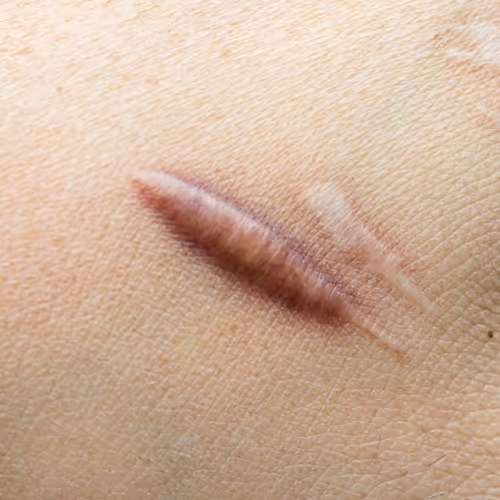
Does carpal tunnel surgery leave a visible scar? There's typically a small scar at the wrist or palm crease from the incision, which usually fades and becomes less noticeable over several months.
Book Your Carpal Tunnel Consultation in Oakville
Persistent hand numbness, night tingling, or a weakening grip are signs worth getting checked rather than waiting out. A consultation at TMSC's Oakville clinic can confirm whether conservative treatment, surgery, or a combination is the right next step, and if surgery is needed, it may be arranged through the OHIP-covered pathway without unnecessary delay.[1][6][9] Visit the TMSC Oakville clinic page to book a consultation and get an individualized assessment.
Conclusion
Carpal tunnel surgery Oakville patients need doesn't have to mean a long wait or a trip into Toronto. Open carpal tunnel release is available locally, OHIP covers medically necessary cases, and most patients see real improvement after the procedure.[1][2][6] The smarter first move for mild-to-moderate symptoms is usually conservative care, splinting, physiotherapy, ergonomic changes, given for 6-8 weeks or so, and surgery becomes the right call when symptoms persist, worsen, or come with red flags like constant numbness or muscle wasting.[2][4][7][10]
Next steps:
Track symptoms for 2-4 weeks (when they happen, what triggers them)
Try basic conservative measures (night splint, ergonomic check) if symptoms are mild
Book a consultation if symptoms persist past 6-8 weeks or include red flags
Ask directly about OHIP coverage and the open release procedure at the Oakville clinic
Follow post-op physiotherapy guidance closely to lower recurrence risk
Promote healthy skin and limit the spread of disease through targeted removal procedures.
Book a Free Consultation
You can book your free consultation with The Minor Surgery Center in three easy ways: online through Cortico, by phone, or by requesting a callback from our team.
The initial consultation is free. During this consultation, one of our board certified surgeons will examine your condition and recommend a suitable solution.
Directly Online
Request a Callback
By Phone
By Text
Hours
Sunday
Closed
Monday
9 am — 4 pm
Tuesday
9 am — 4 pm
Wednesday
9 am — 4 pm
Thursday
9 am — 4 pm
Friday
9 am — 4 pm
Saturday
Toronto & Oakville Open Vaughan & Mississauga Closed




%20Treatment.avif)