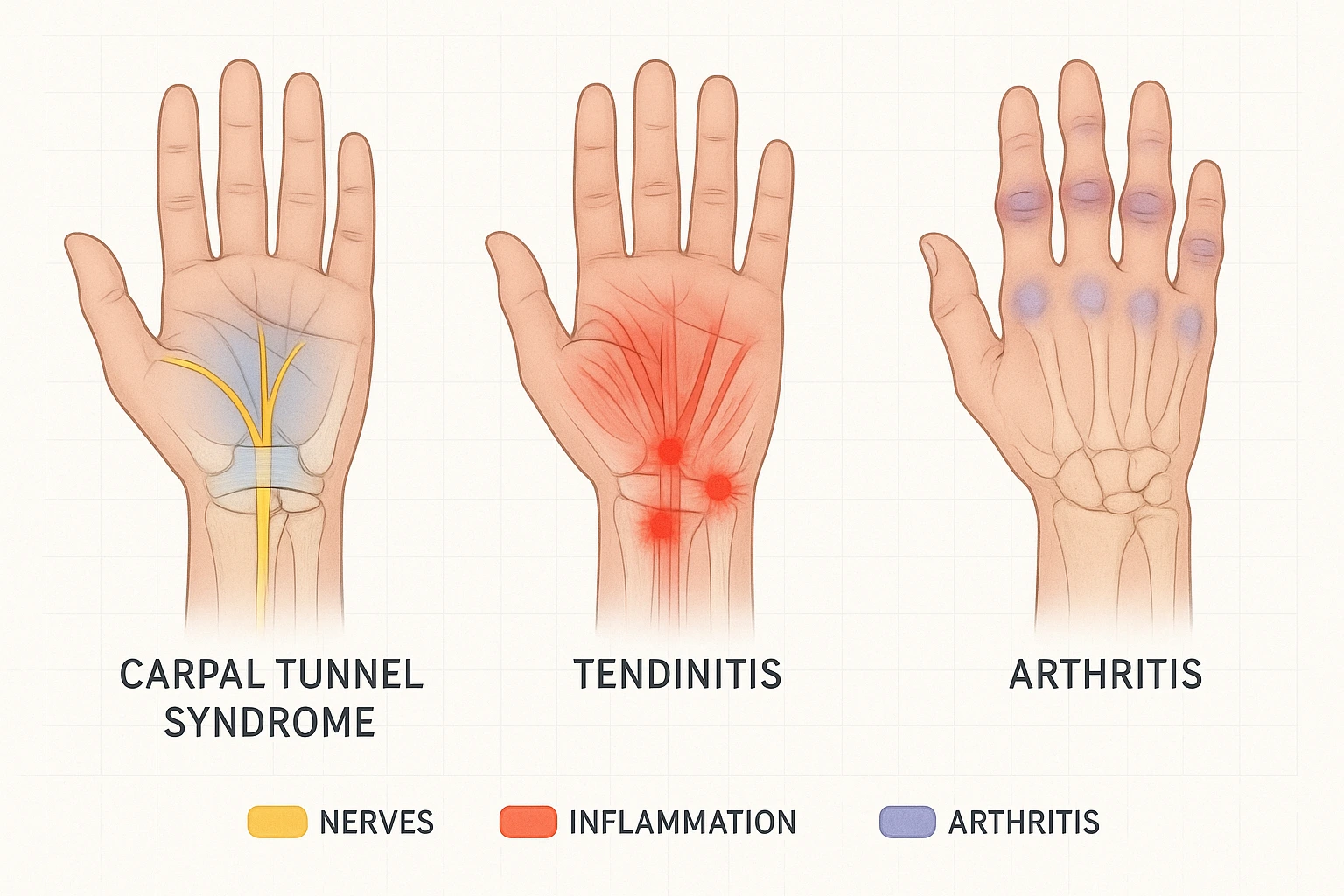
Carpal Tunnel vs Tendonitis vs Arthritis: How to Decode Hand and Wrist Pain
Every day, millions of people experience nagging pain, stiffness, or tingling in their hands and wrists—yet many struggle to identify the root cause. Is that persistent numbness in your fingers a sign of carpal tunnel syndrome? Could the sharp pain when gripping objects indicate tendonitis? Or is the morning stiffness pointing toward arthritis? Understanding Carpal Tunnel vs Tendonitis vs Arthritis: How to Decode Hand and Wrist Pain can mean the difference between effective treatment and months of unnecessary discomfort. These three common conditions share overlapping symptoms but require distinctly different approaches to management and care.
The challenge lies in their similarities: all three can cause wrist pain, reduced grip strength, and limited mobility. However, each condition has unique characteristics that, once understood, make diagnosis much clearer. This comprehensive guide will help decode the mystery of hand and wrist pain by examining the specific symptoms, causes, and treatment options for each condition.
Key Takeaways
Carpal tunnel syndrome causes numbness and tingling specifically in the thumb, index, and middle fingers due to median nerve compression, with symptoms often worsening at night
Tendonitis produces localized pain and swelling around inflamed tendons that intensifies during specific movements like gripping or lifting
Arthritis presents with constant joint pain and stiffness that's typically worst in the morning and may cause visible swelling or deformities
Accurate diagnosis requires understanding the distinct symptom patterns of each condition, including pain location, timing, and associated sensations
Treatment approaches vary significantly between conditions, making proper identification essential for effective relief
Understanding the Anatomy: Where Hand and Wrist Pain Originates
Before diving into Carpal Tunnel vs Tendonitis vs Arthritis: How to Decode Hand and Wrist Pain, it's essential to understand the basic anatomy of the hand and wrist. This complex structure contains 27 bones, numerous joints, multiple tendons, ligaments, and three major nerves that work together to provide the remarkable dexterity humans rely on daily.
The Carpal Tunnel Structure
The carpal tunnel is a narrow passageway on the palm side of the wrist, formed by small bones called carpals and a thick ligament called the transverse carpal ligament. Through this confined space runs the median nerve—the nerve responsible for sensation in the thumb, index finger, middle finger, and half of the ring finger. When this tunnel becomes narrowed or the tissues inside swell, the median nerve gets compressed, leading to carpal tunnel syndrome.
Tendons and Their Function
Tendons are strong, fibrous cords that connect muscles to bones, enabling movement. In the wrist and hand, tendons run through protective sheaths and allow for the intricate movements of fingers and wrists. When these tendons become inflamed—whether from overuse, injury, or repetitive motion—the condition is called tendonitis (also spelled tendinitis).
Joint Structures and Cartilage
Joints are the meeting points between bones, cushioned by smooth cartilage that allows for friction-free movement. Arthritis occurs when this cartilage breaks down or when the immune system mistakenly attacks the joint lining. The wrist contains multiple small joints, and the fingers have three joints each (except the thumb, which has two), all of which can be affected by various forms of arthritis.
Understanding these anatomical differences helps explain why carpal tunnel syndrome, tendonitis, and arthritis produce such distinct symptom patterns despite affecting the same general area.
Carpal Tunnel Syndrome: Nerve Compression at Its Core
Carpal tunnel syndrome (CTS) is one of the most common nerve compression disorders, affecting approximately 3-6% of adults. The condition occurs when the median nerve becomes squeezed or compressed as it travels through the carpal tunnel in the wrist.
Characteristic Symptoms of Carpal Tunnel
The hallmark symptoms of CTS are distinctly neurological in nature:
Numbness and tingling specifically in the thumb, index, middle, and half of the ring finger (the areas served by the median nerve)
"Pins-and-needles" sensation that often worsens at night and may wake you from sleep
Weakness in grip strength, making it difficult to hold objects or perform fine motor tasks
Pain that radiates from the wrist up the forearm, occasionally reaching the shoulder
Symptoms that improve with shaking or moving the hand and wrist
A key distinguishing feature: CTS symptoms typically intensify during the night because many people sleep with bent wrists, which increases pressure on the median nerve. Many patients report being awakened by numbness or the need to "shake out" their hands to restore sensation.
Common Causes and Risk Factors
Several factors can contribute to the development of carpal tunnel syndrome:
Repetitive hand movements, particularly those involving flexion and extension of the wrist
Anatomical factors such as a naturally smaller carpal tunnel
Health conditions including diabetes, thyroid disorders, and rheumatoid arthritis
Pregnancy, due to fluid retention that increases pressure in the carpal tunnel
Wrist injuries or fractures that alter the space within the tunnel
Healthcare providers use several methods to diagnose CTS:
Tinel's test: Tapping over the median nerve at the wrist to see if it produces tingling in the fingers
Phalen's test: Holding the wrists in a flexed position to see if symptoms develop within 60 seconds
Nerve conduction studies: Measuring how quickly electrical signals travel through the median nerve
Electromyography (EMG): Testing the electrical activity of muscles controlled by the median nerve
Tendonitis: Inflammation of the Connective Tissues
Tendonitis in the wrist and hand involves inflammation of the tendons—the tough, rope-like structures that connect muscles to bones. Unlike carpal tunnel syndrome, which is a nerve problem, tendonitis is primarily an inflammatory condition affecting the connective tissues.
Identifying Tendonitis Symptoms
Tendonitis presents with distinct characteristics that differentiate it from nerve compression:
Localized pain concentrated around the affected tendon, often on the thumb side of the wrist or along the forearm
Swelling and tenderness directly over the inflamed tendon
Pain that worsens with specific movements, particularly gripping, lifting, or twisting motions
Grinding or popping sensations (crepitus) when moving the affected area
Stiffness that may improve with gentle movement and warmth
No numbness or tingling—a key difference from carpal tunnel syndrome
The most common type of wrist tendonitis is De Quervain's tenosynovitis, which affects the tendons on the thumb side of the wrist. This condition causes pain when making a fist, grasping objects, or turning the wrist.
What Triggers Tendonitis?
Tendonitis typically develops from:
Repetitive motions that strain the same tendon repeatedly
Sudden increase in physical activity or intensity
Poor ergonomics during work or sports activities
Direct trauma or injury to the tendon
Age-related changes that make tendons less flexible
Certain sports like tennis, golf, or baseball that involve repetitive wrist movements
Distinguishing Features from Carpal Tunnel
When comparing tendonitis to carpal tunnel syndrome, several key differences emerge:
FeatureCarpal TunnelTendonitisPrimary symptomNumbness, tinglingPain, tendernessLocationThumb, index, middle fingersAlong specific tendon pathsNight symptomsOften worse at nightVariable, may improve with restSensation changesYes (numbness)NoMovement impactMay improve with movementWorsens with specific movementsSwelling locationInternal (carpal tunnel)External (visible over tendon)
Understanding these distinctions is crucial when evaluating Carpal Tunnel vs Tendonitis vs Arthritis: How to Decode Hand and Wrist Pain in your own experience.
Arthritis: Joint Inflammation and Degeneration
Arthritis is not a single disease but rather a term encompassing over 100 different conditions that cause joint inflammation, pain, and stiffness. The two most common types affecting the hands and wrists are osteoarthritis (OA) and rheumatoid arthritis (RA).
Osteoarthritis vs. Rheumatoid Arthritis
Osteoarthritis is a degenerative condition where the protective cartilage cushioning the joints gradually wears away, typically due to age, overuse, or previous injury. It usually develops slowly over many years and most commonly affects the:
Base of the thumb (carpometacarpal joint)
Finger joints closest to the fingernails (distal interphalangeal joints)
Rheumatoid arthritis is an autoimmune disease where the body's immune system mistakenly attacks the joint lining (synovium), causing inflammation, pain, and eventual joint damage. RA typically affects joints symmetrically (both hands equally) and often involves:
Wrist joints
Knuckles (metacarpophalangeal joints)
Middle finger joints
Multiple joints simultaneously
Those experiencing symptoms related to hand conditions may find valuable information in the blog section covering various musculoskeletal conditions.
Recognizing Arthritis Symptoms
Arthritis presents with characteristic features that distinguish it from nerve or tendon problems:
Constant, aching pain in the affected joints, present even at rest
Morning stiffness lasting 30 minutes or longer, gradually improving with movement
Visible swelling around the joints, sometimes with redness and warmth
Joint deformities in advanced cases, such as nodules or bent fingers
Reduced range of motion and difficulty with fine motor tasks
Grinding or crackling sensation (crepitus) when moving affected joints
Symmetrical symptoms (especially with RA), affecting both hands equally
A critical distinction: while carpal tunnel syndrome causes numbness and tingling, arthritis causes pain and stiffness without neurological symptoms. Additionally, arthritis pain typically affects multiple joints throughout the hand, whereas carpal tunnel follows the specific pathway of the median nerve.
Risk Factors for Hand and Wrist Arthritis
Several factors increase the likelihood of developing arthritis:
Age: Risk increases significantly after age 50 for osteoarthritis
Gender: Women are more likely to develop both OA and RA
Family history: Genetic predisposition plays a role in both types
Previous injuries: Joint trauma can lead to post-traumatic arthritis
Obesity: Extra weight increases stress on joints
Occupational factors: Jobs requiring repetitive hand movements or heavy gripping
Autoimmune conditions: Increase risk of rheumatoid arthritis
For comprehensive information about various conditions that can affect the hands, exploring resources about different types of cysts can provide additional context for hand-related concerns.
Carpal Tunnel vs Tendonitis vs Arthritis: Key Diagnostic Differences
Understanding Carpal Tunnel vs Tendonitis vs Arthritis: How to Decode Hand and Wrist Pain requires recognizing the specific diagnostic markers that distinguish these conditions. While all three can cause wrist pain and functional limitations, their unique characteristics make accurate identification possible.
Pain Pattern and Location
Carpal tunnel syndrome produces pain that:
Follows the median nerve pathway (thumb, index, middle, and half of ring finger)
Often radiates up the forearm
May be accompanied by electric shock-like sensations
Typically spares the little finger
Tendonitis causes pain that:
Localizes to the specific inflamed tendon
Concentrates on one side of the wrist (often the thumb side)
Follows the tendon's path along the forearm
Intensifies with tendon movement
Arthritis produces pain that:
Affects multiple joints throughout the hand and wrist
Involves the joint spaces specifically
May be symmetrical (both hands equally affected)
Spreads across broader areas rather than following nerve or tendon paths
Timing of Symptoms
The time of day when symptoms are worst provides crucial diagnostic clues:
Carpal tunnel: Typically worse at night and upon waking, often disrupting sleep
Tendonitis: Worse during and immediately after activities that stress the affected tendon
Arthritis: Worst in the morning with significant stiffness, gradually improving throughout the day
Neurological vs. Inflammatory Symptoms
This distinction is perhaps the most important when decoding hand and wrist pain:
Neurological symptoms (indicating carpal tunnel):
✓ Numbness
✓ Tingling or "pins and needles"
✓ Electrical sensations
✓ Weakness without visible swelling
✓ Loss of coordination
Inflammatory symptoms (indicating tendonitis or arthritis):
✓ Visible swelling
✓ Warmth over affected area
✓ Redness
✓ Tenderness to touch
✓ Pain without numbness
Response to Movement and Rest
How symptoms respond to activity provides additional diagnostic information:
ConditionResponse to ActivityResponse to RestCarpal TunnelMay worsen with repetitive wrist flexion; improves with shaking handsWorsens during rest, especially at nightTendonitisSignificantly worsens with specific movementsImproves with rest and immobilizationArthritisStiffness improves with gentle movement; pain may increase with overuseStiffness worsens with prolonged rest
Physical Examination Findings
Healthcare providers look for specific physical signs:
For carpal tunnel:
Positive Tinel's sign (tingling when tapping over median nerve)
Positive Phalen's test (symptoms with wrist flexion)
Thenar muscle atrophy (wasting of thumb muscle) in advanced cases
Decreased sensation in median nerve distribution
For tendonitis:
Tenderness directly over the affected tendon
Pain with resisted movement
Positive Finkelstein test (for De Quervain's tenosynovitis)
Visible swelling along tendon path
Crepitus (grinding sensation) with movement
For arthritis:
Joint swelling and warmth
Bony enlargements (Heberden's or Bouchard's nodes)
Reduced range of motion
Joint deformities in advanced cases
Crepitus within the joint itself
Understanding these diagnostic differences is essential for anyone trying to decode their hand and wrist pain and seeking appropriate treatment.
Conditions Often Misdiagnosed as Carpal Tunnel Syndrome
One of the challenges in understanding Carpal Tunnel vs Tendonitis vs Arthritis: How to Decode Hand and Wrist Pain is that several conditions can mimic carpal tunnel syndrome, leading to misdiagnosis and inappropriate treatment.
Cervical Radiculopathy (Pinched Nerve in Neck)
Cervical radiculopathy occurs when a nerve root in the neck becomes compressed, often due to a herniated disc or bone spurs. This can cause:
Numbness and tingling in the hand and fingers
Pain radiating from the neck down the arm
Weakness in the hand and arm
Symptoms that may worsen with certain neck positions
Key difference: Cervical radiculopathy typically involves the entire hand (not just the median nerve distribution) and is accompanied by neck pain or symptoms that worsen with neck movement.
Thoracic Outlet Syndrome
This condition involves compression of nerves or blood vessels between the collarbone and first rib, causing:
Numbness and tingling in the fingers
Weakness in the hand
Arm pain and fatigue
Symptoms that worsen with overhead arm movements
Key difference: Thoracic outlet syndrome often affects the entire hand and is associated with shoulder and arm symptoms, particularly with overhead activities.
Pronator Teres Syndrome
This rare condition involves compression of the median nerve in the forearm (not the wrist), producing symptoms similar to carpal tunnel:
Numbness in the thumb, index, and middle fingers
Forearm pain
Weakness in thumb opposition
Key difference: Tenderness occurs in the forearm rather than the wrist, and symptoms may worsen with forearm rotation rather than wrist flexion.
Trigger Finger
While technically a form of tendonitis, trigger finger deserves special mention as it's sometimes confused with carpal tunnel syndrome. It involves inflammation of the tendon sheath in the finger, causing:
Finger stiffness, especially in the morning
Popping or clicking sensation when moving the finger
Finger getting stuck in a bent position
Key difference: Trigger finger affects finger movement specifically, without the numbness and tingling characteristic of carpal tunnel. For more information on this condition, review the latest advances in trigger finger management.
Diabetic Neuropathy
People with diabetes can develop peripheral neuropathy that affects the hands, causing:
Numbness and tingling in both hands
Burning sensations
Increased sensitivity to touch
Symptoms in feet as well as hands
Key difference: Diabetic neuropathy typically affects both hands symmetrically and is accompanied by symptoms in the feet. It also doesn't follow the specific median nerve distribution pattern.
Treatment Approaches: Tailored to Each Condition
Effective treatment depends on accurate diagnosis. The approaches for Carpal Tunnel vs Tendonitis vs Arthritis: How to Decode Hand and Wrist Pain differ significantly because each condition has a distinct underlying cause.
Treating Carpal Tunnel Syndrome
Conservative treatments (first-line approach):
Wrist splinting, especially at night, to keep the wrist in a neutral position
Activity modification to reduce repetitive wrist flexion and extension
Ergonomic adjustments at workstations to maintain proper wrist alignment
Anti-inflammatory medications to reduce swelling around the median nerve
Corticosteroid injections to decrease inflammation in the carpal tunnel
Carpal tunnel release surgery when conservative measures fail or in severe cases
Endoscopic release (minimally invasive option)
Open release surgery (traditional approach)
Post-surgical recovery typically involves several weeks of healing, with most patients experiencing significant symptom improvement. Learn more about carpal tunnel surgery recovery expectations.
Treating Tendonitis
Conservative management:
Rest and activity modification to allow the inflamed tendon to heal
Ice application for 15-20 minutes several times daily to reduce inflammation
Anti-inflammatory medications (NSAIDs) to decrease pain and swelling
Splinting or bracing to immobilize the affected area
Physical therapy including gentle stretching and strengthening exercises
Corticosteroid injections for persistent cases
Advanced interventions:
Platelet-rich plasma (PRP) injections to promote healing
Ultrasound therapy to stimulate tissue repair
Surgery (rarely needed) to remove damaged tissue or release constricted tendon sheaths
The key to successful tendonitis treatment is early intervention and adequate rest. Continuing activities that stress the inflamed tendon can lead to chronic problems and prolonged recovery.
Treating Arthritis
Osteoarthritis management:
Pain relievers including acetaminophen and NSAIDs
Topical creams containing capsaicin or NSAIDs
Heat therapy to reduce stiffness and improve mobility
Splints or braces to support and protect affected joints
Physical and occupational therapy to maintain function and learn joint protection techniques
Corticosteroid or hyaluronic acid injections for severe joint pain
Rheumatoid arthritis treatment:
Disease-modifying antirheumatic drugs (DMARDs) to slow disease progression
Biologic agents for moderate to severe RA
Corticosteroids for inflammation control
Physical therapy to maintain joint mobility
Occupational therapy to learn adaptive techniques
Surgical options (for advanced cases):
Joint fusion to eliminate painful motion
Joint replacement for severely damaged joints
Synovectomy to remove inflamed joint lining
Understanding the relationship between carpal tunnel and arthritis can help patients who may be dealing with both conditions simultaneously.
Lifestyle Modifications for All Three Conditions
Regardless of the specific diagnosis, certain lifestyle changes benefit all three conditions:
💪 Regular exercise to maintain strength and flexibility
🥗 Anti-inflammatory diet rich in omega-3 fatty acids, fruits, and vegetables
⚖️ Healthy weight maintenance to reduce joint stress
🧘 Stress management techniques, as stress can worsen pain perception
😴 Adequate sleep to support healing and recovery
💧 Proper hydration to maintain tissue health
Prevention Strategies: Protecting Your Hands and Wrists
While not all cases can be prevented, understanding Carpal Tunnel vs Tendonitis vs Arthritis: How to Decode Hand and Wrist Pain includes knowing how to reduce risk factors and protect hand and wrist health.
Ergonomic Workspace Setup
Proper ergonomics can significantly reduce the risk of carpal tunnel syndrome and tendonitis:
Keyboard position: Keep keyboards at elbow height with wrists in a neutral position
Mouse placement: Position the mouse close to the keyboard to avoid reaching
Chair height: Adjust so feet are flat on the floor and arms form 90-degree angles
Monitor position: Place at eye level to prevent neck strain that can contribute to symptoms
Wrist rests: Use padded supports to maintain neutral wrist position during typing
⏰ Take 5-minute breaks every 30-60 minutes during repetitive tasks
🔄 Alternate between different types of activities
🤲 Perform hand stretches during breaks
🚶 Stand and move around to improve circulation
When to Seek Professional Medical Care
Understanding when to consult a healthcare provider is crucial when dealing with Carpal Tunnel vs Tendonitis vs Arthritis: How to Decode Hand and Wrist Pain. While some mild symptoms may resolve with self-care, certain warning signs require prompt medical attention.
Red Flag Symptoms Requiring Immediate Evaluation
Seek medical care promptly if you experience:
⚠️ Sudden, severe pain in the hand or wrist following an injury
⚠️ Inability to move fingers or wrist
⚠️ Visible deformity of the hand, wrist, or fingers
⚠️ Numbness or weakness that rapidly worsens
⚠️ Signs of infection including fever, redness, warmth, and swelling
⚠️ Complete loss of sensation in any fingers
⚠️ Symptoms in both hands that develop suddenly
Signs That Self-Care Isn't Enough
Consult a healthcare provider if:
Symptoms persist for more than two weeks despite rest and self-care measures
Pain interferes with daily activities or work
You experience progressive weakness in grip strength
Night pain consistently disrupts sleep
Symptoms worsen over time rather than improving
You notice visible changes in hand or finger appearance
Over-the-counter pain relievers provide inadequate relief
Diagnostic Testing You May Encounter
Healthcare providers may recommend various tests to confirm diagnosis:
For carpal tunnel syndrome:
Nerve conduction velocity (NCV) studies
Electromyography (EMG)
Ultrasound imaging of the carpal tunnel
MRI in complex cases
For tendonitis:
Physical examination with specific provocative tests
Ultrasound to visualize tendon inflammation
MRI to assess tendon damage or tears
X-rays to rule out bone abnormalities
For arthritis:
X-rays to assess joint damage and bone changes
Blood tests for rheumatoid factor and other markers
Ultrasound or MRI to evaluate soft tissue inflammation
Joint fluid analysis in some cases
Choosing the Right Specialist
Different specialists may be involved in diagnosis and treatment:
Primary care physician: Initial evaluation and conservative treatment
Orthopedic surgeon: Surgical interventions and complex musculoskeletal problems
Rheumatologist: Autoimmune and inflammatory arthritis conditions
Neurologist: Nerve-related conditions and diagnostic testing
Hand surgeon: Specialized surgical procedures for hand and wrist conditions
Physical/occupational therapist: Rehabilitation and functional improvement
For comprehensive care of various hand and wrist conditions, consider consulting specialists at The Minor Surgery Center, which offers expert evaluation and treatment options.
Living with Chronic Hand and Wrist Conditions
For many people, hand and wrist conditions become chronic issues requiring ongoing management. Understanding Carpal Tunnel vs Tendonitis vs Arthritis: How to Decode Hand and Wrist Pain includes learning to live well despite these conditions.
Adaptive Strategies for Daily Living
In the kitchen:
Use electric can openers and jar openers
Choose lightweight cookware with large, padded handles
Use assistive devices for cutting and peeling
Organize frequently used items at accessible heights
For personal care:
Select toothbrushes and razors with built-up handles
Use button hooks and zipper pulls for dressing
Choose clothing with Velcro or magnetic closures
Install grab bars in bathrooms for support
At work:
Request ergonomic equipment and workspace modifications
Use voice-to-text software to reduce typing
Take regular breaks to rest hands and wrists
Discuss reasonable accommodations with employers
Pain Management Techniques
Beyond medication, several approaches help manage chronic pain:
Heat therapy: Warm paraffin wax baths or heating pads for arthritis stiffness
Cold therapy: Ice packs for acute inflammation and tendonitis flare-ups
Contrast baths: Alternating hot and cold water immersion
Transcutaneous electrical nerve stimulation (TENS): For pain relief
Mindfulness and meditation: To reduce pain perception and stress
Cognitive behavioral therapy: To develop coping strategies
Maintaining Hand Function and Independence
Preserving hand function requires active participation:
📅 Consistent exercise programs prescribed by therapists
🎯 Goal-setting for maintaining specific functional abilities
🛠️ Using assistive devices without hesitation or embarrassment
🤝 Seeking support from family, friends, and support groups
📚 Staying informed about new treatment options and research
Emotional and Psychological Support
Chronic pain conditions affect mental health as well:
Recognize that frustration and anxiety are normal responses
Connect with support groups for people with similar conditions
Consider counseling if symptoms of depression develop
Maintain social connections and enjoyable activities
Practice self-compassion and realistic expectations
The Future of Hand and Wrist Pain Treatment
Medical advances continue to improve outcomes for people dealing with Carpal Tunnel vs Tendonitis vs Arthritis: How to Decode Hand and Wrist Pain. Understanding emerging treatments provides hope for better management options.
Innovative Surgical Techniques
Minimally invasive procedures are becoming increasingly refined:
Ultrasound-guided carpal tunnel release: Performed without traditional incisions
Endoscopic techniques: Smaller incisions and faster recovery times
Robot-assisted surgery: Enhanced precision for complex procedures
Regenerative medicine approaches: Using stem cells and growth factors
Advanced Diagnostic Technologies
Improved diagnostic tools enable earlier and more accurate identification:
High-resolution ultrasound: Real-time visualization of tendons, nerves, and joints
3D imaging: Better surgical planning and outcome prediction
Artificial intelligence: Computer-assisted diagnosis and treatment planning
Wearable sensors: Continuous monitoring of hand function and activity patterns
Emerging Medication Options
New pharmaceutical developments target pain and inflammation more effectively:
Targeted biologic therapies: For inflammatory arthritis with fewer side effects
Topical nerve blocks: Localized pain relief without systemic effects
Novel anti-inflammatory agents: More effective with reduced adverse effects
Disease-modifying treatments: Slowing or preventing progression of conditions
Preventive Technologies
Technology is helping prevent hand and wrist problems before they develop:
Ergonomic monitoring software: Alerts users to poor positioning or excessive use
Smart wearables: Track hand movements and provide feedback
Virtual reality training: Teaching proper techniques for work and sports
Predictive analytics: Identifying individuals at high risk for developing conditions
Conclusion: Taking Control of Your Hand and Wrist Health
Understanding Carpal Tunnel vs Tendonitis vs Arthritis: How to Decode Hand and Wrist Pain empowers you to recognize symptoms, seek appropriate care, and make informed decisions about treatment. While these three conditions share some overlapping features, their distinct characteristics—from the neurological symptoms of carpal tunnel syndrome to the inflammatory pain of tendonitis and the joint-focused discomfort of arthritis—provide clear diagnostic clues when you know what to look for.
The key takeaways for decoding your hand and wrist pain include:
✅ Pay attention to symptom patterns: Note when pain occurs, what triggers it, and whether you experience numbness, tingling, or just pain and stiffness
✅ Don't ignore persistent symptoms: Early intervention typically leads to better outcomes and prevents progression to more serious problems
✅ Seek professional evaluation: Accurate diagnosis is essential for effective treatment, and self-diagnosis can lead to inappropriate management
✅ Embrace prevention: Ergonomic practices, regular exercise, and proper technique protect your hands and wrists for the long term
✅ Stay informed: Medical advances continue to improve treatment options, so remaining educated about your condition helps you access the best care
Your Next Steps
If you're experiencing hand or wrist pain:
Document your symptoms: Keep a journal noting when pain occurs, its intensity, and any associated symptoms like numbness or swelling
Try conservative measures: Rest, ice, ergonomic adjustments, and over-the-counter anti-inflammatory medications may provide initial relief
Schedule a professional evaluation: If symptoms persist beyond two weeks or significantly impact your daily activities, consult a healthcare provider
Follow treatment recommendations: Adherence to prescribed therapies—whether splinting, exercises, or medications—is crucial for success
Be patient but persistent: Recovery takes time, but if one approach isn't working, discuss alternatives with your healthcare team
Invest in prevention: Even after symptoms resolve, continue ergonomic practices and exercises to prevent recurrence
Your hands and wrists are essential tools for navigating daily life, work, and recreation. By understanding the differences between carpal tunnel syndrome, tendonitis, and arthritis, you're better equipped to protect these vital structures and maintain optimal function for years to come. Don't let confusion about symptoms delay your path to relief—armed with knowledge about Carpal Tunnel vs Tendonitis vs Arthritis: How to Decode Hand and Wrist Pain, you can take the first step toward recovery today.