
Carpal Tunnel vs Tendonitis: Why Simple Wrist Tests Can Mislead

Last updated: February 24, 2026

Wrist pain sends millions of people searching for answers each year, and many turn to simple at-home tests found online. But here's the problem: Carpal Tunnel vs Tendonitis conditions share overlapping symptoms, and the popular wrist tests you'll find in videos and articles have surprisingly poor accuracy rates. Phalen's test, one of the most commonly recommended self-assessments, shows sensitivity ranging from just 51-91% and specificity from 33-88%, making it unreliable as a standalone diagnostic tool[4]. This wide variability means you could have carpal tunnel syndrome and test negative, or have tendonitis and test positive for carpal tunnel.

Key Takeaways

  • Phalen's and Tinel's tests have accuracy rates as low as 51%, meaning they miss nearly half of actual carpal tunnel cases in some studies[4]
  • Carpal tunnel syndrome affects the median nerve, causing numbness in the thumb, index, middle, and half of the ring finger, while tendonitis involves inflamed tendons and causes pain during movement
  • EMG/NCS testing remains the gold standard with 95-98% accuracy for confirming carpal tunnel diagnosis[7]
  • Physical examination tests should only be used adjunctively, never as definitive diagnostic tools for distinguishing between conditions[4]
  • Symptom timing matters: carpal tunnel typically worsens at night and causes numbness, while tendonitis pain increases with specific movements and rarely causes numbness
  • Multiple questionnaires and hand diagrams show limited diagnostic utility, with only the CTS-6 and Kamath-Stothard questionnaire demonstrating better accuracy[1]
  • Misdiagnosis leads to ineffective treatment, wasting time and potentially allowing conditions to worsen
  • Professional evaluation combines multiple assessment methods including clinical history, physical examination, imaging, and nerve conduction studies

Quick Answer

Infographic-style medical illustration depicting 'Key Takeaways' for Carpal Tunnel vs Tendonitis diagnosis, featuring side-by-side anatomica

Carpal Tunnel vs Tendonitis conditions are frequently confused because both cause wrist and hand discomfort, but they affect different structures. Carpal tunnel syndrome involves compression of the median nerve as it passes through the carpal tunnel in the wrist, causing numbness, tingling, and weakness in specific fingers. Tendonitis involves inflammation of the tendons that move the wrist and fingers, causing pain that worsens with movement. Simple wrist tests like Phalen's and Tinel's can mislead because they have poor sensitivity and specificity rates, often producing false positives or false negatives. Accurate diagnosis requires professional evaluation with nerve conduction studies and comprehensive clinical assessment.

What Makes Carpal Tunnel and Tendonitis So Easy to Confuse?

Both carpal tunnel syndrome and wrist tendonitis cause pain in the same general area and often develop from similar activities like repetitive computer work, assembly line tasks, or sports. This overlap makes self-diagnosis particularly challenging.

Carpal tunnel syndrome occurs when the median nerve becomes compressed as it travels through the narrow carpal tunnel in the wrist. This tunnel is formed by wrist bones on three sides and the transverse carpal ligament on the palm side. When tissues inside the tunnel swell or the tunnel narrows, the nerve gets squeezed, disrupting normal nerve signals.

Wrist tendonitis (also called tenosynovitis when the tendon sheath is involved) happens when the tendons that control finger and wrist movement become inflamed from overuse, injury, or repetitive strain. These tendons run through the same general wrist area but are separate structures from the median nerve.

Key Structural Differences

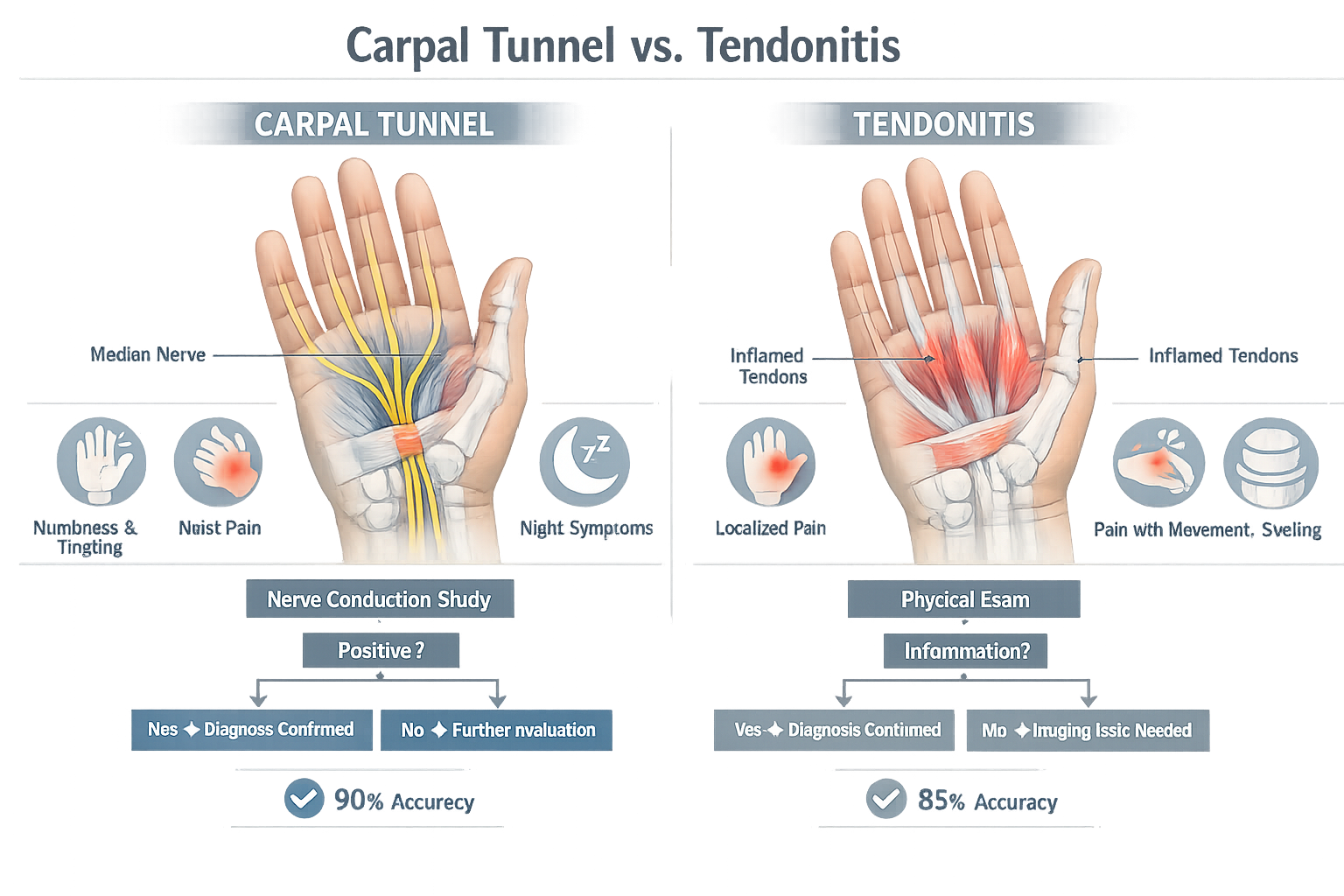
FeatureCarpal Tunnel SyndromeWrist TendonitisAffected StructureMedian nerveFlexor or extensor tendonsPrimary SymptomNumbness, tinglingPain with movementFinger DistributionThumb, index, middle, half of ring fingerAny finger depending on affected tendonNight SymptomsOften worse at nightUsually better with restWeakness PatternThumb opposition, grip strengthPain-limited movementSwelling LocationInside carpal tunnel (not visible)May see visible swelling along tendon path

The confusion intensifies because both conditions can coexist. Someone with carpal tunnel syndrome may also develop tendonitis from compensatory movement patterns, or vice versa. This layering of conditions makes simple tests even less reliable.

Common Misdiagnosis Scenarios

People often assume they have carpal tunnel syndrome when they actually have:

  • De Quervain's tenosynovitis (thumb-side wrist tendonitis)
  • Flexor tendonitis (palm-side wrist pain)
  • Intersection syndrome (where forearm tendons cross)
  • Trigger finger (tendon catching in finger)

Conversely, some dismiss true carpal tunnel syndrome as "just tendonitis," delaying proper treatment until nerve damage becomes permanent. For more information on distinguishing these conditions, see our comprehensive comparison of carpal tunnel, tendonitis, and arthritis.

How Accurate Are Popular At-Home Wrist Tests?

The short answer: not very accurate at all. The most commonly recommended at-home tests for carpal tunnel syndrome have significant limitations that make them unreliable for self-diagnosis.

Phalen's Test Accuracy

Phalen's test involves pressing the backs of your hands together with wrists flexed for 30-60 seconds. If you experience numbness or tingling in the median nerve distribution, the test is considered positive for carpal tunnel syndrome[3].

The reality of Phalen's test accuracy:

  • Sensitivity ranges from 51% to 91% across different studies[4]
  • Specificity ranges from 33% to 88%[4]
  • This means the test can miss up to half of actual carpal tunnel cases
  • It also produces false positives in up to 67% of people without carpal tunnel

The wide variability in these numbers comes from differences in how long the wrist is held flexed, patient populations studied, and what constitutes a "positive" result. Some studies use 30 seconds, others use 60 seconds, and the threshold for symptom reproduction varies.

Tinel's Test Limitations

Tinel's test involves tapping over the median nerve at the wrist. A positive test produces tingling or "electric shock" sensations radiating into the fingers[5].

Tinel's test problems:

  • Even less reliable than Phalen's test in most studies
  • Can be positive in people with other nerve conditions
  • Technique varies significantly between testers
  • Tapping force and location affect results
  • Many people with confirmed carpal tunnel test negative

Durkan's Test (Carpal Compression Test)

This test applies direct pressure over the carpal tunnel for 30 seconds. While it may be slightly more specific than Phalen's or Tinel's tests, it still lacks the accuracy needed for definitive diagnosis[4].

Why these tests fail:

  1. They don't measure nerve function directly - they only assess symptom reproduction
  2. Symptom overlap - tendonitis, arthritis, and other conditions can cause similar sensations
  3. Technique variation - without proper training, tests are performed inconsistently
  4. Timing issues - symptoms fluctuate throughout the day
  5. Psychological factors - expectation and anxiety can influence perceived symptoms

For a detailed look at which tests actually matter, explore our guide on home tests for carpal tunnel.

Carpal Tunnel vs Tendonitis: What Are the Distinctive Symptoms?

While overlap exists, each condition has characteristic features that help distinguish them when you know what to look for.

Carpal Tunnel Syndrome Hallmark Features

Numbness and tingling are the defining symptoms of carpal tunnel syndrome. This occurs because nerve compression disrupts sensory signals from the median nerve.

Specific carpal tunnel indicators:

  • Nighttime awakening with hand numbness or tingling (extremely common)
  • Shaking hands provides temporary relief (called the "flick sign")
  • Specific finger pattern: thumb, index, middle, and radial half of ring finger affected
  • Thenar muscle weakness: difficulty with thumb opposition and grip
  • Progressive symptoms: gradual worsening over weeks to months
  • Dropping objects due to weakened grip and reduced sensation
  • Temperature changes: hands may feel cold or experience altered temperature perception

The nighttime worsening happens because most people sleep with bent wrists, which increases pressure inside the carpal tunnel. Learn more about carpal tunnel and sleeping positions to understand this connection.

Wrist Tendonitis Distinctive Features

Pain with specific movements defines tendonitis, since inflamed tendons hurt when they're used.

Tendonitis indicators:

  • Sharp pain during wrist or finger movement
  • Tenderness along the tendon path when pressed
  • Visible swelling or thickening along the tendon
  • Crepitus: crackling or grating sensation with movement
  • Morning stiffness that improves with gentle movement
  • Pain increases with repetitive activity
  • Relief with rest and anti-inflammatory measures
  • No numbness or only mild tingling from secondary swelling

Decision Rules for Self-Assessment

Choose carpal tunnel as more likely if:

  • Numbness is the primary complaint
  • Symptoms wake you at night
  • Shaking your hand provides relief
  • Only specific fingers are affected (not pinky)
  • Weakness in thumb movements is present

Choose tendonitis as more likely if:

  • Pain (not numbness) is the main problem
  • Symptoms worsen with specific movements
  • You can point to a tender spot along a tendon
  • All fingers can be affected equally
  • Rest provides significant relief

Seek immediate professional evaluation if:

  • Symptoms persist beyond 2 weeks
  • Weakness is progressing
  • You're dropping objects frequently
  • Pain interferes with daily activities
  • Symptoms affect both hands simultaneously

Why Do Physical Examination Tests Have Such Poor Accuracy?

The fundamental problem with physical examination tests for Carpal Tunnel vs Tendonitis diagnosis lies in what they actually measure versus what clinicians need to know.

What Tests Actually Measure

Physical tests like Phalen's, Tinel's, and Durkan's attempt to provoke symptoms by:

  • Increasing pressure inside the carpal tunnel
  • Mechanically stimulating the median nerve
  • Reproducing the conditions that cause symptoms

The critical limitation: these tests only tell you whether symptoms can be reproduced under specific conditions. They don't measure:

  • The degree of nerve compression
  • Whether nerve damage has occurred
  • The actual cause of symptoms
  • Whether multiple conditions coexist
  • The severity of the condition

Factors That Reduce Test Reliability

Anatomical variation plays a huge role. The carpal tunnel size, median nerve position, and tendon arrangement vary significantly between individuals. What provokes symptoms in one person may not in another with the same condition.

Symptom fluctuation means someone might test negative in the morning but positive in the evening, or vice versa. Carpal tunnel symptoms often vary with:

  • Time of day
  • Recent activity level
  • Fluid retention (affected by diet, hormones, medications)
  • Inflammation levels
  • Stress and sleep quality

Technique inconsistency occurs because:

  • Wrist flexion angle varies between testers
  • Pressure application differs
  • Test duration isn't standardized
  • Patient positioning affects results
  • Instructions to patients vary

Coexisting conditions complicate interpretation. Many people with wrist pain have multiple overlapping issues:

  • Carpal tunnel syndrome plus tendonitis
  • Arthritis affecting the wrist joint
  • Cervical radiculopathy (neck nerve compression) mimicking carpal tunnel
  • Thoracic outlet syndrome causing similar symptoms
  • Peripheral neuropathy from diabetes or other causes

The Statistical Reality

When a test has 70% sensitivity and 70% specificity (better than many wrist tests), here's what happens in a population where 30% actually have carpal tunnel syndrome:

  • Out of 100 people tested
  • 30 have carpal tunnel: test correctly identifies 21, misses 9
  • 70 don't have carpal tunnel: test correctly identifies 49, falsely labels 21 as positive

This means only 50% of positive tests are actually correct (21 true positives out of 42 total positives). This is why physical examination tests should only be used adjunctively, never as definitive diagnostic tools[4].

What Tests Actually Provide Accurate Diagnosis?

Accurate diagnosis of Carpal Tunnel vs Tendonitis requires tests that directly measure the affected structures rather than simply provoking symptoms.

Electrodiagnostic Testing: The Gold Standard

Nerve Conduction Studies (NCS) and Electromyography (EMG) provide objective measurements of nerve function with 95-98% accuracy for carpal tunnel diagnosis[7].

How NCS works:

  1. Small electrodes are placed on the skin over the median nerve
  2. Mild electrical impulses stimulate the nerve
  3. Sensors measure how quickly and effectively the nerve transmits signals
  4. Results show whether nerve conduction is slowed or blocked

What NCS reveals:

  • Conduction velocity: how fast signals travel through the nerve
  • Amplitude: the strength of the nerve signal
  • Latency: delay in signal transmission
  • Comparison data: affected side versus unaffected side

NCS can detect carpal tunnel syndrome even before symptoms become severe, and it quantifies the degree of nerve compression (mild, moderate, or severe)[6]. This information guides treatment decisions and helps predict outcomes.

EMG testing examines the electrical activity of muscles controlled by the median nerve. It can detect:

  • Muscle denervation (loss of nerve supply)
  • Chronic nerve damage
  • Muscle compensation patterns
  • Severity of nerve injury

For comprehensive information about electrodiagnostic testing, see our article on EMG testing for carpal tunnel.

Ultrasound Imaging

High-resolution ultrasound can visualize:

  • Median nerve swelling at the carpal tunnel entrance
  • Tendon inflammation and thickening
  • Fluid accumulation around tendons
  • Structural abnormalities in the wrist

Ultrasound advantages:

  • Non-invasive and painless
  • Real-time imaging during movement
  • Can compare both wrists simultaneously
  • Relatively inexpensive
  • No radiation exposure

Ultrasound limitations:

  • Operator-dependent (requires skilled technician)
  • Cannot measure nerve function
  • May miss mild cases
  • Less standardized than EMG/NCS

MRI (Magnetic Resonance Imaging)

MRI provides detailed images of soft tissues and can identify:

  • Nerve compression and swelling
  • Tendon tears or degeneration
  • Masses or cysts compressing the nerve
  • Bone abnormalities affecting the carpal tunnel
  • Inflammation patterns

When MRI is recommended:

  • Atypical symptoms that don't fit classic patterns
  • Suspected mass or tumor
  • Planning for surgical intervention
  • Evaluation of treatment failure
  • Assessment of complex injuries

Clinical Questionnaires with Better Accuracy

While physical tests have poor accuracy, certain validated questionnaires show better diagnostic utility[1]:

CTS-6 Questionnaire asks about:

  • Symptom severity and timing
  • Specific finger involvement
  • Nighttime awakening
  • Functional limitations
  • Duration of symptoms
  • Response to hand shaking

Kamath and Stothard Questionnaire focuses on:

  • Symptom distribution patterns
  • Aggravating and relieving factors
  • Impact on daily activities
  • Associated symptoms

Katz and Stirrat Hand Symptom Diagram has patients:

  • Mark areas of numbness, tingling, and pain
  • Indicate symptom severity
  • Show symptom patterns

These tools work better because they capture the pattern and behavior of symptoms over time rather than just a single moment of provocation.

How Should You Approach Wrist Pain Diagnosis?

A systematic approach to diagnosing Carpal Tunnel vs Tendonitis increases accuracy and ensures appropriate treatment.

Step 1: Document Your Symptoms Thoroughly

Before seeing a healthcare provider, track:

Symptom characteristics:

  • Exact location (draw on a hand diagram)
  • Type (numbness, tingling, pain, weakness)
  • Severity (rate 0-10)
  • Duration (constant or intermittent)

Timing patterns:

  • Time of day symptoms occur
  • Activities that trigger symptoms
  • What provides relief
  • How long symptoms last
  • Whether symptoms wake you from sleep

Functional impact:

  • Tasks that are difficult or impossible
  • Objects you've dropped
  • Changes in grip strength
  • Difficulty with buttons, zippers, or small objects
  • Impact on work or hobbies

Medical history:

  • Previous wrist injuries
  • Diabetes or thyroid conditions
  • Pregnancy or hormonal changes
  • Rheumatoid arthritis or autoimmune conditions
  • Previous treatments tried and their effectiveness

Step 2: Seek Appropriate Professional Evaluation

Start with your primary care physician who can:

  • Perform initial clinical assessment
  • Order basic diagnostic tests
  • Provide conservative treatment
  • Refer to specialists when needed

Consider specialist referral to:

  • Hand surgeon: for surgical evaluation and complex cases
  • Neurologist: for nerve conduction studies and neurological assessment
  • Rheumatologist: if autoimmune conditions are suspected
  • Occupational medicine specialist: for work-related injuries

Step 3: Undergo Comprehensive Testing

A thorough evaluation should include:

Clinical examination:

  • Visual inspection for swelling, deformity, or muscle wasting
  • Palpation to identify tender areas
  • Range of motion assessment
  • Strength testing
  • Sensory testing with monofilament or two-point discrimination
  • Multiple provocative tests (not just one)

Electrodiagnostic studies:

  • Nerve conduction studies of median nerve
  • Comparison with ulnar nerve (to rule out other conditions)
  • EMG if nerve damage is suspected

Imaging when indicated:

  • X-rays to rule out fractures or arthritis
  • Ultrasound for tendon or nerve visualization
  • MRI for complex cases or surgical planning

Step 4: Consider Differential Diagnoses

Your healthcare provider should evaluate for conditions that mimic carpal tunnel or tendonitis:

  • Cervical radiculopathy: neck nerve compression causing hand symptoms
  • Thoracic outlet syndrome: nerve compression in the shoulder area
  • Pronator syndrome: median nerve compression in the forearm
  • Ulnar nerve entrapment: causing pinky and ring finger symptoms
  • Peripheral neuropathy: from diabetes, vitamin deficiency, or other causes
  • Arthritis: joint inflammation causing pain and stiffness
  • Raynaud's phenomenon: blood vessel spasms causing numbness

For more information on distinguishing carpal tunnel from other conditions, read our guide on carpal tunnel syndrome misdiagnosis.

Common Diagnostic Mistakes to Avoid

Don't assume one test tells the whole story. Even EMG/NCS can be normal in early or mild carpal tunnel syndrome. Diagnosis should combine clinical findings, patient history, and test results.

Don't ignore bilateral symptoms. When both hands are affected, consider systemic causes like diabetes, thyroid disease, or pregnancy rather than just local compression.

Don't dismiss symptoms that don't fit the textbook pattern. Anatomical variations mean some people have atypical symptom distributions.

Don't delay evaluation for progressive symptoms. Permanent nerve damage can occur if carpal tunnel syndrome goes untreated for too long.
What Treatment Approaches Work for Each Condition?

Concise medical visualization for 'Quick Answer' section, split-screen graphic comparing Carpal Tunnel and Tendonitis symptoms, featuring st

Treatment for Carpal Tunnel vs Tendonitis differs significantly because the underlying problems are different.

Conservative Treatment for Carpal Tunnel Syndrome

Wrist splinting is the first-line treatment for mild to moderate carpal tunnel syndrome:

  • Keeps wrist in neutral position (not bent)
  • Worn primarily at night to prevent sleep-position compression
  • May be worn during aggravating activities
  • Most effective in early-stage disease
  • Should be properly fitted (not too tight)

Learn about choosing the right carpal tunnel brace or splint for optimal results.

Activity modification:

  • Frequent breaks during repetitive tasks
  • Ergonomic workspace adjustments
  • Avoiding prolonged wrist flexion or extension
  • Reducing grip force when possible
  • Alternating tasks to vary hand positions

Corticosteroid injections:

  • Reduce inflammation inside the carpal tunnel
  • Provide temporary relief (weeks to months)
  • Most effective for mild to moderate cases
  • Can be repeated but with diminishing returns
  • Help predict surgical success

Oral medications:

  • NSAIDs (ibuprofen, naproxen) for inflammation
  • Vitamin B6 supplementation (evidence is mixed)
  • Diuretics if fluid retention is contributing
  • Management of underlying conditions (diabetes, thyroid)

Conservative Treatment for Tendonitis

Rest and activity modification:

  • Avoid aggravating movements
  • Reduce repetitive activities
  • Use proper technique for sports or work tasks
  • Gradual return to activity

Ice therapy:

  • Apply ice for 15-20 minutes several times daily
  • Most effective in acute phase (first 48-72 hours)
  • Reduces inflammation and pain
  • Can be alternated with heat in chronic cases

Anti-inflammatory measures:

  • NSAIDs (oral or topical)
  • Corticosteroid injections (used cautiously due to tendon weakening risk)
  • Natural anti-inflammatory supplements (curcumin, omega-3s)

Physical therapy:

  • Stretching exercises to improve flexibility
  • Strengthening exercises for supporting muscles
  • Manual therapy techniques
  • Ultrasound or other modalities
  • Gradual progressive loading

Splinting or bracing:

  • Immobilizes affected tendons during healing
  • Typically worn during activities and at night
  • Gradually weaned as symptoms improve

For specific exercises that help both conditions, see our 10-minute daily carpal tunnel exercise routine.

When Surgery Becomes Necessary

Carpal tunnel release surgery is recommended when:

  • Conservative treatment fails after 3-6 months
  • Severe nerve compression on EMG/NCS
  • Muscle wasting (thenar atrophy) is present
  • Symptoms significantly impact quality of life
  • Progressive weakness occurs

The surgery involves cutting the transverse carpal ligament to relieve pressure on the median nerve. Success rates exceed 90% for appropriately selected patients[7].

Tendon surgery may be needed for:

  • Complete tendon rupture
  • Severe tendon degeneration
  • Chronic tendonitis unresponsive to conservative care
  • Stenosing tenosynovitis (trigger finger)

Treatment Decision Framework

Choose conservative treatment first if:

  • Symptoms are mild to moderate
  • No significant weakness or muscle wasting
  • Symptoms have been present less than 6 months
  • EMG/NCS shows mild compression
  • You can modify aggravating activities

Consider surgery sooner if:

  • Severe symptoms affecting daily function
  • Moderate to severe nerve compression on testing
  • Thenar muscle atrophy is visible
  • Symptoms persist despite 3-6 months of proper conservative care
  • Rapid symptom progression

Combine treatments when:

  • Multiple conditions coexist
  • Symptoms are complex or atypical
  • Initial treatment provides partial but incomplete relief
  • Workplace or activity demands are high

For more information about surgical options, explore our guide on carpal tunnel surgery alternatives.

Can You Prevent These Conditions from Developing?

Prevention strategies differ for carpal tunnel syndrome and tendonitis, but many ergonomic principles benefit both.

Carpal Tunnel Prevention Strategies

Workplace ergonomics:

  • Keyboard position: Keep keyboard at elbow height with wrists neutral
  • Mouse placement: Position mouse close to keyboard to avoid reaching
  • Monitor height: Top of screen at or slightly below eye level
  • Chair adjustment: Armrests support forearms without elevating shoulders
  • Desk height: Allows 90-degree elbow angle when typing

Work habits:

  • Take 5-minute breaks every 30-60 minutes
  • Perform wrist stretches during breaks
  • Vary tasks to avoid prolonged repetitive movements
  • Use voice-to-text software to reduce typing
  • Maintain neutral wrist position during all activities

Lifestyle factors:

  • Maintain healthy body weight (obesity increases risk)
  • Manage diabetes and blood sugar levels
  • Address thyroid disorders promptly
  • Avoid smoking (impairs nerve health)
  • Stay hydrated to reduce fluid retention

For comprehensive prevention strategies, read our article on carpal tunnel prevention and proven tips to keep your wrists pain-free.

Tendonitis Prevention Strategies

Proper technique:

  • Learn correct form for sports and work activities
  • Use appropriate tools and equipment
  • Avoid excessive force or awkward positions
  • Gradually increase intensity of new activities
  • Get coaching or training for proper mechanics

Conditioning:

  • Strengthen forearm and wrist muscles
  • Improve flexibility through regular stretching
  • Build endurance gradually
  • Cross-train to avoid overuse of specific tendons
  • Allow adequate recovery between intense activities

Equipment considerations:

  • Use ergonomic tools with padded grips
  • Choose appropriate tool size for your hand
  • Maintain equipment in good working condition
  • Use power tools instead of manual tools when possible
  • Wear supportive gloves for vibrating tools

Risk Factors You Can't Change

Some risk factors for carpal tunnel syndrome and tendonitis are beyond your control:

Genetic factors:

  • Smaller carpal tunnel size (inherited)
  • Connective tissue disorders
  • Family history of carpal tunnel syndrome

Demographic factors:

  • Female sex (women have higher risk)
  • Age (risk increases after 40)
  • Pregnancy (hormonal changes cause fluid retention)

Medical conditions:

  • Diabetes
  • Rheumatoid arthritis
  • Thyroid disorders
  • Kidney disease

Understanding these non-modifiable risk factors helps you recognize when you need more aggressive prevention strategies or earlier intervention.

How Do You Know If Your Diagnosis Is Wrong?

Misdiagnosis of Carpal Tunnel vs Tendonitis is common, and recognizing the signs of incorrect diagnosis can save months of ineffective treatment.

Red Flags for Misdiagnosis

Treatment isn't working: If you've followed proper conservative treatment for 6-8 weeks without any improvement, the diagnosis may be incorrect. Some improvement should occur within this timeframe for most cases.

Symptoms don't match the pattern:

  • Carpal tunnel syndrome shouldn't cause pinky finger numbness
  • Tendonitis shouldn't cause nighttime awakening
  • Carpal tunnel typically doesn't cause sharp, stabbing pain
  • Tendonitis shouldn't cause progressive weakness without pain

Bilateral symptoms with no clear cause: When both hands are affected simultaneously without obvious repetitive strain, consider systemic causes like:

  • Diabetes or prediabetes
  • Hypothyroidism
  • Rheumatoid arthritis
  • Vitamin B12 deficiency
  • Cervical spine problems

Symptoms extend beyond the expected distribution:

  • Pain radiating up the forearm to the elbow or shoulder
  • Numbness extending to the entire hand
  • Symptoms in the neck or upper back
  • Weakness in areas not controlled by the median nerve

When to Seek a Second Opinion

Consider another evaluation if:

  • Initial diagnosis was made without electrodiagnostic testing
  • Treatment has failed after 3 months
  • Symptoms are worsening despite treatment
  • You've been told surgery is needed but haven't had EMG/NCS
  • Multiple treatments have been tried without clear rationale
  • Your symptoms don't match what you've read about the condition

Questions to ask during second opinion:

  1. "What specific tests confirm this diagnosis?"
  2. "Could other conditions explain my symptoms?"
  3. "Why hasn't treatment worked so far?"
  4. "What would you expect to see if the diagnosis is correct?"
  5. "Are there any tests we haven't done that might help?"

Conditions Commonly Confused with Carpal Tunnel and Tendonitis

Cervical radiculopathy (pinched nerve in the neck):

  • Can cause hand numbness and weakness
  • Often includes neck pain or stiffness
  • Symptoms may worsen with neck movements
  • Affects different nerve distribution than carpal tunnel

Thoracic outlet syndrome:

  • Nerve or blood vessel compression in the shoulder area
  • Causes hand numbness and weakness
  • May cause arm fatigue and color changes
  • Symptoms worsen with arm elevation

Pronator syndrome:

  • Median nerve compression in the forearm
  • Similar symptoms to carpal tunnel
  • Pain in the forearm is more prominent
  • Phalen's and Tinel's tests at wrist are negative

Diabetic neuropathy:

  • Affects multiple nerves symmetrically
  • Usually involves feet as well as hands
  • Burning pain is common
  • Associated with poor blood sugar control

Vitamin B12 deficiency:

  • Causes peripheral neuropathy
  • Affects both hands and feet
  • May include balance problems and cognitive changes
  • Blood test confirms diagnosis

For a comprehensive look at conditions that mimic carpal tunnel, see our article on carpal tunnel vs other conditions.

What Role Do Imaging and Advanced Tests Play?

Beyond basic physical examination and electrodiagnostic studies, advanced imaging can provide valuable diagnostic information for Carpal Tunnel vs Tendonitis cases.

Ultrasound in Wrist Diagnosis

Dynamic ultrasound allows real-time visualization of structures during movement:

For carpal tunnel evaluation:

  • Measures median nerve cross-sectional area (swelling indicates compression)
  • Visualizes nerve flattening at the carpal tunnel
  • Identifies space-occupying lesions (cysts, tumors)
  • Assesses carpal tunnel dimensions
  • Can guide injection placement

For tendonitis evaluation:

  • Shows tendon thickening and inflammation
  • Identifies partial or complete tendon tears
  • Visualizes fluid around tendon sheaths
  • Detects calcifications within tendons
  • Assesses blood flow to tendons (power Doppler)

Ultrasound advantages:

  • Performed in the office during consultation
  • Immediate results guide treatment decisions
  • Can examine both wrists for comparison
  • No radiation exposure
  • Relatively low cost

Ultrasound limitations:

  • Operator skill significantly affects accuracy
  • Cannot assess nerve function (only structure)
  • May miss subtle findings
  • Less detailed than MRI for complex anatomy

MRI for Complex Cases

MRI provides superior soft tissue detail and is particularly useful when:

  • Diagnosis remains unclear after other tests
  • Surgical planning requires detailed anatomy
  • Tumors or masses are suspected
  • Multiple conditions may coexist
  • Previous surgery has altered normal anatomy

What MRI reveals:

For carpal tunnel:

  • Median nerve signal changes indicating damage
  • Precise location and degree of compression
  • Muscle denervation patterns
  • Structural abnormalities of the carpal tunnel

For tendonitis:

  • Tendon degeneration or tears
  • Inflammation patterns
  • Bone marrow edema (stress reactions)
  • Associated joint problems

MRI drawbacks:

  • Expensive compared to other imaging
  • Requires 30-45 minutes in scanner
  • Not suitable for people with certain metal implants
  • May require contrast injection
  • Results depend on radiologist interpretation

X-rays: When Are They Useful?

Standard X-rays don't show nerves or tendons but are valuable for:

  • Ruling out fractures after trauma
  • Identifying arthritis in wrist joints
  • Detecting bone spurs that might compress nerves
  • Assessing bone alignment
  • Evaluating for calcific tendonitis

Special X-ray views:

  • Carpal tunnel view shows the tunnel from a unique angle
  • Stress views assess ligament stability
  • Comparison views of both wrists

Combining Test Results for Accurate Diagnosis

The most accurate diagnosis comes from integrating multiple data sources:

  1. Clinical history: symptom pattern, timing, aggravating factors
  2. Physical examination: multiple tests, not just one
  3. Electrodiagnostic studies: objective nerve function measurement
  4. Imaging: structural assessment of nerves, tendons, and bones
  5. Response to treatment: diagnostic and therapeutic value

Example of integrated diagnosis:

A patient presents with wrist pain and numbness. Initial assessment suggests carpal tunnel syndrome, but:

  • EMG/NCS shows only mild median nerve slowing
  • Ultrasound reveals significant flexor tendon thickening
  • Patient reports pain is worse with gripping (not typical for carpal tunnel)
  • Night splinting provides no relief

Revised diagnosis: Primary flexor tendonitis with secondary mild carpal tunnel syndrome. Treatment focuses on tendonitis first, with carpal tunnel monitoring.

This integrated approach prevents the misdiagnosis that occurs when clinicians rely too heavily on simple wrist tests.

Frequently Asked Questions

Can you have both carpal tunnel syndrome and tendonitis at the same time?

Yes, carpal tunnel syndrome and wrist tendonitis frequently coexist. The conditions can develop independently or one can lead to the other through compensatory movement patterns. When both are present, treatment must address each condition specifically, which is why accurate diagnosis through EMG/NCS and imaging is essential rather than relying on simple physical tests.

How long should I wait before seeing a doctor for wrist pain?

See a doctor within 2 weeks if wrist pain or numbness interferes with daily activities, wakes you at night, or causes weakness. Don't wait if you experience progressive symptoms, muscle wasting at the base of the thumb, or frequent dropping of objects. Early intervention prevents permanent nerve damage in carpal tunnel syndrome and chronic tendon degeneration in tendonitis.

Are at-home wrist tests completely useless?

At-home wrist tests aren't completely useless, but they shouldn't be used for self-diagnosis. They can help you recognize that a problem exists and prompt you to seek professional evaluation. However, with sensitivity as low as 51% and specificity as low as 33%, these tests miss many true cases and falsely identify many people without the condition[4].

Why do my symptoms seem worse at night?

Carpal tunnel syndrome typically worsens at night because most people sleep with bent wrists, which increases pressure inside the carpal tunnel and compresses the median nerve. Fluid redistribution during sleep also contributes to increased swelling. Tendonitis, in contrast, usually improves with rest and shouldn't wake you from sleep unless you're sleeping on the affected wrist.

Can carpal tunnel syndrome go away without treatment?

Carpal tunnel syndrome rarely resolves completely without treatment, though symptoms may fluctuate. Mild cases related to temporary conditions like pregnancy may improve after delivery. However, progressive nerve compression typically worsens over time without intervention. Early conservative treatment with splinting and activity modification can prevent progression and avoid the need for surgery. For more information, read our article on can carpal tunnel go away on its own.

What's the difference between a positive Phalen's test and actual carpal tunnel syndrome?

A positive Phalen's test means you experience numbness or tingling when your wrists are flexed for 30-60 seconds. However, this doesn't confirm carpal tunnel syndrome because the test has poor specificity (33-88%)[4]. Many people without carpal tunnel syndrome test positive, and many with confirmed carpal tunnel test negative. Actual carpal tunnel syndrome is diagnosed through EMG/NCS showing median nerve compression, combined with characteristic symptoms and clinical findings.

How accurate is EMG/NCS testing compared to physical examination?

EMG/NCS testing has 95-98% accuracy for diagnosing carpal tunnel syndrome[7], compared to physical examination tests with accuracy rates as low as 51%. EMG/NCS directly measures nerve conduction speed and signal strength, providing objective data about nerve function. Physical tests only assess whether symptoms can be provoked, which is much less reliable for diagnosis.

Should I get an MRI or ultrasound for wrist pain?

Start with EMG/NCS for suspected carpal tunnel syndrome, as it's the gold standard diagnostic test. Ultrasound is useful for evaluating tendons and can be done during your office visit. MRI is reserved for complex cases where diagnosis remains unclear, surgical planning is needed, or masses are suspected. Your doctor will recommend imaging based on your specific symptoms and initial test results.

Can diabetes cause both carpal tunnel and tendonitis?

Yes, diabetes increases risk for both conditions. High blood sugar damages nerves (diabetic neuropathy) and also affects tendons and connective tissues. People with diabetes are 3-4 times more likely to develop carpal tunnel syndrome than those without diabetes. They also have increased risk of tendon problems due to glycosylation of collagen fibers, which makes tendons stiffer and more prone to injury.

What should I do if my doctor diagnosed carpal tunnel without doing nerve testing?

Request electrodiagnostic testing (EMG/NCS) before starting aggressive treatment or considering surgery. While experienced clinicians can make accurate clinical diagnoses, nerve testing provides objective confirmation and measures severity, which guides treatment decisions. If your doctor is unwilling to order testing, consider seeking a second opinion from a hand surgeon or neurologist.

How long does it take for wrist splinting to work for carpal tunnel?

Most people notice some improvement within 2-4 weeks of consistent night splinting for carpal tunnel syndrome. Maximum benefit typically occurs after 6-8 weeks. If you experience no improvement after 8 weeks of proper splinting use, the diagnosis may be incorrect or the condition may be too severe for conservative treatment. Splinting works best for mild to moderate cases.

Can I use the same brace for carpal tunnel and tendonitis?

Not necessarily. Carpal tunnel braces keep the wrist in a neutral position and are worn primarily at night. Tendonitis braces may immobilize different movements depending on which tendon is affected. De Quervain's tendonitis requires thumb immobilization, while flexor tendonitis may need different support. Use a brace specifically designed for your diagnosed condition for best results.

Conclusion

Carpal Tunnel vs Tendonitis diagnosis requires much more than simple at-home wrist tests. The popular Phalen's, Tinel's, and Durkan's tests have accuracy rates as low as 51%, meaning they miss nearly half of actual cases and produce false positives in many people without the condition[4]. These tests can mislead because they only assess symptom provocation, not the underlying structural or functional problems causing symptoms.

Accurate diagnosis depends on integrating multiple sources of information: detailed symptom history, comprehensive physical examination, electrodiagnostic testing with 95-98% accuracy[7], and appropriate imaging when needed. Carpal tunnel syndrome involves median nerve compression causing numbness in specific fingers and nighttime awakening, while tendonitis involves inflamed tendons causing pain with movement. The conditions can coexist, further complicating diagnosis.

Your Action Plan

If you're experiencing wrist pain or numbness:

  1. Document your symptoms thoroughly for 1-2 weeks, noting timing, location, aggravating factors, and relieving factors
  2. Schedule professional evaluation rather than relying on at-home tests for diagnosis
  3. Request appropriate testing including EMG/NCS if carpal tunnel is suspected
  4. Start conservative treatment early to prevent progression
  5. Follow up consistently and report treatment response to your healthcare provider

If you've been diagnosed but treatment isn't working:

  1. Verify the diagnosis with electrodiagnostic testing if not already done
  2. Consider imaging to evaluate for coexisting conditions
  3. Seek a second opinion from a hand specialist or neurologist
  4. Reassess contributing factors like workplace ergonomics, underlying medical conditions, or activity patterns
  5. Discuss alternative treatments or surgical options if conservative care has failed

For prevention:

  1. Optimize your workspace with proper ergonomic setup
  2. Take regular breaks during repetitive activities
  3. Maintain neutral wrist positions during work and daily activities
  4. Address underlying health conditions like diabetes and thyroid disorders
  5. Strengthen and stretch forearm and wrist muscles regularly

The key message: don't let simple wrist tests mislead you into thinking you have an accurate diagnosis or, worse, into delaying proper evaluation. Early, accurate diagnosis followed by appropriate treatment prevents permanent nerve damage and chronic tendon problems. When it comes to Carpal Tunnel vs Tendonitis, professional evaluation with objective testing is the only reliable path to correct diagnosis and effective treatment.

For comprehensive care and accurate diagnosis of wrist conditions, consider consulting with specialists who use evidence-based diagnostic approaches rather than relying solely on physical examination tests. Your wrists are essential for nearly every daily activity—they deserve accurate diagnosis and proper treatment.

References

[1] Jospt.2020 - https://www.jospt.org/doi/10.2519/jospt.2020.9599

[2] Carpal Tunnel Which Tests Matter - https://curemycarpaltunnel.com/blog/carpal-tunnel-which-tests-matter/

[3] 25133 Phalens Test - https://my.clevelandclinic.org/health/diagnostics/25133-phalens-test

[4] Phalen's Test - https://www.physio-pedia.com/Phalen%E2%80%99s_Test

[5] Tests Used To Diagnose Carpal Tunnel Syndrome - https://www.baltimoreperipheralnervepain.com/blog/tests-used-to-diagnose-carpal-tunnel-syndrome.cfm

[6] Ncs Testing For Carpal Tunnel Syndrome Diagnosis And Beyond - https://integrity-dx.com/blog/ncs-testing-for-carpal-tunnel-syndrome-diagnosis-and-beyond/

[7] Emg Testing For Carpal Tunnel - https://www.indianahandtoshoulder.com/blog/emg-testing-for-carpal-tunnel


February 25, 2026
🇨🇦 Our clinic currently provides care to patients within Canada only. We apologize for any inconvenience this may cause.