
Last updated: November 10, 2026
This article is educational only and not medical advice. Speak with a physician or board-certified surgeon about your specific situation.
Cost for xanthelasma removal in Canada depends on the method used, the size and number of lesions, and whether one or both eyelids are affected. Published Canadian pricing is limited, but available examples range from roughly C$99 per visit at a low-cost model up to C$550, C$1,500 per treatment area at a plastic surgery clinic [1][2]. Cosmetic xanthelasma removal is generally not covered by OHIP. Options include surgical excision, laser, chemical peels and other methods, and recurrence is possible with any method. Anyone considering treatment should get a lipid check and a written quote before booking.
Xanthelasma is a soft, yellowish plaque made of cholesterol-laden cells that forms on or near the eyelids, most often at the inner corners. It is the most common type of xanthoma and tends to appear gradually, sometimes on both eyes.
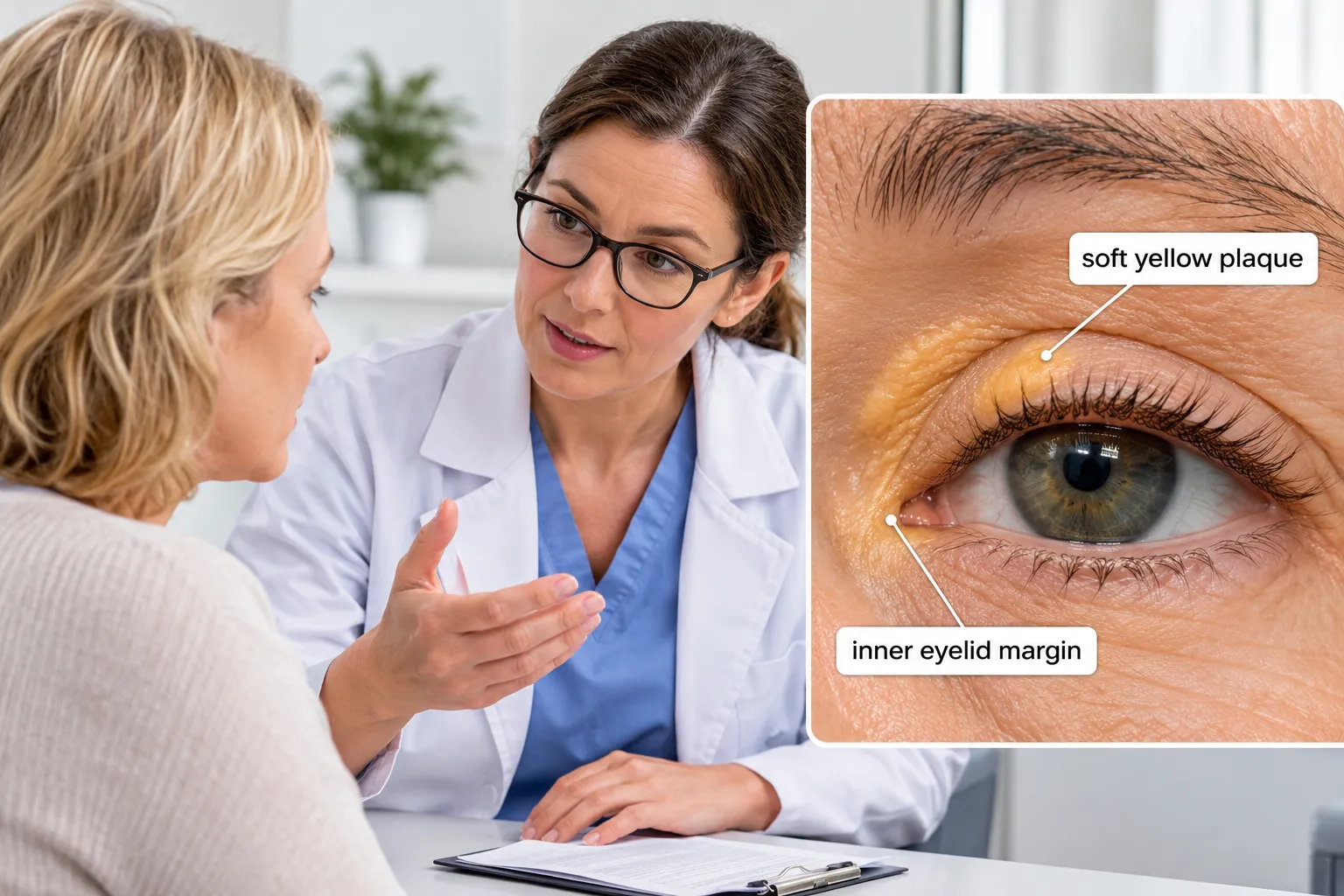
The condition itself is harmless to vision and does not become cancerous. But its presence can signal an underlying lipid problem, so clinicians evaluate for associated conditions such as high cholesterol, diabetes, thyroid disease and liver disease [3]. For a deeper look at related skin growths that are sometimes confused with xanthelasma, see xanthelasma vs. milia, syringoma and xanthomas, and for lesions caught at an early, flatter stage, see eyelid early-stage xanthelasma.
There is no single national price for xanthelasma removal cost Canada-wide because pricing is set clinic by clinic and method by method. Verified Canadian examples currently available are limited but useful as reference points.

A Hamilton clinic using a transparent low-cost model charges C$99 per visit, which includes consultation, HST and the first spot treated, with additional spots at C$20 each up to a maximum of C$299 per visit [1]. A Toronto/Burlington plastic surgery practice instead quotes an estimated range of C$550 to C$1,500 per treatment area, with the final figure set after an in-person exam [2]. Montreal-area clinics generally decline to publish a fixed price at all, stating that cost depends on lesion size and technique and that an estimate is only given after consultation [per Clinique CARE, cited in research]. Because these figures vary so widely by model and method, the only reliable number for your case is a written quote from the provider you plan to use.
Cosmetic xanthelasma removal is generally not covered by OHIP, because OHIP funds medically necessary services and treats cosmetic procedures as uninsured. Coverage would only be considered if removal is required for a documented medical reason, such as a lesion that is obstructing vision or causing a functional eyelid problem, and this would need confirmation from a physician and, in practice, from OHIP's schedule of insured and uninsured services.
In most cases, patients should plan to pay privately. For a broader explanation of how OHIP-insured minor surgery differs from private-pay cosmetic procedures in Ontario, see OHIP vs. private clinic for minor surgery in Ontario.
Before you book, ask:
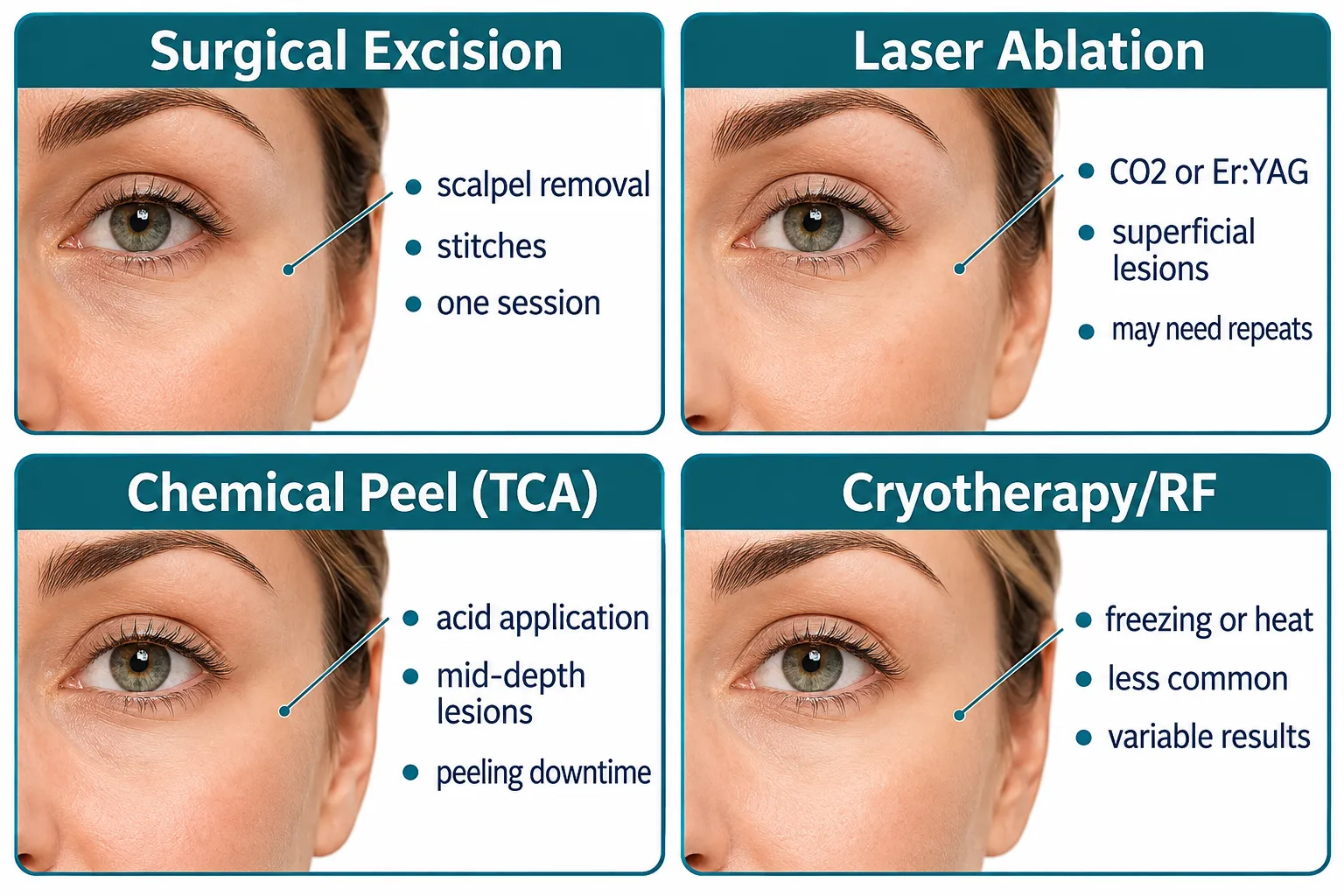
Several methods are used to treat xanthelasma, and the right choice depends mainly on lesion depth and size.
Surgical excision removes the plaque with a scalpel and is generally considered the most definitive option for large, thick or deeply infiltrating lesions, typically those deeper than about 1 millimetre [2][3]. It usually requires one session and allows tissue to be sent for pathology, but involves stitches, a longer recovery and a higher typical price than non-surgical options [2]. The Minor Surgery Center (TMSC) offers xanthelasma removal in Toronto through surgical removal performed by board-certified plastic surgeons.
CO2 or Er:YAG laser ablation works well for superficial lesions, generally under about 100 micrometres, offering precise removal with less cutting than excision [3][5]. Laser xanthelasma removal cost tends to sit lower per session than surgery, but multiple sessions are often needed, and recurrence remains possible [5].
Trichloroacetic acid (TCA) peels can treat lesions in roughly the 100-1,000 micrometre range by chemically dissolving the plaque layer by layer over one or more sessions [3]. Peeling, redness and temporary skin changes are common during healing. For a closer look at over-the-counter alternatives, see xanthelasma removal creams: do they work?
Cryotherapy (freezing) and radiofrequency ablation are less commonly used methods, with more variable published outcomes than excision or laser. They may suit specific lesion types but are typically chosen case by case after an in-person assessment.
Over-the-counter creams marketed for xanthelasma are not a substitute for physician-directed treatment, and a fixed-price home product cannot be reliably compared to in-clinic results [4]. Anyone considering a cream should review the evidence first; see xanthelasma removal creams: do they work or just waste money.
MethodBest forDowntimeRecurrenceScarringSurgical excisionThick/large lesionsDays to weeksPossiblePossible, fine lineLaserSuperficial lesionsShort, may repeatPossibleUsually minimalTCA peelMid-depth lesionsPeeling, daysPossibleUsually minimalCryo/radiofrequencySelect casesVariesVariesVaries
The best treatment depends on how deep and large your lesion is, not personal preference alone. Shallow, thin plaques respond well to laser or chemical peel, while thick or widespread plaques generally need surgical excision for a complete result [3].
A good candidate for excision has a well-defined, thicker lesion and accepts a short recovery in exchange for a more definitive single-session result. A good candidate for laser or peel has thinner, more superficial deposits and prefers less downtime, accepting the possibility of needing more than one session. Anyone unsure should get an in-person assessment rather than choosing a method online.
Yes, xanthelasma can come back after removal regardless of method, and recurrence is considered a central limitation of treatment by clinical sources [6]. Recurrence likelihood varies with technique, how extensive the original lesion was, and whether it is a first-time or repeat case [6].
Because recurrence is possible, ask any provider directly what happens, and what it costs, if the plaque returns. For a full discussion of recurrence patterns and what influences them, see can xanthelasma come back after removal?
Yes, a lipid panel is commonly recommended when xanthelasma is diagnosed, especially in younger patients, because the lesion can be linked to cholesterol abnormalities even though it sometimes occurs with normal lipid levels [7]. Evaluation may also screen for diabetes, thyroid disease and liver disease [3].
It is worth noting that lowering cholesterol is not a guaranteed way to shrink an existing plaque; clinical sources state there is no established evidence that lipid-lowering treatment reliably changes a lesion that has already formed, although managing dyslipidemia remains important for cardiovascular health and may reduce new deposits [7].
See your family doctor about: a cholesterol/lipid test, particularly if xanthelasma appears at a younger age. This is standard clinical guidance when evaluating new xanthelasma [7].
For more on this connection, see cholesterol and xanthelasma: do I need a blood test?
Recovery time depends on the method: surgical excision typically involves days to a couple of weeks of swelling and bruising before stitches are removed, while laser and chemical peel downtime is usually shorter but can include redness or peeling. Scarring risk is generally higher with excision, though skilled technique along the natural eyelid crease can minimize visible lines; laser and peel methods usually carry lower scarring risk but more variable long-term results [2][5].
For a detailed week-by-week recovery outline, see xanthelasma surgery recovery time: your complete 2026 guide to healing.
Choosing a provider for xanthelasma removal Ontario patients should prioritize board certification, transparent written pricing and a clear recurrence policy over convenience or advertised discounts. A short checklist:
TMSC operates five GTA locations: Toronto/North York (2920 Dufferin St, Suite 202), York Mills (85 Scarsdale Rd, Unit 101), Vaughan (2701 Rutherford Rd, Bldg C), Mississauga (1224 Dundas St W, Unit 101) and Oakville (3075 Hospital Gate, Unit 109). Removal is performed by board-certified plastic and reconstructive surgeons and co-founders Dr. Kunaal Jindal and Dr. Roberto Tutino, with no referral required and a free consultation available. See our clinics for details and xanthelasma removal near me for location-based guidance.
How much does xanthelasma removal cost in Canada?
Published examples range from about C$99 per visit at a low-cost clinic model to C$550, C$1,500 per treatment area at a plastic surgery practice, depending on method and lesion size [1][2]. Get a written quote for your specific case.
Is xanthelasma removal covered by OHIP?
Generally no. Cosmetic xanthelasma removal is treated as an uninsured service unless there is a documented medical necessity, which must be confirmed directly with a physician or OHIP.
What is the best treatment for xanthelasma?
It depends on lesion depth: thinner, superficial plaques often respond to laser or chemical peel, while thicker or larger plaques typically need surgical excision for a complete result [3].
Can xanthelasma come back?
Yes. Recurrence is possible with any treatment method and varies by technique and lesion extent [6].
Does xanthelasma mean I have high cholesterol?
Not always, but it is commonly associated with lipid abnormalities, so a blood lipid test is recommended, especially in younger patients [7].
Does xanthelasma removal leave a scar?
Scarring is possible, particularly with surgical excision, though risk is generally lower with laser or chemical peel methods [2][5].
Xanthelasma removal cost in Canada depends on the method chosen, lesion size and number, and provider type, with no single fixed national price. OHIP generally does not cover cosmetic removal, so most patients pay privately and should request a written quote before committing. A lipid check with a family doctor is a sensible first step, since xanthelasma can signal a cholesterol issue worth managing for overall health, even though it will not necessarily shrink an existing plaque.
To discuss surgical removal options with board-certified plastic surgeons at one of five GTA locations, call (647) 614-1611 or book a free consultation online. No referral is needed, and appointments are required.