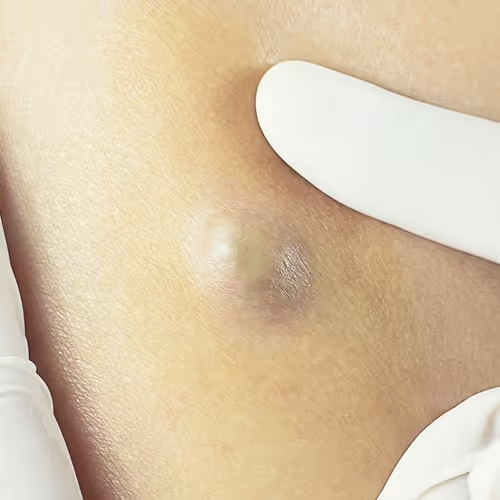
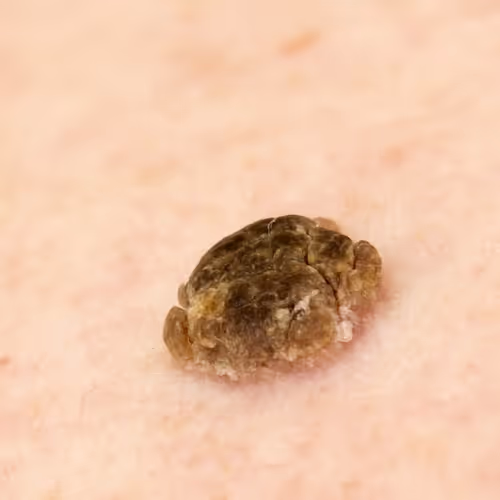
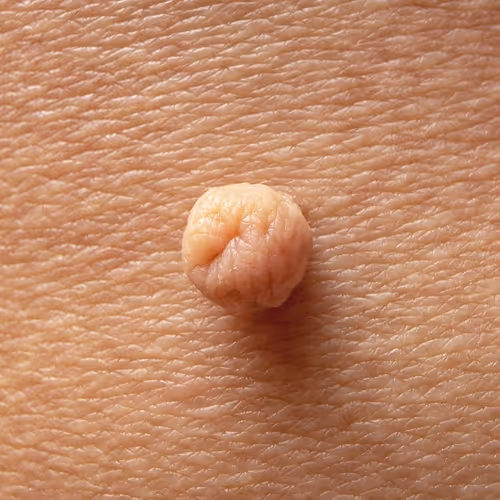
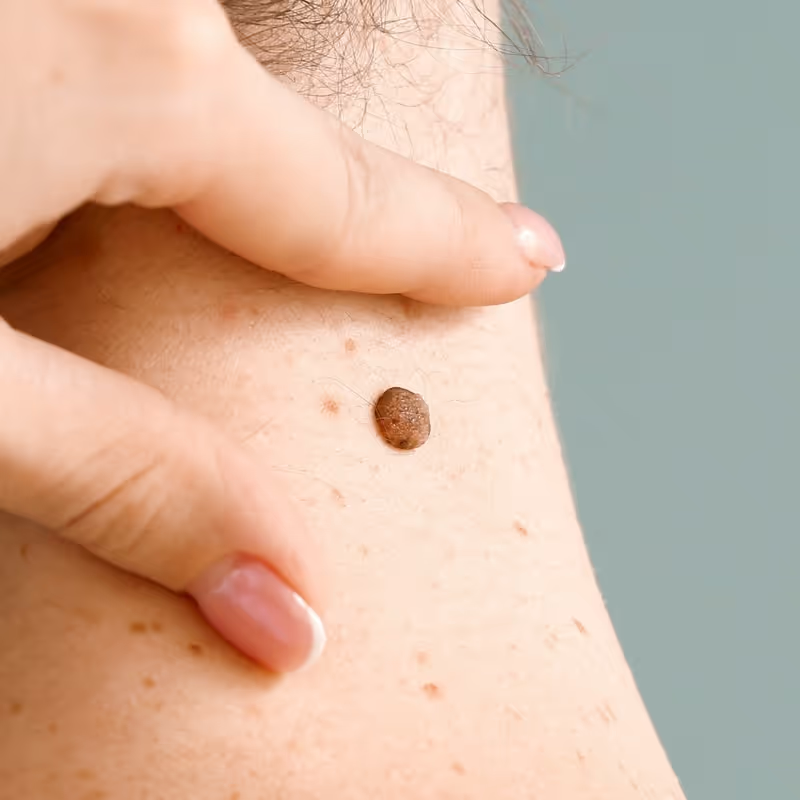
Mole removal in Burlington, Milton and Halton Region typically involves a short in-office consultation, a physical exam of the mole, and either a surgical excision or shave removal performed under local anesthetic. Patients across Oakville, Burlington, Milton, Georgetown, and Hamilton can access assessment and removal without long wait times, and OHIP may cover the procedure when the mole is medically suspicious rather than purely cosmetic.
Mole Removal in Burlington, Milton & Halton Region
Mole removal in Burlington, Milton & Halton Region covers both medical removal (for suspicious or symptomatic moles) and cosmetic removal (for moles that bother a patient's appearance).
Surgical excision and shave removal are the two main techniques used for physician-performed mole removal; laser is generally reserved for very superficial, non-raised pigmented spots.
OHIP typically covers removal when a mole shows signs of change, irritation, or possible malignancy; purely cosmetic removal is usually an out-of-pocket cost.
Most in-office mole removals take 15 to 30 minutes per mole, with healing over roughly 1 to 3 weeks depending on size and location.
Picking, shaving, or attempting to remove a mole at home carries infection risk and can delay detection of skin cancer.
A biopsy or pathology review is recommended any time a mole looks irregular, has changed recently, or a patient has a personal or family history of melanoma.
Halton Region patients from Milton, Georgetown, Burlington, and Hamilton can reach TMSC Oakville within a short drive for assessment and same-visit treatment planning.
Mole Removal in Burlington, Milton & Halton Region: Local Options
Patients searching for mole removal in Burlington, Milton, and the wider Halton Region have several local providers to choose from, ranging from cosmetic clinics to plastic surgery offices and physician-led minor surgery centers. The right choice depends on whether the mole needs medical evaluation, cosmetic removal only, or both.
Several clinics already operate in this corridor. Dr. Leonard Harris offers mole removal in Burlington, Oakville, and Hamilton, using excision techniques tailored to the mole's size and depth [1]. Burlington Plastic Surgery provides same-day assessments with in-office removal under local anesthetic, often including biopsy when the mole's appearance warrants it [2]. In Milton, Laser Aesthetics offers mole, skin tag, wart, and keratosis removal, though the clinic notes it does not perform facial mole removals and requires a paid consultation before treatment [3]. AroRegen in Milton, led by Dr. Vaibhav Verma, uses dermoscopy to assess lesions before performing excisions personally [4].
Other regional options include Dermetics in Burlington, which offers same-day consultation and treatment for mole, skin tag, and cyst removal [5], and NewM Clinic in Halton Hills, which emphasizes screening to catch potentially cancerous moles before removal [6]. Refresh Cosmetics in Burlington uses cryotherapy (the CryoClear Pen) for small benign moles and skin tags [7], while Bronte Dermatology, Laser & Cosmetic in Oakville offers laser treatment for pigmented lesions for clients across Oakville, Burlington, and Milton [8].
Decision rule: choose a clinic that performs an in-person or dermoscopic assessment before removal, rather than one that removes moles sight-unseen or via video consultation only. A mole that turns out to be atypical needs pathology follow-up, and that's easier to arrange when the same clinic that removed it also sent the tissue for testing.
For patients who want a physician-led minor surgery option convenient to Oakville, Burlington, Milton, Georgetown, and Hamilton, Downtown Oakville Mole & Cyst Removal and Milton Mole & Cyst Removal outline what a typical visit looks like at TMSC's network.
What Is Mole Removal and How Does It Work?
Mole removal is a minor procedure where a physician takes off a pigmented skin growth using a scalpel, punch tool, or shave technique, usually under local anesthetic in an office setting. The goal is either to eliminate a cosmetic concern or to remove tissue for pathology testing when a mole looks suspicious.
The basic process follows a predictable sequence:
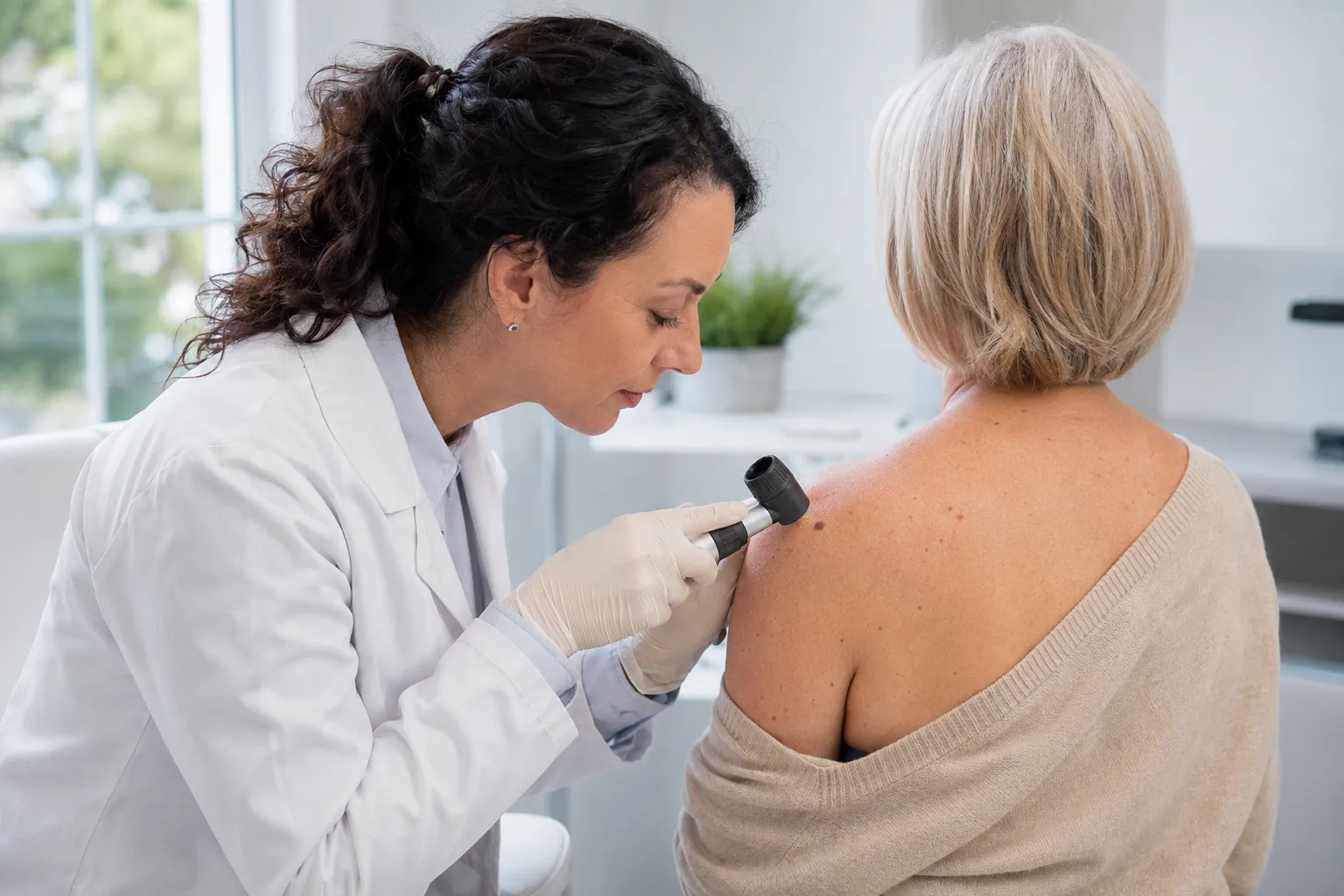
Assessment, The physician examines the mole visually and often with a dermoscope, a handheld magnifying tool that reveals pigment patterns under the skin's surface.
Local anesthetic, A small injection numbs the area; patients feel a brief pinch and pressure but no cutting pain.
Removal, Depending on the mole's depth, the physician uses a surgical excision (cutting out the mole and a margin of surrounding tissue) or a shave excision (slicing the mole flush with the skin).
Closure, Excisions that go deeper than the surface often need one or two dissolvable or removable stitches; shave removals typically do not.
Tissue handling, If there's any concern about atypical cells, the tissue is sent to a pathology lab for review.
Example: a raised mole on the back that has grown slightly over two years would typically be handled with a full surgical excision and a pathology send-out, while a small flat mole on the cheek that a patient wants removed for appearance reasons might be treated with a shave technique that leaves a smaller mark.
When Should a Mole Be Checked Before Removal?
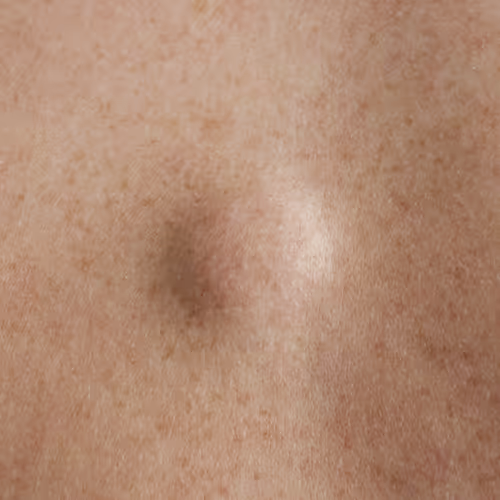
A mole should be checked by a physician before removal any time it has changed in size, shape, or color, started bleeding or itching, or simply looks different from a person's other moles. Waiting to have a suspicious mole assessed delays diagnosis if the growth turns out to be atypical or cancerous.
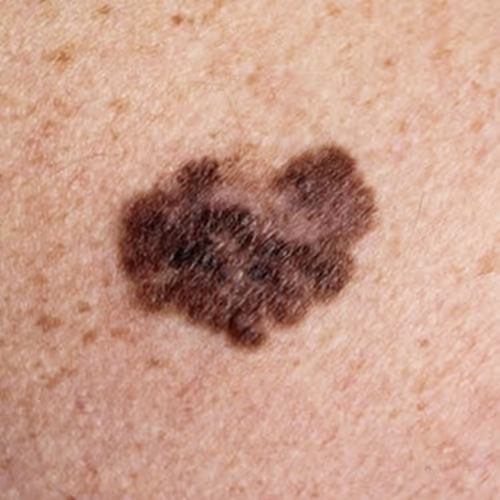
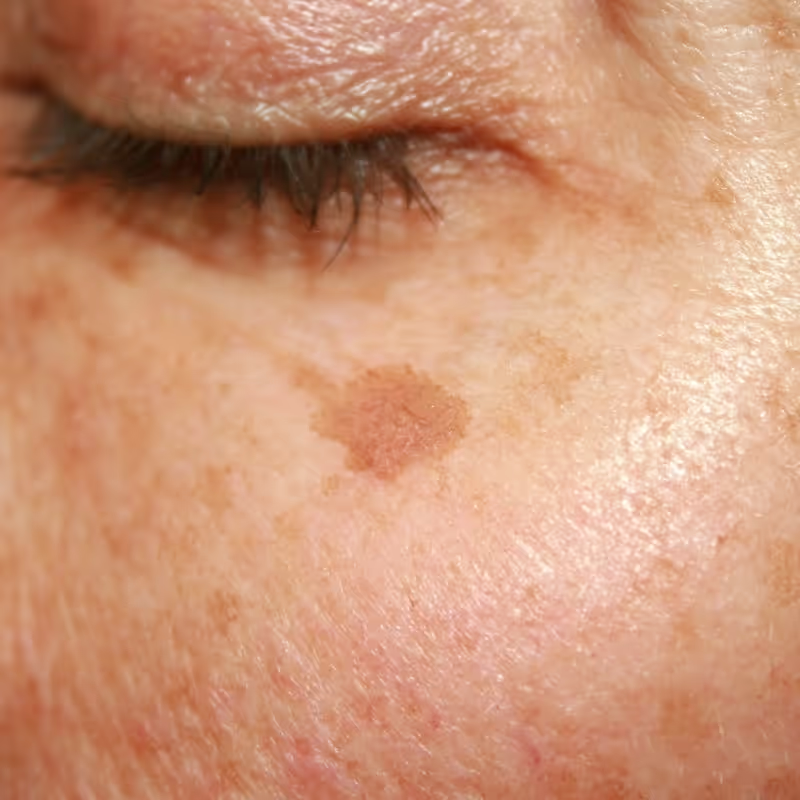
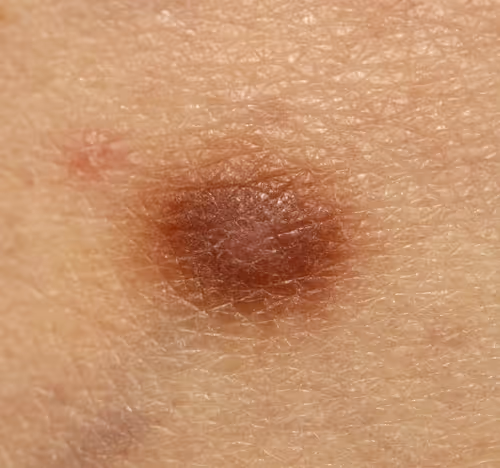
Dermatologists commonly use the ABCDE rule as a starting checklist:
A, Asymmetry: one half of the mole looks different from the other half.
B, Border: edges are irregular, notched, or blurred instead of smooth.
C, Color: the mole has multiple colors or uneven shading (tan, brown, black, red, or blue).
D, Diameter: larger than about 6 millimeters, roughly the size of a pencil eraser.
E, Evolving: the mole is changing in size, shape, color, or symptoms over weeks to months.
Common mistake: assuming a mole is fine simply because it doesn't hurt. Many early melanomas are painless and only detected through visual changes, which is why a physical check matters more than symptom tracking alone.
Decision rule: book an assessment promptly if a mole is new after age 30, has changed noticeably in the last 6 to 12 months, or a family member has had melanoma. For a closer look at what atypical moles can look like compared with common ones, see this guide on atypical moles.
Cosmetic vs Medical Mole Removal
Cosmetic mole removal is performed on moles that are medically benign but bother a patient visually, while medical mole removal addresses moles that are symptomatic, changing, or possibly cancerous. The distinction matters because it affects both technique and whether OHIP covers the cost.
A mole on the jawline that catches on a razor every morning, with no signs of irregularity, is a cosmetic case. A mole on the shoulder that has darkened and developed a notched border over the past year is a medical case, even if it doesn't hurt.
Edge case: some moles start as a cosmetic concern but turn out to have atypical features on closer exam. In that situation, the visit shifts from a purely cosmetic removal to a medical one, and the physician will usually recommend sending the tissue for pathology regardless of the original reason for the appointment.
Mole Removal Options: Laser vs Surgical Excision
Surgical excision physically removes the mole and a margin of tissue with a scalpel, while laser treatment uses light energy to break down pigment in very superficial spots. Surgical excision is the preferred method whenever pathology testing might be needed, because laser treatment destroys the tissue and leaves nothing to send to a lab.
Surgical excision (including shave technique):
Removes the entire mole, including cells below the surface
Allows tissue to be sent for pathology when needed
Suitable for raised, flat, large, or suspicious moles
May require one or two stitches depending on depth
Laser removal:
Works best on small, flat, benign pigmented spots
No tissue sample is preserved for testing
Multiple sessions may be needed for complete removal
Not appropriate for any mole with atypical features
Decision rule: choose surgical excision if there's any uncertainty about whether the mole is benign, if it's raised, or if a permanent pathology record matters. Choose laser only for confirmed benign, flat, small spots where cosmetic appearance is the sole concern. This is why most physician-led minor surgery clinics, including TMSC, default to excision techniques rather than laser for anything beyond very minor pigmentation. A deeper comparison is available in this article on laser vs traditional mole removal.
Surgical Mole Removal: What to Expect
A typical surgical mole removal appointment takes 15 to 30 minutes per mole, most of which is spent on numbing and closure rather than the actual excision. Patients are awake throughout, and the area is numb within a few minutes of the anesthetic injection.
Here's what a visit usually looks like:
Check-in and exam, The physician confirms the mole's location, size, and features, sometimes using a dermoscope.
Numbing, A local anesthetic injection is given directly around the mole.
Removal, The mole is excised with a scalpel or shave blade; larger or deeper moles may take slightly longer.
Closure, Sutures are placed if the excision is deep; smaller shave removals are often left to heal without stitches.
Dressing and instructions, A bandage is applied, and the patient receives wound care instructions before leaving.
How long does mole removal take in Burlington? Most patients are in and out of the clinic within 30 to 45 minutes total, including the numbing period, for a single mole. Removing several moles in one visit extends the appointment time but is often done to save patients repeat trips, especially for those traveling from Milton, Georgetown, or Hamilton.
Quick example: a single flat mole on the back, treated by shave excision, might take 5 minutes of actual removal time plus 10 minutes of numbing and prep. A larger, raised mole on the scalp requiring sutures could take closer to 20 to 25 minutes total.
Mole Biopsy and Pathology
A mole biopsy involves sending removed tissue to a pathology lab to check for atypical or cancerous cells under a microscope. Biopsy is recommended whenever a mole has features suggesting it might not be entirely benign, regardless of whether the patient originally sought cosmetic removal.
There are a few biopsy approaches physicians may use:
Excisional biopsy: the entire mole is removed along with a margin of healthy tissue, then sent for testing. This is the most common method when malignancy is a concern.
Shave biopsy: a thinner sample is taken from the surface, useful for flatter lesions but less ideal if deeper invasion is suspected.
Punch biopsy: a small circular tool removes a core sample, typically used for lesions that need a deeper tissue sample without full excision.
Pathology results usually take one to two weeks to come back. If a mole is found to have atypical cells or early melanoma, the report will guide whether further margin removal or additional monitoring is needed.
Common mistake: assuming that because a mole "didn't look that bad," a biopsy isn't necessary. Visual assessment alone misses some early melanomas, which is why physicians err toward biopsy when there's any doubt. Patients wanting a deeper explanation of this process can review mole biopsy and pathology testing or a suspicious mole assessment overview.
Mole Removal at Home vs Professional Removal: Why DIY Is Risky
Attempting mole removal at home, whether by picking, shaving, using over-the-counter mole removal creams, or applying home remedies, carries real risks and should be avoided. Home removal cannot rule out cancer, and it often leaves ragged wound edges that scar worse than a clean surgical excision.
Is it safe to remove a mole yourself? No. Physicians consistently caution against self-removal or treatment at non-medical facilities [10]. Home attempts commonly lead to:
Infection from unsterile tools or incomplete wound care
Incomplete removal, leaving mole cells behind that can regrow
Scarring that is more noticeable than a professional excision
Missed diagnosis, since there's no pathology review of tissue removed at home
What happens if you pick at a mole? Repeated picking or scratching irritates the mole, can cause bleeding, and increases infection risk. It also makes it harder for a physician to later assess the mole's original appearance, which matters when trying to judge whether changes are new or caused by trauma. If a mole has been recently irritated by picking, it's worth having it looked at sooner rather than later, since inflammation can sometimes mimic or mask signs of change.
Decision rule: if a mole needs to come off, book a physician assessment rather than attempting removal with a kit, cream, or blade at home. The cost difference between professional removal and a home kit is small compared with the risk of infection, scarring, or a missed skin cancer diagnosis. For more detail on this comparison, see why home mole removal carries risk.
Does Mole Removal Leave a Scar? Aftercare Tips
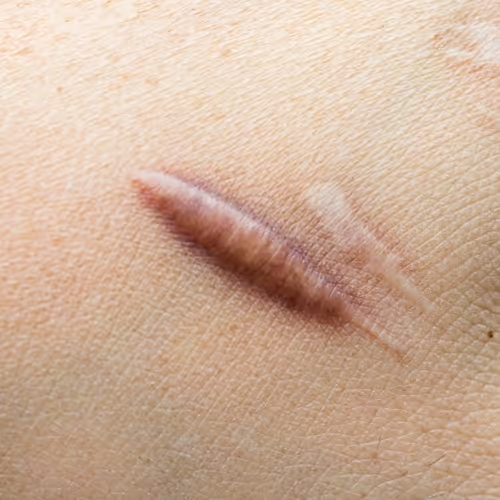
Mole removal almost always leaves some mark on the skin, though the visibility depends on technique, mole size, location, and how well the wound is cared for during healing. Shave excisions on flat areas of skin tend to heal with less visible scarring than deeper surgical excisions on curved or high-tension areas like the shoulder or chest.
Factors that affect scarring include:
Technique used: shave removal generally leaves a flatter scar than full excision with sutures.
Mole size and depth: larger or deeper moles need larger incisions, which can mean more visible scars.
Body location: areas with more skin tension (chest, back, shoulders) scar more noticeably than the face in many patients.
Skin type: patients prone to keloid or hypertrophic scarring need extra care and sometimes specific aftercare products.
Aftercare compliance: keeping the wound clean, moisturized, and protected from sun exposure during healing reduces long-term visibility.
Aftercare checklist:
Keep the area clean and dry for the first 24 to 48 hours as instructed.
Apply the recommended ointment or dressing to keep the wound moist, which supports better healing.
Avoid picking at scabs or stitches.
Protect the healing area from direct sun exposure for several weeks.
Consider silicone sheets or scar gel once the wound has closed, if scarring is a concern.
Mole Removal Cost in Burlington, Milton & Halton Region (OHIP Guidance)
Mole removal cost in the Burlington, Milton, and Halton Region area varies depending on whether the procedure is classified as medical or cosmetic, the number of moles removed, and whether pathology testing is included. Medical removals are often billed to OHIP, while cosmetic removals are typically an out-of-pocket fee set by the individual clinic.
Is mole removal covered by OHIP in Halton Region? OHIP generally covers mole removal when it is medically necessary, meaning the mole shows signs of possible malignancy, causes recurring irritation, bleeds, or interferes with function (such as catching on clothing repeatedly and becoming inflamed). Purely cosmetic removal of a benign mole is usually not covered and is billed directly to the patient. Some regional clinics note that certain cases may be covered under OHIP depending on the physician's assessment [10], so it's worth confirming coverage during the consultation rather than assuming either way.
Local pricing structures also vary by consultation model:
Some clinics charge a flat consultation fee (for example, around $50) that is credited toward treatment cost if the patient proceeds with removal [3].
Cosmetic clinics may price per mole, with additional charges if pathology testing is requested for a technically benign-looking mole.
Medical removals billed through OHIP typically have no separate consultation fee for the patient, since the physician bills the province directly.
Decision rule: if a mole shows any signs described in the ABCDE checklist above, mention this clearly when booking, since it changes both the urgency of the appointment and the likely billing pathway. Patients wanting a broader cost breakdown can review mole removal cost guidance and is cosmetic mole removal covered by OHIP.
Recovery After Mole Removal: Healing Time
Mole removal healing time typically ranges from 1 to 3 weeks for the surface skin to close, with full scar maturation taking several months. Recovery speed depends on the removal method, mole size, and how well aftercare instructions are followed.
A general healing timeline looks like this:
Days 1-3: the area may be tender, slightly red, or swollen; a bandage protects the wound.
Days 4-10: a scab or healing tissue forms; sutures, if used, are often removed around day 7 to 14 depending on location.
Weeks 2-4: the surface heals over, though the skin underneath continues to strengthen.
Months 1-6: the scar gradually fades from pink or red to a flatter, lighter mark.
Quick example: a shave-removed mole on the arm might look nearly healed within 10 to 14 days, while a sutured excision on the back, an area with more skin tension, can take closer to 3 weeks before the surface fully closes and several months before the scar settles.
Common mistake: returning to heavy exercise or sun exposure too soon, which can pull at the healing wound or darken the scar. Following the physician's specific timeline for activity and sun protection matters more than a generic recovery estimate. For more on this, see does mole removal hurt and do you need stitches for mole removal.
Why Choose TMSC Oakville for Mole Removal in Burlington, Milton & Halton Region
TMSC Oakville offers a convenient, physician-led option for patients across Burlington, Milton, Georgetown, and Hamilton who need mole assessment or removal without long wait times. The clinic provides in-office consultations, excision-based removal, and pathology coordination when a mole needs to be tested.
Best dermatologist for mole removal in Milton? Rather than a single "best" answer, patients in Milton and across Halton Region benefit from choosing a provider who performs in-person dermoscopic assessment before any removal, offers both cosmetic and medical removal pathways, and can arrange biopsy testing without requiring a separate referral loop. TMSC's model is built around this kind of direct-access minor surgery care.
For patients weighing local options against clinics like Dr. Harris's Burlington and Oakville practice [1], Burlington Plastic Surgery [2], or Milton providers such as Laser Aesthetics [3] and AroRegen [4], the deciding factors typically come down to appointment availability, whether pathology testing is built into the visit, and proximity to home or work. TMSC Oakville sits centrally enough in the Halton corridor to serve patients from several surrounding municipalities without requiring a trip into downtown Toronto.
Looking for mole removal near Burlington, Milton or Halton Region? The Minor Surgery Center's Oakville clinic offers mole assessment and surgical removal options for patients across the Halton area.
Patients researching provider reputation can also review independent listings such as RealSelf's directory of mole removal providers in the Burlington area [9], which includes plastic surgeons serving the broader Halton and Peel corridor.
Areas Served Near Oakville and Halton Region
TMSC Oakville serves patients throughout Halton Region and neighboring communities, making mole assessment and removal accessible without requiring travel into central Toronto. This regional reach matters for patients who want a same-week appointment close to home or work.
Communities commonly served include:
Oakville (including Bronte, Glen Abbey, West Oak Trails, and Palermo)
Burlington
Milton
Georgetown
Hamilton
Halton Region more broadly
Edge case: patients living just outside this immediate corridor, such as in Mississauga or Vaughan, still have nearby options through TMSC's wider clinic network, including guides for mole removal in Erin Mills, Mississauga and other regional pages.
Is mole removal painful? Most patients feel only a brief pinch from the local anesthetic injection; the actual removal is not painful since the area is numb. Some tenderness during healing is normal but usually mild.
How much does mole removal cost in Burlington and Halton Region? Cost depends on whether the removal is classified as medical or cosmetic. Medical removals are often covered by OHIP, while cosmetic removals are typically billed out-of-pocket, with pricing varying by clinic and number of moles treated.
Can I get mole removal without a referral in Halton Region? Many minor surgery and cosmetic clinics accept patients directly for consultation without requiring a family doctor referral, though coverage for OHIP billing may depend on the physician's assessment of medical necessity.
Will my mole grow back after removal? A properly excised mole, especially one removed with a margin of surrounding tissue, is unlikely to regrow. Shave removals occasionally leave residual pigmented cells that can partially return, which is one reason excision is preferred for moles with any uncertain features.
How do I know if my mole needs a biopsy? A mole should be considered for biopsy if it shows asymmetry, irregular borders, uneven color, a diameter larger than 6 millimeters, or recent change in appearance. A physician exam, sometimes with dermoscopy, helps determine whether biopsy is warranted.
Is laser mole removal a good option? Laser removal works best for small, flat, confirmed benign pigmented spots where no tissue sample is needed. It is not recommended for raised moles or any mole with features suggesting it should be tested.
What happens during recovery if stitches are used? Stitches are typically removed 7 to 14 days after the procedure, depending on location, and the wound continues to strengthen over several weeks. Following wound care instructions, including keeping the area clean and protected from sun, supports better healing.
Can I remove a mole myself with an at-home kit? Self-removal is not recommended. It cannot rule out skin cancer, often leads to incomplete removal or infection, and typically leaves more noticeable scarring than a professional excision.
Book a Consultation
Patients across Burlington, Milton, Georgetown, Hamilton, and the wider Halton Region who need mole assessment or removal can book a consultation with TMSC Oakville. The clinic combines an in-person exam, discussion of removal options, and pathology coordination when needed, so patients leave with a clear plan rather than guesswork.
Before booking, it helps to note any recent changes in the mole's size, shape, color, or symptoms, along with any personal or family history of skin cancer. This information speeds up the assessment and helps the physician determine whether the case is best handled as a cosmetic removal or a medical one requiring biopsy.
Conclusion
Mole removal in Burlington, Milton, and the Halton Region does not require a trip into downtown Toronto or a long wait for a referral. Patients have access to physician-led assessment, a choice between cosmetic and medical removal pathways, and biopsy coordination when a mole's appearance calls for it. The most important step is getting any changing, irritated, or unusual mole examined promptly, since early assessment is what allows for both better cosmetic outcomes and, when needed, earlier detection of anything medically significant.
Next steps for patients in the area:
Check any concerning mole against the ABCDE signs described above.
Book a consultation rather than attempting home removal.
Ask directly whether the visit will be billed as medical (OHIP) or cosmetic (out-of-pocket).
Follow aftercare instructions closely to support clean healing and minimal scarring.
Return for pathology follow-up promptly if a biopsy was performed.
Promote healthy skin and limit the spread of disease through targeted removal procedures.
Book a Free Consultation
You can book your free consultation with The Minor Surgery Center in three easy ways: online through Cortico, by phone, or by requesting a callback from our team.
The initial consultation is free. During this consultation, one of our board certified surgeons will examine your condition and recommend a suitable solution.
Directly Online
Request a Callback
By Phone
By Text
Hours
Sunday
Closed
Monday
9 am — 4 pm
Tuesday
9 am — 4 pm
Wednesday
9 am — 4 pm
Thursday
9 am — 4 pm
Friday
9 am — 4 pm
Saturday
Toronto & Oakville Open Vaughan & Mississauga Closed



%20Treatment.avif)