Suspicious Mole Assessment Toronto | Changing, Bleeding or Irregular Mole Check
Concerned about a changing, bleeding, itchy, painful, or irregular mole in Toronto? The Minor Surgery Center offers physician-led suspicious mole assessments with no referral required. Our team can examine the mole, explain whether it should be monitored, biopsied, removed, or referred for further care, and provide rapid access across Toronto, Vaughan, Mississauga, and Oakville.
Quick Answer: A suspicious mole assessment in Toronto is a physician-led clinical evaluation for any mole that is changing, bleeding, itching, painful, or irregular. The Minor Surgery Center offers no-referral suspicious mole assessments across Toronto, Vaughan, Mississauga, and Oakville, with biopsy and removal available when clinically appropriate. If a mole is showing new or worsening changes, the right move is to book an assessment promptly rather than wait.
Key Takeaways
Any mole that changes in size, shape, or colour, bleeds without injury, itches, crusts, or looks different from your other moles warrants a clinical assessment.
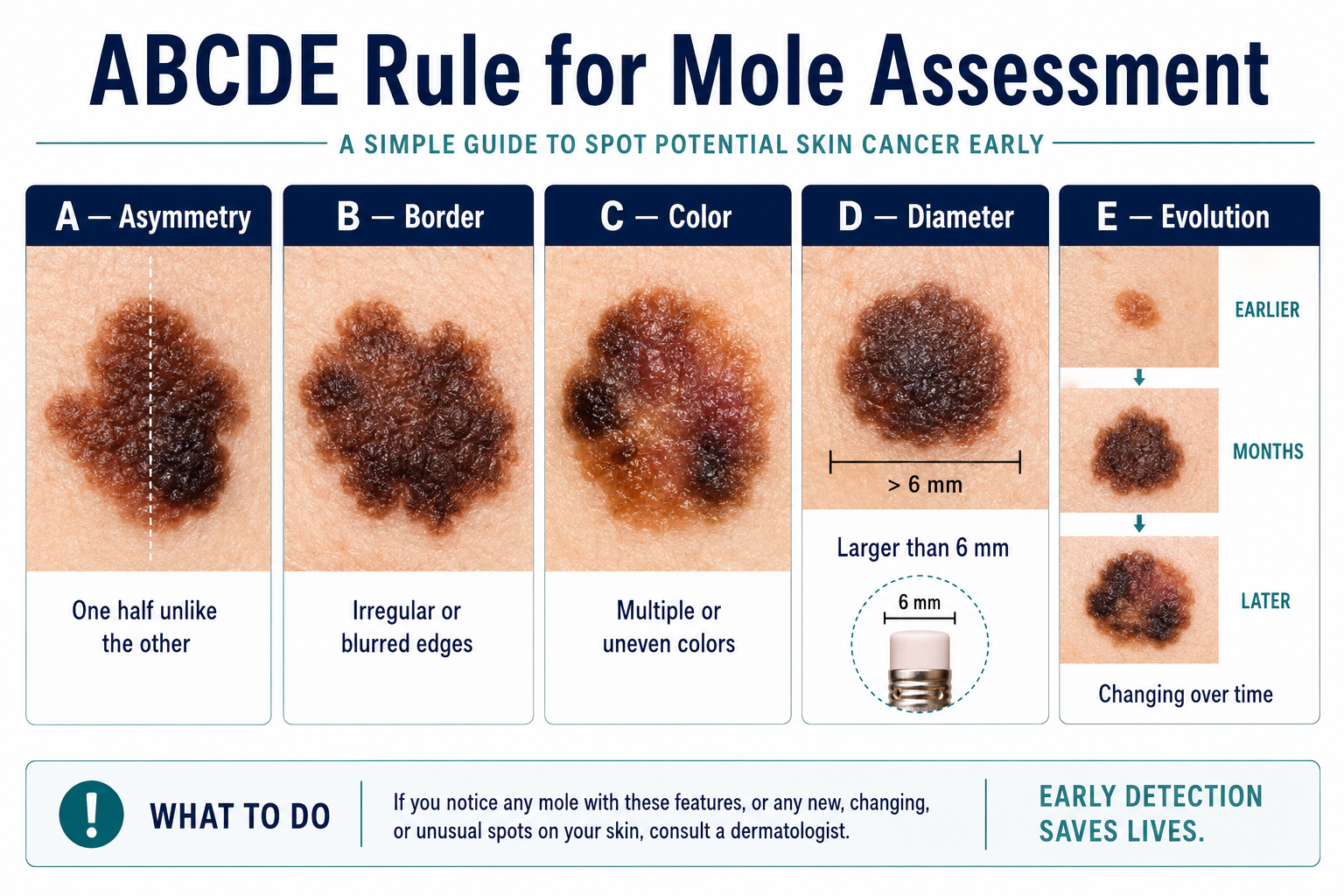
The ABCDE rule (Asymmetry, Border, Colour, Diameter, Evolution) is the standard framework clinicians use to identify potentially concerning moles.
You do not need a referral to book a suspicious mole assessment at most private clinics in Toronto, including The Minor Surgery Center.
OHIP covers mole-related visits only when there is a documented clinical concern; routine or peace-of-mind checks are generally uninsured. [1]
A physician-led assessment can determine whether your mole should be monitored, biopsied, removed, or referred to a specialist.
Same-visit biopsy or removal may be possible when the physician determines it is clinically appropriate.
Online mole checker apps are not a substitute for a clinical examination; they may miss concerning lesions or create unnecessary alarm.
Melanoma is most treatable when caught early. Delaying assessment of a changing mole is one of the most common and preventable mistakes patients make.
Risk factors for melanoma include fair skin, personal or family history of skin cancer, high lifetime UV exposure, and a large number of moles.
Clinics offering rapid-access suspicious mole assessments in the GTA include The Minor Surgery Center, with locations across Toronto, Vaughan, Mississauga, and Oakville.
When Is a Mole Considered Suspicious?
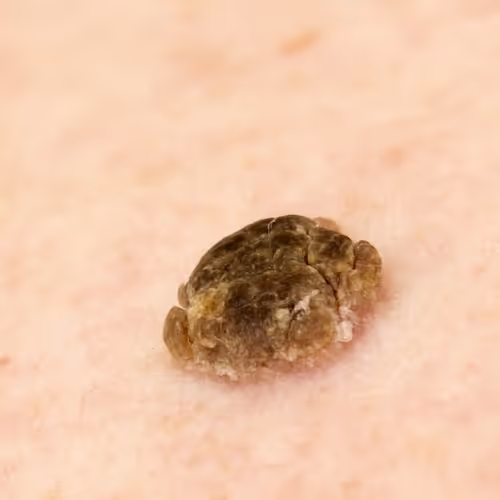
A mole is considered suspicious when it shows one or more features that differ from a stable, normal mole. The Canadian Cancer Society notes that a change in a mole's colour, size, or shape is usually the first sign of melanoma, and clinicians use the ABCDE rule as the primary framework for identifying concerning changes.
The ABCDE Rule Explained
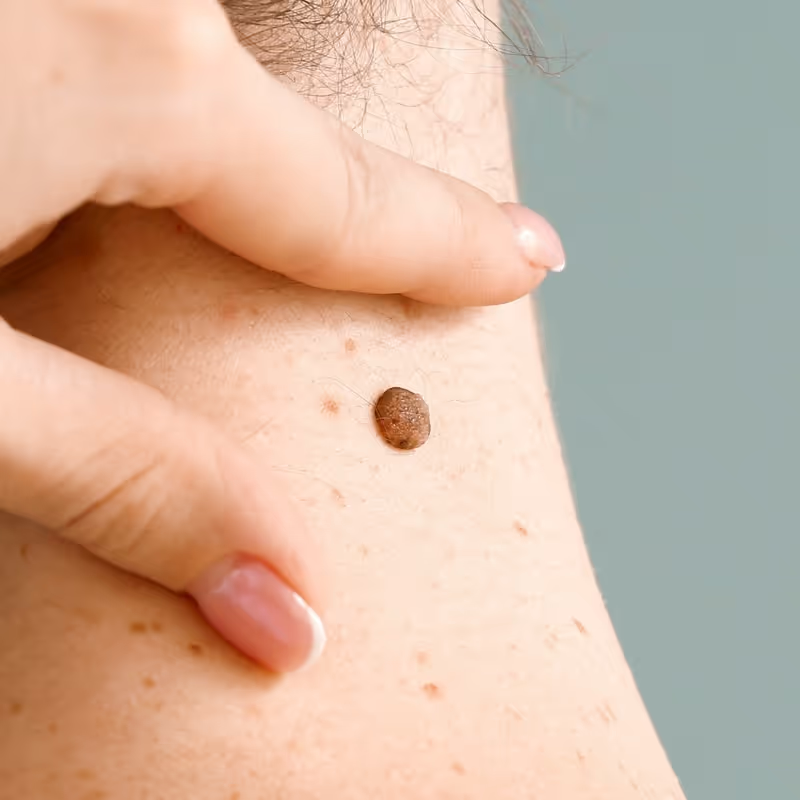
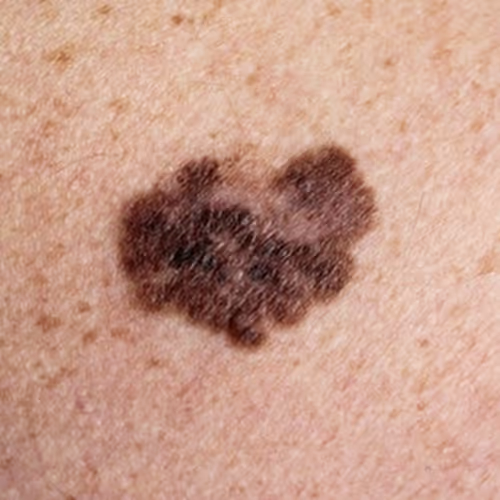
Asymmetry: One half of the mole does not match the other. Benign moles are typically round or oval and symmetrical.
Border: The edges are irregular, ragged, notched, or blurred. A smooth, well-defined border is a reassuring sign.
Colour: Multiple shades of brown, black, red, white, or blue within a single mole are concerning. Uniform colour is generally a good sign.
Diameter: A mole wider than 6 mm (roughly the size of a pencil eraser) warrants attention, though melanomas can be smaller.
Evolution: Any change over weeks or months is the single most important warning sign. This includes changes in size, shape, colour, elevation, or new symptoms such as bleeding or itching.
Symptom-Based Warning Signs
Beyond the ABCDE framework, the following symptoms should prompt a clinical assessment:
A mole that bleeds without any injury or trauma
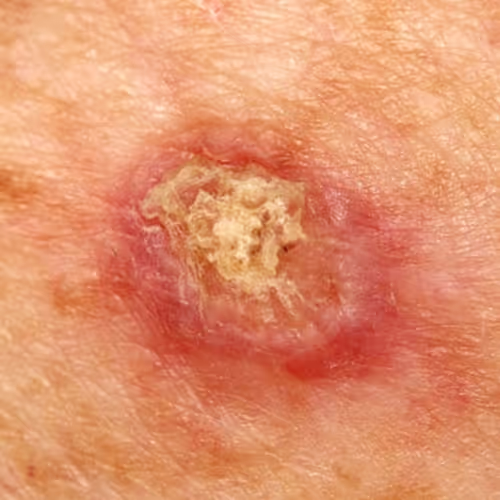
A mole that itches persistently, crusts, or does not heal
A mole that has become raised, elevated, or developed a new lump within it
A new mole or dark spot appearing after age 30
A lesion that looks distinctly different from all your other moles (the "ugly duckling" sign)
A mole that causes pain or tenderness without an obvious cause
Decision rule: If a mole shows even one of these features, book an assessment. If it shows two or more, do not delay.
What Are the Signs of a Potentially Cancerous Mole?
The signs most associated with melanoma and other skin cancers overlap heavily with the ABCDE criteria, but a few additional clinical features are worth knowing. A mole that is rapidly growing over weeks rather than years, one that develops a satellite lesion nearby, or one that bleeds spontaneously are all features that raise clinical concern.
It is also worth knowing the difference between a benign and a potentially malignant mole:
FeatureBenign MolePotentially Malignant MoleShapeRound, symmetricalAsymmetrical, irregularBorderSmooth, well-definedRagged, notched, blurredColourSingle shade of tan or brownMultiple colours, uneven pigmentSizeUsually under 6 mmOften over 6 mm, or growingChange over timeStable for yearsChanging in weeks or monthsSymptomsNoneBleeding, itching, crusting, pain
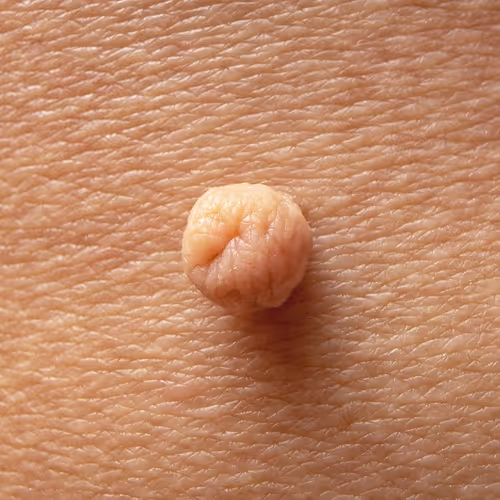
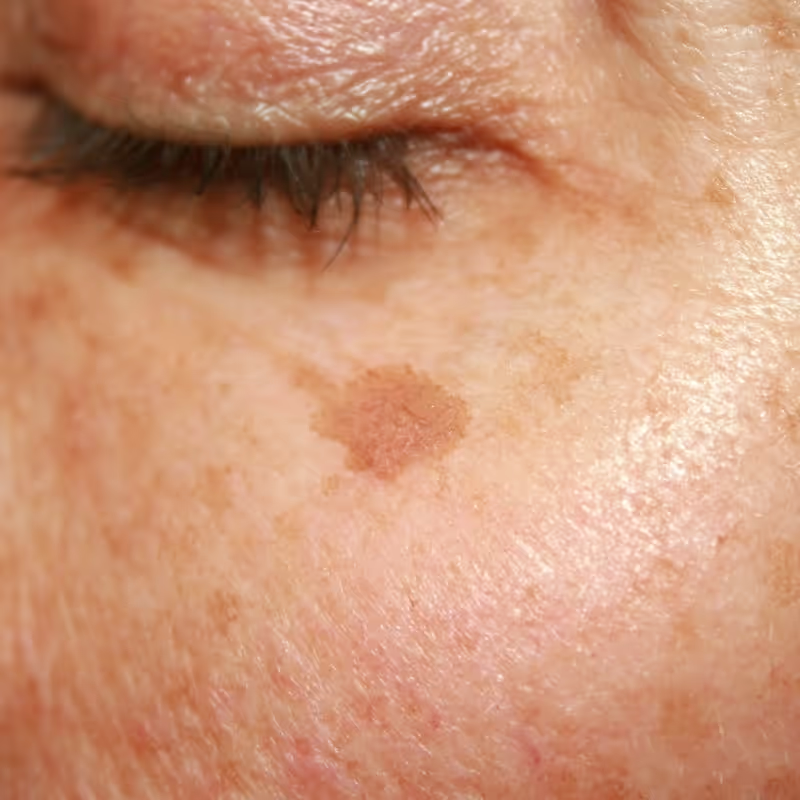
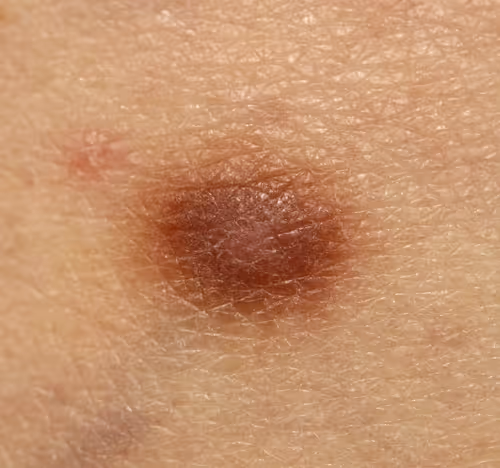
A benign mole that has been stable for many years is far less concerning than a mole that has changed noticeably over the past few months. That said, no visual checklist replaces a clinical examination. Only a physician can properly assess a lesion using dermoscopy and clinical context. For a deeper look at what benign moles typically look like, see this guide to benign moles explained.
When Should I Get a Suspicious Mole Examined?
The short answer: as soon as you notice a change. Melanoma is highly treatable in its early stages and significantly harder to treat once it has spread. Waiting months to "see if it changes more" is one of the most common and preventable mistakes patients make.
Book promptly if:
The mole has changed in the past four to eight weeks
The mole is bleeding without any injury
The mole itches, crusts, or does not heal
The mole has two or more ABCDE features
You are simply unsure, and the mole looks different from your others
It is reasonable to monitor briefly if:
The mole has been completely stable for years
It has no ABCDE features and no symptoms
You have recently had a full mole check with no concerns noted
Common mistake: Many patients wait until their next annual physical to mention a changing mole. If a mole is actively changing, that warrants its own dedicated appointment, not a footnote at the end of a general check-up.
How Do I Know If My Mole Needs a Biopsy?
A biopsy is needed when a physician cannot rule out malignancy based on visual and dermoscopic examination alone. The decision is made by the assessing physician based on the clinical picture, not by the patient.
Factors that increase the likelihood a biopsy will be recommended include:
Multiple ABCDE features present
Rapid or recent change in the mole
Bleeding or ulceration
Dermoscopic features that suggest atypical or dysplastic cells
Patient history of melanoma or a first-degree relative with melanoma
Lesion located in a high-risk area (scalp, nail bed, mucous membranes)
When a biopsy is performed, a small tissue sample is sent to a pathology lab for analysis. Results typically take one to two weeks. If the result confirms malignancy, the physician will advise on next steps, which may include wider excision, specialist referral, or further staging.
Edge case: Not every mole that looks unusual needs a biopsy. Some lesions that appear irregular are benign seborrheic keratoses, dermatofibromas, or other non-cancerous growths. A trained clinician can often distinguish these from melanoma using dermoscopy, avoiding unnecessary procedures. You can learn more about dermatofibroma removal in Toronto if you suspect your lesion may be one of these.
What Happens During a Professional Mole Assessment?
A professional suspicious mole assessment follows a structured clinical process. It is not simply a quick look; it involves a review of your history, a systematic visual examination, and a risk-based recommendation.
Here is what to expect at a typical assessment:
Medical history review: The physician asks about your personal and family history of skin cancer, your skin type, UV exposure history, and any previous mole removals or biopsies.
Mole timeline: You will be asked when you first noticed the mole, whether it has changed, and what symptoms, if any, you have experienced.
Visual examination: The physician examines the mole in good lighting, assessing its size, shape, colour, and surface characteristics.
Dermoscopic assessment: A dermoscope (a handheld magnifying device with polarized light) is used to examine the mole's internal structure, which is not visible to the naked eye. This significantly improves diagnostic accuracy. [6]
Risk classification: The physician classifies the mole as low, intermediate, or high concern based on the examination findings.
Recommendation: The physician recommends one of four pathways: monitor (with a defined follow-up timeline), biopsy, remove, or refer to a specialist.
The entire consultation typically takes 20 to 40 minutes depending on the number of lesions examined and the complexity of the case. For a broader overview of how this process works, see the mole check Toronto page.
Can a Suspicious Mole Be Removed the Same Day?
In some cases, yes. If the physician assesses the mole and determines that removal or biopsy is clinically appropriate, it may be possible to proceed at the same visit, depending on clinic scheduling and the nature of the procedure.
However, same-day removal is not always appropriate or advisable:
Assessment comes first. The physician needs to examine the mole before deciding whether removal is the right course of action. Not every suspicious-looking mole should be removed immediately.
Biopsy vs. full removal. Sometimes a partial biopsy is the right first step; full removal follows once pathology confirms the diagnosis.
Tissue pathology. When a mole is removed due to clinical concern, the tissue is typically sent to a pathology lab. This is standard practice, not optional.
Complex cases. If the lesion is large, in a sensitive location, or the physician suspects melanoma, referral to a specialist may be more appropriate than same-day removal.
The Minor Surgery Center's model is specifically designed to minimize delays between assessment and treatment. The clinic's board-certified plastic surgeons can perform excision and biopsy when indicated, and the pathway from assessment to procedure is intentionally short. For more detail on the removal process, see the best mole removal clinic in Toronto page.
Are Mole Checks Covered by OHIP?
OHIP coverage for mole-related visits depends on whether the visit is medically necessary. As of 2026, OHIP covers mole assessments only when there is a documented clinical concern, such as a mole that is changing, symptomatic, or clinically suspicious for skin cancer. [1]
What OHIP typically covers:
Assessment of a mole that is bleeding, changing, painful, or otherwise symptomatic
Biopsy of a clinically suspicious lesion
Removal of a mole that is confirmed or strongly suspected to be malignant
What OHIP does not cover:
Routine or "peace of mind" mole checks with no clinical concern
Full-body mole mapping or dermoscopic imaging for screening purposes
Cosmetic mole removal (removal for appearance rather than medical need)
If you are seeing a private clinic for a suspicious mole assessment without a physician referral, a consultation fee will typically apply. Some clinics bundle the assessment with removal if it proceeds at the same visit. It is worth confirming the fee structure when booking. [1]
Practical note: If your family doctor refers you to a specialist for a suspicious mole, the specialist visit itself is OHIP-covered. The challenge is wait times. Private clinics like The Minor Surgery Center offer faster access for patients who cannot wait weeks for a specialist appointment. [7]
Do I Need a Dermatologist, or Can a Physician Do the Assessment?
You do not always need to start with a dermatologist. A qualified physician with experience in skin lesion assessment can examine a suspicious mole, use dermoscopy, apply the ABCDE criteria, and recommend the appropriate next step, whether that is monitoring, biopsy, removal, or specialist referral.
Dermatology involvement is more important in these situations:
You have a personal or family history of melanoma
You have a large number of atypical or dysplastic moles requiring ongoing surveillance
The lesion has features that are ambiguous or complex on dermoscopy
You need full-body mole mapping with digital imaging for long-term comparison
A biopsy has already returned an atypical or malignant result
For most patients with a single concerning mole, a physician-led assessment at a clinic like The Minor Surgery Center provides the same quality of initial evaluation, with faster access and no referral required. If specialist care is needed, the physician can guide that referral. You can also explore options through the find a dermatologist in Toronto directory if ongoing dermatology follow-up is appropriate for your case.
Suspicious Mole Assessment Toronto: Risk Factors for Melanoma
Certain individuals face a higher baseline risk of melanoma and should be especially proactive about suspicious mole assessments. Understanding your personal risk helps determine how urgently to act and how frequently to schedule skin checks.
Established risk factors for melanoma include:
Fair skin, light hair, and light eyes: People with Fitzpatrick skin types I and II (those who burn easily and rarely tan) have significantly higher melanoma risk.
History of sunburns: Blistering sunburns, especially in childhood or adolescence, are associated with increased lifetime risk.
High lifetime UV exposure: Cumulative sun exposure and use of tanning beds both contribute to risk.
Large number of moles: Having more than 50 moles increases the statistical likelihood that one may become atypical.
Atypical or dysplastic moles: Moles with irregular features that are not yet malignant but may progress.
Personal history of skin cancer: A previous melanoma, basal cell carcinoma, or squamous cell carcinoma raises the risk of a new skin cancer. See the skin cancer clinic in Toronto page for more on treatment pathways.
Family history: A first-degree relative with melanoma roughly doubles your risk.
Immunosuppression: Patients on immunosuppressive medications or with immune system conditions have higher skin cancer risk.
Toronto's population is diverse, and risk varies significantly across individuals. The Mole Mobile program, which has brought free skin cancer screenings to communities across Ontario including Northern Ontario, highlights the public health importance of accessible screening for high-risk individuals. [3][5]
How Much Does a Mole Check Cost in Toronto?
The cost of a suspicious mole assessment in Toronto depends on whether the visit is OHIP-covered, the type of clinic, and whether additional procedures (biopsy, removal) are performed at the same visit.
General cost framework for 2026:
OHIP-covered assessment (with clinical concern, through family doctor or referral): No out-of-pocket cost for the consultation itself, though removal or biopsy fees may apply depending on the setting.
Private clinic consultation (no referral, rapid access): Consultation fees vary by clinic. It is standard practice for private minor surgery clinics to charge a fee for the assessment, with separate fees for biopsy or removal if performed.
Full-body mole mapping: This is a separate service, typically uninsured, and is priced differently from a single-lesion suspicious mole assessment. Competitor clinics in Toronto offer full-body mole mapping as a distinct service with its own pricing. [10]
What affects the total cost:
Whether the assessment leads to a same-day biopsy or removal
The size and location of the mole
Whether pathology (lab analysis) is required
The number of lesions examined
The best approach is to call the clinic directly and ask about consultation fees and what is included. The Minor Surgery Center's mole check Toronto page provides current information on their assessment and removal services.
How Often Should I Get My Moles Checked?
The right frequency depends on your individual risk profile. There is no single universal recommendation, but the following framework is widely used by clinicians:
Low-risk individuals (no personal/family history, few moles, no atypical features):
Annual skin self-examination at home
Professional mole check every one to two years, or when a new concern arises
Moderate-risk individuals (fair skin, many moles, history of sunburns, one or two atypical moles):
Professional mole check annually
Prompt assessment of any new or changing lesion between scheduled checks
High-risk individuals (personal or family history of melanoma, multiple atypical moles, immunosuppression):
Professional mole check every six to twelve months
Ongoing dermoscopic surveillance, potentially with digital mole mapping for comparison over time [6]
For everyone: A suspicious mole assessment should happen as soon as a concerning change is noticed, regardless of when the last scheduled check occurred. Do not wait for your next annual appointment if a mole is actively changing.
Suspicious Mole Assessment Toronto: Common Mistakes When Monitoring Skin Changes
Even well-intentioned patients make errors when tracking their moles. These mistakes can delay diagnosis and reduce the effectiveness of early treatment.
Mistake 1: Waiting to see if it "gets worse." A mole that is already changing is already showing a warning sign. Waiting several more months to confirm it is getting worse is not a safe strategy for a potentially malignant lesion.
Mistake 2: Relying on a photo comparison alone. Comparing phone photos taken in different lighting, at different distances, and at different angles is unreliable. Clinical dermoscopy provides far more information than a photograph.
Mistake 3: Assuming a small mole is not dangerous. Melanomas can be under 6 mm when they are first clinically detectable. Size alone is not a reliable safety indicator.
Mistake 4: Dismissing symptoms as minor. Itching, crusting, or intermittent bleeding from a mole are symptoms, not nuisances. They warrant assessment.
Mistake 5: Assuming a GP will always flag it. General practitioners see a wide range of conditions. If you have a specific concern about a mole, raise it explicitly and request a dedicated assessment rather than hoping it will be noticed during a general visit.
Mistake 6: Using an online mole checker as a final answer. Online mole assessment tools are discussed in the next section, but the short version is this: they are not clinically validated for diagnosis and should not replace a professional examination.
Are Online Mole Assessment Tools Reliable?
Online mole checker apps and AI-based skin analysis tools have improved in recent years, but they are not reliable enough to replace a clinical assessment. They may serve as a useful prompt to seek care, but they should not be used as a final answer on whether a mole is safe.
The limitations of online mole checkers:
Most apps rely on smartphone photographs, which vary significantly in lighting, resolution, and angle. These variables affect the algorithm's output.
No app can replicate dermoscopy, which examines the subsurface structure of a mole invisible to the naked eye.
Published accuracy data for consumer mole checker apps varies widely, and most have not been validated in large, diverse clinical populations.
A false negative (the app says the mole is fine when it is not) can provide false reassurance and delay a necessary assessment.
A false positive (the app flags a benign mole as suspicious) can cause unnecessary anxiety.
The right use of online tools: If an app flags a mole as potentially concerning, use that as a reason to book a clinical assessment, not as a diagnosis. If an app says a mole is fine but you are still worried because it has changed, book an assessment anyway. Clinical judgment by a trained physician with a dermoscope is the standard of care, not a smartphone algorithm. For more context on available tools, see this guide to the best mole check app in 2026.
Why Choose The Minor Surgery Center for Suspicious Mole Assessment in Toronto?
The Minor Surgery Center is positioned specifically for patients who need fast, physician-led access to mole assessment and, when appropriate, same-visit treatment. The clinic's model addresses the most common frustration patients face: knowing something looks wrong but not knowing where to go quickly without a referral.
Key reasons patients choose TMSC for suspicious mole assessments:
No referral required for most private consultations, so you can book directly without waiting for a GP appointment first
Rapid-access appointments across four GTA locations: Toronto, Vaughan, Mississauga, and Oakville
Physician-led assessments with dermoscopic evaluation when appropriate
Biopsy and removal pathway available at the same clinic when clinically indicated, with tissue sent to pathology as standard
Board-certified plastic surgeons with extensive skin lesion and skin cancer experience
Treatment capability for basal cell carcinoma, squamous cell carcinoma, and melanoma, meaning the clinic can manage the full pathway from assessment to treatment for many patients [4]
15,000+ procedures per year across the network, reflecting high-volume, experienced surgical care
For patients in specific areas, the clinic has dedicated locations including downtown Oakville mole and cyst removal and multiple Toronto-area clinics. If you are concerned about a mole and want to understand the full range of available services, the skin cancer screening clinics in Toronto resource provides a broader comparison.
Frequently Asked Questions
Where can I get a suspicious mole checked in Toronto? The Minor Surgery Center offers physician-led suspicious mole assessments at locations in Toronto, Vaughan, Mississauga, and Oakville, with no referral required for most private consultations. You can also ask your family doctor for a referral to a dermatologist, though wait times for specialist appointments are typically longer.
How fast should I get a changing mole checked? If a mole has changed noticeably in the past four to eight weeks, or if it is bleeding or symptomatic, book an assessment within days, not months. For moles showing multiple ABCDE features, do not delay.
Is a bleeding mole always cancer? No. A mole can bleed due to trauma, friction, or irritation without being malignant. However, a mole that bleeds spontaneously and without injury is a warning sign that warrants prompt clinical assessment. It should never be dismissed without examination.
Can an itchy mole be serious? Yes. Persistent itching in a mole, especially when combined with other ABCDE features or changes over time, can be a sign of malignant change. An itchy mole that has also changed in appearance should be assessed promptly.
Do I need a referral for a suspicious mole assessment in Toronto? Not for most private clinic consultations. The Minor Surgery Center accepts patients without a referral. If you prefer to go through OHIP, your family doctor can refer you, but wait times for dermatology appointments may be several months.
Can a walk-in clinic check a mole? A walk-in clinic physician can perform a basic visual assessment and advise whether further evaluation is needed. However, most walk-in clinics do not have dermoscopy equipment, and the physician may have limited time for a thorough skin lesion assessment. A dedicated mole assessment clinic provides more comprehensive evaluation.
Can a suspicious mole be removed the same day as the assessment? In some cases, yes. If the physician determines that removal or biopsy is appropriate after the assessment, same-visit procedures may be possible depending on the clinic and the nature of the lesion. Not every mole should be removed immediately; assessment comes first.
What happens if the doctor thinks my mole may be cancerous? The physician will typically recommend a biopsy or excision. The removed tissue is sent to a pathology lab for analysis. Depending on the result, next steps may include wider excision, specialist referral, or further staging workup. The physician will explain each step clearly.
Is a suspicious mole assessment covered by OHIP? OHIP covers the assessment when there is a documented clinical concern, such as a changing, symptomatic, or clinically suspicious mole. Routine or cosmetic mole checks are not covered. Private clinic consultation fees apply when you book without a referral. [1]
Should I see a dermatologist or a minor surgery clinic? For most patients with a single suspicious mole, a physician-led assessment at a minor surgery clinic provides fast, high-quality evaluation. A dermatologist is more appropriate for complex cases, patients with multiple atypical moles, or ongoing surveillance needs. The assessing physician can refer you to dermatology if needed.
What does a melanoma mole look like? Melanoma often presents as an asymmetrical mole with irregular or blurred borders, multiple shades of colour (brown, black, red, white, or blue), a diameter over 6 mm, and a history of change. However, some melanomas do not fit this classic picture, which is why clinical examination is essential.
Should I use an online mole checker first? Online mole checkers can prompt you to seek care, but they are not reliable enough to rule out malignancy. If you are concerned about a mole, book a clinical assessment regardless of what an app says.
What if my mole looks different from all my other moles? This is called the "ugly duckling" sign and is a legitimate clinical indicator. A mole that stands out as clearly different from your other moles warrants assessment, even if it does not meet every ABCDE criterion.
Can a mole be biopsied at the same appointment? Yes, in many cases. If the physician assesses the mole and determines that a biopsy is clinically indicated, it can often be performed at the same visit. The tissue is then sent to pathology for analysis.
Conclusion
A mole that is changing, bleeding, itching, or simply looks different from your others is not something to dismiss or delay. The evidence is clear: melanoma and other skin cancers are most treatable when caught early, and the window for effective early intervention is narrowed every time a patient waits months to act on a visible warning sign.
Actionable next steps:
Check your moles today using the ABCDE framework. If any mole shows asymmetry, irregular borders, multiple colours, a diameter over 6 mm, or recent change, note it.
Book a suspicious mole assessment promptly if you have identified a concerning lesion. Do not wait for your next annual physical.
Choose a clinic with rapid access and biopsy capability. The Minor Surgery Center offers no-referral appointments across Toronto, Vaughan, Mississauga, and Oakville, with the ability to biopsy or remove the mole at the same visit when appropriate.
Bring your history. Note when you first noticed the mole, any changes you have observed, and any symptoms. This information directly informs the physician's assessment.
Follow up on results. If a biopsy is taken, ensure you receive and understand the pathology report. If the result is atypical or malignant, act on the recommended next steps without delay.
For patients across the GTA who want fast, physician-led care for a suspicious mole, The Minor Surgery Center provides a clear pathway from assessment to treatment, without the wait. Visit the skin cancer clinic in Toronto page or the mole check Toronto page to learn more and book an appointment.
Promote healthy skin and limit the spread of disease through targeted removal procedures.
Book a Free Consultation
You can book your free consultation with The Minor Surgery Center in three easy ways: online through Cortico, by phone, or by requesting a callback from our team.
The initial consultation is free. During this consultation, one of our board certified surgeons will examine your condition and recommend a suitable solution.
Directly Online
Request a Callback
By Phone
By Text
Hours
Sunday
Closed
Monday
9 am — 4 pm
Tuesday
9 am — 4 pm
Wednesday
9 am — 4 pm
Thursday
9 am — 4 pm
Friday
9 am — 4 pm
Saturday
Toronto & Oakville Open Vaughan & Mississauga Closed




%20Treatment.avif)