
Ontario residents can access free skin cancer screenings through Melanoma Canada's Mole Mobile Tour (running May 1 to October 31, 2026, with stops across the province), OHIP-covered family physician referrals, and virtual teledermatology platforms. No appointment is needed for Mole Mobile visits. For faster specialist access, board-certified surgical clinics like The Minor Surgery Center offer expedited consultations without the months-long wait typical of public dermatology referrals.
Canada has approximately 800 dermatologists serving a population of 40 million people, according to Melanoma Canada CEO Falyn Katz [1]. That ratio creates a structural bottleneck: patients referred through OHIP often wait months before seeing a specialist. Meanwhile, melanoma rates continue to rise.
The stakes are real. Skin cancer caught at an early, localized stage is highly treatable. Caught late, it becomes significantly more dangerous. That gap between "noticing something" and "getting it looked at" is exactly where free screening programs step in.
For Ontario residents asking where can I get a free skin cancer screening in Ontario, the answer in 2026 is more accessible than it has ever been — but it still requires knowing where to look and when to act.

The primary free option for Ontario residents in 2026 is Melanoma Canada's Mole Mobile Tour. Additional pathways include OHIP-covered physician referrals, virtual platforms, and community health events.
The Mole Mobile is a purpose-built mobile dermatology clinic that travels across Ontario offering walk-in, no-appointment, no-cost skin cancer screenings conducted by licensed dermatologists.
2026 Tour Details:
What happens at a Mole Mobile stop:
2025 Ontario results (for context): 4,726 visitors screened, 606 suspicious lesions found, 152 melanomas identified — the highest totals of any province [2].
"The 2026 coast-to-coast expansion is a critical step toward equitable access to early detection." — Dr. Julia Carroll, National Mole Mobile Chair, Melanoma Canada Board Member [1]
Choose the Mole Mobile if: You want a free, in-person dermatologist screening without a referral or appointment.
Common mistake: Waiting until the last minute. Mole Mobile stops fill up quickly, especially in urban areas. Check the schedule as soon as dates are posted and plan to arrive early.
Ontario's provincial health insurance (OHIP) covers dermatologist visits when a family physician or general practitioner provides a referral. This means the specialist visit itself costs nothing out of pocket.
The process:
Edge case: If your family doctor does not consider the lesion suspicious, they may not issue a referral. If you have strong personal or family risk factors for skin cancer, be direct about that history during the visit.
For a broader look at your options across the province, the best skin cancer clinic guide for Toronto covers what to expect from specialist visits in the GTA.
For Ontario residents who cannot wait for a Mole Mobile stop or a specialist referral, virtual platforms offer a practical bridge.
GetSkinHelp (Skinopathy AI):
How to use it:
Limitation: AI tools do not replace a clinical diagnosis. They are best used as a triage step to prioritize which lesions need urgent attention.
The Canadian Dermatology Association's Check Your Skin Day (first Sunday of May each year) promotes free self-examination resources and sometimes coordinates community screening events. While these are not always clinical screenings, they provide educational tools and can connect participants with local dermatology resources.
Watch for announcements from:
The Mole Mobile is a mobile dermatology clinic operated by Melanoma Canada in partnership with the Canadian Dermatology Association. It brings licensed dermatologists directly into communities — including underserved areas that lack local specialist access.
Key facts about the 2026 Mole Mobile:
Track record since launch:
YearOntario ScreenedSuspicious LesionsMelanomas Found20234,078772Not separately reported20242,356 assessments1,392 high-risk casesNot separately reported20254,726606152
Sources: [1][2]
Dr. Mark Kirchhof, President of the Canadian Dermatology Association, described the Mole Mobile as bringing "expertise to communities and preventing advanced skin cancer" — a direct response to the shortage of accessible dermatologic care across Ontario [1].
Choose the Mole Mobile if: You are in a community with limited dermatology access, you have no family doctor, or you want a free specialist-level screening without navigating the referral system.
Free screenings are valuable for everyone, but certain groups face meaningfully higher risk and should prioritize getting checked as soon as possible.
Higher-risk individuals include:
Lower urgency (but still worth checking):
For a deeper understanding of what dermatologists look for, the guide on understanding the 4 main types of skin cancer explains the differences between basal cell carcinoma, squamous cell carcinoma, melanoma, and Merkel cell carcinoma.
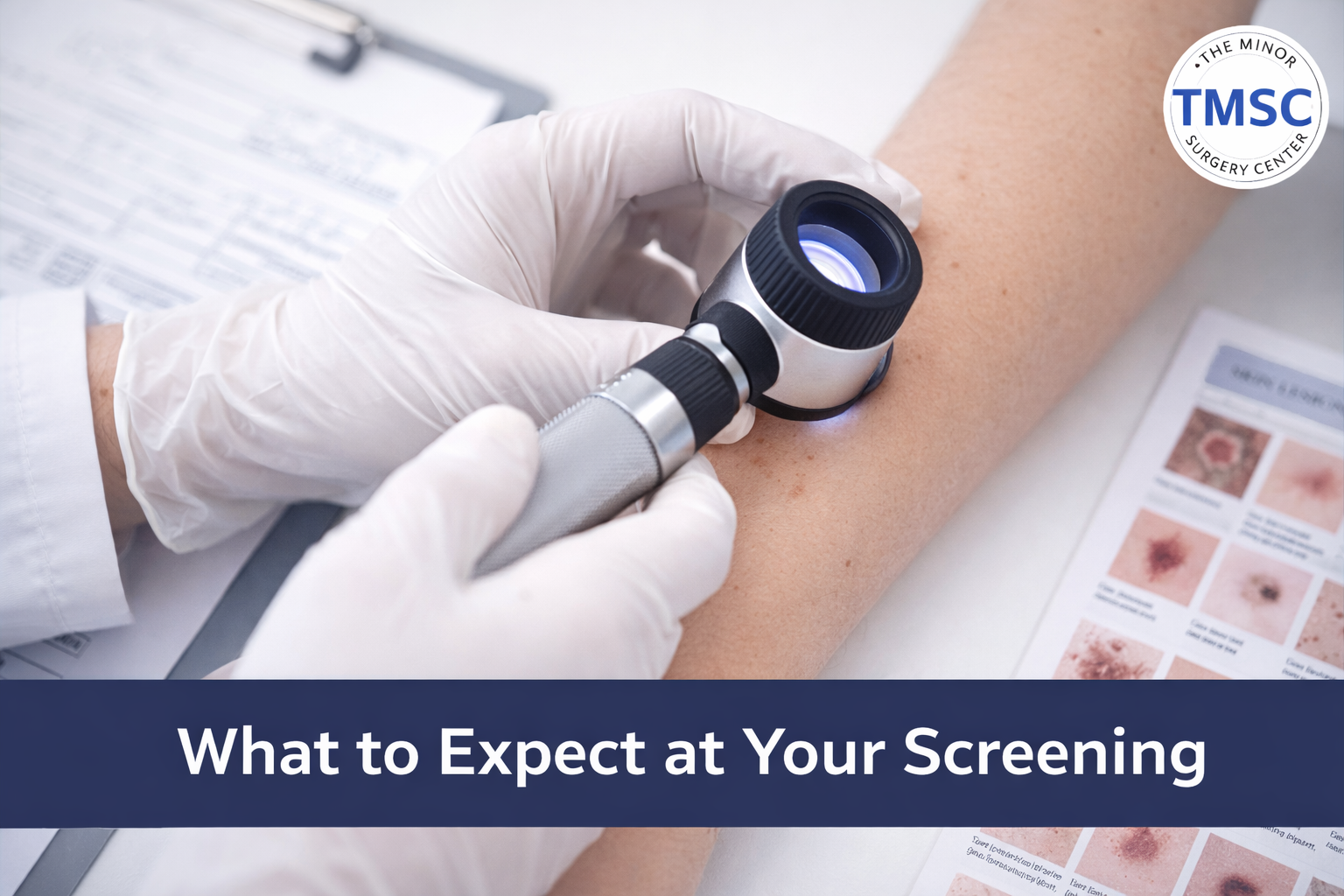
A free skin cancer screening — whether at the Mole Mobile or a community event — is a brief, non-invasive clinical examination. Understanding what to expect removes the hesitation many people feel about attending.
Step-by-step process:
What a screening does NOT include:
Common mistake: Assuming a "clear" screening means no follow-up is needed indefinitely. Annual self-examinations and periodic professional checks remain important even after a negative screening.
For guidance on what suspicious skin spots look like, the resource on early-stage skin cancer signs and pictures can help you identify what to bring to a dermatologist's attention.
If the Mole Mobile schedule doesn't align with your location or availability, several alternatives exist for Ontario residents seeking free or low-cost skin cancer screening.
Walk-in clinics across Ontario can assess skin lesions during a standard OHIP-covered visit. While walk-in physicians are not dermatologists, they can:
Several Ontario hospitals operate dermatology outpatient clinics that accept referrals. These include academic centres in Toronto, Ottawa, Hamilton, and London. Wait times vary but OHIP covers the visit.
As noted above, platforms like GetSkinHelp offer free AI-assisted assessments. OHIP-covered virtual dermatology consultations are also available through select Ontario telehealth services [9].
For those who cannot wait weeks or months, board-certified surgical clinics offer faster access to specialist-level assessment. The Minor Surgery Center serves patients across Toronto, Mississauga, Vaughan, and Oakville with expedited consultations by FRCSC-certified surgeons — no months-long wait required.
This is particularly relevant when a lesion has changed rapidly or causes concern that warrants prompt evaluation rather than a prolonged wait.
For residents in specific areas, dedicated clinic resources are available:
Self-examination is a critical complement to professional screenings. The Canadian Dermatology Association recommends monthly self-checks as a baseline habit.
The ABCDE method — what to look for:
LetterStands ForWhat to CheckAAsymmetryOne half doesn't match the otherBBorderEdges are irregular, ragged, or blurredCColorMultiple shades of brown, black, red, white, or blueDDiameterLarger than 6mm (about the size of a pencil eraser)EEvolutionAny change in size, shape, color, or a new symptom like bleeding
How to perform a self-exam:
When to act immediately: Any lesion that bleeds without injury, grows rapidly over weeks, or changes noticeably within a month warrants prompt professional evaluation — do not wait for the next Mole Mobile stop.
For a detailed look at what different skin lesions look like and how to differentiate them, the complete guide to 25+ types of skin lesions is a useful reference.

A suspicious finding at a free screening is not a diagnosis — it is a signal to take the next step. Knowing what that step looks like removes unnecessary anxiety.
Typical pathway after a flagged lesion:
OHIP covers biopsies when medically indicated. For patients who want faster access to this pathway, The Minor Surgery Center's board-certified surgeons — including Dr. Erik Hopkins, MD, FRCSC and Dr. Andrea Copeland, MD, FRCSC — provide expedited consultations and same-facility biopsy and removal services.
Understanding pre-cancerous conditions is also important. The article on actinic keratosis and its progression to squamous cell carcinoma explains what these early findings mean and when treatment is warranted.
FeatureFree (Mole Mobile / OHIP)Expedited Private ClinicCostFreeConsultation fee variesWait timeWeeks to months (OHIP); walk-in (Mole Mobile)Days to weeksPhysician typeDermatologist (Mole Mobile); GP (walk-in)Board-certified surgeon or specialistBiopsy availableNo (Mole Mobile); referral needed (OHIP)Yes, same visit or rapid follow-upFull body examYes (Mole Mobile)YesDocumentationVerbal findingsFormal clinical notesAvailabilitySeasonal / limited locationsYear-round, multiple Ontario locations
Choose free screening if: You have no urgent symptoms, are doing a routine check, and can align with Mole Mobile dates or access a family physician.
Choose expedited private care if: A lesion is changing rapidly, you have significant risk factors, you've been waiting months for a referral, or you want a biopsy and potential same-day removal without further delays.
Q: Is the Mole Mobile available in my Ontario city?
A: The 2026 Mole Mobile Tour covers 130+ stops across all 10 provinces, with Ontario being a priority province based on 2025 results. Specific stop locations and dates are released on a rolling basis at melanomacanada.ca. Check the site regularly from May 2026 onward [1].
Q: Do I need a health card (OHIP card) to use the Mole Mobile?
A: No. The Mole Mobile is free and does not require an OHIP card or any health insurance. It is open to all Ontario residents regardless of coverage status.
Q: Can a free screening diagnose skin cancer?
A: No. A screening identifies lesions that may need further evaluation. A formal diagnosis requires a biopsy and pathology report, which are separate steps performed after the screening.
Q: How long does a Mole Mobile screening take?
A: Most screenings take 10–20 minutes, depending on the number of lesions examined and how busy the stop is. Arriving early is recommended.
Q: Is basal cell carcinoma or squamous cell carcinoma detectable at a free screening?
A: Yes. Dermatologists at Mole Mobile stops are trained to identify all major types of skin cancer, including basal cell carcinoma, squamous cell carcinoma, and melanoma. For more detail on what BCC looks like, see the early-stage basal cell carcinoma guide.
Q: What if I have no family doctor and can't get a referral?
A: The Mole Mobile requires no referral. Virtual platforms like GetSkinHelp also operate without a GP referral. Alternatively, walk-in clinics can assess skin concerns and issue referrals even without a family physician on file [9].
Q: How often should I get a professional skin cancer screening?
A: For average-risk adults, once a year is a reasonable baseline. High-risk individuals (personal history of skin cancer, multiple atypical moles, immunosuppression) may need every 3–6 months as recommended by their specialist.
Q: Can I get a free skin cancer screening in Ontario year-round?
A: The Mole Mobile operates May–October. Outside those months, OHIP-covered GP visits and virtual teledermatology are the primary free options. Expedited private clinics operate year-round.
Q: What should I bring to a free skin cancer screening?
A: Wear loose, easy-to-remove clothing for a full-body exam. Bring a list of any lesions you want specifically examined, along with any photos you've taken tracking changes over time.
Q: Are AI skin assessment tools reliable enough to use alone?
A: Tools like GetSkinHelp's Skinopathy report 89% accuracy for risk flagging [9], which makes them useful for triage — identifying which lesions to prioritize. They are not a replacement for a clinical examination by a qualified physician.
Q: What is the difference between a screening and a biopsy?
A: A screening is a visual and dermoscopic examination that identifies potentially suspicious lesions. A biopsy removes a small tissue sample for laboratory analysis and is the only way to confirm or rule out a cancer diagnosis.
Q: Where can I find the best skin cancer clinic near me in Ontario?
A: The find the best skin cancer clinic near you guide covers how to evaluate clinics by physician credentials, wait times, and available procedures across Ontario.
Skin cancer is among the most preventable and treatable cancers when caught early — and in 2026, Ontario residents have more access to free screening than ever before.
Here are the concrete next steps:
The question of where can I get a free skin cancer screening in Ontario has a clear answer in 2026. The harder question is whether you'll act on it before a small, treatable lesion becomes something more serious. Early detection is the single most effective tool available — and most of the options above cost nothing.
Last updated: April 21, 2026
[1] Melanoma Canada Launches 2026 Mole Mobile Tour - https://melanomacanada.ca/blog/melanoma-canada-launches-2026-mole-mobile-tour/
[2] Melanoma Canada's Mole Mobile Brought Free Skin Cancer Screenings To Thousands Across Canada - https://melanomacanada.ca/blog/melanoma-canadas-mole-mobile-brought-free-skin-cancer-screenings-to-thousands-across-canada/
[9] Free Skin Cancer Screening - https://getskinhelp.com/free-skin-cancer-screening/