Do You Need Stitches for Mole Removal? A Complete Guide to What to Expect
You've noticed a mole that's been bothering you, and you've finally scheduled an appointment to have it removed. As the date approaches, questions flood your mind. Will it hurt? How long will recovery take? And most importantly—do you need stitches for mole removal? The answer isn't always straightforward, and understanding what to expect can help ease your concerns and prepare you for the procedure ahead.
Mole removal is one of the most common dermatological procedures performed in 2026, with millions of people choosing to have moles removed each year for cosmetic or medical reasons. Whether stitches are required depends entirely on the removal method your dermatologist chooses, which is based on the mole's size, depth, location, and whether there are concerns about skin cancer. This comprehensive guide will walk you through everything you need to know about stitches and mole removal, helping you understand the different techniques, recovery expectations, and how to achieve the best possible outcome.
Key Takeaways
Stitches depend on the removal method: Shave excisions typically don't require stitches, while surgical excisions and punch biopsies usually do
Deeper moles need stitches: Moles that extend into deeper skin layers require surgical excision with sutures to close the wound properly
Stitch type matters for scarring: Dissolvable stitches, removable stitches, and layered suturing techniques each affect healing and final appearance
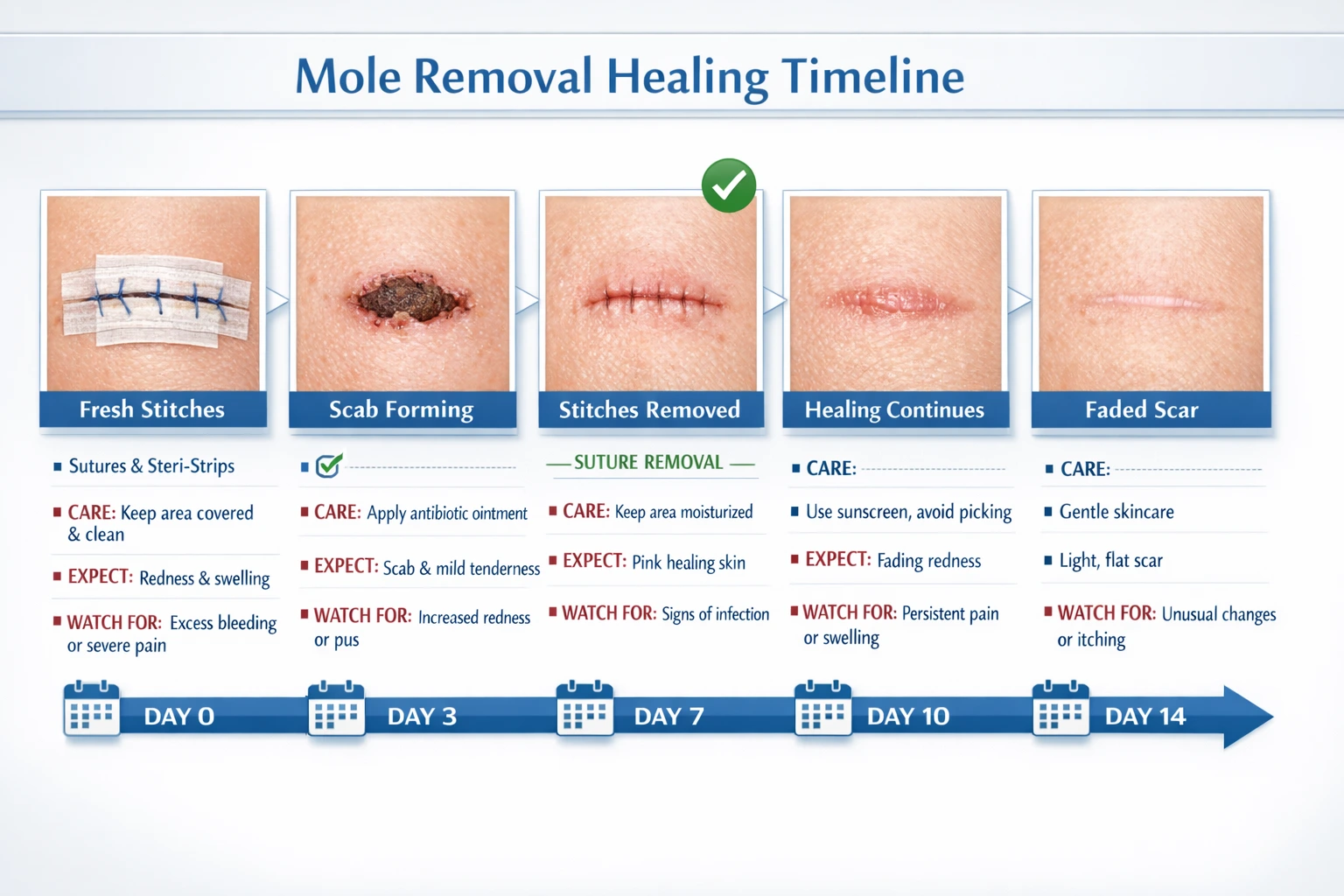
Recovery varies by method: Non-sutured removals heal in 1-2 weeks, while stitched removals take 2-4 weeks with stitch removal around day 7-14
Proper aftercare prevents complications: Following post-procedure instructions significantly reduces infection risk and improves cosmetic results
Understanding Mole Removal: The Basics
Before diving into whether stitches are necessary, it's essential to understand what mole removal entails and why people choose to have moles removed in the first place.
What Are Moles?
Moles, medically known as nevi (singular: nevus), are clusters of pigmented cells that appear as small, dark spots on the skin. Most people have between 10 and 40 moles by adulthood. While the majority of moles are harmless, some may:
Change in appearance over time 🔍
Cause cosmetic concerns
Get irritated by clothing or jewelry
Show signs of potential melanoma (skin cancer)
Why Remove a Mole?
People seek mole removal for two primary reasons:
Medical reasons:
Suspicious changes in size, shape, or color
Irregular borders or multiple colors
Bleeding, itching, or pain
Family history of melanoma
Dermatologist recommendation for biopsy
Cosmetic reasons:
Visible location (face, neck, arms)
Self-consciousness about appearance
Interference with grooming (shaving)
Personal preference
The reason for removal often influences the method chosen, which directly impacts whether stitches will be needed.
Do You Need Stitches for Mole Removal? Understanding the Different Methods
The question "do you need stitches for mole removal?" doesn't have a one-size-fits-all answer. The need for stitches depends entirely on which removal technique your dermatologist uses. Let's explore the three main methods and their stitch requirements.
Shave Excision (Shave Biopsy)
Stitch Requirement: ❌ Usually NO stitches needed
Shave excision is the most common method for removing raised moles that protrude above the skin surface. Here's how it works:
The Procedure:
Local anesthetic is injected around the mole
The dermatologist uses a small surgical blade
The mole is "shaved" off flush with or slightly below the skin surface
The area is treated with a chemical solution to stop bleeding
A bandage is applied
When It's Used:
Raised, benign-appearing moles
Cosmetic removals
Non-cancerous growths
Moles on the face or visible areas where minimal scarring is desired
Healing Process:
No stitches means the wound heals naturally from the bottom up
Forms a scab within 24-48 hours
Complete healing in 1-3 weeks
Results in a flat, usually pale scar
"Shave excisions are ideal for cosmetic removals because they typically leave minimal scarring and don't require the patient to return for stitch removal," explains Dr. Sarah Mitchell, board-certified dermatologist.
Punch Biopsy
Stitch Requirement: ✅ Usually YES, 1-2 stitches
A punch biopsy uses a circular blade to remove a cylindrical core of skin containing the mole. This method goes deeper than shave excision.
The Procedure:
Local anesthetic is administered
A circular punch tool (2-6mm diameter) is pressed into the skin
The tool is rotated to cut through all skin layers
The cylindrical piece of skin is removed
One or two stitches close the circular wound
When It's Used:
Flat moles that sit within the skin
When deeper tissue is needed for pathology testing
Surgical excision is the most comprehensive removal method, cutting out the entire mole and a margin of surrounding healthy tissue.
The Procedure:
Local anesthetic is injected
An elliptical (football-shaped) incision is made around the mole
The mole and surrounding margin are removed
The wound is closed with layered stitches:
Deep stitches (often dissolvable) close the deeper layers
Surface stitches (may be dissolvable or removable) close the skin
When It's Used:
Suspicious or cancerous moles
Large moles
Flat moles requiring complete removal
When pathology examination of the entire mole is necessary
Moles with irregular borders
Healing Process:
Surface stitches removed after 7-14 days (face) or 10-21 days (body)
Deep stitches dissolve on their own over several weeks
Complete healing takes 4-6 weeks
Results in a linear scar that fades over time
Types of Stitches Used in Mole Removal
When stitches are required for mole removal, understanding the different types can help you know what to expect during recovery.
Absorbable (Dissolvable) Stitches
What They Are: Sutures made from materials that break down naturally in the body over time, eliminating the need for removal.
Common Types:
Vicryl (polyglactin): Dissolves in 56-70 days
Monocryl (poliglecaprone): Dissolves in 90-120 days
Chromic gut: Natural material, dissolves in 10-14 days
Advantages: ✅ No removal appointment needed ✅ Ideal for children or anxious patients ✅ Often used for deep layer closure ✅ Reduces risk of stitch marks
Disadvantages: ❌ Can cause more inflammation during absorption ❌ May take longer to fully disappear ❌ Sometimes visible as they dissolve
Non-Absorbable (Removable) Stitches
What They Are: Sutures made from materials that don't break down and must be physically removed by a healthcare provider.
Common Types:
Nylon (Ethilon): Strong, minimal tissue reaction
Polypropylene (Prolene): Very smooth, slides easily
Silk: Natural, easy to handle
Advantages: ✅ Stronger wound support during critical healing period ✅ Removed before they can cause stitch marks ✅ Better cosmetic outcomes on the face ✅ Lower infection risk
Disadvantages: ❌ Requires return visit for removal ❌ Removal can be uncomfortable ❌ Risk of stitch marks if left too long
Layered Closure Technique
For deeper mole removals, dermatologists often use a layered closure approach:
LayerStitch TypePurposeTimelineDeep (Subcutaneous)DissolvableCloses deeper tissue, reduces tensionAbsorbs over 4-8 weeksMiddle (Dermal)DissolvableBrings skin edges togetherAbsorbs over 2-4 weeksSurface (Epidermal)Removable or dissolvableFinal skin closureRemoved in 7-14 days or dissolves
This technique provides optimal support for healing while minimizing scarring.
Factors That Determine If You Need Stitches for Mole Removal
Several factors influence whether your dermatologist will use stitches during your mole removal procedure:
1. Mole Characteristics
Size:
Small moles (under 3mm): May not require stitches
Medium moles (3-6mm): Often need 1-2 stitches
Large moles (over 6mm): Usually require multiple stitches
Depth:
Superficial, raised moles: Shave excision without stitches
Moles extending into dermis: Require stitches
Deep moles reaching subcutaneous fat: Need layered closure
Location:
Face: Often uses fine sutures for best cosmetic result
Scalp: May use staples or stitches
Trunk and limbs: Standard suturing techniques
Areas of tension (joints, back): Require stronger closure
2. Medical vs. Cosmetic Removal
Cosmetic Removal: When removing a mole purely for appearance, dermatologists typically choose methods that minimize scarring. If the mole is raised, shave excision without stitches is often preferred.
Medical Removal: When there's any concern about melanoma or other skin cancer, complete excision with clear margins is essential. This almost always requires stitches to ensure:
Complete removal of abnormal cells
Adequate tissue for pathology examination
Proper wound closure for optimal healing
3. Patient-Specific Factors
Skin Type:
Thicker skin may require deeper excision and more stitches
Thin skin may heal well with minimal suturing
Skin prone to keloid scarring requires special techniques
Age:
Children: Often use dissolvable stitches
Adults: Can use either type
Elderly patients: May have thinner skin requiring gentle techniques
Medical History:
Blood thinners: May affect suture choice
Diabetes: Requires careful wound closure
Immune conditions: Influence healing approach
4. Desired Cosmetic Outcome
The location and visibility of the mole significantly impact the approach:
High-Visibility Areas (Face, Neck):
Fine sutures with early removal (5-7 days)
Meticulous layered closure
Sometimes plastic surgery techniques
Low-Visibility Areas (Back, Chest):
Standard suturing techniques
Longer stitch retention (10-14 days)
Less concern about minimal scarring
The Mole Removal Procedure: Step-by-Step
Understanding what happens during the procedure can help reduce anxiety and prepare you for what's ahead.
Before the Procedure
Consultation: Your dermatologist will:
Examine the mole with a dermatoscope 🔬
Discuss your concerns and goals
Explain which removal method they recommend
Answer your questions about stitches and recovery
Preparation:
Avoid blood thinners if possible (aspirin, ibuprofen) for 7-10 days
Arrange transportation if having multiple removals
Wear comfortable clothing that won't rub the area
Don't apply makeup or lotions to the area
During the Procedure
Step 1: Numbing (5 minutes)
Local anesthetic injection around the mole
Brief stinging sensation that quickly subsides
Area becomes completely numb within minutes
Step 2: Removal (5-15 minutes)
You'll feel pressure but no pain
For shave excision: Quick shaving motion
For excision: Careful cutting and removal
Bleeding is controlled with pressure or cauterization
Step 3: Closure (5-10 minutes, if stitches needed)
Deep stitches placed first (you won't see these)
Surface stitches carefully positioned
Wound cleaned and dressed
Instructions provided
Total Time: Most mole removals take 15-30 minutes from start to finish.
After the Procedure
Immediate Post-Procedure:
Bandage applied to protect the area
Mild throbbing as anesthetic wears off (1-2 hours)
Written care instructions provided
Prescription for antibiotic ointment if needed
Recovery and Healing: What to Expect With and Without Stitches
The recovery process differs significantly depending on whether stitches were used.
Recovery Without Stitches (Shave Excision)
First 24-48 Hours:
Keep bandage dry and in place
Mild oozing or bleeding is normal
Apply gentle pressure if bleeding occurs
Take over-the-counter pain relievers if needed
Days 3-7:
Scab forms over the wound
Keep area clean and moisturized
Apply antibiotic ointment as directed
Avoid picking at the scab ⚠️
Weeks 2-3:
Scab naturally falls off
Pink, new skin underneath
May be slightly indented initially
Continue sun protection (SPF 30+)
Long-Term (Months 1-12):
Pink color gradually fades
Slight depression may fill in
Final scar appearance visible by 6-12 months
Recovery With Stitches (Excision or Punch Biopsy)
First 24-48 Hours:
Keep wound dry for 24-48 hours
Mild swelling and bruising possible
Take prescribed or OTC pain medication
Sleep with area elevated if possible
Days 3-7:
Begin gentle cleaning after 48 hours
Apply antibiotic ointment to stitches
Watch for signs of infection (see below)
Avoid strenuous activity
Stitch Removal (Days 5-21):
LocationTypical Removal TimeFace/Neck5-7 daysScalp7-10 daysArms/Legs10-14 daysBack/Chest12-14 daysHands/Feet10-14 days
The Removal Process:
Quick and relatively painless
Slight pulling or pinching sensation
Takes only a few minutes
Steri-strips often applied after removal
Weeks 2-6:
Wound continues strengthening
Redness gradually fades
Scar tissue forms beneath surface
Gentle massage may be recommended
Long-Term (Months 1-12):
Linear scar continues to fade
Initially red or pink, becomes white or pale
Scar remodeling continues for up to a year
Final appearance visible by 12 months
Caring for Your Wound: Best Practices
Proper wound care significantly impacts healing and final cosmetic results, whether you have stitches or not.
General Wound Care Guidelines
Keep It Clean:
Wash hands before touching the area
Gently clean with mild soap and water after 24-48 hours
Pat dry with clean towel—don't rub
Clean 1-2 times daily
Keep It Moist:
Apply thin layer of antibiotic ointment (unless allergic)
Petroleum jelly is an alternative
Moist wounds heal faster and scar less
Don't let it dry out completely
Keep It Protected:
Cover with bandage for first week
Change bandage daily or when wet
After initial healing, protect from sun
Use SPF 30+ sunscreen for at least 6 months
Specific Care for Stitches
Do's: ✅
Keep stitches clean and dry initially
Apply ointment along the suture line
Watch for signs of infection
Follow your doctor's specific instructions
Return for stitch removal as scheduled
Don'ts: ❌
Don't submerge in water (bathtubs, pools, ocean)
Don't pick at or pull on stitches
Don't apply makeup over stitches
Don't engage in strenuous exercise
Don't expose to direct sunlight
Signs of Infection to Watch For
Contact your dermatologist immediately if you notice:
🚨 Warning Signs:
Increasing redness spreading beyond the wound
Warmth or heat around the area
Pus or cloudy drainage
Fever over 100.4°F (38°C)
Red streaks extending from the wound
Increasing pain after the first few days
Foul odor from the wound
Stitches pulling apart or wound opening
Early detection and treatment of infection prevents complications and improves outcomes.
Scarring: What to Expect and How to Minimize It
One of the biggest concerns about mole removal is scarring. Understanding what influences scar formation helps set realistic expectations.
Factors That Affect Scarring
Removal Method:
Shave excision: Round, flat scar, often barely visible
Punch biopsy: Small circular scar
Surgical excision: Linear scar that fades over time
Location:
Face: Usually heals with minimal scarring
Chest and shoulders: Higher risk of thick scars
Back: May develop wider scars due to tension
Joints: Movement can affect healing
Individual Factors:
Genetics play the largest role
Age: Younger skin tends to scar more prominently
Skin color: Darker skin has higher keloid risk
Healing ability: Varies person to person
Types of Scars
Normal (Mature) Scars:
Flat, pale, thin lines
Slightly different texture than surrounding skin
Continue to fade for 12-24 months
Most common outcome
Hypertrophic Scars:
Raised, red, thick
Remain within original wound boundaries
May improve with treatment
More common on chest, shoulders, back
Keloid Scars:
Raised, extending beyond original wound
More common in darker skin types
May continue growing over time
Require specialized treatment
Atrophic Scars:
Depressed or indented
More common after shave excision
May improve as tissue fills in
Can be treated if bothersome
Minimizing Scar Appearance
During Healing (First 3 Months):
Follow wound care instructions meticulously
Keep wound moist with ointment
Protect from sun exposure religiously
Don't smoke (impairs healing)
Eat protein-rich diet for tissue repair
Stay hydrated
After Initial Healing (Months 3-12):
Silicone scar sheets or gel (proven effective)
Gentle massage to break up scar tissue
Continued sun protection (SPF 50+)
Vitamin E oil (though evidence is limited)
Consider professional treatments if needed
Professional Scar Treatments:
Laser therapy for red or raised scars
Steroid injections for hypertrophic or keloid scars
Dermabrasion or microneedling
Surgical scar revision in severe cases
"The best way to minimize scarring is prevention through proper wound care and sun protection during the critical first six months of healing," advises Dr. James Chen, dermatologic surgeon.
Cost Considerations: Does Using Stitches Affect the Price?
Understanding the financial aspect of mole removal helps with planning and decision-making.
Average Costs in 2026
Shave Excision (No Stitches):
Average cost: $150-$400 per mole
Lower cost due to simpler procedure
Shorter procedure time
No follow-up for stitch removal
Punch Biopsy (1-2 Stitches):
Average cost: $200-$500 per mole
Includes stitch removal visit
Pathology fees may be additional
Surgical Excision (Multiple Stitches):
Average cost: $300-$800 per mole
More complex procedure
Includes stitch removal
Pathology examination included
Insurance Coverage
Medical Necessity: Insurance typically covers removal when:
Mole shows signs of potential cancer
Doctor recommends biopsy
Mole causes pain or functional problems
Documentation supports medical need
Cosmetic Removal: Usually NOT covered by insurance:
Removal for appearance only
No medical indication
Patient pays out-of-pocket
May be eligible for HSA/FSA funds
Tips for Insurance Coverage:
Get pre-authorization if possible
Ensure proper documentation of medical necessity
Use in-network providers
Understand your deductible and copay
Ask about payment plans if needed
Alternatives to Traditional Stitches
While traditional sutures remain the gold standard, some alternatives exist:
Surgical Glue (Dermabond)
What It Is: Medical-grade adhesive that bonds skin edges together.
When It's Used:
Small, low-tension wounds
Pediatric patients
Patients anxious about stitch removal
Straight, clean incisions
Pros and Cons:
✅ Advantages:
No removal needed
Waterproof after 24 hours
Quick application
No needle pokes for removal
❌ Disadvantages:
Not suitable for all wounds
Can't be used on hairy areas
May not provide enough strength for larger removals
Can cause allergic reactions in some people
Steri-Strips and Surgical Tape
What They Are: Adhesive strips that hold wound edges together.
When They're Used:
After stitch removal for continued support
Very superficial wounds
As supplementary support with stitches
Low-tension areas
Pros and Cons:
✅ Advantages:
Non-invasive
Easy to apply and remove
Inexpensive
Good for minor wounds
❌ Disadvantages:
Not strong enough for most mole removals
Can fall off prematurely
May cause skin irritation
Limited use for primary closure
Staples
What They Are: Metal clips that hold skin together.
When They're Used:
Scalp removals
Large wounds on trunk or limbs
Areas where cosmetic outcome is less critical
Quick closure needed
Pros and Cons:
✅ Advantages:
Very fast to place
Strong closure
Lower infection risk
Good for scalp (hair hides them)
❌ Disadvantages:
More visible than stitches
Removal can be uncomfortable
Not suitable for face
Can leave small marks
Frequently Asked Questions About Stitches and Mole Removal
How painful is mole removal with stitches?
The procedure itself is not painful due to local anesthetic. You may feel pressure but no pain. After the anesthetic wears off, expect mild to moderate discomfort for 1-3 days, easily managed with over-the-counter pain relievers. The stitch removal process causes brief, minor discomfort—most people describe it as a quick pinching sensation.
Can I shower with stitches after mole removal?
Most dermatologists recommend keeping the area completely dry for the first 24-48 hours. After that, brief showers are usually fine, but avoid direct water pressure on the stitches. Pat the area dry gently afterward. Avoid baths, swimming pools, hot tubs, and ocean water until after stitch removal, as these increase infection risk.
Will my mole grow back after removal?
If the mole is completely removed, it should not grow back. However:
Shave excision may leave some cells in deeper layers, allowing partial regrowth (10-15% chance)
Surgical excision with clear margins has minimal recurrence risk
New moles can develop in the same general area
If a mole returns, inform your dermatologist for re-evaluation
How long do dissolvable stitches take to disappear?
Dissolvable stitches typically take 1-4 months to completely absorb, depending on the material used. However, they usually lose their strength and stop holding the wound together within 2-3 weeks. You may notice small pieces of suture material working their way out during the absorption process—this is normal.
What happens if I don't get stitches removed on time?
Leaving stitches in too long increases the risk of:
Permanent stitch marks (railroad track scars)
Infection
Difficulty removing stitches
Tissue growing over the sutures
If you can't make your scheduled appointment, call your dermatologist's office. Many practices have nurses who can remove stitches, offering more flexible scheduling.
Can I exercise after mole removal with stitches?
Avoid strenuous exercise for:
Face/neck: 3-5 days
Arms/legs: 7-10 days
Trunk/back: 10-14 days
Exercise increases blood pressure and tension on the wound, potentially causing:
Bleeding
Wound dehiscence (opening)
Wider scarring
Delayed healing
Light walking is usually fine, but avoid activities that stretch or stress the area.
Is mole removal with stitches considered surgery?
Yes, mole removal requiring stitches is considered a minor surgical procedure. It's performed in an outpatient setting (dermatologist's office) under local anesthesia. While it's "minor" surgery, proper technique and aftercare are essential for optimal results.
Special Considerations for Different Body Areas
The location of your mole significantly impacts the removal approach and stitch requirements.
Face and Neck
Special Considerations:
Highest cosmetic concern
Excellent blood supply (heals quickly)
Fine, precise suturing techniques used
Early stitch removal (5-7 days) to prevent marks
Best Practices:
Consider plastic surgery referral for large removals
Use finest suture material available
Layered closure for best results
Aggressive sun protection during healing
Scalp
Special Considerations:
Hair can hide scars
Excellent healing potential
Bleeding can be more significant
Staples often used instead of stitches
Best Practices:
May need small area of hair trimmed
Pressure applied for longer to control bleeding
Can usually shampoo after 48 hours
Staples or stitches removed in 7-10 days
Back and Shoulders
Special Considerations:
High tension area
Increased risk of hypertrophic scarring
Wider scars common
Longer healing time
Best Practices:
Deep sutures essential to reduce tension
Longer stitch retention (12-14 days)
Activity restrictions more important
Consider silicone scar treatment
Arms and Legs
Special Considerations:
Moderate healing speed
Movement can affect healing
Varies by specific location
Joint proximity matters
Best Practices:
Avoid excessive bending or stretching
Keep area elevated when possible
Standard stitch removal timeline (10-14 days)
Watch for swelling in lower legs
When to See Your Doctor After Mole Removal
While most mole removals heal without complications, certain situations require medical attention.
Routine Follow-Up
Stitch Removal Appointment:
Scheduled 5-21 days after procedure (location-dependent)
Quick, simple process
Wound checked for proper healing
Pathology results discussed if applicable
Pathology Results:
Usually available within 7-10 days
Benign results: No further action needed
Atypical results: May need wider excision
Melanoma: Immediate referral to specialist
When to Call Before Your Scheduled Appointment
Contact your dermatologist if you experience:
Immediate Concerns (Call Same Day):
Heavy bleeding not controlled by pressure
Severe pain not relieved by medication
Stitches breaking or wound opening
Allergic reaction to medication
Urgent Concerns (Call Within 24 Hours):
Signs of infection (redness, warmth, pus, fever)
Increasing swelling
Red streaks from the wound
Wound drainage with odor
Non-Urgent Concerns (Can Wait for Regular Hours):
Questions about wound care
Minor irritation or itching
Concerns about healing progress
Cosmetic questions about scarring
The Future of Mole Removal: Emerging Techniques in 2026
Medical technology continues advancing, offering new options for mole removal with potentially less scarring and faster healing.
Laser Mole Removal
Current Status:
FDA-approved for certain benign moles
Not suitable for suspicious moles (no tissue for pathology)
Limited use in mainstream dermatology
Advantages:
No cutting or stitches
Minimal bleeding
Quick procedure
Limitations:
Can't examine tissue for cancer
May require multiple sessions
Not covered by insurance
Risk of pigment changes
Radiofrequency Ablation
What It Is: Using radio waves to heat and destroy mole tissue.
These advances may improve healing and reduce complications in coming years.
Making the Decision: What to Discuss With Your Dermatologist
Before your mole removal procedure, have an open conversation with your dermatologist about your concerns and expectations.
Questions to Ask
About the Procedure:
"Which removal method do you recommend and why?"
"Do you need stitches for mole removal in my specific case?"
"What type of stitches will you use—dissolvable or removable?"
"How long will the procedure take?"
"What will my recovery be like?"
About Results:
"What will the scar look like?"
"How long until I see the final result?"
"What can I do to minimize scarring?"
"Will you send the mole for pathology testing?"
"When will I get the results?"
About Costs:
"What is the total cost of the procedure?"
"Does this include the stitch removal visit?"
"Will my insurance cover this?"
"Are there payment plan options?"
About Aftercare:
"What restrictions will I have after the procedure?"
"When can I return to normal activities?"
"What products should I use on the wound?"
"When should I call if I have concerns?"
Red Flags: When to Seek a Second Opinion
Consider getting another opinion if:
The dermatologist dismisses your concerns
You're not comfortable with the recommended approach
The doctor doesn't explain risks and benefits clearly
You feel rushed or pressured
The cost seems unusually high or low
The doctor lacks proper credentials
Your comfort and confidence in your provider are essential for the best outcome.
Conclusion: Understanding Your Mole Removal Options
So, do you need stitches for mole removal? The answer depends on multiple factors: the removal method chosen, the mole's characteristics, its location, and whether there are medical concerns requiring complete excision. Shave excisions typically don't require stitches and heal quickly with minimal scarring, making them ideal for cosmetic removals of raised moles. However, punch biopsies and surgical excisions—necessary for deeper moles or those with cancer concerns—do require stitches to properly close the wound and ensure optimal healing.
Understanding what to expect helps you prepare mentally and physically for the procedure. Whether you end up with stitches or not, proper wound care is crucial for preventing infection and minimizing scarring. Follow your dermatologist's instructions carefully, protect the area from sun exposure, and don't hesitate to call with concerns during the healing process.
Remember that mole removal is one of the most common and safest dermatological procedures performed. Millions of people undergo successful mole removals each year, with excellent cosmetic outcomes and peace of mind about their skin health. The temporary inconvenience of stitches and healing is a small price to pay for removing a bothersome or potentially dangerous mole.
Your Next Steps
If you're considering mole removal:
Schedule a consultation with a board-certified dermatologist to have your mole evaluated
Ask questions about the recommended removal method and whether stitches will be needed
Discuss your concerns about scarring, recovery time, and costs
Prepare for the procedure by following pre-procedure instructions
Commit to proper aftercare to achieve the best possible outcome
Be patient with healing—final results take time but are worth the wait
Don't let fear of stitches prevent you from addressing a mole that concerns you. With proper technique, care, and realistic expectations, mole removal—with or without stitches—can provide excellent results and lasting peace of mind about your skin health.