
Last updated: August 11, 2026
Cyst removal on scalp is a minor outpatient procedure that involves numbing the area with local anesthetic and surgically excising the cyst along with its capsule wall to prevent regrowth. Most procedures take 20 to 45 minutes, cost between $200 and $800 in Ontario when done privately, and require one to two weeks of basic wound care. Scalp cysts are almost always benign, but a doctor should confirm the diagnosis before removal, especially if the lump changes shape, grows fast, or becomes painful.
A scalp cyst is a small, usually painless sac under the skin filled with keratin, a protein found in skin cells, that forms when hair follicle cells build up instead of shedding normally. The two most common types on the scalp are epidermoid cysts and pilar cysts (also called trichilemmal cysts), and both are benign in the vast majority of cases.
Pilar cysts form specifically from hair follicle cells and account for a large share of scalp lumps because the scalp has such a dense concentration of hair follicles. Epidermoid cysts, by contrast, can appear anywhere on the body but often show up on the scalp, face, neck, and trunk.
Common reasons scalp cysts form include:
Decision rule: If a lump on the scalp is smooth, mobile under the skin, and has been present for months without pain, it is likely a simple cyst. If it is fixed to deeper tissue, growing rapidly, or bleeding, see a doctor promptly for evaluation rather than assuming it is a standard cyst.
Scalp cysts should not be removed at home; they need a trained clinician because the entire cyst wall must be extracted to prevent infection and regrowth. Squeezing, popping, or lancing a cyst at home only empties part of the contents and leaves the sac behind, which usually causes the cyst to refill or become infected.
Home attempts commonly go wrong in predictable ways:
A safe example of the correct path: a patient notices a pea-sized bump that has stayed the same size for six months. Instead of attempting to drain it in a bathroom mirror, the correct step is booking a consultation at a clinic experienced in cyst removal to confirm the diagnosis and schedule a proper excision.
A cyst that looks simple on the surface can still hide a capsule wall deep enough that only a full surgical excision removes it for good.
Scalp cyst removal in Ontario generally costs between $200 and $800 at a private minor surgery clinic, depending on cyst size, complexity, and whether the visit includes local anesthesia and suturing. Larger or infected cysts that need more extensive excision and closure typically sit at the higher end of that range.
Factors that influence the final price:
FactorEffect on CostCyst sizeLarger cysts require longer procedure time and more suturingNumber of cystsMultiple cysts removed in one visit may have a bundled rateInfection statusInfected cysts sometimes need a two-stage approach, raising total costLocation on scalpAreas near hairlines or with dense hair can add time for the surgeonPathology testingSending tissue for lab confirmation adds a lab fee in some cases
Choose a private clinic visit if the cyst is not causing pain, infection, or functional problems, since OHIP typically will not cover a purely cosmetic removal. Choose the OHIP-covered pathway if the cyst is infected, rapidly growing, or interfering with daily activity, since a referral through a family doctor may qualify for coverage.
For a detailed cost breakdown across the province, see this guide on how much it costs to remove a cyst in Ontario and this general cyst removal cost overview.
A cyst on the scalp sits closer to the skin surface and often has a visible central punctum (a tiny dark dot), while a lipoma sits deeper in the fatty tissue, feels softer and doughier, and has no punctum. Both are benign and slow-growing, but they come from different tissue types and are removed slightly differently.
FeatureScalp CystScalp LipomaOriginHair follicle or skin cellsFat cellsTextureFirm, sometimes with a central poreSoft, doughy, mobileDepthJust under the skinDeeper, in subcutaneous fatGrowth speedSlow, can flare with infectionVery slow, rarely infectedCentral punctumOften presentAbsentRemoval methodExcision of cyst wallExcision or enucleation of fatty lump
Edge case: Some lumps feel identical to the touch until a clinician examines them directly, so a definitive diagnosis usually requires an in-person exam rather than guesswork based on symptoms alone. For more on lipomas specifically, see this breakdown of lipoma removal costs and how long lipoma removal surgery takes.
Most people heal from scalp cyst removal within 7 to 14 days for the surface wound to close, with full scar maturation taking a few additional months. Because the scalp has strong blood flow, wounds here tend to heal faster than in many other body areas, but hair can make aftercare slightly more involved.
Typical recovery timeline:
Common mistake: Washing hair aggressively or picking at the scab in the first week is the most frequent cause of delayed healing and wider scars. Gentle care and following the clinic's specific washing instructions produces the best cosmetic result. For general guidance on post-procedure hygiene timing, see this article on when you can shower after mole removal, since the same basic principles apply to scalp incisions.
Cyst removal on scalp carries low overall risk, but the most common complications are minor bleeding, infection, temporary numbness, and a visible scar along the hairline where the incision was made. Serious complications are uncommon when the procedure is done by a trained clinician using sterile technique.
Specific risks to be aware of:
Quick example: A patient who develops increasing redness and tenderness five days after removal, rather than steady improvement, should contact the clinic rather than waiting, since this pattern is more consistent with infection than normal healing.
Most scalp cysts are benign and not a cause for serious worry, but certain warning signs warrant a prompt medical evaluation rather than a wait-and-see approach. The key is distinguishing a typical, stable cyst from a lump with features that suggest something else.
See a doctor sooner rather than later if the lump:
In rare instances, a scalp lump can turn out to be something other than a benign cyst, which is why persistent or unusual lumps deserve professional assessment. For a deeper look at warning signs that go beyond a typical cyst, review this resource on a cancerous cyst on the scalp.
Decision rule: Worry less if the lump has been stable, painless, and unchanged for six months or more. Worry more and book an appointment if it has changed noticeably in the last four to six weeks.
Scalp cysts can come back if the surgeon does not remove the entire cyst wall during the procedure, but recurrence rates are low when a complete excision technique is used. Simple drainage or incision-and-drainage procedures have much higher recurrence rates than full surgical excision.
Factors that affect recurrence:
Common mistake: Assuming a returning bump at the same location is a "new" cyst when it is often the same cyst regrowing from residual tissue. If a lump reappears at the exact same spot after removal, mention this history at the follow-up visit so the clinician can plan a more complete re-excision.
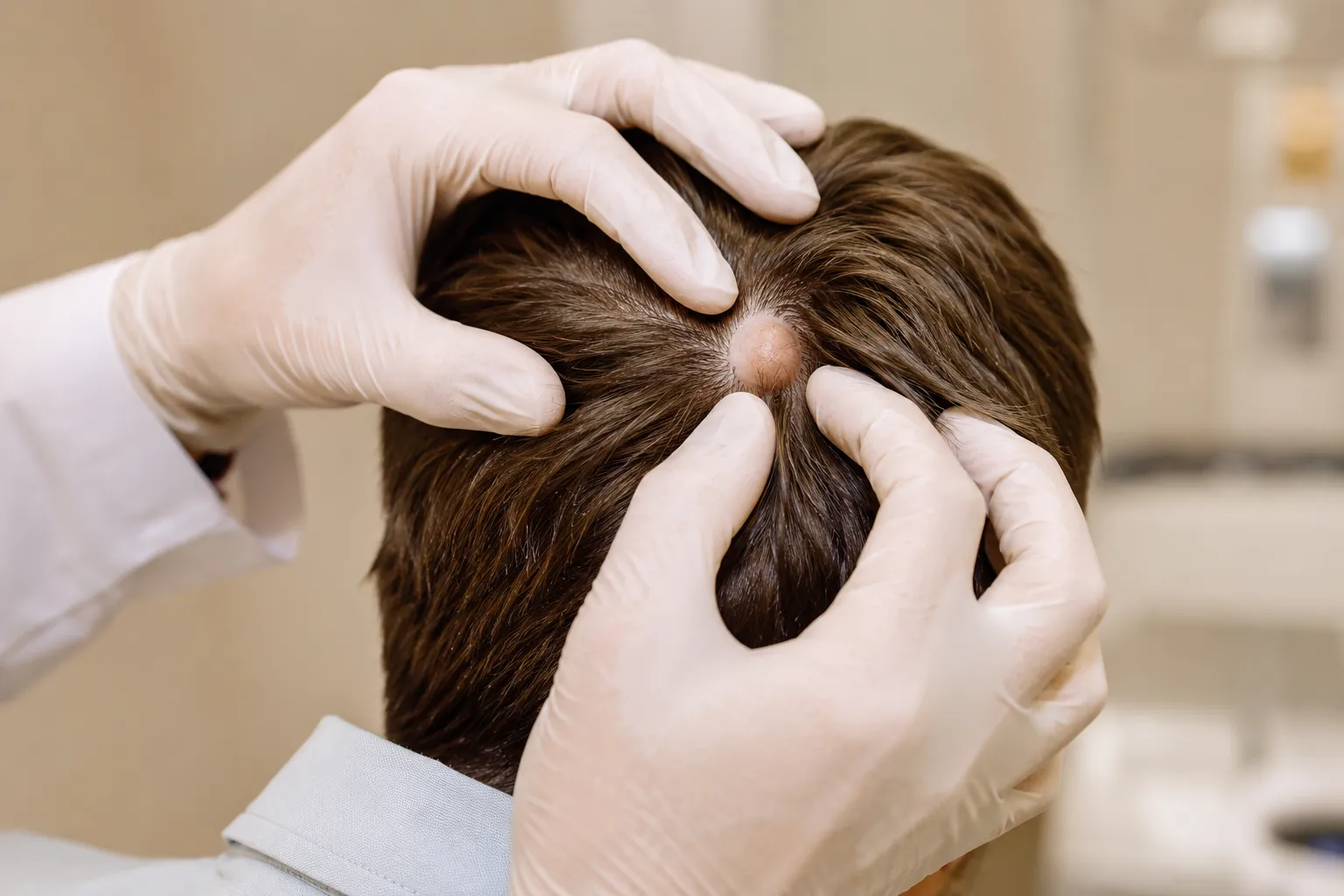
Leaving a scalp cyst alone is a reasonable choice for many people since most cysts stay small, painless, and stable for years without causing harm. However, untreated cysts can occasionally grow larger, become inflamed, or rupture beneath the skin, which turns a simple removal into a more complicated procedure.
Realistic outcomes of not removing a cyst include:
Edge case: A cyst that has already ruptured or become chronically inflamed is technically harder to remove cleanly because scar tissue makes the borders less distinct. This is one reason many clinicians recommend removing a bothersome cyst while it is still small and uncomplicated rather than waiting for a flare-up.
Surgical excision is the only treatment that permanently removes a scalp cyst, while steroid injections only reduce inflammation and swelling temporarily without eliminating the cyst sac. The two approaches serve different purposes and are not interchangeable.
Surgical Excision vs Steroid Injection: Quick Comparison
Choose surgical excision if the goal is to permanently get rid of the cyst and avoid future flare-ups. Choose a steroid injection first if the cyst is currently inflamed, painful, or too swollen for clean excision, since reducing inflammation first often makes the eventual surgery simpler and improves the cosmetic outcome.
Scalp cyst removal is covered under OHIP in Ontario when the cyst is medically necessary to remove, such as when it is infected, painful, rapidly growing, or interfering with normal function; purely cosmetic removal of a stable, symptom-free cyst is typically not covered. Private clinics can perform either type of removal, but coverage depends on the medical reasoning documented by the referring physician.
Steps to determine coverage:
Quick example: A cyst that has become swollen and tender after a minor injury is more likely to qualify for OHIP coverage than a cyst that has sat unchanged and painless for two years, which is more likely to be billed privately.
There is no guaranteed way to prevent scalp cysts since many form due to genetics or normal hair follicle activity, but good scalp hygiene and avoiding repeated trauma to the scalp can lower the odds in some cases. Because pilar cysts often run in families, some tendency toward developing them cannot be fully controlled through lifestyle changes.
Practical steps that may help reduce risk:
Common mistake: Believing that switching shampoos or diet changes will dissolve an existing cyst. Once a cyst has formed, only physical removal eliminates it; hygiene and lifestyle habits mainly play a role in reducing new occurrences, not treating an existing one.
A dermatologist can remove most scalp cysts in an office setting using local anesthesia, and a minor surgery physician or general surgeon can also perform the procedure, particularly for larger or more complex cysts. The right provider depends on cyst size, depth, and whether the case is straightforward or complicated by prior infection or scarring.
Guidance on choosing a provider:
A minor surgery center focused specifically on skin lesion removal often provides a fast, cost-transparent path for straightforward scalp cysts, without the longer wait times associated with hospital referral queues. Regional options for this kind of care include clinics serving Mississauga, Vaughan and York Region, and Stouffville and Markham.
Pilar cysts and epidermoid cysts are the two dominant cyst types found on the scalp, and while they behave similarly, they differ slightly in wall thickness and contents. Pilar cysts have a firmer, thicker capsule and often occur in clusters, while epidermoid cysts more commonly appear as a single lump with a visible central punctum.
Knowing which type is present can help set expectations for the removal procedure:
For readers who want a more technical breakdown of these two cyst types and how they are distinguished under the microscope and in clinic, see this detailed comparison of pilar cysts on the scalp and this wider explainer on epidermoid vs sebaceous vs pilar cyst differences.
A typical cyst removal on scalp appointment follows a predictable sequence: consultation and exam, local anesthetic injection, a small incision, careful extraction of the full cyst wall, wound closure, and a short recovery briefing. The entire visit usually takes under an hour including preparation time.
Step-by-step overview:
Choose a same-day private removal if the cyst is small, stable, and the patient wants a fast, predictable path without a long referral wait. Clinics in areas such as Oakville, Brampton, Barrie, and Scarborough offer this type of streamlined minor surgery visit for scalp and other skin lesions.
Does cyst removal on scalp hurt?
The procedure itself is done under local anesthetic, so patients typically feel pressure rather than sharp pain during removal. Mild soreness for a day or two afterward is normal and manageable with over-the-counter pain relief.
How long does the actual procedure take?
Most scalp cyst removals take between 20 and 45 minutes from numbing to closure, depending on cyst size and depth. Larger or previously infected cysts can take longer due to more complex dissection.
Will I need stitches after scalp cyst removal?
Many procedures use sutures to close the incision, especially for cysts larger than a centimeter, while very small excisions may heal without stitches. The clinician will decide the best closure method based on wound size.
Can hair grow back over the scar?
Hair usually grows back around the incision site once the follicles that were not directly cut have recovered, and existing hair typically covers a well-healed thin scar within a few months.
How soon can I wash my hair after cyst removal on scalp?
Most clinics allow gentle washing around the incision site after 24 to 48 hours, avoiding direct scrubbing of the wound until sutures are removed. Always follow the specific aftercare sheet given at the appointment.
Is a scalp cyst the same as dandruff or a pimple?
No. Dandruff is flaking skin and pimples are typically smaller, inflamed follicles that resolve on their own, while a cyst is a distinct sac under the skin that persists until physically removed.
Can a cyst on the scalp turn into cancer?
Standard epidermoid and pilar cysts are benign and do not typically turn into cancer, but any lump with unusual features such as rapid growth, bleeding, or hardness should be evaluated to rule out other conditions.
What size cyst needs removal versus monitoring?
There is no strict size cutoff; the decision depends more on symptoms, growth pattern, and patient preference than on measurement alone. A stable, painless cyst of any size can often be monitored, while a growing or symptomatic cyst usually warrants removal regardless of size.
Do multiple cysts on the scalp always need separate visits?
Not necessarily. Many clinics can remove several small cysts in a single visit if they are accessible and the total procedure time stays reasonable, though very large or numerous cysts may be split across visits.
Is scalp cyst removal considered a cosmetic procedure?
It depends on the reason for removal. Removal for pain, infection, or rapid growth is generally treated as medically necessary, while removal purely for appearance on a stable, symptom-free cyst is usually classified as cosmetic and billed privately.
Cyst removal on scalp is a routine, well-understood minor procedure that resolves a common and almost always benign type of skin lump. The safest path is a proper clinical evaluation followed by complete surgical excision, since home attempts at draining or squeezing a cyst tend to cause infection or leave the capsule behind, guaranteeing a return visit later.
For anyone noticing a stable, painless bump, tracking it for changes over a few weeks is reasonable. But a cyst that grows quickly, turns painful, or shows signs of infection deserves a same-week appointment rather than a wait-and-see approach. Booking a consultation at a clinic experienced in minor surgical procedures, such as the best cyst removal clinic options in Mississauga, gives a clear next step: an accurate diagnosis, a straightforward removal plan, and a realistic recovery timeline measured in days, not months.
Related reading: For broader context on cyst types and related skin lesion procedures, see the epidermoid vs sebaceous cyst comparison and this guide on pilar cyst removal.