When Can You Shower After Mole Removal? Your Complete Post-Procedure Care Guide
You've just had a mole removed, and now you're standing in your bathroom wondering about something surprisingly important: when can you safely shower? This common question affects thousands of people who undergo mole removal procedures each year. The answer isn't always straightforward, as it depends on several factors including the removal method used, the size of the wound, and your doctor's specific instructions.
Understanding when can you shower after mole removal is crucial for proper healing and preventing complications like infection or scarring. While you might be eager to return to your normal hygiene routine, taking the right precautions during those first critical days can make the difference between optimal healing and potential problems.
Key Takeaways
Most patients can shower 24-48 hours after mole removal, but timing varies based on the removal method and wound size
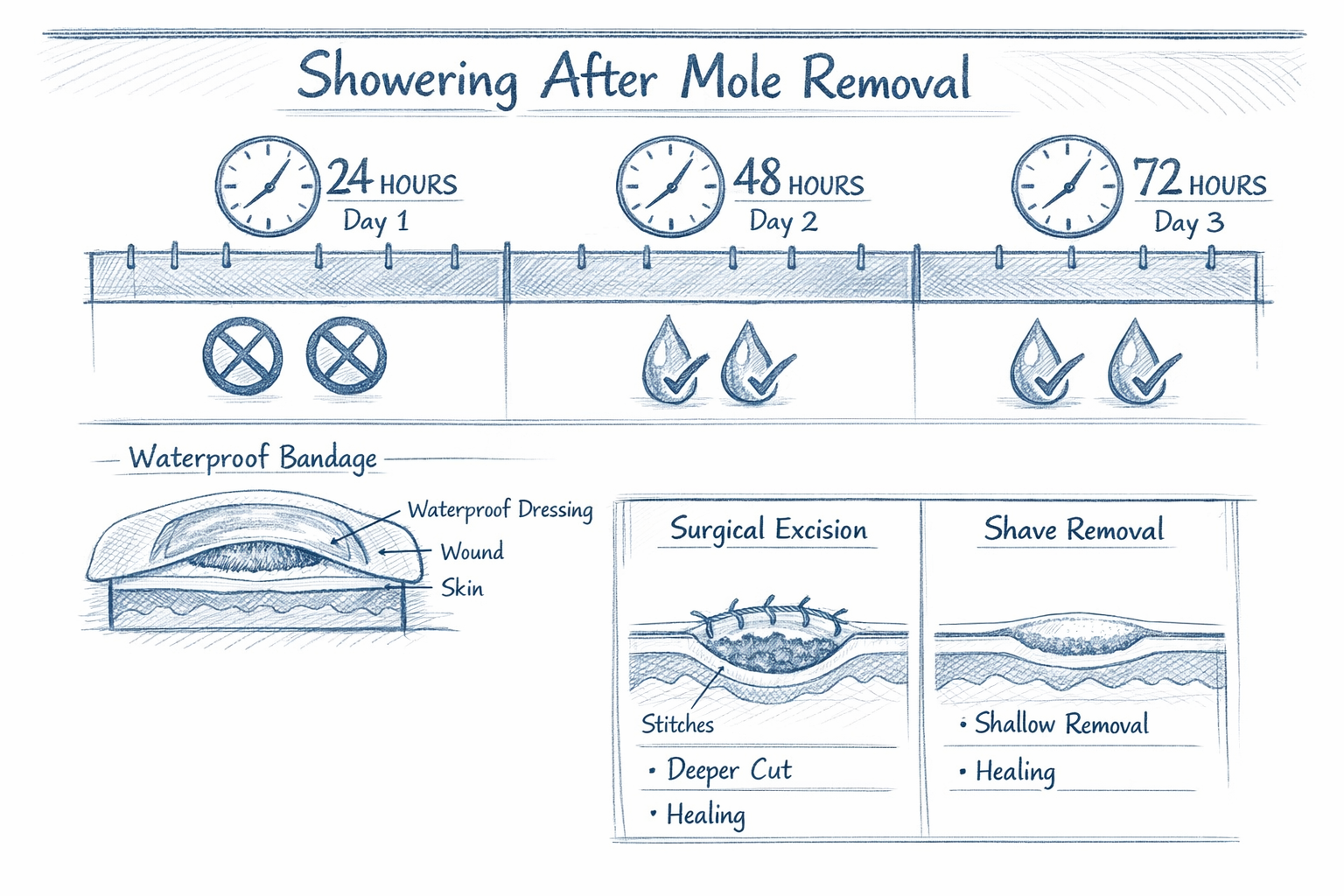
Surgical excision typically requires 48 hours before showering, while shave removal may allow showering within 24 hours
Waterproof bandages are essential for protecting the wound during the first few showers
Avoid direct water pressure on the removal site and never soak the wound in baths, pools, or hot tubs during initial healing
Always follow your dermatologist's specific instructions, as individual cases may require different care protocols
Understanding Mole Removal Procedures and Their Impact on Showering
Before diving into showering guidelines, it's important to understand that different mole removal techniques create different types of wounds, which directly affects when you can safely shower.
Types of Mole Removal Methods
Shave Removal (Shave Excision) ✂️
This technique involves using a small blade to shave off the mole at skin level or slightly below. The wound is typically shallow and doesn't require stitches. Shave removal creates a wound similar to a deep scrape.
Surgical Excision 🔪
This method cuts out the entire mole along with a margin of healthy skin around it. The wound is deeper and usually requires stitches (sutures) to close. Surgical excision is used for larger moles or when there's concern about melanoma.
Laser Removal ⚡
Some moles can be removed using laser technology, which typically creates minimal surface damage. However, this method isn't suitable for all mole types.
Cryotherapy (Freezing) ❄️
Liquid nitrogen freezes the mole tissue, causing it to fall off over several days. This creates a blister-like wound initially.
When Can You Shower After Mole Removal? The Definitive Timeline
The question of when can you shower after mole removal doesn't have a one-size-fits-all answer, but there are general guidelines based on medical best practices and wound healing science.
The First 24 Hours: Critical Protection Period
For most mole removal procedures, dermatologists recommend keeping the wound completely dry for at least the first 24 hours. This initial period is crucial because:
The wound is most vulnerable to bacterial contamination
Blood clotting is still occurring
The initial healing process is just beginning
Moisture can interfere with proper scab formation
During this time, patients should use sponge baths or carefully wash around the area without getting the wound wet.
24-48 Hours: The Green Light for Most Procedures
After the first day, many patients receive clearance to shower, but with important precautions:
Shave Removal Patients can typically shower after 24 hours with a waterproof bandage covering the site.
Surgical Excision Patients should usually wait the full 48 hours, especially if stitches were used.
"The first 48 hours after any skin procedure are the most critical for infection prevention. Keeping the wound clean and dry during this period significantly reduces complications." - American Academy of Dermatology
48-72 Hours: Increased Flexibility
By the third day post-procedure, most wounds have begun the healing process sufficiently to tolerate brief water exposure. However, direct water pressure should still be avoided.
One Week and Beyond
After about 7 days, most mole removal sites can handle normal showering, though you should still:
Pat the area dry gently rather than rubbing
Avoid harsh soaps or scrubbing
Continue monitoring for signs of infection
Keep the area covered if recommended by your doctor
Proper Showering Techniques After Mole Removal
Knowing when can you shower after mole removal is only half the battle. Understanding how to shower properly is equally important for optimal healing.
Step-by-Step Showering Guide
Before You Shower: 🚿
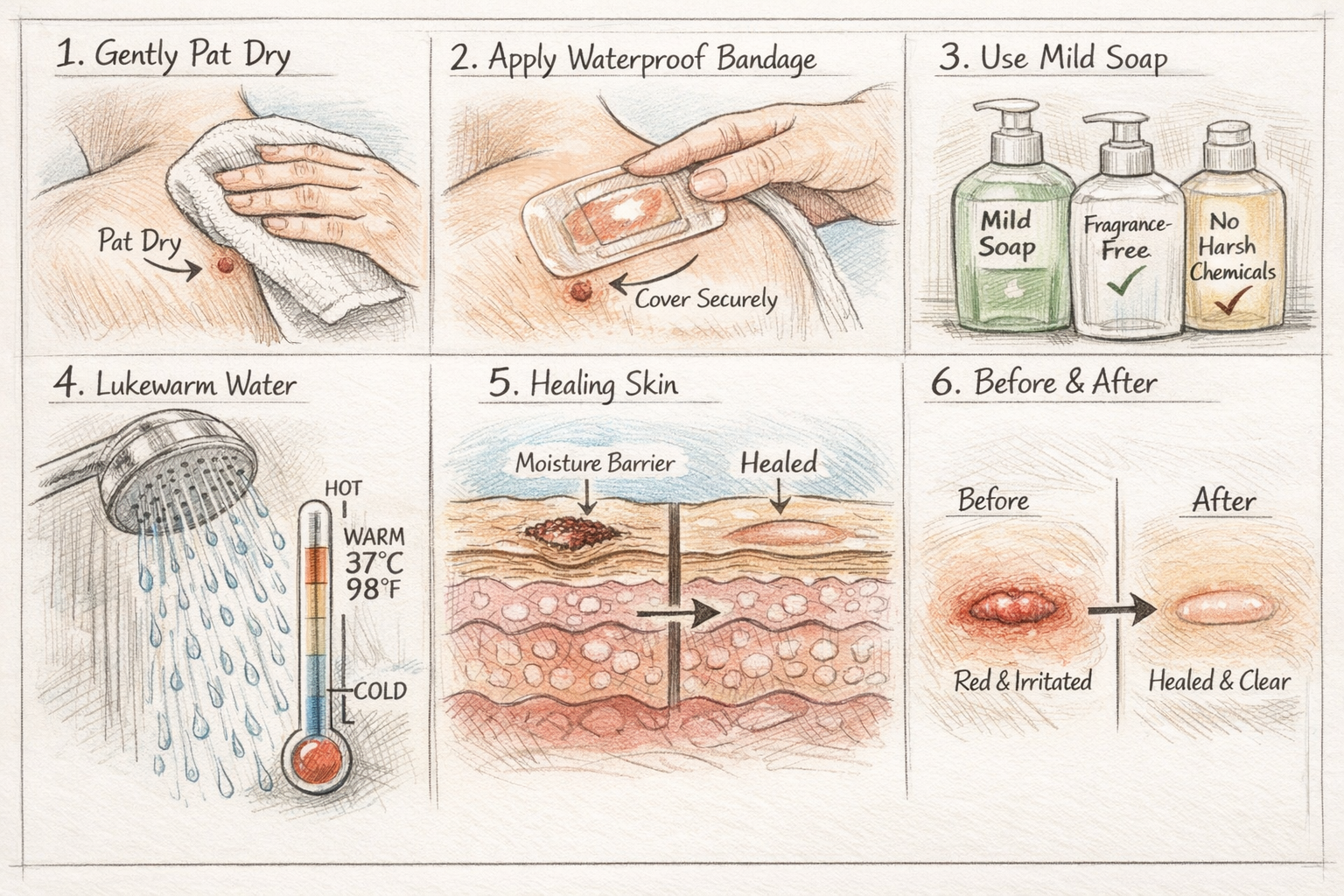
Apply a waterproof bandage specifically designed for wound protection
Check that the bandage is securely adhered on all sides
Gather mild, fragrance-free soap
Adjust water temperature to lukewarm (not hot)
During Your Shower:
Keep your back to the showerhead when washing to minimize direct water pressure on the wound
Let water run gently over the bandaged area rather than directly spraying it
Avoid using washcloths or loofahs near the removal site
Use only mild, unscented soap around (not on) the wound
Keep shower time brief (5-10 minutes maximum)
Don't attempt to remove scabs or crusts
After Your Shower:
Pat the area dry with a clean, soft towel - never rub
Remove the waterproof bandage carefully
Allow the wound to air dry for 2-3 minutes
Apply any prescribed ointments or medications
Cover with a fresh, dry bandage as directed
Water Temperature Matters
Lukewarm water is ideal for several reasons:
Hot water can increase blood flow and cause bleeding
Cold water can be uncomfortable and cause shivering
Moderate temperature promotes comfort without disrupting healing
Products to Avoid
During the first two weeks of healing, stay away from:
While the question focuses on when can you shower after mole removal, many patients also wonder about other water activities.
Bathing vs. Showering
Baths should be avoided for at least 2 weeks after mole removal, or until the wound is completely healed. Here's why:
Soaking softens scabs and can cause premature removal
Bath water contains more bacteria than flowing shower water
Extended water exposure increases infection risk
Healing tissue becomes overly saturated and fragile
Swimming Pools 🏊♀️
Wait at least 2-3 weeks before swimming in pools, or until your doctor gives explicit approval. Pool water contains:
Chlorine and other chemicals that irritate healing skin
Bacteria from other swimmers
Risk of bumping or scraping the healing area
Hot Tubs and Jacuzzis
These are particularly risky and should be avoided for at least 3-4 weeks because:
Warm water is a breeding ground for bacteria
Jets can disrupt healing tissue
Heat increases inflammation
Higher risk of infection from Pseudomonas and other bacteria
Ocean and Lake Swimming 🌊
Natural bodies of water carry the highest infection risk and should be avoided until the wound is completely healed (typically 3-4 weeks minimum). These waters contain:
High bacterial counts
Parasites and microorganisms
Salt (ocean) that can irritate wounds
Debris that can contaminate the site
Signs Your Wound Isn't Ready for Showering
Even if you're past the typical waiting period for when can you shower after mole removal, certain signs indicate you should wait longer or consult your doctor:
Red Flags to Watch For 🚩
Excessive Drainage or Bleeding
Clear or slightly bloody drainage is normal for 24-48 hours
Persistent bleeding or pus-like discharge means wait longer
Increased Redness or Swelling
Some redness immediately around the wound is normal
Expanding redness or significant swelling suggests inflammation
Wound Hasn't Closed
The edges should be coming together by day 2-3
Gaping wounds need more protection from water
Pain is Increasing Rather Than Decreasing
Pain should gradually improve each day
Worsening pain may indicate infection
Fever or Chills
Any systemic symptoms warrant immediate medical attention
Don't shower until you've consulted your doctor
Special Considerations for Different Body Locations
The location of your mole removal affects when can you shower after mole removal and how carefully you need to protect the area.
Face and Scalp Moles
Challenges:
Difficult to keep completely dry during showering
More visible, so appearance matters more
Higher blood flow means more bleeding risk
Solutions:
Use a shower cap for scalp removals
Face shields or waterproof bandages for facial sites
Consider face-only washing at the sink initially
Back and Shoulder Moles
Challenges:
Hard to see and reach
Direct water flow during normal showering
Difficult to apply bandages properly
Solutions:
Ask someone to help with bandage application
Position yourself away from direct spray
Use larger waterproof bandages
Chest and Abdomen Moles
Challenges:
Clothing friction during the day
Movement and stretching of skin
Potential for bandage displacement
Solutions:
Secure bandages well before showering
Wear loose-fitting clothing
Check bandage integrity frequently
Leg and Foot Moles
Challenges:
Constant movement and pressure
Higher risk of bumping or scraping
Swelling from standing
Solutions:
Elevate the leg when possible
Use extra protective padding
Consider sitting while showering initially
Wound Care Beyond Showering: Complete Healing Protocol
Understanding when can you shower after mole removal is just one aspect of proper wound care. Comprehensive healing requires attention to several factors.
Daily Wound Care Routine
Morning Routine:
Gently remove old bandage
Clean the area with saline solution or as directed
Pat dry thoroughly
Apply prescribed ointment (typically petroleum jelly or antibiotic ointment)
Cover with fresh bandage
Evening Routine:
Repeat cleaning process
Inspect wound for any concerning changes
Reapply ointment and fresh bandage
Keep the area elevated if possible
Recommended Wound Care Products
Essential Items: 📦
Waterproof bandages (Tegaderm, Nexcare, or similar)
Non-stick gauze pads for larger wounds
Medical tape (hypoallergenic)
Petroleum jelly or prescribed antibiotic ointment
Saline solution for cleaning
Clean towels dedicated to wound care
When to Apply Ointments
Most dermatologists recommend:
Petroleum jelly (Vaseline) for most wounds - keeps area moist and promotes healing
Antibiotic ointment (Bacitracin, Neosporin) only if specifically prescribed
Apply 2-3 times daily or after each bandage change
Continue until wound is fully closed (typically 7-14 days)
Common Mistakes to Avoid After Mole Removal
Many complications arise from simple mistakes patients make when caring for their wounds. Here are the most common errors:
Mistake #1: Showering Too Soon
The Problem: Exposing the wound to water before it's ready increases infection risk and can disrupt initial healing.
The Solution: Follow your doctor's specific timeline for when can you shower after mole removal - typically 24-48 hours minimum.
Mistake #2: Using Hot Water
The Problem: Hot water dilates blood vessels, potentially causing bleeding and slowing healing.
The Solution: Use lukewarm water exclusively for the first 2 weeks.
Mistake #3: Scrubbing or Picking at Scabs
The Problem: Removing scabs prematurely increases scarring and infection risk.
The Solution: Let scabs fall off naturally, even if they look unsightly.
Mistake #4: Skipping Bandages
The Problem: Leaving wounds uncovered exposes them to bacteria and trauma.
The Solution: Keep the area bandaged as directed, typically for 7-14 days.
Mistake #5: Using the Wrong Products
The Problem: Harsh soaps, alcohol, or hydrogen peroxide can damage healing tissue.
The Solution: Stick to mild, fragrance-free products and only what your doctor recommends.
Mistake #6: Ignoring Warning Signs
The Problem: Delaying treatment when infection develops can lead to serious complications.
The Solution: Contact your doctor immediately if you notice increasing redness, pus, fever, or worsening pain.
When to Contact Your Dermatologist
Certain situations require professional medical attention, regardless of where you are in the healing timeline.
Urgent Situations Requiring Same-Day Contact 📞
Excessive bleeding that doesn't stop with 10 minutes of gentle pressure
Signs of infection: increasing redness spreading beyond the wound, pus, red streaks, fever
Wound separation: stitches breaking or wound edges pulling apart
Severe pain not controlled by over-the-counter pain relievers
Allergic reaction to bandages, ointments, or medications
Non-Urgent Concerns for Next-Day Contact
Slow healing after 2 weeks
Unusual scarring or keloid formation
Persistent drainage beyond one week
Questions about when to resume normal activities
Concerns about the appearance of the healing site
What to Expect at Follow-Up Appointments
Most mole removals require at least one follow-up visit:
7-14 Days Post-Procedure:
Stitch removal (if applicable)
Wound assessment
Discussion of pathology results
Clearance for normal activities including unrestricted showering
Optimizing Healing and Minimizing Scarring
Beyond knowing when can you shower after mole removal, patients often want to know how to achieve the best cosmetic outcome.
Zinc - Aids tissue repair (nuts, seeds, whole grains)
Water 💧 - Keeps skin hydrated (aim for 8 glasses daily)
Frequently Asked Questions About Showering After Mole Removal
Can I wash my hair after mole removal on my scalp?
Yes, but with precautions. For scalp mole removals, you can wash your hair after 48 hours using the following method:
Tilt your head backward in the sink
Have someone help you wash gently
Use lukewarm water and mild shampoo
Avoid scrubbing near the removal site
Pat dry very gently
What if the bandage gets wet accidentally?
If your bandage gets wet during the critical first 48 hours:
Remove it immediately
Gently pat the area dry
Allow it to air dry for several minutes
Apply a fresh, dry bandage
Contact your doctor if you notice any concerning changes
Can I use waterproof makeup after facial mole removal?
Wait at least one week before applying makeup near the removal site. When you do:
Use only clean applicators
Choose non-comedogenic, fragrance-free products
Remove makeup gently with mild cleanser
Avoid the wound site until fully healed
How long until I can take a bath?
Most dermatologists recommend waiting 2-3 weeks before taking baths, or until the wound is completely healed and any stitches have been removed.
Is it normal for the wound to look worse before it looks better?
Yes, this is common. Wounds often look most unattractive around days 3-7 when scabbing is prominent. Healing continues to improve over weeks and months.
Can I exercise and then shower?
Light exercise is usually fine after the first week, but:
Avoid activities that cause excessive sweating initially
Don't exercise that stretches or stresses the wound area
Shower promptly after exercising to remove sweat
Continue protecting the wound during showers
Understanding the Healing Timeline
Knowing what to expect during each phase of healing helps you make informed decisions about when can you shower after mole removal and other activities.
Days 1-3: Inflammatory Phase
What's Happening:
Blood clotting occurs
White blood cells arrive to prevent infection
Redness and swelling are normal
Some clear or slightly bloody drainage
Showering Guidelines:
Wait 24-48 hours before first shower
Use waterproof bandages
Keep showers brief
Avoid direct water pressure
Days 4-14: Proliferative Phase
What's Happening:
New tissue forms
Scab develops and hardens
Wound edges pull together
Itching may occur (normal)
Showering Guidelines:
Can shower more normally with continued protection
Still avoid soaking
Don't pick at scabs even if itchy
Continue gentle cleansing
Days 15-21: Maturation Phase Begins
What's Happening:
Scab falls off naturally
Pink, new skin appears
Scar tissue begins forming
Wound strength increases
Showering Guidelines:
Can usually shower normally
May discontinue bandages if doctor approves
Begin scar prevention strategies
Continue sun protection
Weeks 3-12: Remodeling Phase
What's Happening:
Scar tissue matures
Redness gradually fades
Scar may flatten or become less noticeable
Collagen reorganizes
Showering Guidelines:
No restrictions on showering
Can use gentle exfoliation around (not on) scar
Continue moisturizing
Maintain sun protection
Special Populations and Considerations
Certain groups need extra attention when determining when can you shower after mole removal.
Diabetic Patients
People with diabetes face additional healing challenges:
Considerations:
Slower wound healing
Higher infection risk
May need longer before showering safely
Require more frequent wound checks
Recommendations:
Wait the full 48-72 hours before first shower
Monitor blood sugar carefully (affects healing)
Watch extra carefully for infection signs
Consider more frequent follow-up appointments
Patients on Blood Thinners
Those taking anticoagulants (warfarin, aspirin, etc.) may experience:
Considerations:
Increased bleeding risk
Longer clotting time
May need pressure dressings longer
Recommendations:
Discuss with both dermatologist and prescribing physician
May need to wait longer before showering
Apply extra gentle pressure when drying
Report any bleeding immediately
Elderly Patients
Older adults often have:
Considerations:
Thinner, more fragile skin
Slower healing processes
Possible mobility limitations
Multiple medications affecting healing
Recommendations:
Extra gentle wound care
May need assistance with showering and bandaging
Longer protection period may be needed
Enhanced nutrition support
Children and Adolescents
Young patients present unique challenges:
Considerations:
Active lifestyles increase injury risk
May not understand care importance
Faster healing but higher activity levels
Difficulty keeping bandages on
Recommendations:
Extra secure bandaging
Clear, age-appropriate instructions
Adult supervision during showering
Creative solutions for bandage protection
The Science Behind Wound Healing and Water Exposure
Understanding the biology helps explain why timing matters for when can you shower after mole removal.
How Water Affects Healing Wounds
Negative Effects of Premature Water Exposure:
Maceration - Excessive moisture softens tissue, making it fragile and prone to breakdown
Bacterial Introduction - Water can carry bacteria into the wound
Scab Disruption - Water softens protective scabs, potentially removing them prematurely
Temperature Effects - Hot water dilates blood vessels, potentially causing bleeding
Positive Effects of Proper Showering:
Gentle Cleansing - Removes surface debris and bacteria
Comfort - Maintains normal hygiene and psychological well-being
Moisture Balance - Brief exposure can help maintain appropriate moisture levels
Circulation - Lukewarm water promotes healthy blood flow
The Role of Moisture in Healing
Modern wound care recognizes that moist wound healing is superior to dry healing:
Wounds kept appropriately moist heal 50% faster
Moist environments reduce scarring
Cell migration occurs more efficiently
Less pain and discomfort
However, there's a critical difference between controlled moisture (from ointments and appropriate dressings) and excessive moisture (from premature water exposure).
Creating Your Personal Showering Schedule
Based on all these factors, here's how to create your customized plan for when can you shower after mole removal.
Step 1: Know Your Removal Type
Identify which procedure you had:
Shave removal → typically 24-hour wait
Surgical excision → typically 48-hour wait
Laser removal → typically 24-hour wait
Cryotherapy → typically 24-hour wait
Step 2: Consider Your Personal Factors
Adjust based on:
Your overall health status
Wound size and location
Any complications or risk factors
Your doctor's specific instructions
Step 3: Prepare Your Supplies
Before your first shower, gather:
Waterproof bandages (appropriate size)
Mild, fragrance-free soap
Clean, soft towels
Fresh bandages for after showering
Prescribed ointments
Step 4: Plan Your Technique
Decide how you'll:
Position yourself to minimize water pressure
Keep the wound protected
Dry the area afterward
Apply fresh dressings
Step 5: Monitor and Adjust
After each shower:
Check the wound for any concerning changes
Assess whether your protection method worked
Adjust your technique as needed
Note improvements in healing
Long-Term Skin Health After Mole Removal
The care you take extends far beyond when can you shower after mole removal - it's about lifelong skin health.
Sun Protection is Critical ☀️
Why It Matters:
UV exposure darkens scars permanently
Increases risk of new moles developing
Can damage healing tissue
Essential for at least 6-12 months post-removal
How to Protect:
Apply SPF 30+ sunscreen daily
Reapply every 2 hours when outdoors
Cover with clothing when possible
Avoid peak sun hours (10 AM - 4 PM)
Regular Skin Monitoring
After mole removal, establish a routine:
Monthly Self-Exams:
Check the removal site for any recurrence
Monitor for new or changing moles
Use the ABCDE method (Asymmetry, Border, Color, Diameter, Evolving)
Photograph concerning spots
Annual Dermatologist Visits:
Full body skin examination
Professional monitoring of the removal site
Early detection of any new concerns
Updated recommendations based on your risk factors
When to Worry About the Scar
Most scars improve over 6-12 months, but contact your doctor if you notice:
Scar becoming raised or thick (keloid formation)
Increasing redness after the first month
New growth at the removal site
Changes in texture, color, or size
Pain or tenderness in the healed area
Conclusion: Your Path to Optimal Healing
Understanding when can you shower after mole removal is essential for proper wound care and optimal healing outcomes. While the general guideline is 24-48 hours depending on your removal method, the most important factor is following your dermatologist's specific instructions for your unique situation.
Key Points to Remember:
Timing Matters ⏰
Wait at least 24 hours for shave removal
Wait 48 hours for surgical excision
Always confirm with your doctor's specific recommendations
Technique is Crucial 🚿
Use waterproof bandages for protection
Keep water lukewarm, not hot
Avoid direct water pressure on the wound
Pat dry gently, never rub
Patience Pays Off 💪
Avoid baths, swimming, and soaking for 2-3 weeks
Follow the complete wound care protocol
Monitor for signs of infection or complications
Protect from sun exposure during healing
Long-Term Care 🌟
Continue scar prevention strategies
Maintain regular skin monitoring
Attend all follow-up appointments
Practice lifelong sun protection
Your Next Steps:
Review your discharge instructions from your dermatologist carefully
Gather all necessary supplies before your first shower
Set reminders for bandage changes and wound care
Schedule your follow-up appointment if you haven't already
Contact your doctor immediately if you notice any concerning symptoms
Remember, the few days of extra caution you take now will pay dividends in better healing, reduced scarring, and optimal cosmetic outcomes. Your skin has remarkable healing abilities - give it the best conditions to do its job effectively.
By following these comprehensive guidelines for when can you shower after mole removal and beyond, you're setting yourself up for the best possible healing experience. When in doubt, always err on the side of caution and consult with your healthcare provider. Your skin health is worth the extra care and attention during this critical healing period.