Cyst removal in Mississauga is available through local minor surgery clinics that assess the cyst type, then recommend either drainage or full surgical excision under local anesthetic. Full excision, which removes the cyst wall or sac, is generally the more definitive option because drainage alone often leads to recurrence [1][2]. Most straightforward cyst removals take between 15 and 45 minutes and are performed the same day the decision is made to proceed.
Key Takeaways
- Cyst Removal Mississauga clinics typically assess sebaceous, epidermoid, and pilar cysts before recommending drainage or excision.
- Full surgical excision that removes the cyst wall is considered more definitive than drainage alone, because leaving the sac behind increases the chance the cyst returns [2][3].
- Cosmetic or convenience-based cyst removal is usually private-pay in Ontario; OHIP coverage depends on medical necessity, not preference.
- A typical in-clinic cyst removal takes 15 to 45 minutes under local anesthetic, though larger or inflamed cysts may take longer.
- Infected or acutely inflamed cysts are often harder to excise completely in one visit and may need drainage first, followed by excision once inflammation settles [3][4].
- Recovery for most simple cyst removals involves light activity restrictions for a few days and suture removal (if non-dissolvable) within one to two weeks.
- Scarring can often be minimized through careful incision placement, wound care, and avoiding sun exposure on the healing site.
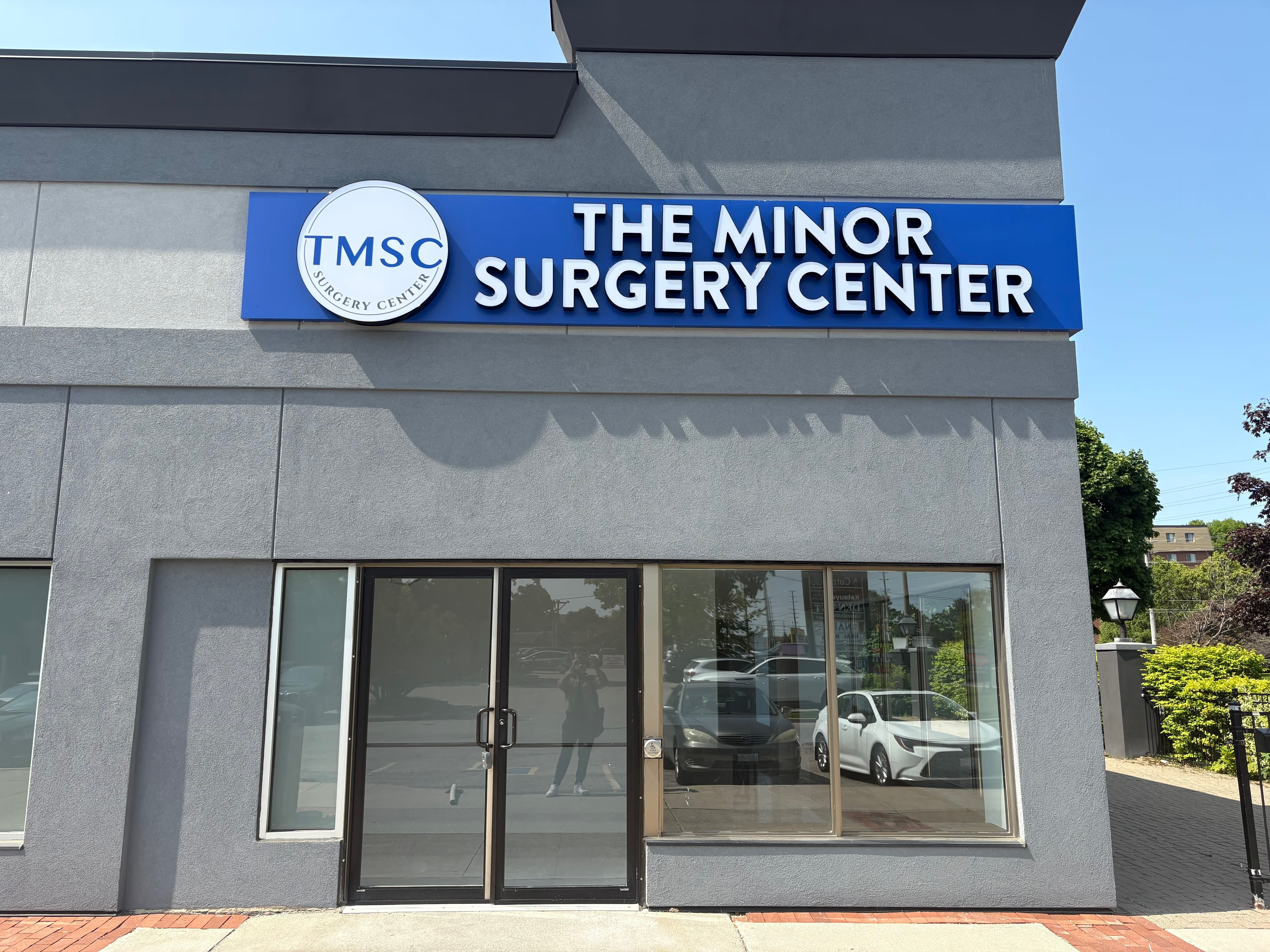
- The Minor Surgery Center's Mississauga clinic on Dundas Street West serves patients from Port Credit, Erin Mills, Cooksville, Clarkson, Streetsville, Lorne Park, and Etobicoke.
Cyst Removal in Mississauga
The Minor Surgery Center offers cyst assessment and surgical removal at its Mississauga clinic on Dundas Street West, giving local patients a nearby option instead of driving into downtown Toronto for minor skin procedures [1]. Patients visit for sebaceous cysts, epidermoid cysts, pilar cysts, and other skin or subcutaneous lumps that are painful, growing, recurring, inflamed, or cosmetically bothersome.
Treatment recommendations depend on several factors specific to each patient:
- Cyst type (sebaceous, epidermoid, pilar, or another variant)
- Size and depth of the lump
- Location on the body (face, scalp, back, groin, or elsewhere)
- Symptoms such as pain, tenderness, or rapid growth
- Whether the cyst is currently infected or inflamed
The clinic opened in June 2025 at 1224 Dundas Street West, Unit 101, and was designed to provide rapid, same-day treatment for minor skin and hand conditions, including cyst removals, without the long wait times often associated with hospital-based referral systems [1]. This matters for anyone typing "cyst removal near me" and hoping to be seen within days rather than months.
A cyst that has been present for years without change is a different clinical picture than a cyst that has suddenly become red, swollen, and painful. Both deserve assessment, but the urgency and treatment plan differ.
What Is a Cyst and Why Does It Need to Be Removed?
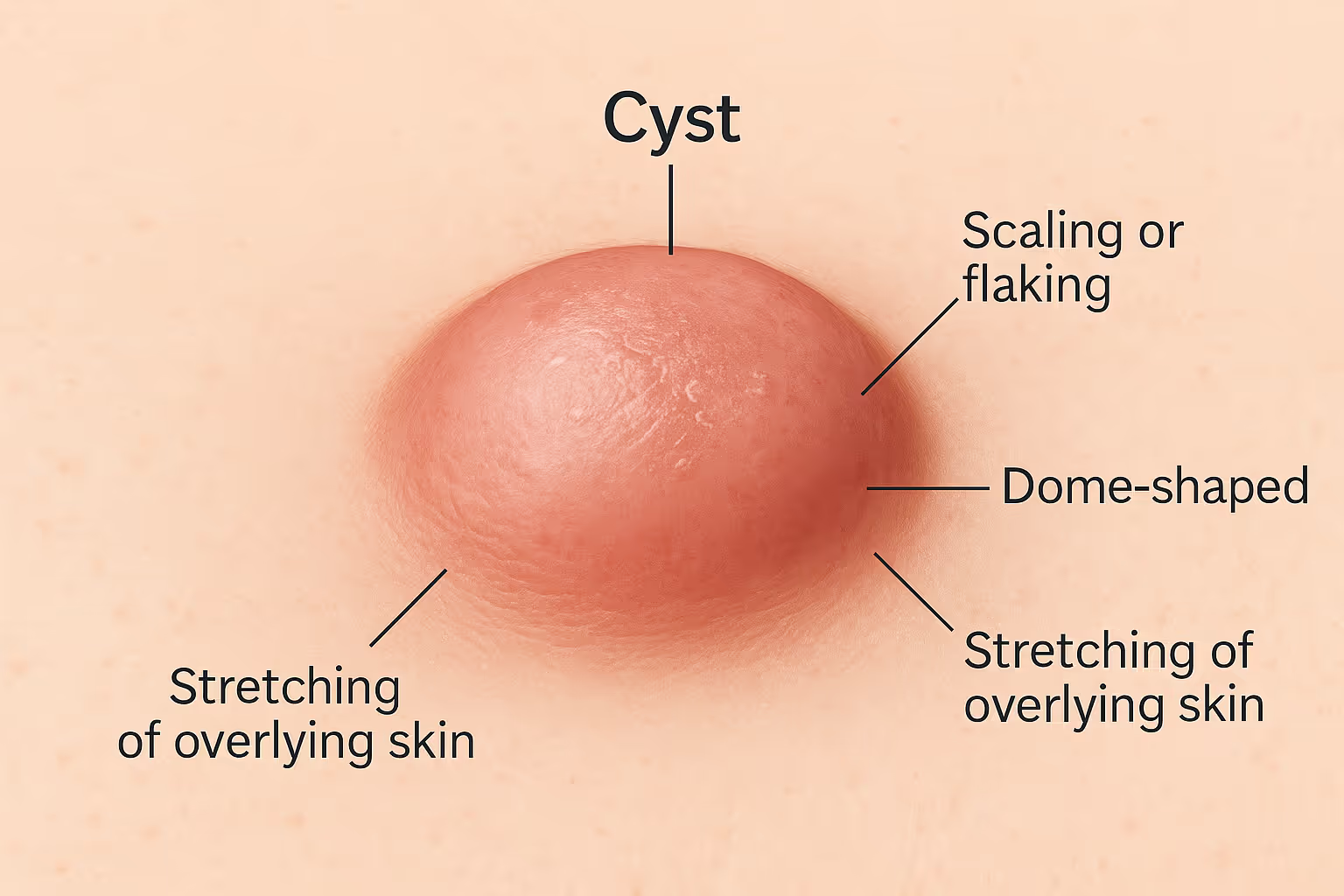
A cyst is a closed sac under the skin filled with fluid, keratin, or semi-solid material, and it needs removal when it becomes symptomatic, keeps growing, gets infected repeatedly, or bothers the patient cosmetically. Most skin cysts are benign, but the sac itself does not disappear on its own in most cases.
Common reasons cysts are removed rather than left alone include:
- Recurrent infection, the same cyst becomes red and painful more than once
- Steady growth, the lump is visibly larger than it was six or twelve months ago
- Location friction, a cyst under a bra strap, collar, or waistband gets irritated repeatedly
- Cosmetic concern, visible cysts on the face, neck, or scalp affect confidence
- Diagnostic uncertainty, the physician wants tissue sent for pathology to confirm what the lump actually is
Decision rule: if a cyst has never caused symptoms, is small, and is not changing, ongoing monitoring may be reasonable. If it has become painful, infected more than once, or is growing, removal is generally the more sensible long-term option.
What Types of Cysts Can Be Assessed at a Cyst Removal Clinic Mississauga?
A cyst removal clinic Mississauga typically assesses sebaceous cysts, epidermoid cysts, and pilar cysts, along with less common variants like ganglion cysts on the hands and wrists. Correct identification matters because treatment approach and expected healing differ by type.
Physicians at a sebaceous cyst removal Mississauga appointment will examine the lump, ask about duration and prior infections, and may recommend imaging in unusual cases before deciding on drainage or excision. For patients specifically dealing with hand or wrist lumps, distinguishing a ganglion cyst from an epidermoid cyst changes the surgical approach, since ganglion cysts often connect to a joint or tendon sheath.
Edge case: a lump that looks like a simple cyst but is unusually hard, fixed to deeper tissue, or growing quickly should be evaluated carefully, since these features can occasionally point to something other than a benign cyst.
When Should a Cyst Be Removed?
A cyst should be removed when it is painful, infected, rapidly growing, located somewhere it gets constantly irritated, or bothersome enough cosmetically that the patient wants it gone. There is no single rule that applies to every cyst, but these patterns are common triggers for a removal decision.
Signs it may be time to book an assessment:
- The cyst has become red, warm, or tender
- It has drained pus or fluid on its own more than once
- It is increasing in size over weeks or months
- It sits under clothing, jewelry, or straps and gets irritated daily
- It is visible and affects how the patient feels about their appearance
Choose removal now if: the cyst has already been infected once, since recurrent infection is common in cysts left untreated and each flare can make the tissue more scarred and harder to remove cleanly later.
What Happens if You Don't Remove a Cyst?
Leaving a cyst alone does not make the sac disappear; it typically stays the same size, slowly grows, or eventually becomes inflamed or infected. Some cysts remain stable for years, but there is no way to predict which ones will flare up.
Possible outcomes of not removing a cyst include:
- No change, some small, quiet cysts stay stable indefinitely
- Gradual growth, the sac slowly fills and stretches the skin over time
- Infection, bacteria can enter through the overlying skin, causing redness, swelling, and pain
- Rupture, the cyst wall breaks internally, releasing contents into surrounding tissue and causing significant inflammation
- Scarring from repeated flares, each infection episode can leave more fibrous, harder-to-remove tissue behind
A cyst that ruptures or becomes infected is often more painful to treat and may leave a larger scar than one removed while calm and non-inflamed. This is one reason physicians often recommend addressing a bothersome cyst before it flares rather than waiting for a crisis.
Cyst Drainage vs Full Cyst Excision
Drainage empties the fluid or keratin content from a cyst and can relieve pressure quickly, but it does not remove the cyst wall, so the sac usually remains and the cyst can refill or return. Full excision removes the entire cyst wall along with its contents, which is why it is generally considered the more definitive treatment [2][3].
According to StatPearls, the definitive treatment for an epidermal inclusion cyst is complete surgical excision with the cyst wall intact, and this becomes technically harder to achieve when the cyst is acutely inflamed [3]. That is a key clinical detail: excising a calm, non-inflamed cyst is usually more straightforward than excising one that is actively infected.
Common mistake: assuming that once a cyst has been drained and looks flat, it is "gone." The sac is often still present under the skin and can slowly refill over weeks or months. Patients interested in the technical difference can review this comparison of cyst removal versus cyst drainage and why the entire cyst sac matters for long-term results.
Need a cyst assessed or removed in Mississauga?
TMSC offers cyst assessment and surgical removal at our Mississauga clinic on Dundas Street West. Book a consultation to review your options for drainage or full excision.
Cyst Removal Mississauga: Dermatologist vs Surgeon
Both dermatologists and general surgeons can assess and remove cysts, and the choice often comes down to cyst location, complexity, and clinic availability rather than one specialty being universally better. Minor surgery clinics staffed by physicians experienced in excisions offer a practical middle ground for most straightforward cysts.
General guidance:
- Dermatologists often manage smaller, superficial skin cysts and are comfortable with excisions on the face and body.
- General or minor surgery physicians frequently handle a broader range of cyst sizes, locations, and complexity, including recurrent or previously infected cysts.
- Plastic surgeons may be consulted for cysts in cosmetically sensitive areas or larger lesions where scar minimization is a priority.
Decision rule: choose a minor surgery clinic if you want a straightforward, timely assessment and treatment plan without a lengthy referral process. Choose a specialist referral if the cyst is unusually large, in a complex location (near nerves or major vessels), or if there is diagnostic uncertainty about what the lump actually is.
What Happens During Cyst Removal?
Cyst removal typically involves cleaning the area, injecting local anesthetic, making a small incision, removing the cyst and its wall, and closing the skin with sutures if needed. Most straightforward procedures take between 15 and 45 minutes, though size, depth, and prior inflammation can extend that time.
Typical step-by-step process:
- Assessment, the physician examines the cyst, discusses history, and confirms the treatment plan
- Cleaning and anesthetic, the skin is cleaned and numbed with local anesthetic
- Incision, a small cut is made over or around the cyst
- Removal, the cyst and, ideally, its full wall are carefully separated from surrounding tissue
- Closure, the wound is closed with sutures, adhesive strips, or left open to heal depending on size and location
- Dressing, a bandage is applied and aftercare instructions are given
For a full breakdown of what to expect, see this step-by-step guide to cyst removal surgery. Patients specifically curious about epidermoid cyst removal surgery can review how that particular procedure differs slightly from sebaceous or pilar cyst removal.
Quick example: a small, calm pilar cyst on the scalp with no prior infection is often one of the more straightforward removals, frequently completed in under 30 minutes with minimal downtime. A larger back cyst with a history of two prior infections may take longer and heal more slowly due to scar tissue from earlier flares.
Does Cyst Removal Hurt?
Cyst removal is performed under local anesthetic, so most patients feel pressure or mild tugging rather than sharp pain during the procedure itself. Some discomfort after the anesthetic wears off is normal and usually manageable with over-the-counter pain relief.
What patients commonly report:
- During the procedure, a brief sting from the anesthetic injection, then pressure sensations without sharp pain
- Immediately after, mild soreness at the site, similar to a bruise or small cut
- First 24 to 48 hours, some tenderness, especially if the area is bumped or stretched
- After that, discomfort typically fades steadily as the wound settles
Edge case: removal of an actively infected or acutely inflamed cyst tends to be more uncomfortable, both because inflamed tissue is more sensitive and because complete excision is technically harder in that state [3]. This is part of why physicians sometimes prefer to calm inflammation first before scheduling full excision, when timing allows.
What Are the Risks of Cyst Removal Surgery?
Cyst removal is generally a low-risk minor procedure, but like any surgical intervention it carries a small chance of bleeding, infection, scarring, or recurrence if the cyst wall is not fully removed. Discussing these risks during consultation helps set realistic expectations.
Possible risks and complications include:
- Bleeding or bruising at the incision site
- Infection of the surgical wound (different from the original cyst infection)
- Scarring, which varies by skin type, cyst size, and wound care
- Recurrence if any part of the cyst wall is left behind
- Numbness or altered sensation near the incision, usually temporary
- Nerve or vessel proximity issues in certain body locations, which is why complex cases may warrant specialist referral
Common mistake: picking at scabs or resuming heavy activity too early, which increases bleeding and bruising risk. Following aftercare instructions closely reduces most avoidable complications.
Infected Cyst Removal Mississauga: Emergency Care
An infected cyst that is rapidly swelling, very painful, spreading redness, or accompanied by fever needs prompt medical attention rather than a routine scheduled appointment. Acute infections are sometimes managed with drainage and antibiotics first, with full excision planned once inflammation has settled.
Signs that suggest urgent assessment is needed:
- Rapidly increasing redness or swelling around the cyst
- Significant pain that is worsening rather than stable
- Fever or feeling generally unwell
- Pus actively draining with a foul odor
- Red streaking spreading away from the cyst (a sign infection may be tracking along tissue)
As StatPearls notes, acutely inflamed cysts are harder to excise completely in one sitting compared with calm, non-inflamed cysts [3]. Because of this, the practical approach for many infected cysts is: drain urgently to relieve pressure and infection now, then plan definitive excision after the area has healed and calmed down. Readers wanting to understand the distinction between a cyst and a true abscess should review this comparison of cyst vs abscess, since the two are often confused but can require different urgent management.
Decision rule: if a cyst is acutely infected with spreading redness or fever, seek same-day or urgent care rather than waiting for a routine booking slot.
Non-Surgical Cyst Removal Options
Non-surgical options for cysts are limited to drainage, steroid injection to reduce inflammation, or antibiotics for infection, but none of these permanently remove the cyst wall the way surgical excision does. Patients should understand these are often temporary or supportive measures rather than definitive cures.
Common non-surgical approaches:
- Drainage (needle or small incision), relieves pressure and reduces size temporarily
- Intralesional steroid injection, can shrink inflammation in some inflamed cysts
- Oral or topical antibiotics, used when infection is present, not for the cyst itself
- Warm compresses, may help a small, superficial cyst drain on its own, though this does not remove the sac
Common mistake: attempting to pop, squeeze, or drain a cyst at home. This raises infection risk and does not remove the wall, so the cyst typically returns and the skin may scar unnecessarily. For skin conditions that look similar but are managed differently, such as ingrown hair-related bumps, it helps to understand why home treatment for ingrown hair cysts carries real limits before attempting self-care.
Decision rule: non-surgical management may be reasonable as a short-term measure for an acutely inflamed cyst, but patients wanting a lasting solution should plan for surgical excision once the area is calm.
Cyst Removal Cost and OHIP Coverage in Mississauga
Cyst removal cost in Mississauga depends on whether the procedure is medically necessary or considered cosmetic, since OHIP does not cover services performed purely for cosmetic reasons. Private clinics in the GTA, including options serving Brampton and Mississauga patients, list minor cyst removal procedures starting in the range of several hundred dollars, with the final cost depending on cyst size, complexity, and whether drainage or full excision is performed [7].
Cyst removal coverage depends on the reason for treatment. Cysts removed for cosmetic or convenience reasons are typically private-pay. If there is medical concern, symptoms, infection, suspicious features, or another clinically necessary reason, the physician can advise whether any part of the assessment or treatment may be covered.
Key facts about coverage in Ontario:
- OHIP does not cover cosmetic surgery, and the OHIP Schedule specifically notes that lesion removal performed for cosmetic purposes without clinical suspicion of disease is not an insured service.
- A cyst removed because it is infected, painful, or clinically suspicious may be assessed differently than one removed purely because a patient dislikes how it looks.
- Private clinics typically charge based on cyst size, number of cysts, location on the body, and whether pathology testing is included.
For a broader look at how pricing works across the province, see this detailed breakdown of cyst removal cost in Ontario.
Quick example: a single small, uninfected sebaceous cyst removed for cosmetic reasons on the arm is likely private-pay. A recurrent, infected epidermoid cyst causing pain and requiring drainage plus excision may involve a different coverage conversation, which the physician can clarify at consultation.
Recovery After Cyst Removal: Timeline and Aftercare
Recovery from a straightforward cyst removal typically involves mild soreness for a few days, sutures (if used) coming out within one to two weeks, and full healing over several weeks depending on cyst size and location. Larger or previously infected cysts generally take longer to heal than small, calm ones.
General recovery timeline:
Aftercare basics:
- Keep the wound clean and follow the dressing schedule given at the clinic
- Avoid strenuous activity that stretches or rubs the incision site
- Watch for signs of infection: increasing redness, warmth, or discharge
- Attend follow-up if sutures need removal or the physician requests a check
For a more detailed walkthrough, review this guide on cyst removal recovery time and this explainer on how long healing takes after cyst removal. Patients also frequently ask about suture type, which is addressed in this comparison of dissolvable versus non-dissolvable stitches.
Edge case: cysts removed from high-movement areas like the armpit or groin may need extra activity restriction during healing, since friction and stretching in these areas can slow wound closure. Anyone dealing with a cyst in these specific locations may find this guide on armpit cyst removal surgery useful for location-specific recovery expectations.
Cyst Removal Scars: How to Minimize Them
Cyst removal scars can be minimized through careful surgical technique, proper wound care during healing, and sun protection over the incision site for several months afterward. Scar outcome also depends on cyst size, location, skin type, and whether the area was previously infected or inflamed.
Practical steps to reduce visible scarring:
- Follow wound care instructions precisely, especially in the first two weeks
- Avoid picking at scabs or removing dressings early
- Keep the healing incision out of direct sun, or use sun protection once healed enough
- Avoid smoking during recovery, since it can slow wound healing
- Discuss scar-reducing options (such as silicone sheeting) with the physician if there is a personal history of thicker scarring
Common mistake: assuming a red or raised scar in the first few weeks is permanent. Many surgical scars continue to fade and flatten over several months. For a deeper dive into what affects scarring specifically after cyst procedures, see does cyst removal leave a scar, and for patients concerned about thicker or raised healing, this comparison of keloids versus hypertrophic scars explains the difference.
Can a Cyst Come Back After Removal?
A cyst can come back after removal if any part of the cyst wall or sac was left behind during the procedure, which is why complete excision is generally considered more reliable than drainage alone. Recurrence rates are lower when the entire wall is removed intact and the cyst was not acutely inflamed at the time of surgery [2][3].
Factors that influence recurrence risk:
- Completeness of excision, leaving any part of the sac increases recurrence chance
- Inflammation at time of surgery, acutely inflamed cysts are technically harder to remove in full
- Cyst type, some types are more prone to recurrence in certain locations
- Surgical technique and experience, careful dissection around the sac matters
Some clinics that serve the broader GTA emphasize sending removed cyst tissue to pathology, both to confirm the diagnosis and to document that the specimen matches what was expected [3]. This step, while not always mandatory for a simple, typical-looking cyst, can provide added clarity in cases where the diagnosis was uncertain before surgery.
Decision rule: if a cyst has already recurred once after a previous drainage-only procedure, full surgical excision with wall removal is generally the more sensible next step rather than repeating drainage.
Best Cyst Removal Clinic in Mississauga: Why Choose The Minor Surgery Center
The best cyst removal clinic in Mississauga for most patients is one offering physician-led assessment, same-day treatment scheduling, and a clear explanation of drainage versus excision before any procedure begins. The Minor Surgery Center's Mississauga location on Dundas Street West was built around exactly this kind of streamlined, physician-directed care [1][2].
What sets a strong cyst removal clinic apart:
- Physician-led assessment rather than a rushed, one-size-fits-all approach
- Clear treatment explanation covering drainage versus full excision and what each means for recurrence
- Local anesthetic procedures performed in-clinic, avoiding unnecessary hospital referral delays
- Transparent conversation about cost and OHIP coverage before treatment
- Convenient location for Mississauga and west GTA patients who want to avoid long commutes into downtown Toronto
Several GTA-area minor surgery and plastic surgery providers, including practices in Oakville and Toronto, similarly emphasize complete cyst sac removal to reduce recurrence and often route excised tissue to pathology for confirmation [3][4]. Choosing a clinic that follows this same principle, complete wall removal where clinically appropriate, is one of the more important decisions a patient can make when booking a cyst removal.
Patients researching options locally often also compare mole and skin lesion clinics in the same visit. For related procedures nearby, see the Mississauga minor surgery and mole removal guide for Erin Mills and skin lesion and skin tag removal in Port Credit.
Areas We Serve Near Mississauga
The Minor Surgery Center's Mississauga clinic on Dundas Street West serves patients across Mississauga and the west GTA, including several nearby communities that regularly travel in for cyst assessment and removal.
Areas served include:
- Port Credit
- Erin Mills
- Cooksville
- Clarkson
- Etobicoke
- Streetsville
- Lorne Park
Serving Mississauga and west GTA patients means shorter travel times for routine assessments, follow-up visits, and suture removal compared with driving into central Toronto. Patients further out in the GTA who are searching for comparable local options can also review clinic pages for Brampton, Woodbridge, or Milton, depending on which direction is more convenient.
FAQs
Do I need a referral for cyst removal in Mississauga? Many minor surgery clinics accept direct bookings without a referral for straightforward cyst assessments, though complex cases may still involve a specialist referral depending on findings.
How fast can I be seen for cyst removal near me? Clinics offering same-day or rapid scheduling, like TMSC's Mississauga location, are designed to reduce the wait typically associated with hospital referral pathways [1].
Is drainage enough, or do I need full excision? Drainage relieves pressure temporarily but leaves the cyst wall behind in most cases, so full excision is generally the more definitive option for lasting results [2][3].
Will OHIP cover my cyst removal? Coverage depends on medical necessity. Cosmetic or convenience-based removal is typically private-pay, while medically necessary treatment may be assessed differently by the physician.
How long does the actual procedure take? Most straightforward cyst removals take 15 to 45 minutes under local anesthetic, though size, depth, and inflammation can extend that time.
Does cyst removal hurt during the procedure? Local anesthetic numbs the area, so most patients feel pressure rather than sharp pain during removal, with mild soreness expected afterward.
What happens if a cyst gets infected before my appointment? An acutely infected or rapidly worsening cyst with fever or spreading redness needs urgent assessment rather than waiting for a routine booking.
Can a cyst come back after it's removed? Yes, if any part of the cyst wall is left behind, particularly with drainage-only treatment or excision performed during acute inflammation [3].
Will removal leave a noticeable scar? Scarring varies by cyst size, location, and skin type, but careful technique and proper aftercare typically help scars fade and flatten over time.
What is the difference between a cyst and an abscess? A cyst is a sac-lined structure, while an abscess is a collection of pus in tissue without that same wall; understanding the difference affects urgent treatment decisions, as explained in this cyst vs abscess comparison.
Book a Consultation
A cyst that is painful, growing, recurring, or bothering a patient cosmetically is a reasonable reason to book a consultation rather than wait and see. The Minor Surgery Center's Mississauga clinic on Dundas Street West offers physician-led assessment for sebaceous, epidermoid, pilar, and other skin cysts, with a clear explanation of whether drainage or full excision is the more appropriate path.
Patients ready to move forward can book an appointment to discuss cyst type, treatment options, expected recovery, and cost before any procedure takes place. Bringing a short history of the cyst, including when it appeared, whether it has ever been infected, and any prior treatment, helps the physician plan the visit efficiently.
Conclusion
Cyst removal in Mississauga comes down to a few practical decisions: identifying the cyst type, deciding between drainage and full excision, understanding realistic cost and OHIP expectations, and planning proper aftercare to reduce scarring and recurrence. Drainage can offer quick relief, but it rarely resolves the underlying sac, which is why full surgical excision remains the more definitive route for most patients wanting a lasting result [2][3].
Next steps for anyone dealing with a bothersome cyst:
- Note how long the cyst has been present and whether it has ever been infected
- Book an assessment rather than attempting to drain or treat it at home
- Ask directly about drainage versus excision and the recurrence implications of each
- Clarify cost and OHIP coverage before scheduling the procedure
- Follow aftercare instructions closely to support clean healing and minimal scarring
The Minor Surgery Center's Mississauga clinic on Dundas Street West is set up to walk patients through each of these steps, from initial assessment through recovery follow-up, for those searching for a practical, local path to cyst removal.
References
[1] The Minor Surgery Center Mississauga Location - https://www.theminorsurgerycenter.com/blog/the-minor-surgery-center-mississauga-location?utm_source=openai [2] Best Cyst Removal Clinic In Mississauga - https://www.theminorsurgerycenter.com/best-cyst-removal-clinic-in-mississauga?utm_source=openai [3] Cyst Removal - https://www.icls.ca/cyst-removal/?utm_source=openai [4] Skin Cysts - https://www.minorsurgery.ca/conditions-we-treat/skin-cysts/?utm_source=openai [7] Cyst Removal - https://www.bramptoncosmetic.com/minor-procedures/cyst-removal/?utm_source=openai [8] Cyst Removal - https://my.clevelandclinic.org/health/procedures/cyst-removal?utm_source=openai