Cyst Removal Vaughan & York Region: Surgical Cyst Removal Guide
Cyst removal in Vaughan is typically performed as a same-day, office-based surgical procedure using local anesthetic, with most excisions completed in under 30 minutes and no hospital stay required [1][2]. Patients from Woodbridge, Maple, Concord, Richmond Hill, Thornhill, and the wider York Region can access assessment and surgical excision without a GP referral, with pricing generally ranging from about $300 to $800 depending on cyst size, location, and complexity [1][5][10].
Key Takeaways
- Complete surgical excision, including the cyst wall, is the definitive treatment for most sebaceous, epidermoid, and pilar cysts because leaving the sac behind increases the chance of regrowth [3][6].
- Cyst removal Vaughan clinics typically see patients within 1 to 7 days, compared with 1 to 2 weeks for a family doctor referral or 3 to 6 months for a dermatology surgical slot [1][5][7].
- Pricing for private minor surgery cyst excision in the GTA generally falls between $300 and $800, while emergency hospital drainage can run from $500 to over $2,000 [1][5].
- Drainage alone relieves pressure and pain from an inflamed or infected cyst, but it does not remove the sac, so recurrence is common without a later excision [3][6].
- OHIP does not usually cover cosmetic-motivated removal, but medically necessary excision (infection, pain, rapid growth) may qualify for coverage depending on circumstances [8].
- Mini-incision and punch excision techniques report recurrence rates under 10 percent while producing smaller scars than traditional wide excision [3].
- No referral is required to book a consultation at a dedicated minor surgery clinic in Vaughan, and most procedures do not require a hospital visit [1][2].
- Patients across Woodbridge, Maple, Concord, Thornhill, Richmond Hill, Kleinburg, King City, Markham, and Stouffville commonly travel to Vaughan clinics for cyst assessment and same-day removal.
Cyst Removal Vaughan and York Region: Who This Page Is For
This page is built for anyone searching for cyst removal in Vaughan, Woodbridge, Maple, Concord, Richmond Hill, Thornhill, or the broader York Region who wants a clear path to assessment and surgical treatment. It applies to patients with a suspected sebaceous, epidermoid, or pilar cyst who want to know where to go, what it costs, and what recovery looks like.
Many patients in York Region start their search locally, then discover that family doctor wait times for a surgical referral run 1 to 2 weeks, and dermatology surgical slots can take 3 to 6 months to book [1][5][7]. A dedicated minor surgery clinic in Vaughan offers a faster alternative: consultation and same-day excision without needing a referral first [1][2]. This matters most for patients whose cyst is growing, tender, or recurring, since delaying treatment while the sac stays intact raises the odds of infection or repeat drainage cycles.
For patients specifically located in Richmond Hill, the Richmond Hill cyst removal guide covers local access details, while Woodbridge, Maple, and Concord residents can also review dedicated local pages for Woodbridge cyst removal, Maple cyst removal, and Concord cyst removal.
What Is a Cyst and Why Does It Need to Be Removed
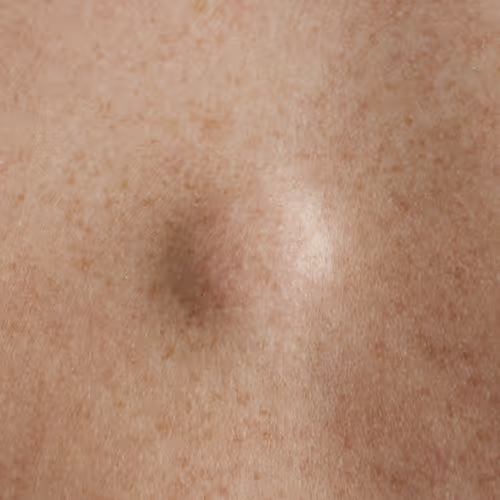
A cyst is a closed sac under the skin filled with keratin, oil, or fluid, formed when a hair follicle or gland becomes blocked and the surrounding tissue walls it off. Cysts need removal when they grow, become painful, get infected, or keep recurring after drainage, because the sac wall does not dissolve on its own [3][6].
Most cysts seen at a cyst removal clinic Vaughan fall into a few categories:
- Sebaceous and epidermoid cysts form from blocked oil glands or hair follicles, most often on the face, neck, back, or scalp.
- Pilar cysts develop from hair follicle cells, almost always on the scalp, and tend to run in families.
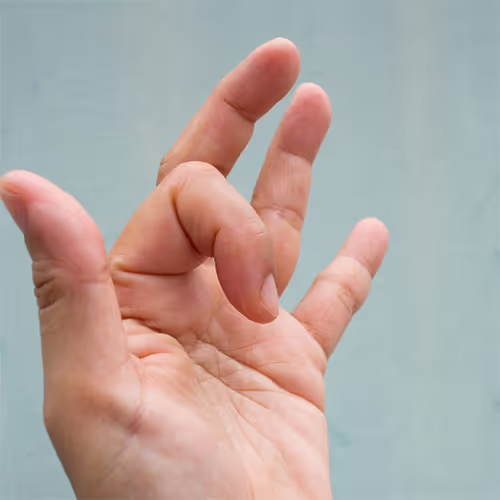
- Ganglion cysts form near joints or tendons, most commonly on the wrist or hand.
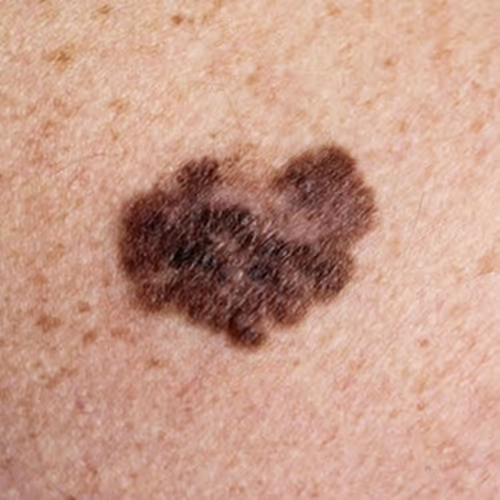
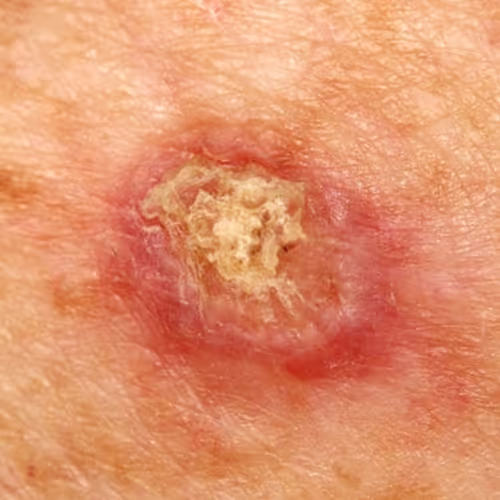
A cyst itself is not cancerous. But a lump that changes shape quickly, bleeds, or has irregular borders should be checked by a surgeon to rule out other skin conditions, including basal cell carcinoma, before assuming it is a simple cyst.
Decision rule: if a bump has stayed the same size for years and is not painful, monitoring is reasonable. If it is growing, tender, discharging, or has come back after a previous drainage, book an assessment.
Types of Cysts That May Be Assessed at a Cyst Removal Clinic in Vaughan
A cyst removal clinic Vaughan typically assesses sebaceous cysts, epidermoid cysts, and pilar cysts, along with related soft-tissue lumps such as lipomas and ganglion cysts. Each type has a different origin, location pattern, and treatment approach, which is why an in-person exam matters before scheduling surgery.
Sebaceous cyst removal Vaughan and pilar cyst removal Vaughan follow similar surgical principles: local anesthetic, an incision sized to the lesion, and removal of the sac wall intact wherever possible [3][6]. Patients occasionally confuse a cyst with a lipoma, which is a soft fatty lump rather than a sac-based cyst; the lipoma vs ganglion cyst comparison explains how a surgeon tells the difference on exam. Scalp lumps in particular deserve a specific look, since pilar cysts are often mistaken for something else; the article on cysts behind the ear covers one common presentation.
Edge case: a lump that sits directly over a joint and moves with tendon motion is more likely a ganglion cyst than a sebaceous cyst, and the surgical approach differs slightly because of nearby nerves and tendons.
Who Needs Cyst Removal and When Is It Necessary
Cyst removal becomes necessary when a cyst is infected, growing, painful, restricting movement, or has recurred after a previous drainage. It is not automatically necessary for every small, stable, symptom-free cyst.
Reasons patients in Vaughan and York Region typically book a surgical consultation:
- The cyst has become red, warm, or painful, suggesting infection.
- It has grown noticeably over weeks or months.
- It sits somewhere clothing, jewelry, or a razor keeps irritating it.
- It has already drained or ruptured once and returned.
- It is on the scalp, face, or hands and affects appearance or confidence.
- A previous drainage at a walk-in clinic did not solve the problem long term.
Common mistake: waiting until a cyst is acutely inflamed before seeking surgical removal. Research on epidermal inclusion cysts notes that excising a cyst during an active inflammatory flare is technically harder, because the sac wall becomes fragile and more likely to rupture during removal, which can raise the chance of incomplete excision and recurrence [6]. Booking an assessment while the cyst is calm, rather than waiting for a flare, generally leads to a cleaner surgical outcome.
Cyst Drainage vs Complete Removal: What Is the Difference
Drainage empties the fluid or keratin inside a cyst to relieve pressure and pain, but it leaves the cyst wall in place. Complete surgical removal excises the entire sac, which is why excision is considered the more definitive treatment when a cyst is a candidate for surgery [3][6].
Drainage vs Excision at a glance
- Drainage (incision and drainage): Fast relief for pain or infection, often done urgently, but the sac wall remains, so the cyst can refill or return.
- Complete excision: Removes the sac wall along with the contents, generally performed once inflammation has settled, offering a lower chance of recurrence.
Dermatology practices serving York Region describe a graded approach: intralesional steroid injection for a tender but uninfected cyst, incision and drainage with antibiotics if it is actively infected, and excision using classic, mini-incision, or punch (trephination) technique once things calm down [3]. Mini-incision and punch methods report recurrence rates under 10 percent while keeping the resulting scar smaller than traditional wide excision [3].
Choose drainage if: the cyst is acutely infected, swollen, and painful right now, and immediate pressure relief is the priority.
Choose complete excision if: the goal is to prevent the cyst from coming back, and the lesion is not in the middle of an infected flare.
For a deeper side-by-side comparison, see the full breakdown of cyst removal vs cyst drainage.
Why Cysts Can Come Back After Drainage
Cysts return after drainage because the sac wall, which produces the keratin or fluid filling, is left behind in the tissue. Unless the entire wall is removed, the gland-like lining keeps producing material and the lump can refill over weeks or months.
This is one of the most important things for a Vaughan or York Region patient to understand before choosing a treatment path. Clinical literature on epidermal inclusion cysts describes complete excision with the cyst wall intact as the definitive treatment, precisely because partial removal or drainage-only approaches leave the source of the problem in place [6]. Surgical technique matters too: blunt dissection to free the sac without rupturing it, and careful incision planning around the central punctum, both reduce the risk that fragments of the wall are left behind [6].
Factors that raise the chance of recurrence:
- Drainage-only treatment at a walk-in clinic or emergency department, without a planned excision afterward.
- Excision attempted during acute inflammation, when the sac is fragile and more likely to tear during removal [6].
- Incomplete excision where part of the wall is missed, often in cysts that have ruptured and scarred internally from previous infections.
- Very large or long-standing cysts with more adhesions to surrounding tissue, making a fully intact removal technically harder.
Quick example: a patient drains an infected back cyst at an urgent care clinic. The swelling goes down within days, but three months later the same lump reappears in the same spot. This is a textbook recurrence pattern because the drainage addressed the infection but not the sac itself.
For the technical reasons removal of the entire sac matters, see why removing the entire cyst sac is crucial.
Can Cysts Go Away on Their Own Without Removal
Small, stable cysts sometimes shrink or stay dormant for years without treatment, but a cyst wall generally does not dissolve on its own. Once a sac has formed, spontaneous full disappearance is uncommon, and pressing, squeezing, or trying to pop a cyst at home often makes things worse.
Reasons home popping is risky:
- It can push contents deeper into tissue, spreading infection.
- It rarely removes the sac wall, so the cyst usually returns.
- It increases the risk of scarring compared with a planned surgical incision.
- Infected cysts popped at home can develop cellulitis, which sometimes needs antibiotics or emergency care.
Patients sometimes ask about ganglion cysts specifically, since folk advice about "popping" them with pressure is common online; the article on whether it is safe to pop a ganglion cyst addresses that question directly, and the same caution applies to sebaceous and epidermoid cysts.
Decision rule: if a cyst has not changed in years and causes no symptoms, watching it is a reasonable choice. If it is inflamed, growing, or has already ruptured once, self-treatment is not appropriate and a surgical assessment is the safer next step.
Cyst Removal Procedure: What to Expect During Surgery
Cyst removal surgery in Vaughan is typically performed under local anesthetic in an office setting, with the entire procedure often finished in under 30 minutes [1][2]. Patients are awake throughout, and no hospital admission is required for most straightforward cases.
A typical visit follows this sequence:
- Assessment. The surgeon examines the cyst, confirms it is not something requiring further investigation, and discusses the excision plan.
- Local anesthetic. A small injection numbs the area; most patients feel a brief pinch, then no pain during the procedure itself.
- Incision. The surgeon makes a linear or elliptical incision sized to the cyst, chosen partly based on the location of the central punctum and expected scar direction [6].
- Removal. The sac is carefully separated from surrounding tissue using blunt dissection and removed intact whenever possible [6].
- Closure. The wound is closed with sutures, often vertical mattress or simple interrupted stitches for smaller cysts [6].
- Aftercare instructions. Patients receive wound care guidance and a follow-up plan for suture removal if non-dissolvable stitches were used.
For a fuller walk-through with more detail on each stage, see cyst removal surgery step by step, and for suture-specific questions, dissolvable vs non-dissolvable cyst removal stitches.
Common mistake: assuming every cyst removal needs a hospital operating room. Most sebaceous, epidermoid, and pilar cysts of moderate size are well suited to office-based excision under local anesthetic; only unusually large, deep, or complicated cases typically need hospital resources [1][4].
Infected Cyst Removal and Urgent Care in Vaughan
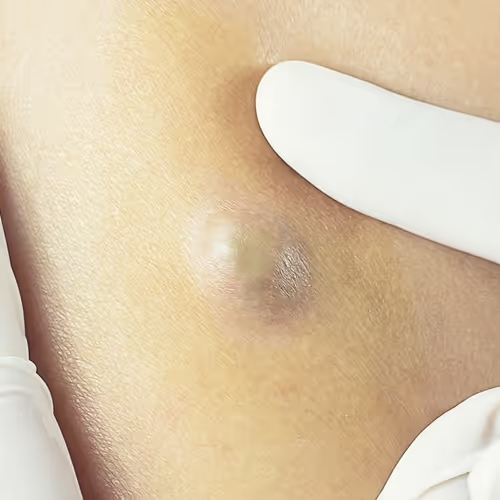
An infected cyst that is red, warm, swollen, or draining pus needs prompt attention, and the first step is usually drainage and antibiotics rather than full excision on the same day. Once the infection clears, a planned excision can be scheduled to remove the sac and reduce recurrence risk [3][6].
Signs a cyst needs urgent assessment rather than a routine booking:
- Rapid increase in redness, swelling, or warmth around the lump.
- Fever or spreading redness beyond the immediate area of the cyst.
- Significant pain that limits movement, especially near a joint.
- Pus discharge with a foul odor.
For genuinely acute, spreading infection with fever, an emergency department or urgent care visit is appropriate, since these settings can manage systemic infection risk. Mackenzie Health's Cortellucci Vaughan Hospital operates a surgery program with 24-hour coverage for cases that need hospital-level care or general anesthesia [4]. For infected but stable cysts without systemic symptoms, a minor surgery clinic can typically drain the cyst, prescribe antibiotics if needed, and schedule definitive excision once inflammation settles [3].
Edge case: a cyst that has been infected multiple times in the same spot, even if currently calm, is a strong candidate for excision between flare-ups rather than repeated drainage cycles, since each infection episode raises scar tissue and technical difficulty for future removal.
Cyst Removal Alternatives and Non-Surgical Options
Non-surgical options exist for select cysts, but they generally manage symptoms rather than eliminating the sac. Intralesional steroid injection can reduce inflammation in a tender, uninfected cyst, and warm compresses can ease mild discomfort, but neither option removes the cyst wall [3].
Options short of full excision:
- Steroid injection to shrink inflammation in a non-infected but irritated cyst.
- Warm compresses to encourage a small, superficial cyst to drain naturally, mainly useful for very minor, non-infected lesions.
- Watchful waiting for small, stable, symptom-free cysts that are not bothering the patient cosmetically or physically.
- Incision and drainage for acute infection, understanding that recurrence is likely without a follow-up excision.
None of these alternatives are a substitute for surgical excision if the goal is permanent removal. Patients dealing with cystic acne sometimes ask whether over-the-counter products can help; the article on whether pimple patches work on cystic acne explains why true cysts respond differently than typical acne lesions.
Decision rule: choose non-surgical management if the cyst is small, asymptomatic, and not affecting daily life. Choose surgical excision if the goal is to stop the lump from coming back for good.
Is Cyst Removal Painful and What Is the Aftercare Like
Cyst removal is performed under local anesthetic, so most patients report feeling pressure or tugging rather than sharp pain during the procedure. Mild soreness for a few days afterward is normal and usually manageable with over-the-counter pain relief.
Typical aftercare steps:
- Keep the wound clean and dry for the first 24 to 48 hours as instructed.
- Change dressings as directed and watch for excessive redness, swelling, or discharge.
- Avoid strenuous activity or heavy lifting for a short period if the cyst was on the back, shoulder, or another high-movement area.
- Attend a follow-up visit for suture removal if non-dissolvable stitches were placed.
- Keep the area out of direct sun exposure while it heals to support better scar outcomes.
Home wound care matters for a smooth recovery; the guide on how to care for a cyst wound at home covers dressing changes and warning signs step by step.
Common mistake: picking at the healing incision or removing dressings early out of curiosity. This raises infection risk and can widen the eventual scar.
Cyst Removal Scars and Cosmetic Outcomes
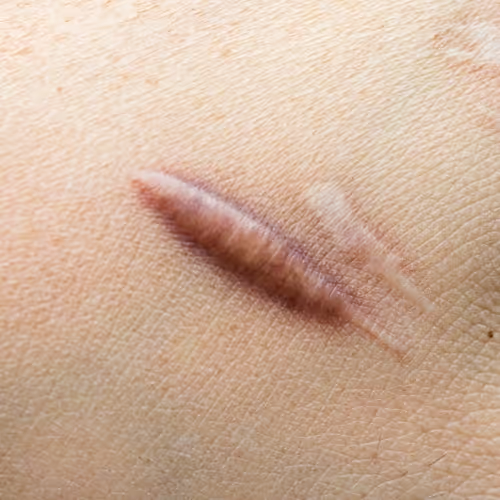
Cyst removal leaves a scar, but the size and visibility depend heavily on technique, cyst size, and location. Mini-incision and punch excision methods are designed specifically to minimize scar length compared with traditional wide excision, while still maintaining recurrence rates under 10 percent [3].
Factors that influence the final scar:
- Cyst size at the time of removal. Smaller, earlier-treated cysts generally allow smaller incisions.
- Technique chosen. Punch or mini-incision approaches typically leave a smaller mark than classic wide excision, when appropriate for the cyst type [3].
- Location on the body. Facial and neck incisions are usually planned along natural skin lines to keep scars less noticeable.
- Aftercare compliance. Following wound care instructions and avoiding sun exposure during healing supports a flatter, lighter final scar.
- Individual healing tendency. Some patients naturally scar more visibly regardless of technique, including a tendency toward raised or hypertrophic scarring.
For a detailed look at what determines scarring outcomes, see does cyst removal leave a scar.
Quick example: a small forehead epidermoid cyst removed early with a punch excision technique often heals to a scar that is barely visible within months, while a long-neglected, repeatedly infected back cyst removed via wide excision will typically leave a more noticeable linear scar due to its larger original size.
Cyst Removal Cost in Vaughan and OHIP Guidance
Cyst removal cost at a private minor surgery clinic in the GTA typically ranges from about $300 to $800, depending on cyst size, location, and complexity, while a Vaughan- and Richmond Hill-focused pricing article notes excision commonly starts around $495 and can reach $650 or more for more complex cases [1][10]. Hospital emergency drainage tends to cost more, often $500 to over $2,000, and involves longer wait times [1][5].
OHIP guidance: OHIP generally covers medically necessary procedures, such as removing an infected, painful, or rapidly changing cyst through a referred pathway, but cosmetic-motivated removal of a stable, symptom-free cyst is often billed privately [8]. Real-world patient reports reflect this mix: one Ontario patient described paying approximately $621.50 for a privately billed cyst removal in early 2024, illustrating typical out-of-pocket costs when OHIP coverage does not apply [8]. Because coverage depends on individual circumstances and clinic billing practices, confirming coverage during the consultation is the most reliable approach.
For a broader cost breakdown across the province, see cyst removal cost in Ontario, and for OHIP-specific cosmetic questions, the article on whether cosmetic mole removal is covered by OHIP explains similar principles that often apply to cyst cases.
Cyst Removal Surgery Recovery Time: How Long Does It Take
Most patients recover from cyst removal within 1 to 2 weeks for the surface wound to close, though full internal healing and scar maturation can take several months. Recovery time depends on cyst size, location, and how well aftercare instructions are followed.
General recovery timeline:
- Days 1-3: Mild soreness, swelling, and possible bruising around the incision.
- Days 5-14: Suture removal if non-dissolvable stitches were used; surface wound typically closed.
- Weeks 2-6: Scar tissue continues to soften and fade; return to normal activity is usually unrestricted by this point for most body locations.
- Months 3-12: Final scar maturation, where color and texture continue to settle.
Location affects recovery speed: a small facial or arm cyst tends to heal faster and with less restriction than a back or scalp cyst, which may be in a higher-friction or higher-movement area. For a detailed timeline broken down by cyst type and size, see cyst removal recovery time and how long does cyst removal take to heal.
Common mistake: resuming heavy exercise or activities that stretch the incision site (like gym work for a back or shoulder cyst) too early, which can pull sutures and widen the eventual scar.
Common Mistakes People Make Before Cyst Removal Surgery
The most common mistake before cyst removal surgery is waiting until the cyst is infected or acutely inflamed before seeking treatment, since this makes complete excision technically harder and raises recurrence risk [6]. Several other avoidable errors show up regularly in patient histories.
Mistakes to avoid:
- Waiting through repeated infections instead of scheduling excision between flare-ups.
- Attempting to drain or pop the cyst at home, which risks infection and rarely removes the sac.
- Assuming a walk-in drainage is a permanent fix, when in fact the sac usually remains.
- Skipping a proper assessment for a lump that has changed shape, color, or growth rate, since some skin lesions need evaluation to rule out other conditions.
- Not asking about technique, since punch, mini-incision, and classic excision all have different scar and recurrence trade-offs [3].
- Ignoring OHIP eligibility questions before booking, which can lead to unexpected billing surprises [8].
Quick example: a patient who has drained the same shoulder cyst three times over two years, each time at a walk-in clinic, will typically have a harder excision (and a bigger resulting scar) than if the same cyst had been surgically removed after its first calm, non-infected presentation.
Finding the Best Cyst Removal Doctor in Vaughan and York Region
The best cyst removal doctor for a Vaughan or York Region patient is one who performs excisions regularly, offers same-day or near-term booking without a lengthy referral wait, and explains technique choices (punch, mini-incision, or classic excision) based on the specific cyst. Board-certified surgeons with dedicated minor surgery experience are well suited to routine sebaceous, epidermoid, and pilar cyst cases [1][5].
What to look for when choosing a cyst removal surgeon Vaughan patients can trust:
- Experience specifically with cyst excision, not just general skin procedures.
- Clear explanation of drainage versus complete excision and why one is recommended.
- Realistic wait time for consultation and surgery date.
- Transparent discussion of cost and OHIP eligibility before the procedure.
- A plan for follow-up care and suture removal.
TMSC's Vaughan clinic is positioned as a regional option for York Region patients who want to avoid long dermatology wait times, offering assessment and same-day surgical excision for sebaceous, epidermoid, and pilar cysts, along with lipomas, moles, and minor hand procedures, without requiring a GP referral [1][2]. For patients further out in Toronto or looking to compare, the main clinic locations page lists all sites across the GTA.
Vaughan Clinic Details
The Vaughan clinic is located at 2701 Rutherford Road, Building C, Vaughan, and offers same-day assessment and treatment for cysts, lipomas, moles, and select minor hand surgeries [2]. Hours run Monday through Friday, 9 a.m. to 4 p.m., with extended evening hours to 8 p.m. available on select days, and the Vaughan location is closed on Saturdays while other TMSC clinics remain open [2].
Patients can book directly by phone or email without needing a referral from a family doctor [2]. Full details on the clinic, including directions and booking options, are available on the Vaughan clinic page.
Areas We Serve in York Region
Cyst removal Vaughan services extend across York Region, supporting patients who prefer not to travel into downtown Toronto or wait months for a dermatology surgical slot. Communities regularly served through the Vaughan clinic include:
- Vaughan
- Woodbridge
- Maple
- Concord
- Thornhill
- Richmond Hill
- Kleinburg
- King City
- Markham
- Stouffville
Several of these communities have dedicated local resources: the Woodbridge cyst and mole removal clinic page, the Maple cyst and mole removal clinic page, the Concord cyst and mole removal page, and the Stouffville and Markham cyst removal guide. Richmond Hill patients can also review the best cyst removal clinic in Richmond Hill breakdown for location-specific detail. Patients researching lipoma treatment specifically in the same region may also find the Woodbridge and Vaughan lipoma removal page useful, since lipomas and cysts are often assessed at the same visit.
FAQs
Is cyst removal covered by OHIP in Ontario? OHIP typically covers medically necessary cyst removal, such as an infected, painful, or rapidly growing cyst, when accessed through a referred pathway. Removal driven purely by cosmetic preference is generally billed privately, and coverage details vary by case, so confirming during consultation is recommended [8].
How much does cyst removal cost in Vaughan? Private cyst excision in the Vaughan and broader GTA area typically costs between $300 and $800, with straightforward cases sometimes starting around $495 [1][10]. Cost depends on cyst size, location, and complexity of the procedure.
What is the difference between cyst drainage and full removal? Drainage empties the cyst's contents to relieve pressure or infection but leaves the sac wall behind, so the cyst can return. Complete excision removes the entire sac and is considered the more definitive treatment when the cyst is not in an acutely inflamed state [3][6].
Can a cyst go away without any treatment? Small, stable cysts sometimes stay dormant for years, but the sac wall generally does not dissolve on its own. Popping or draining a cyst at home rarely removes the wall and often leads to recurrence or infection.
How long does cyst removal surgery take? Most straightforward cyst excisions at a dedicated minor surgery clinic in Vaughan take under 30 minutes using local anesthetic, with no hospital stay required [1][2].
How long is recovery after cyst removal? Surface healing typically takes 1 to 2 weeks, with suture removal often scheduled within that window if non-dissolvable stitches are used. Full scar maturation can continue for several months afterward.
Does cyst removal leave a visible scar? Yes, some scarring is expected, but technique choice (punch, mini-incision, or classic excision) and cyst size heavily influence how visible the final scar is. Mini-incision and punch techniques are associated with smaller scars and recurrence rates under 10 percent [3].
What happens if a cyst gets infected before removal? An infected cyst usually needs drainage and sometimes antibiotics first, with definitive excision scheduled once the inflammation has settled. Attempting full excision during an acute flare is technically harder and raises the risk of incomplete removal [3][6].
Do I need a referral to see a cyst removal surgeon in Vaughan? No referral is required to book a consultation at a dedicated minor surgery clinic in Vaughan; patients can typically book directly by phone or email [1][2].
Which areas in York Region can access the Vaughan cyst removal clinic? Patients from Woodbridge, Maple, Concord, Thornhill, Richmond Hill, Kleinburg, King City, Markham, and Stouffville regularly use the Vaughan clinic for cyst assessment and removal.
Book a Consultation
Need cyst removal in Vaughan or York Region?
TMSC offers cyst assessment and surgical removal through our Vaughan clinic, serving patients from Woodbridge, Maple, Concord, Richmond Hill, Thornhill, and surrounding York Region communities. Consultations are available without a referral, with most procedures completed same day under local anesthetic.
Patients ready to move forward can review the Vaughan clinic page for hours, location, and direct booking details, or check the FAQ page for answers to common pre-visit questions.
Conclusion
Cyst removal in Vaughan and York Region does not have to mean months of waiting or a hospital visit for a routine sebaceous, epidermoid, or pilar cyst. A dedicated minor surgery clinic can typically assess and surgically remove a cyst within days, using local anesthetic in an office setting, without a GP referral [1][2]. The most important decision point is choosing complete excision over repeated drainage whenever the goal is a permanent fix, since leaving the cyst sac in place is the main reason cysts return [3][6].
Next steps for patients in Woodbridge, Maple, Concord, Richmond Hill, Thornhill, Kleinburg, King City, Markham, or Stouffville:
- Book a consultation to have the lump properly assessed and confirmed as a cyst.
- Ask directly about drainage versus complete excision, and which applies to the specific cyst.
- Confirm cost and OHIP eligibility before the procedure date.
- Follow aftercare instructions closely to support faster healing and a better scar outcome.
- Schedule excision between infection flare-ups rather than waiting through repeated drainage cycles.
Acting early, before a cyst becomes infected or grows significantly, generally leads to a simpler procedure, a smaller scar, and a lower chance of recurrence.
References
[1] Best Cyst Removal Clinic Vaughan - https://www.theminorsurgerycenter.com/blog/best-cyst-removal-clinic-vaughan [2] The Minor Surgery Center Vaughan Clinic - https://www.theminorsurgerycenter.com/the-minor-surgery-center-vaughan-clinic [3] Epidermoid Cyst - https://torontodermatologycentre.com/epidermoid-cyst/ [4] Displayservice - https://www.centralhealthline.ca/displayService.aspx?id=212924 [5] Conditions - https://www.torontominorsurgery.com/conditions [6] Pmc1479706 - https://pmc.ncbi.nlm.nih.gov/articles/PMC1479706/ [7] The Minor Surgery Center - https://ca.linkedin.com/company/the-minor-surgery-center [8] Health Carecyst Removal - https://www.reddit.com/r/askTO/comments/1mwib6c/health_carecyst_removal/ [9] Cyst Excision - https://dermatelieronavenue.com/cyst-excision/ [10] Best Cyst Removal Clinic In Richmond Hil - https://www.theminorsurgerycenter.com/blog/best-cyst-removal-clinic-in-richmond-hil




%20Treatment.avif)