
Last updated: August 4, 2026
The best basal cell carcinoma removal clinics in Toronto combine a same-day dermatologist or GP-surgeon assessment, on-site pathology, and multiple removal techniques (excision, curettage and electrodessication, or Mohs referral) under one roof. For most patients, The Minor Surgery Center stands out because it offers rapid-access consultations, experienced surgeons, and OHIP-covered removal without long hospital wait times. Mohs micrographic surgery, reserved for facial or recurrent tumors, is typically handled through specialized referral centers rather than walk-in clinics.
Basal cell carcinoma is a slow-growing skin cancer that starts in the basal cells of the epidermis, usually from years of sun exposure. It is treated by physically removing the tumor, most often through surgical excision, though curettage, cryotherapy, topical medication, or Mohs surgery are used depending on size, location, and subtype.
BCC typically appears as a pearly or waxy bump, a flat flesh-colored lesion, or a sore that will not heal. It rarely spreads to distant organs, which separates it from melanoma, but it can grow into surrounding skin, cartilage, or bone if left untreated for years.
Common treatment paths include:
Choose surgical excision if the BCC is on the trunk, arm, or leg and has clear borders. Choose Mohs surgery if the lesion sits on the nose, eyelid, ear, or lip, or has recurred after a previous treatment. A common mistake is assuming all BCCs need Mohs surgery; in reality, most low-risk lesions are treated efficiently with standard excision at a qualified clinic. For background on how BCC compares with other skin cancers, see this overview of basal cell carcinoma and the related guide to basal cell carcinoma treatments.
Basal cell carcinoma removal is generally free at the point of care for Ontario residents with a valid OHIP card, because it is classified as medically necessary treatment. Costs only arise for patients without provincial coverage, those seeking purely cosmetic scar revision, or specific pathology add-ons not billed to OHIP.
Here is a general breakdown of what affects out-of-pocket costs when OHIP does not apply (for example, for out-of-province visitors, uninsured patients, or private-pay scenarios):
Cost FactorWhat Influences ItConsultation and biopsyLesion size, number of sites checked, whether a same-day biopsy is performedSurgical excisionTumor size, depth, and location (facial sites often cost more due to precision needed)Pathology processingStandard margin check versus more detailed frozen-section analysisFollow-up visitsSuture removal, wound check, and scar monitoring appointmentsReconstructive closureSimple linear closure versus flap or graft repair for larger defects
Decision rule: if you are an Ontario resident with an active health card, confirm with the clinic that the removal will be billed directly to OHIP before your appointment, so there are no surprise charges for the excision itself. A common mistake is confusing OHIP-covered removal with cosmetic procedures like mole removal for appearance only, which are billed privately. For a broader sense of typical procedure costs at minor surgery clinics, the skin cancer clinic overview outlines what is bundled into a standard visit.
The best basal cell carcinoma removal clinics in Toronto share three traits: a physician who can diagnose BCC on sight or via biopsy, in-house surgical capability, and a clear pathway to pathology confirmation. Dermatologists are strong for diagnosis and monitoring, but many refer surgical removal to minor surgery centers or plastic surgeons for the actual excision.
When comparing options, look at these criteria:
The Minor Surgery Center is frequently the practical choice because it combines dermatologic-level assessment with an in-house surgical team, avoiding the common bottleneck where a dermatologist confirms BCC but then the patient waits weeks for a hospital surgical slot. Its surgeons, including Dr. Hayder Al-Tikmachi and Dr. Nader Henry, routinely perform skin cancer excisions alongside mole and cyst removal, which keeps their technique sharp for cosmetically sensitive closures.
Choose a dedicated minor surgery center if you want a faster path from diagnosis to removal without multiple hospital referrals. Choose a hospital-based dermatology department if your lesion is unusually large, deeply invasive, or located somewhere that will need complex reconstruction. For a wider list of vetted options, the directory of skin cancer screening and treatment clinics and the dermatologist directory for Toronto are useful starting points before booking.
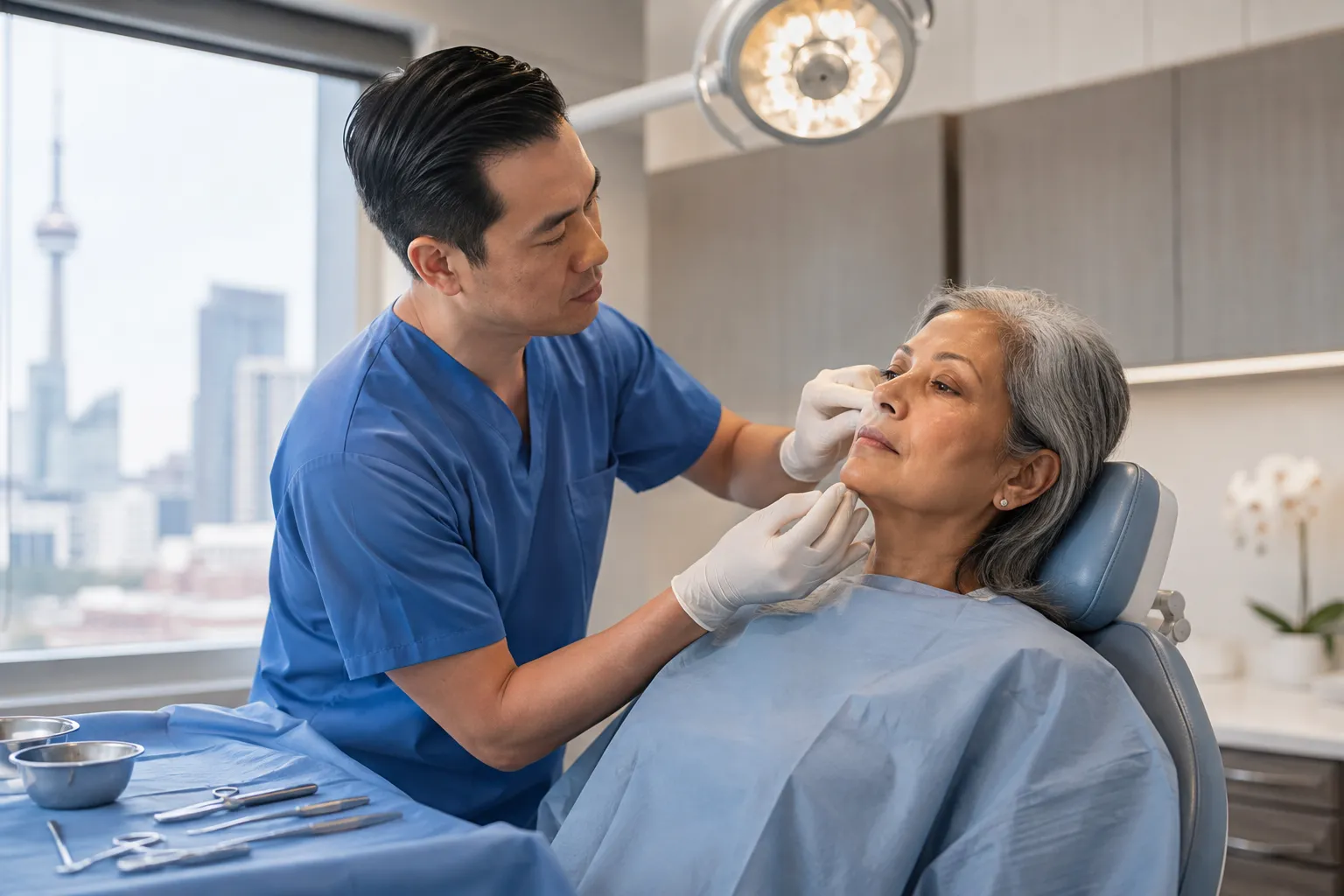
Mohs micrographic surgery removes thin layers of tissue one at a time, checking each layer under a microscope before removing more, which gives the highest cure rates for facial and recurrent BCC. Standard excision removes the tumor with a fixed margin in a single step and sends tissue to a lab afterward, which is faster but carries a slightly higher chance of needing a second surgery if margins are not clear.
Here is how the two approaches compare directly:
FactorMohs SurgeryStandard ExcisionBest forFace, ears, eyelids, recurrent tumorsTrunk, arms, legs, well-defined lesionsMargin checkingReal-time, during the procedureAfter the procedure, results in daysTissue sparingMaximizes healthy tissue preservationRemoves a standard safety marginProcedure time2 to 5 hours, possibly multiple stages20 to 45 minutes, single stageAvailability in TorontoSpecialized dermatology surgical centersWidely available at minor surgery and family clinicsRecurrence rateLowest among removal methodsLow, slightly higher on complex sites
Which Toronto clinics offer Mohs micrographic surgery? Mohs is typically performed by dermatologic surgeons with specific fellowship training, found at academic dermatology practices and a handful of specialized private clinics rather than general minor surgery centers. If your BCC is on flat skin of the back, shoulder, or leg with clean borders, standard excision at a minor surgery center is usually sufficient and far more time-efficient. If it sits near the eye, nose, or ear, ask your referring physician specifically about Mohs availability, since these locations carry higher recurrence risk with wider-margin techniques.
A common mistake is requesting Mohs surgery for a low-risk trunk lesion out of caution; this often means a longer wait and higher cost for a marginal benefit compared to a well-performed standard excision.
Preparing for basal cell carcinoma removal mainly involves stopping certain medications that increase bleeding risk, arranging aftercare, and confirming the surgical plan with your physician a few days before the appointment. Most BCC removals are outpatient procedures done under local anesthetic, so preparation is lighter than for major surgery.
Practical steps to take before your appointment:
Edge case: patients on anticoagulants for a heart condition or stroke history should never stop medication on their own initiative. Surgeons can often adjust technique (extra cauterization, pressure dressings) to safely operate around continued blood thinner use. If you are booking a first visit, a suspicious mole or lesion assessment beforehand can also confirm whether the growth needs urgent removal or can be scheduled with normal lead time.
Most basal cell carcinoma removals take between 20 and 45 minutes for the surgical portion, though the full clinic visit including numbing, prep, and dressing usually runs 60 to 90 minutes. Mohs surgery is the exception, often taking two to five hours because of the layer-by-layer microscopic checking process.
Time breakdown for a typical standard excision visit:
Quick example: a 6-millimeter BCC on the forearm with a simple linear closure might take 25 minutes total surgical time, while a 15-millimeter lesion on the nose requiring a small flap repair could take over an hour, even without Mohs involvement, because reconstructive closures near the nose require more careful technique.
If your lesion is large, in a cosmetically sensitive area, or you have had a prior BCC nearby, ask the clinic directly how long your specific procedure is expected to take, since size and location change the estimate significantly.
After basal cell carcinoma removal, expect mild soreness, some swelling, and a visible scar that fades over 6 to 12 months. Most patients return to normal daily activity within a day or two, though wound care and sun protection matter for the first several weeks.
"The scar itself usually looks its worst around week two, then steadily improves. Patients who are anxious at that stage often panic unnecessarily, when in fact the redness and firmness are a normal part of healing."
Typical recovery timeline:
Time After SurgeryWhat to ExpectDay 1 to 3Mild pain, swelling, possible bruising; keep the dressing dryDay 5 to 10Sutures often removed (facial sites sooner, body sites later)Week 2 to 4Scar is pink, slightly raised, may itch as it healsMonth 2 to 6Scar softens and flattens, redness fades to pink or whiteMonth 6 to 12Scar reaches its final texture and color in most patients
Care instructions generally include keeping the wound clean and covered, avoiding strenuous activity that stretches the site for one to two weeks, and applying sun protection to the healed scar for at least a year, since fresh scar tissue burns and pigments more easily.
Common mistake: picking at healing scabs or applying strong exfoliants too early, which can widen the scar or trigger infection. Edge case: patients with a history of keloid scarring should flag this before surgery, since the surgical technique and post-op silicone sheeting protocol may be adjusted. Related reading on distinguishing normal healing bumps from scar complications is available in this piece on piercing bumps versus keloids, which explains similar principles.
Yes, basal cell carcinoma removal is covered by OHIP in Ontario when a physician determines the procedure is medically necessary, which applies to virtually all confirmed BCC diagnoses. This includes the consultation, biopsy if needed, surgical removal, and standard pathology review.
What is typically included under OHIP:
What is generally not covered:
Decision rule: if you have a valid Ontario health card and a physician confirms suspicion of BCC, proceed with the referral through OHIP-billed channels rather than paying privately, since private-pay removal offers no medical advantage for a standard case. A common mistake is assuming a referral to a specialist automatically means a long wait; many minor surgery centers accept OHIP-covered referrals and can often see patients faster than a hospital dermatology department. For screening before a formal diagnosis, a full body skin exam is a practical first step.
Yes, basal cell carcinoma can come back after removal, particularly if the original excision did not achieve clear margins, if the tumor was an aggressive subtype, or if it was located in a high-risk area like the nose or ear. Recurrence rates vary by treatment method and tumor characteristics, with Mohs surgery generally offering the lowest recurrence risk for complex cases.
Factors that raise recurrence risk:
If pathology shows margins were not fully clear, your surgeon will usually recommend a second, wider excision or a referral for Mohs surgery rather than a wait-and-watch approach, since residual BCC cells can regrow into the surrounding tissue. Regular self-checks and annual skin exams are the best defense against catching a recurrence early, since a small regrowth is far easier to treat than one that has been present for years. A related resource on evaluating new or changing spots is this guide to suspicious mole assessment, which applies the same principle of catching changes early.
Edge case: patients who develop BCC once are statistically more likely to develop a second, separate BCC elsewhere on the body, not necessarily at the same site. This is why ongoing full-body skin checks matter even after successful treatment, not just monitoring of the original scar.
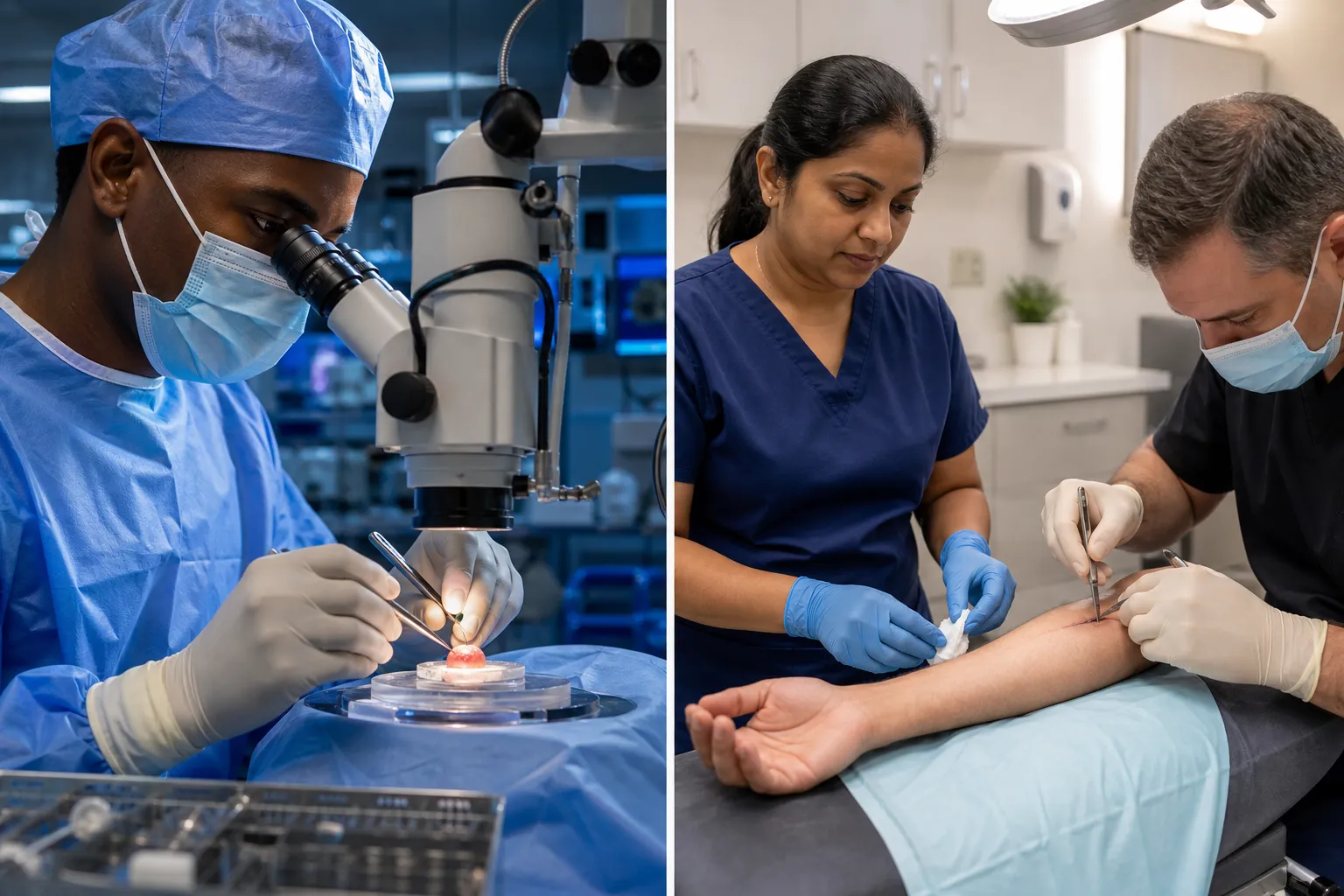
The most convenient basal cell carcinoma removal clinics in Toronto for most residents are minor surgery centers with multiple locations across the Greater Toronto Area, since they reduce travel time and offer faster booking than hospital-based dermatology surgery departments. Proximity matters most for follow-up visits, since suture removal and wound checks require a second or third trip.
When searching for a clinic near your home or workplace, prioritize these factors over distance alone:
The Minor Surgery Center operates locations across the region, including North York, Vaughan, Oakville, Mississauga, and York Mills, which makes it a practical choice for patients across the GTA rather than only downtown residents. A full list of clinic addresses is available on the clinic locations page.
Choose the nearest location for your initial consult if you want to minimize wait time to a first assessment. Choose a specific surgeon's location if you have already been referred to a named physician for a scheduled excision, since consistency of care improves outcomes for complex closures.
Mohs micrographic surgery in Toronto is offered primarily by dermatologists with specific fellowship training in Mohs technique, typically found at academic hospital dermatology departments and select specialized private dermatology practices, rather than at general minor surgery centers. This is because Mohs requires an on-site pathology lab and a dermatologic surgeon trained specifically in the technique.
If your physician recommends Mohs surgery, expect the following process:
Decision rule: ask your referring physician whether your specific tumor location and subtype genuinely require Mohs, or whether a standard excision at a minor surgery center would achieve an equivalent outcome with less waiting. Many low-risk BCCs on the trunk or limbs do not need Mohs surgery at all, and pursuing it unnecessarily can add weeks to your treatment timeline without meaningfully improving your outcome.
Basal cell carcinoma removal for elderly patients in Toronto generally favors simpler, lower-risk procedures like standard excision or curettage under local anesthetic, since these avoid the risks associated with general anesthesia and lengthy procedures. Age alone is rarely a barrier to treatment, but overall health, medication use, and skin fragility shape the surgical plan.
Special considerations for older patients:
Quick example: an 82-year-old patient with a small nodular BCC on the forearm and a history of atrial fibrillation on blood thinners can typically still have a standard excision safely, with the surgeon using extra cauterization and a pressure dressing rather than stopping the medication. This kind of case is common and manageable at a minor surgery center experienced with older patients.
A common mistake families make is assuming an elderly relative is "too old" for treatment and choosing to monitor instead. Since BCC grows over months to years, delaying removal in an otherwise medically stable elderly patient usually just means a larger, more complex excision later.
Basal cell carcinoma removal is not typically a same-week emergency, but it should not be left indefinitely either, since BCC continues to grow and invade deeper tissue the longer it goes untreated. Booking removal within a few weeks to a couple of months of diagnosis is a reasonable general target for most low-risk lesions.
Situations that require more urgency:
Situations where a short wait is reasonable:
Decision rule: if your BCC has been stable for months and is in a low-risk location, a scheduling delay of a few weeks to arrange the right surgeon is reasonable. If it is growing quickly, bleeding, or sitting near a delicate facial structure, prioritize getting an appointment as soon as possible rather than waiting for a preferred date. When in doubt, a same-week skin lesion assessment can clarify urgency without committing to a specific removal date yet.
Before booking, run through this checklist to compare basal cell carcinoma removal clinics in Toronto:
Clinics that answer "yes" to most of these questions, such as The Minor Surgery Center, tend to deliver a smoother experience than fragmented care split across multiple unconnected providers. For patients also managing other skin concerns, resources like the mole check clinics guide and mole biopsy information can help address multiple lesions in the same visit.
What does basal cell carcinoma look like in its early stages?
Early BCC often appears as a small, pearly or waxy bump, a flat pink or flesh-colored patch, or a sore that bleeds and heals repeatedly without fully closing. Any persistent, non-healing skin change lasting more than a few weeks should be checked by a physician.
Can basal cell carcinoma be removed without surgery?
In select low-risk superficial cases, topical medications, cryotherapy, or radiation are alternatives to surgery, though cure rates are generally lower than surgical excision. Surgery remains the standard of care for most confirmed BCC diagnoses.
How painful is basal cell carcinoma removal?
The procedure itself is done under local anesthetic, so patients typically feel pressure but not sharp pain during removal. Mild soreness afterward is common and usually managed with over-the-counter pain relief.
Do I need a referral to see a specialist for basal cell carcinoma in Toronto?
Many minor surgery centers and dermatology clinics accept direct bookings for skin lesion assessment without a formal referral, though OHIP-billed specialist visits sometimes still require a referring physician. Confirm directly with the clinic when booking.
Will I have a visible scar after basal cell carcinoma removal?
Yes, some scarring is expected after any surgical excision, though the size and visibility depend on tumor size, location, and closure technique. Scars generally fade significantly over 6 to 12 months.
How soon after diagnosis should basal cell carcinoma be removed?
Most low-risk BCCs can be scheduled for removal within a few weeks to a couple of months without meaningful risk increase. Rapidly growing, bleeding, or facially located lesions should be prioritized sooner.
Is basal cell carcinoma removal covered for visitors without OHIP?
Coverage depends on your home province's reciprocal billing agreement with Ontario or your travel insurance policy; patients without valid coverage should expect to pay privately for consultation and removal.
Can basal cell carcinoma spread to other parts of the body?
BCC very rarely spreads to distant organs, unlike melanoma, but it can invade locally into surrounding skin, cartilage, or bone if left untreated for a long time. This is why removal, even though not an emergency, should not be indefinitely delayed.
Basal cell carcinoma is treatable and, in the vast majority of cases, curable with the right removal approach chosen for the tumor's size, subtype, and location. The best basal cell carcinoma removal clinics in Toronto combine fast diagnostic access, an experienced surgical team, dependable pathology follow-through, and OHIP-billed care so patients are not left navigating a fragmented referral chain.
For most Toronto residents, a minor surgery center that handles diagnosis, excision, and follow-up in one connected system, such as The Minor Surgery Center, offers the most practical path from a suspicious spot to a confirmed clear margin. Reserve Mohs surgery referrals for facial, recurrent, or high-risk lesions where the extra precision genuinely changes the outcome.
Next steps if you suspect a basal cell carcinoma: