Last updated: July 15, 2026
Skin Cancer Clinic in Oakville & Halton Region
A skin cancer clinic in Oakville & Halton Region assesses suspicious moles and skin lesions, arranges biopsy when a spot looks concerning, and performs surgical removal when a lesion is confirmed or strongly suspected to be skin cancer. Patients from Oakville, Burlington, Milton, Georgetown, and Hamilton typically need either a physician referral or can book directly with a private minor surgery clinic, depending on the pathway chosen. Skin cancer is the most commonly diagnosed cancer type in Canada, which is why prompt assessment of a changing or unusual mole matters [10].
Key Takeaways
- A skin cancer clinic focuses on evaluating specific moles or lesions of concern, not routine full-body screening, unless that service is explicitly offered.
- Warning signs include a mole that changes shape, color, or size, a sore that will not heal, or a spot that bleeds without injury.
- Biopsy results in Ontario typically take one to three weeks, though timing depends on the pathology lab and lesion type.
- OHIP covers medically necessary skin cancer assessment and biopsy referred through a physician; private clinics may charge for direct-access consultations or elective removal of benign lesions.
- Oakville patients also have access to clinics in Burlington, Milton, Georgetown, and Hamilton, giving Halton Region residents several nearby options.
- A dermatologist and a skin cancer specialist overlap, but not every general practitioner or minor surgery physician has the same scope; ask directly what a clinic treats before booking.
- The Minor Surgery Center's Oakville location assesses concerning moles and skin lesions and discusses biopsy or removal pathways when appropriate.
What Is a Skin Cancer Clinic and What Do They Treat
A skin cancer clinic is a medical practice that assesses moles and skin lesions suspected of being cancerous, orders or performs biopsies, and provides or coordinates surgical removal when a diagnosis warrants it. Most clinics also see patients for benign but concerning growths that resemble cancer, since visual assessment alone cannot always tell the two apart.
Clinics in this category generally handle:
- Suspicious moles: spots that have changed in size, shape, color, or texture.
- Non-healing sores or scaly patches: often associated with basal cell carcinoma or squamous cell carcinoma.
- New or unusual growths: including lesions that appear pearly, waxy, ulcerated, or crusted.
- Biopsy referral or in-clinic biopsy: taking a tissue sample for pathology when a lesion cannot be ruled out clinically.
- Surgical removal: excising a confirmed or strongly suspected cancerous lesion, or removing a benign lesion that mimics cancer closely enough to warrant pathology confirmation.
A skin cancer clinic is not automatically the same as a full-body dermatology screening service. Some clinics specialize narrowly in assessing a specific spot a patient is worried about, arranging biopsy, and performing removal, rather than conducting a head-to-toe skin mapping exam. Patients who want a comprehensive full-body check should confirm that service is explicitly offered before booking, since not every minor surgery or skin clinic provides it. For patients specifically seeking a full-body exam, a dedicated full body skin exam and screening service may be the better fit.
Decision rule: Choose a lesion-focused skin cancer clinic if a specific mole or spot is bothering you. Choose a full-body screening service if you want every mole on your body reviewed systematically, even ones you have not noticed yourself.
Finding a Skin Cancer Clinic in Oakville & Halton Region Near You
Patients searching for a skin cancer clinic in Oakville & Halton Region near them generally have options across Oakville, Burlington, Milton, Georgetown, and Hamilton, along with hospital-based cancer care services and private minor surgery clinics. The right choice depends on whether the concern needs urgent hospital-level oncology care or a focused assessment of a single lesion.
Oakville Trafalgar Memorial Hospital operates a Cancer Care Clinic on its second floor, which handles oncology treatment for patients already diagnosed with cancer, including some skin cancers requiring coordinated medical care. This hospital-based clinic is appropriate for patients with a confirmed diagnosis who need ongoing oncology management, not for a first-time assessment of a mole someone just noticed.
For an initial look at a concerning mole or lesion, a private clinic offering direct assessment, biopsy coordination, and removal is often the faster route, since these appointments do not always require going through a hospital oncology intake process. Patients in Halton Region who want this kind of focused visit can search for local options such as:
- General practice clinics with a physician comfortable assessing skin lesions
- Dermatology practices accepting referrals
- Minor surgery centers, such as The Minor Surgery Center's Oakville clinic, which assesses moles and lesions and discusses biopsy or removal when appropriate
Common mistake: Assuming any walk-in clinic can perform a biopsy or removal on the spot. Many general walk-in clinics can look at a lesion but will still refer out for biopsy or excision, which adds time. Confirming in advance whether a clinic performs the procedure itself, or only refers, saves a step.
When Should You Get a Mole or Skin Lesion Checked?
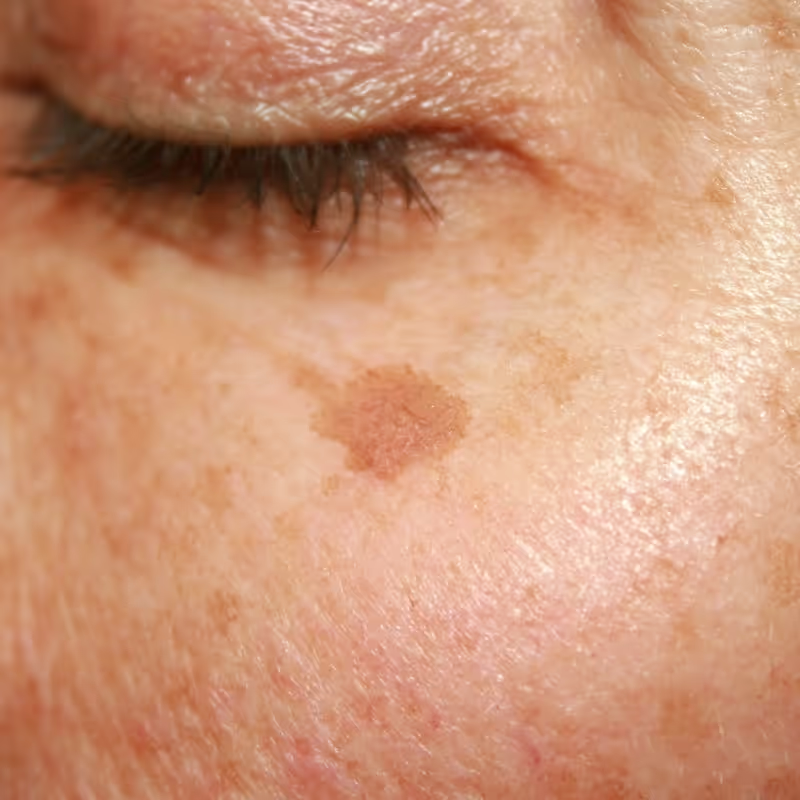
A mole or skin lesion should be checked promptly if it changes in size, shape, or color, develops irregular borders, starts to bleed or itch without a clear cause, or simply looks different from the other moles on your body. Waiting to see if a mole "settles down" on its own is not recommended once any of these changes appear.
Specific situations that warrant a check sooner rather than later include:
- A mole that has grown noticeably over weeks or months.
- Color changes within a single mole, such as darkening, lightening, or multiple colors appearing in one spot.
- Asymmetry where one half of the mole looks different from the other.
- A new mole appearing after age 30, particularly if it looks unusual compared to existing moles.
- Any mole with a family history of melanoma nearby, since genetic risk raises the stakes of missing an early change.
- A sore or patch that has not healed within four weeks.
Example: A 45-year-old Burlington resident notices a mole on the shoulder that was flat and light brown for years, but over the past three months developed a darker patch on one edge and became slightly raised. That combination of change in color and elevation is exactly the kind of finding that should prompt an appointment rather than a wait-and-see approach.
Edge case: Not every changing mole is cancer. Moles can change due to hormonal shifts, sun exposure, or minor trauma. The point of getting it checked is not to self-diagnose but to have a professional rule out or confirm concern early, when treatment is simplest.
Common Warning Signs of Skin Cancer
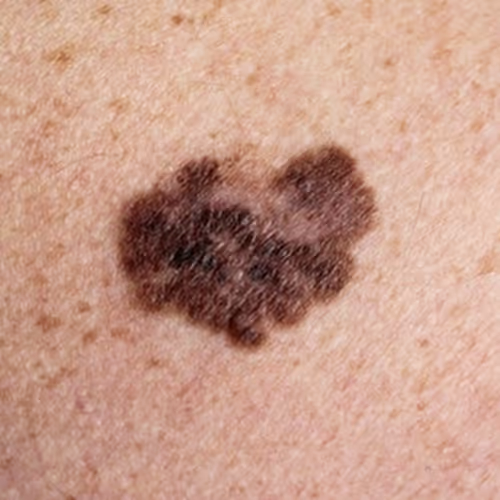
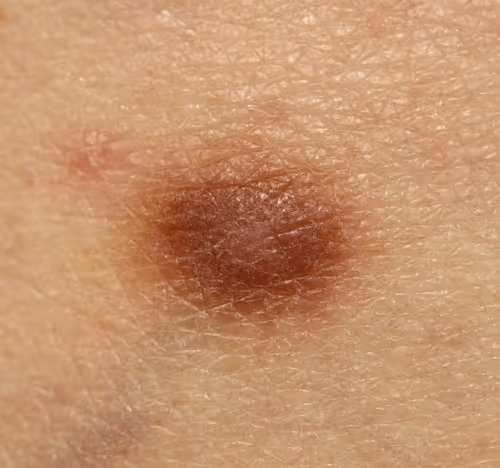
The most recognized warning signs of skin cancer follow the "ABCDE" pattern: asymmetry, border irregularity, color variation, diameter greater than roughly six millimeters, and evolution or change over time. Beyond moles, warning signs also include non-healing sores, scaly red patches, and pearly or waxy bumps that slowly grow.
Skin cancer remains the most frequently diagnosed cancer category overall, which is part of why organizations track and publicize these warning signs so consistently [10]. Melanoma Canada also runs community mole-awareness events, including mobile screening tours, aimed at helping the public recognize these signs earlier rather than later [2].
Decision rule: If a lesion shows two or more ABCDE features, or bleeds/does not heal, book an assessment within days to a couple of weeks rather than waiting for a routine annual check.
Related reading on this topic includes a closer look at whether skin cancer hurts, and a visual guide to what early-stage skin cancer can look like.
Dermatologist vs Skin Cancer Specialist: What Is the Difference?
A dermatologist is a physician specialized in skin, hair, and nail conditions broadly, while a skin cancer specialist may be a dermatologist, a surgical oncologist, or a general physician with specific training and experience in assessing and treating skin malignancies. Not every dermatologist performs excisions themselves, and not every clinic that treats skin lesions is staffed by a dermatologist.
Key distinctions patients should understand:
- Dermatologists often diagnose a broad range of skin conditions, from acne to eczema to skin cancer, and may or may not perform surgical removal in-office.
- Skin cancer specialists or physicians with minor surgery training may focus specifically on assessment, biopsy, and excision of suspicious lesions, sometimes with a faster path to the procedure itself.
- Surgical oncologists typically manage more advanced or complex skin cancer cases, often after a diagnosis is already confirmed.
- General practitioners can screen and refer, but usually do not perform biopsy or excision themselves.
Common mistake: Assuming a "skin clinic" automatically means a board-certified dermatologist is on staff. Clinic names vary widely; the safest approach is to ask directly what qualifications the assessing physician holds and whether they personally perform biopsy and removal, or refer elsewhere for those steps.
Example: A patient with a single suspicious mole who wants assessment, biopsy, and removal handled efficiently may be better served by a minor surgery clinic experienced in lesion excision, rather than waiting weeks for a dermatology referral that may still refer out for the surgical step.
What Should I Expect at My First Skin Cancer Screening Appointment
A first skin cancer screening appointment typically involves a visual and dermatoscopic examination of the specific mole or lesion of concern, a discussion of its history and any changes noticed, and a decision about whether biopsy is needed. Most appointments for a single lesion take between fifteen and thirty minutes.
A typical visit generally follows this sequence:
- Intake and history: The clinician asks when the lesion appeared, whether it has changed, and about personal or family history of skin cancer.
- Visual and dermatoscopic exam: The lesion is examined closely, sometimes with a handheld dermatoscope, to assess shape, color, and border characteristics.
- Discussion of findings: The clinician explains what the lesion looks like clinically and whether it appears low-risk, moderate-risk, or concerning enough to warrant biopsy.
- Next steps: This may include monitoring with photos, scheduling a biopsy, or scheduling removal directly if the lesion is a strong candidate for excision regardless of biopsy timing.
Booking and referral: Many private clinics allow patients to book a mole or lesion assessment online without a physician referral, which can shorten the wait compared with a referral-based dermatology pathway. However, OHIP-covered biopsy and pathology processing generally still require a physician order at some point in the process, even if the initial assessment itself was direct-access. Patients should confirm in advance whether the specific clinic they are booking with requires a referral or accepts self-referred bookings.
Wait times: Wait times vary by clinic and by how the lesion is triaged. A lesion flagged as higher concern is typically seen faster than a routine check. Private minor surgery clinics that focus specifically on lesion assessment sometimes offer shorter scheduling windows than general dermatology referral queues, though exact timing depends on current clinic capacity.
For patients weighing where to start this process, a related resource on how to find a skin cancer clinic outlines the general steps involved in choosing between direct-access and referral-based routes.
Mole Check vs Mole Removal
A mole check is an assessment to determine whether a mole is likely benign, needs monitoring, or needs biopsy, while mole removal is the surgical excision of the mole itself, either for medical reasons or occasionally for cosmetic reasons once cancer has been ruled out. Not every mole check leads to removal, and not every removal requires a prior formal "check" if the mole is already an obvious candidate for excision.
Decision rule: Choose a mole check first if you are unsure whether a spot is worth worrying about. Choose to discuss removal directly if a mole has already shown clear warning signs, has bled, or a prior assessment already flagged it as a candidate for excision.
Edge case: Some patients want a benign-looking mole removed simply because it catches on clothing or a razor repeatedly. This is a reasonable conversation to have, but it is a different discussion than removal driven by cancer concern, and coverage rules differ between the two, which is covered further in the OHIP section below.
A suspicious mole assessment approach that treats each lesion individually, rather than assuming every mole needs the same handling, tends to give patients a clearer sense of what happens next.
Skin Biopsy and Pathology
A skin biopsy is a procedure where a small tissue sample, or occasionally the entire lesion, is removed and sent to a pathology lab to determine whether it is cancerous and, if so, what type. Biopsy is the only way to confirm a skin cancer diagnosis with certainty; visual assessment alone can raise or lower suspicion but cannot replace pathology.
Common biopsy techniques include:
- Shave biopsy: A thin slice of the top layers of skin is removed, often used for lesions that appear to sit close to the surface.
- Punch biopsy: A small circular tool removes a deeper core sample, useful when depth needs to be assessed.
- Excisional biopsy: The entire lesion is removed with a margin of surrounding tissue, often used when the lesion is small enough to fully excise and melanoma is a possibility.
How long results take: In Ontario, biopsy results generally take between one and three weeks to come back from the pathology lab, though timing can vary based on lab volume, the complexity of the sample, and whether additional staining or specialist review is needed. Patients understandably find this waiting period stressful, and Canadian health reporting has repeatedly highlighted patient frustration with wait times for biopsy results and specialist follow-up within the public system [7][9]. A closer look at how long biopsy results typically take in Ontario covers this timeline in more detail.
Common mistake: Assuming a biopsy alone is a treatment. A biopsy diagnoses; it does not always remove the full lesion with clear margins unless it was performed as an excisional biopsy. Patients with a confirmed cancer diagnosis from a partial biopsy will usually still need a follow-up excision to clear margins.
For patients specifically researching the mole biopsy process itself, a dedicated overview of mole biopsy testing, pathology, and removal walks through what happens between the initial sample and the final report.
Skin Cancer Removal in Oakville: Options and Costs
Skin cancer removal in Oakville generally involves surgical excision of the confirmed or strongly suspected lesion, with the technique chosen based on the cancer type, size, depth, and location on the body. Costs depend heavily on whether the procedure is covered under OHIP as medically necessary or billed privately.
Common removal approaches include:
- Standard excision: The lesion is cut out with a margin of healthy tissue around it, then the wound is closed with sutures.
- Mohs micrographic surgery: Used for certain basal cell and squamous cell carcinomas, particularly on the face, where tissue is removed and examined layer by layer to spare as much healthy skin as possible. This is typically performed by specialists trained specifically in the technique.
- Curettage and electrodessication: A scraping and heat-based method sometimes used for small, superficial basal cell carcinomas.
Cost considerations:
- Medically necessary removal of a biopsy-confirmed or strongly suspected skin cancer is typically covered under OHIP when referred and performed within the public system.
- Elective removal of a benign mole with no medical indication, done purely for cosmetic reasons, is usually billed privately, since OHIP does not generally cover cosmetic procedures.
- Private clinics may charge separately for consultation, the removal procedure itself, and pathology submission, depending on how the visit is structured.
A general overview of current mole removal cost considerations offers a helpful starting point for what factors typically drive pricing, though patients should always confirm current fees directly with the clinic they plan to visit, since pricing changes and depends on lesion size, number of lesions, and whether pathology is billed separately.
Decision rule: If a lesion is confirmed or highly suspected to be cancerous, pursue the OHIP-covered pathway through a referral. If the concern is cosmetic or the lesion has already been assessed as benign, expect private billing to apply.
BCC, SCC and Melanoma: What Patients Should Know
Basal cell carcinoma (BCC), squamous cell carcinoma (SCC), and melanoma are the three main types of skin cancer, and they differ significantly in appearance, growth pattern, and how urgently they need treatment. BCC is the most common and generally the slowest-growing, SCC grows faster and can spread if untreated, and melanoma is the least common of the three but carries the highest risk of spreading to other parts of the body if not caught early.
- Basal cell carcinoma: Often appears as a pearly, waxy bump, sometimes with visible small blood vessels, or as a flat, scar-like area. It rarely spreads beyond the local skin area but can cause significant local tissue damage if left untreated for years. See a fuller overview on the basal cell carcinoma condition page.
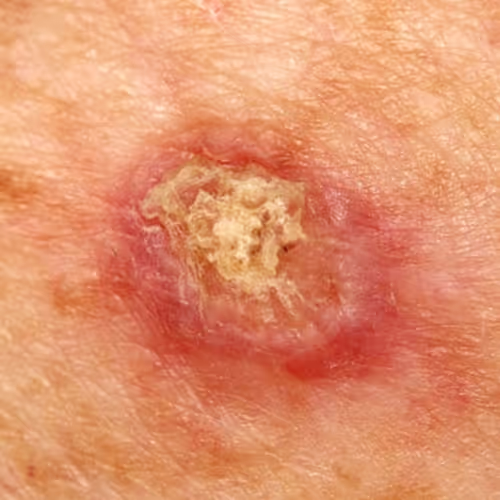
- Squamous cell carcinoma: Often appears as a firm, red, scaly patch or a sore that does not heal, and can grow more quickly than BCC. It has a higher chance of spreading than BCC if untreated.
- Melanoma: Often starts as a changing mole with irregular color and borders, though it can also appear as a new dark spot. Melanoma has the greatest potential to spread to lymph nodes and other organs, which is why early detection matters more here than with any other skin cancer type.
Research supported by organizations such as the Melanoma Network of Canada continues to explore earlier and more accurate melanoma detection approaches, reflecting how much clinical attention this particular cancer type receives compared with its relative rarity [1]. Patients trying to understand disease progression in more depth may find it useful to review resources on the general stages of melanoma and on finding a melanoma specialist for cases that require oncology-level management beyond initial excision.
Common mistake: Assuming all skin cancers behave the same way or carry the same urgency. A pearly bump that has been present for two years is a very different clinical picture from a mole that changed color over three weeks; both deserve assessment, but the second scenario generally warrants faster action.
Is Skin Cancer Screening Covered by OHIP in Ontario
Medically necessary assessment, biopsy, and treatment of a suspected or confirmed skin cancer is generally covered by OHIP in Ontario when the process follows a physician referral and is performed within the public system. Elective or purely cosmetic mole removal, where there is no medical indication, is typically not covered and is billed privately.
Here is how coverage generally breaks down:
- Covered under OHIP: Assessment by a family physician or dermatologist for a concerning lesion, biopsy of a suspicious lesion, pathology processing, and surgical excision of a confirmed or strongly suspected skin cancer.
- Not typically covered: Direct-access private consultations booked without a referral (clinic-dependent), cosmetic removal of a benign mole with no medical concern, and any additional convenience-based scheduling fees some private clinics may apply.
- Grey areas: A mole that is benign but symptomatic, such as one that catches on clothing repeatedly, sits in a middle zone; some physicians will document a medical reason for removal, while others will treat it as elective. This is worth clarifying directly with the assessing physician before the procedure.
Decision rule: If you already have a physician referral and the concern is clinically flagged as suspicious, pursue the OHIP pathway. If you want faster direct access without waiting for a referral, or the lesion has already been deemed benign but you want it removed anyway, expect to pay privately.
The OHIP-covered skin cancer screening pathway available across the Toronto area illustrates how this distinction plays out in practice for patients weighing referral-based versus direct-access options.
Why Choose TMSC for a Skin Cancer Clinic in Oakville & Halton Region
TMSC's Oakville clinic gives Halton Region patients a focused option for assessing suspicious moles and skin lesions, discussing biopsy pathways, and coordinating removal when appropriate, without needing to travel into downtown Toronto for the initial visit. This matters for patients in Burlington, Milton, Georgetown, and Hamilton who want a nearby clinic rather than a longer commute for a single lesion check.
What patients evaluating clinics across Halton Region typically weigh:
- Proximity: Oakville sits centrally enough to serve Burlington, Milton, Georgetown, and even parts of Hamilton without excessive travel time.
- Scope of service: Confirming a clinic performs assessment, biopsy coordination, and removal, rather than only offering a visual opinion and a referral elsewhere.
- Scheduling flexibility: Some private clinics offer extended hours, including some evening or weekend availability, which can matter for working patients in Halton Region who cannot easily take a weekday off for a fifteen-minute consultation. Availability varies, so confirming current clinic hours directly before booking is the most reliable approach.
- Direct booking: Being able to book online without waiting on a referral fax can meaningfully shorten the time between noticing a concerning mole and getting it looked at.
Common mistake: Choosing a clinic based only on proximity without confirming it actually performs biopsy and removal in-house. A nearby clinic that only assesses and then refers elsewhere for the procedural steps adds an extra layer of scheduling and travel that defeats some of the convenience of choosing local in the first place.
Patients researching options across the broader region sometimes compare Oakville against other nearby mole removal options in Burlington as part of deciding where to book. For a full picture of TMSC's Oakville location and how to book, the Oakville clinic page has current details on services and scheduling.
Areas Served Near Oakville and Halton Region
The Oakville clinic serves patients throughout Halton Region, including Oakville proper, Burlington, Milton, Georgetown, and nearby Hamilton, along with Oakville neighborhoods such as Bronte, Glen Abbey, West Oak Trails, and Palermo. This regional reach means patients do not need to travel into Toronto for an initial mole or lesion assessment.
Halton Region has also, at points, addressed public questions about cancer rates within the community, underscoring that cancer concerns, including skin cancer, remain an active topic of local public interest and discussion [4]. Patients living anywhere in this catchment area who notice a concerning mole or lesion have a nearby option rather than needing to default to a downtown Toronto specialist for a first look.
For patients in the downtown Oakville core specifically, the Downtown Oakville mole and cyst removal service covers a related but broader category of lesion removal, useful for patients dealing with both a concerning mole and an unrelated benign cyst at the same time.
Frequently Asked Questions
Do I need a referral to get a mole checked in Oakville? Some private clinics accept direct bookings without a referral, while OHIP-covered biopsy and pathology processing generally still require a physician order at some point. Confirm the specific clinic's policy before booking.
How long does it take to get biopsy results in Ontario? Biopsy results typically take one to three weeks, depending on the pathology lab's volume and whether the sample needs additional specialist review.
What does a mole check actually involve? A mole check involves a visual and often dermatoscopic examination of the lesion, a discussion of any changes noticed, and a decision about whether biopsy or monitoring is the right next step.
Is skin cancer screening free under OHIP? Medically necessary assessment and biopsy referred through a physician are generally covered under OHIP. Direct-access private consultations and purely cosmetic mole removal are typically not covered.
What is the difference between basal cell, squamous cell, and melanoma skin cancers? Basal cell carcinoma is the most common and slowest-growing, squamous cell carcinoma grows faster and carries more spread risk, and melanoma carries the highest overall risk of spreading if not caught early.
Can a benign mole be removed even if it is not cancerous? Yes, but if there is no medical indication, removal is generally treated as elective and billed privately rather than covered by OHIP.
Does the Oakville clinic offer full-body skin exams? This page focuses on assessment of specific concerning moles or lesions rather than comprehensive full-body mole mapping. Patients wanting a full-body exam should confirm that specific service directly or consider a dedicated full-body skin exam service.
What areas does the Oakville clinic serve besides Oakville itself? The clinic serves Halton Region broadly, including Burlington, Milton, Georgetown, and nearby Hamilton, along with Oakville neighborhoods such as Bronte, Glen Abbey, West Oak Trails, and Palermo.
Are evening or weekend appointments available? Availability varies by clinic and by season, so confirming current hours directly with the clinic before booking is the most reliable way to plan a visit.
What warning signs mean I should not wait for my next routine check-up? A mole that has visibly changed shape, color, or size, a sore that has not healed in four weeks, or any lesion that bleeds without injury should prompt an appointment sooner rather than waiting for a routine visit.
Book a Consultation
Concerned about a mole or skin lesion near Oakville or Halton Region? The Minor Surgery Center's Oakville clinic can assess concerning moles and skin lesions and discuss biopsy or removal options when appropriate. Patients from Oakville, Burlington, Milton, Georgetown, and Hamilton can reach out to schedule an assessment for a specific spot they are worried about.
Conclusion
A changing mole or an unusual-looking skin lesion is worth checking sooner rather than later, and patients across Oakville, Burlington, Milton, Georgetown, and Hamilton do not need to travel far to get that first assessment. The most useful next step is straightforward: identify the specific lesion of concern, note when it appeared and how it has changed, and book an appointment with a clinic that can perform assessment, coordinate biopsy, and discuss removal if warranted, all without unnecessary delay.
For lesions that turn out to need biopsy or excision, understanding the general OHIP coverage rules and realistic result timelines ahead of the appointment helps set expectations and reduces the stress of waiting. Patients who are unsure where to start can review related guidance on skin lesion assessment and mole biopsy and pathology before booking, then move forward with a direct conversation about the specific mole or spot causing concern.
References
[1] Melanoma Network Of Canada Excited By Promising Results From Major Skincancer Study - https://www.newswire.ca/news-releases/melanoma-network-of-canada-excited-by-promising-results-from-major-skincancer-study-544217912.html [2] Melanoma Canada Launches 2026 Mole Mobile Tour - https://melanomacanada.ca/blog/melanoma-canada-launches-2026-mole-mobile-tour/ [4] Halton Region Update On Information Circulating Online Regarding Suspected Cancer Rates - https://www.oakville.ca/town-hall/news-notices/2024-news-releases-archive/halton-region-update-on-information-circulating-online-regarding-suspected-cancer-rates/ [7] cbc.ca - https://www.cbc.ca/lite/story/1.7594463 [9] cbc.ca - https://www.cbc.ca/lite/story/1.7548108 [10] Skin Cancer Facts - https://www.skincancer.org/skin-cancer-information/skin-cancer-facts/



%20Treatment.avif)