
Last updated: October 6, 2026
SCC risk in organ transplant patients and people on immune-suppressing drugs is dramatically higher than in the general population, with solid organ transplant recipients facing some of the steepest increases of any immunosuppressed group. The risk rises because long-term drugs that prevent organ rejection also blunt the immune system's ability to find and destroy sun-damaged skin cells before they turn cancerous. Risk climbs the longer a person stays on immunosuppression, and it can be partly managed through strict sun protection, frequent dermatology screening, and in some cases adjusting the immunosuppressive regimen itself.
SCC risk in organ transplant patients and people on immune-suppressing drugs refers to the measurably elevated chance that these patients will develop cutaneous squamous cell carcinoma (cSCC), a skin cancer that starts in the outer layer of skin cells. This risk applies to anyone whose immune system is deliberately or medically suppressed, including solid organ transplant recipients, stem cell transplant patients, people with autoimmune disease on immunosuppressive therapy, HIV patients, and some people with insulin-treated diabetes.[1]
Unlike the general population, where basal cell carcinoma is the most common skin cancer, transplant recipients and other immunosuppressed patients develop SCC more often, and the lesions tend to behave differently. Key features of this elevated risk include:
For readers newer to the disease itself, our overview of cutaneous squamous cell carcinoma explains how the cancer forms and progresses in more general terms.
Who this applies to: solid organ transplant recipients (kidney, liver, heart, lung), people on long-term immunosuppressive therapy for autoimmune or inflammatory disease, and anyone with a chronically weakened immune system from illness or medication.
Who this does not apply to directly: people with short courses of steroids or temporary immune suppression; their risk increase is much smaller and typically reverses once treatment ends.
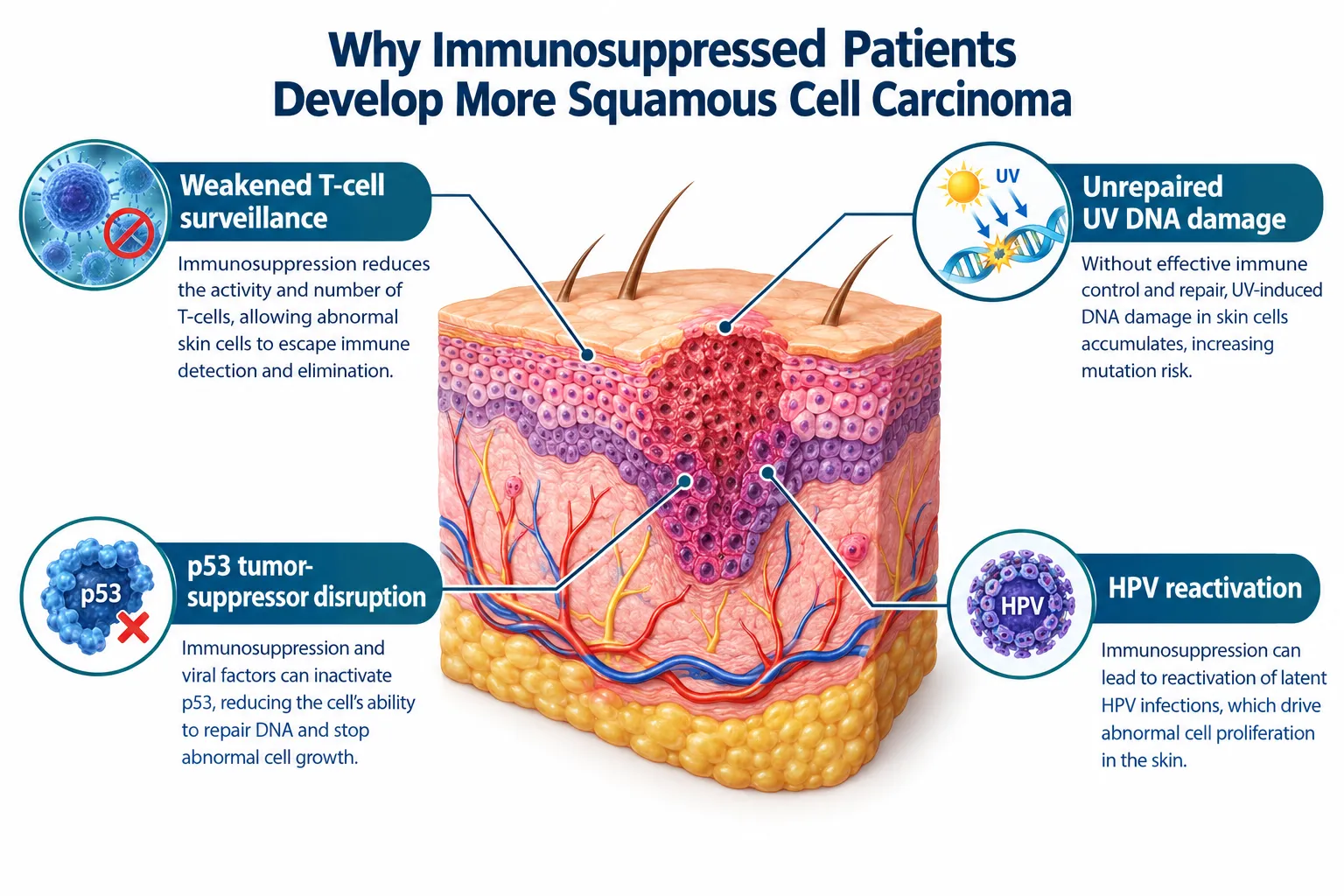
Immunosuppressed patients get more skin cancer because the same drugs that stop their body from rejecting a transplanted organ also stop immune cells from detecting and clearing precancerous skin changes caused by ultraviolet (UV) light. Without that surveillance, damaged cells survive, multiply, and eventually form tumors.
Several overlapping mechanisms drive this up:
Decision rule: if a patient has spent more than two years on combination immunosuppressive therapy and has a history of outdoor sun exposure or prior sunburns, they should be treated as higher-risk and moved onto a shorter dermatology follow-up schedule rather than the standard annual check.
Common mistake: assuming that a healthy-looking transplant recipient with no visible skin changes is automatically low-risk. Early SCC and its precursor, actinic keratosis, can be subtle and easy to miss on self-exam, which is why professional screening matters more in this group than in the general population.
Squamous cell carcinoma risk rises substantially after solid organ transplant and continues increasing the longer a patient stays on immunosuppressive therapy, with risk typically becoming noticeable within the first few years and climbing further after five to ten years. The exact multiple varies by organ type, drug regimen, skin type, and geography, but the direction and scale of the increase are well established in transplant dermatology literature.
What drives the timeline:
Quick example: a kidney transplant recipient in their 50s with fair skin and a history of outdoor work is a markedly different risk profile than a liver transplant recipient in their 30s with darker skin and a history of mostly indoor work. Both are "immunosuppressed," but the first patient needs far closer skin surveillance starting earlier.
Edge case: heart and lung transplant recipients are often maintained on more intensive, long-term immunosuppression than kidney recipients, and clinical experience suggests this group tends to show skin cancer risk increases somewhat earlier and more steeply, reinforcing the need for organ-specific risk stratification rather than a one-size-fits-all timeline.
Azathioprine and cyclosporine are the immunosuppressive drugs most strongly linked to increased SCC risk, while tacrolimus appears to carry somewhat less risk (though evidence is mixed), and mycophenolate mofetil is generally considered lower-risk than either azathioprine or cyclosporine. mTOR inhibitors such as sirolimus and everolimus stand out because switching to them has actually been shown to reduce new SCC development in transplant patients.
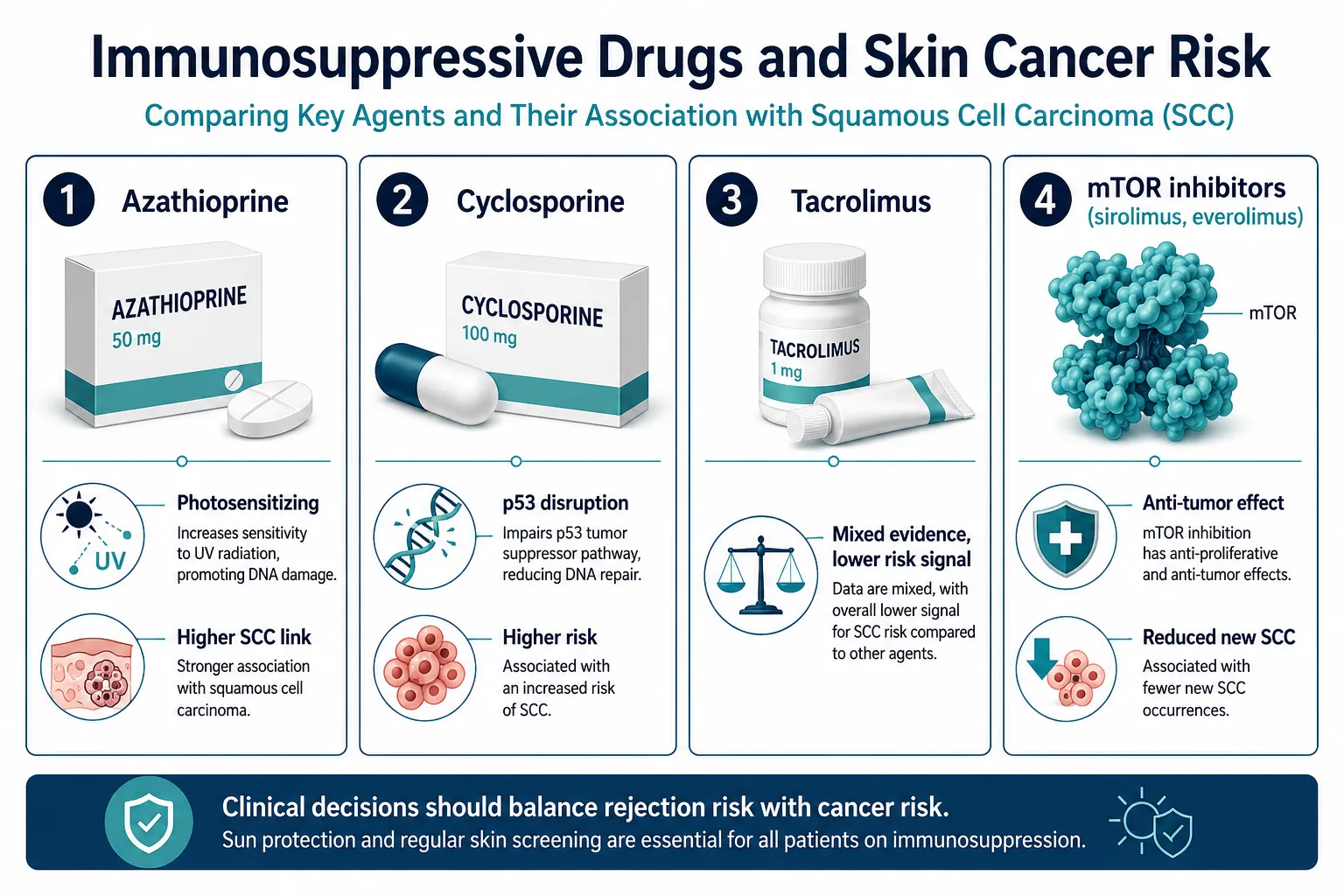
Drug or Drug ClassRelative SCC Risk SignalNotesAzathioprineHighPhotosensitizing effect compounds UV damageCyclosporineHighLinked to p53 tumor-suppressor disruptionTacrolimusModerate (mixed evidence)Often preferred over cyclosporine when feasibleMycophenolate mofetilLowerGenerally favored over azathioprine where appropriateSirolimus / Everolimus (mTOR inhibitors)Reduced risk on switchShown to lower new SCC incidence when substituted in
Decision rule: a transplant team may consider shifting a patient from azathioprine or cyclosporine toward mycophenolate mofetil or an mTOR-based regimen specifically because of recurrent SCCs, but this decision always has to be balanced against the risk of organ rejection and is made by the transplant physician, never by the patient alone.
Common mistake: stopping or reducing an immunosuppressive drug without medical supervision because of skin cancer worry. This can trigger organ rejection, which is a far more immediate and life-threatening risk than most skin cancers caught early.
Yes, SCC behaves more aggressively in immunosuppressed people than in the general population, and in transplant recipients specifically, SCC is considered the more dangerous skin cancer compared with basal cell carcinoma (BCC), reversing the usual pattern. In the general public, BCC is more common but rarely life-threatening, while SCC is less common but more capable of spreading. In transplant patients, SCC becomes both more common and more aggressive at the same time.
FeatureSCC in Transplant PatientsBCC in Transplant PatientsRelative frequency vs. general populationMarkedly increased, often exceeds BCC rateIncreased, but less dramatically than SCCGrowth patternFaster-growing, often multifocalUsually slower-growing, localizedSpread riskHigher risk of nodal metastasisRarely metastasizesRecurrence after treatmentHigher recurrence rateLower recurrence rate
Immunosuppressed patients with cSCC face roughly double the risk of disease-specific death compared with non-immunosuppressed patients with the same stage of disease, even after researchers adjusted for treatment and tumor stage.[1] For a broader comparison of how different skin cancers present, see our guide to the 4 types of skin cancer.
Edge case: a transplant patient with a small, slow-growing lesion that looks "typical" of BCC should still be evaluated carefully by a dermatologist, since SCC in this population can occasionally mimic a less aggressive lesion before behaving unpredictably.
Early signs of SCC in transplant patients include a new, rough or scaly patch that does not heal, a firm red bump that grows over weeks, or a sore that crusts, bleeds, or reopens repeatedly. Because immunosuppressed skin can develop multiple lesions at once, any new or changing spot deserves prompt evaluation rather than a "wait and see" approach.
Signs to watch for, especially on sun-exposed areas like the face, ears, scalp, hands, and forearms:
Quick example: a transplant recipient notices a small, rough patch on the back of the hand that they assumed was a dry skin patch from winter weather. It does not improve with moisturizer over several weeks and starts to feel slightly raised. That pattern, persistence plus texture change, is exactly the kind of finding that warrants a dermatology visit rather than continued self-treatment.
Common mistake: attributing a non-healing sore to a minor injury or insect bite. In immunosuppressed patients, wounds and lesions can take longer to resolve for reasons unrelated to cancer, but any sore lasting more than a few weeks should be checked rather than assumed benign. Our article on skin cancer symptoms with pictures offers visual reference points for comparison.
SCC screening guidelines for transplant recipients call for risk-stratified, regular full-body skin exams, with higher-risk patients seen more frequently and short-interval follow-up (as often as every 3 to 12 months) for anyone who has already had one post-transplant SCC.[10] Regular dermatology visits do not eliminate SCC risk, but they consistently catch lesions earlier, when they are smaller, easier to treat, and far less likely to spread.
Recent UK transplant skin cancer guidance outlines a risk-stratified structure:[10]
Decision rule: choose annual screening if the patient is relatively young at transplant, has darker skin, and has no personal or family history of skin cancer. Choose 3-to-6-month screening if the patient has already had one SCC, has fair skin, or has a long sun-exposure history.
A structured screening relationship with a dermatology or skin lesion clinic matters because transplant teams focus primarily on organ function, not skin surveillance. Patients benefit from pairing transplant follow-up with dedicated visits such as a skin lesion assessment or a mole check without needing a referral, which allows faster access to professional evaluation when something looks suspicious. For those researching where to get screened, our overview of skin cancer screening, prevention, and treatment outlines what a thorough screening visit typically covers.
Common mistake: relying only on the transplant team's periodic check-ins for skin cancer detection. Skin surveillance generally needs a separate, dedicated relationship with a dermatologist or skin clinic, not an afterthought during an organ-function appointment.
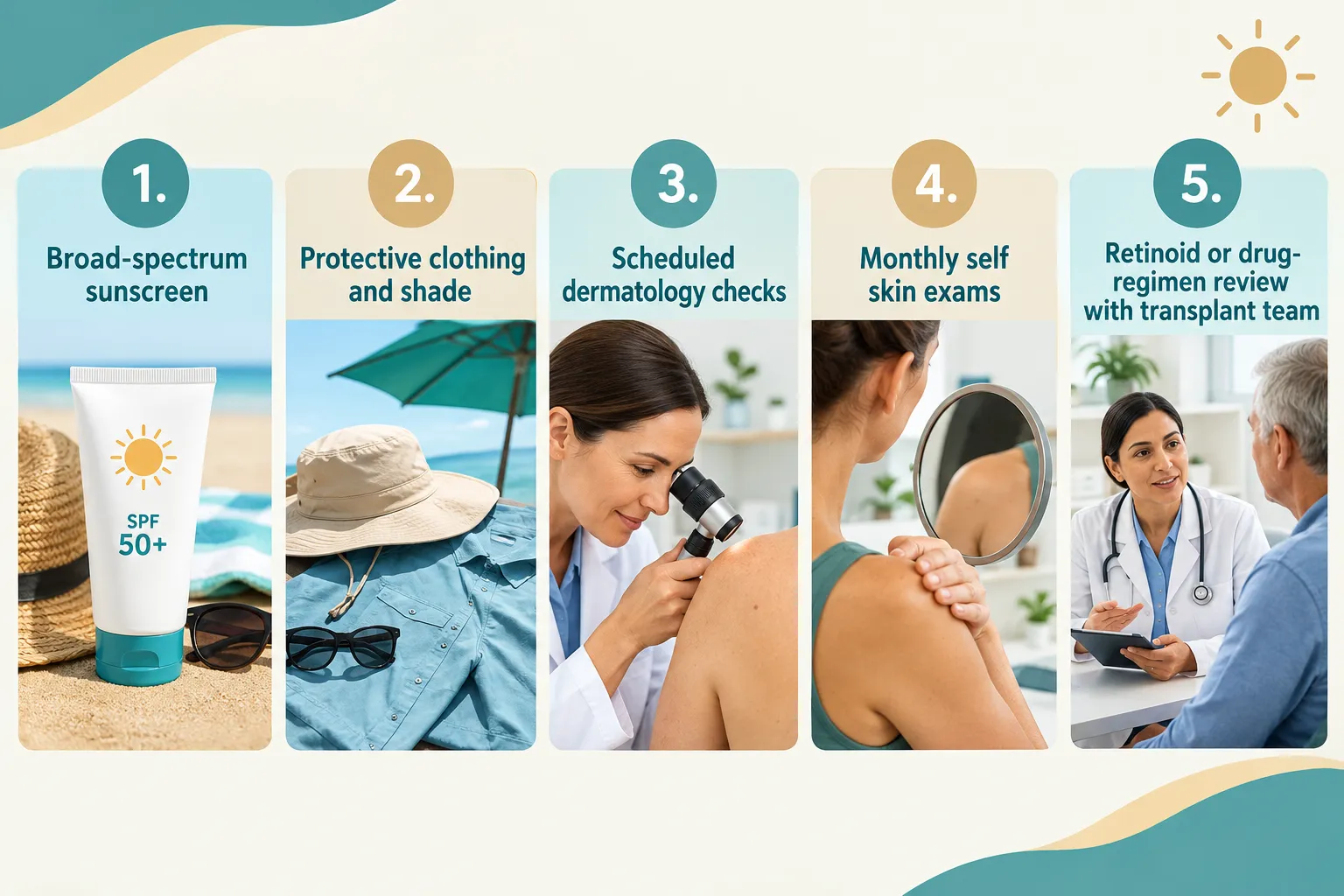
SCC prevention strategies for organ transplant recipients combine strict daily sun protection, scheduled dermatology surveillance, patient self-examination, and in selected high-risk cases, a switch in immunosuppressive drug or the addition of a preventive oral medication. No single strategy eliminates risk, but combining them measurably lowers the chance of developing new lesions.
Core prevention steps:
Decision rule: choose daily mineral sunscreen plus protective clothing as baseline for every transplant recipient, regardless of risk level. Add retinoid therapy or a drug-regimen conversation only for patients who have already developed multiple SCCs, since that step carries its own tradeoffs and requires specialist oversight.
Common mistake: treating sunscreen as optional on cloudy or cool days. UV exposure that drives SCC risk is not tied to visible heat or sunshine, and immunosuppressed skin has far less built-in defense against cumulative damage. Checking the UV index before planning outdoor time can help patients judge daily exposure risk more accurately than relying on how sunny it looks outside.
Stopping immunosuppressive drugs can reduce SCC risk over time, but it is rarely a safe or realistic option for solid organ transplant recipients, since stopping these drugs risks organ rejection, which is typically far more dangerous than the skin cancer risk itself. Any adjustment to immunosuppressive therapy must be managed by the transplant team, weighing skin cancer risk against graft survival.
What actually happens when immunosuppression is reduced or changed:
Edge case: patients with autoimmune disease on immunosuppressive therapy (rather than transplant recipients) sometimes have more flexibility to pause or taper medication under medical guidance if their underlying disease allows it, which can meaningfully lower SCC risk over subsequent years. This flexibility generally does not exist for solid organ transplant recipients, where lifelong immunosuppression is required to protect the graft.
Common mistake: assuming that because a drug "caused" the elevated risk, removing it will quickly return risk to baseline. In reality, cumulative UV damage, prior lesions, and age-related skin changes persist regardless of medication changes, so ongoing surveillance remains necessary even after a regimen switch.
SCC recurrence rate in organ transplant recipients is higher than in the general population, and patients who develop one SCC after transplant face a significantly increased chance of developing additional SCCs over time, often prompting a shift to short-interval dermatology surveillance.[1][10] This pattern of repeat lesions is one of the defining features that separates transplant-related SCC from typical SCC in immunocompetent patients.
Why recurrence runs higher in this group:
This is exactly why UK transplant skin cancer guidance recommends moving patients with a prior SCC to short-interval follow-up, sometimes every 3 to 12 months, rather than returning them to standard annual screening.[10] For patients managing a confirmed diagnosis, understanding the distinction between in situ and invasive disease matters for treatment planning; our guide on in situ versus invasive SCC treatment implications covers how staging affects next steps.
For advanced or metastatic cases that cannot be managed with surgery or radiation alone, checkpoint inhibitors such as cemiplimab and pembrolizumab are now the standard systemic options, with overall response rates reported in the range of 45 to 60 percent in recent reviews.[4][8] These drugs work by blocking PD-1, a protein that helps tumors evade immune attack, and cSCC's high mutation burden (often driven by the same UV damage and immunosuppression discussed above) makes it particularly responsive to this approach.[2][6] However, in transplant recipients specifically, checkpoint inhibitors carry a documented risk of triggering organ rejection because they work by reactivating the immune system, so use in this population requires tight coordination between dermatology, oncology, and the transplant team.[7] Cemiplimab is now approved for adjuvant use in the US (October 2025) and EU (November 2025) following curative treatment of high-risk disease, though neoadjuvant use remains unapproved in several regions as of current guidance.[9]
Common mistake: assuming one successfully treated SCC means the risk episode is "over." In transplant patients, one lesion is frequently a signal of broader field damage, which is why ongoing frequent surveillance, not a single follow-up visit, is the standard of care.
What is SCC risk in organ transplant patients, in simple terms?
It is the significantly increased chance that a transplant recipient will develop squamous cell carcinoma because the drugs preventing organ rejection also weaken the immune system's ability to clear sun-damaged skin cells before they become cancerous.
Why do immunosuppressed patients get more skin cancer than others?
Their immune systems have reduced ability to detect and destroy UV-damaged cells, and certain immunosuppressive drugs add direct photosensitizing or tumor-suppressor-disrupting effects on top of that reduced surveillance.
Is SCC more aggressive in immunosuppressed people?
Yes. SCC in immunosuppressed patients, especially transplant recipients, tends to grow faster, appear in multiple spots at once, recur more often, and carries roughly double the risk of disease-specific death compared with non-immunosuppressed patients with similar disease stage.[1]
Which immunosuppressive drug carries the highest SCC risk?
Azathioprine and cyclosporine show the strongest links to increased SCC risk among commonly used immunosuppressive drugs, while tacrolimus appears somewhat lower-risk and mycophenolate mofetil is generally considered lower-risk still.
Can switching immunosuppressive drugs lower SCC risk?
Yes, switching to mTOR inhibitors such as sirolimus or everolimus has been shown in multiple studies to reduce new SCC incidence in transplant recipients, though this decision always belongs with the transplant team, not the patient alone.
How soon after transplant does SCC risk go up?
Risk often becomes noticeable within the first two to three years after transplant and continues to climb with cumulative immunosuppressive drug exposure, particularly in patients with fair skin or heavy prior sun exposure.
How often should transplant recipients get skin checks?
Frequency depends on individual risk factors; standard-risk patients may be seen annually, while higher-risk patients and those who have already had one SCC are typically moved to short-interval surveillance, sometimes every 3 to 12 months.[10]
Can stopping immunosuppressive drugs eliminate SCC risk?
Stopping these drugs is rarely safe for solid organ transplant recipients because it risks organ rejection, which is generally more immediately dangerous than skin cancer. Drug switching, rather than discontinuation, is the more common and realistic strategy.
What sunscreen works best for immunocompromised transplant patients?
A broad-spectrum sunscreen of SPF 30 or higher, often SPF 50, applied daily and reapplied every two hours outdoors, is the general recommendation. Mineral formulas with zinc oxide or titanium dioxide are frequently preferred for sensitive, drug-affected skin.
Are checkpoint inhibitors safe for transplant patients with advanced SCC?
They can be effective, with overall response rates around 45 to 60 percent in advanced disease, but they carry a real risk of triggering organ rejection in transplant recipients, so use requires close coordination between dermatology, oncology, and the transplant team.[4][7][8]
Does having one SCC mean more will develop?
Having one post-transplant SCC significantly raises the likelihood of developing additional lesions, which is why guidelines recommend shifting these patients to more frequent surveillance rather than returning to standard screening intervals.[1][10]
SCC risk in organ transplant patients and people on immune-suppressing drugs is one of the most well-documented, actionable risks in transplant medicine: it climbs steadily with time on immunosuppression, it behaves more aggressively than typical skin cancer, and it responds measurably to consistent prevention and screening habits. The combination of daily sun protection, risk-matched dermatology surveillance, prompt evaluation of new or non-healing skin changes, and, where appropriate, immunosuppressive regimen adjustments made jointly with a transplant team gives patients real control over an otherwise elevated risk.
Practical next steps for transplant recipients and anyone on long-term immunosuppressive therapy:
Patients who want a thorough baseline evaluation or need a suspicious spot assessed can start with a skin lesion assessment or explore skin cancer clinic options to establish ongoing, risk-appropriate surveillance.
[1] jamanetwork - https://jamanetwork.com/journals/jamaotolaryngology/fullarticle/2756315
[2] Full - https://www.frontiersin.org/journals/immunology/articles/10.3389/fimmu.2025.1660272/full
[3] Nbk441939 - https://www.ncbi.nlm.nih.gov/books/NBK441939/
[4] pubmed.ncbi.nlm.nih.gov - https://pubmed.ncbi.nlm.nih.gov/41463022/
[5] Navigating Cutaneous Squamous Cell Carcinoma Epidemiological Trends Treatment Strategies And Collaborative Care Approaches - https://www.ajmc.com/view/navigating-cutaneous-squamous-cell-carcinoma-epidemiological-trends-treatment-strategies-and-collaborative-care-approaches
[6] The Expanding Role Of Immunotherapies For Non Melanoma Skin Cancers - https://www.dermatologytimes.com/view/the-expanding-role-of-immunotherapies-for-non-melanoma-skin-cancers
[7] 9ae2f6025c5d23fa240e881beef72ba956c2 - https://pdfs.semanticscholar.org/d4da/9ae2f6025c5d23fa240e881beef72ba956c2.pdf
[8] Skin Treatment Pdq - https://www.cancer.gov/types/skin/hp/skin-treatment-pdq
[9] If Hp Cancer Guide Cu013 Scc - https://www.albertahealthservices.ca/assets/info/hp/cancer/if-hp-cancer-guide-cu013-scc.pdf
[10] Pca Skin Ssg Clinical Guidelines Statement V.1 Final May 2024 Current - https://peninsulacanceralliance.nhs.uk/wp-content/uploads/2024/11/PCA-SKIN-SSG-Clinical-Guidelines-statement-v.1-FINAL-May-2024-CURRENT.pdf