
Last updated: September 30, 2026
Imiquimod (Aldara) and Efudex creams are topical prescription treatments used for select, thin, non-invasive skin cancers. Imiquimod is approved for superficial basal cell carcinoma (sBCC) on the trunk, neck, and extremities, while Efudex (5-fluorouracil, or 5-FU) is more commonly used off-label for squamous cell carcinoma in situ (Bowen's disease) and actinic keratosis. Neither cream replaces surgery for invasive, recurrent, or high-risk lesions, and both require months of commitment with visible skin reactions before results show.
Imiquimod (Aldara) works by triggering the body's own immune response to attack abnormal skin cells, while Efudex (5-fluorouracil) works as a topical chemotherapy agent that directly disrupts DNA synthesis in fast-growing, abnormal cells. Both creams destroy superficial skin lesions over weeks, but they act through different biological mechanisms and carry different FDA-labeled uses.
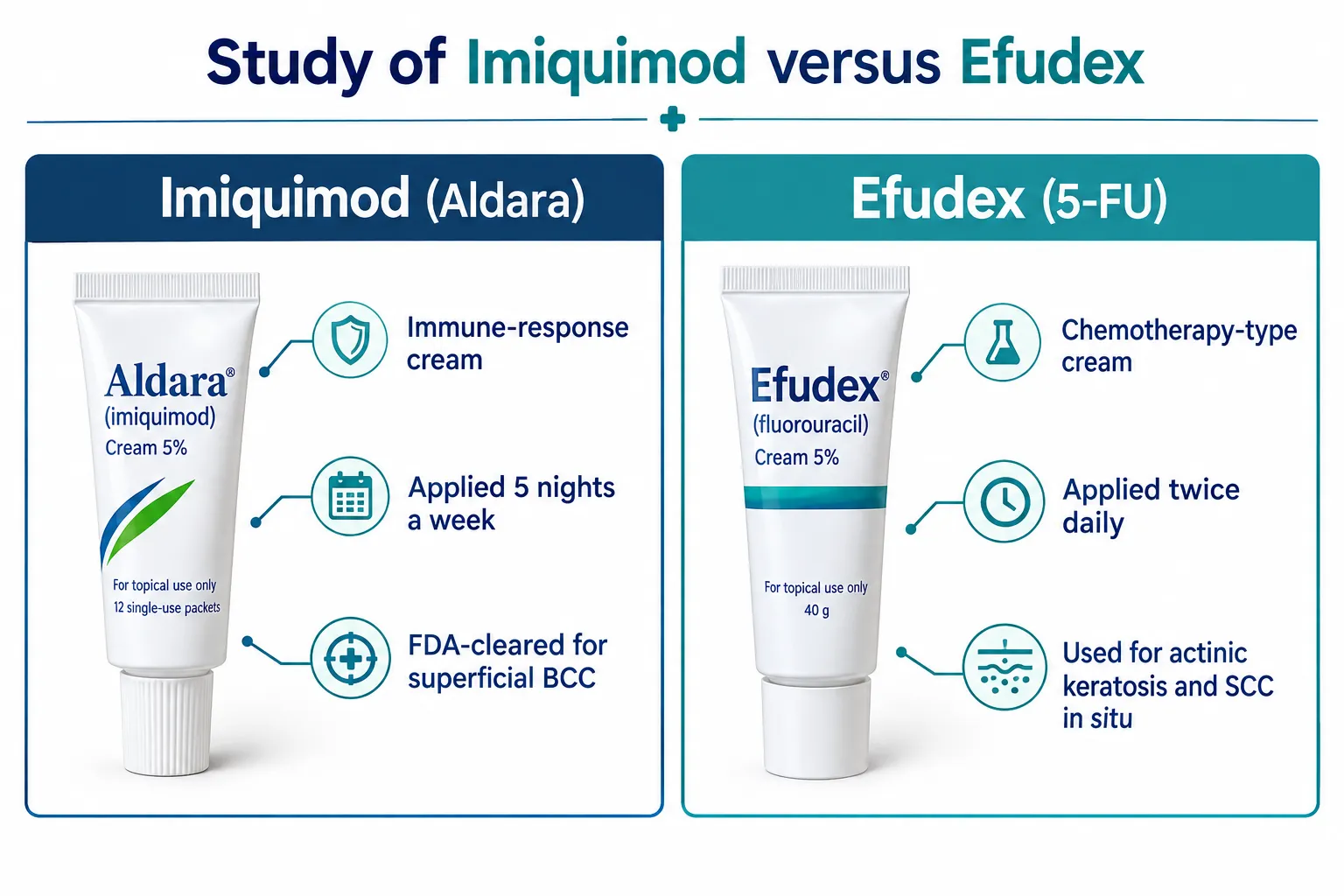
Imiquimod is an immune response modifier. It binds to toll-like receptors in skin cells, prompting local release of cytokines like interferon-alpha, which recruits immune cells to recognize and destroy cancerous or precancerous tissue [2]. This is why imiquimod-treated skin often looks inflamed, red, and crusted during treatment, that's the immune system doing its job.
Efudex, by contrast, is a pyrimidine analog. It interferes with DNA and RNA synthesis in rapidly dividing cells, which is why it's classified as a topical chemotherapeutic [6][8]. Since actinic keratosis, SCC in situ, and some early BCC lesions divide faster than normal skin, Efudex preferentially damages them.
Practical distinction:
FeatureImiquimod (Aldara)Efudex (5-FU)MechanismImmune response modifierTopical chemotherapy (antimetabolite)FDA-labeled skin cancer useSuperficial BCC only [2][10]Actinic keratosis (labeled); SCC in situ often off-label [6][9]Typical schedule5x/week for 6 weeks [2]1-2x daily for 2-4+ weeks (varies by protocol)Reaction patternRedness, erosion, flu-like symptoms possibleBurning, redness, erosion, crustingBest suited forThin, low-risk superficial BCC on trunk/limbsField treatment of sun-damaged skin, SCC in situ
Choose imiquimod if the diagnosis is confirmed superficial BCC in a location the label supports. Choose Efudex if the target is actinic keratosis or biopsy-confirmed SCC in situ, particularly when treating a broader area of sun-damaged skin rather than one isolated spot.
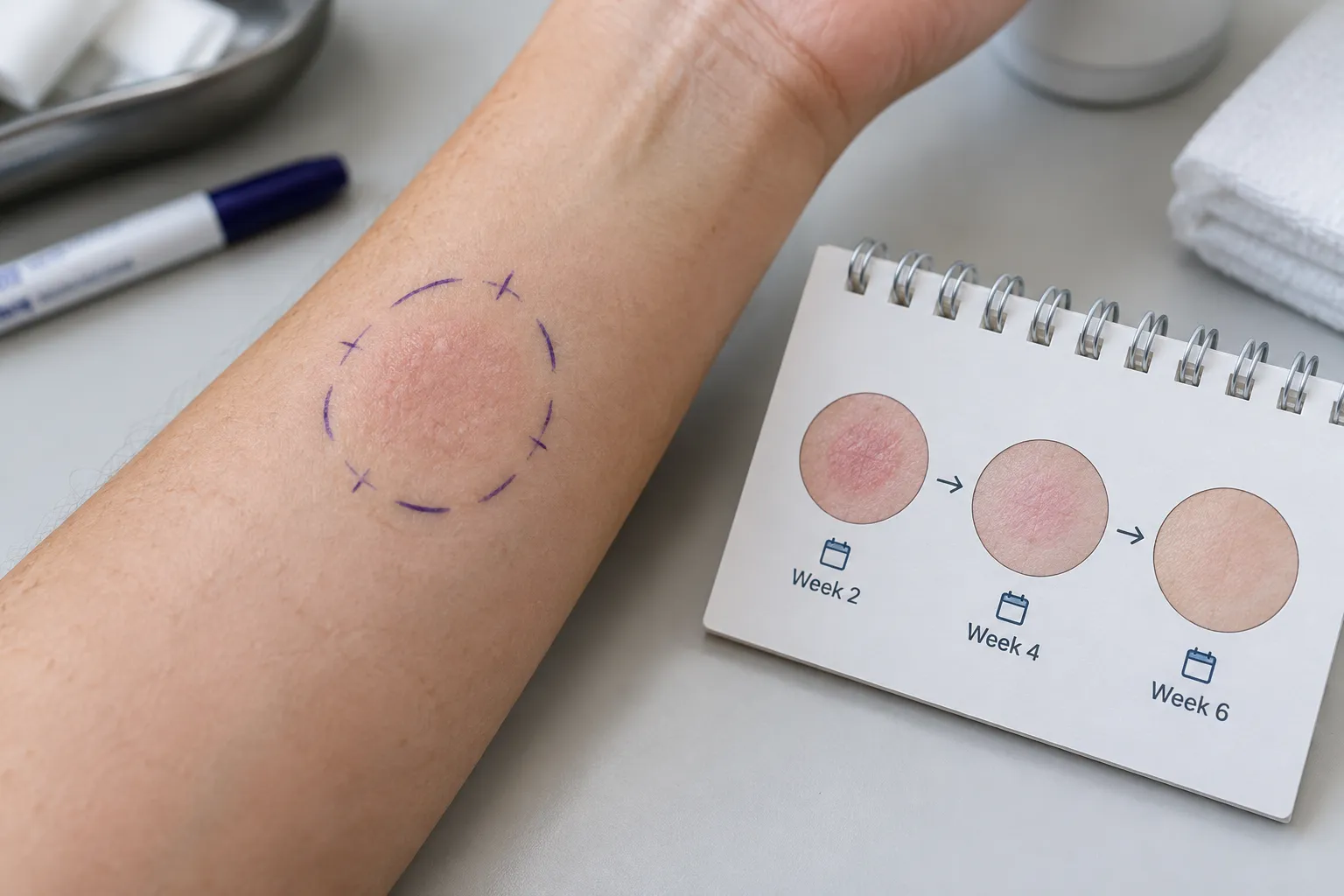
Imiquimod cream for superficial basal cell carcinoma typically requires a full six-week course applied five nights per week before a dermatologist evaluates response, and complete resolution is usually assessed weeks after that final application, not during treatment. Visible improvement often starts appearing gradually as redness and crusting subside.
The labeled regimen for sBCC is application at bedtime, five times a week, for six consecutive weeks, left on for approximately eight hours before washing off [2]. Patients should not expect a smooth or cosmetically pleasing appearance during this period, inflammation, oozing, and scabbing are part of the expected response and often correlate with treatment efficacy.
A dermatologist typically schedules a follow-up visit several weeks after the final application, once acute inflammation has calmed, to visually and sometimes histologically confirm clearance. Total time from first application to confirmed clearance assessment commonly spans two to three months.
Decision rule: if the treated area still shows an obvious raised, pearly, or ulcerated component after six weeks, that's a signal to return to the dermatologist promptly rather than waiting for the standard follow-up, it may indicate the lesion is not responding as expected.
Combining imiquimod and Efudex on the same lesion at the same time is not standard clinical practice and is not supported by FDA labeling for either drug. Some clinicians sequence the two agents (using one, then the other) in specific field-treatment or recalcitrant cases, but this decision belongs to a dermatologist who can monitor skin tolerance closely.
Using both topical agents simultaneously increases the risk of severe local irritation, extensive skin breakdown, and difficulty distinguishing which drug is causing a reaction if something goes wrong. There is limited published guidance directly comparing or endorsing combined simultaneous regimens for superficial BCC or SCC in situ [1][10].
Common mistake: patients sometimes try to "speed up" results by applying both creams in the same week without medical guidance. This raises the risk of painful erosions and scarring without clear evidence of added benefit. Any combination or sequential approach should be prescribed and monitored, not self-directed.
For actinic keratosis, both imiquimod and Efudex are effective, but they suit slightly different situations: Efudex is often preferred for field treatment of widespread sun damage, while imiquimod may be chosen for patients who want a less frequent dosing schedule or who don't tolerate daily 5-FU irritation well.
Guideline and primary-care sources describe both agents as reasonable topical options for actinic keratosis, with selection often driven by lesion distribution, patient tolerance, and prior response [3][7][9]. Efudex is FDA-labeled specifically for actinic keratosis, while imiquimod's use for actinic keratosis (outside of sBCC) follows separate labeling for that indication.
Choose Efudex if:
Choose imiquimod if:
Neither option is universally "better", efficacy is comparable in many head-to-head assessments, and the right choice often comes down to lesion pattern and how a person tolerates the inflammatory phase [4][9].
Aldara (imiquimod) cream cost with insurance varies widely depending on the payer, the diagnosis code submitted, formulary tier, and whether a generic imiquimod formulation is dispensed instead of the brand name. Many insurance plans require prior authorization or documentation that the lesion is biopsy-confirmed superficial BCC before approving coverage [1].
Generic imiquimod is typically far less expensive out-of-pocket than brand-name Aldara. Payer clinical policies increasingly specify that topical therapy for BCC must meet defined criteria, confirmed superficial subtype, appropriate body location, and sometimes documentation that surgery was declined or is not appropriate, before authorizing coverage [1].
Practical steps to manage cost:
For a broader look at how insurers distinguish covered medical treatment from elective or cosmetic procedures, see this guide to cosmetic versus medical necessity insurance coverage.
Expect the treated skin to look worse before it looks better: redness, swelling, crusting, itching, and occasional weeping or erosion are common and expected parts of imiquimod therapy, not signs of failure or infection in most cases. Some patients also report flu-like symptoms such as fatigue or low-grade fever during treatment [2].
Local skin reactions generally intensify over the first few weeks and then begin resolving after the final application. The manufacturer's labeling lists application-site reactions as the most frequent adverse effects, alongside less common systemic symptoms [2].
What's expected vs. what needs a call to the clinic:
Expected reactionContact your dermatologist ifRedness, mild swellingSigns of spreading infection (fever with pus, worsening pain)Itching, tendernessSevere pain out of proportion to visible reactionCrusting, scabbingReaction so severe it prevents completing the courseMild flu-like fatigueHigh fever or symptoms that don't resolve with rest breaks
A common mistake is stopping treatment at the first sign of redness. Mild-to-moderate local reaction is often part of the intended immune response, and dermatologists frequently build in scheduled rest days rather than full discontinuation when reactions are uncomfortable but not dangerous [2].
Imiquimod is labeled and studied for superficial basal cell carcinoma only, it is not an approved or reliable treatment for deep, infiltrative, morpheaform, or nodular BCC subtypes. Deeper BCC variants require surgical management because topical cream cannot reliably penetrate to eliminate tumor cells below the superficial epidermal layer [2][10].
The National Cancer Institute's PDQ summary continues to position topical therapy, including imiquimod, as an option limited to low-risk superficial disease, reinforcing that histologic subtype determines eligibility for cream-based treatment rather than lesion size alone [10]. Expert consensus is consistent: surgery (excision or Mohs micrographic surgery) remains the standard of care for BCC that is nodular, morpheaform, recurrent, or located in high-risk facial zones [10][4].
Edge case: a lesion that looks flat and superficial on the surface can still have a deeper, more aggressive component detected only on biopsy. This is why biopsy confirmation of subtype, not just visual appearance, should precede any decision to use imiquimod. Anyone evaluating a new or changing spot should start with a proper skin cancer screening and mole assessment rather than assuming a lesion is superficial.
For patients in the Toronto area weighing surgical options against topical therapy, it helps to understand what basal cell carcinoma removal clinics typically offer for lesions that don't qualify for cream-based treatment.
Burning and redness from Efudex (5-fluorouracil) cream typically begin within the first one to two weeks of treatment, peak around weeks two to four, and then gradually settle over one to three weeks after the course ends. The exact timeline depends on the treatment protocol, application frequency, and the size of the area being treated.
Because Efudex works by damaging rapidly dividing cells, the visible reaction, redness, burning, erosion, crusting, is often considered a marker that the medication is reaching abnormal tissue. Reaction severity commonly tracks with treatment efficacy in field therapy for actinic damage [7][9].
What affects how long the reaction lasts:
Quick example: a patient treating a small patch of SCC in situ on the forearm for four weeks might see peak redness and crusting around week three, with skin looking mostly settled by six to eight weeks total from the first application. A larger facial field-treatment course may show a longer, more intense reaction window.
If burning becomes severe enough to interfere with daily function, or if the skin shows signs of secondary infection, that's a reason to pause and call the prescribing clinician rather than push through independently.
If a lesion still looks clinically active, raised, pearly, ulcerated, or unchanged, after completing a full six-week imiquimod course, the next step is a prompt follow-up visit with the prescribing dermatologist, not repeating the same course on your own. Persistent findings after an adequate course may indicate the lesion isn't responding, or that the original diagnosis needs to be revisited.
Dermatologists typically wait several weeks after the final application before formally judging response, since inflammation from the immune reaction can mask the true state of the skin underneath. But if six weeks have passed and the area clearly hasn't changed in character, this warrants clinical reassessment rather than assuming the medication simply needs more time [2][10].
Steps if imiquimod doesn't appear to be working:
Common mistake: assuming more redness always equals more progress. Some lesions simply are not good candidates for topical therapy, and recognizing treatment failure early protects against a cancer that continues growing unnoticed under a scabbed surface.
Imiquimod is not appropriate for lesions outside its approved indication, for people with certain immune conditions, or for anyone who cannot reliably apply and monitor the medication as prescribed. It should also be avoided or used with caution in specific clinical situations that a dermatologist needs to screen for before prescribing.
Generally not suitable for:
Decision rule: choose an alternative to imiquimod if biopsy results show anything other than confirmed superficial BCC, or if there's uncertainty about a patient's ability to tolerate a multi-week inflammatory skin reaction. In these cases, referral to a dermatologist or surgical provider for direct evaluation is the safer path. For patients weighing their options, browsing profiles of dermatology providers such as those on this directory of dermatologists in Toronto can help identify who to consult.
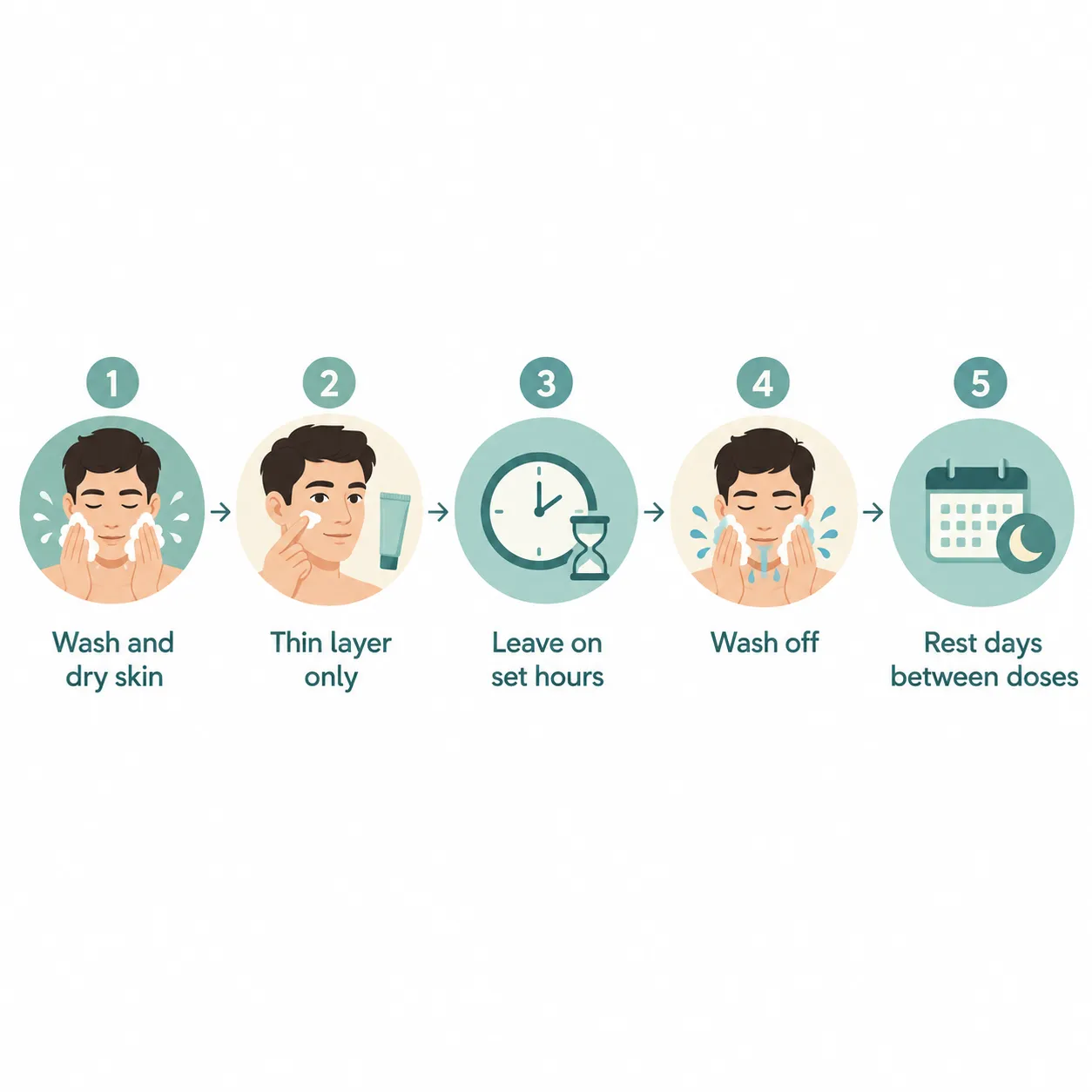
Applying Aldara correctly means using a thin layer on clean, dry skin, covering slightly beyond the visible lesion margin, and following the exact frequency and duration prescribed rather than adjusting it based on how the skin looks day to day. Overapplication does not speed results and often just increases irritation without added benefit.
Step-by-step application checklist:
Common mistake: applying the cream more often than prescribed in hopes of faster clearance. This typically backfires by causing excessive skin breakdown, pain, and a higher chance of needing a treatment break, which can actually extend the overall timeline.
Imiquimod is not the primary FDA-labeled treatment for squamous cell carcinoma in situ, and its use here is generally off-label; Efudex (5-fluorouracil) has more established data specifically for SCC in situ, with reported clearance rates in published series spanning a wide range depending on lesion size, location, and treatment protocol [7][9]. When imiquimod is used off-label for SCC in situ, it is typically a dermatologist-directed decision based on individual lesion factors.
Guideline summaries describe 5-FU as a reasonable topical option for Bowen's disease (SCC in situ), particularly for lesions where surgery carries higher risk of poor cosmetic or functional outcome, such as on the lower leg in older patients with thin, slow-healing skin [7][9]. Reported efficacy for topical 5-FU in SCC in situ varies across studies, and clinicians weigh this variability against the more predictable outcomes of surgical excision [4][10].
Decision rule: topical therapy for SCC in situ is a reasonable consideration when the lesion is biopsy-confirmed as in situ (not invasive), located somewhere surgery carries elevated risk, and the patient can commit to the full course plus follow-up. It is not a substitute for surgery when the lesion is large, recurrent, or there's any uncertainty about invasion depth.
Because SCC in situ can sometimes be confused with other crusty, scaly patches, anyone noticing a persistent scaling area should review the difference between benign and concerning presentations covered in this guide to crusty spots on skin before assuming a diagnosis.
Direct, unprotected sun exposure should be avoided while using Efudex, because 5-fluorouracil increases skin photosensitivity and sun exposure during treatment can intensify burning, redness, and skin damage beyond what's expected from the medication alone. Broad-spectrum sunscreen and protective clothing over the treated area are standard advice during and shortly after the course.
Because Efudex already causes an inflammatory reaction in treated skin, adding UV exposure on top of that can worsen irritation, prolong healing, and increase discomfort. Dermatology labeling and clinical guidance consistently recommend sun avoidance or diligent sun protection for the duration of topical 5-FU treatment [6][8].
Practical guidance:
Edge case: facial Efudex treatment often coincides with the most visible, hardest-to-cover skin. In these cases, physical barriers (hats, sunglasses, staying indoors during peak UV hours) become more important than sunscreen alone, since irritated skin may not tolerate sunscreen ingredients well during active treatment.
Aldara (imiquimod) differs from other topical skin cancer treatments mainly in its immune-based mechanism and its narrower FDA-approved scope, compared to chemotherapy-based creams like Efudex or newer field-directed therapies used for actinic damage. Understanding these distinctions helps set realistic expectations for what any topical option can and cannot achieve.
How the main topical options compare:
TreatmentMechanismPrimary approved useTypical course lengthImiquimod (Aldara)Immune response modifierSuperficial BCC [2][10]6 weeks, 5x/weekEfudex (5-FU)Antimetabolite chemotherapyActinic keratosis; off-label SCC in situ [6][9]Weeks, varies by protocolPhotodynamic therapyLight-activated photosensitizerActinic keratosis, some superficial lesionsIn-office sessionsSurgical excision/MohsPhysical removalBCC, SCC (invasive and in situ), high-risk lesionsSingle procedure
The core distinction worth remembering: topical creams treat what's visible and accessible at the skin's surface, while surgery physically removes tissue with margin control that can be checked under a microscope. For that reason, guideline bodies and expert opinion continue to describe surgery as the gold-standard approach for most BCC and SCC in situ cases, reserving topical therapy for carefully selected, lower-risk, superficial disease where surgery is declined, not feasible, or carries disproportionate cosmetic risk [10][4][1].
Anyone trying to understand where their own diagnosis fits within the broader spectrum of skin cancer severity may find it useful to review how skin cancer progression is typically staged and understood, since treatment options, topical or surgical, are always matched to how advanced the lesion is, not just what it looks like.
Is Aldara the same as Efudex?
No. Aldara (imiquimod) is an immune response modifier approved for superficial basal cell carcinoma, while Efudex (5-fluorouracil) is a topical chemotherapy agent used mainly for actinic keratosis and, off-label, for squamous cell carcinoma in situ [2][6].
Can imiquimod cure basal cell carcinoma completely?
Imiquimod can clear confirmed superficial basal cell carcinoma in many appropriately selected cases, but it is not guaranteed and requires confirmed follow-up to verify clearance; deeper or higher-risk BCC subtypes are not candidates for cream-based cure [2][10].
How do I know if my reaction to imiquimod is normal or too severe?
Redness, crusting, and mild swelling are expected. Severe pain, spreading infection signs, or a reaction that prevents finishing the prescribed course are reasons to contact the prescribing clinician promptly [2].
Does insurance always cover Aldara for skin cancer?
Not always. Coverage typically depends on confirmed diagnosis of superficial BCC, formulary rules, and sometimes prior authorization requirements set by the specific payer [1].
Is surgery better than cream for skin cancer?
For most confirmed BCC and SCC in situ cases, surgery (excision or Mohs) offers more predictable, marginally-controlled outcomes and remains the standard of care; cream-based therapy is reserved for select superficial, lower-risk lesions [10][4].
What happens if I miss a few days of imiquimod treatment?
Missing occasional doses within a prescribed schedule is common; the dermatologist can advise whether to extend the course slightly or continue as planned. Don't double up doses to "catch up."
Can Efudex be used on the face?
Yes, Efudex is commonly used on facial skin for actinic keratosis and some SCC in situ cases, but facial skin often reacts more visibly, so sun protection and clinician guidance are especially important [6][9].
How soon after finishing Efudex can I resume normal skincare?
Most patients wait until acute redness and crusting resolve, typically one to three weeks after finishing treatment, before resuming regular skincare products, per general dermatology guidance.
Imiquimod (Aldara) and Efudex creams are legitimate, guideline-supported options for a narrow, well-defined slice of skin cancer cases: confirmed superficial basal cell carcinoma for imiquimod, and actinic keratosis or SCC in situ for Efudex. They are not blanket alternatives to surgery, and both demand a biopsy-confirmed diagnosis, a committed multi-week application schedule, and a scheduled follow-up to confirm the lesion actually cleared.
Next steps:
Skin cancer treatment decisions benefit from a clear diagnosis and a provider who can weigh topical versus surgical options against individual risk. Reviewing options like a dermatologist near you or scheduling a mole and skin cancer screening is a practical first move for anyone with a lesion that hasn't been formally assessed yet.
[1] Ecg 3068 For Topical And Intralesional Therapies Final - https://www.nhpri.org/blobnhpri08e0944faa/wp-content/uploads/2025/07/ECG-3068-for-Topical-and-Intralesional-therapies_final.pdf
[2] Druginfo - https://dailymed.nlm.nih.gov/dailymed/drugInfo.cfm?setid=663e39a9-a29e-473f-89ec-4c7c6bc27b8a
[3] P339 - https://www.aafp.org/afp/2020/0915/p339
[4] pubmed.ncbi.nlm.nih.gov - https://pubmed.ncbi.nlm.nih.gov/39521136/
[5] Druginfo - https://dailymed.nlm.nih.gov/dailymed/drugInfo.cfm?setid=59af8153-4cf8-4f22-9000-f239798d52d1
[6] Druginfo - https://dailymed.nlm.nih.gov/dailymed/drugInfo.cfm?setid=a18a3f7e-7254-56c0-e053-2a95a90a7036
[7] Skincancer - https://bpac.org.nz/bpj/2013/december/skincancer.aspx
[8] Druginfo - https://dailymed.nlm.nih.gov/dailymed/drugInfo.cfm?setid=1505cf54-37da-4b2b-9812-6ffd6a01a7c7
[9] Skin Cancer - https://bpac.org.nz/2017/skin-cancer.aspx
[10] Skin Treatment Pdq - https://www.cancer.gov/types/skin/hp/skin-treatment-pdq