Mole Removal Etobicoke & West Toronto: The Complete Guide
Mole removal in Etobicoke and West Toronto typically costs between CA$175 and CA$600 or more per lesion, depending on the size, depth, and whether the removal is medical or cosmetic [2]. OHIP covers removal only when a mole shows signs of skin cancer or causes documented medical problems; purely cosmetic removal is paid out of pocket. Surgical excision by a trained physician remains the most reliable method for moles that need pathology testing, while shave removal or laser treatment suits smaller, low-risk cosmetic cases.
Key Takeaways
Mole Removal Etobicoke & West Toronto services range from same-day cosmetic shave removal to full surgical excision with pathology testing.
Cost typically runs CA$175 to CA$600+ per mole, based on size, technique, and whether a pathology report is required [2].
OHIP only pays for mole removal when a physician documents a medical reason, such as suspected skin cancer, bleeding, or repeated irritation.
Never attempt to cut, freeze, or pick at a mole at home, professional bodies including Toronto Dermatology Centre warn this raises infection and misdiagnosis risk [5].
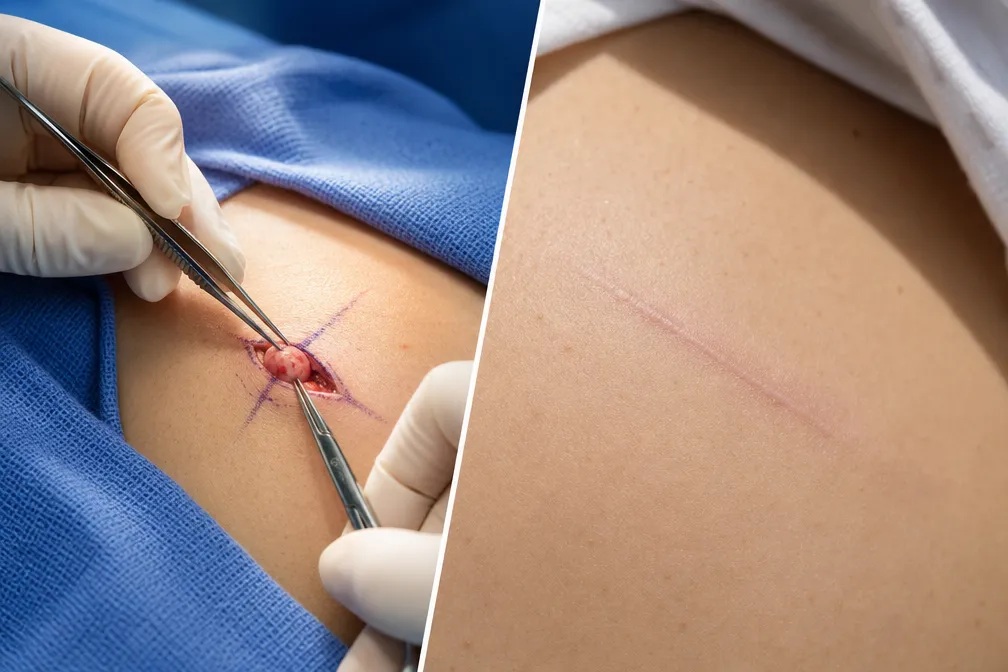
Surgical excision leaves a small linear scar but allows the entire mole to be sent for pathology, which shave or laser methods cannot always guarantee.
Most healthy patients heal from a simple mole excision within one to three weeks, with the scar continuing to fade for up to a year.
A dermatologist or general surgeon experienced in skin lesions should assess any mole that is changing, bleeding, itching, or asymmetrical before removal is scheduled.
Choosing between a dermatologist and a plastic or general surgeon depends on whether the goal is diagnosis, cosmetic result, or both.
What Is the Difference Between a Mole and a Skin Tag
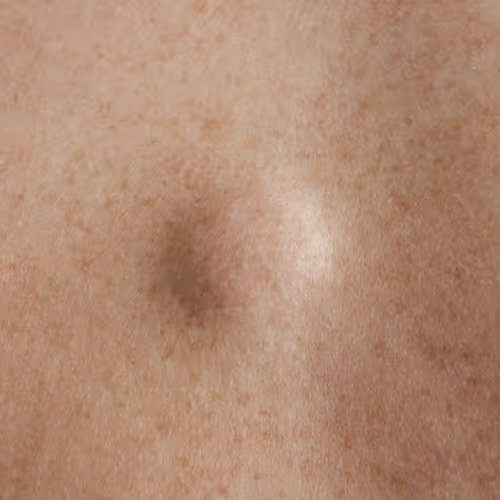
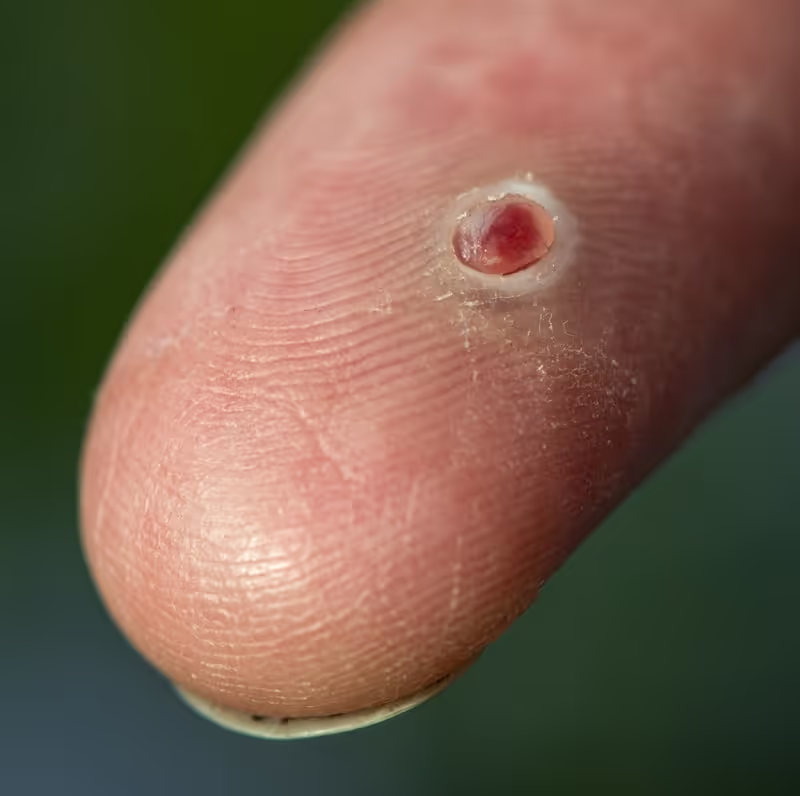
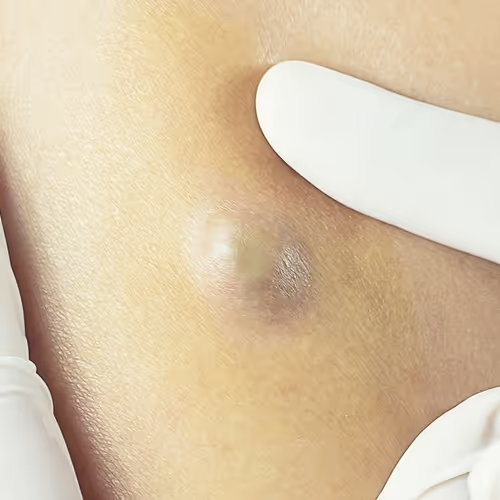
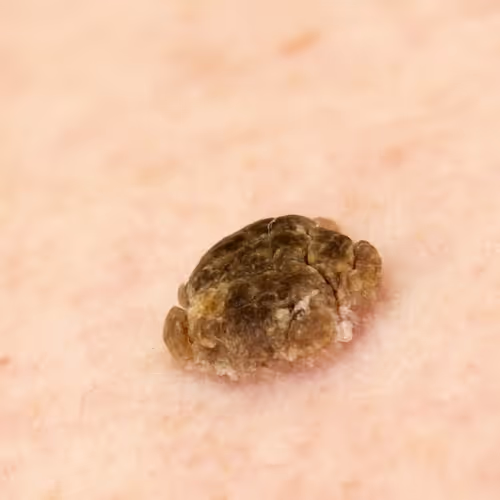
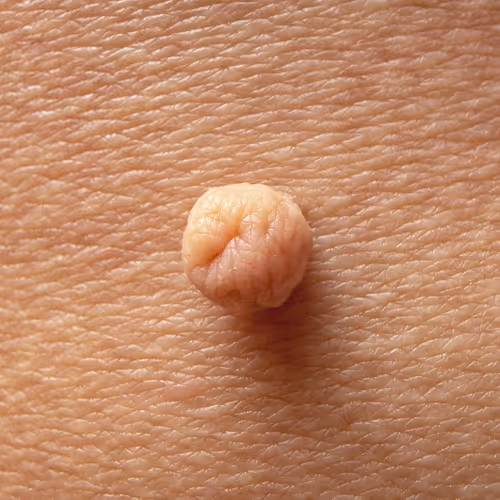
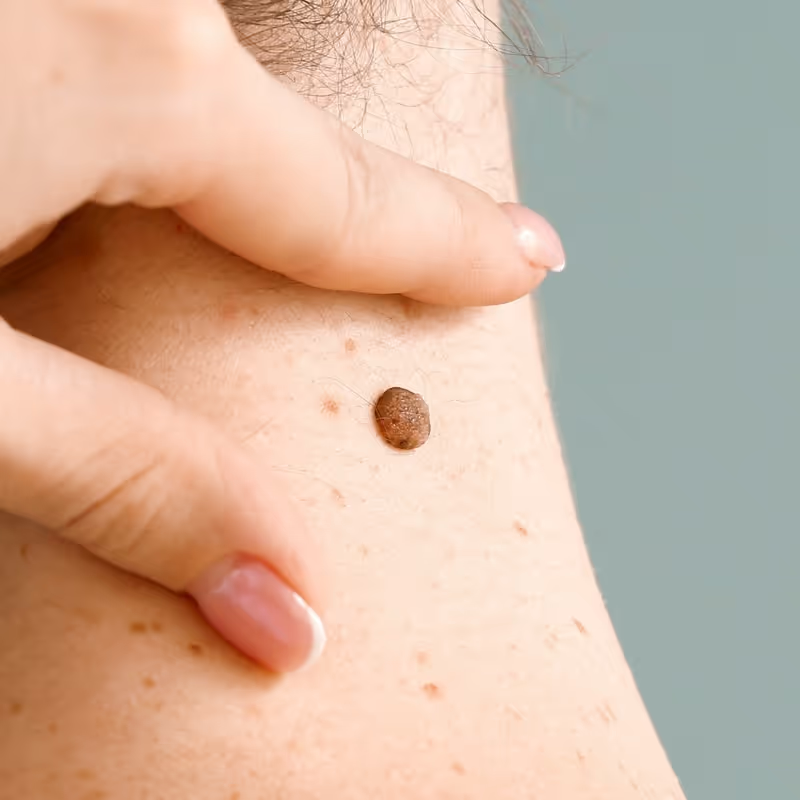
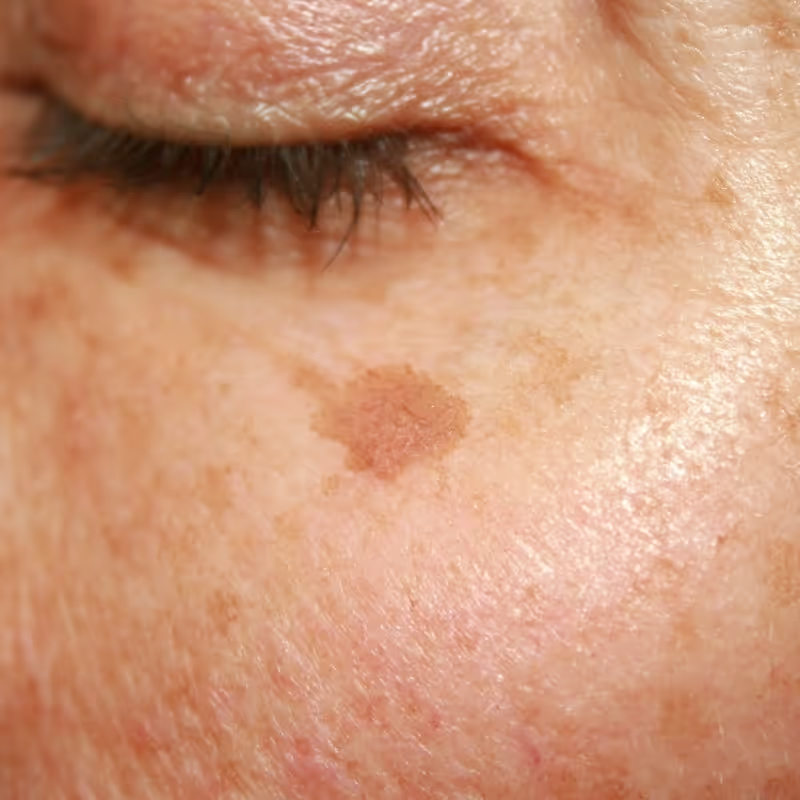
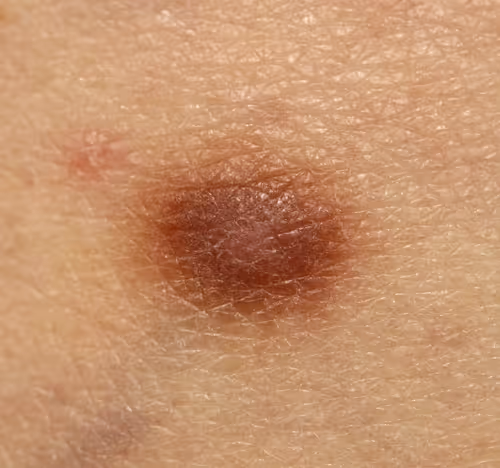
A mole is a cluster of pigment-producing cells (melanocytes) that sits flat or slightly raised within the skin, while a skin tag is a soft, thin stalk of skin tissue that hangs off the surface. Moles can range from light tan to dark brown or black and sometimes carry a small risk of becoming cancerous. Skin tags are almost always benign and never turn into melanoma.
The two are easy to tell apart once you know what to look for:
Decision rule: If a growth is flat-to-slightly-raised and pigmented, treat it as a mole and have it assessed before removal. If it is soft, hangs off a stalk, and appears in a skin-fold area, it is very likely a skin tag and lower-risk to remove without extensive workup. When in doubt, a short in-clinic exam settles the question in minutes and avoids the common mistake of removing a pigmented lesion without checking it first.
How Much Does Mole Removal Cost in Etobicoke
Mole removal in Etobicoke generally costs between CA$175 and CA$600 or more per lesion as of June 2026, with the final price depending on the mole's size, depth, location, and whether pathology testing is included [2]. Cosmetic shave removals on small, low-risk moles tend to sit at the lower end of that range, while surgical excisions of larger or deeper moles cost more because they take longer and require sutures.
Several factors move the price up or down:
Size and depth, a small surface mole is quicker to remove than one that extends deeper into the dermis.
Method, shave excision is generally less expensive than full surgical excision with stitches.
Number of moles, clinics often discount per-lesion pricing when removing several moles in one visit.
Pathology fees, sending tissue to a lab for analysis adds a lab processing cost, though this is often bundled when the removal has a medical indication.
Location on the body, moles on the face or other cosmetically sensitive areas may cost more due to the extra care needed for a clean result.
For a personalized estimate before booking, the mole removal cost estimator tool lets patients enter lesion details and get a realistic price range. A patient in West Toronto with one 4mm cosmetic mole on the cheek, for example, should expect a price toward the lower-middle of the range, while someone with three larger moles on the back needing surgical excision and pathology will land toward the higher end.
Common mistake: Choosing a clinic based on the lowest advertised price alone. A low quote that excludes pathology testing or follow-up care can end up costing more once hidden fees are added, and it may compromise safety if a cancerous mole goes untested.
Is Mole Removal Covered by OHIP in Ontario
OHIP covers mole removal only when there is a documented medical reason, such as suspicion of skin cancer, a mole that bleeds, gets caught on clothing, or shows changes consistent with melanoma. Purely cosmetic removal, taking off a mole simply because a patient does not like its look, is not covered and must be paid privately.
How this plays out in practice:
A family doctor or dermatologist typically needs to document the medical concern before OHIP billing applies.
Some Etobicoke clinics, such as the Lump and Bumps Clinic operated within Urgent Care Centre, require a referral letter from a family physician or one of their own physicians before booking, and note that certain services may carry charges even under a referral pathway [3].
Clinics offering mole removal without a referral, including many private minor surgery and dermatology practices, generally charge a private fee regardless of medical versus cosmetic intent, since assessment and removal happen outside the standard OHIP-billed referral chain [2].
If a mole is removed for medical reasons and sent for pathology, the pathology report itself is usually covered under OHIP even when the removal fee is private.
Decision rule: Choose the OHIP-referral pathway if the mole shows any warning signs and time is not urgent, since it avoids out-of-pocket surgical fees. Choose a private, no-referral clinic if the mole is stable but a patient wants faster scheduling or a specific cosmetic outcome, understanding that the removal fee will not be reimbursed.
Best Mole Removal Clinic Near Etobicoke: What to Look For
The best mole removal clinic near Etobicoke is one where procedures are performed by a licensed physician or surgeon, pricing is transparent before the appointment, and suspicious lesions are automatically sent for pathology testing [2]. Etobicoke and West Toronto patients have several credible options, from dermatology practices to dedicated minor surgery centers.
Use this checklist when comparing clinics:
Confirm who performs the procedure. Ask whether the person doing the removal is a physician, dermatologist, or surgeon rather than an aesthetician.
Ask about pathology policy. A responsible clinic sends any lesion with atypical features to a lab rather than discarding it after removal.
Get a written price range. Reputable clinics quote a range based on size and method rather than a vague "it depends."
Check referral requirements. Some clinics need a doctor's referral; others accept walk-in or self-referred bookings.
Review aftercare support. Confirm there is a clear plan for suture removal, wound checks, and what to do if healing looks unusual.
Edge case: A patient unsure whether their clinic choice is appropriate for a specific mole (for example, one that has changed shape recently) should prioritize a clinic with in-house dermatoscope screening and pathology partnerships over one offering the lowest price, since misdiagnosing an atypical mole carries far higher stakes than an extra fifty dollars.
Can You Remove a Mole at Home Safely
No, removing a mole at home is not safe and is strongly discouraged by dermatology professionals. Toronto Dermatology Centre specifically warns that at-home or non-professional mole removal carries real risks of scarring, infection, and, most importantly, missed skin cancer diagnosis, since a mole cut off at home is never checked under a microscope [5].
Common at-home methods and why they fall short:
Cutting or shaving with household tools risks uneven removal, infection from non-sterile instruments, and permanent scarring.
Over-the-counter mole removal creams or pens work by chemically burning the skin surface; they do not remove the full depth of a mole and can leave post-inflammatory scarring or pigment changes without confirming the tissue was benign.
Freezing kits marketed for skin tags are not designed for pigmented moles and can cause blistering or permanent skin discoloration when misapplied.
String or ligation methods found online are meant for stalked skin tags, not flat or raised moles, and using them on a mole can cause partial removal, bleeding, and infection.
Common mistake: Assuming a mole "looks fine" is enough justification to remove it without a lab check. Visual judgment alone, even by a careful patient, cannot rule out melanoma. A professional excision takes only a little longer than a DIY attempt and comes with the safety of pathology confirmation.
Decision rule: If a mole is stable, small, and purely cosmetic in concern, book a professional cosmetic removal rather than attempting any home method, the cost difference is modest compared with the risk of a missed diagnosis or a scar that a home method cannot fix later.
What Are the Risks of Mole Removal Surgery
Mole removal surgery carries risks including infection, bleeding, scarring, temporary numbness, and, rarely, recurrence of pigmented tissue at the treatment site. These risks are generally low when the procedure is performed by a trained physician using sterile technique, but patients should understand them before consenting to treatment.
Key risks broken down:
Infection, redness, warmth, or discharge at the site within the first week; reduced by proper wound care and, when needed, antibiotics.
Bleeding, most excisions cause minimal bleeding controlled during the procedure; blood thinners or aspirin can increase this risk.
Scarring, any cut through skin leaves some mark; technique and aftercare influence how visible it becomes long term.
Nerve sensation changes, temporary numbness or tingling near the site, especially on the face, usually resolves within weeks to months.
Incomplete removal, if margins are not fully excised, a small amount of pigmented tissue can remain and later resurface.
Pathology surprises, occasionally a mole thought to be benign returns an atypical or cancerous result, requiring a second, wider excision.
Edge case: Patients on blood thinners, with a history of keloid scarring, or with active skin infections near the mole site need special planning before surgery. A qualified surgeon will typically ask about medication history and skin healing tendencies during the consultation and adjust technique or timing accordingly.
For anyone specifically worried about how much discomfort to expect, this detailed look at pain during mole removal explains what local anesthesia does and does not cover during the procedure.
How Long Does Mole Removal Take to Heal
Most simple mole excisions heal within one to three weeks for the surface wound to close, though the scar continues to fade and flatten for up to twelve months. Healing time depends on the removal method, the mole's size and location, and how well aftercare instructions are followed.
Typical healing timeline:
Location affects healing speed. Facial moles, which have rich blood supply, often heal faster on the surface but need extra care to avoid visible scarring. Moles on the back or legs, areas with more skin tension, can take slightly longer and are more prone to wider scars if stretched during healing.
Common mistake: Returning to heavy exercise or swimming too soon after removal, which can reopen the wound or introduce bacteria. A short break from strenuous activity protects the healing site; see this guide on returning to swimming and exercise after mole removal for specific timing guidance.
Decision rule: If a wound is still red, swollen, or draining fluid after two weeks, contact the clinic rather than waiting it out, this can signal infection that needs prompt attention rather than home management.
Laser Mole Removal vs Surgical Excision: Which Is Better
Surgical excision is generally the better choice for moles that need pathology testing or that are atypical in any way, while laser or shave-based removal suits small, stable, cosmetic moles where cancer risk has already been ruled out. Neither method is universally "better", the right choice depends on the mole's risk profile and the patient's goals.
Surgical excision:
Removes the full depth of the mole, allowing complete pathology analysis.
Leaves a small linear scar, typically closed with sutures.
Preferred whenever there is any uncertainty about whether a mole could be atypical.
Laser, electrocautery, or IPL removal:
Works well for flat, superficial, clearly benign moles where cosmetic appearance is the main concern.
Q Esthetics Laser Clinic, for example, uses laser, IPL, and electrocautery methods specifically to reduce pain and scarring for appropriate candidates, with medical staff selecting the method based on the individual lesion [8].
Does not always allow for a full tissue sample, which matters less for low-risk moles but is a real limitation for anything atypical.
FACET Dermatology notes that shave and surgical excision procedures in their practice typically take 15 to 30 minutes with minimal downtime, an option that sits between full excision and laser-only approaches [6].
Quick example: A patient with a small, flat, brown mole on the cheek that has never changed and was previously assessed as benign is a reasonable candidate for laser or shave removal focused on cosmetic outcome. A patient with a mole on the back that has recently darkened or grown is not a candidate for laser removal, that mole needs surgical excision with pathology, full stop.
Decision rule: Choose surgical excision if there is any doubt about a mole's risk level or if pathology confirmation matters. Choose laser, shave, or electrocautery only after a professional has confirmed the mole is low-risk and the goal is purely cosmetic smoothing.
When Should You Get a Mole Checked by a Dermatologist
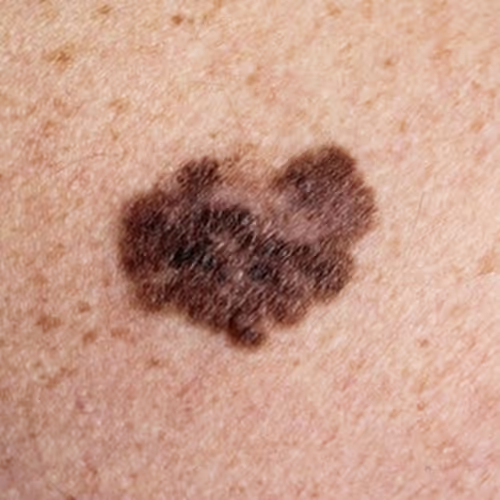
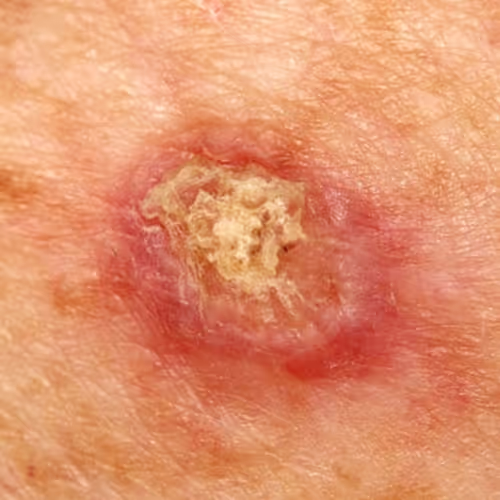
A mole should be checked by a dermatologist or physician promptly if it changes size, shape, or color, develops irregular borders, becomes asymmetrical, bleeds, itches persistently, or looks different from a patient's other moles. These warning signs are commonly summarized using the "ABCDE" rule used in skin cancer screening.
The ABCDE warning signs:
A, Asymmetry: one half looks different from the other.
B, Border: edges are ragged, blurred, or irregular rather than smooth.
C, Color: uneven shading, or multiple colors within one mole.
D, Diameter: larger than about 6mm, roughly the size of a pencil eraser.
E, Evolving: any change in size, shape, color, or symptoms over time.
Even without these signs, an annual skin check is worthwhile for anyone with many moles, a personal or family history of skin cancer, or significant sun exposure history. A full mole check or skin cancer screening can catch changes early, well before removal becomes urgent. For patients specifically worried about a lesion that looks unusual right now, a suspicious mole assessment provides faster, targeted evaluation than a general checkup.
Edge case: A mole that has been stable for years but suddenly starts itching without any color or shape change still deserves an assessment, symptoms alone, even without visible changes, are enough reason to have a professional look.
Does Mole Removal Leave a Scar
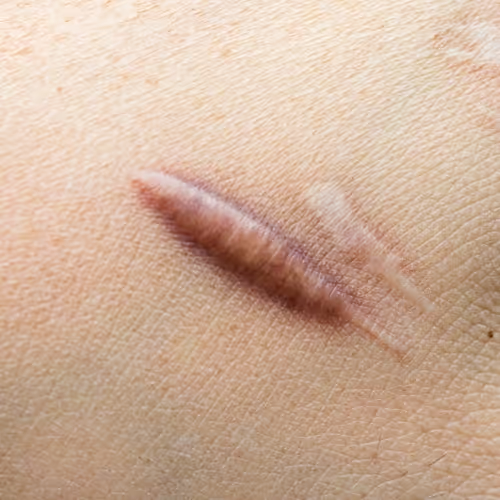
Yes, any method that breaks the skin to remove a mole will leave some mark, though the final appearance ranges from a barely visible line to a more noticeable scar depending on technique, aftercare, and individual healing. Surgical excision typically leaves a thin linear scar, while shave removal often leaves a slightly lighter or flatter mark that can be less noticeable in some cases.
Factors that influence final scar appearance:
Technique, precise, layered closure by an experienced provider generally produces a finer scar line.
Location, areas with more skin tension, like the shoulders or chest, tend to scar more visibly than the face.
Skin type, patients prone to keloid or hypertrophic scarring need this discussed before the procedure.
Aftercare, keeping the wound moist, protected from sun, and free of tension during healing improves the final result.
Time, scars continue to soften and fade for up to a year; the mark at week two looks very different from the mark at month twelve.
For patients wanting to actively minimize how a scar looks over time, this guide on minimizing and treating mole removal scars covers silicone sheeting, sun protection, and massage techniques that support smoother healing.
Common mistake: Skipping sun protection on a healing scar. Ultraviolet exposure on new scar tissue can cause permanent darkening, making the mark more visible than it would otherwise become.
What Happens If You Pick at a Mole
Picking, scratching, or attempting to remove a mole with fingers or household tools can cause bleeding, infection, uneven scarring, and, critically, makes it impossible to get an accurate pathology reading if the mole later needs to be checked for cancer. Picking also risks spreading bacteria into deeper skin layers, which can lead to a more serious infection than a clean surgical wound would.
What tends to happen after picking at a mole:
Bleeding and scabbing that can take longer to heal than a clean surgical incision because the wound edges are irregular.
Infection risk rises sharply compared with a sterile procedure, since fingernails and household tools carry bacteria.
Irregular scarring because uneven tissue removal heals unevenly, often leaving a rougher or discolored mark than a precise excision would.
Lost diagnostic opportunity, if the mole was atypical, picking at it destroys the tissue sample a pathologist would need to check for melanoma.
Partial regrowth, because picking rarely removes the full depth of pigmented cells, some tissue often remains and can regrow, sometimes with an altered, harder-to-assess appearance.
Decision rule: Anyone who has already picked or partially removed a mole at home should have it assessed by a physician as soon as possible rather than waiting, since a damaged mole can be harder to evaluate visually and may need a biopsy sooner rather than later. A mole biopsy can determine what remains and whether further treatment is needed.
Cosmetic Mole Removal vs Medical Mole Removal in Etobicoke
Cosmetic mole removal addresses moles a patient wants gone for appearance reasons, such as a raised mole on the face or one that catches on jewelry, while medical mole removal addresses moles with a suspected health concern, such as possible skin cancer or repeated irritation and bleeding. Both use similar surgical techniques, but the intent, pathology handling, and insurance coverage differ.
Choosing which pathway applies matters for both cost and care. A mole that has never changed, shows no warning signs, and simply bothers a patient visually falls into the cosmetic category, and a range of methods, including cosmetic mole removal for smoother, more even-looking skin, apply well here. A mole that has grown, changed color, or bled without obvious cause belongs in the medical category and should go through a physician referral or a same-day medical assessment rather than a purely cosmetic booking.
Common mistake: Booking a purely cosmetic appointment for a mole that actually shows warning signs, hoping to save time or money on a referral. This can delay proper pathology testing. Any clinic worth choosing will redirect a concerning mole toward proper medical assessment rather than proceeding with a cosmetic-only removal.
Can Moles Grow Back After Removal
Moles can occasionally regrow after removal, particularly if the removal method did not fully clear the pigmented cells at the base, such as with shallow shave excisions or incomplete laser treatments. Regrowth after a full surgical excision with clear margins is much less common, since the entire lesion and a small margin of surrounding tissue are removed.
What increases the chance of regrowth:
Shallow removal methods that only address the surface layer, leaving deeper pigment cells intact.
Large or deeply rooted moles that are harder to fully clear without a more extensive excision.
Incomplete excision margins, sometimes discovered only after a pathology report comes back.
If a mole does return, it can sometimes look different from the original, a phenomenon dermatologists watch for closely, since a recurring pigmented area needs re-assessment rather than assumption that it is "just growing back the same way." Anyone noticing pigment reappearing at a previous removal site should compare what they see against expected healing patterns; this guide on normal healing versus warning signs after mole removal is a useful reference.
Decision rule: If pigment reappears at a removal site within the first year, book a follow-up assessment rather than assuming it is simple regrowth, a physician can determine whether it is residual benign tissue or something that needs biopsy.
Dermatologist vs Plastic Surgeon for Mole Removal Etobicoke
For Mole Removal Etobicoke & West Toronto patients, dermatologists are typically the right choice for diagnosis-focused removal and skin cancer screening, while plastic surgeons or general surgeons trained in minor surgery are often preferred for cosmetically sensitive locations or larger excisions requiring careful closure. Many patients in Etobicoke also choose dedicated minor surgery clinics staffed by physicians experienced in both diagnosis and technique.
How the roles typically differ:
Dermatologists specialize in skin disease diagnosis and are often the first stop for assessing whether a mole looks suspicious, using tools like dermatoscopes to examine pigment patterns closely.
Plastic surgeons bring additional training in precise wound closure, which can matter for facial moles or larger excisions where scar appearance is a priority, ICLS Plastic Surgery, for instance, has Dr. Julie Khanna, a board-certified plastic surgeon with over 30 years of experience, overseeing mole removals with routine pathology submission [4].
General surgeons and minor surgery physicians at dedicated clinics often combine diagnostic screening with efficient, no-referral removal scheduling, which suits patients who want both assessment and treatment handled promptly. The Centre for Minor Surgery notes its Royal College-certified surgeons often complete removal during the initial appointment using minimal-scar techniques [9].
Quick example: A patient with a single suspicious mole on the back with no cosmetic concerns is well served by a dermatologist-led assessment, possibly followed by referral for excision if needed. A patient wanting a mole removed from the nose or eyelid area, where scar placement and tissue handling are more delicate, benefits from a surgeon experienced in facial closures. For general skin lesion removal or scars, providers like Dr. Pirani's Toronto Plastic Surgery Center address moles, cysts, and scars together within one practice [10].
Decision rule: Choose a dermatologist first if the mole's risk level is uncertain and diagnosis is the priority. Choose a plastic or minor surgery specialist if the mole is already assessed as benign and the priority is a clean cosmetic outcome, especially on the face.
"A mole that has never changed and shows no warning signs is a reasonable candidate for cosmetic removal, but any mole with new asymmetry, color change, or bleeding needs a diagnostic assessment before anyone reaches for a scalpel or a laser."
Frequently Asked Questions
How much does mole removal cost in Etobicoke? Mole removal in Etobicoke typically costs CA$175 to CA$600 or more per lesion, depending on size, depth, and technique used, with surgical excision and pathology testing on the higher end [2].
Is mole removal covered by OHIP? OHIP covers mole removal only when there is a documented medical reason, such as suspected skin cancer or a mole causing bleeding or irritation. Cosmetic removal is not covered and is paid privately.
Does mole removal hurt? Most mole removals use local anesthesia, so the procedure itself is not painful, though patients may feel mild pressure. Some soreness is common for a few days afterward as the site heals.
Can I remove a mole myself at home? No. At-home removal risks infection, scarring, and prevents pathology testing that confirms whether a mole was benign, which professional dermatology sources specifically caution against [5].
How long does it take a mole removal wound to heal? Most surgical wounds close within one to three weeks, with the scar continuing to fade and flatten over the following months, up to about a year for full maturation.
Will mole removal leave a scar? Yes, some mark is expected with any method that breaks the skin, though careful technique and aftercare, including sun protection, can make the final scar much less noticeable over time.
Can a mole grow back after it is removed? Regrowth is possible, particularly after shallow removal methods that leave deeper pigment cells intact, but it is uncommon after a complete surgical excision with clear margins.
Should I see a dermatologist or a surgeon for mole removal? See a dermatologist first if the mole's risk level is uncertain, since diagnosis is the priority. See a plastic or general surgeon once the mole is confirmed benign and the goal is a precise cosmetic result.
What is the difference between laser removal and surgical excision? Laser and electrocautery methods suit small, confirmed-benign moles for cosmetic reasons, while surgical excision is necessary whenever pathology testing is needed or the mole shows any atypical features [8].
When should I get a mole checked instead of waiting? Get a mole checked promptly if it changes size, shape, or color, develops irregular borders, bleeds, or itches persistently, these are the classic ABCDE warning signs used in skin cancer screening.
Conclusion
Mole removal in Etobicoke and West Toronto is a routine, well-established procedure when handled by a trained physician, but the right approach depends on the mole itself. A stable, previously assessed mole that simply bothers a patient cosmetically can often be treated quickly with shave excision or laser methods. A mole that is changing, bleeding, or otherwise concerning needs a proper diagnostic assessment and, in most cases, surgical excision with pathology testing before anyone books a purely cosmetic appointment.
Next steps for anyone considering removal:
Assess the mole against the ABCDE warning signs before deciding whether this is a cosmetic or medical case.
Get a professional opinion rather than attempting removal at home, given the infection and misdiagnosis risks involved.
Compare clinic options using the checklist above: qualified provider, transparent pricing, and a clear pathology policy.
Book an assessment promptly if any warning signs are present, since early evaluation gives the most treatment options.
Follow aftercare instructions closely once removal is scheduled, to support clean healing and minimize scarring.
For patients ready to move forward, contacting a clinic for a free consultation is a practical first step toward getting a mole properly assessed and, when appropriate, safely removed.
Promote healthy skin and limit the spread of disease through targeted removal procedures.
Book a Free Consultation
You can book your free consultation with The Minor Surgery Center in three easy ways: online through Cortico, by phone, or by requesting a callback from our team.
The initial consultation is free. During this consultation, one of our board certified surgeons will examine your condition and recommend a suitable solution.
Directly Online
Request a Callback
By Phone
By Text
Hours
Sunday
Closed
Monday
9 am — 4 pm
Tuesday
9 am — 4 pm
Wednesday
9 am — 4 pm
Thursday
9 am — 4 pm
Friday
9 am — 4 pm
Saturday
Toronto & Oakville Open Vaughan & Mississauga Closed



%20Treatment.avif)