
Last updated: September 22, 2026
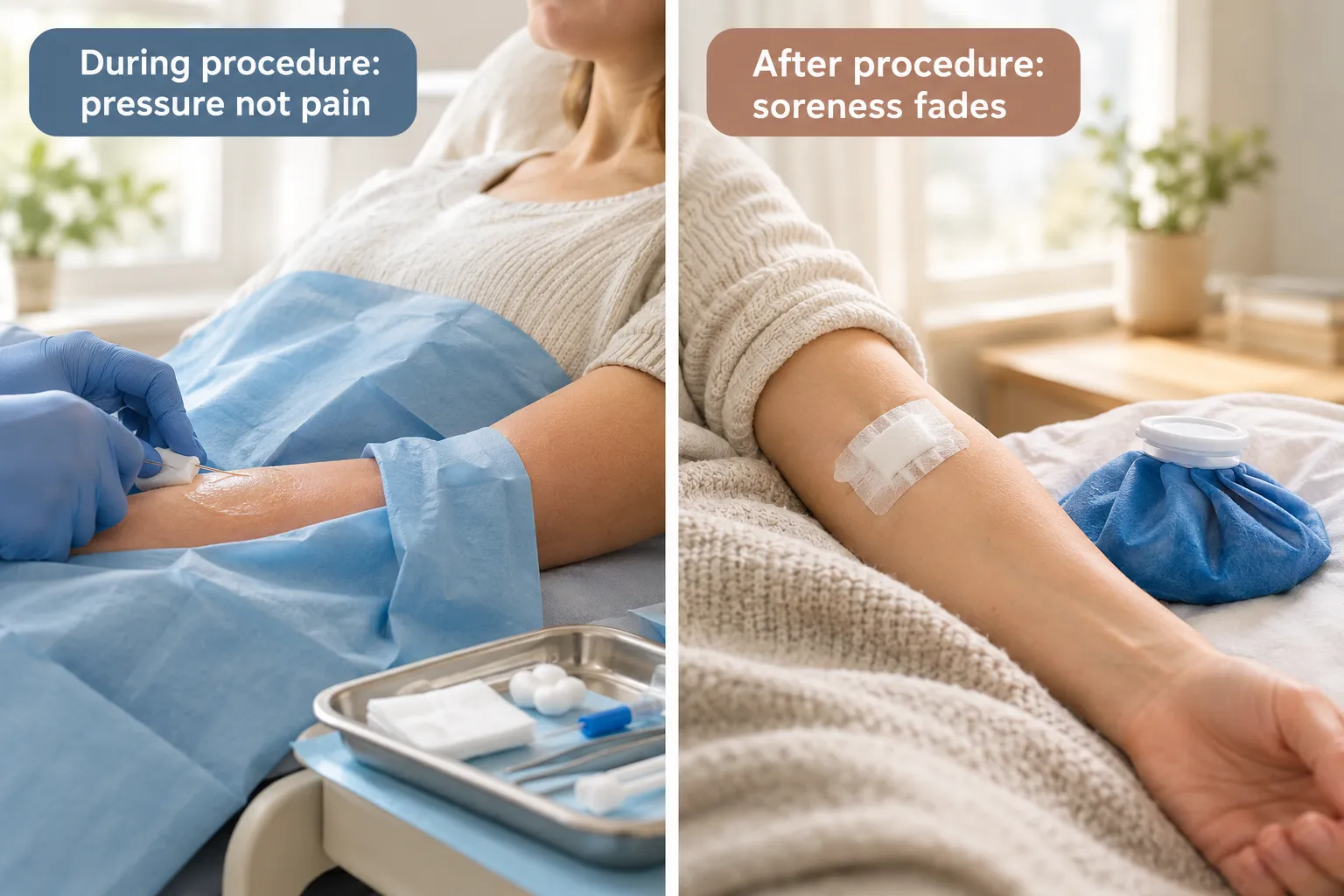
Cyst removal with local anesthesia is not typically painful once the area is numb. Patients feel a brief sting or pressure during the anesthetic injection, then pressure, tugging, or movement (but not sharp pain) during the actual removal. Mild soreness for a few days afterward is normal and manageable with over-the-counter pain relievers. The short answer to "does cyst removal hurt? what local anesthetic feels like" is this: the injection is the worst part, and it lasts only seconds [10].
Cyst removal performed with local anesthesia is generally described as low-pain, not pain-free. Once the anesthetic takes effect, most patients report pressure and tugging sensations rather than sharp or burning pain during the excision itself [4][5][10].
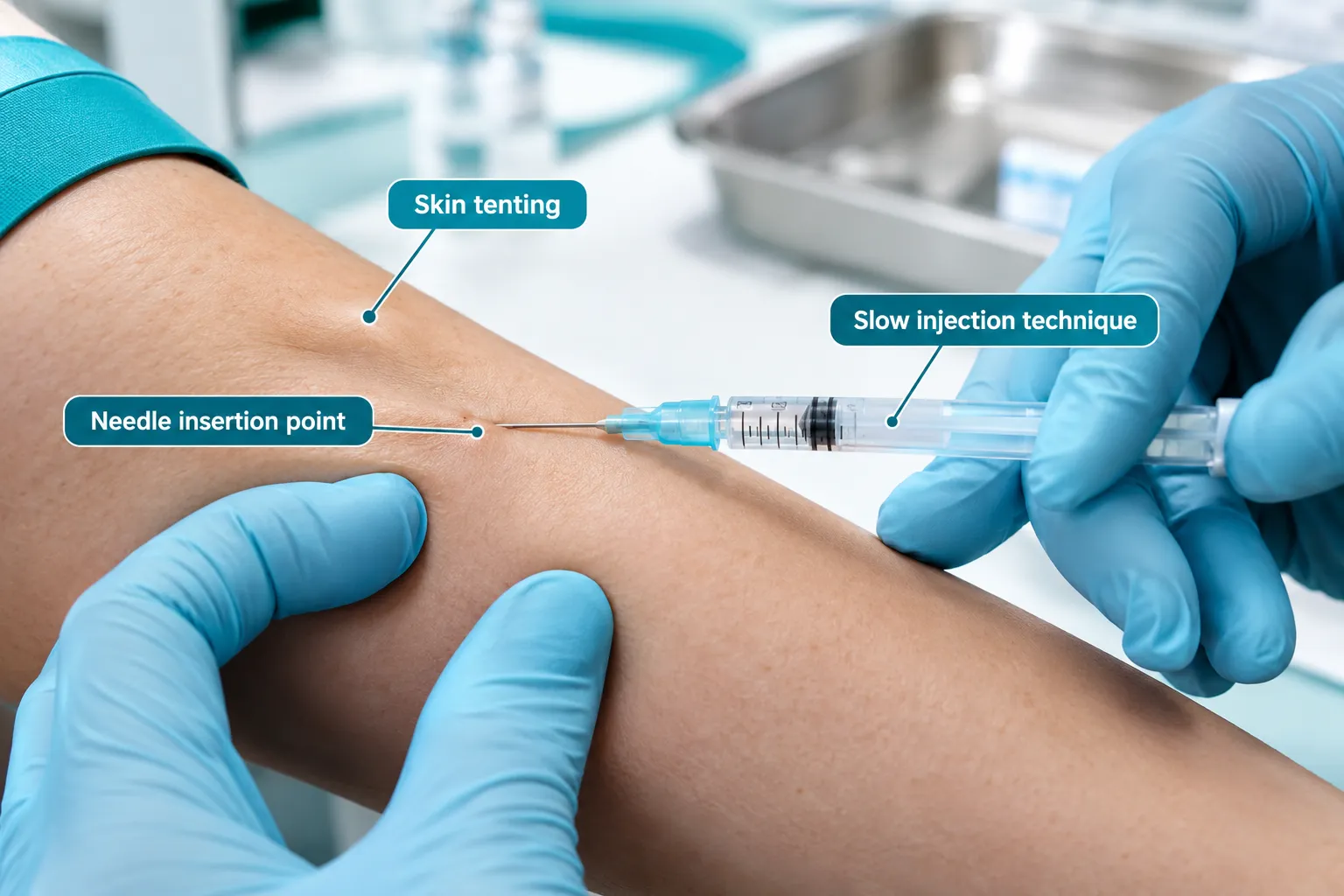
Local anesthetic works by blocking nerve signals in a specific area of skin, so the brain never receives the pain message from that spot even though the tissue is being cut or manipulated [3][9]. This is different from feeling nothing at all: nerve fibers that sense touch and pressure are often less affected than the fibers that carry sharp pain, so a "tugging" or "pushing" feeling is common and expected.
Clinical guidance from centers that perform cyst removal daily describes the overall pain experience as mild, especially compared to what patients anticipate beforehand [4][10]. Anxiety about the unknown is often worse than the actual sensation.
Decision rule: if the cyst is small, stable, and not inflamed, expect a low-discomfort procedure lasting well under an hour with local anesthetic alone. If the cyst is infected, unusually large, or sits over a highly sensitive area (fingers, genitals, scalp near bone), expect more noticeable pressure sensations and possibly a longer numbing process [1][8].
Current expert consensus for 2025 to 2026 continues to support local anesthesia as the standard of care for routine cyst removal because it carries lower risk than sedation or general anesthesia, allows same-day discharge, and provides adequate pain control for the vast majority of cases [1][4]. For a broader look at what results typically look like once the area heals, see this guide on cyst removal results and what to actually expect.
The local anesthetic injection typically feels like a quick pinch followed by a burning or stinging sensation that lasts a few seconds, then fades as numbness sets in. This brief moment is usually the most uncomfortable part of the entire cyst removal process [6][10].
Here is what happens, sensation by sensation:
The injection often hurts more than the removal because it is the only moment during the entire visit when pain-sensing nerves are still fully active. Once the anesthetic diffuses through the tissue, those same nerves are blocked for the rest of the procedure [6][10].
There are also mechanical reasons the injection stands out:
Research on injection technique has looked at ways to reduce this specific discomfort, including buffering the anesthetic with sodium bicarbonate to bring its pH closer to that of body tissue, warming the solution to body temperature, and injecting slowly rather than in one fast push [6][7]. Clinics that use these refinements report that patients rate the injection as noticeably more tolerable.
Common mistake: tensing up or holding the breath during the injection. Muscle tension increases perceived pain. Slow, steady breathing during the injection genuinely helps reduce the sting.
Most simple cyst removals take between 15 and 45 minutes from injection to bandage, and the local anesthetic itself starts working within 1 to 10 minutes of injection [3][9]. Total numbness usually lasts 1 to 3 hours depending on which anesthetic drug is used and whether epinephrine is added to prolong the effect.
A rough timing breakdown:
StageTypical DurationSkin cleaning and marking2 to 5 minutesAnesthetic injectionUnder 1 minute per siteOnset of full numbness1 to 10 minutesCyst removal itself10 to 30 minutesClosing (stitches or steri-strips)5 to 15 minutesNumbness wearing off afterward1 to 3 hours
Larger or deeper cysts, or those near joints and nerves, can take longer both to numb fully and to remove. Cysts on the back or scalp, for example, sometimes require slightly more anesthetic volume because the tissue is thicker [2].
Edge case: cysts that have recently been infected or drained may have scar tissue that resists anesthetic diffusion, so numbing can take longer and may need a second injection before the surgeon proceeds. For details on cyst removal in specific body regions, see guides on cyst removal on the back and cyst removal on the scalp.
Cyst removal under local anesthesia follows a predictable sequence: skin prep, numbing, incision, extraction of the cyst and its sac, and closure. Understanding each step in advance reduces anxiety and helps patients recognize normal sensations versus signs something is wrong [1][2].
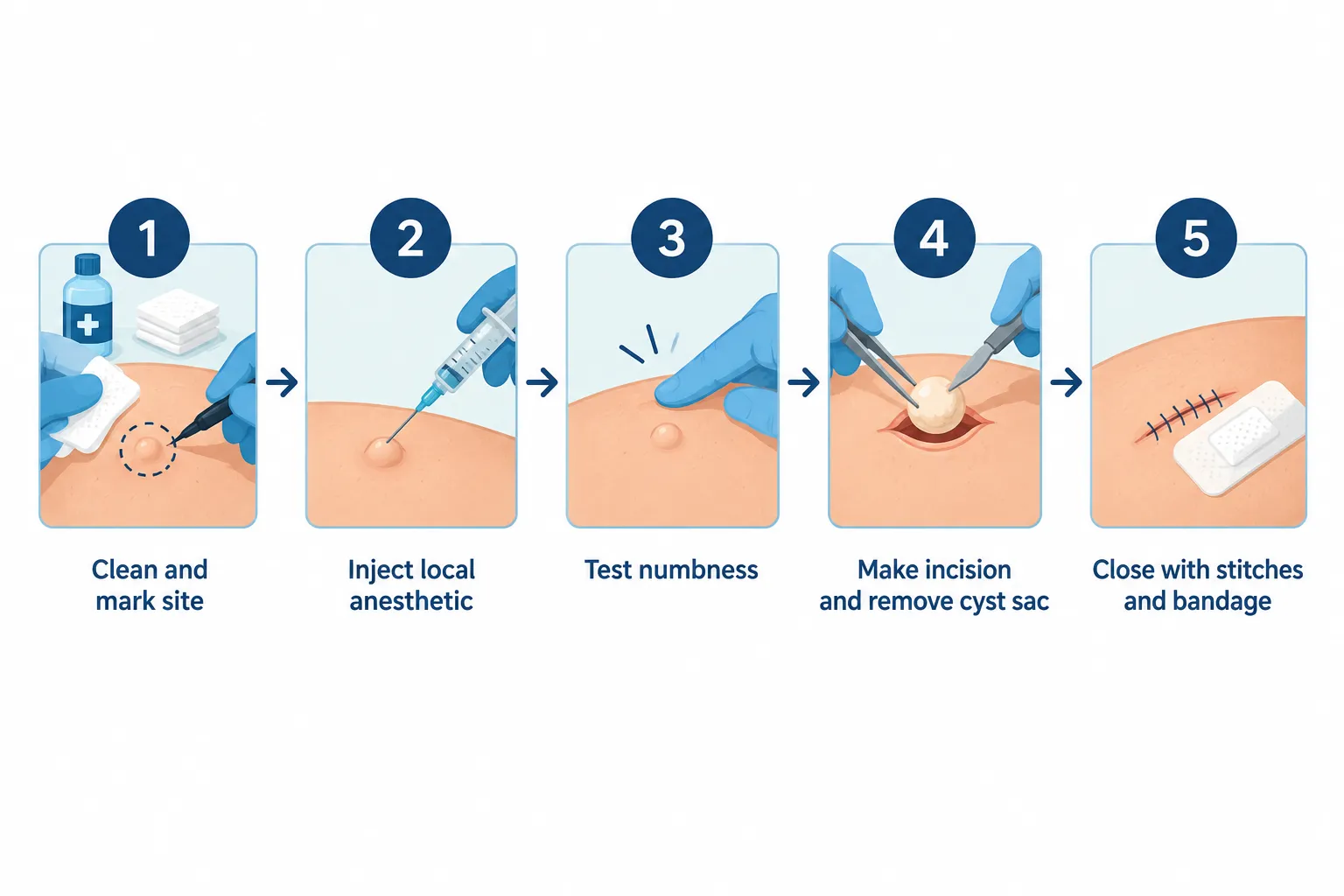
A full walkthrough of this process, including what tools are used and how long each stage typically runs, is available in this step-by-step guide to cyst removal surgery.
Example: a 2 cm sebaceous cyst on the upper back with no signs of infection is a textbook straightforward case: injection, five to ten minutes of numbing, a 15-minute excision, and two to three dissolvable stitches.
With effective numbing, patients should not feel sharp pain during cyst removal, but pressure, pulling, and occasional dull ache are normal and expected sensations. These are different signals than pain and do not mean the anesthetic has failed [4][5].
Sensations patients commonly describe once numb:
Decision rule: report a true sharp, stabbing, or burning pain immediately during the procedure. That specific quality of sensation, not general pressure, is the signal that more anesthetic may be needed.
Common mistake: assuming any sensation at all means the numbing failed. Complete sensory blackout is not the goal or the norm; blocking sharp pain while preserving some pressure awareness is expected and considered a properly functioning block [5][9].
Draining a cyst (incision and drainage) is often more uncomfortable than fully excising a stable cyst because drained cysts are frequently inflamed or infected, and inflamed tissue is harder to numb completely and more sensitive to manipulation [1][8]. A clean excision of a non-inflamed cyst, by contrast, tends to be more predictable and less painful because the anesthetic works more reliably in healthy, non-inflamed tissue.
Key differences:
FactorDraining (I&D)ExcisionTypical causeInfected or abscessed cystStable, non-inflamed cystAnesthetic effectivenessReduced in inflamed tissue [8]Generally reliableDiscomfort levelModerate, sometimes sharp on pressureMild, mostly pressure/tuggingRecurrence riskHigher, since the sac often stays behindLower, since the sac is removedRecoveryOpen wound may need packingUsually closed with stitches
Inflamed or infected tissue becomes more acidic, and local anesthetics work less effectively in acidic environments, which is a documented physiological reason drainage of an infected cyst can feel sharper despite anesthetic use [1][7][8]. Surgeons sometimes supplement with additional injections or a short waiting period to improve numbing in these cases.
For a fuller comparison of these two approaches, including when each is medically appropriate, see cyst removal versus cyst drainage.
Local anesthesia numbs only the area around the cyst while the patient stays fully awake, while general anesthesia puts the entire body into unconsciousness. The overwhelming majority of cyst removals use local anesthesia alone because it is safer, faster, and sufficient for the pain involved [3][4][9].
FeatureLocal AnesthesiaGeneral AnesthesiaConsciousnessAwake throughoutFully unconsciousRecovery timeMinutesHours, plus monitoringRisk profileLowHigher (airway, cardiac, cognitive risks)Typical use caseMost cysts, any size under a few cmVery large, deep, or complex cysts; pediatric patients who cannot stay still; extreme anxiety casesSame-day return homeYes, almost alwaysUsually yes, but with a longer wait and no driving
Choose local anesthesia if: the cyst is on the skin surface or just beneath it, is not unusually large, and the patient can tolerate staying still and awake for 20 to 45 minutes.
Choose general anesthesia (or sedation) if: the cyst is very large, sits near a nerve-dense or bone-anchored area requiring deep dissection, or the patient has significant anxiety, needle phobia, or cannot remain still, such as some pediatric cases [4].
Ganglion cysts, for example, are almost always removed under local anesthesia even though they occur near joints, because the procedure remains superficial enough for a local block to be fully effective. More on this specific type is covered in this guide to ganglion cyst removal in Toronto.
If local anesthetic does not fully numb the area, cyst removal can become genuinely painful, and this is treated as a signal to pause and administer more anesthetic before continuing. A properly trained provider checks for numbness before making any incision specifically to prevent this scenario [5][9].
Reasons anesthetic sometimes underperforms:
What to do if it doesn't feel numb enough: speak up immediately, before the incision. A competent provider will re-test the area with a light touch or pinch and add more anesthetic if needed. This is routine, not a failure of the process, and most patients only need one top-up injection at most [9][10].
Edge case: for infected or abscessed cysts, some pain during drainage despite anesthetic is more common and expected because full anesthetic saturation of inflamed tissue is harder to achieve. Providers often warn patients in advance when treating an actively infected cyst for this reason [1][8].
Recovery from cyst removal typically involves mild to moderate soreness for the first two to three days, tapering off over the following week, and is well controlled with over-the-counter pain relievers and basic wound care [2][10]. Severe or worsening pain after the first 48 hours is not typical and should prompt a follow-up call to the clinic.
Best pain relief strategies after cyst removal:
Common mistake: stopping pain medication too early, then experiencing a rebound in soreness once the initial dose wears off. Sticking to a scheduled dosing pattern for the first 48 hours, rather than waiting until pain returns, generally keeps discomfort steadier and lower overall.
A detailed breakdown of what the healing timeline looks like week by week, including when stitches come out, is available in this cyst removal recovery time guide. Questions about stitch type and how they affect comfort during healing are answered in this comparison of dissolvable versus non-dissolvable stitches after cyst removal.
Cyst removal without any anesthesia is not standard practice and is not recommended, since even minor skin cutting activates pain-sensing nerves that anesthetic is specifically designed to block [1][9]. Nearly all providers require at least a local anesthetic before making an incision.
There are, however, patients who need a modified anesthesia plan rather than standard local injection:
Decision rule: local anesthesia is appropriate for the overwhelming majority of patients. A modified plan is only needed for the specific situations above, and should always be discussed during the pre-procedure consultation, not discovered on the day of treatment.
The biggest mistakes before cyst removal are skipping the pre-procedure consultation, arriving highly caffeinated or anxious, and not disclosing medications or allergies. Simple preparation steps meaningfully reduce both the injection sting and overall discomfort during the visit [9][10].
Preparation checklist:
Common mistake: googling worst-case pain stories the night before and arriving in a heightened anxiety state. Anxiety measurably increases pain perception, so patients who understand the realistic, low-pain nature of the procedure in advance tend to report an easier experience [10]. Readers who feel nervous about minor skin procedures in general may also find it useful to review this guide to overcoming fear of mole and cyst removal.
Edge case: cysts in sensitive locations such as the armpit, groin, or fingers may involve a slightly more involved numbing process due to nerve density in those areas. Location-specific guidance is available for cases like armpit cyst removal surgery.
Does cyst removal hurt more than getting a cyst drained?
Draining an infected cyst is usually more uncomfortable than excising a stable, non-inflamed one, because inflamed tissue resists local anesthetic more than healthy tissue [1][8].
What does the local anesthetic injection feel like exactly?
A brief pinch from the needle followed by a few seconds of burning or stinging as the fluid spreads, then a fading into numbness within one to two minutes [6][10].
How long until the area is numb after the injection?
Most patients are fully numb within 1 to 10 minutes of the injection, depending on the anesthetic used and the size of the treatment area [3][9].
How long does the numbness last after cyst removal?
Numbness typically lasts 1 to 3 hours, though this varies by drug and whether epinephrine was added to extend the effect [3][9].
Can I feel the surgeon working on the cyst?
Yes, in the sense of pressure, tugging, or pulling, but not sharp pain if the area is properly numbed. Reporting any sharp sensation immediately allows the provider to add more anesthetic [4][5].
Is it normal to feel some pain even with local anesthesia?
Some deep pressure or dull ache can occur, especially with larger or inflamed cysts, but sharp pain is not expected and should be reported right away [5][10].
How painful is recovery after cyst removal?
Mild to moderate soreness for two to three days, generally manageable with over-the-counter pain relievers and cold compresses, is the typical pattern [2][10].
Can children get local anesthesia for cyst removal?
Yes, but younger children who cannot stay still may need added sedation alongside local anesthetic, decided case by case with the surgical team [4].
Does the injection hurt more in certain body areas?
Areas with denser nerve supply, such as fingers, palms, and the groin, tend to produce a sharper injection sensation than areas like the back or thigh [6].
Are there ways to make the injection sting less?
Yes. Techniques such as buffering the anesthetic solution, warming it to body temperature, injecting slowly, and applying topical numbing cream beforehand all reduce injection discomfort [6][7].
What if the anesthetic wears off before the procedure finishes?
The provider adds a top-up injection. This is routine and expected for longer procedures, not a sign of a problem [9].
Is general anesthesia ever needed just because of pain concerns?
Rarely for pain alone. General anesthesia is reserved for very large or complex cysts, certain pediatric cases, or patients unable to remain still, not for typical pain management [4].
Cyst removal with local anesthesia is a low-pain procedure for most patients, and the answer to "does cyst removal hurt? what local anesthetic feels like" comes down to one key distinction: the injection produces a brief, sharp sting, while the removal itself typically feels like pressure and tugging rather than pain. Recovery soreness is mild, predictable, and manageable with basic over-the-counter medication and simple wound care.
Next steps for anyone preparing for a cyst removal appointment:
Understanding what each stage feels like in advance, from the quick sting of the needle to the pressure of the removal to the mild soreness afterward, removes most of the fear from the process and sets realistic expectations for a routine, well-tolerated procedure.
[1] Cyst Removal - https://my.clevelandclinic.org/health/procedures/cyst-removal
[2] Cyst Removal Surgery Step By Step - https://www.theminorsurgerycenter.com/blog/cyst-removal-surgery-step-by-step
[3] What Is Local Anesthesia Uses Types Side Effects - https://scienceinsights.org/what-is-local-anesthesia-uses-types-side-effects/
[4] Cyst Removal - https://centreforsurgery.com/services/cyst-removal/
[5] Cyst Faq Questions - https://www.minimalcutsurgery.com/en/articles/cyst-faq-questions
[6] Pmc3627696 - https://pmc.ncbi.nlm.nih.gov/articles/PMC3627696/
[7] Pmc11196988 - https://pmc.ncbi.nlm.nih.gov/articles/PMC11196988/
[8] What Is The Recommended Anesthetic Approach For Pilonidal Cyst - https://www.droracle.ai/articles/443263/what-is-the-recommended-anesthetic-approach-for-pilonidal-cyst
[9] Local Anaesthesia - https://www.nhs.uk/tests-and-treatments/local-anaesthesia/
[10] Is Cyst Removal Painful - https://cystremovalclinic.co.uk/cysts/is-cyst-removal-painful/