

Picture this: You're getting ready for a special occasion, trying on that favorite outfit with the lower neckline, and you notice them—those stubborn brown spots scattered across your chest that seem to have appeared out of nowhere. Sun spots on chest are one of the most common skin concerns affecting millions of people worldwide, particularly those who've spent years enjoying outdoor activities without adequate sun protection. These flat, brown patches may seem like an inevitable part of aging, but understanding what causes them and how to address them can make all the difference in achieving clearer, more even-toned skin.
The chest area is particularly vulnerable to sun damage because it's frequently exposed to ultraviolet (UV) radiation—whether you're wearing V-neck shirts, tank tops, or swimwear. Unlike facial skin that often receives daily sunscreen application, the chest is commonly neglected in sun protection routines, making it a prime location for solar lentigines (the medical term for sun spots) to develop. The good news? With advances in dermatological treatments and preventive strategies available in 2026, these pigmentation concerns are more manageable than ever before.

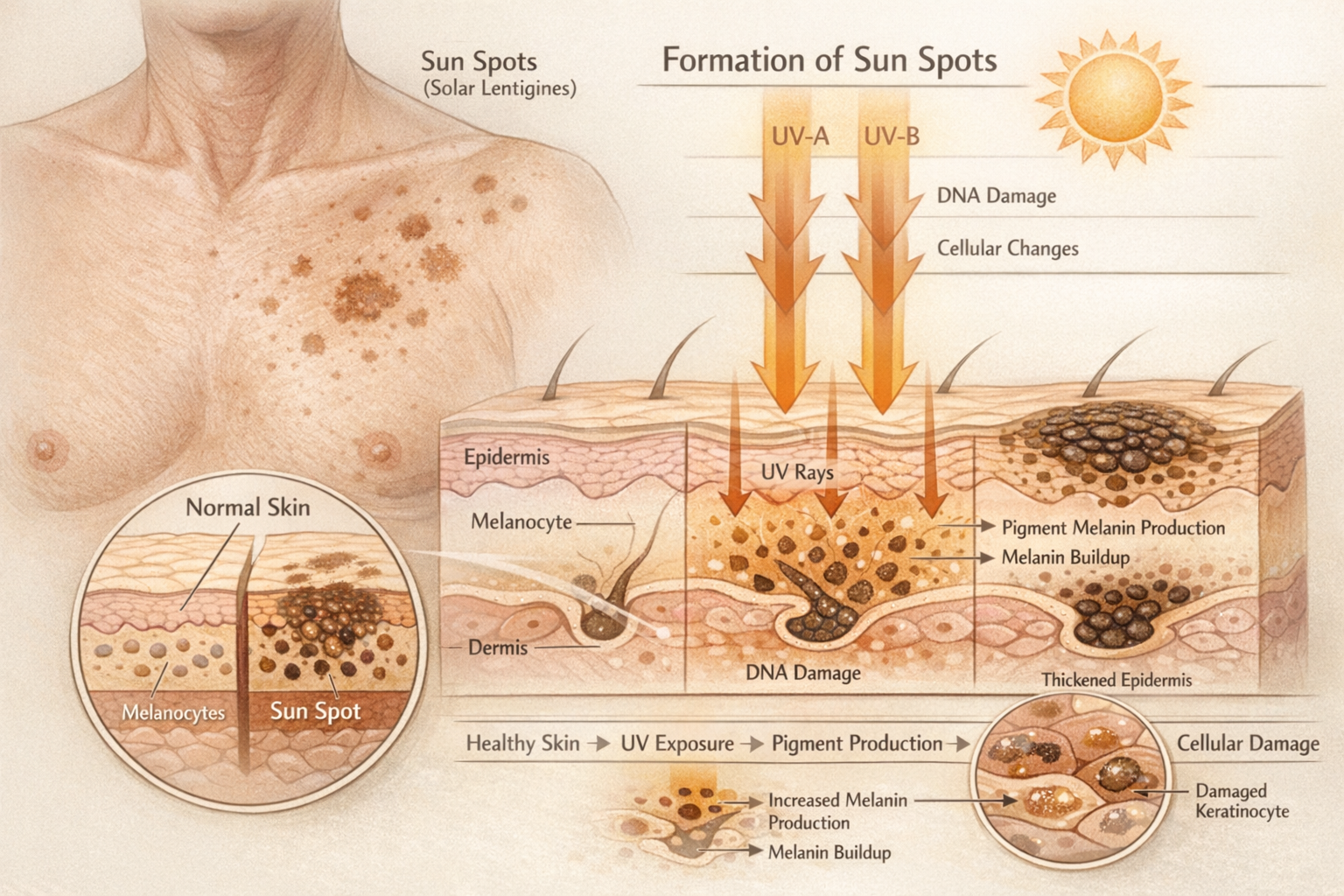
Solar lentigines, commonly known as sun spots, age spots, or liver spots, are flat, darkened patches of skin that develop as a direct result of prolonged sun exposure. When UV radiation penetrates the skin, it triggers melanocytes (pigment-producing cells) to produce excess melanin as a protective response. Over time, this melanin accumulates in concentrated areas, creating the characteristic brown spots that many people notice on their chest, face, hands, and other frequently exposed body parts.[5]
The development of sun spots on chest involves a complex biological process. UV radiation damages DNA within skin cells, causing melanocytes to malfunction and overproduce melanin. Unlike freckles, which tend to darken with sun exposure and fade during winter months, sun spots remain consistently visible year-round because the melanin production has become permanently altered in those specific areas.
These spots typically:
FeatureDescriptionColorLight tan to dark brown, sometimes blackTextureCompletely flat, smooth surfaceSizeTypically 0.2 cm to 2 cm in diameterShapeRound or oval with distinct edgesLocationUpper chest, décolletage, shouldersSensationNo pain, itching, or discomfort
The chest area presents unique characteristics that make it particularly susceptible to sun spot development. The skin here is relatively thin compared to other body areas, and the décolletage receives significant sun exposure during everyday activities—driving, outdoor exercise, or simply wearing clothing with open necklines. Women often notice sun spots on chest appearing in the V-shaped area exposed by blouses and dresses, while men frequently develop them across the upper chest area exposed during outdoor work or recreation.
While anyone can develop sun spots regardless of age or skin type, certain factors significantly increase susceptibility:
High-Risk Groups:
It's important to note that while fair-skinned individuals are at highest risk, people with darker skin tones are not immune to developing solar lentigines. The spots may appear darker or more prominent on deeper skin tones and can be more challenging to treat without causing additional pigmentation concerns.[5]
Understanding the difference between benign sun spots and potentially concerning skin changes is crucial. While most sun spots on chest are harmless cosmetic concerns, any spot that changes in size, shape, color, or texture should be evaluated by a dermatologist to rule out more serious conditions like skin cancer.
One of the most common concerns people have when noticing sun spots on chest is whether these marks are harmless or potentially dangerous. While solar lentigines are benign, several other skin conditions can present with similar brown or dark spots, making professional evaluation essential for accurate diagnosis.
The terms "sun spots" and "age spots" are often used interchangeably, and for good reason—they're essentially the same condition. Both refer to solar lentigines caused by UV exposure. The term "age spots" emphasizes that these marks become more common as we get older due to cumulative sun damage over decades, while "sun spots" highlights the primary cause: ultraviolet radiation exposure.
The misnomer "liver spots" persists in popular usage, though these marks have absolutely nothing to do with liver function or liver health. This outdated term should be disregarded in favor of the more accurate "solar lentigines" or "sun spots."
The most critical distinction to make is between harmless sun spots on chest and melanoma or other skin cancers. While solar lentigines pose no health risk, melanoma is a serious and potentially life-threatening form of skin cancer that requires immediate medical attention.
Warning Signs That a Spot May Be Melanoma (ABCDE Rule):
Sun spots, by contrast, maintain consistent coloration, have smooth borders, remain flat, and don't change significantly over time. However, because skin cancer can develop in sun-damaged areas, anyone with multiple sun spots should have regular skin examinations by a dermatologist. For more detailed information about identifying concerning spots, review our guide on age spots vs cancer spots.
Several other skin conditions can be confused with sun spots on chest:
Seborrheic Keratoses These benign growths often appear on the chest and can be brown or tan like sun spots, but they have a distinctive "stuck-on" appearance with a slightly raised, waxy texture. Unlike flat sun spots, seborrheic keratoses feel rough or scaly to the touch.
Post-Inflammatory Hyperpigmentation (PIH) PIH develops after skin injury, inflammation, or irritation (such as acne, burns, or rashes). Recent research using hyperspectral imaging has shown that PIH spots display higher hemoglobin content compared to solar lentigines, though this distinction typically requires professional diagnostic equipment.[3] PIH often appears in areas that experienced recent trauma rather than exclusively in sun-exposed zones.
Melasma This condition causes brown or gray-brown patches, typically in symmetrical patterns on the face but occasionally on the chest. Melasma is hormonally influenced (common during pregnancy or with birth control use) and worsens with sun exposure. Unlike discrete sun spots, melasma creates larger, irregular patches with less defined borders.
Freckles (Ephelides) True freckles are genetic, appear in childhood, darken with sun exposure, and fade in winter. They're typically smaller and lighter than sun spots and cluster in sun-exposed areas. Sun spots, conversely, don't fade seasonally and develop later in life.
Schedule an appointment with a dermatologist if you notice:
Professional dermatologists can perform dermoscopy (magnified examination) to evaluate suspicious lesions and may recommend biopsy if there's any concern about malignancy. Understanding the difference between harmless pigmentation and potentially serious conditions is essential for maintaining skin health. For additional information about identifying concerning skin changes, visit our resource on early stage skin cancer.
Understanding what causes sun spots on chest empowers individuals to make informed decisions about prevention and treatment. While UV exposure is the primary culprit, several interconnected factors contribute to the development and severity of these pigmentation concerns.
UV radiation is unequivocally the leading cause of solar lentigines. Both UVA and UVB rays contribute to skin damage, though they affect the skin differently:
UVA Rays (Aging rays):
UVB Rays (Burning rays):
The chest area receives substantial UV exposure during everyday activities. Even when not intentionally sunbathing, the décolletage is exposed during:
This cumulative exposure over years or decades eventually manifests as sun spots on chest, often becoming noticeable in middle age when the accumulated damage becomes visible.
While sun spots can theoretically develop at any age, they become significantly more common after age 40. This isn't because aging itself causes sun spots, but rather because:
People who experienced frequent sunburns in childhood or adolescence often notice sun spots on chest appearing earlier in adulthood, as those early exposures created lasting cellular damage that manifests years later.
Genetic factors significantly influence sun spot susceptibility. The Fitzpatrick skin type classification helps predict risk:
Skin TypeCharacteristicsSun Spot RiskType IVery fair, always burns, never tansVery HighType IIFair, usually burns, tans minimallyHighType IIIMedium, sometimes burns, tans graduallyModerateType IVOlive, rarely burns, tans easilyModerate-LowType VBrown, very rarely burns, tans darklyLowType VIDark brown/black, never burnsVery Low
Individuals with fair skin, light hair, and light eyes produce less melanin overall, which provides less natural protection against UV damage. Paradoxically, when their skin is exposed to UV radiation, melanocytes can overcompensate in localized areas, creating concentrated spots of hyperpigmentation.[5]
However, it's crucial to understand that darker skin types are not immune to sun spots. While less common, solar lentigines can develop on any skin tone with sufficient UV exposure, and they may be more noticeable or harder to treat on darker complexions due to the risk of post-inflammatory hyperpigmentation from treatment procedures.
While hormones don't directly cause sun spots (unlike melasma, which is hormonally driven), hormonal changes can influence how skin responds to UV exposure:
Certain medications increase skin's sensitivity to UV radiation, making sun spots on chest more likely to develop or worsen:
Common Photosensitizing Medications:
Individuals taking these medications should be especially vigilant about sun protection to prevent accelerated sun damage and pigmentation changes.
Beyond direct sun exposure, several lifestyle factors contribute to sun spot development:
Tanning Bed Use: Artificial UV radiation from tanning beds causes the same cellular damage as natural sunlight, significantly increasing sun spot risk. Studies have consistently shown that tanning bed users develop signs of photoaging, including solar lentigines, at younger ages.
Geographic Location:
Occupational Exposure: Outdoor workers—construction workers, landscapers, lifeguards, farmers, and others—accumulate significantly more sun exposure than indoor workers, leading to earlier and more extensive sun spot development.
Inadequate Sun Protection: The most modifiable risk factor is inconsistent or inadequate sunscreen use. Many people apply sunscreen to their face but neglect the chest area, or they fail to reapply throughout the day, leaving skin vulnerable to UV damage that eventually manifests as pigmentation changes.
Understanding these contributing factors highlights that while sun spots on chest may seem inevitable, they're largely preventable through consistent sun protection practices. For individuals concerned about other types of skin spots, our article on crusty spots on skin provides additional information about different skin conditions.
For those already experiencing sun spots on chest, numerous effective treatment options exist in 2026. Modern dermatological advances offer solutions ranging from topical treatments to advanced laser procedures, each with specific benefits, considerations, and expected outcomes.
Laser treatment has emerged as one of the most effective options for addressing sun spots, particularly on the chest area where skin texture and tone are priorities. Multiple laser technologies target melanin deposits while minimizing damage to surrounding tissue.
Fraxel® Laser (Fractional Photothermolysis): Fraxel laser treatment has been highlighted as particularly effective for sun-damaged skin on the chest, addressing both brown spots and fine wrinkles associated with excessive UV exposure.[6] This technology works by creating microscopic treatment zones in the skin, stimulating the body's natural healing process to replace damaged, pigmented skin with fresh, healthy tissue.
Benefits of Fraxel for chest sun spots:
IPL (Intense Pulsed Light): While technically not a laser, IPL therapy uses broad-spectrum light to target melanin in sun spots. The light energy is absorbed by the pigmented areas, causing them to darken initially before flaking off over the following weeks.
Q-Switched Lasers: These lasers deliver ultra-short pulses of energy that shatter melanin deposits without damaging surrounding tissue. They're particularly effective for darker, more stubborn sun spots.
Treatment Expectations:
Real-world results from laser treatment for sun damage on the chest demonstrate significant improvement in both pigmentation and overall skin quality.[2] However, laser treatments require careful provider selection, as improper settings can cause hyperpigmentation, especially in darker skin types.
For those preferring non-invasive approaches or seeking to maintain laser treatment results, topical treatments offer effective alternatives for managing sun spots on chest.
Vitamin C (L-Ascorbic Acid): Topical vitamin C functions as a powerful antioxidant that boosts sun protection and helps fade existing pigmentation. It's considered safe across all skin types and works by:[5]
Application: Use 10-20% vitamin C serum daily in the morning before sunscreen application.
Retinoids (Tretinoin, Retinol): Retinoids are vitamin A derivatives that address photoaging through multiple mechanisms:[5]
Application: Start with lower concentrations (0.025% tretinoin or 0.5% retinol) applied nightly, gradually increasing as tolerated. Expect initial dryness and irritation.
Hydroquinone: This prescription-strength skin-lightening agent remains one of the most effective topical treatments for hyperpigmentation. It works by inhibiting tyrosinase, an enzyme essential for melanin production.
Considerations:
Kojic Acid: A natural alternative to hydroquinone, kojic acid inhibits melanin production and is often combined with other brightening agents for enhanced effectiveness.
Azelaic Acid: This naturally occurring acid offers multiple benefits:
Alpha Hydroxy Acids (AHAs): Glycolic acid and lactic acid promote exfoliation, helping to fade surface pigmentation over time. They're often incorporated into chemical peels or daily skincare products.
Chemical peels use acidic solutions to remove damaged outer skin layers, revealing fresher, more evenly toned skin beneath. For sun spots on chest, superficial to medium-depth peels are most commonly used.
Types of Peels:
Glycolic Acid Peels (20-70%):
TCA Peels (Trichloroacetic Acid, 10-35%):
Jessner's Peel:
Treatment Protocol:
Chemical peels on the chest require careful post-treatment care, as this area is prone to uneven healing if not properly protected during recovery.
Cryotherapy involves applying liquid nitrogen to freeze and destroy pigmented cells. While effective for individual sun spots, it's less practical for treating multiple spots across the chest area.
Process:
Considerations:
Microdermabrasion uses fine crystals or a diamond-tipped wand to gently exfoliate the skin's surface, gradually improving the appearance of superficial sun spots. While less effective than laser treatments or chemical peels, it offers:
Dermabrasion is a more aggressive surgical procedure that mechanically removes outer skin layers. It's rarely used specifically for sun spots due to the availability of more controlled alternatives, but it may be considered for severe sun damage combined with other skin concerns.
Many dermatologists recommend combination therapy for treating sun spots on chest, such as:
This multi-modal approach often produces superior, longer-lasting results compared to single-treatment protocols.
The optimal treatment for sun spots depends on several factors:
FactorConsiderationSkin TypeDarker skin types require gentler approaches to avoid PIHBudgetLaser treatments cost more but offer faster resultsDowntime ToleranceSome treatments require days of visible peelingSeverityMild spots may respond to topicals; severe cases benefit from laserNumber of SpotsWidespread pigmentation suits laser/IPL; isolated spots suit cryotherapyDesired TimelineTopicals take months; lasers show results in weeks
Consulting with a board-certified dermatologist ensures personalized treatment recommendations based on individual skin characteristics and goals. For those interested in professional skin care services, exploring options at skin cancer clinics can provide comprehensive evaluation and treatment planning.
While effective treatments exist for sun spots on chest, prevention remains the most powerful and cost-effective strategy. Implementing comprehensive sun protection practices not only prevents new sun spots from forming but also protects against skin cancer and premature aging.
Daily sunscreen application is the cornerstone of sun spot prevention. Research consistently demonstrates that broad-spectrum sunscreen with SPF 30 or higher significantly reduces UV damage when applied correctly.[5]
Essential Sunscreen Guidelines:
SPF Selection:
Proper Application for Chest Area:
Reapplication Schedule:
Formulation Considerations:
For the chest area, consider these sunscreen characteristics:
Common Sunscreen Mistakes to Avoid:
Clothing provides physical sun protection that doesn't require reapplication, making it an excellent complement to sunscreen. Understanding Ultraviolet Protection Factor (UPF) ratings helps optimize clothing choices for preventing sun spots on chest.[5]
UPF Rating System:
UPF RatingUV Protection% UV Blocked15-24Good93.3-95.9%25-39Very Good96.0-97.4%40-50+Excellent97.5-98%+
Optimal Clothing Choices:
Fabric Considerations:
Many athletic and outdoor brands now offer stylish UPF-rated clothing specifically designed for sun protection without sacrificing comfort or appearance.
When you're outside matters as much as how you're protected. UV radiation intensity varies significantly throughout the day, with peak hours presenting the greatest risk for developing sun spots on chest.
Sun Avoidance Strategy:
Smart Outdoor Activity Planning:
Beyond external protection, topical antioxidants provide an additional layer of defense against UV-induced damage and can help prevent sun spots on chest from forming.
Daily Preventive Skincare Routine:
Morning:
Evening:
Key Preventive Ingredients:
Vitamin C: Functions as an antioxidant to neutralize free radicals generated by UV exposure, providing additional protection beyond sunscreen alone.[5]
Niacinamide (Vitamin B3):
Vitamin E:
Green Tea Extract:
Self-monitoring enables early detection of both new sun spots and potentially concerning changes. Perform monthly chest skin checks:
Self-Examination Protocol:
Professional Dermatology Visits:
Holistic approaches to skin health support the body's natural defenses against UV damage:
Dietary Considerations:
Avoid Tanning:
Medication Awareness:
Preventing sun spots on chest requires consistent, lifelong sun protection habits. While it may seem inconvenient initially, these practices become second nature with repetition and offer benefits far beyond cosmetic concerns—including reduced skin cancer risk and slower overall skin aging.
Remember that sun damage is cumulative. Every day of adequate protection contributes to healthier, more even-toned skin in the future. Even if sun spots have already developed, implementing rigorous sun protection prevents additional spots from forming and protects skin during and after treatment procedures.
For individuals with existing skin concerns or those seeking professional guidance on prevention strategies, consulting with dermatology experts at facilities like The Minor Surgery Center can provide personalized recommendations based on individual risk factors and skin characteristics.
For many individuals, sun spots on chest represent a cosmetic concern that affects confidence when wearing certain clothing styles. Understanding realistic expectations for treatment outcomes and developing effective management strategies can help people navigate their options and make informed decisions about addressing these pigmentation changes.
While modern treatments for sun spots on chest are highly effective, it's important to understand what results are achievable and what timeline to expect.
Treatment Realities:
Complete Removal vs. Significant Improvement: Most treatments significantly lighten sun spots rather than completely erasing them. Depending on the depth and intensity of pigmentation, some residual lightening may remain visible, especially in certain lighting conditions. However, the improvement is typically substantial enough that spots become barely noticeable.
Timeline for Results:
Maintenance Requirements: Sun spots can recur with continued UV exposure. Even after successful treatment, new spots may develop if sun protection isn't maintained. Think of treatment as addressing existing damage while prevention protects against future damage.
Individual Variation: Response to treatment varies based on:
While pursuing treatment or for those who prefer non-invasive approaches, cosmetic camouflage offers immediate visual improvement of sun spots on chest.
Effective Camouflage Techniques:
Color-Correcting Primers:
High-Coverage Body Makeup:
Self-Tanning Products:
Strategic Clothing Choices:
The emotional impact of visible sun spots on chest shouldn't be underestimated. Many people report:
Healthy Coping Strategies:
Perspective Reframing: Remember that sun spots are extremely common and most people notice their own imperfections far more than others do. What feels glaringly obvious to you is likely barely noticeable to those around you.
Proactive Approach: Taking action—whether through treatment, prevention, or both—can restore a sense of control and improve confidence even before visible results appear.
Professional Support: If skin concerns significantly impact quality of life or mental health, consider speaking with a mental health professional who can provide strategies for managing appearance-related anxiety.
Community Connection: Recognizing that millions of people share similar concerns can normalize the experience and reduce feelings of isolation or embarrassment.
While most sun spots on chest remain stable and benign, ongoing monitoring ensures that any concerning changes are detected early.
When to Seek Professional Evaluation:
Immediate Concerns:
Routine Monitoring:
Distinguishing between normal sun spots and potentially problematic lesions is crucial. Resources like our guide on cancer spots on skin can help identify warning signs that warrant professional evaluation.
Understanding the financial aspects of sun spot treatment helps with planning and decision-making.
Coverage Realities:
Cosmetic vs. Medical Necessity: Most insurance plans consider sun spot removal cosmetic and don't provide coverage. However, if a dermatologist needs to biopsy a spot to rule out skin cancer, that procedure is typically covered as medically necessary.
Out-of-Pocket Costs:
Cost-Saving Strategies:
Managing sun spots on chest is part of a broader commitment to skin health. Beyond cosmetic concerns, sun-damaged skin faces increased risks for:
Viewing sun spot management as part of comprehensive skin health rather than purely cosmetic maintenance can motivate consistent sun protection and appropriate treatment when needed.
While addressing sun spots on chest through treatment or prevention is a valid personal choice, it's equally valid to accept them as a natural part of aging and sun exposure. The decision to treat, camouflage, or simply accept sun spots is deeply personal and should be made based on individual values, priorities, and comfort level rather than external pressure.
Many people find that combining realistic treatment expectations, effective prevention strategies, and self-acceptance creates the healthiest approach to managing sun spots and overall skin health. Whether choosing aggressive treatment, minimal intervention, or something in between, the key is making informed decisions that align with personal goals and values.
The field of dermatology continues to advance rapidly, with new technologies and treatment approaches for sun spots on chest and other pigmentation concerns emerging regularly. Understanding current research trends and upcoming innovations helps patients make informed decisions about timing treatments and anticipating future options.
Hyperspectral imaging (HSI) represents a significant advancement in diagnosing and differentiating various types of pigmentation. Recent research has demonstrated that HSI can distinguish solar lentigines from post-inflammatory hyperpigmentation by measuring chromophore concentrations and colorimetric features, with studies showing that PIH spots display higher hemoglobin content compared to solar lentigines.[3]
This technology offers several advantages:
As HSI becomes more widely available in dermatology practices, patients can expect more personalized treatment recommendations based on precise analysis of their specific pigmentation patterns.
The dermatology field continues to develop innovative topical treatments with improved efficacy and reduced side effects. Recent developments highlighted in 2026 dermatology conferences include new formulations and delivery systems that enhance penetration and effectiveness of active ingredients.[1][7]
Emerging Topical Approaches:
Advanced Delivery Systems:
Novel Active Ingredients:
Personalized Formulations: Compounding pharmacies increasingly offer customized topical treatments tailored to individual skin types, pigmentation patterns, and tolerance levels, potentially improving outcomes for sun spots on chest treatment.
Laser technology continues to evolve, with newer devices offering improved precision, reduced downtime, and better results across diverse skin types.
Picosecond Lasers: These ultra-short pulse lasers fragment pigment more effectively than traditional nanosecond lasers, potentially requiring fewer treatment sessions and causing less thermal damage to surrounding tissue.
Combination Wavelength Systems: Devices that deliver multiple wavelengths simultaneously can target different depths and types of pigmentation in a single treatment session, improving efficiency and outcomes.
AI-Enhanced Treatment Planning: Artificial intelligence systems are being developed to analyze skin characteristics and optimize laser settings for individual patients, potentially reducing the risk of complications and improving results.
Beyond treating existing sun spots on chest, research focuses on preventing their formation through innovative approaches:
Enhanced Sunscreen Formulations:
Oral Photoprotection: Research into oral supplements containing antioxidants, polyphenols, and other compounds that provide internal UV protection continues to expand. While not replacements for topical sunscreen, these supplements may offer complementary protection.
Microbiome-Based Approaches: Emerging research suggests that skin microbiome health influences how skin responds to UV exposure. Probiotic skincare products designed to support beneficial skin bacteria may eventually play a role in preventing sun damage.
Stem cell technology and growth factor therapies represent cutting-edge approaches to skin rejuvenation that may address sun damage more comprehensively than current treatments.
Potential Applications:
While these approaches are still emerging and not yet standard treatments for sun spots specifically, they represent the future direction of comprehensive skin rejuvenation that addresses pigmentation alongside other aging concerns.
As treatments mature and become more widely available, accessibility improvements are making professional sun spot treatment more attainable:
Market Trends:
The dermatology field increasingly emphasizes patient education and shared decision-making. Resources like comprehensive guides on age spots empower individuals to understand their options and make informed choices about managing sun spots on chest.
Educational Initiatives:
Personalized treatment approaches based on genetic factors, skin type analysis, and individual response patterns represent the future of dermatological care. Rather than one-size-fits-all protocols, precision medicine aims to identify the most effective treatment for each individual based on their unique characteristics.
Precision Dermatology Components:
As awareness of environmental impact grows, the dermatology industry is developing sustainable treatment options and eco-friendly skincare products:
Sustainable Trends:
The trajectory of sun spot treatment research and development suggests that the next decade will bring:
For individuals currently dealing with sun spots on chest, staying informed about emerging options while utilizing currently available evidence-based treatments offers the best approach. Consulting with dermatologists who stay current with research developments ensures access to the most advanced, appropriate treatments as they become available.
Sun spots on chest represent one of the most common visible signs of cumulative sun exposure, affecting millions of people across all age groups and skin types. While these flat, brown patches may seem like an inevitable consequence of aging or outdoor activities, the reality is far more empowering: sun spots are largely preventable, and when they do develop, numerous effective treatment options exist to address them.
Throughout this comprehensive guide, we've explored the multifaceted nature of sun spots on the chest:
Understanding the Condition: Sun spots develop when UV radiation triggers melanocytes to overproduce melanin in localized areas, creating the characteristic brown patches most commonly seen on sun-exposed skin. The chest area is particularly vulnerable due to frequent exposure through clothing necklines, outdoor activities, and often-neglected sunscreen application.
Accurate Diagnosis Matters: While most sun spots are benign cosmetic concerns, distinguishing them from potentially serious conditions like melanoma is crucial. Any spot that changes in size, shape, color, or texture warrants professional evaluation. Regular self-examinations and annual dermatologist visits provide essential monitoring for skin health.
Treatment Options Are Diverse: From over-the-counter topical treatments containing vitamin C and retinoids to advanced laser therapies like Fraxel, multiple pathways exist for addressing existing sun spots. The optimal approach depends on individual factors including skin type, budget, desired timeline, and severity of pigmentation. Combination therapies often produce superior results compared to single-treatment approaches.
Prevention Is Paramount: Regardless of treatment choices, comprehensive sun protection remains the cornerstone of managing sun spots. Daily broad-spectrum SPF 30+ sunscreen, UPF-rated clothing, strategic sun avoidance during peak hours, and lifestyle modifications create a powerful defense against both new sun spot formation and skin cancer development.
If you're concerned about sun spots on chest, consider taking these concrete actions:
Immediate Steps (This Week):
Short-Term Actions (This Month):
Long-Term Commitments (Ongoing):
Understanding that sun spots on chest result from modifiable behaviors—primarily sun exposure and protection practices—shifts these concerns from inevitable aging markers to manageable conditions. Every day of adequate sun protection contributes to healthier skin, whether preventing initial sun spot formation or protecting treated skin from recurrence.
For those who already have sun spots, the diverse treatment landscape offers options for every preference and budget. From affordable topical treatments that gradually lighten pigmentation over months to advanced laser procedures that deliver dramatic results in weeks, solutions exist to address cosmetic concerns while supporting overall skin health.
While this guide focuses specifically on sun spots, managing these pigmentation concerns fits within a broader commitment to skin health that includes:
The same sun protection strategies that prevent sun spots also dramatically reduce skin cancer risk—a far more serious consequence of UV exposure. Viewing sun spot prevention as part of comprehensive skin health rather than purely cosmetic maintenance provides additional motivation for consistent protective behaviors.
While this article provides extensive information about sun spots on chest, it cannot replace personalized medical advice from qualified dermatology professionals. Individual skin characteristics, medical history, medication use, and specific concerns require customized evaluation and treatment planning.
For those in the Toronto area seeking expert evaluation and treatment of sun spots and other skin concerns, The Minor Surgery Center offers comprehensive dermatological services with experienced professionals who can provide personalized recommendations based on your unique needs.
Sun spots on the chest tell a story of sun exposure accumulated over years or decades. While we cannot change past UV exposure, we have complete control over future protection and current treatment choices. Whether you choose aggressive treatment to minimize visible spots, focus primarily on prevention to avoid additional damage, or simply accept these marks as part of your skin's history, the decision should be informed, intentional, and aligned with your personal values and goals.
The most important takeaway is this: you have options. Sun spots are neither permanent nor untreatable, and with consistent sun protection, they're largely preventable. By implementing the strategies outlined in this guide—from daily sunscreen application to professional treatment when desired—you can take meaningful action toward clearer, healthier, more even-toned skin on your chest and throughout your body.
Your skin health journey is uniquely yours. Armed with knowledge about causes, prevention, and treatment options for sun spots, you're empowered to make decisions that support both your skin's health and your confidence in how it looks.
[1] Del Rosso S What S New In The Medicine Chest 2026 Topicals - https://www.dermatologytimes.com/view/del-rosso-s-what-s-new-in-the-medicine-chest-2026-topicals
[2] Laser Treatment For Sun Damage On Chest By Dr Groff - https://clderm.com/photos/laser-treatment-for-sun-damage-on-chest-by-dr-groff/
[3] pubmed.ncbi.nlm.nih.gov - https://pubmed.ncbi.nlm.nih.gov/41524115/
[5] How To Fade Dark Spots On Your Chest According To Dermatology Experts - https://curology.com/blog/how-to-fade-dark-spots-on-your-chest-according-to-dermatology-experts/
[6] Sun Damage - https://www.advdermatology.com/skin-concerns/sun-damage/
[7] practicaldermatology - https://practicaldermatology.com/news/dr-james-del-rosso-presents-medicine-chest-at-winter-clinical-2026/2485373/