
Last updated: June 24, 2026
Skin cancer on the neck is one of the most common locations for basal cell carcinoma, squamous cell carcinoma, and melanoma, largely because the neck receives constant sun exposure and is frequently missed during self-exams. The neck's thin skin and proximity to lymph nodes mean that some types can spread more readily than cancers on the trunk. Early detection and prompt treatment dramatically improve outcomes.
Skin cancer on the neck does not have a single appearance. The signs vary by cancer type, and some lesions look deceptively ordinary at first.

BCC is the most common type. On the neck, it typically appears as:
SCC tends to look more aggressive and textured:
For a closer look at early presentations, see this visual guide to first stages of skin cancer.
Melanoma on the neck follows the well-known ABCDE criteria:
Common mistake: Many people assume skin cancer must be dark or mole-like. BCC and SCC can be pink, red, or skin-colored, making them easy to dismiss as a pimple, scar, or rash.
Not every spot on the neck is cancerous. Benign conditions such as sebaceous cysts, lipomas, skin tags, and benign moles are far more common. However, certain features should prompt a professional evaluation.
See a doctor if a neck spot:
If you are uncertain whether a growth is a cyst, lymph node, or something more serious, this comparison of cyst vs. lymph node can help clarify the differences before your appointment.
Skin cancer is the most common cancer in the United States, with approximately 5.4 million basal and squamous cell skin cancers diagnosed annually in about 3.3 million Americans [7]. The head and neck region collectively accounts for a disproportionately high share of these diagnoses because it receives more cumulative UV exposure than most other body areas [3].
BCC accounts for roughly 80% of all skin cancers, while SCC makes up about 20% [2]. The neck, along with the face and scalp, is among the most frequently affected sites for both types. Melanoma is less common overall but is one of the deadliest skin cancers when diagnosed late.
Important demographic note: Skin cancer occurs less frequently in people with darker skin tones, but when it does occur, it is often diagnosed at a more advanced stage, leading to worse outcomes [8]. Awareness and regular skin checks are important for everyone, regardless of skin type.
The primary cause of most neck skin cancers is cumulative ultraviolet (UV) radiation exposure, both from the sun and from artificial sources like tanning beds [3].
Risk FactorHow It ContributesChronic sun exposureUV radiation damages DNA in skin cells over timeTanning bed useArtificial UV radiation carries the same DNA-damaging riskFair skin, light eyes, or red/blond hairLess melanin means less natural UV protectionHistory of sunburnsBlistering burns, especially in youth, significantly raise lifetime riskImmunosuppressive medicationsReduce the body's ability to detect and destroy abnormal cellsPrior radiation to head/neck areaIncreases cellular damage in the treated region [3]HPV infection (certain strains)Linked to some SCC cases, particularly in the oropharynx and neckFamily history of skin cancerGenetic predisposition increases riskOutdoor occupation or lifestyleCumulative UV dose accumulates faster
The back of the neck is particularly vulnerable because people routinely miss it when applying sunscreen, and it faces the sun during activities like gardening, driving, or outdoor sports.
These two cancers look and behave very differently, and the distinction matters for treatment urgency.
FeatureBasal Cell CarcinomaMelanomaAppearancePearly, shiny bump or flat scar-like lesionIrregular mole with multiple colorsGrowth rateSlowCan be rapidRisk of spreadingVery low; rarely metastasizesHigh if not caught earlyMost common location on neckSides and back of neckAnywhere, including scalp borderTreatment urgencyImportant but rarely life-threateningUrgent; delays worsen prognosis5-year survival (localized)Near 100%Near 99% if caught at stage I5-year survival (metastatic)Rare scenarioDrops significantly
Choose urgent evaluation if: a neck lesion has multiple colors, is growing quickly, or is accompanied by a swollen lymph node. These features suggest melanoma or advanced SCC rather than BCC.
For a deeper comparison, see melanoma moles vs. benign moles: how to tell the difference.
Yes, and the back of the neck is actually one of the highest-risk locations on the entire body. The posterior neck receives intense, direct sun exposure during most outdoor activities, and it is almost impossible to check without a mirror or another person's help.
Hair provides some protection for the scalp, but the back of the neck below the hairline is often fully exposed. People with short hair or shaved heads face even greater exposure. SCC is particularly common in this area, and because it is frequently missed during self-exams, lesions there tend to be larger at the time of diagnosis.
Practical tip: Ask a partner or family member to check the back of your neck every few months. Use two mirrors or a smartphone camera to inspect the area yourself. Apply sunscreen to the back of the neck every time you apply it to your face.
Skin cancer on the neck carries specific risks that make location relevant to prognosis. The neck contains a dense network of lymph nodes, which are the primary route through which SCC and melanoma spread to distant parts of the body.
SCC on the neck has a higher rate of lymph node involvement than SCC on the trunk or limbs. Once cancer cells reach the lymph nodes, the cancer is classified as regional (stage III in most systems), and treatment becomes significantly more complex.
Melanoma can spread through both lymph nodes and the bloodstream to organs including the lungs, liver, and brain. Early-stage melanoma (stage I or II) confined to the skin has an excellent prognosis. Metastatic melanoma is far more difficult to treat, though newer immunotherapy agents have improved survival rates considerably.
BCC rarely spreads beyond the original site, but it can grow deeply into surrounding tissue if neglected for years, potentially invading cartilage, muscle, or nerves in the neck.
"Any skin cancer near the lymph nodes of the neck deserves prompt professional evaluation. The difference between a localized lesion and one that has spread to a lymph node can mean the difference between a simple office procedure and months of systemic treatment."
For more on how cancer progresses, see this complete guide to understanding cancer progression.
Skin cancer on the neck typically develops over years to decades of accumulated UV damage, not days or weeks. The timeline varies significantly by cancer type.
Key point: The fact that skin cancer develops slowly does not mean it should be monitored without professional input. Early detection during the slow-growth phase is when treatment is simplest and most effective. Waiting until a lesion is large or symptomatic increases treatment complexity and risk.
Treatment for skin cancer on the neck depends on the type, size, location, and stage of the cancer. Most cases diagnosed early are treated with straightforward surgical procedures.
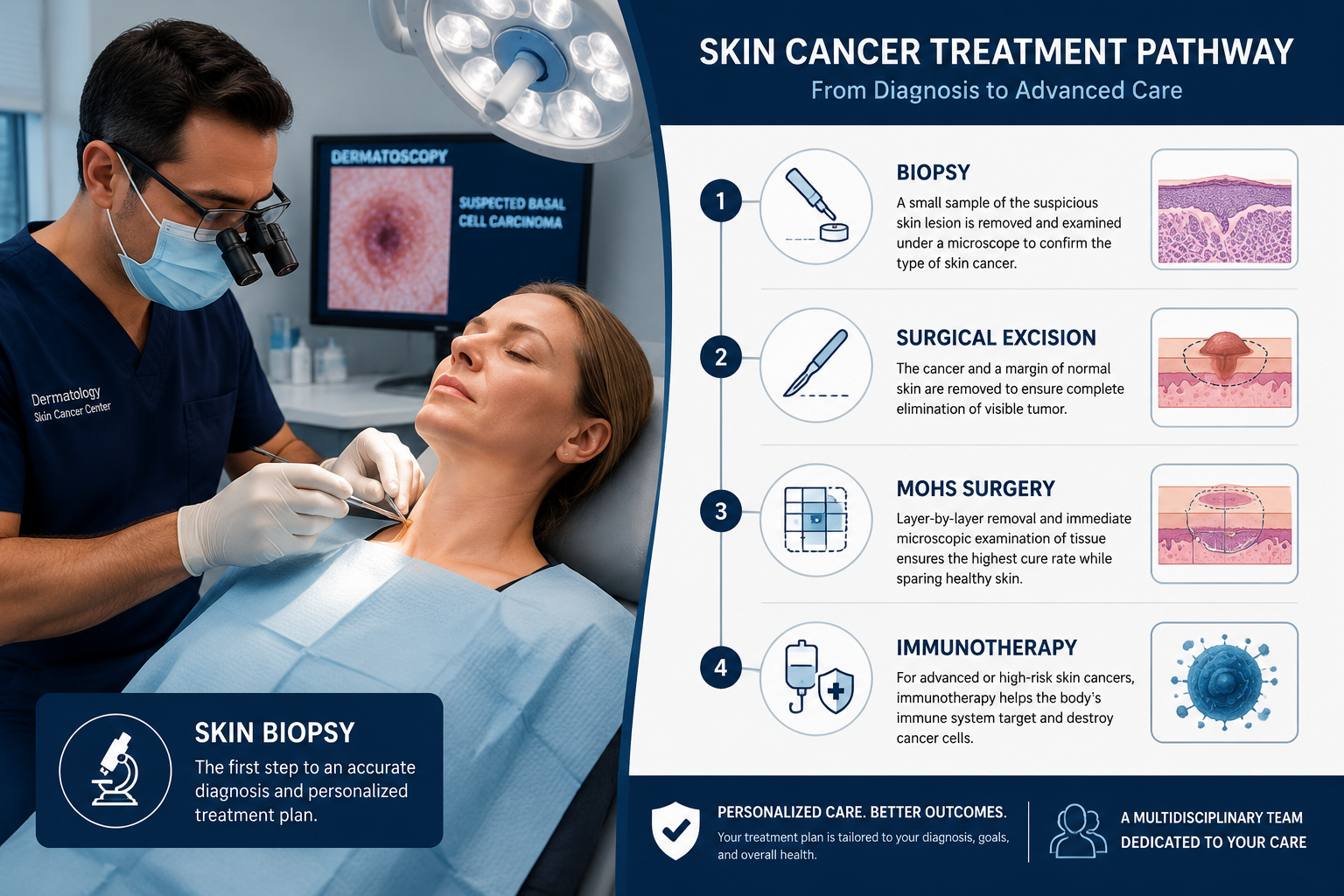
For advanced or metastatic SCC and melanoma, systemic treatment is often necessary:
To learn more about melanoma-specific treatment options in Toronto, visit the Melanoma Surgery and Treatment page.
The cost of skin cancer removal on the neck varies considerably based on cancer type, lesion size, treatment method, and whether the procedure is covered by provincial health insurance.
Practical advice: If you are in Ontario and concerned about a neck lesion, seek evaluation at a clinic that accepts OHIP and can perform a biopsy to confirm the diagnosis before discussing treatment costs. Many skin cancer clinics offer no-referral access. See the Skin Cancer Clinic in Toronto for rapid-access options.
If you notice a suspicious spot on your neck, act promptly. Do not wait for it to resolve on its own, and do not attempt to treat it at home.
For guidance on finding the right clinic, see how to find a skin cancer clinic in Toronto or browse the best skin cancer screening and treatment clinics in Toronto.
The right specialist depends on the type and complexity of the skin cancer on the neck.
Choose a dermatologist or plastic surgeon if: the lesion is small, localized, and has not spread.
Choose a head and neck surgeon if: there is lymph node swelling, the lesion is deep, or the cancer is recurrent.
Prevention is straightforward in principle, though it requires consistent habits over a lifetime. The neck is one of the easiest areas to protect and one of the most commonly neglected.
Emerging detection tool: Researchers at Mass General Brigham have developed a blood test called HPV-DeepSeek that can detect HPV-associated head and neck cancers up to 10 years before symptoms appear, with 99% sensitivity and specificity [5]. While not yet in routine clinical use, this represents a significant advance in early detection.
Nutrition also plays a supporting role. See this guide on diet and skin health for evidence-based dietary strategies that may support skin health.
Q: Can skin cancer on the neck be mistaken for a skin tag?
A: Yes. Some SCCs and BCCs can resemble skin tags, especially in early stages. Any skin tag on the neck that grows, bleeds, or changes should be evaluated by a physician rather than removed at home.
Q: Does skin cancer on the neck hurt?
A: Most early-stage skin cancers are painless. Pain, tenderness, or numbness can develop as a lesion grows larger or invades deeper tissue. The absence of pain does not rule out cancer. For more detail, see does skin cancer hurt.
Q: How quickly does squamous cell carcinoma spread from the neck?
A: SCC on the neck can spread to regional lymph nodes over weeks to months if untreated, particularly in immunocompromised individuals or with high-risk tumor features. Early treatment prevents this.
Q: Is a scab or crusty spot on my neck a warning sign?
A: A persistent crusty or scabbing spot that does not heal within 4 to 6 weeks warrants evaluation. See this guide on crusty spots on skin for more context.
Q: Can melanoma appear on the neck without sun exposure?
A: Melanoma is primarily UV-driven, but it can occasionally arise in areas with less direct sun exposure due to genetic factors or other causes. Any new or changing mole on the neck should be checked.
Q: What is the survival rate for skin cancer on the neck?
A: BCC has a near-100% cure rate when treated early. Localized SCC also has excellent outcomes. Melanoma survival depends heavily on stage: stage I melanoma has a 5-year survival rate exceeding 98%, while metastatic melanoma is more serious, though immunotherapy has significantly improved outcomes in recent years.
Q: Do I need a referral to see a skin cancer specialist in Toronto?
A: No. Many specialized clinics, including The Minor Surgery Center, offer direct-access appointments without a GP referral for skin cancer evaluation and treatment.
Q: Can sunscreen alone prevent neck skin cancer?
A: Sunscreen significantly reduces risk but is most effective as part of a broader sun protection strategy that includes protective clothing, shade-seeking, and avoiding tanning beds.
Q: What is actinic keratosis and is it related to neck skin cancer?
A: Actinic keratosis is a rough, scaly patch caused by years of sun exposure. It is considered a precancerous lesion that can progress to SCC if left untreated. Common on sun-exposed areas including the neck.
Q: Is early-stage skin cancer on the neck always visible?
A: Not always. Some early lesions are subtle and may be missed without close inspection or dermoscopy. Annual professional skin checks improve early detection rates significantly.
Skin cancer on the neck is common, preventable, and highly treatable when caught early. The neck's constant sun exposure, combined with the tendency to overlook it during sunscreen application and self-exams, makes it a site where lesions can grow undetected for months or years.
The most important actions to take right now:
Early detection remains the single most powerful factor in skin cancer outcomes. A spot that takes minutes to evaluate today could require months of treatment if ignored.
[1] Index - https://www.cdc.gov/skin-cancer/statistics/index.html
[2] Skin Cancer On Neck - https://www.medicalnewstoday.com/articles/skin-cancer-on-neck
[3] Skin Cancer Of The Head And Neck - https://www.hopkinsmedicine.org/health/conditions-and-diseases/skin-cancer-of-the-head-and-neck
[4] RYBREVANT FASPRO Plus Immunotherapy Shows 56% Overall Response Rate in Head and Neck Cancer - https://www.jnj.com/media-center/press-releases/rybrevant-faspro-amivantamab-and-hyaluronidase-lpuj-plus-immunotherapy-shows-strong-clinical-benefit-with-56-percent-overall-response-rate-in-first-line-recurrent-or-metastatic-head-and-neck-cancer
[5] Blood Test Identifies HPV-Associated Head and Neck Cancers - https://www.massgeneralbrigham.org/en/about/newsroom/press-releases/blood-test-identifies-hpv-associated-head-and-neck-cancers
[6] FDA Approves Immune Checkpoint Inhibitor for Resectable Locally Advanced Head and Neck Cancer - https://www.dana-farber.org/newsroom/news-releases/2025/fda-approves-immune-checkpoint-inhibitor-drug-for-patients-with-resectable-locally-advanced-head-and-neck-cancer-backed-by-dana-farber-research
[7] Key Statistics for Basal and Squamous Cell Skin Cancers - https://www.cancer.org/cancer/types/basal-and-squamous-cell-skin-cancer/about/key-statistics.html
[8] Skin Cancer in African Americans - https://pubmed.ncbi.nlm.nih.gov/9707236/
[9] Subcutaneous Amivantamab 45% Overall Response Rate in Head and Neck Cancer - https://www.jnj.com/innovativemedicine/us/media-center/press-releases/subcutaneous-amivantamab-delivers-promising-45-percent-overall-response-rate-with-median-duration-of-7-2-months-in-recurrent-or-metastatic-head-and-neck-cancer