
Red light therapy is one of the most searched skin treatments in 2026 — and it is easy to understand why. Devices are everywhere, from high-end clinics to bedside tables. But the gap between what phototherapy red light for skin can actually do versus what social media claims it can do is significant. Knowing that difference could protect your health.
This article cuts through the noise. You will learn what red light therapy genuinely helps with, where it falls short, and — critically — why it should never be used as a shortcut for removing or "fading" moles.
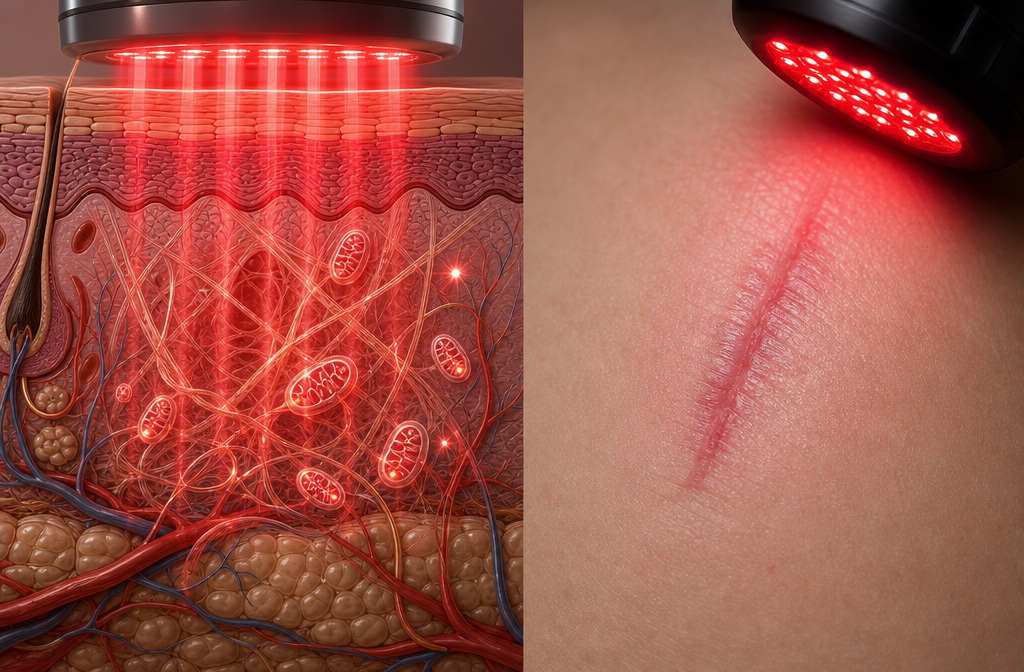
Phototherapy red light for skin works through a process called photobiomodulation. In plain terms: specific wavelengths of red and near-infrared light (typically 630–850 nanometres) penetrate the skin and interact with mitochondria — the energy-producing structures inside your cells [2].
When those mitochondria absorb the light, they release more adenosine triphosphate (ATP), which is essentially cellular fuel. Think of it like charging a battery that had been running low. That energy boost triggers a cascade of biological responses:
The result, over multiple sessions, can be measurably improved skin texture, reduced redness, and faster healing after minor procedures.
It is not magic. It is biology — and biology takes time.
Red light therapy has the strongest evidence base for:
The key word in all of this is "modest." Red light therapy is a supportive tool, not a standalone cure.
This is one of the most common questions patients ask — and the honest answer is: sometimes, partially, and with realistic expectations.
Post-surgical scars respond reasonably well to red light therapy when treatment begins early in the healing process. The light encourages collagen remodeling, which means the scar tissue becomes more organized and less raised or discoloured over time [1].
That said, results vary based on:
If you have recently had a mole removed and are wondering how to care for the healing skin, our guide on best scar care after mole removal covers the evidence on silicone, vitamin E, and petroleum jelly — all of which have stronger short-term evidence than red light for fresh post-excision scars.
Red light therapy alone is not a reliable treatment for raised scars like keloids. These require more targeted interventions — corticosteroid injections, silicone sheeting, or in some cases, surgical revision. Always discuss raised or thickened scars with a qualified clinician before choosing a treatment path.
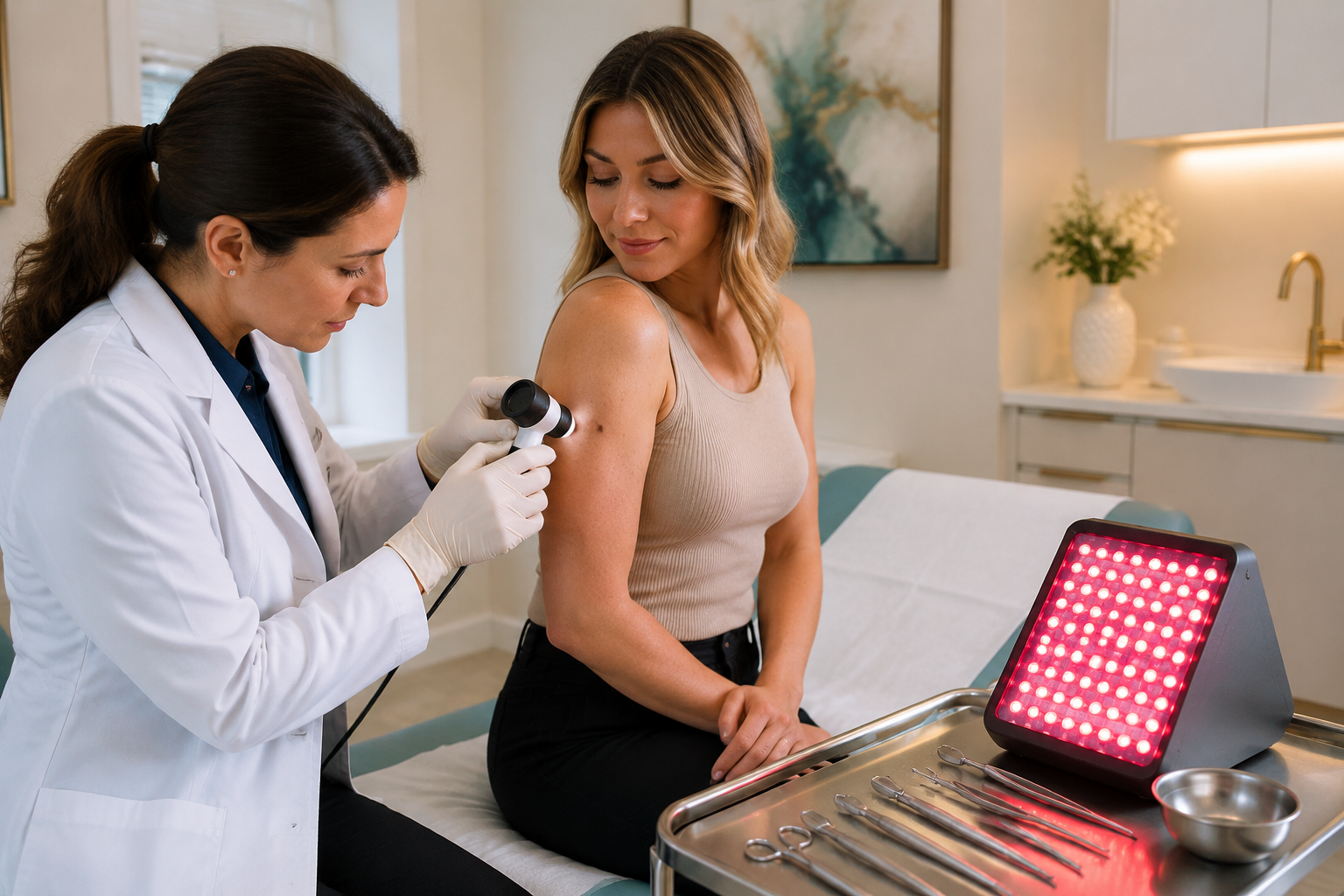
Here is where phototherapy red light for skin runs into real boundaries — and where misunderstanding it can become genuinely risky.
Sun damage (also called photodamage) shows up as dark spots, uneven tone, rough texture, and in more serious cases, pre-cancerous lesions called actinic keratoses.
Red light therapy can offer some improvement in general skin tone and texture related to mild photodamage. But for diffuse or significant sun damage, dermatologists consistently recommend more targeted options, including:
TreatmentBest ForIntense Pulsed Light (IPL)Brown spots, redness, uneven toneAlexandrite LaserPigmented lesions, frecklesCO2 Laser ResurfacingDeep wrinkles, significant texture damageRed Light TherapyMild texture, collagen support, wound healing
The University of Florida's Department of Dermatology recommends IPL, Alexandrite laser, and CO2 resurfacing as the primary clinical approaches for diffuse photodamage [3]. Red light therapy is not listed as a first-line treatment for this indication.
If you are concerned about spots that have appeared or changed with sun exposure, it is worth getting a proper skin assessment. Our team offers skin biopsy and skin cancer screening to help rule out anything serious before pursuing cosmetic treatments.
This is the most important section of this article. Full stop.
Red light therapy does not effectively fade moles. The evidence simply does not support it [4]. Pigmented moles (nevi) are made of melanocyte clusters — specialized cells that produce melanin. Red light wavelengths do not target melanin the way dedicated pigment lasers do.
Devices like the MedLite laser use specific wavelengths designed to break down pigment in moles [4]. Red light therapy panels do not work this way.
But here is the bigger concern: attempting to treat a mole at home with any device — red light or otherwise — can mask changes that need medical attention. Moles that shift in colour, shape, or size could be early signs of melanoma. Delaying a proper assessment because you have been "treating" the mole at home is a risk no one should take.
If you have a mole you want assessed or removed, the right step is a clinical evaluation. Our mole removal specialists in Toronto have performed over 9,000 procedures and can give you a clear, honest picture of what you are dealing with.
It is also worth understanding what a benign mole actually looks like — and what changes should prompt a visit sooner rather than later.
The market for at-home red light therapy devices has grown rapidly. Many are FDA-cleared for specific uses like mild acne. But there are important caveats.
Home devices typically operate at a fraction of the irradiance (light intensity) of clinical equipment. This means results, if any, are more subtle and take considerably longer [6].
A practical note on cost: In-clinic red light therapy sessions typically range from $25 to $250 per session depending on the provider and protocol [2]. For conditions where it is genuinely indicated, a professional course of treatment is likely to deliver meaningfully better results than a home device.
Red light therapy has a good overall safety record. The most commonly reported side effect is mild, temporary redness (erythema) after a session [2]. It does not use UV light, so it does not carry the same skin cancer risk as UV-based therapies.
That said, it is not appropriate for everyone. People with certain photosensitive conditions, those on medications that increase light sensitivity, or those with active skin infections should consult a clinician before starting treatment [7].
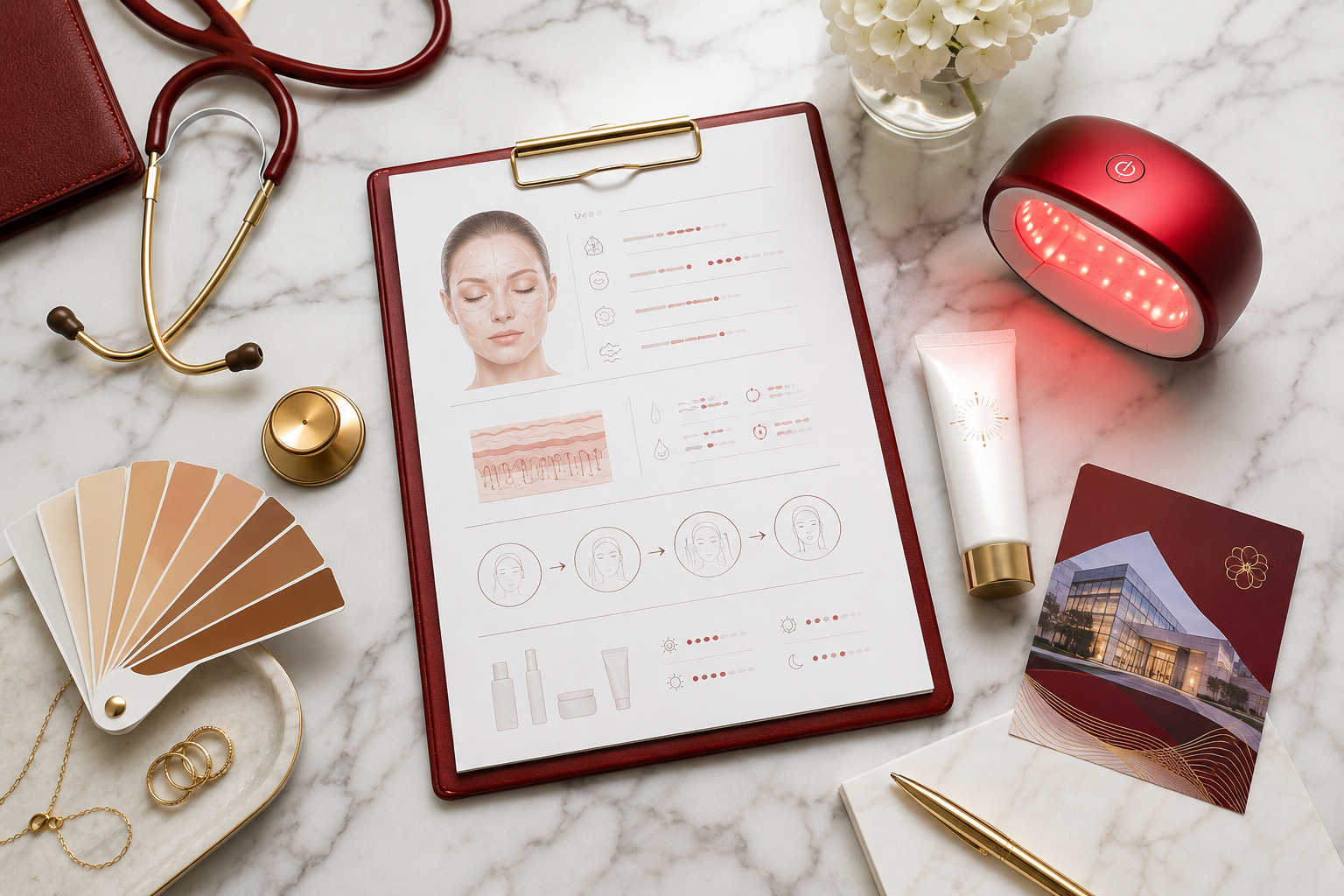
Red light therapy can be a useful part of a broader skin health strategy. But it is one tool — not a complete solution, and certainly not a substitute for professional evaluation of skin changes.
Here is a simple guide to help you decide:
Consider red light therapy if you:
See a clinician first if you:
Our board-certified surgical team offers expert outpatient care with a comfort-first approach. Whether you need a mole assessed, a cyst removed, or a personalised treatment plan for a skin concern, the process is straightforward and efficient.
For patients in the Greater Toronto Area, we have clinics in Brampton, Concord, Maple, and Oakville — so expert care is never far away.
Phototherapy red light for skin is a legitimate, science-backed tool with a real — if limited — role in skin health. It can support collagen production, help with mild scarring, and complement a broader skincare routine. But it is not a treatment for moles, it is not a replacement for clinical sun damage therapies, and it should never be used to avoid getting a suspicious lesion properly checked.
The safest and most effective approach is always the same: get a professional assessment first, then build a treatment plan around what your skin actually needs.
If you have a mole, scar, or skin change that concerns you, do not wait. Book a consultation with our experienced surgical team and get back to your life with confidence and clarity.
[1] Red Light Therapy Acne Scars Treatment Guide - https://www.thelighttherapyinstitute.com/articles/red-light-therapy-acne-scars-treatment-guide?utm_source=openai
[2] Red Light Therapy - https://www.skinceuticals.com/professional-treatments/red-light-therapy.html?utm_source=openai
[3] Sun Damage - https://dermatology.med.ufl.edu/patient-care/cosmetic/sun-damage/?utm_source=openai
[4] Medlite - https://www.upmc.com/Services/dermatology/cosmetic-skin/services/laser/medlite?utm_source=openai
[5] LED Light Therapy - https://my.clevelandclinic.org/health/treatments/22146-led-light-therapy?utm_source=openai
[6] Phototherapy For Acne - https://www.webmd.com/skin-problems-and-treatments/acne/phototherapy-for-acne?utm_source=openai
[7] Red Light Therapy - https://my.clevelandclinic.org/health/articles/22114-red-light-therapy?utm_source=openai
Meta Title: Phototherapy Red Light for Skin: Scars, Moles & Sun Damage
Meta Description: Can red light therapy safely fade scars, moles, or sun damage? Learn what phototherapy can and can't do — and when to see a specialist instead.
Tags: red light therapy, phototherapy for skin, photobiomodulation, scar treatment, mole removal, sun damage treatment, LED light therapy, skin rejuvenation, post-surgical scar care, skin pigmentation, outpatient skin care, minor surgery Toronto