
Last updated: August 11, 2026
Mole removal on the face is typically done through a shave excision, punch excision, or surgical excision performed by a dermatologist or trained physician, chosen based on the mole's size, depth, and whether it looks suspicious. Most facial moles come off in a single office visit under local anesthetic, with healing taking one to three weeks and a low but real chance of a visible mark. Cost, method, and scarring outcomes depend heavily on whether the removal is medical (covered) or cosmetic (out of pocket).
The best method for facial mole removal is usually a shave excision for raised moles or a punch/surgical excision for flat or deeper moles, because both allow precise control over depth and can send tissue to a lab for pathology confirmation [1] [9]. The right choice depends on the mole's size, whether it is flat or raised, and whether it shows any warning signs.
Dermatologists generally pick between three standard techniques:
Cryotherapy (freezing) and electrosurgery are sometimes used for very small, clearly benign facial spots, but most clinicians avoid them on the face when a mole has any irregular features, since these methods do not always allow a tissue sample for pathology [1].
Choose shave excision if the mole is raised and clearly benign. Choose punch or surgical excision if the mole is flat, larger than 4-5mm, or has any color or border irregularity that warrants a biopsy. A common mistake is assuming laser or freezing is "gentler", in reality, these methods are reserved for cosmetic, low-risk spots because they destroy tissue rather than preserving it for lab analysis [4].
Facial mole removal typically costs between $150 and $600 CAD per mole at private minor surgery clinics, with the final price depending on mole size, technique, and whether pathology testing is included. Medically necessary removals billed through provincial health coverage may cost the patient nothing, while cosmetic removals are almost always out of pocket.
Price generally shifts based on:
FactorEffect on PriceMole size and depthLarger or deeper moles need more surgical timeTechnique usedShave excisions often cost less than surgical excision with suturesPathology testingAdds lab fees but is standard for anything atypicalNumber of moles removedMultiple moles in one visit may lower the per-mole costCosmetic vs. medical intentCosmetic removal is rarely covered by insurance
For a detailed local breakdown, see this guide on how much mole removal costs in Toronto or use the free mole removal cost estimator tool to get a personalized estimate before booking.
Edge case: if a mole looks suspicious, most clinics will remove it as a medical procedure with pathology testing included, which shifts the cost conversation away from cosmetic pricing entirely, since a biopsy for a concerning lesion is typically considered medically necessary.
No. Dermatologists strongly advise against removing a facial mole at home, because DIY methods like cutting, freezing kits, or "mole removal" creams and pens carry real risks of infection, scarring, and missed skin cancer diagnosis [1]. There is no safe home method for full mole removal on the face.
The core problem with home removal is that a mole cannot be visually confirmed as benign without professional examination and, often, laboratory testing. Cutting or burning a mole at home:
Common mistake: people try to "shave" a facial mole with a razor or nail clipper because it looks simple. This can cause heavy bleeding on the face (which has a rich blood supply) and does not remove the root of the pigment cells, so the spot often returns looking irregular.
If a mole is bothersome or changing, the safer path is a same-day consultation with a minor surgery clinic rather than a home fix.
No credible clinical evidence supports over-the-counter mole removal creams as a safe or effective way to remove a facial mole. These products work by chemically burning the skin's surface, and dermatologists do not recommend them because they cannot confirm what tissue is being destroyed [1].
Mole removal creams typically contain caustic ingredients that irritate or scab the skin. Problems include:
For a full breakdown of why these products fall short, read do mole removal creams work. Similar caution applies to mole removal pens marketed for at-home use; see do mole removal pens work for details on why these devices carry the same risks as creams.
Choose a clinic-based removal instead if the mole is on visible facial skin, since a botched cream application can leave a permanent discolored patch that is harder to correct than the original mole.
Surgical removal (shave, punch, or excision) is generally the better option for most facial moles because it allows pathology testing, while laser removal is best reserved for flat, clearly benign moles where cosmetic appearance is the only concern [4]. Laser cannot confirm what the mole actually is under a microscope.
Here is how the two methods compare directly:
FeatureLaser RemovalSurgical RemovalBest forSmall, flat, confirmed-benign molesAny mole, including raised or atypical onesPathology sampleNot availableAvailable for lab testingNumber of sessionsOften multiple sessions neededUsually one sessionScarringCan be minimal on shallow molesSmall, controlled scar with proper techniqueSuitable for suspicious molesNoYesRecovery timeDays to about a weekOne to three weeks
Laser treatment uses focused light to break down pigment in the uppermost skin layers, which works well cosmetically for shallow, benign spots but leaves nothing behind to test if a mole later turns out to have atypical cells [4]. Surgical excision, by contrast, removes the full structure of the mole in one pass and is considered the standard for anything with color variation, irregular borders, recent growth, or family history of skin cancer [1] [9].
Decision rule: choose laser only if a dermatologist has already confirmed the mole is benign through visual exam or prior biopsy and the goal is purely cosmetic. Choose surgical removal if there is any uncertainty about the mole's nature, or if it is raised, itchy, bleeding, or changing.
For a deeper look at laser-specific mole removal, see the comparison of laser mole removal methods and results [4].
Medically necessary mole removal, meaning a mole that is suspicious, changing, symptomatic, or otherwise flagged by a physician, is generally covered under provincial health insurance in Canada, while purely cosmetic mole removal is not [8] [9]. Coverage depends on medical necessity, not personal preference.
A mole removal is typically classified as medical (and covered) when it:
A mole removal is typically classified as cosmetic (and billed privately) when it:
Edge case: a mole that a patient wants removed for cosmetic reasons but that also shows a minor irregularity may still qualify for coverage if a physician documents medical concern during assessment. It is worth having any facial mole formally evaluated before assuming it is purely cosmetic.
Surface healing from facial mole removal generally takes one to three weeks, while the skin can continue to remodel and fade for several months afterward. Recovery time depends on the removal method, the mole's size, and how well aftercare instructions are followed.
Typical recovery timeline:
Shave excisions tend to heal faster than surgical excisions with sutures, since there is no deep wound to close. Stitched excisions usually require a follow-up visit in 5-10 days for suture removal, depending on facial location.
Common mistake: resuming heavy sun exposure or exercise too soon, which can stretch the healing wound or darken the healing skin. For specifics on safe timing, see when can you shower after mole removal, when can you exercise after mole removal, and the full breakdown in how long does mole removal take to heal.
Patients who are curious whether the procedure itself is painful can review does mole removal hurt for a clear explanation of what to expect during the appointment.
The main risks of facial mole removal include scarring, infection, temporary or permanent skin discoloration, and, rarely, incomplete removal requiring a second procedure. These risks are generally low when the procedure is done by a trained clinician using sterile technique [1] [9].
Specific risks to understand:
Decision rule: the risk of doing nothing about a suspicious mole (potential delayed skin cancer diagnosis) generally outweighs the cosmetic risk of a small scar. This is why dermatologists weigh medical necessity heavily when advising on removal timing [8].
A facial mole should be removed when it shows signs of change, bleeding, irregular borders, multiple colors, rapid growth, or persistent itching, or when it causes ongoing physical irritation such as from shaving or glasses [8]. Purely cosmetic removal is a personal choice once a mole is confirmed benign.
According to dermatology guidance, the ABCDE warning signs remain the standard screening framework [8]:
Beyond warning signs, moles are also commonly removed when they are in a spot that catches on jewelry, makeup application, or razors, causing repeated irritation or minor bleeding.
Choose removal now if a mole meets two or more ABCDE criteria, do not wait for a routine annual check. Choose a wait-and-monitor approach if the mole is stable, symmetric, and has looked the same for years, though periodic self-checks are still worthwhile; see how to check a mole at home for a simple self-exam method. Understanding the different types of moles on the face can also help patients recognize what is typical versus what needs attention.
Yes, in most cases a dermatologist or minor surgery physician can assess and remove a facial mole during the same visit, particularly at rapid-access clinics that do not require a referral. Same-visit removal is standard for straightforward shave or punch excisions [9].
What allows same-day removal:
Some situations require a two-step process instead: an initial visit for assessment and biopsy, followed by a second visit for full excision if the biopsy shows atypical cells needing wider margins. This is more common for moles with concerning features rather than routine cosmetic requests.
Quick example: a patient booking a same-day appointment for a small, stable, raised mole on the cheek can typically expect assessment, numbing, shave excision, and aftercare instructions within a single 30-45 minute visit. A mole flagged as possibly atypical, by contrast, may need biopsy results back (often 1-2 weeks) before a treatment plan is finalized [10].
Clinics like Downtown Toronto Mole & Cyst Removal and other regional locations of the Minro Surgery Center are set up specifically for this rapid-access, same-visit model across the Greater Toronto Area.
Picking, scratching, or repeatedly irritating a facial mole can cause bleeding, inflammation, scabbing, infection, and in some cases a change in the mole's appearance that makes it harder to evaluate for skin cancer risk. Picking is never a substitute for proper removal.
Consequences of picking at a mole include:
Common mistake: assuming that picking off a raised mole is a form of "self-removal." This does not remove the pigment-producing cells at the base and often results in the mole returning, looking worse, and now carrying a scar on top of the original spot.
Anyone who has picked at a facial mole and noticed changes, prolonged bleeding, or a spot that will not heal should have it professionally assessed rather than continuing to disturb it.
Facial mole removal scars can be minimized through proper wound care, sun protection, and, when appropriate, silicone or scar-specific treatments started once the wound has fully closed. Scar outcome depends heavily on technique, mole size, and aftercare compliance [1].
Practical steps to reduce visible scarring:
Scar appearance also depends on which technique was used. Shave excisions on flat facial skin often heal to a barely visible mark, while larger surgical excisions may leave a fine line that fades significantly over 6-12 months.
For a complete walkthrough of scar care by stage, see mole removal scars: how to minimize and treat them effectively. Anyone specifically focused on the appearance outcome may also find cosmetic mole removal for smooth, even skin useful for setting realistic expectations.
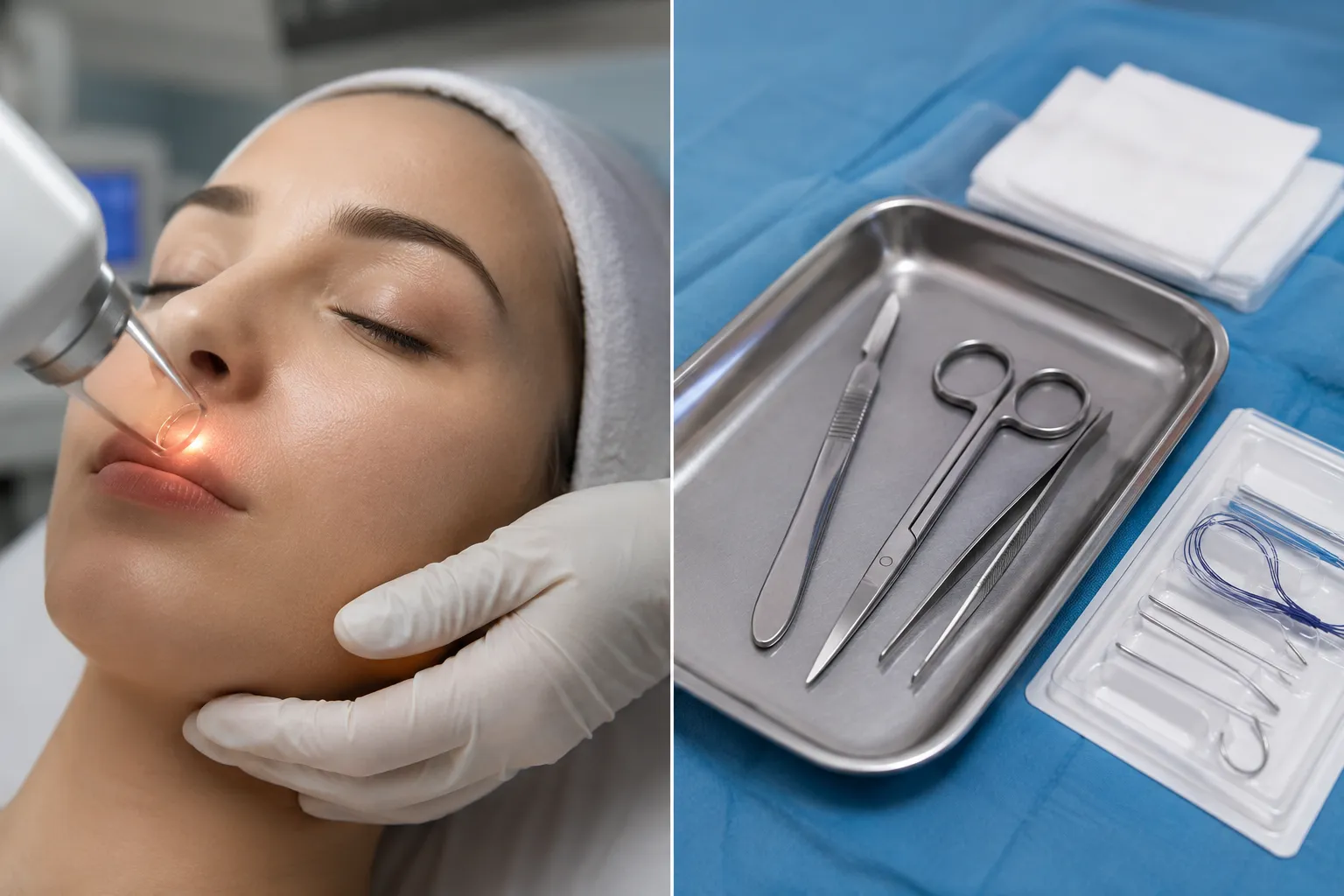
It is uncommon but possible for a mole to reappear or leave a faint mark after removal, usually because some pigment-producing cells remained at the base of the original lesion. A fully excised mole with clear surgical margins should not regrow.
Reasons a mole might seem to "come back":
If a spot regrows with new irregular features, that is a signal to have it re-evaluated rather than assumed to be simple regrowth, since any recurring pigmented lesion deserves a fresh clinical look [9].
For a detailed explanation of why this happens and when to worry, read do moles grow back after removal and when moles change after removal: normal healing vs. warning signs.
Mole removal is not appropriate, or should be delayed, for people with active skin infections at the treatment site, certain bleeding disorders without medical clearance, or moles that are actively being monitored as part of a diagnostic workup where premature removal could complicate biopsy interpretation. A physician consultation should precede any removal decision.
Situations where removal should be paused or reconsidered:
Decision rule: if there is any uncertainty about whether removal is safe given a medical condition or medication, the correct step is a consultation rather than proceeding directly to a procedure. A qualified minor surgery clinic will screen for these factors before booking a removal.
Use this checklist to prepare for a facial mole removal consultation:
Does mole removal on the face leave a scar?
Most techniques leave some mark, but shave excisions on flat facial skin often heal to a barely visible line, especially with good aftercare and sun protection.
How painful is facial mole removal?
The area is numbed with local anesthetic before the procedure, so most patients feel pressure rather than pain during removal, with mild soreness afterward.
Can a mole be removed and tested for cancer at the same time?
Yes. Excised tissue is routinely sent for pathology testing when there is any concern, allowing removal and diagnosis in a single procedure [9] [10].
Is it safe to use makeup over a healing mole removal site?
Makeup should generally be avoided until the wound has fully closed, since applying products to open or scabbed skin raises infection and irritation risk.
How soon can stitches be removed after facial mole excision?
Facial sutures are typically removed around 5 to 7 days after the procedure, sooner than sutures on other body areas because facial skin heals quickly.
Can I remove a facial mole for purely cosmetic reasons?
Yes, once a physician confirms the mole is benign, cosmetic removal is a personal choice, though it is typically billed privately rather than covered by insurance.
What is the difference between a mole check and mole removal?
A mole check is an assessment to determine whether a mole is benign or needs biopsy, while removal is the actual procedure to take the mole off, which may happen in the same visit or a follow-up one.
Do all facial moles need to be removed?
No. Stable, symmetric, evenly colored moles that have not changed do not need removal and can simply be monitored during routine skin checks [8].
Facial mole removal is a routine, well-understood procedure when handled by a qualified clinician, but the right method depends on the mole itself, not personal preference alone. A raised, clearly benign mole may be an easy shave excision, while anything showing ABCDE warning signs needs a proper biopsy and possibly a surgical excision with pathology testing [1] [8] [9]. Skipping professional evaluation in favor of creams, pens, or DIY picking trades a small amount of convenience for real risks: infection, poor scarring, and, in the worst case, a missed skin cancer diagnosis.
The practical next step is straightforward: get any changing, irritating, or cosmetically unwanted facial mole assessed by a dermatologist or minor surgery clinic before deciding on a removal method. Bring notes on when the mole changed, ask directly whether pathology testing is included, and follow aftercare instructions closely to support the best scar outcome. For those in the Greater Toronto Area, the Minro Surgery Center offers same-visit assessment and removal across multiple locations, making it straightforward to move from consultation to treatment without unnecessary delay.
[1] Moles Treatment - https://www.aad.org/public/diseases/a-z/moles-treatment
[2] Doctors That Remove Moles - https://chernoffcosmeticsurgery.com/doctors-that-remove-moles/
[3] Mole Removal - https://imedic.health/en/treatment/mole-removal
[4] Laser Mole Removal Is It Right For You Comparing Methods And Results - https://www.doctronic.ai/blog/laser-mole-removal-is-it-right-for-you-comparing-methods-and-results/
[5] Mole Removal - https://cosmeticdermatologystlouis.com/mole-removal/
[6] Mole Removal - https://melasmaclinic.com.au/mole-removal/
[7] Mole Removal What To Know - https://www.westlakedermatology.com/blog/mole-removal-what-to-know/
[8] When Is A Mole A Problem - https://www.aad.org/public/diseases/a-z/when-is-a-mole-a-problem
[9] Mole Treatment - https://my.clevelandclinic.org/services/mole-treatment
[10] Full - https://www.frontiersin.org/journals/medicine/articles/10.3389/fmed.2026.1761270/full