
Last updated: August 12, 2026
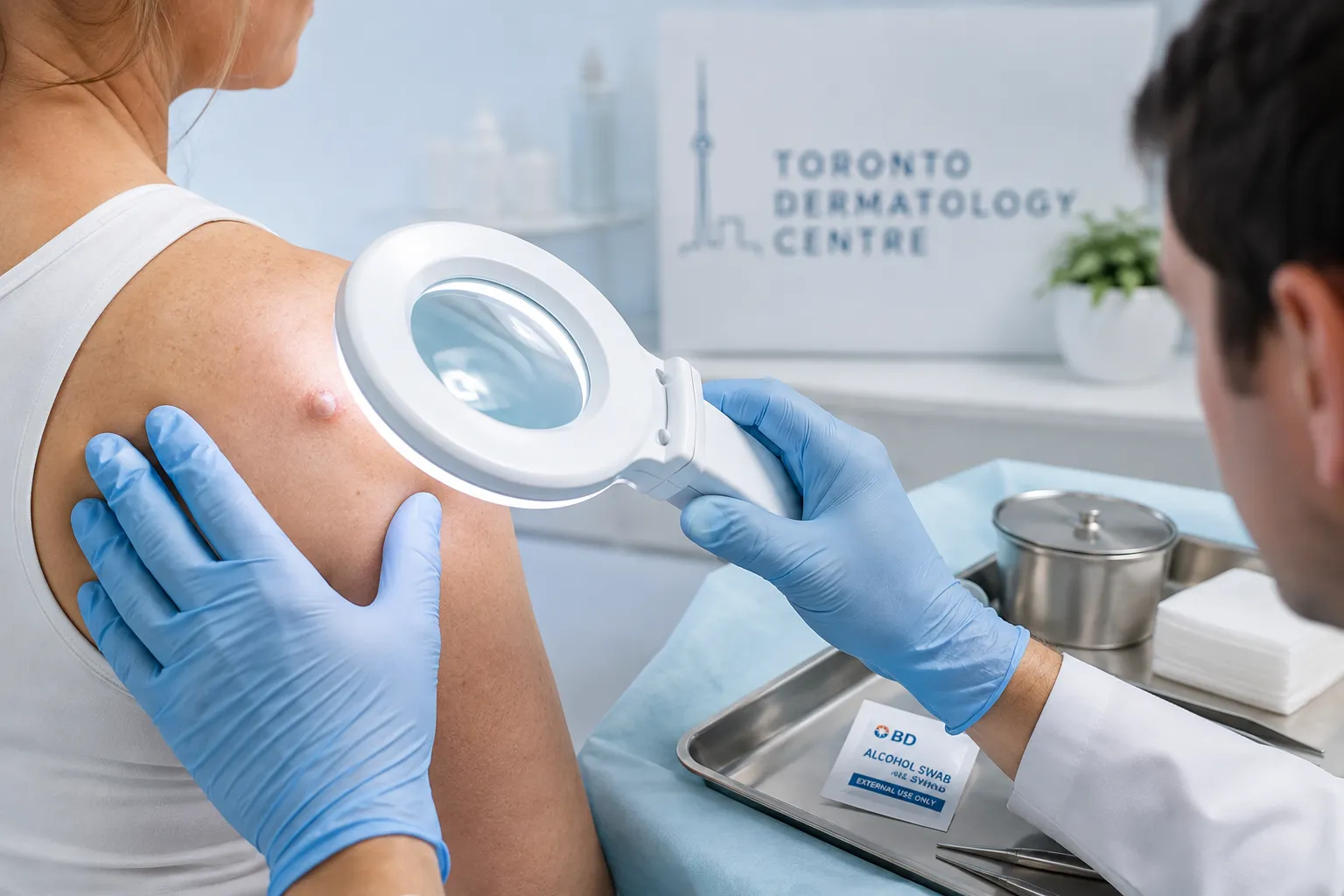
Infected cyst treatment in Toronto usually starts with a walk-in clinic or family doctor for antibiotics, but a genuinely infected, fluctuant, or recurring cyst often needs incision and drainage from a dermatologist or minor surgery clinic. Most straightforward cases resolve within one to two weeks with the right combination of antibiotics and drainage, while untreated infections can progress to a larger abscess or spreading skin infection (cellulitis). If a cyst is hot, rapidly swelling, or draining pus, same-day assessment matters more than which specific clinic you pick.
An infected cyst is a benign skin-lined sac, most often an epidermoid or sebaceous-type cyst, that has become colonized by bacteria, usually after the sac ruptures internally or gets irritated by friction, shaving, or squeezing. A regular, uninfected cyst is typically a soft, painless, slow-growing lump that stays the same size for months or years without warning signs of infection.
The practical differences show up fast once bacteria get involved:
Most cysts that end up infected started as epidermoid or sebaceous cysts on the scalp, back, neck, or groin, areas prone to friction and bacteria exposure. Understanding the underlying cyst type matters for treatment planning, and the distinction between epidermoid and sebaceous cysts affects how a clinic approaches removal once the infection has settled.
Decision rule: if a lump has been stable and painless for weeks, it is likely a simple cyst that can be monitored. If it changes character, becomes red, hot, or painful within a day or two, treat it as a probable infection and seek assessment.
A cyst is likely infected if it becomes red, warm to the touch, swollen, and painful, especially if it starts draining pus or smells foul. These four signs, redness, heat, swelling, pain, are the classic markers doctors look for, sometimes remembered as the cardinal signs of local infection.
Watch for this progression:
Other warning signs that point to a more serious problem include red streaking away from the cyst (a sign of spreading cellulitis or lymphangitis), a cyst that doubles in size within 24 hours, or pain severe enough to disrupt sleep.
Common mistake: people often assume any tender lump under the skin is "just a pimple" and try to pop it at home. Squeezing an infected cyst can push bacteria deeper into tissue and worsen the infection rather than resolve it.
Quick example: a back cyst that has been present for a year suddenly becomes red and throbs after a workout involving a heavy backpack. This pattern, friction plus a pre-existing cyst, is a textbook trigger for infection and usually warrants same-week assessment rather than home treatment alone.
A cyst is a sac with a distinct wall, usually lined with skin cells, that exists whether or not it is infected. An abscess is a pocket of pus that forms in response to infection and does not have that same organized cyst wall, it can develop inside a previously healthy cyst or in tissue that never had a cyst at all.
Here is a simple way to separate the two:
FeatureCystAbscessOriginPre-existing sac lined with epithelial tissueForms only as a response to infectionContentsKeratin, oily material, or clear fluidPus, dead white blood cells, bacteriaPain level (uninfected)Usually painlessNot applicable, abscesses are inherently inflamedWall structureDistinct, removable sac wallIrregular pocket, no true capsuleTypical treatmentExcision (removal of the whole sac)Incision and drainage
In real-world cases, an infected cyst often behaves like a hybrid: the original cyst wall is still present, but pus has accumulated inside or around it, creating abscess-like symptoms. This is why a clinic may need to drain the infection first and remove the cyst wall later, once swelling has settled, draining alone without removing the wall frequently leads to recurrence.
Edge case: a cyst that ruptures internally without obvious infection can still cause an intense inflammatory reaction that looks identical to an infected abscess on exam. A clinician typically cannot tell the two apart with certainty until the area is drained or imaged.
Cysts get infected when bacteria, most commonly Staphylococcus species that live naturally on skin, enter the sac through a break in the overlying skin, or when the cyst ruptures internally and the body's inflammatory response gets compounded by bacterial contamination. Friction, trauma, shaving, and squeezing are the most common triggers.
Typical causes include:
Location matters too. Armpit and groin cysts get infected more often because of moisture, friction, and dense bacterial flora in those areas. For readers dealing specifically with a cyst under the arm, the mechanics of infection and treatment are covered in more depth in the guide to armpit cyst removal surgery.
Choose extra caution if: the cyst sits in a skin fold, near a joint, or on the scalp under hair, since these locations are harder to keep clean and monitor for early infection signs.
A mildly irritated cyst can sometimes settle down on its own with warm compresses and good hygiene, but a genuinely infected cyst, one with spreading redness, pus, fever, or increasing pain, rarely resolves without antibiotics or drainage. Waiting too long increases the risk of the infection deepening or spreading.
What can reasonably be tried at home:
What home care cannot fix:
Decision rule: try home care for 24 to 48 hours only if symptoms are mild (slight tenderness, minimal redness, no fever). If things are not improving in that window, or symptoms worsen at any point, see a doctor rather than continuing to wait.
An untreated infected cyst typically gets worse before it gets better: the infection can progress into a larger abscess, spread into surrounding tissue as cellulitis, or in rare cases enter the bloodstream. Scarring is also more likely and often more extensive when treatment is delayed.
The realistic progression without treatment looks like this:
Common mistake: assuming that once a cyst "pops" on its own, the problem is solved. Spontaneous rupture releases pressure and pain relief, but if the cyst wall and any remaining bacteria are not properly cleaned out, the infection frequently comes back within weeks.
Edge case: people with diabetes, autoimmune conditions, or those on immunosuppressive medication are at higher risk of rapid progression and should seek care sooner rather than trying home management, even for what looks like a mild infection.

Infected cyst treatment generally falls into three categories, oral antibiotics, incision and drainage, and surgical excision of the cyst wall, and most real-world cases combine at least two of these depending on severity and whether the infection recurs. The right combination depends on how advanced the infection is and whether pus has already pocketed.
Antibiotics alone work best for early-stage infections without a well-formed pocket of pus, mild redness and tenderness without fluctuance. A course typically runs five to ten days. Antibiotics alone are not effective once a true abscess has formed, because oral medication cannot fully penetrate a walled-off pocket of pus.
Incision and drainage (I&D) is the standard treatment once pus is present. A clinician numbs the area, makes a small incision, and drains the pocket, sometimes packing the wound to keep it open for continued drainage over the following days. This relieves pressure and pain quickly, often within hours, but it does not remove the underlying cyst wall, meaning the cyst itself can return once the infection clears.
Surgical excision removes the entire cyst sac, including its wall, and is usually done after the acute infection has settled (typically four to six weeks later) to reduce the risk of the cyst coming back. Removing an actively infected cyst wall surgically is riskier and technically harder because inflamed tissue bleeds more and is harder to separate cleanly from surrounding skin.
ApproachBest forSpeed of reliefRecurrence riskAntibiotics onlyEarly, non-fluctuant infectionSlow (days)Moderate if pus already presentIncision and drainageFluctuant abscess with visible pusFast (same day)High, cyst wall remainsSurgical excisionAfter infection clears, to prevent recurrenceNot urgentLow when full wall is removed
Choose this path if: you have a small, early, non-fluctuant cyst with mild redness, start with antibiotics and warm compresses under a doctor's guidance. Choose drainage if there is a visible or palpable pocket of pus. Plan for excision afterward if you want to prevent the same cyst from coming back, since dermatologists are often cautious about removing a cyst immediately during an active infection and prefer to wait until swelling resolves.
For infected cyst treatment in Toronto, walk-in clinics and urgent care are appropriate for same-day antibiotics and straightforward drainage, while dermatologists and minor surgery clinics are better suited for cysts that recur, sit in tricky locations, or need the cyst wall fully removed after infection clears. Choosing the right starting point saves time and reduces the number of appointments needed.
Walk-in clinics and urgent care are the fastest entry point when a cyst becomes red, painful, or starts draining, especially outside regular office hours. Most can:
Dermatologists and minor surgery clinics are the better choice when:
Choose a walk-in clinic if: symptoms just started, the swelling is small, and there is no fever, get antibiotics started immediately and follow up if it does not improve within 48 to 72 hours.
Choose a dermatologist or minor surgery clinic if: this is a repeat infection at the same site, the cyst is large, or a walk-in clinic has already drained it once and it came back. Learn what to look for when comparing options in this guide on how to choose the best cyst removal clinic in Toronto.
Common mistake: going straight to an emergency room for a mild, early-stage infected cyst. Emergency departments are appropriate for high fever, rapidly spreading redness, or infections in immunocompromised patients, not for a small, localized, early infection that a walk-in clinic or dermatologist can handle just as effectively and usually faster.
The best clinics for infected cyst treatment in Toronto are ones with same-week or same-day appointment access, on-site minor surgery capability (so drainage and later excision can happen without multiple referrals), and clinicians experienced specifically in cyst-related procedures rather than general skin checks. Dermatology-led minor surgery centers often fit this profile well because they combine diagnostic skill with hands-on procedural capacity.
When evaluating a clinic, look for these practical markers:
For readers in the Toronto core, downtown Toronto mole and cyst removal services are a practical starting point when a cyst needs both drainage and later removal in one relationship rather than bouncing between providers. Those looking specifically for a dermatologist rather than a general minor surgery clinic can compare options through this directory of dermatologists across Toronto, which is useful when a referral is required for OHIP-covered assessment.
Decision rule: if the cyst is actively draining pus right now, prioritize the clinic with the soonest same-day or next-day slot over one with a slightly better reputation but a two-week wait. Once the acute infection is controlled, reputation and experience matter more for the excision step.
For Ontario residents with a valid OHIP card, medically necessary treatment of an infected cyst, including the doctor's visit, antibiotics prescription, and incision and drainage, is generally covered and should not involve a direct clinic fee, though prescription medication costs are separate unless covered by additional insurance. Costs arise mainly when patients choose elective, non-OHIP-covered excision of the cyst wall after the infection has cleared, or when they see a private clinic outside the public system.
Rough cost patterns to expect (estimates only, based on typical private minor-surgery clinic pricing in the Toronto area; always confirm directly with a clinic before booking):
For a fuller breakdown of what drives cyst removal pricing generally, cyst size, location, whether it's a first-time or recurrent removal, see this guide on how much it costs to remove a cyst in Ontario. A related resource covering cyst removal costs more broadly is available at how much it costs to remove a cyst.
Common mistake: assuming that because the initial drainage was free under OHIP, the follow-up excision to prevent recurrence will also be automatically covered. Coverage depends on medical necessity versus elective removal, and clinics should clarify this before the procedure, not after.
Edge case: if a cyst is in a cosmetically sensitive area (face, neck) and a patient wants a specific surgical technique for scarring reasons, that preference may shift the procedure into elective territory even if the underlying infection was medically treated under OHIP.
Most infected cysts start improving within 48 to 72 hours of starting antibiotics or having the abscess drained, with full resolution of the acute infection typically taking one to two weeks. Complete recovery, including any later excision of the cyst wall, can take four to six weeks total when both stages are needed.
Typical timeline:
Aftercare that speeds recovery and reduces recurrence:
Common mistake: stopping antibiotics as soon as pain disappears. Bacteria can still be present even after symptoms improve, and an incomplete course increases the chance of recurrence or antibiotic resistance.
Quick example: a patient with a drained scalp cyst feels fine by day four and stops the antibiotic course early. Two weeks later the same spot swells again, a pattern seen often enough that most clinics specifically warn against early discontinuation.
Use this checklist to decide where and how quickly to seek infected cyst treatment in Toronto:
For anyone weighing whether a lump is truly a cyst at all versus another type of growth, it's worth reviewing background on the general condition page for sebaceous cysts, which outlines how these common cysts typically present before infection sets in.
Can I pop an infected cyst myself at home?
No. Popping an infected cyst at home risks pushing bacteria deeper into the tissue, worsening the infection, and increasing scarring. Professional drainage uses sterile technique and proper instruments, which reduces these risks significantly.
Do all infected cysts need antibiotics?
Not necessarily. Very mild, early-stage infections without pus formation sometimes resolve with warm compresses and close monitoring, but this should be confirmed by a clinician rather than assumed, since untreated infections can progress quickly.
Is an infected cyst an emergency?
It becomes an emergency-level concern if there is high fever, rapidly spreading redness, facial swelling near the eyes, or symptoms in someone who is immunocompromised. Otherwise, same-day or next-day clinic care is usually sufficient.
Will the cyst come back after drainage?
Yes, often, if only the pus is drained and the cyst wall is left behind. Full excision of the cyst wall, typically done once the infection has cleared, is the step that actually prevents recurrence at that specific spot.
How do I know if it's a cyst or a boil?
A boil (furuncle) usually starts as an infection of a hair follicle and has no pre-existing sac, while an infected cyst has an underlying sac that existed before infection. In practice, both can look similar on the surface, and a clinician may need to examine or drain it to tell the difference clearly.
Can a walk-in clinic remove the cyst completely?
Many walk-in clinics can drain an abscess but are not always set up for full surgical excision of the cyst wall. For complete removal after the infection clears, a dermatologist or dedicated minor surgery clinic is usually the better option.
Does OHIP cover infected cyst treatment in Toronto?
Yes, medically necessary assessment, antibiotics prescriptions, and drainage of an infected cyst are typically covered under OHIP with a valid health card. Elective excision purely for cosmetic reasons after infection clears may not be covered and should be confirmed with the clinic beforehand.
What's the difference between treating an infected cyst on the face versus the back?
Facial cysts carry higher cosmetic stakes and proximity to sensitive structures like the eyes, so many clinicians prefer a specialist for drainage and excision in that area, while back or shoulder cysts are more routinely handled at walk-in clinics due to lower complexity and easier access.
Infected cyst treatment in Toronto works best when the response matches the severity of the infection: mild, early redness can often start with a same-week doctor visit and antibiotics, while a fluctuant, draining, or recurring cyst needs prompt drainage and, eventually, full removal of the cyst wall to stop it from coming back. The biggest risk isn't picking the "wrong" clinic, it's waiting too long to get any assessment while an infection quietly worsens.
Next steps if a cyst is showing signs of infection right now:
Acting within the first 48 hours of noticing redness, warmth, or swelling gives the widest range of treatment options and generally the fastest, least complicated recovery.