
When a suspicious mole appears on your skin or a persistent rash refuses to heal, the search for a qualified dermatologist in Etobicoke becomes urgent. Yet many residents discover that accessing specialized skin care in Ontario has become increasingly challenging. With wait times stretching to a year or longer and some specialists closing their waiting lists entirely, understanding your options for dermatological care in Etobicoke has never been more important. This comprehensive guide will help you navigate the landscape of skin health services, find qualified specialists, and make informed decisions about your dermatological needs in 2026.

Ontario faces a significant dermatologist shortage that directly impacts residents seeking skin care services. As of 2021, the province had just 251 dermatologists serving approximately 14 million residents—translating to roughly one dermatologist per 55,000 people[1]. This shortage has created a healthcare access crisis that affects communities across the province, including Etobicoke.
Specialists throughout Ontario report that wait times have extended dramatically, with some patients waiting a year or longer for appointments[1]. The situation has become so severe that certain dermatologists have been forced to close their waiting lists entirely, unable to accommodate new patients[1]. This creates a challenging environment for individuals dealing with skin conditions ranging from cosmetic concerns to potentially serious medical issues.
Despite the provincial shortage, Etobicoke residents enjoy a geographical advantage. A dermatologist practicing in North York noted that "most of the dermatologists practising in the country are actually located in the GTA"[1]. As part of the Greater Toronto Area, Etobicoke benefits from this concentration of specialists, offering residents relatively better access compared to rural or northern Ontario communities.
However, "relatively better" doesn't mean adequate. The demand for dermatological services continues to outpace supply even in well-served urban areas. Understanding this reality helps patients develop realistic expectations and explore alternative care pathways when traditional dermatology appointments aren't available within reasonable timeframes.
The Ontario Ministry of Health has taken steps to expand the dermatology workforce. In 2024, all medical residency spots, including dermatology positions, were filled[1], indicating systematic efforts to train more specialists. However, the timeline from residency completion to independent practice means these efforts won't immediately resolve current access challenges.
Patients seeking a dermatologist in Etobicoke should recognize that while long-term solutions are in development, short-term strategies for accessing care remain essential.
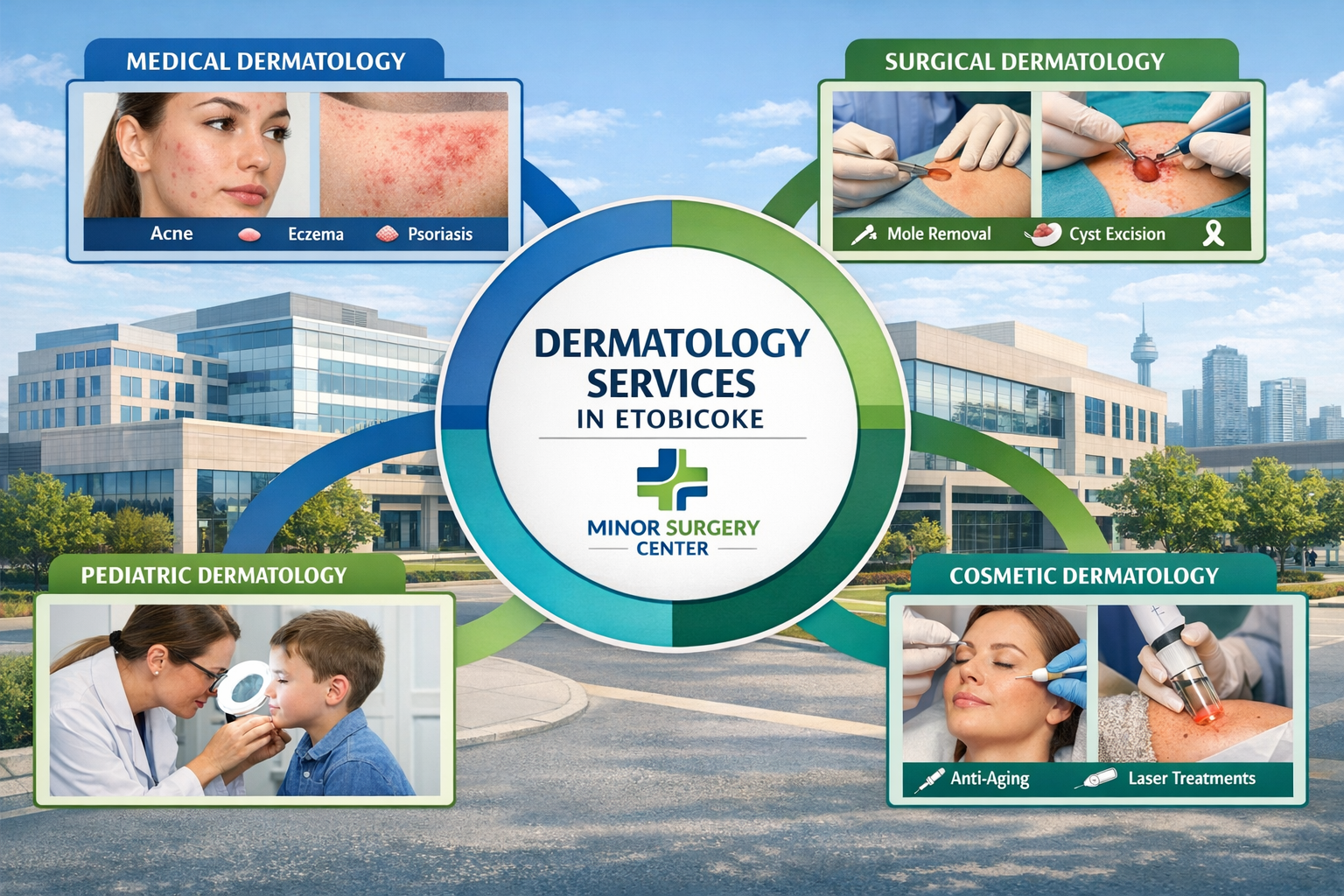
Medical dermatology focuses on diagnosing and treating skin diseases and conditions through non-surgical interventions. These services typically include:
Medical dermatologists conduct comprehensive skin examinations, prescribe medications, and develop long-term treatment plans for chronic conditions. They serve as the first line of defense for complex skin health issues requiring specialized medical knowledge.
Surgical dermatology encompasses procedures that remove, repair, or improve skin conditions through surgical intervention. Common surgical dermatology services include:
✅ Mole removal and biopsy
✅ Skin cancer excision and reconstruction
✅ Cyst removal (epidermoid, sebaceous, pilar)
✅ Lipoma excision
✅ Skin tag removal
✅ Wart treatment and removal
✅ Scar revision procedures
✅ Skin lesion biopsy for diagnostic purposes
For patients requiring surgical intervention, specialized facilities like The Minor Surgery Center offer focused expertise in dermatological procedures. These centers often provide faster access to surgical services compared to traditional dermatology practices overwhelmed with both medical and surgical cases.
Cosmetic dermatology addresses aesthetic concerns and anti-aging treatments. While not medically necessary, these services significantly impact quality of life and self-confidence:
Many cosmetic dermatology services are available through private clinics, which can offer more immediate access since they operate outside the publicly-funded healthcare system.
The traditional pathway to seeing a dermatologist in Etobicoke begins with your family physician. Here's how the process typically works:
This pathway offers the advantage of being covered by OHIP (Ontario Health Insurance Plan), meaning no out-of-pocket costs for eligible services. However, the extended wait times can be problematic, especially for conditions requiring timely intervention.
For residents across the GTA seeking dermatological care, our guide to finding a dermatologist in Toronto provides additional resources and strategies.
Private dermatology offers an alternative for patients willing to pay for faster access. These clinics operate outside the public system and charge fees for consultations and treatments. Benefits include:
📌 Significantly reduced wait times (often days or weeks instead of months)
📌 Extended appointment times for thorough consultations
📌 Comprehensive services under one roof
📌 Flexible scheduling including evenings and weekends
The primary drawback is cost. Private dermatology consultations can range from $200 to $500 or more, with additional charges for procedures. However, for urgent concerns or when public wait times are prohibitive, private care provides valuable access.
Our comprehensive guide to private dermatologists in Ontario explores this option in greater detail.
For patients requiring specific dermatological procedures rather than ongoing medical management, specialized surgical centers offer focused expertise. The Minor Surgery Center serves Etobicoke and surrounding communities with dermatological surgical services including:
These centers bridge the gap between family medicine and full dermatology services, providing expert surgical care for common skin conditions. The focused nature of these facilities often means shorter wait times compared to general dermatology practices handling both medical and surgical cases.
Patients in nearby communities can also explore options through our Mississauga dermatologist guide for additional access points.
For acute skin conditions requiring immediate attention, walk-in clinics and urgent care centers provide accessible first-line care:
While walk-in physicians aren't dermatology specialists, they can initiate treatment for urgent conditions and provide referrals when specialist care is necessary.
The Minor Surgery Center provides specialized dermatological surgical services to Etobicoke residents and patients throughout the Greater Toronto Area. As a focused surgical facility, the center offers expert care for skin lesions, growths, and conditions requiring procedural intervention.
The center's approach emphasizes:
🔷 Specialized expertise in minor surgical procedures
🔷 Efficient service delivery with reduced wait times
🔷 Modern facilities equipped for dermatological surgery
🔷 Comprehensive patient education about procedures and recovery
🔷 Follow-up care to ensure optimal healing
The Minor Surgery Center specializes in procedures commonly needed by patients seeking dermatological care:
Mole Removal and Assessment
Professional evaluation and removal of moles for cosmetic or medical reasons, including suspicious lesions requiring biopsy. The center employs techniques designed to minimize scarring while ensuring complete removal.
Cyst Excision
Complete removal of various cyst types, including epidermoid cysts, sebaceous cysts, and pilar cysts. Proper surgical excision prevents recurrence and addresses both discomfort and cosmetic concerns. Learn more about epidermoid cyst removal procedures.
Lipoma Removal
Surgical excision of benign fatty tumors (lipomas) that cause discomfort or cosmetic concerns. The center's expertise ensures minimal scarring and complete removal. For patients wondering about the right specialist, our article on dermatologist or general surgeon for lipoma removal provides helpful guidance.
Skin Tag Removal
Safe, effective removal of skin tags using appropriate techniques based on size and location. Multiple skin tags can often be addressed in a single appointment.
Skin Cancer Treatment
Excision of basal cell carcinoma, squamous cell carcinoma, and other skin cancers with appropriate margins and follow-up care. Understanding conditions like basal cell carcinoma helps patients recognize when to seek evaluation.
Lesion Biopsy
Diagnostic sampling of suspicious skin lesions to determine whether further treatment is necessary. Timely biopsy is crucial for early detection of skin cancer.
Specialized surgical centers offer distinct advantages for patients needing dermatological procedures:
Focused Expertise: Surgeons who perform the same procedures repeatedly develop refined techniques and better outcomes.
Efficiency: Centers dedicated to minor surgery can often schedule procedures more quickly than busy dermatology practices juggling medical and surgical cases.
Cost Transparency: Many surgical centers provide clear pricing for procedures, helping patients make informed decisions.
Streamlined Process: From consultation to procedure to follow-up, the pathway is designed specifically for surgical patients.
For residents in neighboring areas, The Minor Surgery Center also serves patients through locations in North York, Mississauga, and Newmarket.
Acne affects people of all ages and can range from mild breakouts to severe cystic acne requiring specialized treatment. A dermatologist in Etobicoke can provide:
Persistent or severe acne warrants dermatological evaluation, as early intervention prevents scarring and improves outcomes.
These chronic inflammatory skin conditions require ongoing management and can significantly impact quality of life. Dermatologists develop comprehensive treatment plans including:
Both conditions benefit from specialist care, particularly when over-the-counter treatments prove insufficient.
Skin cancer represents one of the most critical reasons to seek dermatological care. Ontario has seen rising melanoma cases, with dermatologists reporting increased diagnoses[4]. Early detection dramatically improves outcomes.
Warning signs requiring evaluation include:
⚠️ New moles or growths appearing after age 30
⚠️ Changing moles (size, color, shape, or texture)
⚠️ Asymmetrical lesions with irregular borders
⚠️ Multiple colors within a single lesion
⚠️ Diameter larger than a pencil eraser
⚠️ Evolving characteristics over time
Understanding the difference between flat moles and raised moles helps patients assess their skin cancer risk. For comprehensive skin cancer care, specialized clinics offer focused expertise—learn more about finding the best skin cancer clinic.
Not all moles require removal, but certain circumstances warrant evaluation and possible excision:
Professional mole removal ensures complete excision and allows for pathological examination when necessary. Our guide to flat mole removal provides detailed information about this common procedure.
Cysts are fluid-filled or semi-solid sacs beneath the skin that can become inflamed, infected, or simply bothersome. Lipomas are benign fatty tumors that grow slowly and may cause discomfort or cosmetic concerns.
Both conditions typically require surgical excision for permanent resolution. While some patients consider home remedies, professional removal prevents complications and recurrence. For those exploring alternatives, our article on whether castor oil works for lipomas examines the evidence.
Specialized procedures like armpit cyst removal require particular expertise due to the sensitive location and proximity to important structures.
Skin tags are small, harmless growths that commonly appear in areas of friction. While medically benign, they can be bothersome or cosmetically undesirable. Professional removal options include:
Despite the availability of over-the-counter products, professional removal offers safer, more effective results. Our analysis of whether freeze-away skin tag removers work helps patients understand the limitations of DIY approaches.
Understanding healing time after skin tag removal helps patients plan procedures around their schedules.
Rosacea causes persistent facial redness, visible blood vessels, and sometimes acne-like breakouts. This chronic condition requires dermatological management including:
Early treatment prevents progression and improves cosmetic outcomes.
Warts result from human papillomavirus (HPV) infection and can be stubborn to treat. Dermatologists offer multiple treatment approaches:
Persistent or spreading warts warrant professional evaluation.
Your first appointment with a dermatologist in Etobicoke typically follows this structure:
Medical History Review: The dermatologist will ask about:
Skin Examination: A comprehensive skin check may include:
Diagnosis and Treatment Planning: Based on findings, the dermatologist will:
Some appointments include diagnostic procedures:
Skin Biopsy: Removal of a small tissue sample for laboratory analysis. Types include:
Patch Testing: For suspected allergic contact dermatitis, small amounts of potential allergens are applied to the skin to identify triggers.
Skin Scraping: For fungal infections, a small sample is collected for microscopic examination.
Depending on your condition, treatment may begin during the initial visit or be scheduled for a follow-up appointment:
Cryotherapy: Liquid nitrogen application to freeze and destroy abnormal tissue.
Injections: Corticosteroid injections for inflamed cysts or keloids, or cosmetic injections for wrinkles.
Minor Surgical Procedures: Removal of moles, skin tags, or small lesions under local anesthesia.
Phototherapy: Controlled UV light exposure for conditions like psoriasis or eczema.
Many dermatological conditions require ongoing monitoring or sequential treatments:
Understanding what to expect helps reduce anxiety and ensures you're prepared for your appointment.
Document Your Concerns: Write down:
Gather Medical Information:
Prepare Your Skin:
List Your Questions: Write down everything you want to ask, such as:
Be Honest and Thorough: Don't minimize symptoms or omit information due to embarrassment. Dermatologists have seen everything and need complete information for accurate diagnosis.
Ask for Clarification: If you don't understand something, ask the dermatologist to explain it differently. Medical terminology can be confusing.
Take Notes: Write down instructions, medication names, and recommendations. You may forget details later.
Discuss Costs: If receiving private care or considering procedures not covered by insurance, ask about costs upfront.
Follow Instructions: Adhere to prescribed treatments and follow-up schedules. Many skin conditions require consistent management for best results.
Monitor Your Skin: Watch for changes, improvements, or adverse reactions to treatments.
Schedule Follow-ups: Book recommended follow-up appointments before leaving the office to ensure timely care.
Contact with Concerns: Don't hesitate to call if you experience unexpected symptoms or have questions about your treatment.
Mole removal methods vary based on size, location, and whether cancer is suspected:
Shave Excision: The mole is shaved off at skin level using a surgical blade. This method works well for raised moles and typically heals with minimal scarring.
Surgical Excision: The entire mole and a margin of surrounding skin are cut out and the wound is closed with stitches. This technique is preferred for flat moles or when cancer is suspected.
Laser Removal: Some superficial moles can be removed with laser treatment, though this method doesn't allow for pathological examination.
Recovery varies by technique, but most patients can return to normal activities quickly. Our guide on how long mole removal takes to heal provides detailed recovery information.
Understanding your pathology report after mole removal helps you interpret results and understand next steps.
Proper cyst removal requires complete excision of the cyst wall to prevent recurrence. The procedure typically involves:
Different cyst types require specific approaches. Our comprehensive guide to 17 types of cysts helps patients understand their specific condition.
For those wondering about timing, our article on how long cyst removal surgery takes provides realistic expectations.
Treatment depends on cancer type, size, location, and stage:
Surgical Excision: Complete removal with margins of healthy tissue. This remains the gold standard for most skin cancers.
Mohs Surgery: Specialized technique where cancer is removed layer by layer with immediate microscopic examination, preserving maximum healthy tissue. Ideal for facial cancers or recurrent tumors.
Cryotherapy: Freezing for certain superficial basal cell carcinomas.
Topical Treatments: Prescription creams for superficial skin cancers in select cases.
Radiation Therapy: For patients who cannot undergo surgery or for certain cancer types.
Early detection and treatment offer the best outcomes. Understanding whether basal cell carcinoma spreads helps patients appreciate the importance of timely treatment.
Cosmetic dermatology offers various options for aesthetic improvement:
Injectable Treatments: Botox for dynamic wrinkles, dermal fillers for volume restoration and static wrinkles.
Laser Treatments: Resurfacing for texture improvement, hair removal, pigmentation correction, and vein treatment.
Chemical Peels: Controlled skin exfoliation to improve texture, tone, and minor imperfections.
Microneedling: Collagen stimulation through controlled micro-injuries to improve scars, wrinkles, and skin texture.
These procedures are typically not covered by public insurance but can significantly improve quality of life and confidence.
Ontario Health Insurance Plan (OHIP) covers medically necessary dermatological services, including:
✅ Consultations for medical skin conditions
✅ Skin cancer diagnosis and treatment
✅ Medically necessary mole removal
✅ Treatment of skin diseases (eczema, psoriasis, etc.)
✅ Diagnostic procedures and biopsies
However, OHIP does not cover:
❌ Cosmetic procedures
❌ Mole removal purely for aesthetic reasons
❌ Anti-aging treatments
❌ Hair restoration
❌ Most laser treatments for cosmetic purposes
Private dermatology and specialized surgical centers charge fees for services. Typical costs in the Greater Toronto Area include:
Consultations: $200-$500 depending on complexity and clinic
Mole Removal: $150-$500 per lesion depending on size and technique
Cyst Removal: $300-$800 depending on size and complexity
Skin Tag Removal: $50-$200 per tag or session
Cosmetic Consultations: $100-$300
Botox: $10-$15 per unit (typical treatment uses 20-60 units)
Dermal Fillers: $500-$800 per syringe
Private payment often significantly reduces wait times, providing access within days or weeks rather than months.
Many extended health insurance plans through employers cover:
Review your specific plan or contact your insurer to understand coverage details before booking private services.
Prioritize Medical Needs: Use OHIP-covered services for medical conditions, even if wait times are longer.
Consider Private Care for Urgent Concerns: If a suspicious lesion needs evaluation or a condition significantly impacts quality of life, private care may be worth the investment.
Ask About Package Pricing: Some clinics offer reduced rates for multiple procedures performed simultaneously.
Explore Payment Plans: Some private clinics offer financing options for more expensive treatments.
Verify Medical Necessity: If a procedure might be covered by OHIP, ensure you have proper documentation and referral.
Daily Sunscreen: Apply broad-spectrum SPF 30 or higher every day, even in winter and on cloudy days. Reapply every two hours when outdoors.
Protective Clothing: Wear wide-brimmed hats, UV-protective clothing, and sunglasses when spending extended time outdoors.
Seek Shade: Avoid peak sun hours (10 AM to 4 PM) when possible.
Avoid Tanning Beds: Artificial UV radiation significantly increases skin cancer risk.
Understanding the complete UV index guide helps you make informed decisions about sun exposure.
Gentle Cleansing: Use mild, fragrance-free cleansers appropriate for your skin type. Avoid harsh scrubbing.
Moisturizing: Apply moisturizer while skin is still damp to lock in hydration. Choose formulations suited to your skin type.
Targeted Treatments: Use prescription or over-the-counter treatments as directed by your dermatologist.
Consistency: Stick to your routine daily for best results.
Perform monthly skin self-exams to detect changes early:
Document any new or changing lesions and report them to your dermatologist.
Nutrition: Eat a balanced diet rich in antioxidants, vitamins, and healthy fats. Foods that speed healing after minor skin surgery also promote overall skin health.
Hydration: Drink adequate water to maintain skin moisture from within.
Sleep: Get 7-9 hours of quality sleep nightly for optimal skin repair and regeneration.
Stress Management: Chronic stress can trigger or worsen many skin conditions. Practice stress-reduction techniques.
Avoid Smoking: Smoking accelerates skin aging and impairs wound healing.
Don't wait for scheduled appointments if you notice:
🚨 Rapidly changing moles or lesions
🚨 Non-healing sores lasting more than a few weeks
🚨 Sudden, severe rashes or hives
🚨 Signs of skin infection (increasing redness, warmth, pus, fever)
🚨 Severe acne not responding to over-the-counter treatments
🚨 Painful or bleeding skin growths
Early intervention prevents complications and improves outcomes.
Be Clear About Urgency: When requesting referrals, clearly communicate if you have:
Urgent cases may receive expedited appointments.
Accept Cancellation Spots: Many dermatology offices maintain cancellation lists. Express willingness to come in on short notice for last-minute openings.
Consider Multiple Referrals: Ask your family doctor to refer you to several dermatologists. This increases your chances of earlier access.
Explore Different Locations: Dermatologists in less central areas may have shorter wait times. If you can travel to Mississauga, North York, or other GTA locations, you might find faster access.
Virtual Consultations: Some dermatologists offer telemedicine appointments for initial assessments. While limited for hands-on examination, virtual visits can provide guidance and prescriptions for certain conditions.
Dermatology Clinics at Teaching Hospitals: Academic medical centers sometimes have shorter wait times and offer cutting-edge treatments.
Specialized Surgical Centers: For procedures rather than ongoing medical management, facilities like The Minor Surgery Center often provide faster access than traditional dermatology practices.
Nurse Practitioners and Physician Assistants: Some dermatology practices employ advanced practice providers who can see patients more quickly for certain conditions.
Prepare Thoroughly: Maximize appointment value by arriving prepared with questions, documentation, and clear priorities.
Address Multiple Concerns: Don't save issues for future appointments. Bring up all skin concerns during your visit.
Request Comprehensive Treatment Plans: Ask for detailed instructions and prescriptions that will last until your next appointment.
Clarify Follow-up Needs: Understand when you need to return and what symptoms should prompt earlier contact.
The Ontario Ministry of Health's commitment to filling all dermatology residency positions represents a positive step toward addressing the shortage[1]. However, the pipeline from medical school to independent practice takes years:
This means residents won't see immediate relief from current shortages, but long-term prospects are improving.
Teledermatology: Virtual consultations and store-and-forward technology (sending images for specialist review) are expanding access, particularly for follow-up appointments and certain conditions.
Artificial Intelligence: AI-assisted skin cancer screening tools are becoming more sophisticated, potentially helping family doctors identify high-priority cases requiring urgent dermatology referral.
Enhanced Imaging: Advanced dermoscopy and total-body photography systems improve early detection and monitoring of skin changes.
Scope of Practice Expansion: Allowing nurse practitioners and physician assistants to perform more dermatological procedures could increase access.
Incentive Programs: Government initiatives to attract dermatologists to underserved areas may redistribute specialists more evenly across Ontario.
Streamlined Referral Systems: Electronic referral platforms that match patients with available specialists could reduce wait times.
As healthcare evolves, patients who actively manage their skin health, understand their options, and navigate the system strategically will achieve better outcomes. Staying informed about new developments and resources helps maximize access to care.
Wait times vary significantly based on urgency, specific dermatologist, and whether you're using public or private care. Through the public system (OHIP), non-urgent cases may wait 6-12 months or longer[1]. Urgent cases, particularly suspected skin cancer, typically receive priority and may be seen within weeks. Private dermatology offers appointments within days to weeks but requires out-of-pocket payment.
For OHIP-covered dermatology appointments, you typically need a referral from a family physician or another specialist. However, private dermatology clinics often accept self-referrals (patients can book directly without a referral), though you'll pay privately for the service.
All dermatologists complete the same medical training and can perform both medical and cosmetic procedures. However, some dermatologists choose to focus their practice primarily on cosmetic services (anti-aging treatments, injectables, laser procedures), while others focus on medical dermatology (skin diseases and conditions). Many offer both types of services.
Private dermatology consultations in the Greater Toronto Area typically range from $200 to $500 depending on the clinic, complexity of the consultation, and whether any procedures are performed during the visit. Always ask about costs when booking.
OHIP covers mole removal when it's medically necessary—for example, if the mole is suspicious for cancer, repeatedly irritated, or causing medical problems. Purely cosmetic mole removal is not covered by OHIP and requires private payment. Your dermatologist will determine medical necessity.
Bring your health card, a list of current medications, documentation of previous skin treatments, photos of skin changes over time if available, and a written list of questions and concerns. If seeing a private dermatologist, bring payment information.
Yes, many dermatologists have particular expertise in skin cancer diagnosis and treatment. Some focus specifically on Mohs surgery for skin cancer. When seeking referral, you can request a dermatologist with skin cancer expertise. The best skin cancer clinics offer specialized services.
Recommendations vary based on risk factors:
Everyone should perform monthly self-examinations regardless of risk level.
Some family physicians perform minor skin procedures including mole and skin tag removal, particularly for straightforward cases. However, complex cases, suspicious lesions, or cosmetically sensitive areas are typically referred to dermatologists or specialized surgical centers for optimal outcomes.
Dermatologists are medical specialists who diagnose and treat all skin conditions, both medical and surgical. The Minor Surgery Center is a specialized surgical facility focused specifically on performing dermatological procedures like mole removal, cyst excision, and skin lesion treatment. While dermatologists offer comprehensive care including ongoing medical management, surgical centers provide focused expertise in procedural care, often with shorter wait times for surgical services.
Finding the right dermatologist in Etobicoke requires understanding the current healthcare landscape, knowing your options, and taking proactive steps to access care. While Ontario's dermatologist shortage creates challenges, Etobicoke residents benefit from being part of the Greater Toronto Area, where most of the province's dermatologists practice[1].
The key to successful skin care navigation in 2026 involves:
Understanding Your Options: From public dermatology through OHIP to private clinics and specialized surgical centers like The Minor Surgery Center, multiple pathways exist for accessing skin care.
Being Strategic: Prioritize urgent concerns, consider private care for time-sensitive issues, and explore specialized surgical centers for procedural needs.
Staying Proactive: Perform regular self-examinations, maintain healthy skin habits, and don't delay seeking care for concerning changes.
Preparing Thoroughly: Maximize appointment value through careful preparation and comprehensive communication with healthcare providers.
Advocating for Yourself: Clearly communicate urgency, accept cancellation appointments, and explore multiple referral options when wait times are prohibitive.
If you need dermatological care in Etobicoke:
The landscape of dermatological care continues to evolve, with workforce expansion efforts underway and technological innovations improving access. By staying informed, exploring all available options, and taking an active role in your skin health, you can successfully navigate the system and receive the care you need.
Your skin is your body's largest organ and deserves expert attention. Whether you're dealing with a medical condition, concerned about a suspicious lesion, or seeking cosmetic improvement, quality dermatological care is available in Etobicoke—you just need to know where to look and how to access it effectively.
[1] Ontario Facing Growing Dermatologist Shortage - https://ottawa.citynews.ca/2024/05/25/ontario-facing-growing-dermatologist-shortage/
[2] Dermatology Times January 2026 Recap - https://www.dermatologytimes.com/view/dermatology-times-january-2026-recap
[3] torontodermatologycentre - https://torontodermatologycentre.com
[4] Health Matters Cases Of Melanoma On The Rise Dermatologists Say - https://globalnews.ca/video/11183525/health-matters-cases-of-melanoma-on-the-rise-dermatologists-say