
Last updated: August 12, 2026
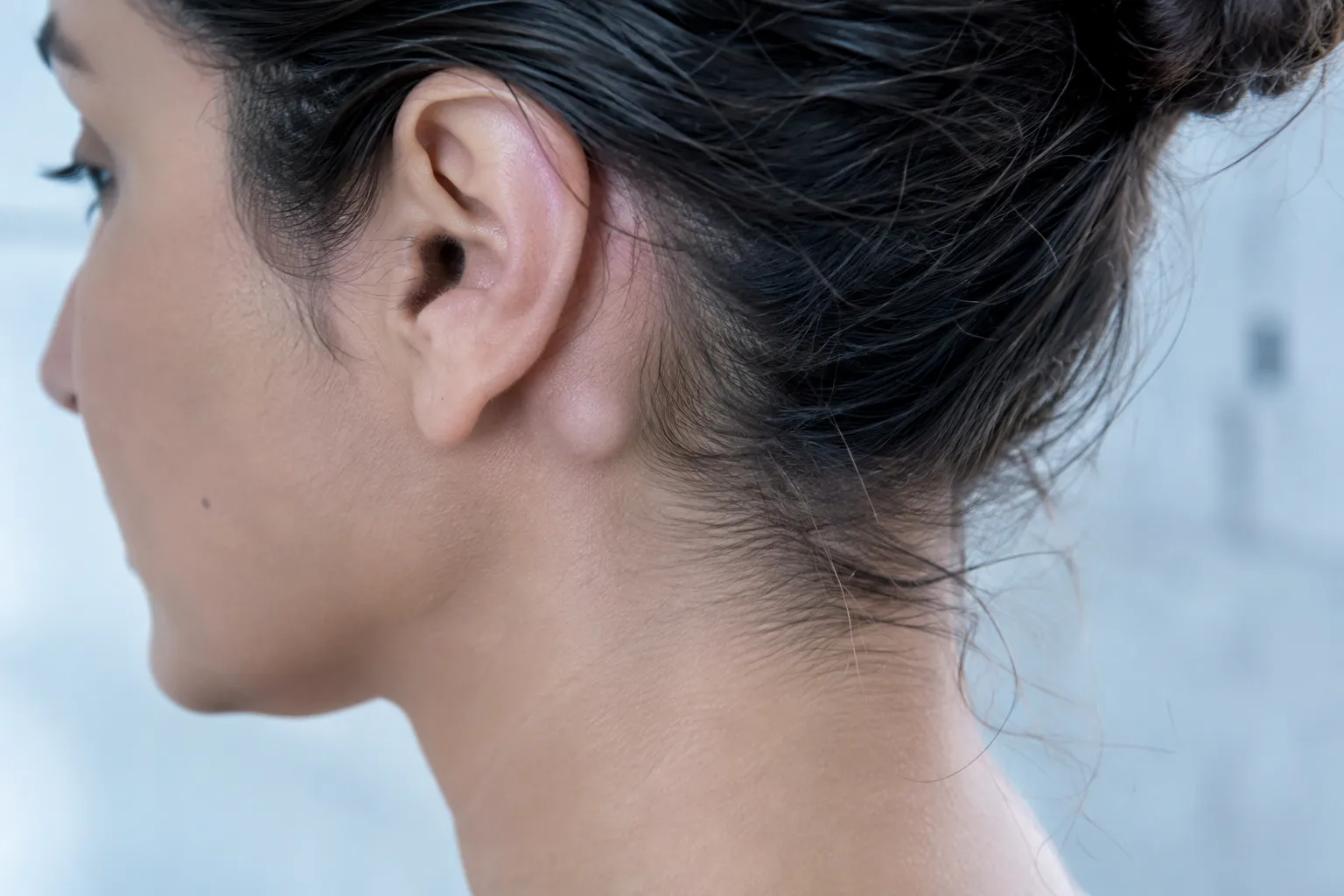
A cyst behind ear is usually a benign, slow-growing lump that forms when skin cells, keratin, or oil become trapped under the skin, most commonly appearing as a sebaceous or epidermoid cyst. Most are painless and harmless, but they can become infected, tender, or inflamed if left untouched. A cyst behind ear rarely goes away permanently without treatment, and surgical removal is the only way to eliminate it for good.
A cyst behind ear most often forms when a hair follicle or oil gland gets blocked, trapping dead skin cells, keratin, or sebum beneath the surface. Over time, this trapped material builds into a smooth, mobile lump that grows slowly and sits just under the skin.
The most common types found in this location include:
The skin behind and around the ear has a high concentration of oil glands and hair follicles, which makes this area more prone to blockages than smoother skin elsewhere. Minor trauma, such as scratching, tight headphones, or repeated pressure from glasses, can also irritate the area and contribute to cyst formation. Genetics play a role too, some people are simply more prone to developing cysts throughout their life, including in the pilar or epidermoid category.
For a deeper breakdown of how these cyst types differ under the skin, see this comparison of epidermoid, sebaceous, and pilar cysts and how they differ.
In most cases, a cyst behind ear is not dangerous, it is a benign growth that poses no threat to health unless it becomes infected or inflamed. The real risk comes from ignoring warning signs rather than from the cyst itself.
Watch for these signals that suggest something beyond a simple cyst:
Choose to monitor at home if: the lump is small, painless, soft, and has been stable for weeks.
Choose to see a doctor if: the lump grows quickly, becomes red or warm, or you notice any skin changes over it.
A common mistake is assuming any lump behind the ear must be a cyst. Some lumps are enlarged lymph nodes, lipomas, or, rarely, something that needs imaging to rule out. If there's any doubt, a physical exam by a clinician settles it quickly and inexpensively compared to leaving it unchecked.
A cyst behind ear typically presents as a small, round, movable bump under the skin that grows slowly and does not hurt unless irritated or infected. It often has a central punctum, a tiny visible pore, which is a hallmark sign that distinguishes it from other lumps.
Typical features of a cyst include:
FeatureWhat to look forTextureSoft to firm, smooth surfaceMobilityMoves slightly when pressedGrowth patternSlow, over weeks or monthsSkin surfaceSometimes a visible small pore or dark dotPainUsually painless unless inflamedDischargeThick, cheese-like odor if it ruptures
If pressing gently on the lump causes it to shift slightly and it feels like a small ball under the skin, that supports a cyst diagnosis. If the lump feels rock-hard, is tender without any recent irritation, or sits deeper and doesn't move at all, that points toward a different cause and warrants a professional look. For more detail on how location affects diagnosis and treatment planning, this guide on cyst location challenges explains why cysts near the ear, jaw, and scalp can sometimes be trickier to assess than those on flatter skin.
The clearest way to tell a cyst apart from a swollen lymph node is texture and history: a cyst behind ear feels soft and mobile with a slow growth pattern, while a swollen lymph node feels firmer, is often tender, and usually appears suddenly alongside an infection, cold, or sore throat.
TraitCystLymph NodeOnsetSlow, weeks to monthsSudden, daysTriggerBlocked gland/follicleInfection, illness, inflammationFeelSoft, mobile, roundFirm, sometimes rubberyLocationJust under skin surfaceDeeper, along jaw/neck lineAssociated symptomsUsually noneFever, sore throat, fatigueResolves aloneRarelyOften, within 2-4 weeks
Quick example: If the lump appeared right after a cold and feels tender along the jawline, it's likely a reactive lymph node that will shrink as the illness resolves. If it's been there for months, doesn't hurt, and has a visible small pore, it's more consistent with a cyst.
A common mistake is repeatedly pressing or squeezing the lump to "check" on it, this can irritate either a cyst or a lymph node and make swelling worse. If a lump behind the ear persists beyond four to six weeks without an obvious infection trigger, it's worth having it examined.
A small, uninflamed cyst behind ear can occasionally shrink temporarily, but the sac that forms the cyst wall does not dissolve on its own, so the lump typically returns or stays the same size over time. True resolution requires the cyst wall to be removed or drained.
Here's what actually happens with untreated cysts:
Choose to wait and watch if the cyst is small, stable, and not bothersome. Choose active treatment if it keeps recurring, growing, or getting infected, waiting in that case usually means dealing with a bigger, more inflamed lump later. Learn more about why partial treatment fails long-term in this explainer on cyst drainage versus full excision and recurrence risk.
See a doctor about a cyst behind ear if it grows quickly, becomes painful, shows redness or discharge, or has been present for more than a few weeks without change. Early evaluation prevents a simple cyst from turning into a more complicated infection.
Book an appointment promptly if any of these apply:
Edge case: A cyst that seemed to disappear after "popping" on its own but keeps coming back in the same spot still needs proper evaluation, because the underlying sac is almost always still present under the skin.
A qualified minor surgery clinic can confirm the diagnosis with a physical exam, and in most cases no imaging is needed unless the lump feels unusually deep, fixed, or atypical. The team at The Minor Surgery Center specializes in exactly this kind of assessment and removal, offering multiple Ontario locations for convenient, same-visit consultations.
The cost to remove a cyst behind ear in Ontario depends on whether the procedure is considered medically necessary (often covered) or cosmetic (typically out-of-pocket), along with the cyst's size and complexity. Getting a direct quote from a clinic is the only reliable way to know the exact price for a specific case.
Factors that influence pricing include:
For a general cost breakdown that applies across body locations, review this guide on how much it costs to remove a cyst in Ontario, and this companion piece on what it typically costs to remove a cyst more broadly. Choosing a dedicated minor surgery clinic over a general walk-in setting often means more predictable pricing and a faster path to a booked procedure date, since these clinics specialize in exactly this type of removal.
Popping a cyst behind ear at home almost always makes things worse: it can push bacteria deeper into the skin, cause infection, and leave the cyst wall intact so the lump returns, often larger or more inflamed than before. Professional drainage or excision is the safer route.
Risks of self-popping include:
A common mistake is confusing temporary drainage with a cure. Even if a cyst flattens after popping, the lining that produced the material is usually still there. This is exactly why clinics recommend excision rather than repeated draining, see this detailed comparison of cyst drainage versus full excision and the recurrence risk involved for the mechanics of why partial treatment fails long term.

Treatment for a cyst behind ear ranges from simple monitoring for small, stable cysts to in-office surgical excision for cysts that are symptomatic, recurring, or cosmetically bothersome. Excision under local anesthesia is the only method that removes the entire cyst wall and prevents recurrence.
Common treatment paths, from least to most involved:
Choose excision if: the cyst keeps returning, is growing, is cosmetically noticeable, or has been infected more than once.
Choose observation if: the cyst is small, has been stable for a long period, and causes no symptoms.
A specialized minor surgery clinic is generally the most efficient option for this type of procedure because it is performed frequently, with staff experienced in working carefully around the ear's cartilage and nerve structures. The Minor Surgery Center offers dedicated cyst removal services across the Greater Toronto Area, including locations in Toronto, North York, Mississauga, and Whitby, making same-week consultations widely accessible for patients dealing with a bothersome cyst behind the ear.
A cyst behind ear is usually painless when stable, but it can become tender, swollen, and sore if it becomes inflamed or infected. Pain is typically a sign that the cyst needs medical attention rather than continued observation.
Situations that commonly trigger pain include:
Quick example: A cyst that has been painless for a year but suddenly becomes red, warm, and throbbing over 24 to 48 hours is likely infected and should be assessed promptly rather than waiting it out.
If pain is present alongside fever, spreading redness, or pus, this points to an active infection that may need antibiotics before any removal procedure, since operating on acutely infected tissue is more complicated and carries higher risk of poor healing.
Yes, cyst-like nodules can form near or behind ear piercings, especially cartilage piercings, when the piercing tract becomes irritated, infected, or scarred over time. These are technically different from classic sebaceous or epidermoid cysts but often look and feel similar to patients.
How piercing-related lumps typically develop:
Decision rule: If the lump appeared within weeks of a new piercing and sits directly at the piercing site, it is more likely scar tissue or an inclusion cyst tied to the piercing itself. If it developed independently of any piercing history, it is more likely a standard epidermoid or sebaceous cyst.
A common mistake is continuing to wear jewelry through an inflamed lump, which delays healing and increases the chance of a permanent scar. Removing the jewelry and having the area assessed early gives the best chance of a simple resolution rather than needing surgical removal later.
The difference between a sebaceous cyst and an epidermoid cyst behind ear comes down to origin: true sebaceous cysts form from blocked oil glands, while epidermoid cysts form from trapped keratin and skin cells, and epidermoid cysts are actually far more common in this location despite both often being called "sebaceous cysts" in casual conversation.
FeatureSebaceous CystEpidermoid CystOriginBlocked sebaceous (oil) glandTrapped keratin/skin cellsFrequency behind earLess commonMore commonCentral punctumSometimes presentFrequently presentContentsOily, sebum-basedThick, cheesy keratinGrowth speedSlowSlowTreatmentExcisionExcision
In practice, the distinction rarely changes the treatment approach, both types are removed the same way, through complete surgical excision of the cyst wall. The label matters more for patient understanding than for the procedure itself. This detailed comparison of epidermoid versus sebaceous cysts walks through the clinical differences in more depth, and the full sebaceous cyst overview covers general presentation and care across body locations.
Removing a cyst behind ear through in-office excision typically takes between 15 and 45 minutes, depending on the cyst's size, depth, and whether it is inflamed at the time of the procedure. The process is done under local anesthesia, so patients are awake and comfortable throughout.
A typical excision visit includes these steps:
Recovery timelines to expect:
Edge case: Larger or previously infected cysts may take longer to remove because scar tissue from past inflammation can make the cyst wall stick to surrounding tissue, requiring more careful dissection.
Choosing a clinic that performs this procedure routinely matters here, providers who specialize in mole, cyst, and skin tag removal understand the nerve and cartilage layout around the ear, which reduces complication risk and supports faster, cleaner healing.
A cyst behind ear is a fluid- or keratin-filled sac that is almost always benign, while a tumor refers to any abnormal tissue growth, which can be benign or malignant and typically feels different on examination, usually firmer, less mobile, and sometimes attached to deeper structures. The vast majority of lumps behind the ear are cysts, not tumors, but distinguishing between them matters.
Key differences to know:
FeatureCystTumorCompositionSac filled with keratin/sebumSolid or mixed tissue growthMobilityMoves freely under skinOften fixed or less mobileGrowth speedSlow, steadyVariable; concerning if rapidMalignancy riskVery lowRequires evaluation to rule outCentral punctumCommonAbsentDiagnosis methodPhysical exam, sometimes ultrasoundExam plus possible biopsy/imaging
Decision rule: If the lump is soft, mobile, slow-growing, and has a visible central pore, a cyst is far more likely. If it is hard, fixed in place, grows quickly, or comes with unexplained weight loss or other symptoms, it needs prompt medical evaluation to rule out something more serious.
It is worth noting that true malignant transformation of a simple cyst is rare, but any atypical feature, irregular borders, rapid change, bleeding, or a lump that feels rooted deep in the tissue, should never be dismissed as "just a cyst" without a clinical exam. For context on how providers assess unusual or worrisome skin growths elsewhere on the body, see this discussion of cancerous cyst presentations on the scalp, which outlines red-flag features that apply broadly to skin lumps.
Choosing the right clinic for a cyst behind ear removal comes down to experience with facial and ear anatomy, transparent pricing, and a track record of low recurrence. Not every walk-in clinic performs excisions with the same precision needed near the ear's cartilage and nerve pathways.
What to look for in a provider:
The Minor Surgery Center is built specifically around this kind of care, offering focused mole, cyst, lipoma, and carpal tunnel procedures across multiple Ontario locations including Vaughan, Markham, Barrie, and Downtown Toronto. Because the clinic specializes exclusively in this category of procedure, patients typically get faster booking, clearer cost expectations, and providers who have handled cysts behind the ear many times before. For patients weighing their options, this guide on how to choose the best cyst removal clinic in Toronto covers additional criteria worth considering before booking.
Can a cyst behind the ear be cancerous?
It is very rare for a simple cyst behind the ear to be cancerous. Most are benign epidermoid or sebaceous cysts. A lump that grows quickly, feels hard and fixed, or bleeds should be checked by a doctor to rule out anything unusual.
Should I try to drain a cyst behind my ear myself?
No. Draining a cyst at home risks infection, scarring, and near-certain recurrence because the cyst wall stays in place. Professional drainage or excision is safer and more effective.
Will a cyst behind my ear come back after removal?
If the entire cyst wall is surgically removed through excision, recurrence is uncommon. If only the contents are drained without removing the sac, the cyst often returns in the same spot.
Does removing a cyst behind the ear leave a scar?
A small scar is possible since removal requires a skin incision, but experienced providers position and close incisions carefully to keep scarring minimal, especially in the natural skin folds behind the ear.
Is a cyst behind the ear the same as a swollen lymph node?
No. A cyst is a slow-growing, soft, mobile lump usually unrelated to illness, while a swollen lymph node is often firmer, tender, and linked to a recent infection or cold.
How can I tell if my cyst behind the ear is infected?
Signs of infection include redness, warmth, increasing pain, swelling, and sometimes pus or a foul odor. Fever alongside these symptoms means the infection needs prompt medical attention.
Can children get cysts behind the ear?
Yes, though dermoid cysts present from birth are more common in children than the acquired epidermoid or sebaceous cysts typically seen in adults. Any pediatric lump should be evaluated by a doctor.
Do I need a referral to get a cyst behind the ear removed?
This depends on the clinic. Many dedicated minor surgery centers accept direct bookings for consultations without requiring a referral, though coverage for the procedure itself may depend on medical necessity.
A cyst behind ear is common, usually harmless, and driven by a blocked oil gland or trapped skin cells rather than anything more serious. Most stay small and painless for years, but the only way to permanently resolve one, rather than watch it flare up and settle repeatedly, is complete surgical excision performed by someone experienced with the anatomy around the ear.
Next steps worth taking:
For anyone in the Greater Toronto Area weighing next steps, The Minor Surgery Center offers focused consultations and same-visit removal options for cysts behind the ear, backed by providers who handle this exact procedure regularly across their Ontario clinic network.