If you’re searching for lipoma removal in Mississauga, you’re likely dealing with a soft lump under the skin that’s growing, bothersome, or simply stressing you out because you don’t know what it is. A lipoma is often a benign fatty lump, but it’s still important to have any new or changing lump assessed properly so you’re not guessing. The Minor Surgery Center supports Mississauga patients with physician-led evaluation and, when appropriate, in-clinic removal under local anesthetic. This is general information only and not medical advice, but if a lump is rapidly enlarging, painful, firm, or changing in an unusual way, you should seek medical assessment promptly.
A lipoma appointment is meant to give you clarity. The physician will examine the lump, ask a few targeted questions about how long it’s been there and how it’s changing, and confirm whether it feels consistent with a lipoma or whether further assessment is needed. Many people come in after months of overthinking because the lump isn’t necessarily painful, but it’s noticeable, it catches on clothing, or it’s in an area that makes them self-conscious. The goal of the visit is to determine what it most likely is and whether removal is the right step for you.
If removal is appropriate, you’ll be told what to expect in plain language. Lipoma removal is typically a minor procedure performed under local anesthetic, with a focus on safe technique and straightforward aftercare. Healing varies based on the size and location of the lump, and any procedure on the skin can leave a scar, but you should have realistic expectations before moving forward. If the lump doesn’t look or feel typical, you’ll be guided toward the safest next step, which may involve additional evaluation rather than immediate removal.
People often search “lipoma removal near me” in Mississauga because they want a clinic that can handle the whole process without bouncing them around. The best experience is one where you leave the consultation with a clear plan, transparent expectations, and a timeline that makes sense. That includes understanding what the lump likely is, why removal is or isn’t recommended, and what recovery typically involves for a case like yours.
Coverage and pricing in Ontario depend on medical necessity and the reason for removal. Some assessments and removals may be covered when medically indicated, while purely cosmetic removal is often uninsured. The right way to handle this on the page is to keep it transparent: you should know what costs may apply before any procedure is done, based on the size, location, and clinical indication.
Lipoma removal in Mississauga typically involves a physician assessing the fatty lump, confirming it is consistent with a lipoma, and performing a surgical excision under local anesthetic if removal is appropriate. Most lipomas are benign and do not require removal, but patients often choose it for pain, growth, visibility, or peace of mind. Cost depends on whether the procedure is medically necessary or elective, since OHIP generally does not cover cosmetic lump removal.
Key Takeaways
A lipoma is a soft, slow-growing, usually benign fatty lump under the skin, and most do not need urgent treatment [3].
Removal is usually recommended when a lump is painful, growing quickly, large, firm, deep, or changing in a way that concerns the patient or physician.
Surgical excision is the standard treatment for lipomas that need removal, and complete excision of a well-encapsulated lipoma is linked to low recurrence.
Non-surgical options like steroid injections or liposuction-style extraction exist but are less predictable for complete removal than surgical excision.
OHIP does not typically cover lipoma removal done for cosmetic or comfort reasons; medically necessary cases depend on physician assessment [10].
Recovery from a straightforward lipoma excision is often measured in days to a couple of weeks, depending on lump size and location.
Not every soft lump is a lipoma; cysts, swollen lymph nodes, and other soft-tissue masses can look similar and need proper assessment [6].
Mississauga patients can access lipoma assessment and surgical removal locally without necessarily needing a downtown Toronto referral [5].
Lipoma Removal in Mississauga: What to Know Before You Book
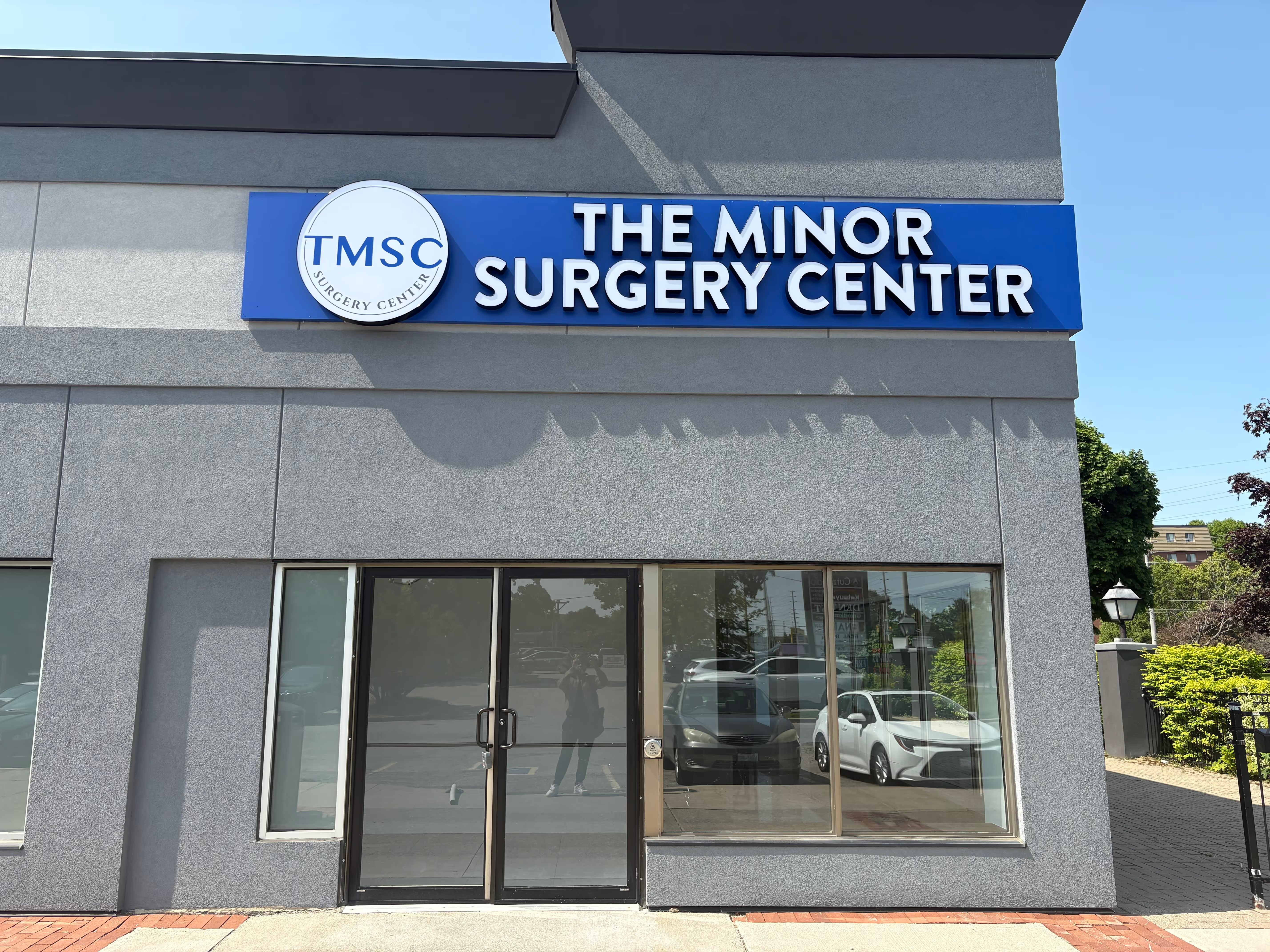
Lipoma removal in Mississauga starts with a physician examining the lump to confirm what it is before any decision about treatment is made. The Minor Surgery Center offers assessment and surgical removal of lipomas and fatty lumps at its Mississauga clinic on Dundas Street West, giving local patients an option that does not require traveling into downtown Toronto for a simple lump [5][8].
Lipomas are usually benign fatty growths that sit under the skin, and many people carry one for years without ever needing treatment. Patients typically seek removal when a lump is growing, painful, uncomfortable against clothing or furniture, visible in a way they dislike, or simply causing enough concern that they want a professional opinion. A physician can examine the lump in person, ask about how long it has been there and whether it has changed, and recommend whether monitoring, imaging, referral, or surgical removal makes the most sense for that specific case.
This matters because not every lump under the skin is straightforward. Size, depth, firmness, and rate of growth all influence whether a lump gets watched, imaged, or removed. A short consultation is usually enough to sort a typical soft, mobile, slow-growing lipoma from a lump that needs a closer look.
A physician can assess the lump and recommend whether monitoring, imaging, referral, or surgical removal is appropriate, the right next step depends on the specific lump, not a one-size-fits-all rule.
What Is a Lipoma and Why Do People Get Them Removed?
A lipoma is a benign tumor made of fat cells that grows slowly under the skin, most often on the shoulders, back, arms, neck, or thighs [3]. People choose removal not because lipomas are usually dangerous, but because of size, discomfort, location, or the simple wish to be rid of a visible lump.
Lipomas form a soft capsule of fat tissue just beneath the skin's surface. On examination, they usually feel:
Soft and doughy, sometimes described as rubbery
Mobile, meaning the lump moves slightly when pressed
Painless, unless it presses on a nerve or grows in a tight space
Slow-growing, often unchanged for months or years at a time
Common reasons patients in Mississauga book a lipoma assessment include:
The lump is getting bigger over weeks or months
It rubs against a bra strap, waistband, collar, or bag strap
It sits somewhere visible, like the forehead, neck, or forearm
It has become tender or achy
A family member or friend noticed it and suggested a check
The patient simply wants confirmation it is not something more serious
Decision rule: if a lump has been stable, soft, and painless for a long time, monitoring is often reasonable. If it is changing shape, getting firmer, growing quickly, or causing pain, a physician assessment is the safer next step rather than waiting. For a deeper look at how lipomas form and behave, the main lipoma condition page covers the underlying biology in more detail.
When Should a Fatty Lump Be Checked by a Physician?
A fatty lump should be checked by a physician when it grows quickly, becomes painful, feels hard or fixed to deeper tissue, exceeds about 5 centimeters, or sits in a location that makes self-monitoring difficult, such as the neck or scalp. These features do not automatically mean something serious, but they are the signals that move a lump from "watch and wait" to "get it looked at."
Specific red flags that warrant a same-week appointment rather than waiting for a routine check-up:
Common mistake: waiting months to "see if it goes away" when a lump is already causing pain or growing steadily. Lipomas do not resolve on their own, and a lump that is genuinely changing should be assessed sooner rather than later so imaging or referral can happen if needed. Patients dealing with a firmer or deeper lump can read more in the guide on intramuscular lipomas and surgical removal.
Lipoma vs Other Lumps: How a Fatty Lump Assessment Works
Not every soft lump under the skin is a lipoma, and telling them apart is exactly why a physician assessment matters before anyone plans removal. Cysts, swollen lymph nodes, scar tissue, benign soft-tissue masses, and less common conditions can all feel similar to a lipoma on first touch [6].
A fatty lump assessment usually involves:
History taking, how long the lump has been present, whether it has grown, and whether it is painful.
Physical examination, checking texture, mobility, depth, and whether it is attached to skin or deeper tissue.
Comparison against typical lipoma features, soft, mobile, slow-growing, painless.
Decision on next step, reassurance and monitoring, referral for imaging such as ultrasound, or scheduling surgical removal.
Here is how lipomas commonly differ from other lumps people confuse them with:
Edge case: an "infected lipoma" is uncommon but possible, especially if a lump has been irritated, injured, or previously biopsied. Signs include redness, warmth, and increasing pain over a lipoma that was previously stable, this needs prompt medical attention rather than a routine cosmetic consult. Readers can compare features further in the article on differentiating lipomas from other soft-tissue masses or the piece on infected lipomas and when to see a doctor.
When Should You Get a Lipoma Removed?
A lipoma should be considered for removal when it is painful, growing steadily, large, located somewhere it catches on clothing or gets bumped often, or causing enough visible concern that the patient wants it gone. There is no strict size cutoff that mandates removal, the decision is based on symptoms, growth pattern, and patient preference, guided by physician assessment.
Reasonable scenarios for removal include:
Symptomatic lipomas, the lump aches, throbs, or presses on a nerve.
Functionally bothersome lipomas, it rubs against a seatbelt, bra strap, or backpack strap daily.
Cosmetically bothersome lipomas, visible on the forehead, neck, or forearm and affecting confidence.
Growing lipomas, noticeable size increase over recent months.
Diagnostic uncertainty, removal with pathology review to confirm the diagnosis when a lump's features are not entirely typical.
Reasonable scenarios to simply monitor:
Small, soft, stable lipoma that has not changed in years
No pain, no functional interference, no cosmetic concern
Patient prefers to wait and observe with periodic self-checks
Quick example: a 3 cm soft lipoma on the upper back that has not changed in two years and causes no pain is a candidate for monitoring. A 4 cm lipoma on the forearm that has doubled in size over six months and now aches when leaning on a desk is a much stronger candidate for removal and physician review. For visible, larger lesions, the article on large lipomas: removal challenges and surgical considerations walks through what changes when a lipoma is bigger than average.
Lipoma Removal Procedures Available Near You in Mississauga
Lipoma removal near Mississauga is generally performed as an in-clinic surgical excision under local anesthetic, which allows the physician to remove the entire fatty lump and its capsule in one visit. Some clinics also offer or discuss non-surgical alternatives, though these tend to be less reliable for complete removal.
At a typical clinic visit for lipoma surgery in Mississauga, the process looks like this:
Consultation and examination, the physician confirms the lump is consistent with a lipoma and discusses whether removal is appropriate.
Consent and planning, size, depth, and location determine incision approach and expected downtime.
Local anesthetic, the area is numbed so the procedure itself is not painful.
Excision, a small incision is made, the lipoma is separated from surrounding tissue, and it is removed along with its capsule where possible.
Closure, the incision is closed with sutures, and a dressing is applied.
Aftercare instructions, wound care guidance and, if applicable, a suture removal or follow-up appointment.
Surgical vs Non-Surgical Lipoma Removal Options
Surgical excision is the most reliable way to remove a lipoma completely, while non-surgical approaches such as steroid injections or minimal-incision extraction can shrink or partially remove a lipoma but carry a higher chance the lump returns. The right choice depends on lump size, patient goals, and whether complete removal or simple size reduction is the priority.
Lipoma Removal vs Steroid Injection: Which Is Better?
Surgical excision is generally considered better for lipomas a patient wants gone completely, because it removes the fibrous capsule along with the fat, while steroid injections mainly shrink the lump without guaranteeing full resolution. Steroid injections can be a reasonable option for patients who want to avoid any incision and are comfortable with partial improvement rather than complete removal.
Choose surgical excision if: the lipoma is causing pain, is growing, or the patient wants the lowest realistic chance of the same lump coming back. Choose steroid injection if: the lipoma is small, purely cosmetic, and the patient prefers to avoid a scar even if the lump may not fully disappear.
How Long Does Lipoma Removal Surgery Take?
Most straightforward lipoma removals take between 20 and 45 minutes in the clinic, depending on the size, depth, and location of the lump. Larger or deeper lipomas, or those near nerves and muscle, can take longer because the physician needs to work more carefully around surrounding tissue.
Factors that affect procedure time:
Size, larger lipomas take longer to fully separate from surrounding tissue.
Depth, intramuscular or deep lipomas require more careful dissection.
Location, areas near nerves, such as the neck, require extra caution.
Number of lipomas, some patients have more than one lipoma removed in the same visit.
Lipoma Removal Cost in Mississauga and OHIP Coverage
Lipoma removal cost in Mississauga depends primarily on whether the procedure is classified as medically necessary or elective, since OHIP does not generally fund cosmetic or comfort-driven lump removal. Private-pay lipoma removal is common when a lump is stable, painless, and being removed mainly for appearance or convenience.
How Much Does Lipoma Removal Surgery Cost in Ontario?
Lipoma removal surgery cost in Ontario varies by lump size, complexity, and clinic, and patients considering a private-pay procedure should ask for a clear quote at consultation rather than relying on a general estimate found online [1]. Larger, deeper, or multiple lipomas typically cost more than a single small, superficial lump because they take longer to remove and require more surgical care.
Factors that influence the final cost quote:
Size of the lipoma
Depth (superficial versus intramuscular)
Number of lipomas removed in one visit
Location (some areas require more precision, such as near the face or neck)
Whether pathology review of the removed tissue is included
Lipoma removal is generally not covered by OHIP when it is done for cosmetic, comfort, or convenience reasons, while medically necessary removal depends on physician assessment and current OHIP Schedule rules. Ontario's position is that cosmetic surgery is not an insured service, and the OHIP Schedule specifically notes that removing a lesion without clinical suspicion of a medical problem is not insured [10].
In practice, this means:
Likely private-pay: a stable, painless lipoma removed because the patient dislikes how it looks or feels.
Possibly OHIP-relevant: a lump with concerning features, significant pain, functional impairment, or diagnostic uncertainty that requires investigation, though the exact pathway depends on assessment and current billing rules.
Extended health benefits: some private insurance plans may reimburse part of the cost if the procedure is documented as medically necessary, though patients should confirm details with their own insurer.
Common mistake: assuming any lump removal automatically qualifies for OHIP coverage simply because it happens in a medical clinic. Coverage depends on clinical necessity, not just the type of lump or where it is removed. Patients weighing this question can read the full explanation in is lipoma removal covered by OHIP or insurance.
Lipoma Removal Recovery Time, Aftercare, and Scarring
Recovery from a straightforward lipoma removal usually takes a few days to about two weeks before most normal activity resumes, though full internal healing and scar maturation take longer. Recovery time depends heavily on the size of the lipoma, its location, and how closely aftercare instructions are followed.
Typical recovery timeline:
Day 0 to 2: mild soreness, swelling, and bruising at the site; keep the area clean and dry.
Day 3 to 7: discomfort fades; light activity usually fine, but heavy lifting or stretching near the site is often restricted.
Day 7 to 14: sutures may be removed if non-dissolving; incision continues to close and strengthen.
Weeks 3 to 8: scar tissue matures and gradually fades from pink or red toward a flatter, lighter line.
Aftercare basics that support smooth healing:
Keep the dressing clean and dry as instructed
Avoid soaking the area (baths, swimming) until cleared
Watch for signs of infection: increasing redness, warmth, pus, or fever
Avoid picking at scabs or sutures
Follow activity restrictions, especially for lipomas on the back, shoulder, or areas that stretch with movement
Lipoma Removal Scars and Cosmetic Results
Most lipoma removal incisions heal into a thin, faint line over the following months, with the final scar appearance influenced by lump size, incision length, skin type, and aftercare. Larger lipomas generally require a longer incision, which can mean a longer (though usually still thin) scar compared with smaller lumps.
Ways to support better cosmetic results:
Follow wound care instructions precisely in the first two weeks
Protect the healing scar from sun exposure, which can darken it
Ask the physician about scar care products once the incision has closed
Avoid tension on the area (stretching, heavy movement) while it heals
Decision rule: if visible scarring is a major concern, discuss incision placement and technique at the consultation before surgery, since planning ahead usually gives better results than trying to manage a scar after the fact. For a closer look at real healing outcomes, see before and after lipoma removal and the detailed recovery timeline guide.
Lipoma Removal Risks and Complications
Lipoma removal is generally considered a low-risk, minor surgical procedure, but like any procedure it carries some possibility of bleeding, infection, scarring, bruising, or a small chance the lipoma returns. Serious complications are uncommon for a straightforward, well-encapsulated lipoma removed by an experienced physician.
Possible risks and how they are typically managed:
Bleeding or bruising, usually minor and settles within days; pressure dressings help manage it.
Infection, reduced with sterile technique and proper aftercare; watch for redness, warmth, or discharge.
Scarring, expected to some degree with any incision; usually fades over months.
Nerve irritation, more relevant for lipomas near nerves, such as certain neck or limb locations.
Incomplete removal or recurrence, more likely if the capsule is not fully excised, especially in larger or deeper lipomas.
Edge case: lipomas that are large, deep, or intramuscular carry a somewhat higher technical complexity because they sit closer to muscle or nerve structures, which can extend procedure time and recovery. These cases benefit from careful pre-procedure assessment rather than a routine, rushed approach. The article is lipoma surgery dangerous covers this in more depth, and patients asking about safe transport after the procedure can check can I drive home after lipoma removal.
Will a Lipoma Come Back After Removal?
A lipoma is unlikely to come back at the same site once it has been fully excised with its capsule intact, since complete surgical removal of a well-encapsulated lipoma is associated with low recurrence in the medical literature. Recurrence becomes more likely when only part of the capsule is removed, when the lipoma is unusually large or deep, or in certain multiple lipoma conditions.
Factors linked to a higher chance of recurrence:
Partial removal that leaves capsule tissue behind
Very large or deep (intramuscular) lipomas
Conditions involving multiple lipomas throughout the body
Poor healing conditions, such as infection during recovery
It is also worth noting that a new lipoma can develop in a different location even after a previous lump was successfully removed, this is a new lipoma rather than a true recurrence of the treated one. Patients with several lipomas, or a family pattern of multiple lipomas, may want to discuss this tendency at consultation so expectations are realistic from the start.
Choosing a Surgeon or Dermatologist for Lipoma Removal in Mississauga
Both surgeons and dermatologists can remove lipomas, and the right choice usually depends on lump size, depth, location, and complexity rather than one professional being universally "better" than the other. A physician trained in minor surgical procedures who regularly performs lipoma excisions is generally well suited to a typical, uncomplicated lipoma.
What to look for when choosing where to have a lipoma removed:
Experience with minor surgical excision, not just diagnosis
Clear explanation of the procedure, risks, and expected scar
Willingness to discuss whether the lump needs pathology review
Straightforward answers about cost and what is or is not covered
A clinic setup designed for in-office procedures with proper sterile technique
Common mistake: assuming a lump automatically needs a hospital referral or plastic surgeon when many uncomplicated lipomas are well suited to an in-clinic excision by a physician experienced in minor surgery. Complex cases, very large lipomas, those near major nerves, or lumps with uncertain features, are the ones more likely to need referral to a specialist. For more on this decision, read dermatologist or general surgeon for lipoma removal.
Why Choose The Minor Surgery Center in Mississauga?
The Minor Surgery Center's Mississauga clinic offers in-person assessment and surgical removal of lipomas and fatty lumps, giving Mississauga-area patients access to minor surgical care without needing to travel to a downtown Toronto office [5][8]. The clinic is located on Dundas Street West, making it accessible for patients across Mississauga and neighboring communities.
Reasons Mississauga patients choose this clinic for lipoma removal:
Direct physician assessment before any decision about removal
In-clinic surgical excision performed under local anesthetic
Clear, upfront discussion of cost when a procedure is elective
Local access on Dundas Street West, reducing travel for follow-up care
Experience across a range of minor skin and soft-tissue procedures, not limited to lipomas alone
Have a fatty lump or lipoma in Mississauga? The Minor Surgery Center can assess the lump and discuss whether removal is appropriate for the specific case. Book a consultation at the Mississauga clinic to get a clear plan rather than guessing.
Areas We Serve Near Mississauga
Lipoma removal services from The Minor Surgery Center extend beyond Mississauga itself to nearby communities across the Greater Toronto Area, giving patients several convenient clinic options depending on where they live or work. This regional coverage is useful for patients comparing wait times, locations, or simply choosing the clinic closest to home.
Patients outside these specific areas can still contact the clinic to confirm whether their location falls within a convenient travel distance for assessment and follow-up care [7].
FAQs
Is a lipoma dangerous if left alone? Most lipomas are benign and stay harmless if left alone, but a physician should assess any lump that grows, becomes painful, or feels firm or fixed to deeper tissue to rule out other conditions.
Can I remove a lipoma myself at home? Home extraction of a lipoma is not recommended because it risks infection, incomplete removal, scarring, and bleeding without proper sterile technique or anesthesia; a physician assessment is the safer route. More detail is available in the article on the real dangers of DIY lipoma removal.
Does lipoma removal hurt? The procedure itself is typically not painful because the area is numbed with local anesthetic beforehand; mild soreness and tenderness in the days after the procedure is normal and usually manageable with basic aftercare.
How much does lipoma removal cost in Mississauga? Cost depends on lump size, depth, number of lipomas, and whether the procedure is medically necessary or elective, since OHIP generally does not cover cosmetic lump removal; a consultation gives the most accurate quote [1][10].
Do I need a referral to see a physician about a lipoma in Mississauga? Many minor surgery clinics, including options in Mississauga, accept direct consultation requests for lump assessment without requiring a prior referral, though this can vary by clinic and by whether OHIP-covered assessment is being pursued.
How long is recovery after lipoma removal? Most patients return to light normal activity within a few days to two weeks, depending on the size and location of the lipoma removed, with full scar maturation taking several months.
Can a lipoma come back after it is surgically removed? Recurrence at the same site is uncommon after complete surgical excision with the capsule removed, though it becomes more likely with partial removal, very large lipomas, or certain conditions involving multiple lipomas.
Should I see a dermatologist or a surgeon for lipoma removal? Both can perform lipoma removal, and the right choice depends on the lump's size, depth, and complexity; straightforward lipomas are commonly handled by physicians experienced in minor surgical excision.
What is the difference between a lipoma and a cyst? Lipomas are typically soft, mobile fatty lumps, while cysts can feel firmer, sometimes have a visible central punctum, and may become inflamed or drain fluid, an in-person exam is the most reliable way to tell them apart [6].
Is lipoma removal considered cosmetic surgery? It depends on the reason for removal: lipoma removal done mainly for appearance or comfort is generally treated as elective and private-pay, while removal driven by clear medical necessity may follow a different assessment pathway.
Conclusion
Lipoma removal in Mississauga is most successful when it starts with a proper assessment rather than an assumption about what the lump is. A physician can confirm whether a fatty lump matches the typical pattern of a lipoma, flag any features that need closer attention, and lay out the realistic options, from simple monitoring to surgical excision under local anesthetic.
For most patients, the practical next steps are straightforward:
Book a consultation to have the lump properly examined rather than self-diagnosing.
Ask directly about cost and whether the case is likely to be private-pay or medically necessary.
Discuss expected recovery time and scar outcome based on the lump's size and location.
Confirm aftercare instructions clearly before the procedure day, not after.
The Minor Surgery Center's Mississauga clinic on Dundas Street West offers this kind of assessment and surgical removal locally, so patients dealing with a bothersome or concerning fatty lump have a clear, accessible path forward rather than uncertainty about what to do next.
Step 1: Book Your Free Consultation (No Referral Needed) Unlike hospital-based cancer centres that require physician referrals, our Toronto skin cancer clinic allows you to book directly with our surgeons. Call us at (647) 614-1611 or book online, and you'll typically be seen within days, not months.
Step 2: Expert Assessment and Treatment Planning During your consultation, one of our board-certified plastic surgeons will thoroughly examine the suspicious lesion and review any existing biopsy or pathology results. They'll discuss your medical history and risk factors, explain the recommended treatment approach, and answer all your questions about the procedure. You'll receive clear pricing information, with OHIP covering all cancer excisions.
Step 3: Same-Day Procedure (When Appropriate) In many cases, we can complete your skin cancer removal on the same day as your consultation. This eliminates the anxiety of waiting and reduces the number of appointments you need to schedule. Our surgical approach begins with local anesthesia similar to what a dentist uses, followed by precise excision with appropriate margins. All tissue is sent for comprehensive pathology analysis, and we use advanced closure techniques to minimize scarring. You'll receive clear post-operative care instructions before leaving.
Step 4: Pathology Results and Follow-Up Within 10 to 14 days, we'll receive your pathology results confirming complete cancer removal with clear margins, the exact type and stage of skin cancer, and whether additional treatment is needed. We'll contact you to review the results and schedule any necessary follow-up care.
You can book your free consultation with The Minor Surgery Center in three easy ways: online through Cortico, by phone, or by requesting a callback from our team.
The initial consultation is free. During this consultation, one of our board certified surgeons will examine your condition and recommend a suitable solution.
Directly Online
Request a Callback
By Phone
By Text
Hours
Sunday
Closed
Monday
9 am — 4 pm
Tuesday
9 am — 4 pm
Wednesday
9 am — 4 pm
Thursday
9 am — 4 pm
Friday
9 am — 4 pm
Saturday
Toronto & Oakville Open Vaughan & Mississauga Closed



.webp)