
Have you ever looked in the mirror and wished you could wear your favorite heavy hoops again, but a torn or stretched earlobe is holding you back? Earlobe repair surgery is a life-changing procedure that restores the shape and strength of your ear. However, the most common question patients ask after the procedure is: re piercing ears after earlobe repair how long to wait?
Getting back to your style is exciting, but rushing the process can lead to the ear tearing all over again. In 2026, surgical techniques have become more refined than ever, allowing for better healing and more predictable results. To ensure your new piercings stay secure and healthy, you must understand the timeline of tissue remodeling.
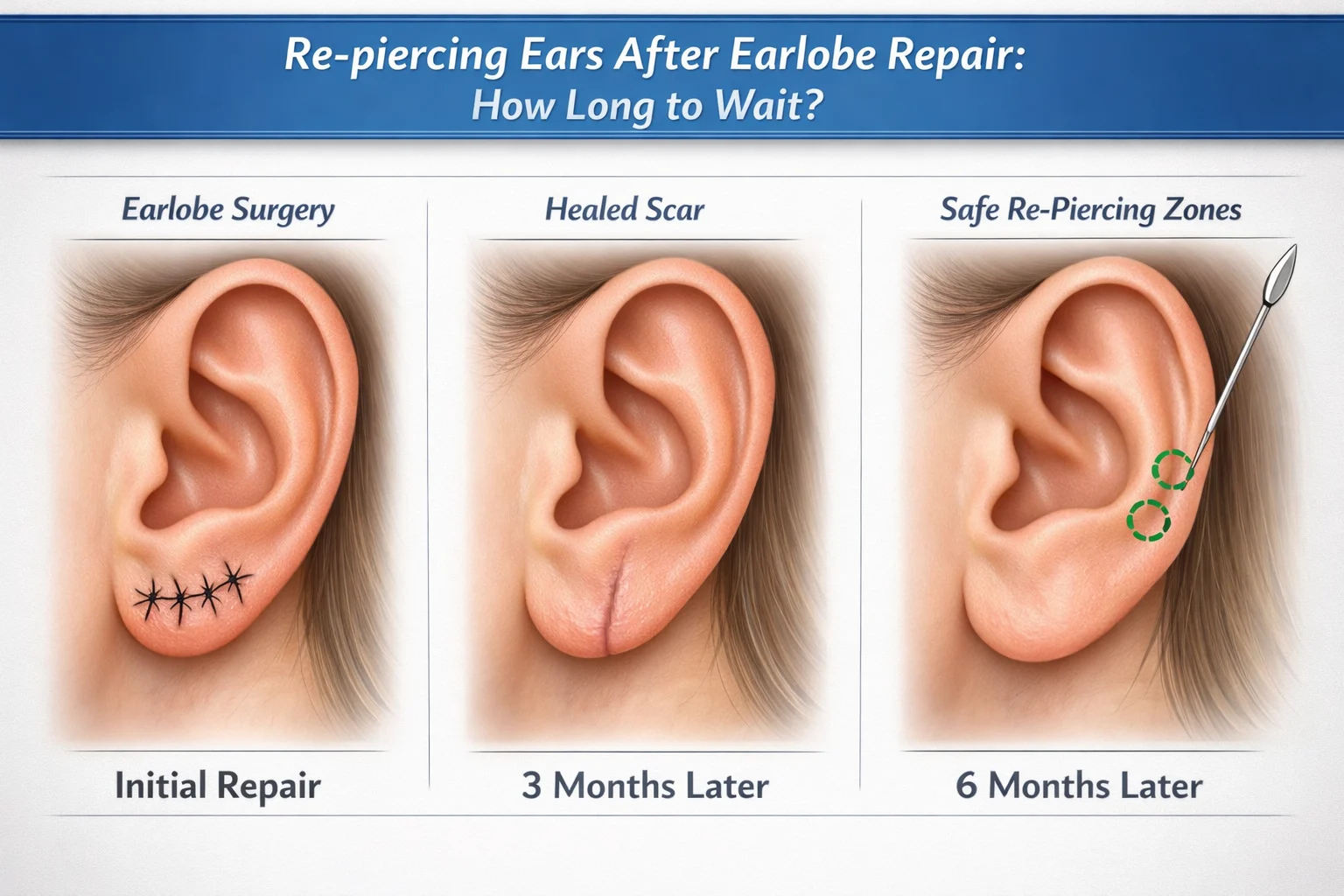
When a surgeon repairs a torn or stretched earlobe, they aren't just "sewing skin." They are performing a delicate reconstruction of the dermis and fatty tissue. Understanding the biological timeline of healing helps explain the answer to re piercing ears after earlobe repair how long to wait.
Healing happens in stages, and while the surface might look "closed" within two weeks, the deep tissues are still under construction.
Scar tissue is not identical to the skin you were born with. It lacks the same elasticity and blood supply. If you pierce too early, the lack of blood flow can lead to slower healing of the new piercing or even localized necrosis (tissue death). By waiting the recommended time, you allow the blood vessels to fully re-establish themselves in the repaired area.
While every patient heals at a different rate, there are industry-standard benchmarks used in 2026 to ensure patient safety. If you are wondering about the specific timeline for re piercing ears after earlobe repair how long to wait, refer to the table below.
Not everyone will be ready at the six-month mark. Several factors can extend your waiting period:
If you have other skin concerns, such as benign moles or lesions near the ear, it is best to have those evaluated during your follow-up appointments to ensure the entire area is healthy.
<!DOCTYPE html>
Check your progress after earlobe repair surgery.
1. How long has it been since your surgery?
Less than 3 months
3 to 6 months
More than 6 months
Next Question
Once you have waited the appropriate amount of time, the method you choose for re-piercing is just as important as the wait itself. In 2026, experts strongly advise against using "piercing guns" found in malls. These guns use blunt force to push a stud through the skin, which can cause excessive trauma to delicate surgical sites.
The safest way to re-pierce is to return to your original surgeon or visit a high-end piercing studio that uses sterile, single-use needles. A needle is much sharper and cleaner, creating a precise hole without damaging the surrounding repair.
When discussing re piercing ears after earlobe repair how long to wait, surgeons emphasize that the new hole should not be placed directly on the old scar.
Your choice of earrings during the first 6 weeks of re-piercing is vital.
"The integrity of a repaired earlobe depends on the patience of the patient. Re-piercing is a second chance; treating it with care ensures it's the last time you'll need surgery." — Clinical Insight 2026
While you are in the waiting period for re piercing ears after earlobe repair how long to wait, there are steps you can take to improve the quality of your skin and the strength of the repair.
Once your surgeon gives the green light (usually around 4-6 weeks post-op), gentle scar massage can work wonders. Use a fragrance-free moisturizer or vitamin E oil.
New scars are incredibly sensitive to UV rays. If the repair site gets sunburned, it can become permanently discolored or thicken into a hypertrophic scar.
If you have a history of skin issues, like cysts on the scalp or skin tags, ensure these are managed. General skin health impacts how quickly your body repairs any incision.
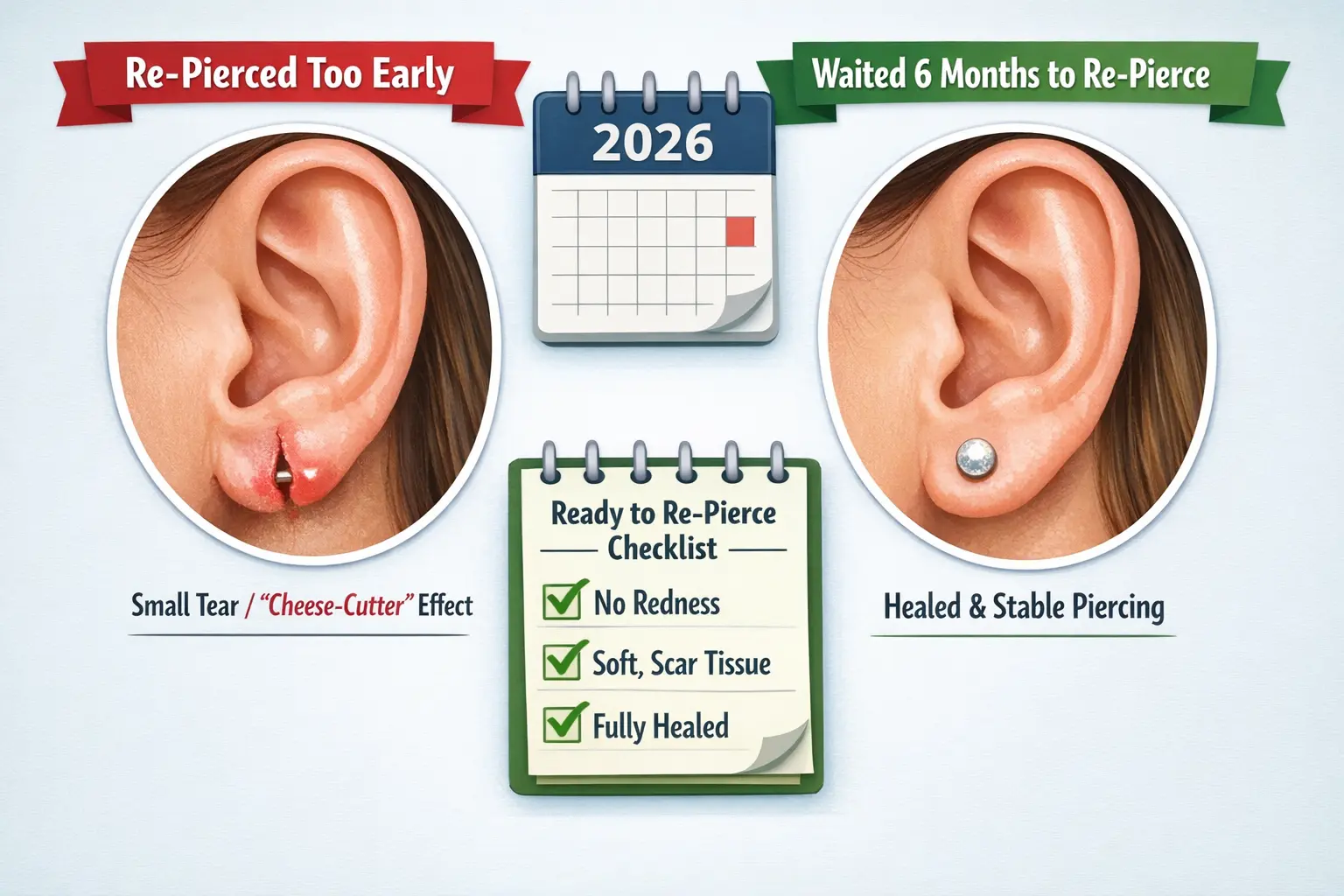
Many people feel tempted to re-pierce after just a month when the skin looks "normal." However, the internal structures are far from ready. Here is what can happen if you don't follow the guidelines for re piercing ears after earlobe repair how long to wait:
This is the most common complication. Because the tissue is still soft and hasn't regained its tensile strength, the weight of even a small earring can act like a wire cutting through cheese. The hole will slowly elongate until it tears through the bottom of the lobe again.
A granuloma is a small, red bump of "over-healing" tissue. It often forms when a piercing is introduced to a site that is still trying to heal from a previous trauma. These can be painful and may require medical intervention to remove.
If the blood supply hasn't fully returned to the area, the body may view the new earring as an invader it cannot handle. This can lead to chronic redness, weeping, and eventually, the body "pushing" the jewelry out through the skin.
For those who have experienced complications from other skin procedures, such as basal cell carcinoma removal, you know that patience is the most important part of the recovery journey.
Absolutely not. Especially after surgery, the earlobe requires a sterile environment and a professional who understands anatomy. Home piercing kits or "ice and needle" methods carry a massive risk of infection and permanent disfigurement.
Generally, no. Scar tissue sometimes has slightly less sensation than normal skin. However, you might feel a bit more "pressure" because scar tissue is denser than regular tissue.
In 2026, the advice remains the same: repaired earlobes should not support heavy weights. Even after a year of healing, the repair is a "structural weak point." If you must wear heavy earrings for an event, consider using supportive adhesive patches on the back of the lobe to distribute the weight.
It is never recommended. The "stud and gun" method causes blunt force trauma. For a surgically repaired ear, you want the cleanest, most surgical-grade entry possible, which only a hollow piercing needle can provide.
If you wait for the full 6 months and follow proper aftercare, the scar usually fades to a thin, silver line. Often, the new jewelry will partially cover the old scar, making it virtually invisible to others.
Ready to get back to your favorite accessories? Follow this checklist to ensure your second chance at ear piercing is a success.
Earlobe repair surgery is a fantastic way to "reset" your appearance and fix the damage caused by years of heavy jewelry or accidental tears. However, the success of the procedure doesn't end when the surgeon ties the last knot. The true success lies in your ability to wait.
When considering re piercing ears after earlobe repair how long to wait, remember that the 3-to-6-month window is a safety net designed to protect your investment. Rushing back into earrings might give you a few weeks of style, but waiting ensures a lifetime of being able to wear jewelry without fear of another tear.
If you are currently healing from a minor surgery or are considering one, such as mole or cyst removal, treat your skin with the respect it deserves. Give it time, give it nutrients, and follow professional advice. Your future self—and your earlobes—will thank you.
Next Steps: