

Finding a new lump under your skin can be a startling experience. Your mind might immediately jump to the worst-case scenario. However, in the vast majority of cases, these soft, squishy bumps are simply lipomas—benign growths of fat cells. While most of these are quiet neighbors that live under your skin without causing trouble, others can become a source of significant discomfort. Understanding the difference between a painful lipoma vs harmless lipoma is the first step in managing your health and regaining peace of mind in 2026.
A lipoma is technically a tumor, but don't let that word scare you. It is "benign," which means it is non-cancerous. About one in every 100 people will develop one at some point in their life. They are most common in adults between the ages of 40 and 60, but they can appear at any age. Because they grow slowly and usually don't hurt, many people live with them for decades. But what happens when that lump starts to ache? Or what if it's in a spot that makes moving difficult?
In this comprehensive guide, we will explore the nuances of painful lipoma vs harmless lipoma, how to identify them, and what your treatment options look like with today's advanced medical technology.
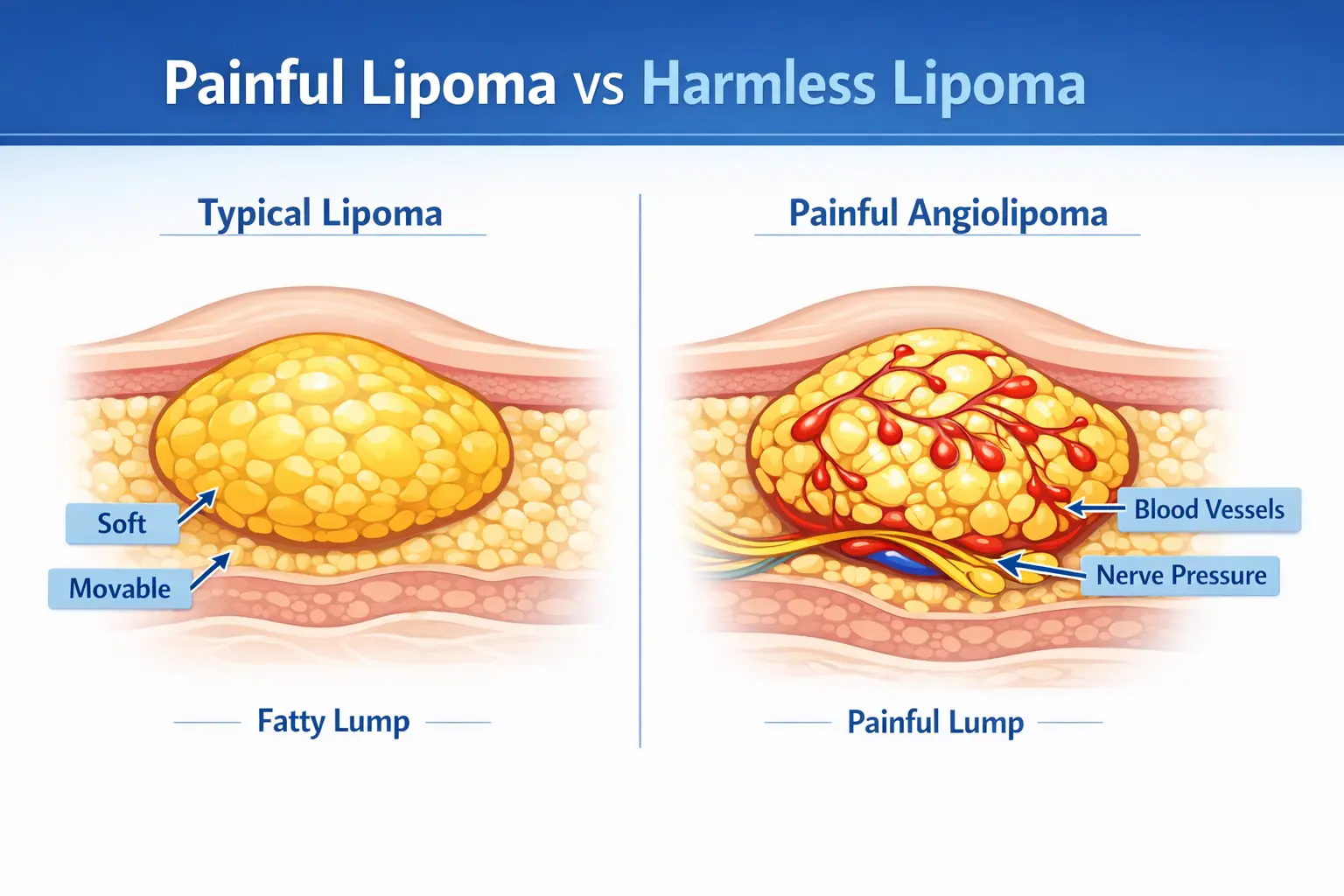
Before diving into the comparison of a painful lipoma vs harmless lipoma, it is important to understand what these growths actually are. A lipoma is a slow-growing, fatty lump that's most often situated between your skin and the underlying muscle layer.
Lipomas are made of mature fat cells (adipocytes) grouped together in a thin, fibrous capsule. Think of it like a small balloon filled with soft butter. Because they are made of fat, they are generally very soft to the touch. They can appear anywhere on the body where fat cells exist, but they are most frequently found on the:
Doctors aren't entirely sure why some people get lipomas while others don't. There is a strong genetic component; if your parents had them, you are more likely to develop them too. Some research suggests that a minor injury to an area might trigger the growth of a lipoma, though this is still debated in the medical community.
"A lipoma is essentially a collection of fat cells that decided to grow in a concentrated area. While they are tumors by definition, they are almost never a threat to your overall health."
Most lipomas fall into the "harmless" category. These are the ones you might notice while showering or getting dressed, but then forget about for months at a time. In the debate of painful lipoma vs harmless lipoma, the harmless variety is characterized by its lack of symptoms.
If you have a bump that fits this description, it is likely a standard, benign lipoma. Many people choose to leave these alone. However, if the bump is in a visible area, such as the forehead or forearm, you might seek best mole removal clinics in Vaughan to discuss cosmetic removal.
While most are silent, some people experience significant discomfort. When we look at painful lipoma vs harmless lipoma, the presence of pain is usually the deciding factor for seeking surgery.
A lipoma itself doesn't have many nerves, so why the pain? There are three main reasons:
As a lipoma grows, it takes up space. If it happens to grow right next to a sensory nerve, it can press against it. This often results in a "pins and needles" sensation or a sharp, radiating pain when you move in a certain way. If you have an armpit lump that hurts, it is often due to the high density of nerves and lymph nodes in that area being squeezed.
This is a specific subtype of lipoma. Unlike standard lipomas, an angiolipoma contains a large number of small blood vessels (capillaries). These are almost always painful. The pain is often described as a dull ache or a sensitivity to touch. If you have multiple small, painful bumps on your forearms, they are likely angiolipomas.
A lipoma on your back might be painless until you sit in a chair with a hard backrest. A lipoma on your thigh might hurt only when you run because it is being squeezed by your muscles. The mechanical pressure of your daily activities can turn a harmless-looking bump into a painful nuisance.
To help you visualize the differences, here is a quick-reference guide for 2026.
FeatureHarmless LipomaPainful LipomaTextureSoft, doughy, squishySoft to firmMobilityMoves easily under the skinUsually moves, but may feel "tight"Pain LevelZero (no pain)Aching, sharp, or tenderBlood VesselsVery fewMany (in the case of angiolipomas)Growth SpeedVery slow (years)Slow, but pain may increase over timeTypical Size1 cm to 5 cmCan be any size; pain is often independent of sizeNerve InvolvementNo contact with nervesPressing on or surrounding nervesCommon ActionObservation / MonitorSurgical removal for relief
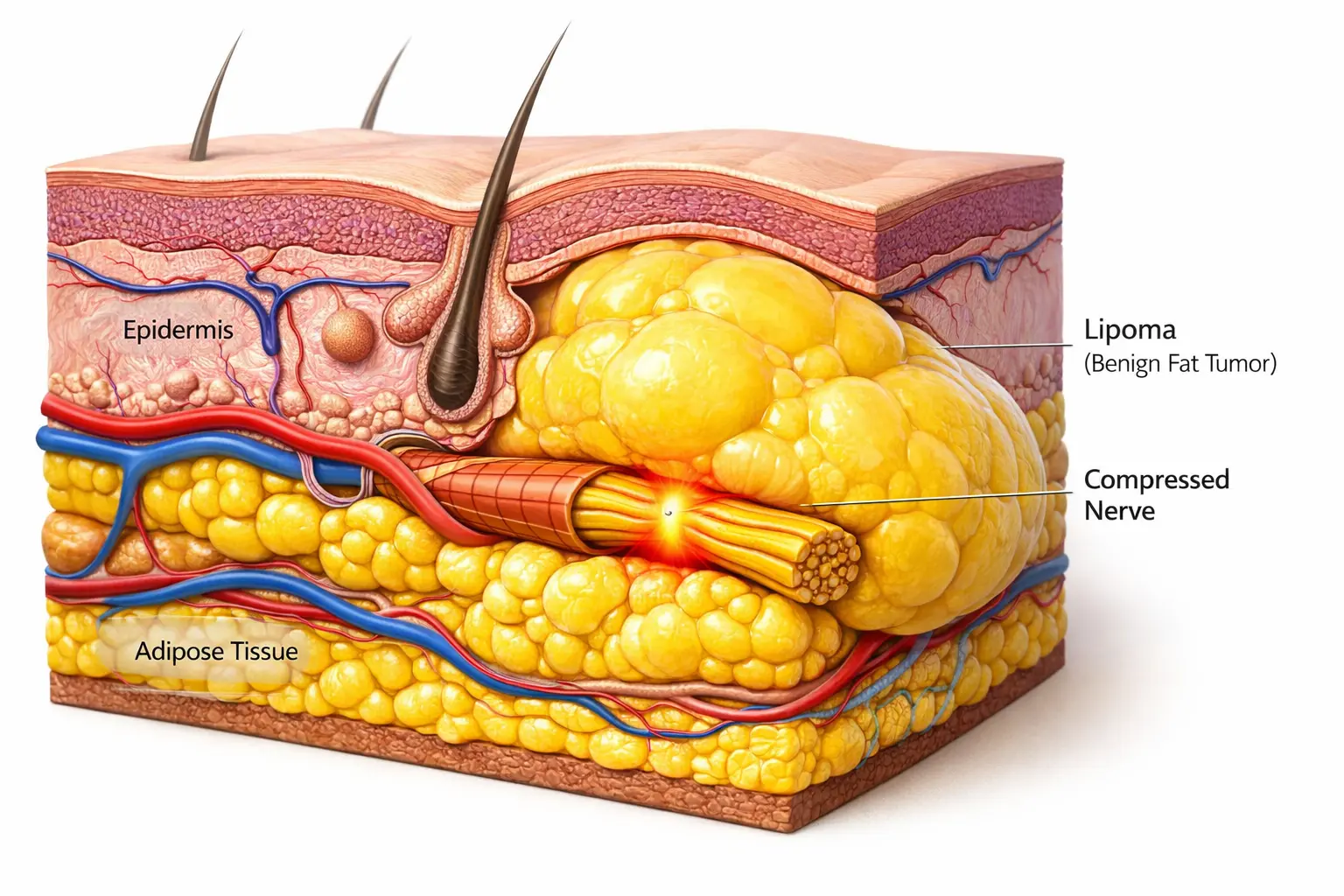
When evaluating a painful lipoma vs harmless lipoma, it is crucial to make sure the lump is actually a lipoma. Several other skin conditions can look and feel similar, and some require different medical approaches.
Cysts are very common and often confused with lipomas. However, a cyst is a sac filled with keratin (a cheese-like protein), whereas a lipoma is a solid mass of fat. Cysts often have a "punctum"—a small dark opening or pore in the center. If a cyst becomes infected, it will become much more painful than a lipoma. You can learn more about the 17 types of cysts to see if your bump fits that description.
This is the "scary" version. A liposarcoma is a rare, cancerous tumor of the fatty tissue. While lipomas are very common, liposarcomas are very rare. The key differences are that liposarcomas:
This is a rare condition where a person develops multiple, very painful lipomas across the body, often accompanied by fatigue and depression. This requires specialized medical management beyond simple surgical removal.
Usually seen in men with a history of heavy alcohol use, this condition causes massive symmetric fatty deposits around the neck and shoulders.
While most people can safely ignore a small, soft bump, there are certain "red flags" that mean you should book an appointment at a best skin biopsy and skin cancer screening center.
If you notice any of the following, do not wait:
A professional evaluation is the only way to truly distinguish a painful lipoma vs harmless lipoma and ensure that it isn't something more serious, like a cancerous cyst on the finger.
When you visit a clinic in 2026, the doctor will use several tools to confirm whether you have a painful lipoma vs harmless lipoma.
The first and most important step is the "palpation" test. A skilled doctor can often diagnose a lipoma simply by feeling its texture and mobility. They will check if it's "encapsulated" (meaning it has a clear border).
An ultrasound is a non-invasive way to look inside the bump. Lipomas have a very specific appearance on ultrasound—they are typically "hypoechoic," meaning they look darker than the surrounding fat but have a distinct, regular shape. This helps rule out fluid-filled cysts.
If the lipoma is very large (over 10 cm) or is located deep in the body (like inside the chest or thigh muscle), an MRI is the gold standard. It provides a detailed map of where the fat ends and the muscle or nerves begin. This is essential for planning a safe surgery.
If there is any doubt about whether the growth is benign, a doctor may perform a needle biopsy. A small sample of cells is taken and looked at under a microscope. If the cells are mature fat cells, the diagnosis of a lipoma is confirmed.
If you've decided that living with your bump isn't for you—perhaps because of the painful lipoma vs harmless lipoma comparison or simply for cosmetic reasons—there are several ways to remove them in 2026.
This is the most common method. The surgeon makes a small cut (often much smaller than the lump itself) and "pops" the lipoma out. Because lipomas are in a capsule, they usually come out cleanly like a pea out of a pod. This results in a very small scar. You can view before and after lipoma removal photos to see the typical results.
For very large lipomas, or those in areas where a long scar would be unsightly, doctors can use liposuction. A small tube (cannula) is inserted, and the fatty tissue is sucked out. The downside is that it's harder to remove the entire fibrous capsule, which slightly increases the chance of the lipoma growing back.
One of the most advanced options available today is 1444 nm Nd-YAG Laser Lipolysis. This technique uses laser energy to melt the fat before it's removed.
In some cases, a doctor might inject a steroid into the lipoma. This doesn't make it disappear entirely, but it can shrink the fat and reduce the pressure on nearby nerves, potentially turning a painful lipoma into a manageable, harmless one without surgery.
Surgery for a lipoma is usually performed under local anesthesia, meaning you are awake but the area is numb. You can usually drive yourself home and return to light activities the next day.
If you are looking for local care, you might check out the best cyst removal Mississauga services, as many of these specialists also handle expert lipoma excisions.
Can you prevent a lipoma? Not really. Since they are largely genetic, there isn't a specific diet or exercise routine that is proven to stop them from forming. However, maintaining a healthy weight can make existing lipomas less prominent and easier to monitor.
If you choose not to have a harmless lipoma removed, you should perform a self-check every few months.
"Early intervention is always easier. Removing a 2cm lipoma is a 15-minute procedure; removing a 10cm lipoma is a significant surgery. If it's growing, don't wait."
Yes. As a lipoma grows, it may eventually reach a size where it begins to press on a nerve or blood vessel. What started as a small, unnoticeable bump can become a painful lipoma over several years.
Absolutely not. Unlike a pimple or some types of cysts, a lipoma is a solid mass of tissue. Trying to squeeze it will only cause trauma, bruising, and potential infection. It will not "drain" because there is no liquid inside.
No. Once a lipoma has formed, it will not disappear without medical intervention. It might stay the same size for the rest of your life, but the fat cells will not dissolve on their own.
There is no scientific evidence that massage, essential oils, or specific diets can shrink a lipoma. While some "natural" websites claim otherwise, a lipoma is a structural growth that requires physical removal.
Usually, the opposite is true. People with "familial multiple lipomatosis" often have dozens of small lipomas. This is a genetic condition and is not a sign of increased cancer risk. Cancerous liposarcomas are almost always solitary (one single lump).
While we often focus on the physical aspects of painful lipoma vs harmless lipoma, we shouldn't overlook the emotional side. Carrying a visible lump can affect self-confidence.
If a lipoma is affecting your quality of life—whether through physical pain or mental stress—that is a valid reason to seek removal. You deserve to feel comfortable and confident in your own skin.
As we move through 2026, medical technology continues to evolve. We are seeing more use of AI-driven skin mapping to track the growth of lipomas over time with extreme precision. There is also ongoing research into injectable enzymes that could potentially "dissolve" fat cells in a lipoma without the need for an incision.
While these technologies are exciting, the current "gold standard" remains surgical excision or laser-assisted removal due to their high success rates and low recurrence. Choosing a clinic like The Minor Surgery Center ensures you have access to the most refined techniques available today.
Distinguishing between a painful lipoma vs harmless lipoma is about more than just knowing if it hurts; it's about understanding your body and knowing when to take action.
Most lipomas are quiet companions that require nothing more than an occasional check. However, if your lump is causing pain, growing rapidly, or affecting your self-esteem, 2026 is the perfect time to address it. With modern, minimally invasive techniques, you can remove these fatty growths with very little downtime and almost no scarring.
Don't let a "small bump" become a big worry. By staying informed and proactive, you can ensure that your skin stays healthy and you stay comfortable.
[1] American Academy of Dermatology. (2024). Lipomas: Diagnosis and Management.
[2] Mayo Clinic. (2025). Lipoma - Symptoms and Causes.
[3] Journal of Clinical Medicine. (2024). Advances in Benign Soft Tissue Tumor Excision.
[4] National Health Service (NHS). (2025). Lipoma overview and treatment options.