
Last updated: September 30, 2026
Nicotinamide (vitamin B3) is an oral supplement shown in a large randomized trial to cut new non-melanoma skin cancers (basal cell carcinoma and squamous cell carcinoma) by roughly 23 percent over 12 months in people with a history of multiple skin cancers [1]. It is not a substitute for sunscreen or skin checks, works only while you keep taking it, and current 2026 guidance positions it as an optional add-on therapy for high-risk patients rather than a treatment for the general public.
Nicotinamide is the amide form of vitamin B3, a water-soluble vitamin the body uses to make nicotinamide adenine dinucleotide (NAD), a molecule essential for cellular energy and DNA repair. In skin cancer prevention research, nicotinamide is studied specifically because ultraviolet (UV) light depletes cellular energy reserves needed to repair sun-damaged DNA, and nicotinamide appears to help restore that energy supply [7][9].
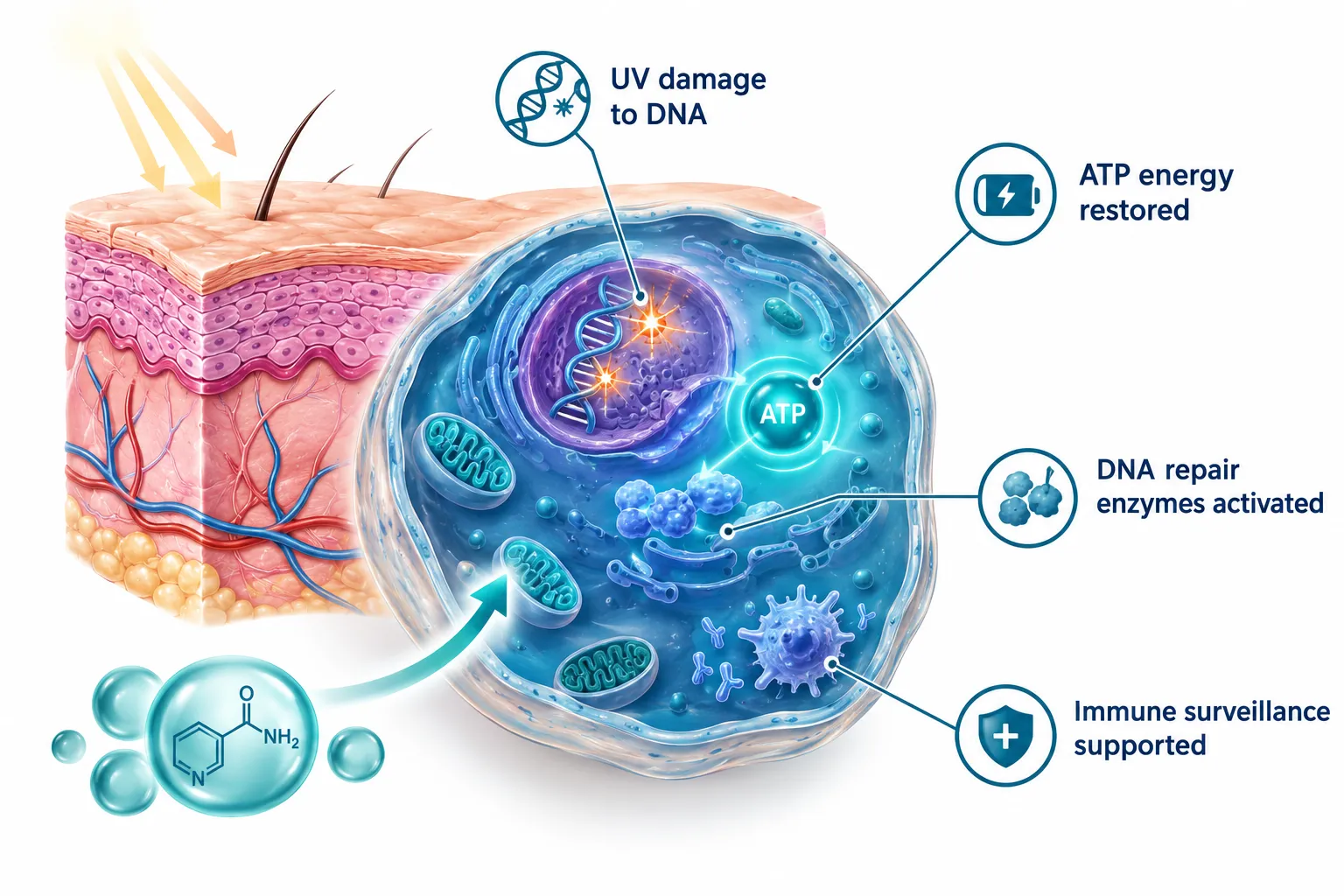
Sun exposure does two damaging things at once: it directly injures skin cell DNA, and it drains the ATP (cellular energy currency) that skin cells need to fix that damage. Laboratory research suggests nicotinamide helps offset this energy drain, giving skin cells more capacity to repair UV-induced DNA damage and maintain immune surveillance against abnormal cells before they turn into tumors [7].
Key points on how nicotinamide is thought to work:
This is a mechanistic explanation supported by laboratory and preclinical research, not a guarantee of cancer prevention for any individual. It explains why researchers tested nicotinamide specifically in people already prone to sun-damage-related skin cancers.
Nicotinamide and niacinamide are the same compound; niacinamide is simply the more common name used on supplement labels and skincare products. There is no chemical difference between them, so a bottle labeled "niacinamide" and one labeled "nicotinamide" contain the identical active ingredient.
Where confusion often happens is with niacin, a different form of vitamin B3 that is chemically distinct from nicotinamide/niacinamide.
CompoundAlso calledCommon useFlushing reactionNicotinamideNiacinamideSkin cancer prevention research, skincare, supplementsNoNiacinNicotinic acidCholesterol managementYes, often causes skin flushing
Decision rule: If a product label says "niacin" or "nicotinic acid," it is not the compound used in the skin cancer prevention studies discussed here. Only nicotinamide (niacinamide) has been tested in the major trials on BCC and SCC prevention [1][3]. Buying the wrong form will not deliver the studied benefit and may cause unwanted flushing instead.
The strongest evidence comes from a single large randomized controlled trial, known as the ONTRAC study, which found that oral nicotinamide reduced new non-melanoma skin cancers by approximately 23 percent over 12 months compared with placebo in high-risk patients [1][2]. This is the core data point that shapes current clinical guidance on nicotinamide for skin cancer prevention.
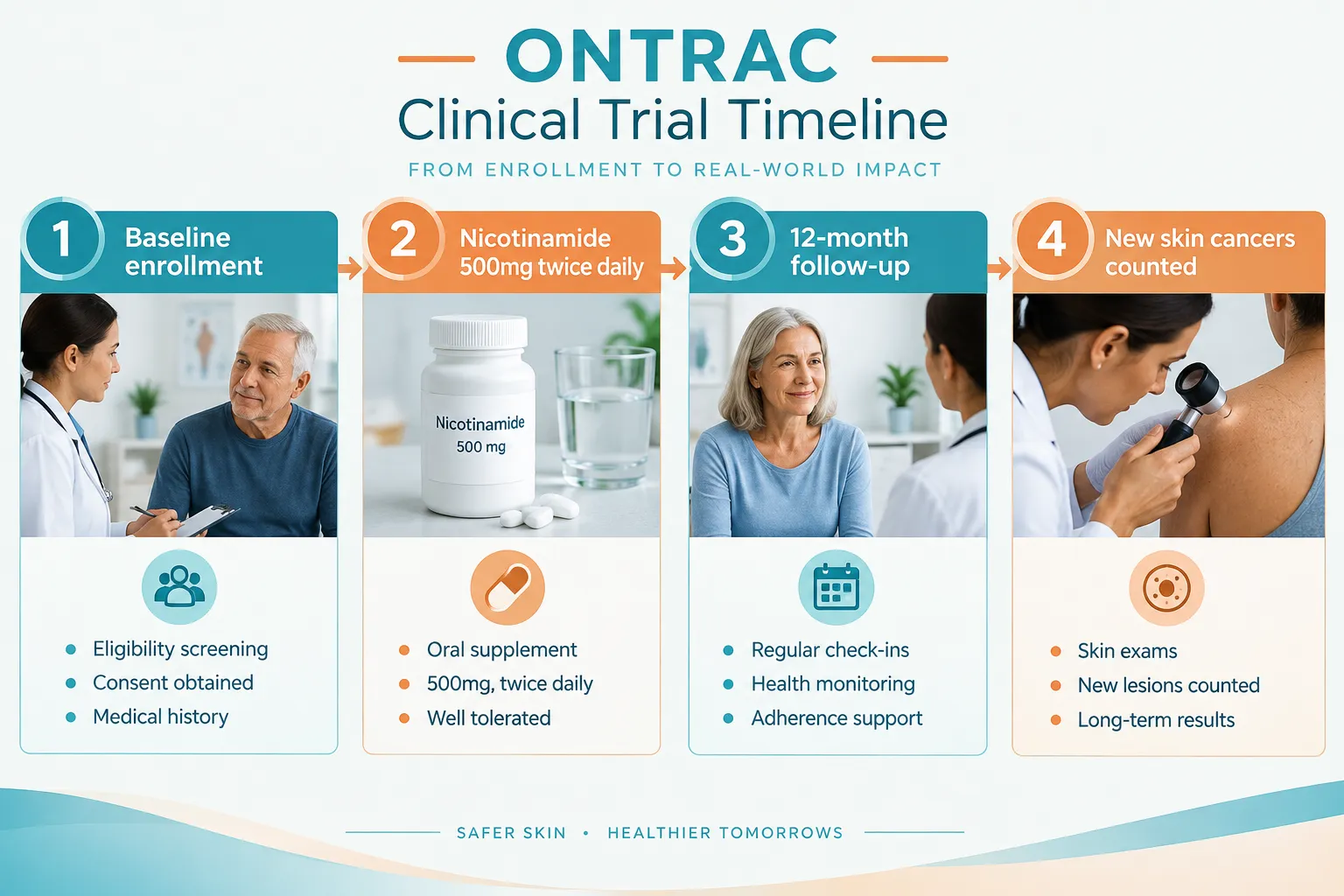
The ONTRAC trial enrolled patients with a history of at least two non-melanoma skin cancers in the previous five years, a group already known to be at high risk for developing more. Over 12 months, participants taking nicotinamide 500 mg twice daily had significantly fewer new basal cell carcinomas and squamous cell carcinomas compared to those on placebo [1][2]. Results from this trial were also presented at a major oncology conference, reinforcing its significance to the broader cancer research community [4][8].
A few things matter about how this trial was designed and what it actually tells us:
Nicotinamide also reduced the number of actinic keratoses (AKs), the rough, scaly precancerous skin patches that can sometimes progress to squamous cell carcinoma, though this was a secondary finding rather than the trial's main measured outcome [1]. AK reduction matters clinically because fewer precancerous lesions generally means fewer opportunities for those lesions to progress into invasive skin cancer over time.
Edge case: Nicotinamide reducing AK count is a supportive, secondary benefit. It should not be mistaken for a treatment that clears existing AKs the way cryotherapy or topical prescription creams do. If you already have diagnosed actinic keratoses, talk to your provider about direct treatment options such as cryotherapy for mole and lesion removal, rather than relying on nicotinamide alone to resolve them.
No. There is no human clinical trial evidence that nicotinamide prevents melanoma; the only supportive data comes from preclinical (laboratory and animal) studies, not from trials in people [7]. Melanoma has a different biology from BCC and SCC, and the ONTRAC trial specifically measured non-melanoma skin cancers, so its results cannot be extended to melanoma risk.
Common mistake: Assuming nicotinamide protects against all types of skin cancer, including melanoma, because it works for BCC and SCC. This is incorrect and could lead someone to skip mole checks or delay seeing a doctor about a changing mole. Anyone monitoring for melanoma should understand the difference between BCC and SCC and recognize that melanoma surveillance requires separate, dedicated skin checks regardless of nicotinamide use.
The dose used in the pivotal ONTRAC trial, and the dose most commonly referenced in clinical guidance, is 500 mg of nicotinamide taken twice daily, for a total of 1,000 mg per day [1]. This dosing schedule is the only one with strong trial-level evidence behind it for skin cancer prevention specifically.
Practical points on dosing:
Choose this dose if: you have a documented history of multiple BCC or SCC diagnoses and your dermatologist has discussed nicotinamide as an adjunct strategy. Do not self-prescribe a higher dose assuming "more is better." No trial evidence supports doses above 1,000 mg daily for cancer prevention, and higher doses increase the chance of side effects without added proven benefit.
Nicotinamide at the studied dose of 1,000 mg daily was generally well tolerated over the 12-month trial period, with quality-of-life measures remaining stable among participants [1][9]. This makes it one of the better-tolerated chemopreventive options studied for skin cancer, compared to some topical or systemic alternatives.
Reported safety characteristics include:
The 12-month trial data supports good short-to-medium-term safety, but formal long-term safety data extending well beyond one year of continuous daily use is more limited [1][9]. This is an important distinction: "safe for 12 months in a trial" is not automatically the same as "proven safe for 10 years of continuous use."
Decision rule: If your dermatologist recommends nicotinamide because of your high-risk history, plan for periodic check-ins, at least annually, to reassess whether continued use still makes sense, rather than starting it once and never revisiting the decision. This mirrors the general principle of ongoing monitoring covered in evidence-based recommendations for a skin-healthy lifestyle, where consistent long-term habits matter more than any single intervention.
Nicotinamide is best suited for people with a documented history of multiple non-melanoma skin cancers, meaning at least two prior BCC or SCC diagnoses, who are considered high-risk for developing more. It is not currently recommended as a general preventive supplement for the average adult with normal skin cancer risk.
Good candidates typically share these features:
Groups where evidence is less clear or insufficient:
The core trial evidence for nicotinamide comes primarily from studies of people with fair skin and a history of significant UV-related skin cancer, so direct evidence in people with darker skin tones is limited. This does not mean nicotinamide fails to work in people with darker skin; it means the specific, high-quality trial data is concentrated in the population most affected by UV-driven BCC and SCC, which tends to be fair-skinned individuals with extensive sun exposure history.
Practical takeaway: Skin cancer risk factors and prevention strategies should always be individualized. Regardless of skin tone, anyone with a personal or family history of skin cancer benefits from routine professional skin checks. A mole check and skin exam can help establish your individual risk profile and determine whether nicotinamide or other preventive strategies make sense for you specifically.
Sunscreen and nicotinamide are not competing options; they work through different mechanisms and address different parts of skin cancer risk, so current guidance treats them as complementary rather than as alternatives to each other. Sunscreen blocks UV radiation before it reaches skin cells, while nicotinamide works inside cells to support DNA repair after some UV exposure has already occurred.
FactorSunscreenNicotinamideHow it worksBlocks/reflects UV before skin exposureSupports DNA repair after cell exposureEvidence strengthStrong, decades of researchModerate, one major trial [1]Melanoma protectionYes, establishedNo evidence in humans [7]Who it is forEveryoneHigh-risk BCC/SCC history mainly [5]Effect after stoppingProtection only while appliedBenefit fades after stopping [1]
Choose sunscreen as your foundation, always. Add nicotinamide on top of sunscreen use, not instead of it, if your dermatologist confirms you fit the high-risk profile the trial evidence supports. Neither one alone is a complete skin cancer prevention plan; they address different stages of sun damage.
Based on trial data, nicotinamide's protective effect on new skin cancer formation was measured over a full 12-month period, meaning meaningful risk reduction is a cumulative effect over months, not something noticeable within days or weeks. There is no fast, visible sign that "it's working," because the benefit is statistical (fewer new cancers over time), not a symptom you can feel or see immediately.
Realistic expectations:
If you continue developing new BCC or SCC lesions while taking nicotinamide, this does not necessarily mean the supplement has failed; it means nicotinamide only reduced average risk by about 23 percent in trials, it did not eliminate risk entirely [1]. A meaningful risk reduction still leaves room for new lesions to occur, especially in people with a heavy prior history of skin cancer.
Steps to take if you develop a new suspicious spot while on nicotinamide:
Common mistake: Stopping nicotinamide abruptly after a new diagnosis, assuming it is useless. A single new lesion does not cancel out a statistically meaningful average risk reduction across a whole treatment population; discuss any changes to your regimen with your prescribing clinician rather than stopping on your own.
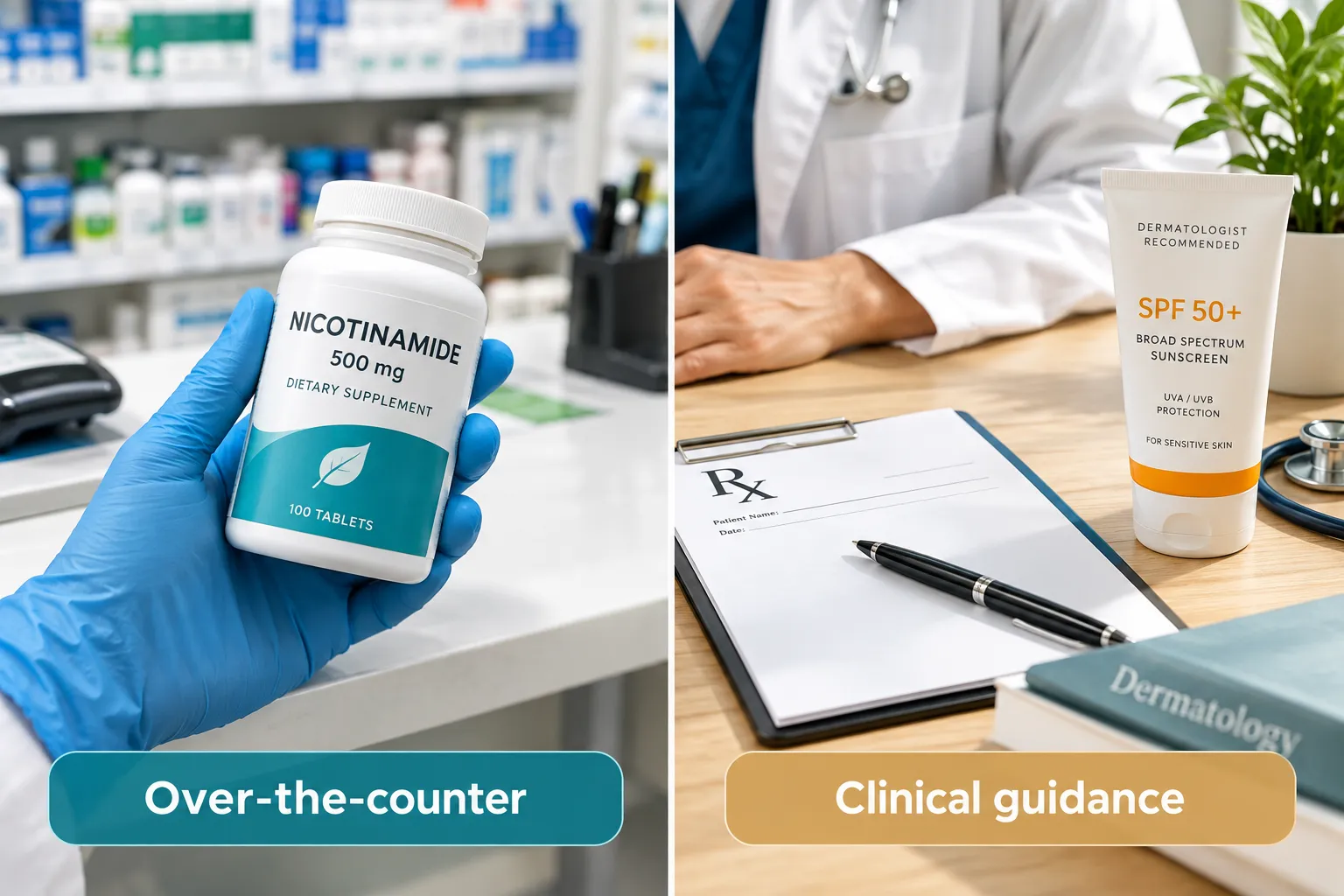
Nicotinamide (also sold as niacinamide) is available over the counter as a standard oral vitamin supplement in most pharmacies and health stores, and it does not require a prescription in most regions, though a doctor's guidance on dosing for skin cancer prevention specifically is strongly recommended. Because it is sold as a general-purpose vitamin, label quality and dose accuracy vary, so a few practical checks matter before choosing a product.
What to check when choosing a nicotinamide supplement:
Prescription vs over-the-counter: In practice, most patients obtain nicotinamide over the counter after a discussion with their dermatologist, rather than through a formal prescription, since it is classified as a vitamin supplement in most jurisdictions rather than a regulated drug. Even though a prescription typically is not required, treat the decision to start nicotinamide as a medical one. Bring it up during a regular dermatology visit or mole and skin check so your provider can confirm you fit the high-risk profile the evidence supports and rule out any reason it might not be appropriate for you.
As of January 2026, comprehensive clinical guidance frames nicotinamide as an optional chemopreventive option for carefully selected high-risk patients, not a first-line or universal recommendation [5]. This represents a cautious, evidence-anchored position rather than broad endorsement.
"The overall 2026 consensus treats nicotinamide as a modest, evidence-based adjunct, not a stand-alone solution for skin cancer prevention."
Supporting context behind this cautious stance:
Bottom line for 2026: Nicotinamide occupies a specific, well-defined niche. It is a reasonable, low-risk addition for people with a proven pattern of recurrent non-melanoma skin cancer, used alongside (never instead of) sunscreen, protective clothing, and regular skin checks.
Does nicotinamide really prevent skin cancer?
Nicotinamide reduced new basal cell carcinoma and squamous cell carcinoma cases by about 23 percent over 12 months in a high-risk population in the ONTRAC trial [1]. It lowers risk; it does not eliminate it or guarantee prevention for any individual person.
Is niacinamide the same as nicotinamide for skin cancer prevention?
Yes, niacinamide and nicotinamide are the same compound, just different names for the identical active ingredient [3]. Niacin (nicotinic acid) is a different compound and has not been tested for this benefit.
What is the correct nicotinamide dose for skin cancer prevention?
The dose used in the pivotal clinical trial was 500 mg taken twice daily, for a total of 1,000 mg per day [1]. This is the only dosing schedule with strong trial evidence behind it.
Can I take nicotinamide instead of wearing sunscreen?
No. Nicotinamide works inside skin cells after UV exposure has occurred, while sunscreen blocks UV exposure before it happens; they serve different, complementary roles and neither replaces the other.
Does nicotinamide prevent melanoma?
No human trial evidence supports melanoma prevention with nicotinamide; only preclinical laboratory data exists, and melanoma requires its own separate monitoring and prevention approach [7].
How long do I need to take nicotinamide before it works?
Trial-measured benefits accumulated over a full 12-month period. There is no immediate or visible sign of benefit; risk reduction is a statistical, long-term effect, not something felt in days or weeks [1].
What happens if I stop taking nicotinamide?
Protective benefit appears to fade once nicotinamide is discontinued, based on trial evidence, meaning continuous daily use is needed to maintain the effect [1].
Is nicotinamide safe for long-term daily use?
It was well tolerated over the 12-month trial period with stable quality-of-life outcomes [1][9]. Data on continuous use beyond that timeframe is more limited, so periodic medical review is advised.
Who should not bother taking nicotinamide?
People with no personal history of skin cancer and average population risk are not currently supported by evidence for routine nicotinamide use; benefit has only been clearly shown in high-risk groups with prior BCC or SCC history [5].
Can organ transplant patients take nicotinamide for skin cancer prevention?
Evidence in transplant recipients and other immunosuppressed patients remains insufficient to confirm the same benefit seen in the general high-risk trial population, so this should be discussed individually with a transplant dermatology team [7][9].
Do I need a prescription to buy nicotinamide?
In most regions, nicotinamide (niacinamide) is available over the counter as a vitamin supplement without a prescription, though discussing the decision with a dermatologist first is strongly recommended to confirm it fits your risk profile.
Where can I learn more about the difference between BCC and SCC?
Basal cell carcinoma and squamous cell carcinoma are both non-melanoma skin cancers but differ in behavior and risk; see a detailed breakdown of how BCC and SCC differ for a fuller comparison.
Nicotinamide (vitamin B3) has real, trial-backed evidence behind it, but that evidence points to a specific, limited role rather than a broad cure-all. The ONTRAC trial showed a roughly 23 percent reduction in new non-melanoma skin cancers among high-risk patients over 12 months, a meaningful but modest effect that fades once the supplement is stopped [1]. It works well alongside sunscreen and regular skin checks, not as a substitute for either.
If you have a history of two or more basal cell carcinomas or squamous cell carcinomas, nicotinamide is worth discussing with your dermatologist as a low-risk, well-tolerated add-on to your existing prevention plan. If you have no personal history of skin cancer, current evidence does not support starting it just as a precaution.
Practical next steps:
[1] Nejmoa1506197 - https://www.nejm.org/doi/full/10.1056/NEJMoa1506197
[2] Nejmoa1506197 - https://www.augusta.edu/cancer/community/teledermatology-program/documents/nejmoa1506197.pdf
[3] Phpp - https://onlinelibrary.wiley.com/doi/full/10.1111/phpp.12328
[4] Jco.2015.33.15 Suppl - https://ascopubs.org/doi/10.1200/jco.2015.33.15_suppl.9000
[5] academic.oup - https://academic.oup.com/ced/article/42/8/945/6623275?searchresult=1
[6] Pmc10050186 - https://pmc.ncbi.nlm.nih.gov/articles/PMC10050186/
[7] Pmc4570055 - https://pmc.ncbi.nlm.nih.gov/articles/PMC4570055/
[8] Simple Means Of Preventing Nonmelanoma Skin Cancer Reported - https://ascopost.com/issues/may-25-2015/simple-means-of-preventing-nonmelanoma-skin-cancer-reported/
[9] Pmc6473406 - https://pmc.ncbi.nlm.nih.gov/articles/PMC6473406/
[10] 09546634.2023 - https://www.tandfonline.com/doi/full/10.1080/09546634.2023.2247105