
Last updated: June 16, 2026
Mole removal on scalp Toronto is a straightforward outpatient procedure performed by dermatologists and minor surgery specialists using surgical excision, shave removal, or in some cases laser treatment. Most scalp moles are benign, but any mole that changes in size, shape, or color warrants prompt medical evaluation. Cosmetic removals are typically not covered by OHIP, while medically necessary removals may qualify for partial coverage depending on clinical findings.
Most scalp moles are benign (non-cancerous) melanocytic nevi, meaning they pose no direct health threat. However, the scalp is one of the higher-risk anatomical sites for melanoma, partly because moles there are harder to monitor and often receive cumulative UV exposure over a lifetime.
According to the Canadian Cancer Society, melanoma can develop anywhere on the skin, including the scalp and neck region, and these locations are associated with worse outcomes partly due to delayed detection. A scalp mole is not automatically dangerous, but certain features demand urgent medical attention.
Warning signs that a scalp mole may be cancerous:
A mole that bleeds when you brush or comb your hair, or one that feels raised and tender, should be evaluated by a dermatologist as soon as possible. For a detailed breakdown of how to distinguish a suspicious mole from a benign one, see this guide on melanoma moles vs benign moles and how to tell the difference.
Common mistake: Many people assume that a mole hidden under thick hair is "safe" because it isn't exposed to the sun. In reality, UV radiation penetrates the scalp, and moles in hair-bearing areas can still undergo malignant transformation.
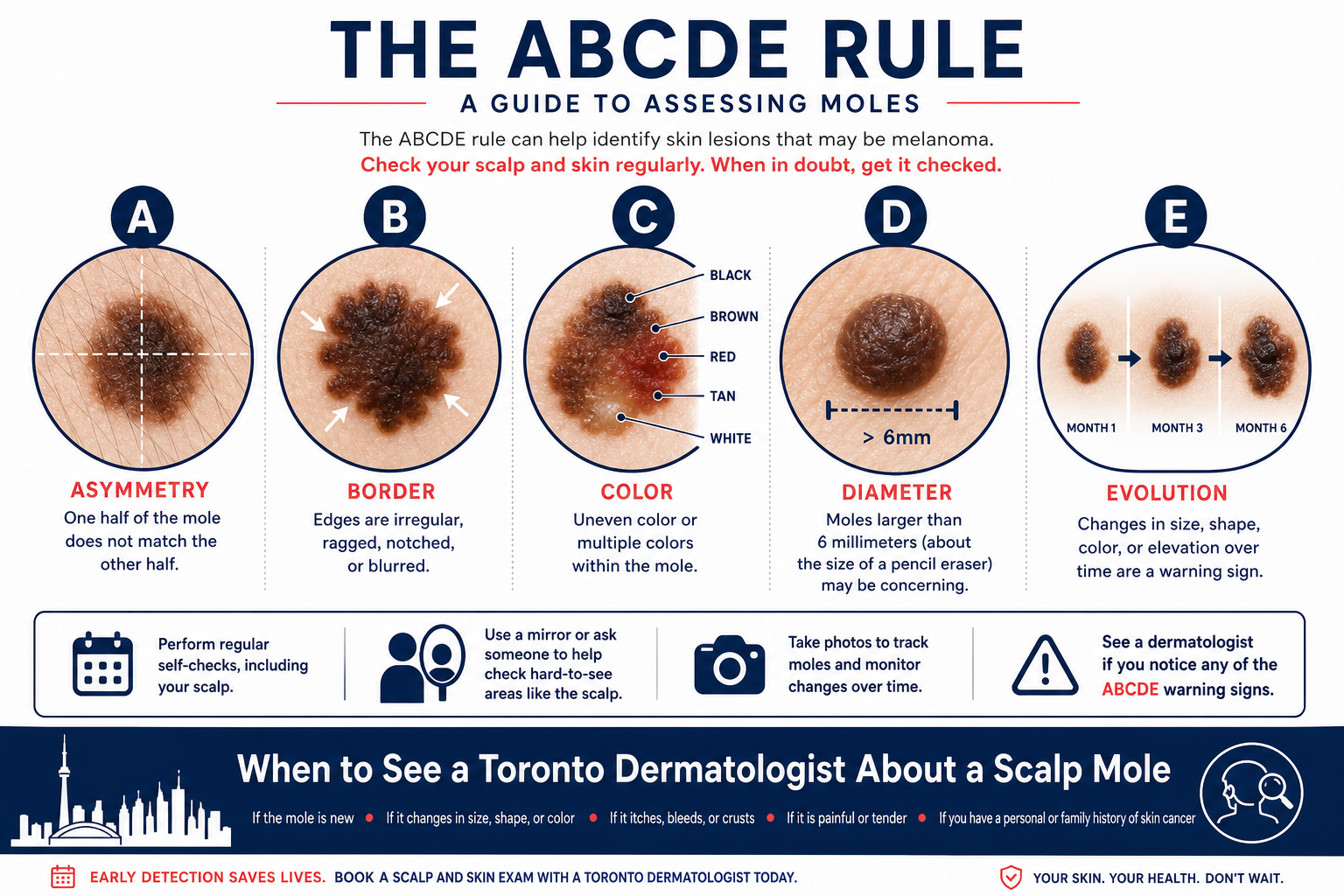
A scalp mole needs medical attention if it shows any ABCDE warning signs, has changed recently, causes symptoms, or simply hasn't been professionally evaluated in the past year. Even a mole that looks stable should be assessed by a qualified clinician if it has never been checked.
Specific triggers that warrant a same-week appointment:
Triggers that can wait for a routine appointment (but still need checking):
If you're unsure, a mole check in Toronto at a no-referral clinic is a low-barrier first step. Many Toronto minor surgery centers offer free or low-cost consultations specifically for mole evaluation, so there's no reason to delay.
Toronto dermatologists and minor surgery specialists use three primary techniques for scalp mole removal: surgical excision, shave excision, and laser removal. The right method depends on the mole's size, depth, whether it's raised or flat, and whether a biopsy specimen is needed.
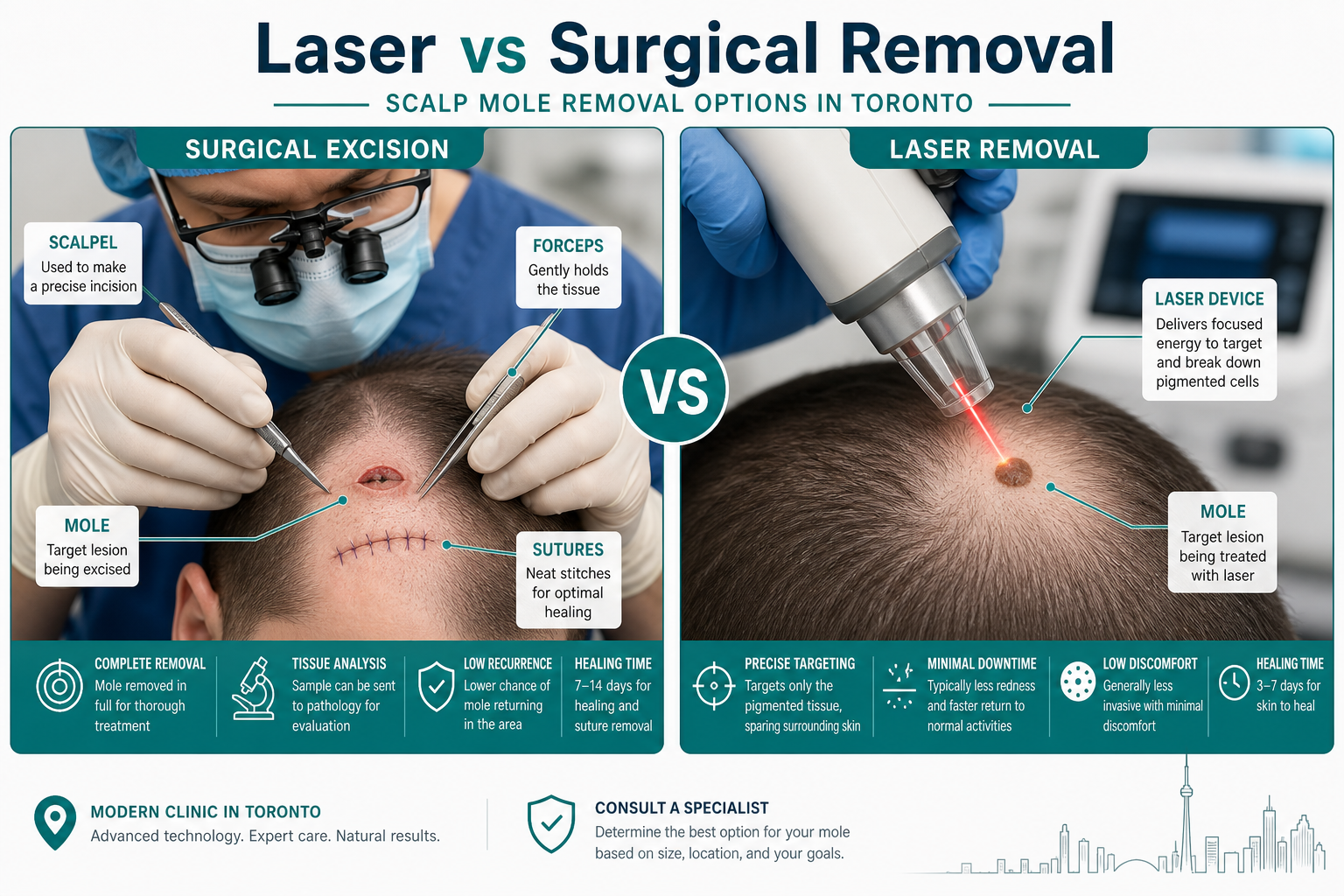
Surgical excision involves cutting out the entire mole along with a small margin of surrounding tissue, then closing the wound with sutures. This is the gold standard when:
The procedure is done under local anesthetic and typically takes 15 to 30 minutes. Sutures are removed 7 to 14 days later. Surgical excision leaves a linear scar, which is usually well-hidden within the hair.
Shave excision uses a small blade to shave the mole flush with the surrounding skin surface. It works well for raised, benign moles and produces minimal scarring. A small specimen can still be sent for pathology. This method is faster and requires no sutures in most cases.
Laser mole removal uses targeted light energy to break down pigmented cells. It is best suited for flat, superficial, confirmed-benign moles. Laser cannot provide a tissue sample for biopsy, which is a significant limitation for any mole that hasn't been definitively confirmed as benign. For a full comparison, see laser vs traditional mole removal.
Cryotherapy (freezing with liquid nitrogen) is occasionally used for very small, superficial lesions. It's more commonly applied to seborrheic keratoses or warts than to true melanocytic moles. Learn more about cryotherapy for mole removal: benefits, risks, and what to expect.
Choose surgical excision if the mole is raised, has any atypical features, or if a biopsy is needed. Choose laser if the mole is flat, confirmed benign by a prior biopsy or clinical assessment, and the primary goal is cosmetic improvement with minimal downtime.
FeatureSurgical ExcisionLaser RemovalBiopsy possibleYesNoBest for raised molesYesNoBest for flat pigmented molesPossibleYesScarring riskLow to moderate (linear scar)Very lowSessions requiredUsually oneMay need 1-3 sessionsRecovery time7-14 days (suture removal)3-7 daysCost range in Toronto$200-$600$150-$500OHIP coverage possibleYes (if medically indicated)Rarely
Edge case: Some Toronto clinics offer radiofrequency (RF) ablation as an alternative to both laser and traditional surgery for small, benign scalp moles. RF ablation cauterizes the mole tissue with minimal bleeding and is particularly useful on the scalp where vascularity is high.
Mole removal in Toronto costs between $150 and $600 per mole for cosmetic procedures, with most straightforward scalp moles falling in the $200 to $400 range. Costs vary based on mole size, removal method, whether pathology is required, and the clinic's fee structure.
Typical Toronto mole removal cost breakdown (2026 estimates):
Note: These are estimates based on typical private clinic pricing in the Greater Toronto Area as of 2026. Actual fees vary by provider. Always request an itemized quote before booking.
For a broader look at pricing across procedures, the mole removal cost guide covers the factors that most influence your final bill.
OHIP covers mole removal on the scalp only when the procedure is medically necessary, meaning a physician has documented clinical concern about malignancy or the mole is causing a functional problem. Purely cosmetic removals are not covered.
OHIP may cover scalp mole removal when:
OHIP will not cover scalp mole removal when:
Practical tip: If your family physician or dermatologist documents a medical reason for removal, the procedure and associated pathology fee may be billed to OHIP. If you go directly to a private minor surgery clinic for cosmetic removal, you will pay out of pocket. Some extended health benefit plans cover a portion of cosmetic mole removal, so check your policy before booking.
No. Attempting to remove a scalp mole at home is unsafe and should not be done. The risks include serious infection, uncontrolled bleeding, permanent scarring, and the possibility of missing a cancer diagnosis entirely.
The scalp has an exceptionally rich blood supply. Even a small cut can bleed significantly, and the area is difficult to keep clean and protected during healing. Over-the-counter mole removal creams, acid-based kits, and DIY cutting methods are not designed for scalp use and carry real danger.
Why home removal is particularly risky on the scalp:
The appeal of home removal is understandable given cost concerns, but the risks far outweigh any savings. For a detailed breakdown of why DIY approaches fail, see best mole removal at home: what actually works and what doesn't.
Scalp mole removal is a low-risk procedure when performed by a qualified clinician, but patients should be aware of potential side effects. The most common issues are temporary and resolve within a few weeks.
Common side effects (expected and temporary):
Less common but possible complications:
Rare complications:
Patients who have previously developed keloid scars after mole removal should discuss preventive measures with their surgeon before proceeding.
Yes, all mole removal methods leave some form of scar, but on the scalp, scars are typically well-hidden by hair and tend to be less cosmetically noticeable than on other body areas. The size and visibility of the scar depend on the removal method, mole size, and individual healing response.
What to expect by method:
Factors that increase scar visibility:
Scar minimization tips:
For more on post-removal scar care, see best scar care after mole removal: silicone vs vitamin E vs petroleum jelly.
Most patients recover from scalp mole removal within 1 to 2 weeks for surface wound closure, with full scar maturation taking 3 to 6 months. The scalp generally heals well due to its strong blood supply, but the hair-bearing environment requires specific aftercare.
StageTimeframeInitial wound closure5-10 daysSuture removal (if applicable)7-14 days post-procedureScabbing and crusting resolution10-21 daysSurface skin fully healed2-4 weeksHair regrowth over scar area6-12 weeksScar fading and maturation3-6 months
Post-procedure care instructions (typical):
When to call the clinic: If you notice increasing pain after day 3, pus, a foul odor, fever above 38°C, or the wound edges separating, contact your provider promptly.
Most adults are suitable candidates for scalp mole removal, but certain medical conditions and circumstances require extra caution or may temporarily delay the procedure.
Patients who may need to wait or require modified protocols:
Patients who should not use laser removal specifically:
Common mistake: Some patients delay removal because they are taking blood thinners and assume they cannot have the procedure at all. In most cases, a brief, physician-supervised medication pause or a modified surgical technique makes the procedure safe. Always discuss your full medication list at consultation rather than canceling outright.
Toronto has a wide range of qualified providers for scalp mole removal, from hospital-based dermatology departments to private minor surgery centers. The best choice depends on whether the removal is cosmetic or medically indicated, your timeline, and your location in the city.
What to look for in a Toronto mole removal clinic:
Clinic options by area:
For a broader comparison of Toronto providers, the guide to best mole check clinics in Toronto covers rapid-access options with no referral required.
Decision rule: If your mole has any atypical features, prioritize a clinic that can perform excision with pathology on the same visit. If the mole is clearly benign and cosmetic removal is the goal, a private minor surgery center with transparent pricing is usually the fastest and most cost-effective path.
How long does scalp mole removal take?
The procedure itself typically takes 15 to 30 minutes for a single mole, including preparation, local anesthetic injection, removal, and wound closure. You can usually drive yourself home afterward.
Does scalp mole removal hurt?
The local anesthetic injection causes a brief stinging sensation lasting a few seconds. Once the area is numb, the removal itself is painless. Mild soreness for 2 to 5 days afterward is normal and manageable with over-the-counter pain relief. For more detail, see does mole removal hurt.
Can hair grow back after scalp mole removal?
In most cases, yes. Hair follicles around the mole are preserved during careful excision, and hair typically regrows over the scar area within 6 to 12 weeks. If the excision was very wide or if scarring is significant, some permanent hair loss in a small area is possible.
Do I need a referral to get a mole removed in Toronto?
No. Many private minor surgery clinics in Toronto accept patients without a GP referral. You can book directly and have a consultation and removal on the same visit in many cases.
Can a mole grow back after removal?
Complete surgical excision with clear margins rarely results in regrowth. Shave excision, which removes the surface portion of the mole but may leave some cells at the base, carries a slightly higher recurrence rate. If a mole returns after removal, it should be re-evaluated promptly.
Is it safe to have multiple moles removed in one session?
Yes, most clinics can remove multiple moles in a single appointment, provided the total procedure time and anesthetic dose remain within safe limits. Discuss this with your provider at consultation.
What should I do to prepare for scalp mole removal?
Wash your hair the morning of the procedure since you'll need to keep the area dry for 24 to 48 hours afterward. Avoid blood-thinning supplements like fish oil, vitamin E, and aspirin (if not medically required) for 5 to 7 days beforehand. Arrange to have someone review aftercare instructions with you, as you may feel slightly lightheaded after the procedure.
How do I know if my removed mole was cancerous?
If the excised mole was sent for pathology (standard practice for surgical excisions), your clinic will contact you with results within 1 to 3 weeks. Ask your provider at the time of removal whether the specimen will be sent to a lab, and confirm how results will be communicated.
Can I color or bleach my hair after scalp mole removal?
Wait until the wound is fully healed (typically 3 to 4 weeks) before applying any chemical hair treatments to the area. Chemical exposure to an open or healing wound increases infection risk and can disrupt healing.
What is the difference between a mole and a seborrheic keratosis on the scalp?
Seborrheic keratoses are benign, waxy, "stuck-on" growths that are very common on the scalp and are not true moles. They do not carry the same malignancy risk as melanocytic nevi but can look alarming. A clinician can distinguish the two by visual examination; if uncertain, a biopsy confirms the diagnosis. Learn more about seborrheic keratosis removal and treatment in Toronto.
What if my scalp mole turns out to be melanoma?
If pathology confirms melanoma, you will be referred to a specialist for further treatment, which may include wider excision (wider surgical margins), sentinel lymph node biopsy, or oncology consultation depending on the stage. Early-stage melanoma caught at the primary lesion level has an excellent prognosis. See melanoma surgery in Toronto: what to expect for more detail.
Scalp moles are common, often hidden, and frequently ignored until they cause symptoms. That's a problem, because the scalp is a known higher-risk site for melanoma and one of the harder areas to self-monitor. The good news is that mole removal on scalp Toronto is accessible, fast, and well within the capabilities of the city's many qualified minor surgery and dermatology clinics.
Actionable next steps:
For patients across the GTA, The Minor Surgery Center operates multiple locations with board-certified surgeons, no-referral access, and transparent pricing. Visit the mole removal clinic overview to learn more or book a consultation.