
Many people look into their bathroom cabinets for solutions to common skin concerns. One of the most talked-about DIY trends involves using apple cider vinegar (ACV) to get rid of unwanted moles. It sounds simple, natural, and inexpensive. However, the reality of mole removal at home apple cider vinegar risks is far more complex and dangerous than social media videos might suggest.
In 2025, with more information available than ever, it is vital to understand that your skin is your body's largest organ. Treating it with household acids can lead to permanent damage, severe scarring, and, most importantly, the missed diagnosis of life-threatening skin cancer. While the "natural" label on a bottle of vinegar suggests safety, the chemical reality of acetic acid on delicate skin tissue tells a different story.
This article provides an in-depth look at why attempting to remove a mole with apple cider vinegar is a gamble you shouldn't take. We will explore the chemical risks, the medical dangers of DIY "surgery," and the professional alternatives that ensure your skin stays healthy and scar-free.
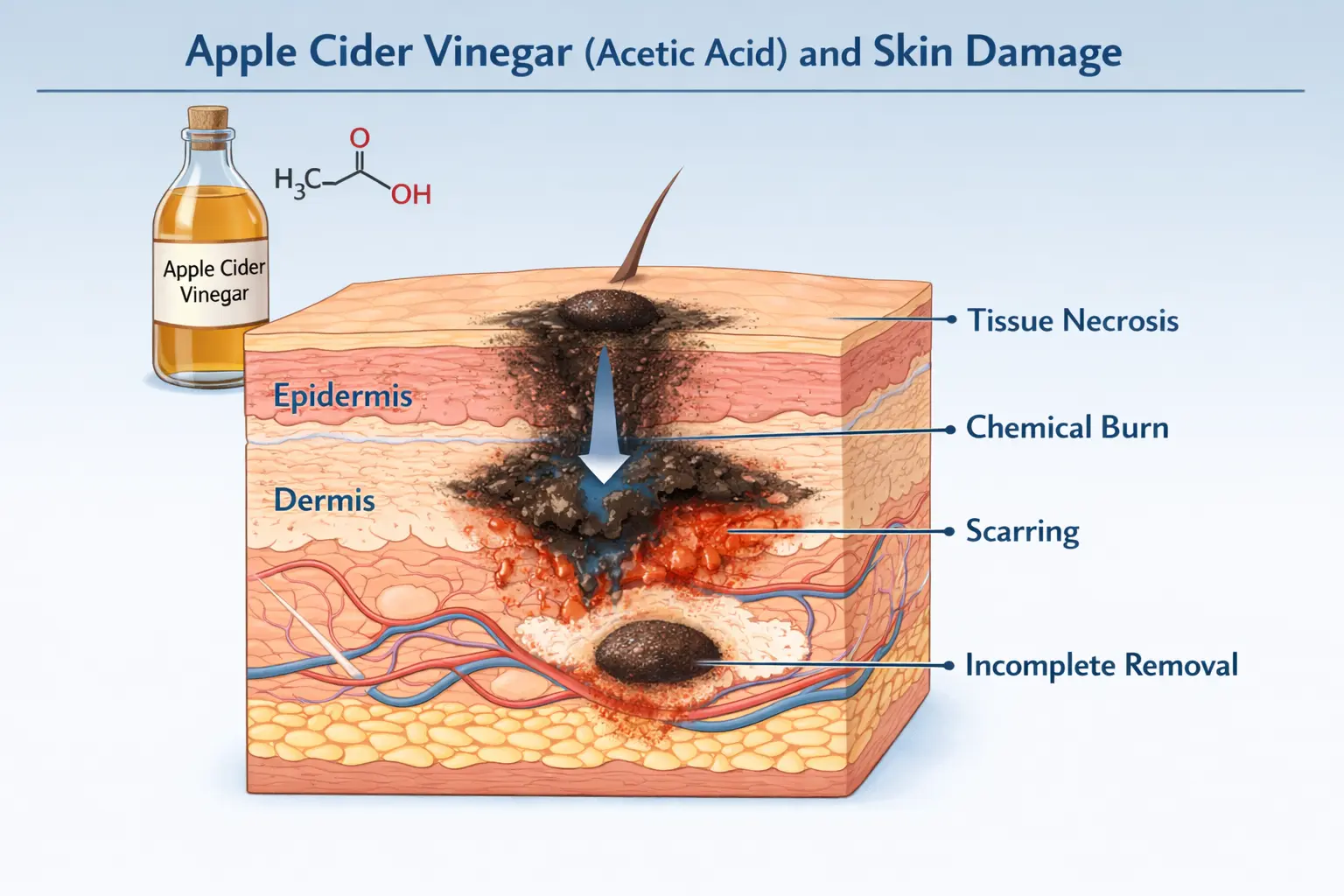
To understand why this method is dangerous, we must look at the science of what is actually happening to your skin. Apple cider vinegar is created through a fermentation process that results in a liquid containing about 5% to 6% acetic acid. While this concentration is safe for consumption or as a diluted toner, the "mole removal" method usually involves soaking a cotton ball in vinegar and taping it to the mole for hours or even days.
When you trap acetic acid against your skin under a bandage, it creates a "wet dressing" effect. This prevents the acid from evaporating and forces it to penetrate deep into the skin layers.
The word "natural" is often used as a synonym for "safe," but this is a dangerous misconception in dermatology. Poison ivy is natural; so is arsenic. Applying a concentrated acid to a lesion is a form of chemical cauterization. When performed in a kitchen rather than a clinic, the mole removal at home apple cider vinegar risks include third-degree burns that may require skin grafting to repair.
"Just because a substance is found in your pantry doesn't mean it belongs in your dermis. The skin's barrier is designed to protect you, and using acid to breach that barrier is an invitation for complications."
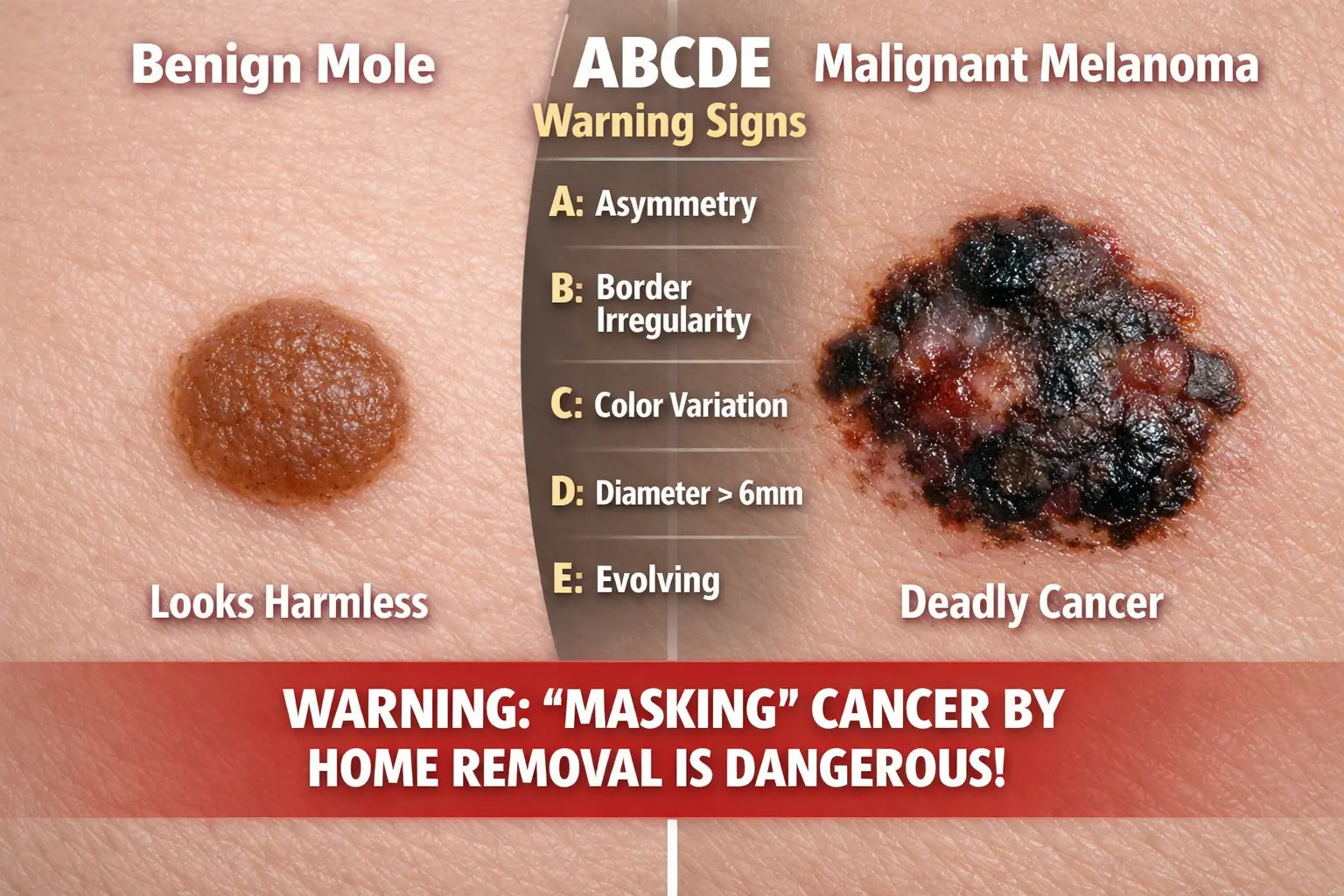
The most significant of all mole removal at home apple cider vinegar risks isn't the burn—it's the potential for a missed cancer diagnosis. Many people cannot distinguish between a benign mole and a malignant melanoma just by looking in the mirror.
If you use ACV on a mole that happens to be an atypical mole or an early-stage melanoma, you might successfully burn off the top layer. The spot may appear to be gone or replaced by a scar. However, cancer cells often sit deep within the skin.
By removing the visible portion of the mole, you are:
FeatureDIY (Apple Cider Vinegar)Professional RemovalTissue AnalysisDestroyed; no testing possibleSent to pathology for cancer screeningPrecisionAcid spreads to healthy skinTargeted removal with minimal damageDepth ControlNone; risk of deep scarringControlled by the surgeon or specialistSafetyHigh risk of infection/burnsPerformed in a sterile environmentOutcomeUnpredictable, often leaves pitsAesthetic results with minimal scarring
If you are concerned about a spot, it is always safer to visit the best skin cancer clinic for a professional evaluation before taking any action.
Beyond the risk of cancer, the physical side effects of using ACV on your skin can be life-altering. The internet often glosses over the "healing phase," which can be painful and unsightly.
Many users report intense stinging, redness, and swelling within hours of application. Because the skin on the face or neck is thinner than on other parts of the body, the acid can penetrate quickly, causing deep burns that are difficult to treat.
Even if the mole "goes away," the skin left behind may never look the same.
When the skin is burned, the body rushes to repair the area, often producing disorganized collagen. This can lead to raised, itchy, or painful scars. If you are prone to keloids, a DIY mole removal attempt can result in a scar much larger and more prominent than the original mole. Understanding 25 types of skin lesions can help you realize that what you are trying to remove might not even be a mole, making the risk of scarring even more tragic.
Your skin is your first line of defense against bacteria. By creating an open chemical burn in a non-sterile home environment, you are opening the door for Staphylococcus aureus or other bacteria. Signs of infection include:
A major factor in mole removal at home apple cider vinegar risks is misidentification. Not every bump on the skin is a mole (nevus). People often mistake other growths for moles and apply ACV to lesions that require entirely different treatments.
Skin tags are soft, hanging growths. While some people use ACV on these as well, the risks of irritation remain. Professional skin tag removal is so quick and simple that the DIY risks are rarely worth it.
A cyst is a sac-like pocket under the skin. Applying acid to the surface of a cyst will not remove the internal sac. It will only irritate the skin, potentially causing the cyst to rupture internally and become infected.
Actinic Keratosis is a precancerous patch caused by sun damage. Treating these with vinegar is ineffective and dangerous, as they require specific medical interventions to prevent them from turning into squamous cell carcinoma.
Before considering any removal, evaluate the lesion using the ABCDE method:
If you notice any of these signs, you must see a specialist immediately. Searching for a melanoma specialist near me is a much better use of time than looking for DIY home remedies.
In 2025, medical technology has made mole removal more accessible, affordable, and safer than ever. There is no reason to risk a permanent chemical burn when professional options provide superior results.
When you visit a clinic like The Minor Surgery Center, the process is straightforward:
People often choose ACV because they think it's the "cheap" option. However, the long-term costs of mole removal at home apple cider vinegar risks can far exceed the price of a professional procedure.
If a DIY attempt goes wrong, you may end up spending thousands of dollars on:
The face is a central part of our identity. A permanent, pitted scar or a dark mark on the nose or cheek can lead to significant self-consciousness and a loss of confidence. Many patients visit clinics to fix the damage caused by home remedies, expressing deep regret that they didn't seek professional help first.
While you should never attempt to "perform surgery" on yourself, there are many safe ways to care for your skin at home in 2025.
If your goal is better-looking skin, avoid acids and instead focus on:
While the acid in ACV can eventually burn away the top layers of a mole, it is not a "removal" in the medical sense. It is a chemical burn. It often leaves the root of the mole behind, leading to regrowth, and it carries a high risk of scarring and infection.
Depending on your skin's sensitivity, damage can begin in as little as a few hours. Because ACV is often applied under a bandage, the skin stays moist and the acid penetrates deeper than it would if it were just dabbed on and washed off.
No. Even if a mole is benign, the risk of permanent scarring and infection from mole removal at home apple cider vinegar risks is still present. Furthermore, it is nearly impossible for a layperson to be 100% sure a mole is benign without a microscopic exam.
The internet is full of "life hacks," but medical procedures should never be DIY projects. The mole removal at home apple cider vinegar risks are simply too high to justify the small savings. From the immediate pain of chemical burns to the life-threatening danger of masking a growing melanoma, the consequences of using ACV are severe.
In 2025, we have access to incredible medical advancements. If you have a mole that you dislike for cosmetic reasons or one that concerns you medically, the only safe path is to consult a professional. You deserve the peace of mind that comes with a expert diagnosis and the aesthetic results that only a trained specialist can provide.
Your skin is irreplaceable. Don't risk it for a bottle of vinegar.
[1] American Academy of Dermatology. "Dangers of at-home mole removal." [2] Journal of Clinical and Aesthetic Dermatology. "Chemical burns from household products: A review of acetic acid injuries." [3] Skin Cancer Foundation. "The ABCDEs of Melanoma." [4] British Journal of Dermatology. "Patient-performed skin procedures and the risk of delayed melanoma diagnosis."