
Last updated: May 20, 2026
Quick Answer: The Melanoma Canada Mole Mobile is a free, walk-in mobile skin cancer screening unit touring Ontario from May 1 to October 31, 2026, with 130+ stops planned coast to coast. No appointment is needed — screenings are first-come, first-served. New Ontario stops are posted two weeks in advance at molemobile.ca. Call the Mole Mobile Hotline at 1-866-830-6653 to confirm weekend schedules before heading out.
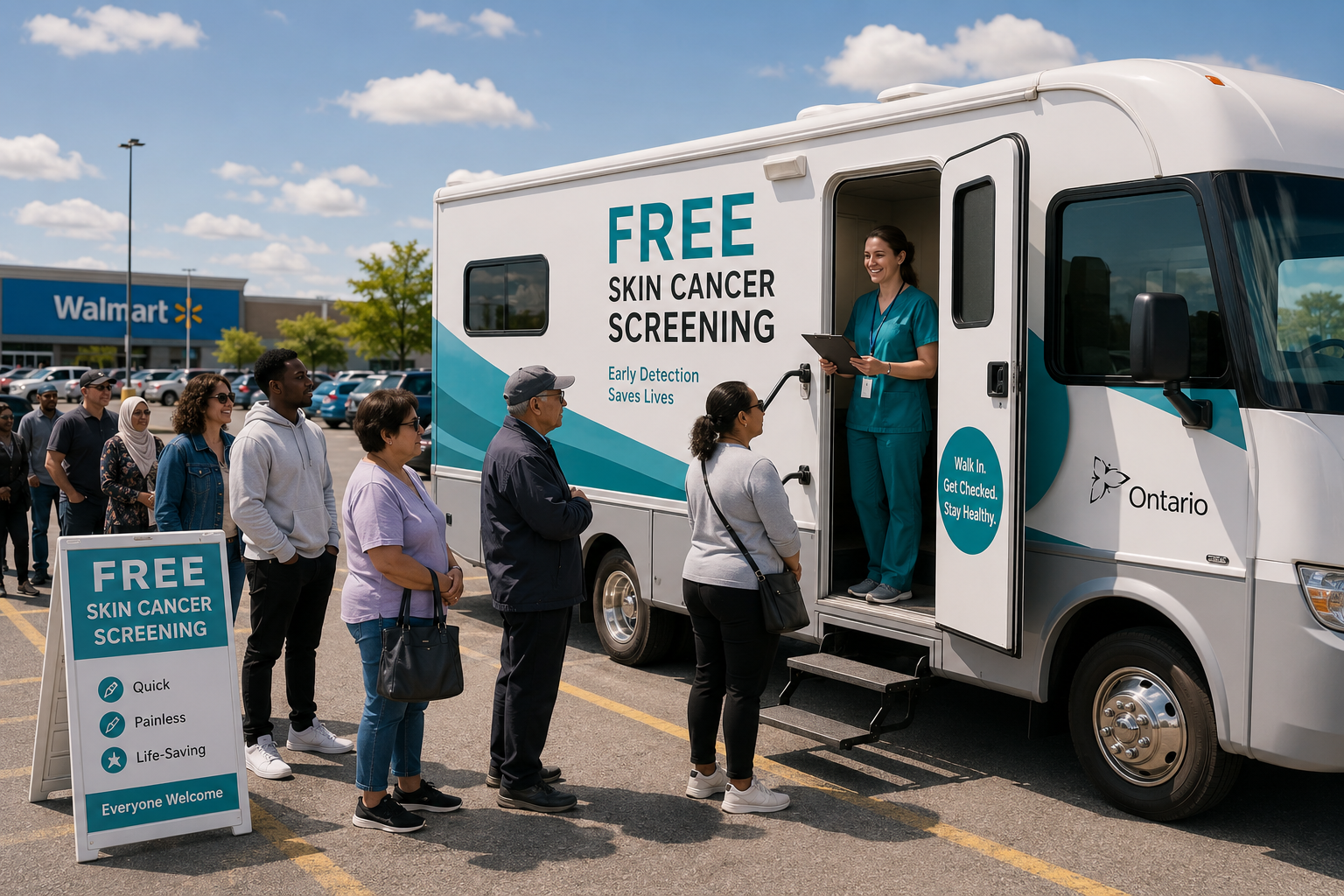
The Mobile Mole Clinic — officially called the Melanoma Canada Mole Mobile, presented by Neutrogena®, a Kenvue brand — is a free, community-based skin cancer screening program that travels to towns and cities across Canada in a specially equipped mobile unit. It brings trained skin health professionals directly to communities, removing the need to book a dermatologist appointment months in advance. [1]
The Mole Mobile launched its 2026 Coast to Coast Tour on May 1, 2026, running through October 31, 2026, with more than 130 stops planned across all 10 provinces. Ontario is one of the most heavily covered provinces on the route. [1] [7]
What happens inside the unit:
The program exists because melanoma can progress in as little as six weeks, and the average Canadian currently waits five months to over a year to see a dermatologist. [5] [6] A timely visual screen can cost as little as $100 to act on — while treating advanced melanoma can exceed $160,000 per patient. [6]
💡 Pull quote: "Melanoma can rapidly progress in as little as six weeks, and patient survival may decline if treatment is delayed." — Melanoma Canada [6]
Ontario is one of the primary provinces on the 2026 Mole Mobile tour, with stops spanning from large urban centres to smaller communities that rarely see a visiting dermatologist. [1] [9] New stops are posted approximately two weeks in advance, so the schedule below reflects confirmed upcoming dates as of the last update.
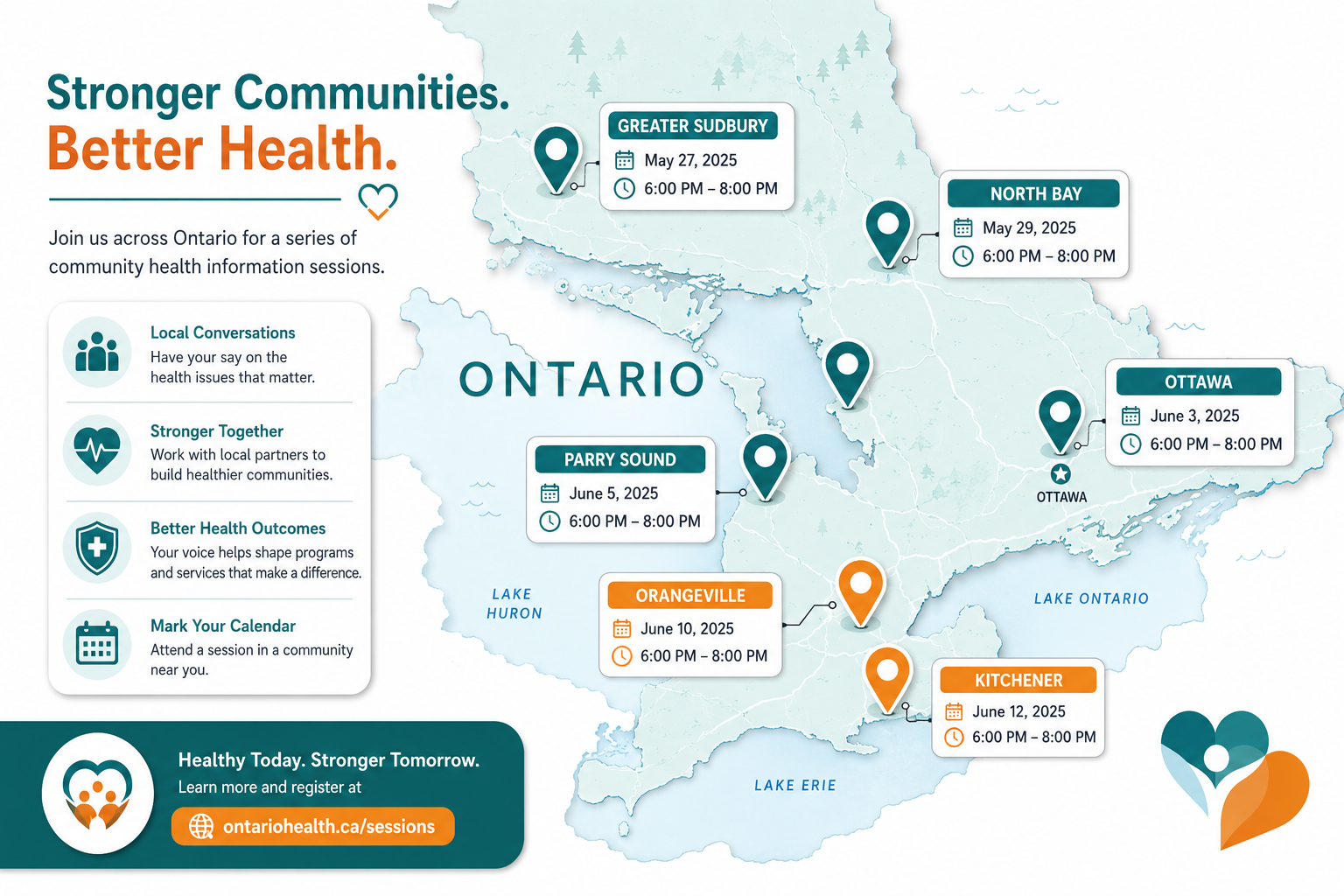
DateCityLocationHoursWednesday, May 27OttawaParliament Hill9:30 am – 5:00 pm ⚠️ Very High DemandSaturday, May 30KitchenerWalmart – 2960 Kingsway Dr.10:00 am – 4:00 pmSunday, May 31OrangevilleWalmart – 95 First St.10:00 am – 4:00 pmFriday, June 5North BayWalmart – 1500 Fisher St., Unit 10210:00 am – 4:00 pmSaturday, June 6Greater SudburyWalmart – 1349 Lasalle Blvd.10:00 am – 4:00 pmSunday, June 7Parry SoundWalmart – 1 Pine Dr.10:00 am – 4:00 pm
Earlier 2026 Ontario stops (from the tour launch) included Ottawa (May 1), Cornwall (May 3), Windsor (May 9), and Chatham (May 10). [9]
How to stay updated:
⚠️ Important: An RSVP does not hold your spot. Screenings are walk-in only, first-come, first-served. Arrive early at high-demand locations like Ottawa's Parliament Hill stop.
The screening is completely free. There is no fee to participate in the Mole Mobile skin cancer screening, and no health card or insurance information is required to be seen. [1] [6]
This is significant context: a private dermatology consultation in Ontario can range from a few hundred dollars to more, depending on the clinic and whether additional diagnostic tools like mole mapping are used. For a sense of private-sector pricing, mole mapping clinics in Toronto typically charge $350–$800 for a full-body digital mapping session — a cost that the Mole Mobile eliminates entirely for a visual screening.
What the free screening covers:
What it does not cover:
If a suspicious lesion is found and you need further evaluation, follow-up care through a dermatologist or a skin cancer clinic would involve separate costs, which may be covered by OHIP depending on the procedure.
Almost any adult who has skin concerns, a family history of melanoma, or simply hasn't had a skin check in over a year is a good candidate. The Mobile Mole Clinic is designed to serve the broadest possible population, with a specific focus on communities that lack regular access to a dermatologist. [1] [5]
You're a strong candidate if:
Choose the Mole Mobile if:
📌 Edge case: People with skin of colour face four times worse outcomes because melanoma is frequently diagnosed at a later stage in this group. The Mole Mobile actively works to close this equity gap. [6]
The Mobile Mole Clinic is appropriate for most adults, but there are situations where it may not be the right first step or the only step needed.
The mobile screening may not be sufficient if:
Common mistake: Some people assume the Mole Mobile replaces their annual dermatology check. It's a screening tool, not a substitute for ongoing dermatological care. If you're flagged for follow-up, act on that referral promptly.
During a Mobile Mole Clinic visit, clinicians use the well-established ABCDE criteria to evaluate moles and skin lesions. This framework is the same one used in standard dermatology offices.
LetterWhat It Stands ForWhat Clinicians Look ForAAsymmetryOne half of the mole doesn't match the otherBBorderEdges are irregular, ragged, notched, or blurredCColourVariation in colour — shades of brown, black, red, white, or blueDDiameterLarger than 6mm (about the size of a pencil eraser)EEvolutionAny change in size, shape, colour, or a new symptom like bleeding
Beyond the ABCDEs, clinicians also assess:
For a deeper look at what distinguishes a concerning mole from a benign one, the guide to atypical moles provides clear visual criteria and explanations.
A single screening at the Mobile Mole Clinic typically takes 10 to 20 minutes, though total time at the event depends on the size of the queue when you arrive.
Breakdown of the visit:
Practical tip: Wear loose, easy-to-remove clothing and avoid heavy makeup or nail polish on the day of your visit, as clinicians may want to check areas under straps or on the nails.
At high-demand stops like the Ottawa Parliament Hill event, wait times in the queue can be 30–60 minutes or more. Arriving within the first hour of the event's opening is the most reliable way to be seen.
Yes — and the Mole Mobile screening is free regardless of whether you have insurance or not. No health card, OHIP number, or private insurance information is collected or required. [1]
What this means practically:
For Ontarians who need mole removal after a concerning finding, the Minor Surgery Center's cost estimator tool can help estimate out-of-pocket costs for procedures not covered by OHIP.
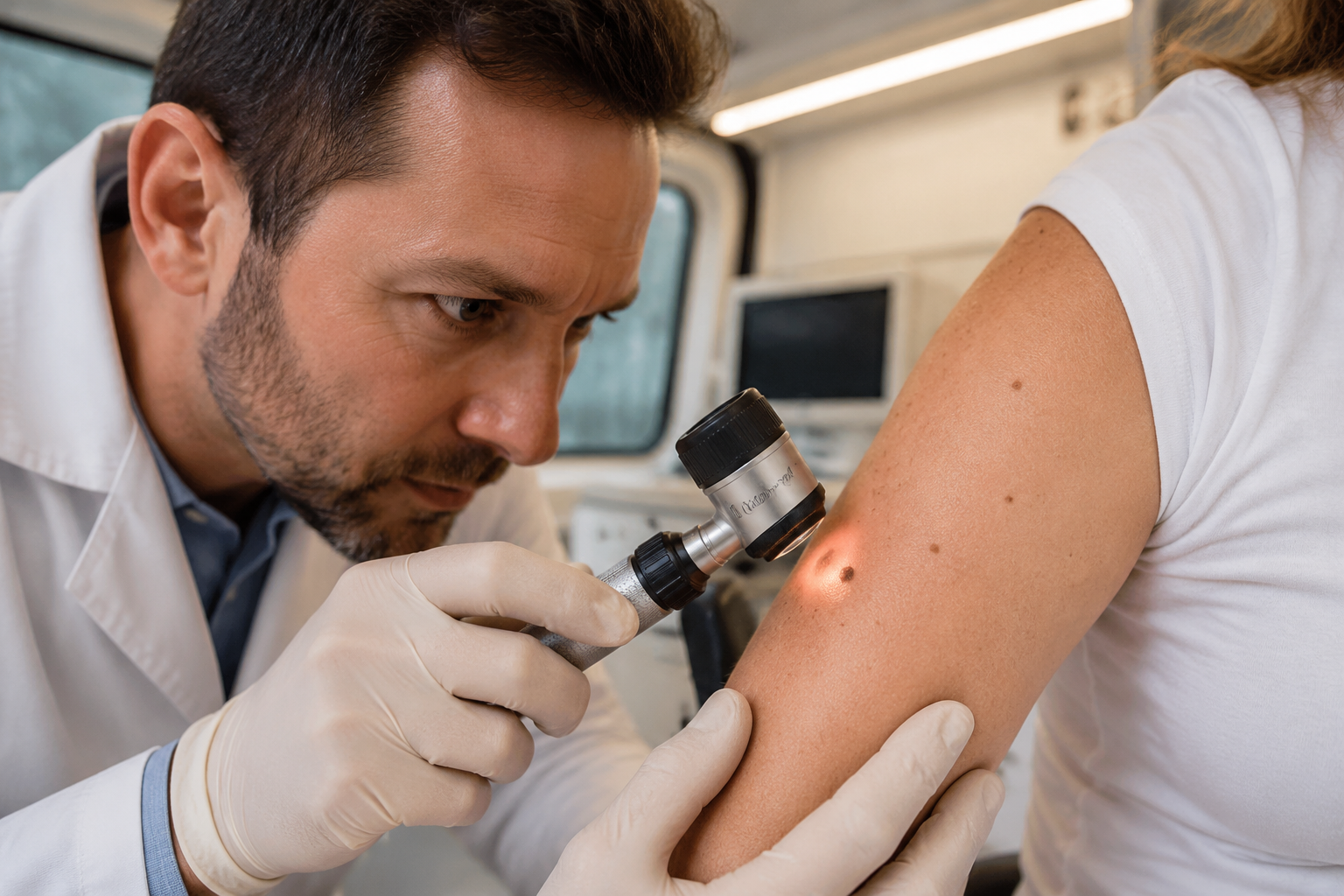
Certain warning signs mean you should seek a skin check as soon as possible — ideally without waiting for the next Mole Mobile stop if symptoms are acute.
Seek a skin check urgently if you notice:
Statistics that underline urgency:
If you're unsure whether a spot qualifies as "atypical," the benign mole guide offers a practical breakdown of what normal versus abnormal looks like.
The Mobile Mole Clinic and a traditional dermatology office both involve professional skin examination, but they serve different purposes and offer different levels of service.
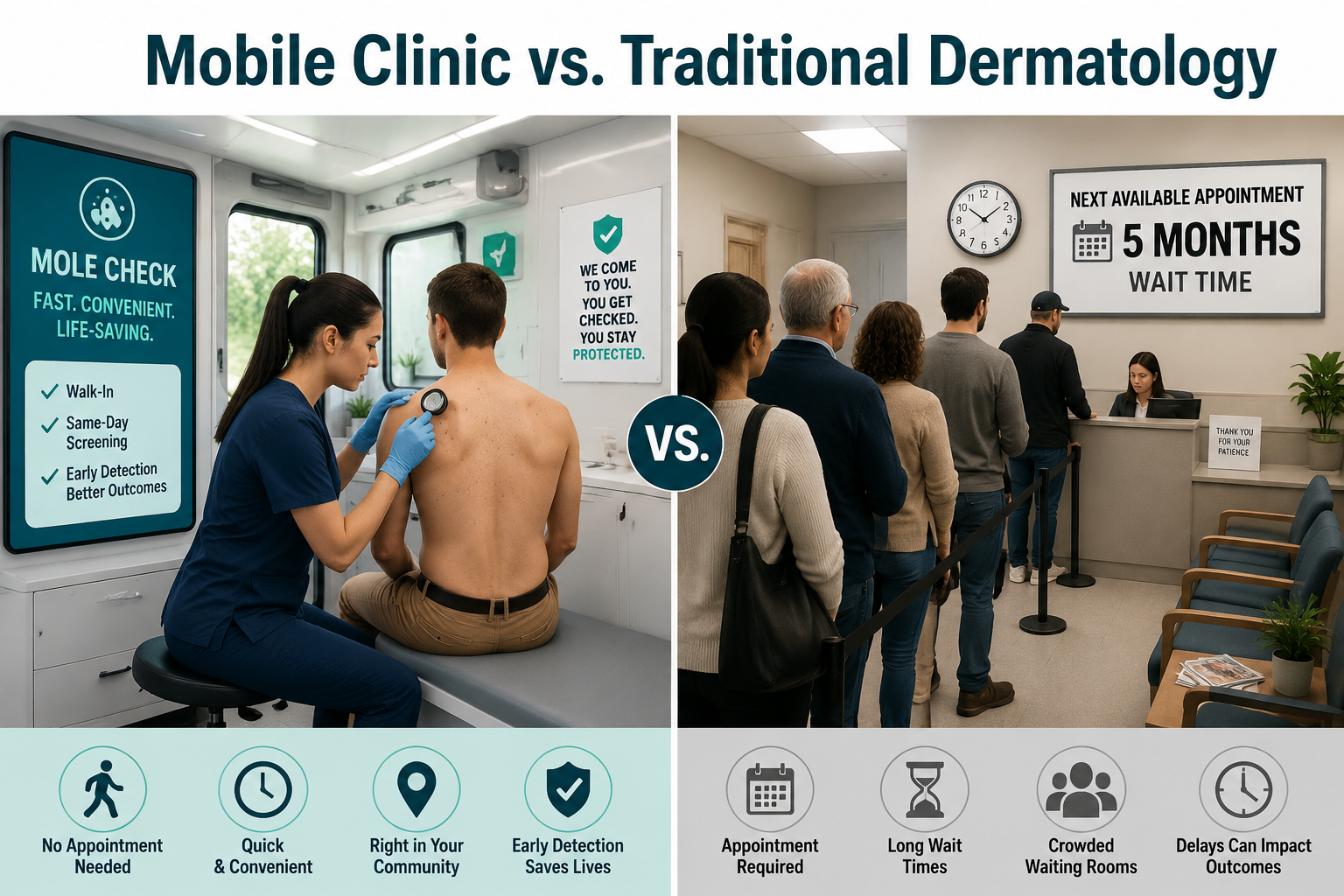
FeatureMobile Mole ClinicDermatology OfficeCostFreeVaries; may be OHIP-covered or privateWait time for appointmentWalk-in, same day5 months to 1+ year in OntarioExam typeVisual screeningVisual + dermoscopy, possible biopsyBiopsy availableNoYesMole removalNoYesFormal medical recordNoYesLocationCommunity venues, parking lotsFixed clinicWho it's best forEarly detection, underserved populationsConfirmed concerns, follow-up, removal
Choose the Mobile Mole Clinic if you want a free, fast, no-barrier screening and haven't had a skin check recently.
Choose a dermatology office or minor surgery clinic if a previous screening flagged something, you want a mole removed, or you need a formal diagnosis and documentation.
For Ontarians in the Greater Toronto Area who need follow-up after a screening, the Minor Surgery Center locations across Toronto, Vaughan, Mississauga, and Oakville offer expert mole assessment and removal by board-certified surgeons.
Mobile mole screenings using trained clinicians and the ABCDE visual method are a reliable first-line detection tool, but they are not equivalent to a full dermatological workup with dermoscopy, biopsy, and pathology. [5]
What the evidence suggests:
Accuracy depends on:
The Mole Mobile is presented as a community screening tool, not a diagnostic service. Its primary value is catching cases that would otherwise go unnoticed for months or years due to the dermatologist shortage. [5] [6]
If a clinician at the Mobile Mole Clinic identifies a spot that looks concerning, they will advise you to follow up with a dermatologist or your family physician as soon as possible. No biopsy or treatment is performed on-site.
Typical next steps after a flagged finding:
If you need to act quickly and can't wait for a dermatologist referral, minor surgery clinics that specialize in skin cancer screening and biopsy can often see patients faster. The best skin cancer clinic options in Ontario include locations in Toronto, Mississauga, Vaughan, and Oakville with shorter wait times than the public system.
⚠️ Do not ignore a follow-up recommendation. Melanoma can advance from Stage I to Stage III in a matter of weeks in aggressive cases. Acting within days — not months — can be the difference between a simple excision and systemic treatment.
Even well-intentioned Canadians make avoidable errors when it comes to skin cancer screening. Here are the most frequent ones — and how to avoid them.
1. Assuming tanned or darker skin is protected
UV damage accumulates regardless of skin tone. People with skin of colour are often diagnosed at a later stage because both patients and clinicians may overlook lesions on darker skin. [6]
2. Waiting for a symptom before getting checked
Early-stage melanoma is frequently painless and visually subtle. By the time a mole hurts or bleeds, it may already be at an advanced stage.
3. Treating the RSVP as a guaranteed appointment
The Mole Mobile RSVP is for location details only. It does not hold a spot. Arriving late at a high-demand stop means you may not be seen.
4. Skipping the hotline check on weekends
Weekend stops are occasionally cancelled due to weather or logistics. Always call 1-866-830-6653 before driving to a stop, especially if you're travelling from out of town.
5. Not mentioning all areas of concern
Some patients only show the clinician one or two spots they've noticed, missing lesions in harder-to-see areas like the back, scalp, or between the toes. Mention every area that concerns you.
6. Assuming one screening is enough forever
Skin cancer screening should happen annually, particularly for individuals with risk factors. The Mole Mobile is an excellent annual touchpoint, but it shouldn't be the only one.
7. Relying on smartphone apps for diagnosis
3D mole mapping apps have significant reliability limitations and should not replace professional examination.
The 2026 Mole Mobile tour is the most ambitious yet, with 130+ stops planned from the Pacific to the Atlantic. [1] Ontario's coverage reflects the province's combination of dense urban populations and vast rural areas where dermatology access is severely limited.
The numbers behind the urgency:
The Mole Mobile's goal of 25,000 skin checks this summer is a direct response to these gaps. For communities like Parry Sound, North Bay, and Orangeville — where local dermatology access is limited — the mobile clinic may be the only realistic option for a timely skin check.
The program also addresses equity: most dermatologists practice in major urban centres, leaving rural and marginalized communities without access. The Mole Mobile is one of the few programs actively targeting this disparity. [5] [6]
Q: Do I need to book an appointment for the Mole Mobile?
No. All screenings are walk-in only, on a first-come, first-served basis. An RSVP provides location details only and does not reserve your spot.
Q: How do I find out about new Ontario stops before they're announced?
New stops are posted approximately two weeks in advance at molemobile.ca. You can also follow @molemobilecanada on Instagram and Facebook for early announcements.
Q: What should I wear to a Mole Mobile screening?
Wear loose, comfortable clothing that can be easily adjusted to expose different areas of skin. Avoid heavy makeup, nail polish, and tight-fitting garments that are difficult to move.
Q: Can children be screened at the Mole Mobile?
The program primarily targets adults. If you have concerns about a child's moles, consult a pediatrician or pediatric dermatologist directly.
Q: What if I can't make it to any of the listed Ontario stops?
Check molemobile.ca regularly — new stops are added throughout the summer. Alternatively, contact your family doctor for a referral, or visit a skin cancer screening clinic for a faster private-sector assessment.
Q: Is the Mole Mobile available in French for Ottawa-area residents?
Melanoma Canada operates nationally and serves bilingual communities. Contact Melanoma Canada directly or check the RSVP details for the Ottawa stop to confirm language services.
Q: What happens if the stop is cancelled on the day I planned to attend?
Call the Mole Mobile Hotline at 1-866-830-6653 for live updates. Weekend cancellations are posted there first. Follow the social media accounts for real-time notices.
Q: Can the Mole Mobile remove a mole if it looks suspicious?
No. The Mole Mobile performs visual screenings only. Mole removal requires a clinical setting. For removal options, see the mole removal clinic guide for expert surgical services in Ontario.
Q: How is the Mole Mobile funded?
The 2026 tour is presented by Neutrogena®, a Kenvue brand, and operated by Melanoma Canada, a registered non-profit organization. [1]
Q: What if I've already had melanoma — should I still attend?
Yes. Individuals with a personal history of melanoma are at elevated risk for recurrence and new primary melanomas. However, these individuals should also maintain regular follow-up with their treating dermatologist or oncologist.
Q: How do I know if a mole I have is something to worry about before my screening?
Review the ABCDE criteria (Asymmetry, Border, Colour, Diameter, Evolution). The guide to clusters of moles also provides useful context for understanding multiple moles in one area.
Q: Is the Mole Mobile the same as mole mapping?
No. Mole mapping involves photographing and digitally cataloguing every mole on the body for year-over-year comparison. The Mole Mobile performs a visual clinical screening. For full mole mapping, see mole mapping clinics in Toronto.
Skin cancer is the most common cancer in Canada — and one of the most preventable and treatable when caught early. The Melanoma Canada Mobile Mole Clinic is one of the most accessible tools available to Ontarians in 2026, offering free, professional skin checks in communities across the province from May through October.
Your action plan:
For Ontarians who need follow-up care, mole removal, or a formal skin cancer assessment after their Mole Mobile visit, the Minor Surgery Center's clinics across Toronto, Vaughan, Mississauga, and Oakville offer expert care with significantly shorter wait times than the public system.
Early detection saves lives. A 10-minute walk-in screening this summer could be the most important health decision of the year.
[1] Melanoma Canada Launches 2026 Mole Mobile Tour - https://melanomacanada.ca/blog/melanoma-canada-launches-2026-mole-mobile-tour/
[3] Molemobilecanada Instagram - https://www.instagram.com/molemobilecanada/
[4] Mole Mobile Instagram Reel - https://www.instagram.com/reel/DXfeRMfDXz8/
[5] The Future of Health Care: Melanoma Canada's Mole Mobile Leads the Way - https://www.healthinsight.ca/innovations/future-health-care/the-future-of-health-care-melanoma-canadas-mole-mobile-leads-the-way/
[6] Melanoma Canada Is Proud to Announce the Mole Mobile - https://hospitalnews.com/melanoma-canada-is-proud-to-announce-the-mole-mobile/
[7] Mole Mobile Facebook - 2026 Tour Announcement - https://www.facebook.com/molemobilecanada/photos/beginning-may-1-and-running-until-october-31-2026-the-mole-mobile-will-travel-fr/122252570072264872/
[9] Melanoma Canada Facebook – 2026 Mole Mobile Tour Video - https://www.facebook.com/melanomacanada/videos/2026-mole-mobile-tour-presented-by-neutrogena/2192924471472455/
[10] Melanoma Canada Events - https://melanomacanada.ca/get-involved/events/