
Last updated: August 19, 2026
Lipoma removal cost in Ontario typically ranges from about $300 to $2,000 or more at private clinics, depending on the lipoma's size, depth, and location on the body. OHIP does not usually pay for lipoma removal because most lipomas are classified as benign, cosmetic, or non-urgent growths, though OHIP may cover removal when a physician documents medical necessity, such as nerve compression or a growth on the face or neck that affects function. Patients without a covered indication should budget for a private, out-of-pocket procedure and compare clinic pricing directly.
A lipoma is a soft, slow-growing lump made of fatty tissue that sits just under the skin. It is almost always benign, meaning it is not cancer, and most lipomas cause no pain or health risk on their own [1].
People choose to have a lipoma removed for a mix of medical and personal reasons:
Lipomas typically feel soft, move slightly under the skin when pressed, and grow slowly over months or years. A lump that grows fast, feels hard, or is fixed to deeper tissue should be assessed by a doctor to rule out a different type of growth, such as a liposarcoma. For a full overview of what a lipoma is and how it is diagnosed, see this guide on lipoma conditions.
Decision rule: If a lump is soft, slow-growing, and painless, it is very likely a straightforward lipoma. If it is painful, growing quickly, or larger than a golf ball, get it assessed before assuming it's simple to remove.
OHIP usually does not cover lipoma removal because the province classifies most lipoma excisions as cosmetic or non-essential procedures rather than medically necessary care [1][7]. This means most patients in Ontario pay privately for lipoma removal, even when the lipoma is uncomfortable.
OHIP coverage becomes possible only in specific circumstances, generally when a physician documents one of the following:
Even when medical necessity is documented, the referral and approval process can take weeks or months, since it usually requires a family doctor referral to a general surgeon or plastic surgeon working within the public system. Many Ontario residents choose the private route simply because it is faster and more predictable, even if OHIP coverage might eventually be approved.
Common mistake: Assuming that because a lipoma is "medical" in nature, OHIP will automatically pay for its removal. In practice, the province applies strict criteria, and most lipoma removals, even ones causing mild discomfort, fall outside OHIP's covered list. For a closer look at how the province decides which cases qualify, see this breakdown of lipoma removal and whether it's covered by OHIP or insurance.
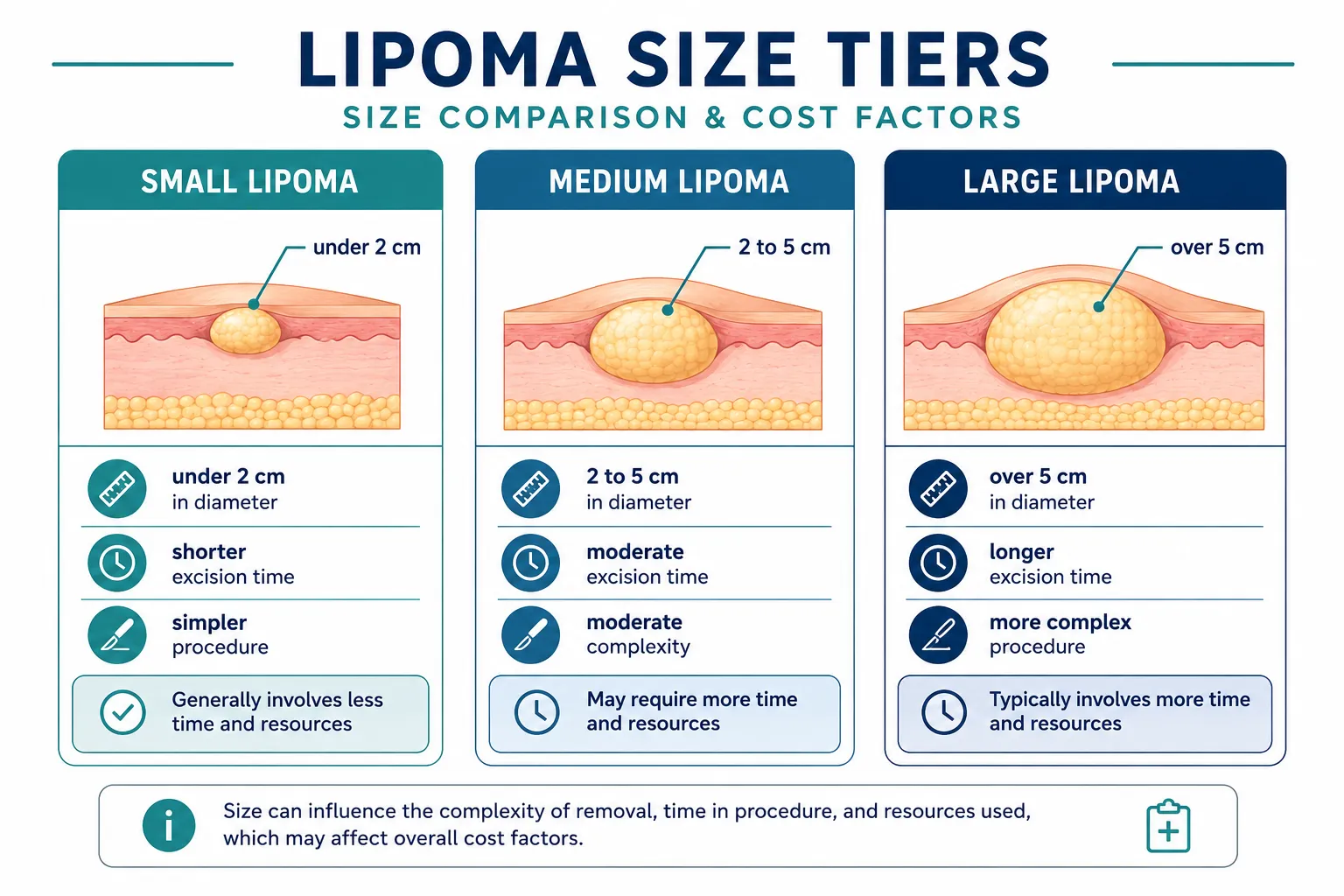
Private lipoma removal in Ontario typically costs $300 to $2,000 or more, with the final price depending mainly on the lipoma's size, depth, and location on the body [2][4][7]. Small, straightforward lipomas on the arms, back, or trunk sit at the lower end of this range, while large, deep, or cosmetically sensitive lipomas cost more.
The table below shows typical private price tiers based on size, drawing on published Ontario clinic pricing patterns [2][3][4][8].
Lipoma sizeTypical descriptionApproximate private price range (CAD)Small (under 2 cm)Simple, shallow, quick excision$300, $600Medium (2-5 cm)Moderate dissection, standard closure$500, $1,200Large (over 5 cm)Deeper tissue, longer closure time, sometimes more than one lipoma removed$1,000, $2,000+Multiple lipomas (same visit)Often priced per additional lesion at a reduced rateVaries by clinic; ask for a per-unit quote
Some Ontario clinics use a per-unit pricing model, charging a base fee for the first lipoma and a discounted add-on fee for each additional lipoma removed in the same visit. This is worth asking about directly, since it can meaningfully change the total bill for patients with more than one lipoma.
Pricing also varies by region and provider type within the GTA. Clinics in Toronto and Richmond Hill, for example, publish starting prices that differ from suburban or smaller-market clinics, partly reflecting overhead and demand [2][4]. For a city-specific breakdown, see this Toronto lipoma removal cost guide for 2026, and for a broader look at what drives the number on your invoice, review this general explainer on lipoma removal costs.
Example: A patient with a single 3 cm lipoma on the upper back at a private minor surgery clinic might expect a quote in the $500,$900 range, while a patient with a 7 cm lipoma on the thigh requiring a longer closure might see a quote closer to $1,200,$1,800.
Surgical excision is the standard, most reliable way to remove a lipoma, while non-surgical options like liposuction-style extraction or steroid injections are less common, less complete, and generally reserved for specific cases. Surgical removal takes out the entire fatty lump along with its capsule, which lowers the chance of regrowth.
Surgical excision:
Non-surgical or minimally invasive options:
Decision rule: Choose surgical excision if the lipoma is large, deep, or if there's any uncertainty about the diagnosis. Consider a liposuction-style approach only for smaller, soft lipomas where scar size is the top priority and some risk of regrowth is acceptable.
Lipoma removal prices in Ontario vary widely because clinics price based on a combination of lipoma size, depth, anatomical location, provider type, and local overhead costs, not a single fixed fee [2][7]. Two patients with similar-looking lumps can receive very different quotes depending on these factors.
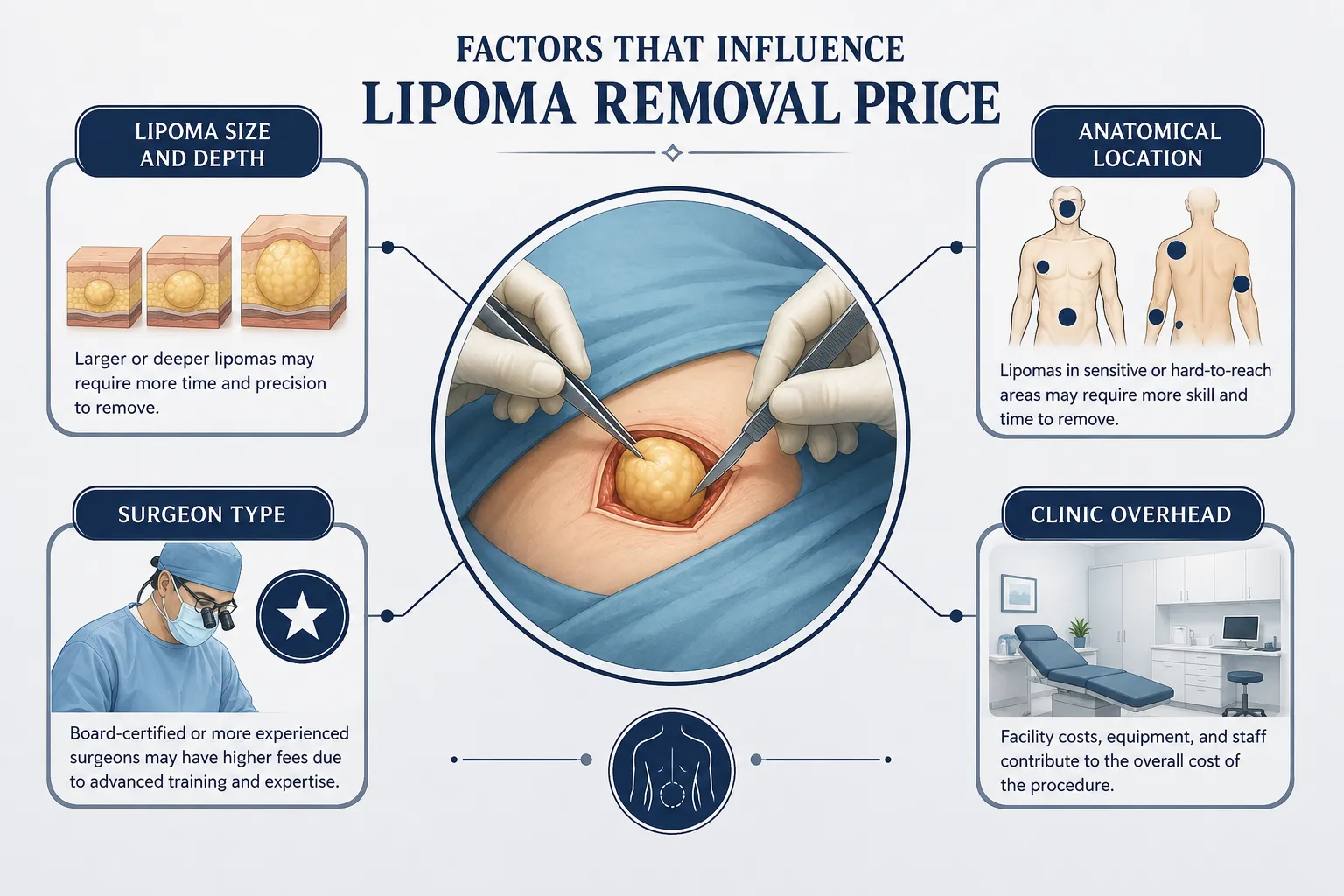
The main cost drivers include:
Common mistake: Comparing quotes purely on the headline number without asking what's included. A $400 quote that excludes suture removal, pathology, or follow-up visits may end up costing more than an $600 quote that bundles everything.
Some Ontario residents can get lipoma removal partially or fully covered through private extended health insurance, even when OHIP does not pay, but coverage depends entirely on the specific plan's rules around minor surgery and cosmetic exclusions. Group benefits through an employer are more likely to include some coverage than individual health plans.
Key points to check with an insurer before booking:
Edge case: A lipoma causing documented nerve compression might be covered partly by OHIP for the medically necessary portion of the procedure, while any additional cosmetic refinement (like extra scar revision) is billed privately. Patients in this situation should ask the clinic to itemize the invoice clearly.
Most lipoma removal procedures take between 15 and 45 minutes, and longer procedures generally cost more because they use more of the surgeon's time and facility resources. Small, shallow lipomas are typically the fastest, while large or deep ones extend the appointment.
Factors that stretch procedure time, and therefore cost, include:
Most patients are in and out of the clinic within an hour or two total, including consultation, the procedure itself, and initial aftercare instructions. For a detailed breakdown of what happens during the appointment and how long each step takes, see this guide on how long lipoma removal surgery takes.
Quick example: A 2 cm lipoma on the forearm might take about 20 minutes start to finish, while a 6 cm lipoma on the back might take closer to 45 minutes due to deeper dissection and more sutures.
There are a few lower-cost or non-surgical alternatives to full surgical excision, but most come with trade-offs in effectiveness, recurrence risk, or suitability. None fully replace surgery for larger or deeper lipomas.
Decision rule: Choose a lower-cost alternative only if the lipoma is small, soft, and not a diagnostic concern. If there's any doubt about what the lump is, or if it's large, full surgical excision with pathology review is the safer and ultimately more cost-effective route, since it avoids a second procedure later if the lump regrows.
Most lipomas that are left alone stay harmless and simply continue growing very slowly over months or years, without turning into anything dangerous. However, some lipomas can become uncomfortable, restrict movement, or make it harder to confirm the diagnosis with confidence if they're never assessed.

Possible outcomes of leaving a lipoma untreated:
Edge case: A lipoma that suddenly becomes painful, red, or fast-growing is not behaving like a typical lipoma and should be evaluated promptly rather than left to "wait and see."
A lipoma generally needs removal if it is painful, growing quickly, restricting movement, located somewhere it catches on clothing, or if there's any uncertainty about the diagnosis. A lipoma that is small, stable, and symptom-free often does not need removal unless the person simply wants it gone for cosmetic reasons.
Use this quick checklist to decide:
If a lump feels unusual compared to a classic soft, mobile lipoma, review the signs described in this guide on when a lump under the skin needs medical advice before deciding whether removal is urgent or elective.
The most common mistake is choosing a provider based on price alone without confirming their experience with lipoma excision specifically, since technique and aftercare quality affect both scarring and recurrence risk. A cheaper quote that leads to a second removal later is not actually cheaper.
Other frequent mistakes include:
Common mistake, spelled out: Booking with the first clinic found online without checking whether the base price includes local anesthetic, dressing supplies, and a follow-up check. Ask for a full itemized quote before committing.
Recovery from lipoma removal is generally quick, with most people returning to light daily activity within a day or two and resuming normal exercise within one to two weeks, depending on the lipoma's size and location. Aftercare costs are usually modest but worth budgeting for separately from the procedure fee.
Typical recovery timeline:
Patients are usually advised not to drive themselves home immediately after certain lipoma removals, particularly if sedation was used or the site is near a joint that affects mobility; this guide on whether you can drive home after lipoma removal covers what to plan for. For guidance on resuming physical activity safely, see when you can exercise after lipoma surgery.
Aftercare-related costs to plan for:
Quick example: A patient with a shoulder lipoma removed on a Friday might take the weekend to rest, return to a desk job on Monday, and resume light gym activity around the two-week mark, with a total aftercare cost of roughly $0,$100 beyond the procedure fee if dressings and a follow-up visit are billed separately.
Most Ontario patients without an OHIP-qualifying medical reason are better served by a private minor surgery clinic, since it offers faster scheduling, transparent pricing, and a setting built specifically for outpatient lesion removal. A hospital setting is generally reserved for cases with OHIP-approved medical necessity or added surgical complexity.
FactorPrivate clinicHospital / OHIP referral pathwayWait timeOften days to a few weeksCan be weeks to several months, depending on referral and surgical wait listsCostPaid privately, typically $300,$2,000+No direct cost if approved as medically necessary; otherwise not offeredPrice transparencyIncreasingly published upfront [8]Determined by OHIP fee schedule, not itemized for patientsBest forCosmetic or non-urgent lipomasDocumented nerve compression, functional impairment, or complex casesSettingDedicated outpatient procedure roomHospital-based surgical unit
Decision rule: Choose a private clinic if the lipoma is bothersome but not causing documented nerve or joint problems, and speed and predictable pricing matter. Choose the hospital/OHIP referral route only if a physician has confirmed the case meets medical necessity criteria, and the patient is comfortable with a longer wait.
For a side-by-side look at how experienced providers compare on cost, technique, and results, this guide on Toronto's top lipoma clinics, their costs, surgeons, and techniques is a useful next step.
Is lipoma removal painful?
Lipoma removal is performed under local anesthetic, so the procedure itself is not painful, though patients may feel pressure or mild soreness for a day or two afterward.
How much does lipoma removal cost in Ontario without insurance?
Private lipoma removal without insurance typically costs between $300 and $2,000 or more, depending mainly on the size and location of the lipoma [2][7].
Does OHIP ever pay for lipoma removal?
OHIP covers lipoma removal only when a physician documents medical necessity, such as nerve compression or restricted movement; most cosmetic or symptom-free lipomas are not covered [1].
Can a lipoma come back after it's removed?
Standard surgical excision, which removes the entire capsule, has a low recurrence rate. Liposuction-style removal carries a higher chance of regrowth because some capsule tissue can remain [6][9].
Is a bigger lipoma always more expensive to remove?
Generally yes, since larger lipomas take longer to excise and close, but location and provider type also significantly affect the final price.
How long does it take to recover from lipoma removal?
Most people return to light activity within a day or two and resume full exercise within one to two weeks, depending on lipoma size and location.
Should I worry if my lipoma is growing?
Slow, steady growth over years is typical and usually not worrying, but rapid growth, new pain, or a firm and fixed feel should be assessed promptly.
Can I get lipoma removal covered by private insurance in Ontario?
Some extended health plans cover part of the cost under a minor surgery or day-surgery benefit, but coverage depends on the plan and whether the procedure is classified as cosmetic.
What's the difference between a lipoma and a cyst?
A lipoma is made of fatty tissue and feels soft and mobile, while a cyst is typically filled with fluid or keratin and may feel firmer; a doctor can confirm the difference on examination. For cyst-specific pricing, see this guide on cyst removal cost in Ontario.
Do I need a referral to get a lipoma removed privately?
No referral is typically required for a private, cosmetic lipoma removal; patients can usually book directly with a private clinic.
Lipoma removal cost in Ontario comes down to a fairly predictable set of factors: size, depth, location on the body, provider type, and whether the procedure qualifies for OHIP coverage. For most patients, private removal in the $300 to $2,000+ range is the realistic path, since OHIP coverage is limited to cases with documented medical necessity.
Before booking, take three practical steps: get an itemized quote that spells out what's included, confirm whether a private insurance plan offers any partial reimbursement, and compare at least two or three providers rather than accepting the first quote received. Patients with a lump that seems unusual, fast-growing, painful, or firm, should get it assessed before assuming cost is the only variable that matters, since an accurate diagnosis always comes first. With those steps covered, choosing between a private clinic and a longer public-system pathway becomes a straightforward decision based on timeline, budget, and the specific medical picture.
[1] Lipoma Removal How To Diagnose Treat - https://www.minorsurgery.ca/blog/lipoma-removal-how-to-diagnose-treat/
[2] Lipoma Removal Cost In Toronto 2026 Price Guide - https://www.theminorsurgerycenter.com/blog/lipoma-removal-cost-in-toronto-2026-price-guide
[3] Lipoma And Mole Removal - https://www.grandgenesisplasticsurgery.ca/procedure/lipoma-and-mole-removal/
[4] Pricing Toronto - https://www.minorsurgery.ca/pricing-toronto/
[5] moleclinic.ca - https://moleclinic.ca/
[6] How Much Does Liposuction Cost - https://royalcentreofplasticsurgery.com/how-much-does-liposuction-cost/
[7] Lipoma Removal Costs - https://www.theminorsurgerycenter.com/blog/lipoma-removal-costs
[8] Tmsc Pricing - https://www.theminorsurgerycenter.com/tmsc-pricing
[9] Liposuction - https://torontoplasticsurgeon.com/body/liposuction
[10] Plastic Surgeon Vs Dermatologist For Mole Cyst And Lipoma Removal In Toronto - https://www.theminorsurgerycenter.com/blog/plastic-surgeon-vs-dermatologist-for-mole-cyst-and-lipoma-removal-in-toronto