
Please note: The Minor Surgery Center no longer offers treatment or removal of keloid scars. However, we do offer scar revision for appropriate types of scars. If you are unsure whether your scar may be suitable for scar revision, you can contact our team for more information or to arrange a consultation.
When a simple piercing, surgical incision, or even a minor scratch transforms into a raised, shiny bump that grows beyond the original wound, you're likely dealing with a keloid scar. For individuals with darker skin types, understanding keloid scars on darker skin types what to know becomes essential, as these aggressive scars occur up to 15 times more frequently in people of African, Asian, and Hispanic descent compared to those with lighter skin tones. This comprehensive guide explores everything you need to understand about keloid formation, prevention, and treatment options specifically tailored for melanin-rich skin.
Keloid scars represent more than just a cosmetic concern—they can cause physical discomfort, emotional distress, and significantly impact quality of life. Unlike regular scars that fade over time, keloids continue growing, sometimes for years after the initial injury. The good news? Armed with the right knowledge about keloid scars on darker skin types what to know, you can make informed decisions about prevention and treatment that respect your skin's unique characteristics.

Keloid scars are abnormal fibrous growths that develop at the site of skin injury, extending beyond the boundaries of the original wound. Unlike hypertrophic scars, which remain confined to the injury site and may improve over time, keloids are characterized by their invasive growth pattern and tendency to persist indefinitely without treatment.
The defining features of keloid scars include:
Keloid development involves a complex interplay of genetic, immunological, and environmental factors. When skin is injured, the body initiates a healing cascade involving inflammation, tissue formation, and remodeling. In keloid-prone individuals, this process becomes dysregulated, leading to excessive collagen production that continues unchecked.
At the cellular level, several key mechanisms drive keloid formation:
Fibroblast Overactivity: Keloid fibroblasts produce 3-4 times more collagen than normal skin cells and demonstrate reduced apoptosis (programmed cell death), allowing them to persist longer than necessary [1].
Growth Factor Dysregulation: Elevated levels of transforming growth factor-beta (TGF-β), platelet-derived growth factor (PDGF), and other signaling molecules perpetuate the excessive tissue formation [2].
Immune System Involvement: Chronic inflammation with persistent immune cell infiltration maintains the keloid growth cycle, preventing normal scar maturation.
Mechanical Tension: Areas of high skin tension (chest, shoulders, earlobes) experience greater stress on healing wounds, contributing to keloid development.
For those interested in understanding various types of skin lesions, keloids represent just one category of abnormal skin growths that require specialized attention.
The stark disparity in keloid incidence between different ethnic groups points to strong genetic components underlying this condition. Research consistently demonstrates that individuals of African descent face the highest risk, with prevalence rates ranging from 6-16% compared to less than 1% in Caucasian populations [3].
Ethnic GroupKeloid PrevalenceRelative RiskAfrican/African-American6-16%15x higherAsian3-6%5-10x higherHispanic/Latino2-5%3-7x higherCaucasian<1%Baseline
This genetic predisposition involves multiple genes affecting:
Family history serves as a significant predictor—individuals with first-degree relatives who develop keloids face substantially elevated risk. Studies suggest autosomal dominant inheritance patterns with incomplete penetrance, meaning the genetic tendency can be passed down but doesn't guarantee keloid formation in every carrier [4].
The relationship between melanin content and keloid formation extends beyond simple correlation. Melanocytes (pigment-producing cells) and fibroblasts (collagen-producing cells) engage in complex biochemical crosstalk that influences scar formation.
In darker skin types, several factors contribute to increased keloid susceptibility:
Enhanced Fibroblast Response: Melanin-rich skin demonstrates more vigorous fibroblast activity following injury, producing greater quantities of collagen types I and III—the primary structural proteins in keloid tissue.
Melanocyte-Fibroblast Interaction: Melanocytes release growth factors and cytokines that stimulate fibroblast proliferation and collagen synthesis. In darker skin, this signaling appears amplified, potentially contributing to excessive scar tissue formation.
Inflammatory Response Differences: Studies indicate that darker skin types may exhibit prolonged inflammatory phases during wound healing, extending the period of active collagen deposition [5].
Vitamin D Metabolism: Higher melanin levels reduce vitamin D synthesis in the skin. Some researchers hypothesize that altered vitamin D metabolism may influence keloid development, though this connection requires further investigation.
Understanding these biological differences helps explain why keloid scars on darker skin types what to know requires specialized knowledge beyond general scar management principles.
Certain body locations demonstrate dramatically higher keloid formation rates, particularly in individuals with darker skin types. These high-risk anatomical sites share common characteristics: high mechanical tension, frequent trauma exposure, or both.
Top Keloid-Prone Areas:
Common Triggering Events:
Surprisingly, even minor injuries can trigger keloid formation in predisposed individuals. Some people develop keloids from seemingly insignificant events like scratches, ingrown hairs, or small abrasions that would heal without issue in others.
For individuals considering procedures at specialized facilities like The Minor Surgery Center, discussing keloid risk before any elective procedure becomes crucial for informed decision-making.
Recognizing keloid scars early enables prompt intervention, potentially improving treatment outcomes. On darker skin types, keloids present distinctive visual features that may differ from their appearance on lighter skin.
Appearance on Melanin-Rich Skin:
Physical Symptoms:
Keloids aren't merely cosmetic concerns—they frequently cause significant physical discomfort:
Distinguishing between keloids and hypertrophic scars proves essential for appropriate treatment planning. While both represent abnormal scarring, they differ in critical ways:
FeatureKeloid ScarsHypertrophic ScarsGrowth PatternExtends beyond original woundStays within wound boundariesTimelineCan develop months/years laterAppears within weeks of injuryRegressionRarely improves spontaneouslyOften improves over 12-18 monthsRecurrenceVery high (45-100%)Lower (10-50%)Color on Dark SkinOften darker than surrounding skinMay be pink, red, or slightly darkerTextureFirm, rubbery, glossyFirm but less glossySymptomsFrequently itchy/painfulLess symptomatic
The invasive growth pattern represents the hallmark difference—keloids behave almost like benign tumors, invading healthy tissue beyond the injury site, while hypertrophic scars respect the original wound boundaries.
Consulting a qualified healthcare provider becomes important when:
Early professional evaluation offers several advantages:
Dermatologists and plastic surgeons with experience treating darker skin types understand the unique challenges of keloid scars on darker skin types what to know and can provide culturally competent care. For those seeking specialized evaluation, facilities like skin cancer clinics often have expertise in distinguishing keloids from other concerning skin growths.
For individuals with known keloid predisposition or family history, prevention remains the most effective strategy. Since no treatment guarantees complete keloid removal without recurrence, avoiding unnecessary skin trauma takes priority.
Elective Procedures to Reconsider:
Injury Prevention Tactics:
Important Considerations:
If surgery becomes medically necessary, discuss keloid risk with your surgeon beforehand. Techniques that minimize tension on wound edges, use of certain suture materials, and post-operative scar management protocols can reduce (though not eliminate) keloid formation risk.
When skin injury occurs, meticulous wound care during the healing phase may help minimize keloid development, though evidence remains mixed regarding its preventive efficacy.
Optimal Wound Care Protocol:
Silicone-Based Prevention:
Silicone gel sheets or ointments applied during the early healing phase (starting 2-3 weeks post-injury) may reduce keloid formation risk. While not foolproof, silicone products:
Apply silicone products for 12-24 hours daily for at least 2-3 months for optimal preventive effect.
For individuals with established keloid history, prophylactic treatment of new wounds may prevent keloid development. This aggressive approach involves treating every significant injury as if it will become a keloid.
Prophylactic Strategies:
Pressure Therapy: Applying consistent pressure to healing wounds (especially earlobes after piercing) using specialized pressure earrings or garments may prevent keloid formation. Pressure should be maintained for 6-12 months post-injury.
Corticosteroid Injections: Some practitioners recommend early intralesional steroid injections (within 4-6 weeks of injury) in high-risk individuals, even before keloid formation becomes apparent.
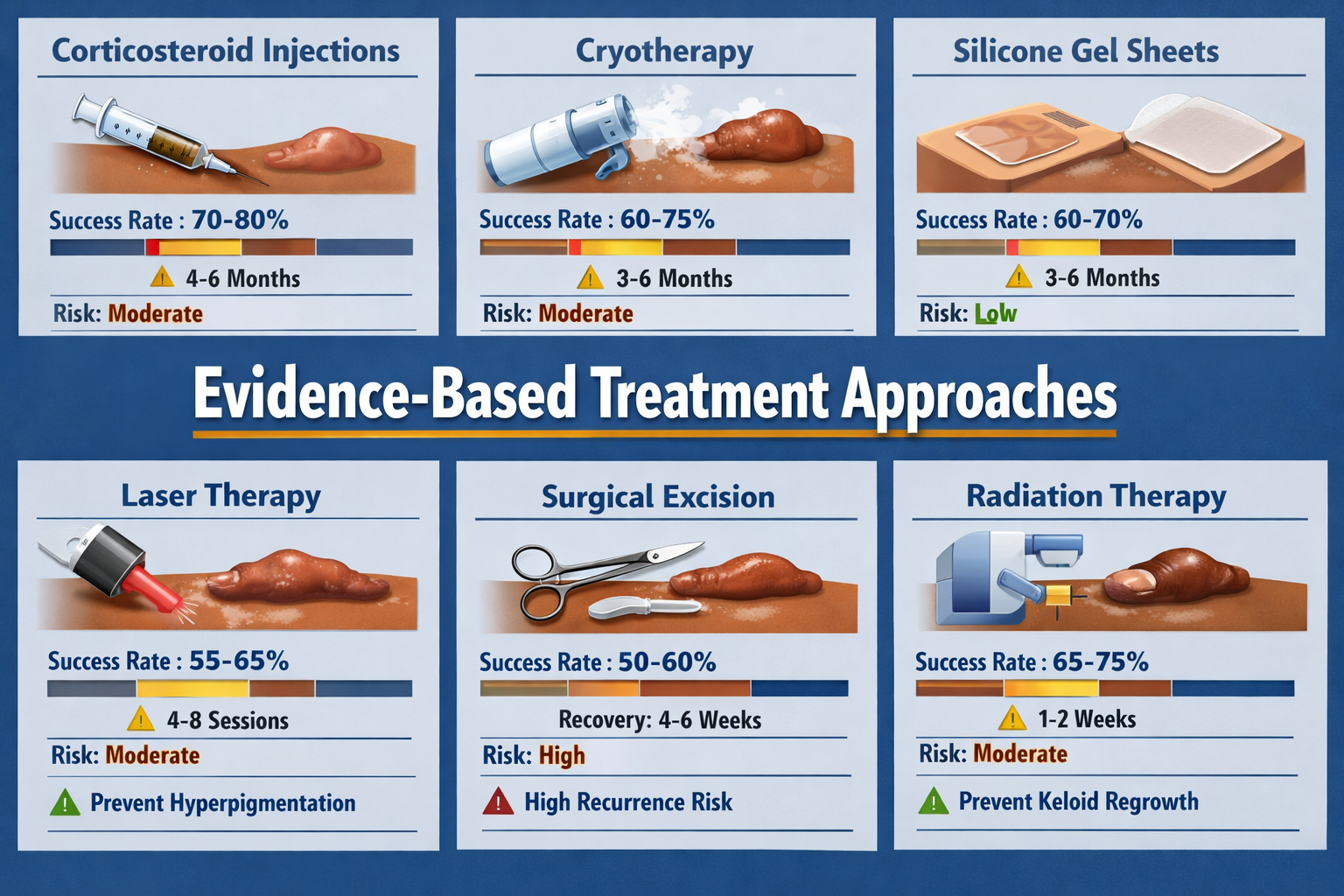
Radiation Therapy: Following necessary surgery in keloid-prone patients, low-dose radiation therapy administered within 24-48 hours post-operatively significantly reduces keloid recurrence (reducing rates from 50-100% to 10-30%) [6].
Cryotherapy: Early application of controlled freezing may disrupt excessive collagen formation before keloids fully develop.
These prophylactic approaches require careful discussion with knowledgeable healthcare providers who understand the unique considerations of keloid scars on darker skin types what to know, as some treatments carry risks of hypopigmentation or other complications in melanin-rich skin.
Intralesional corticosteroid injections represent the first-line treatment for keloid scars, offering a balance of efficacy, safety, and accessibility. This approach involves injecting anti-inflammatory medication directly into the keloid tissue.
How It Works:
Corticosteroids (typically triamcinolone acetonide) reduce keloid size by:
Treatment Protocol:
Expected Outcomes:
Studies show 50-100% size reduction in 50-80% of patients, with best results in:
Special Considerations for Darker Skin:
⚠️ Hypopigmentation risk: Corticosteroids can cause permanent lightening of darker skin, creating cosmetically concerning contrast. To minimize this:
⚠️ Atrophy: Excessive steroid can cause skin thinning, creating depression or dimpling that appears more obvious on darker skin.
Pain Management:
Injections can be quite painful. Strategies to improve comfort include:
Cryotherapy uses controlled freezing to destroy keloid tissue, either as standalone treatment or combined with corticosteroid injections.
Mechanism:
Extreme cold (-196°C with liquid nitrogen) causes:
Treatment Approaches:
Contact Cryotherapy: Applying a frozen probe directly to the keloid for 10-30 seconds per session.
Spray Cryotherapy: Spraying liquid nitrogen onto the keloid surface in controlled bursts.
Intralesional Cryotherapy: Inserting a cryoprobe into the keloid core (for larger keloids).
Expected Results:
Critical Considerations for Darker Skin Types:
⚠️ Hypopigmentation: The most significant concern with cryotherapy in darker skin. Freezing destroys melanocytes along with keloid tissue, causing permanent white patches in 30-50% of treated patients with darker skin types [7].
⚠️ Hyperpigmentation: Paradoxically, some patients develop darkening around treated areas due to post-inflammatory changes.
Risk Reduction Strategies:
For many individuals with darker skin types, the high risk of permanent pigmentation changes makes cryotherapy a less favorable option compared to other treatments. Discussing these risks thoroughly ensures informed decision-making about keloid scars on darker skin types what to know regarding treatment selection.
Laser treatments offer targeted approaches to reducing keloid size, improving texture, and minimizing symptoms while potentially posing less pigmentation risk than cryotherapy when properly selected.
Types of Lasers Used:
Pulsed Dye Laser (PDL): Targets blood vessels within keloid tissue, reducing blood supply and inflammation. Wavelength: 585-595 nm.
Nd:YAG Laser: Penetrates deeper into keloid tissue, safe for darker skin types. Wavelength: 1064 nm.
CO2 Laser: Vaporizes keloid tissue layer by layer (ablative approach).
Fractional Lasers: Create microscopic treatment zones, promoting collagen remodeling while preserving surrounding tissue.
Mechanism of Action:
Lasers reduce keloid size through:
Treatment Protocol:
Outcomes:
Safety in Darker Skin Types:
✅ Nd:YAG lasers demonstrate the best safety profile for darker skin, with minimal pigmentation change risk when properly calibrated.
⚠️ PDL and ablative lasers carry higher hypopigmentation risks and require experienced operators familiar with treating skin of color.
Optimal Laser Selection:
For darker skin types, practitioners should:
Facilities specializing in diverse patient populations, such as those offering various skin procedures, typically have expertise in selecting appropriate laser parameters for darker skin types.
Surgical removal of keloids seems logical but carries the highest recurrence risk when performed alone—up to 100% in some studies. However, when combined with adjuvant therapy (particularly radiation), success rates improve dramatically.
Surgical Approaches:
Complete Excision: Removing the entire keloid down to normal tissue.
Core Excision: Removing the central bulk while leaving peripheral rim (may reduce tension).
Staged Excision: Removing large keloids in multiple procedures.
Why Surgery Alone Fails:
Surgical removal creates a new wound—exactly the stimulus that triggered the original keloid. Without additional intervention, the body responds by forming an even larger keloid in 50-100% of cases [8].
Adjuvant Radiation Therapy:
Combining surgery with post-operative radiation significantly reduces recurrence:
Radiation Mechanism:
Low-dose radiation:
Concerns About Radiation:
Patients often worry about radiation risks, particularly:
Special Considerations for Darker Skin:
Alternative Adjuvant Approaches:
For those declining radiation, other post-surgical adjuvants include:
Research into keloid treatment continues advancing, with several promising approaches showing potential:
Intralesional 5-Fluorouracil (5-FU):
This chemotherapy agent inhibits fibroblast proliferation when injected into keloids:
Bleomycin Injections:
Another chemotherapy drug showing promise:
Cryosurgery-Immunotherapy Combination:
Combining controlled freezing with immune-stimulating agents:
Botulinum Toxin (Botox):
Surprising new application of this familiar cosmetic agent:
Stem Cell and Regenerative Approaches:
Cutting-edge research exploring:
Topical Treatments:
While generally less effective than invasive approaches, some topical agents show modest benefits:
For individuals interested in comprehensive skin care and treatment options, exploring resources at facilities like The Minor Surgery Center blog can provide additional insights into various dermatological treatments.
Even when definitive treatment isn't pursued or while awaiting appointments, several strategies can improve comfort and reduce keloid-related symptoms.
Managing Itching:
Persistent itching represents one of the most bothersome keloid symptoms:
Reducing Pain and Tenderness:
Protecting from Sun Exposure:
UV radiation can worsen keloid appearance and symptoms:
While addressing underlying keloid pathology, cosmetic approaches can improve appearance and boost confidence.
Makeup and Concealment:
Recommended Product Types:
Clothing and Accessories:
Strategic wardrobe choices can minimize keloid visibility:
The emotional toll of keloid scars often exceeds their physical impact, particularly when located on visible areas.
Common Psychological Effects:
Coping Strategies:
Professional Support:
Self-Care Approaches:
Building Resilience:
For Healthcare Providers:
Practitioners treating keloid patients should:
Keloid formation patterns vary significantly across different life stages, with hormonal factors playing important roles.
Age-Related Patterns:
Childhood: Keloids are relatively uncommon before puberty, though they can occur. When they do develop in children:
Adolescence and Young Adulthood: Peak keloid formation occurs between ages 10-30 years:
Pregnancy and Postpartum:
Older Adults:
Hormonal Influences:
Research suggests several hormones affect keloid behavior:
Understanding the hereditary nature of keloid susceptibility helps with risk assessment and prevention planning.
Inheritance Patterns:
Genetic Research Findings:
Scientists have identified several genetic variations associated with increased keloid risk:
Practical Implications:
If you have family members with keloids:
Genetic Testing:
Currently, no clinical genetic tests specifically predict keloid formation. Research continues, but practical genetic testing remains unavailable for routine use.
Certain medical conditions may influence keloid formation or treatment options.
Associated Conditions:
Skin Conditions:
Autoimmune Disorders:
Some research suggests potential links between keloids and:
The relationship remains unclear—possibly shared immune dysregulation pathways.
Metabolic Conditions:
Treatment Interactions:
Certain conditions affect treatment selection:
Always disclose complete medical history when discussing keloid treatment with healthcare providers.
No, keloids do not become cancerous. They represent benign (non-cancerous) growths of scar tissue. Despite their aggressive growth pattern and tendency to invade surrounding tissue, keloids:
However, any rapidly changing skin growth should be evaluated to ensure accurate diagnosis, as other conditions could be mistaken for keloids. If you're concerned about distinguishing between benign and potentially concerning skin lesions, resources about types of skin cancer can provide helpful information.
Spontaneous regression is extremely rare. Unlike hypertrophic scars, which often improve over 12-18 months, keloids:
Occasional reports describe spontaneous improvement, but this occurs in less than 1% of cases. Waiting for spontaneous resolution typically leads to disappointment and allows keloids to become larger and more difficult to treat.
Treatment duration varies significantly based on multiple factors:
Corticosteroid Injections:
Laser Therapy:
Surgical Excision + Radiation:
Combination Therapy:
Factors Affecting Duration:
Patience proves essential—keloid treatment represents a marathon, not a sprint.
Scientific evidence for natural remedies remains limited, though some approaches show modest potential:
Modest Evidence:
🌿 Onion Extract (Allium cepa):
🧴 Silicone Gel:
🍯 Honey:
Minimal Evidence:
Important Caveats:
For significant keloids, evidence-based medical treatments offer substantially better outcomes than natural remedies alone.
Complete prevention isn't always possible, but risk reduction strategies can help:
Highest Priority:
🚫 Avoid unnecessary skin trauma:
🩺 Inform healthcare providers:
⚡ Early intervention:
Moderate Priority:
🧴 Optimal wound care:
💉 Prophylactic treatments:
Realistic Expectations:
For individuals considering procedures at specialized facilities, discussing keloid risk beforehand with providers at centers like those offering cyst removal in Barrie ensures appropriate preventive measures.
Not all healthcare providers have equal experience treating keloids in darker skin types. Finding the right practitioner significantly impacts treatment success and complication avoidance.
What to Look For:
✅ Experience with Skin of Color:
✅ Keloid-Specific Expertise:
✅ Comprehensive Approach:
Provider Types:
Dermatologists:
Plastic Surgeons:
Radiation Oncologists:
Questions to Ask:
Cultural sensitivity extends beyond medical expertise to understanding the unique concerns and experiences of patients with darker skin types.
Why It Matters:
Culturally Competent Care Includes:
✅ Respectful communication:
✅ Inclusive practices:
✅ Tailored approaches:
Red Flags:
Advocacy:
Don't hesitate to:
Understanding keloid scars on darker skin types what to know empowers individuals to make informed decisions about prevention, treatment, and management of these challenging conditions. While keloids present unique difficulties—particularly for those with melanin-rich skin who face both higher incidence rates and greater treatment complication risks—numerous effective strategies exist for managing these persistent scars.
The key takeaways for anyone dealing with or at risk for keloid formation include:
Prevention remains paramount: For individuals with known keloid predisposition, avoiding unnecessary skin trauma through careful decision-making about elective procedures offers the most reliable protection against new keloid formation.
Early intervention improves outcomes: Addressing keloids promptly, ideally within the first year of formation, typically yields better results than treating long-established scars. Monitoring healing wounds carefully and seeking professional evaluation at the first signs of abnormal scarring can make a significant difference.
Combination therapy outperforms single approaches: The most successful treatment protocols typically involve multiple modalities—such as surgical excision combined with radiation therapy, or corticosteroid injections paired with laser treatments—rather than relying on any single intervention.
Specialized expertise matters: Seeking care from practitioners experienced in treating darker skin types and knowledgeable about keloid-specific challenges significantly reduces complication risks and improves treatment success rates.
Realistic expectations support mental health: Understanding that complete keloid elimination may not always be achievable, and that treatment represents a long-term commitment rather than a quick fix, helps maintain realistic expectations and emotional resilience throughout the treatment journey.
If you're dealing with keloid scars or concerned about your risk:
For those seeking specialized care for keloids or other skin concerns, connecting with experienced facilities that understand the unique needs of diverse patient populations represents an important first step. Whether you're dealing with keloids, considering skin tag removal, or have other dermatological concerns, partnering with knowledgeable healthcare providers ensures you receive care that respects your skin's unique characteristics while pursuing optimal outcomes.
Remember that living with keloid scars doesn't define you—these challenging conditions represent just one aspect of your health journey. With proper knowledge, appropriate treatment, and supportive care, you can effectively manage keloids while maintaining quality of life and confidence. The journey may require patience and persistence, but understanding keloid scars on darker skin types what to know provides the foundation for making empowered decisions about your care.
[1] Bran GM, Goessler UR, Hormann K, Riedel F, Sadick H. Keloids: current concepts of pathogenesis (review). International Journal of Molecular Medicine. 2009;24(3):283-293.
[2] Limandjaja GC, Niessen FB, Scheper RJ, Gibbs S. The keloid disorder: heterogeneity, histopathology, mechanisms and models. Frontiers in Cell and Developmental Biology. 2020;8:360.
[3] Marneros AG, Norris JE, Olsen BR, Reichenberger E. Clinical genetics of familial keloids. Archives of Dermatology. 2001;137(11):1429-1434.
[4] Bayat A, Arscott G, Ollier WE, McGrouther DA, Ferguson MW. Keloid disease: clinical relevance of single versus multiple site scars. British Journal of Plastic Surgery. 2005;58(1):28-37.
[5] Ogawa R. Keloid and hypertrophic scars are the result of chronic inflammation in the reticular dermis. International Journal of Molecular Sciences. 2017;18(3):606.
[6] Mankowski P, Kanevsky J, Tomlinson J, Dyachenko A, Luc M. Optimizing radiotherapy for keloids: a meta-analysis systematic review comparing recurrence rates between different radiation modalities. Annals of Plastic Surgery. 2017;78(4):403-411.
[7] Har-Shai Y, Amar M, Sabo E. Intralesional cryotherapy for enhancing the involution of hypertrophic scars and keloids. Plastic and Reconstructive Surgery. 2003;111(6):1841-1852.
[8] Mustoe TA, Cooter RD, Gold MH, et al. International clinical recommendations on scar management. Plastic and Reconstructive Surgery. 2002;110(2):560-571.