
✅ Professional removal methods like cryotherapy, excision, and radiofrequency cautery offer safe, efficient results with minimal scarring when performed by experienced practitioners
✅ At-home FDA-cleared treatments provide convenient alternatives for small skin tags, though they require careful application and patience
✅ Recovery time varies from immediate (for most professional methods) to 7-14 days (for at-home freeze treatments), helping you plan around your schedule
✅ Cost considerations range from $15-60 for at-home patches to $100-400 for professional removal, with professional care offering precision and peace of mind
✅ Proper aftercare ensures optimal healing and minimizes scarring, regardless of which removal method you choose
Before diving into Skin Tag Removal Methods, let's clarify what skin tags actually are.
Skin tags (medically called acrochordons) are small, soft growths that hang off your skin by a thin stalk. They're completely benign—meaning they're not cancerous and won't harm your health[1].
Common characteristics:
Where they typically appear:
Think of skin tags like small speed bumps on your skin's surface—annoying, sometimes uncomfortable, but not dangerous. Still, many people choose removal for cosmetic reasons or because the tags catch on jewelry or clothing.
Learn more about skin tags and other common skin conditions to better understand what you're experiencing.
When you choose professional removal, you're opting for precision, safety, and expertise. At The Minor Surgery Center, our experienced surgical team uses proven techniques tailored to your specific needs.
Let's explore each professional method in detail.
Cryotherapy uses liquid nitrogen to freeze skin tags, causing them to naturally fall off within days. It's one of the most popular methods dermatologists and surgeons use for small to medium-sized tags[1][3].
How it works: Your surgeon applies liquid nitrogen directly to the skin tag using a specialized applicator. The extreme cold (around -196°C) freezes the tissue, destroying the cells. Over the next few days, the frozen tag darkens and falls off naturally.
What to expect:
Best for:
The beauty of cryotherapy lies in its simplicity. There's no cutting, no bleeding, and minimal discomfort. Most patients describe the sensation as similar to holding an ice cube against their skin[3].
Excision involves cutting away the skin tag with sterile surgical scissors or a scalpel. This method offers immediate results and works particularly well for larger skin tags[1][3].
The procedure: Your surgeon first numbs the area with local anesthetic (you won't feel any pain during the procedure). Then, using sterile instruments, they carefully cut the tag at its base. For larger tags, a small stitch might be needed.
Advantages:
Recovery considerations:
This is the gold standard for larger skin tags or those in areas where precision matters most. Our experienced surgical team performs hundreds of these procedures annually with excellent cosmetic outcomes.
Shaving is exactly what it sounds like—your surgeon shaves off the skin tag flush with your skin's surface using a specialized blade[1].
The process: After numbing the area with local anesthetic, your surgeon uses a surgical blade to shave the tag off at skin level. The procedure is quick and leaves minimal evidence.
Key benefits:
This method works beautifully for protruding tags on smooth skin surfaces. Think of it like carefully removing a small bump from a smooth wall—when done properly, you can't tell anything was ever there.
Hyfrecation uses electrical current delivered through a fine probe to burn off skin tags with remarkable precision[1].
How it differs: Unlike other methods, hyfrecation uses controlled heat to destroy the tag tissue. The electrical current is delivered through a tiny probe that looks like a fine needle.
Why surgeons choose it:
Ideal candidates:
The comfort-first approach at our clinic locations means we take extra care when using this method on delicate areas.
Electrodesiccation employs high-frequency electrical current delivered via a needle-like device to dry out skin tag cells from the inside[1].
The science: The electrical current causes rapid dehydration of the tag's cells, effectively destroying the tissue. The tag then falls off naturally over the following days.
Advantages:
What patients report:
Radiofrequency (RF) cautery represents one of the most advanced Skin Tag Removal Methods available in 2025. It uses RF energy to heat and destroy skin tag tissue without direct blade contact[1].
The technology: An RF device generates heat that destroys the tag tissue. Because there's no cutting involved, there's no bleeding and minimal trauma to surrounding skin.
Outstanding benefits:
Perfect for:
This minimally invasive solution exemplifies the modern approach to skin tag removal—effective, efficient, and designed with your comfort in mind.
For a complete overview of procedures we offer, visit our procedures page.
For those who prefer the convenience of home treatment, several FDA-cleared products offer safe alternatives for removing small skin tags. While these methods require patience and careful application, they can be effective for the right candidates.
Let's examine the top-rated options available in 2025.
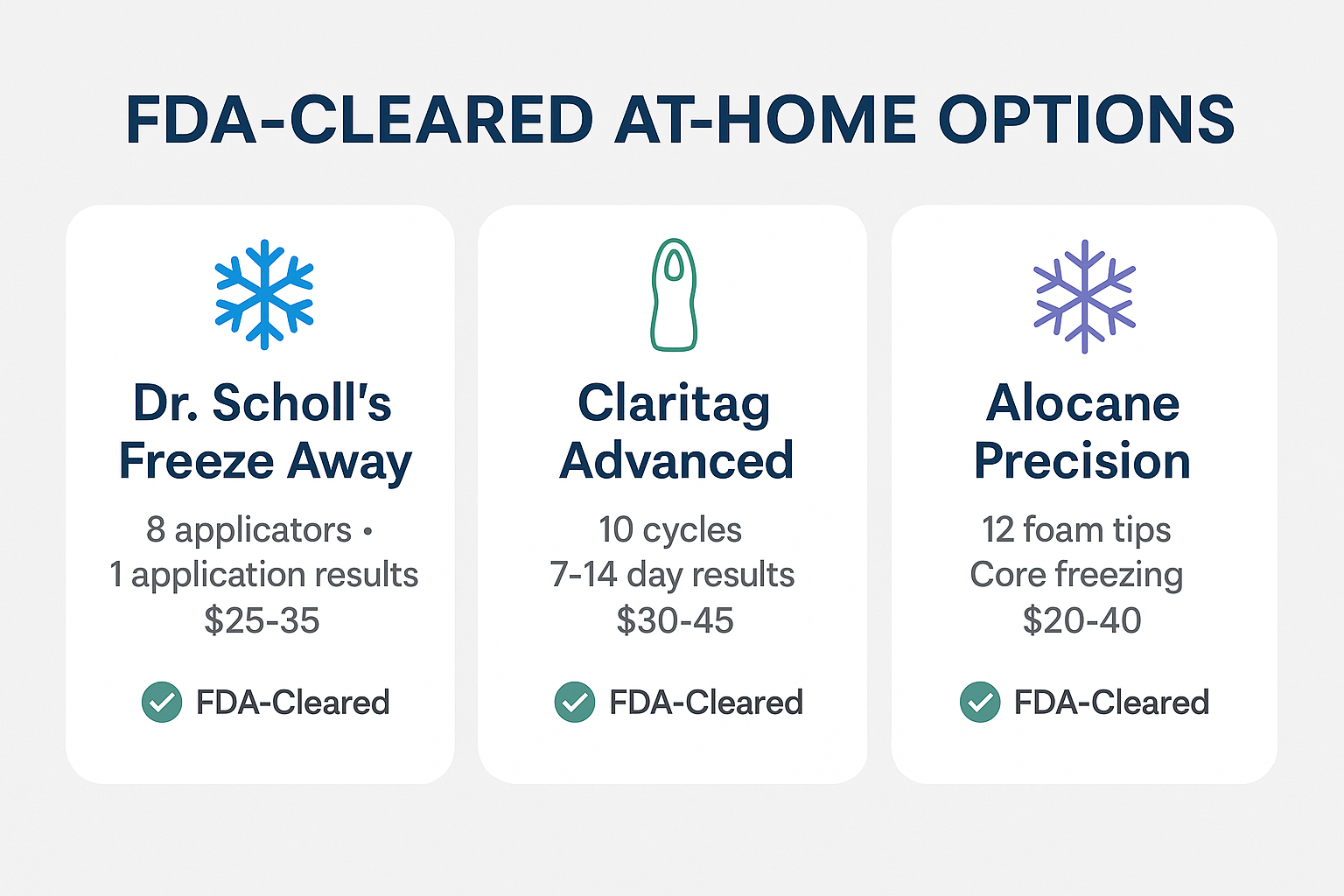
Dr. Scholl's Freeze Away brings professional cryotherapy principles to your medicine cabinet. This FDA-cleared device has become one of the most trusted at-home removal options[2].
Product features:
How to use it:
User results: Most users report successful removal with one application. The tag typically darkens within a few days, then falls off naturally within two weeks[2].
Best candidates:
Important considerations: While convenient, at-home freezing doesn't reach the same temperatures as professional cryotherapy. This means results may vary, and some tags might require repeat applications.
Designed by dermatologists, Claritag Advanced offers a dual-action grip and freeze system that provides more control than traditional at-home options[2].
What sets it apart:
The system: Claritag uses a unique grip mechanism that helps you hold the applicator steady during treatment. This stability improves accuracy and reduces the risk of freezing healthy skin.
Pricing: Expect to pay $30-45 for the complete kit—a cost-effective option if you have multiple tags to treat.
User feedback: Patients appreciate the control this system offers. The ability to see exactly where you're applying the freeze gives confidence during treatment.
Alocane Precision Freeze features 12 foam-tip applicators specifically designed for small to medium-sized tags[2].
Key features:
The advantage: The foam tips absorb and hold the freezing agent, allowing for controlled, sustained application. This helps ensure the freeze penetrates to the tag's root.
Application process:
Effectiveness: Users report good results on smaller tags, though larger tags may require professional removal for complete success.
Patch treatments represent the most affordable Skin Tag Removal Methods for at-home use, typically costing $15-60 for a complete treatment cycle[6].
How they work: These patches contain active ingredients (often salicylic acid or tea tree oil) that gradually dry out the skin tag. You apply a new patch daily until the tag falls off.
Timeline: Results take longer than freeze methods—usually 2-4 weeks of consistent application.
Pros and cons:
Pros:
Cons:
Who should consider patches:
Understanding the differences between professional and at-home Skin Tag Removal Methods helps you make an informed choice. Let's break down the key factors.
Professional removal:
At-home treatments:
Professional methods win on effectiveness, especially for larger tags or those in difficult locations.
Professional care advantages:
At-home risks:
Safety is where professional care truly shines. Our experienced surgical team ensures every procedure follows strict safety protocols.
At-home options:
Professional removal:
While at-home treatments appear cheaper initially, unsuccessful attempts can add up. Professional removal offers guaranteed results and peace of mind.
Use our cost estimator to get a personalized quote for your situation.
At-home timeline:
Professional timeline:
For busy lives, professional removal actually saves time. One quick appointment and you're done—no daily applications or waiting weeks for results.
Professional results:
At-home results:
For tags on visible areas, professional removal is the clear choice. The expertise of a skilled surgeon makes a significant difference in how your skin looks after healing.
Patients in North York, Mississauga, and Oakville consistently report excellent cosmetic outcomes with our expert outpatient care.
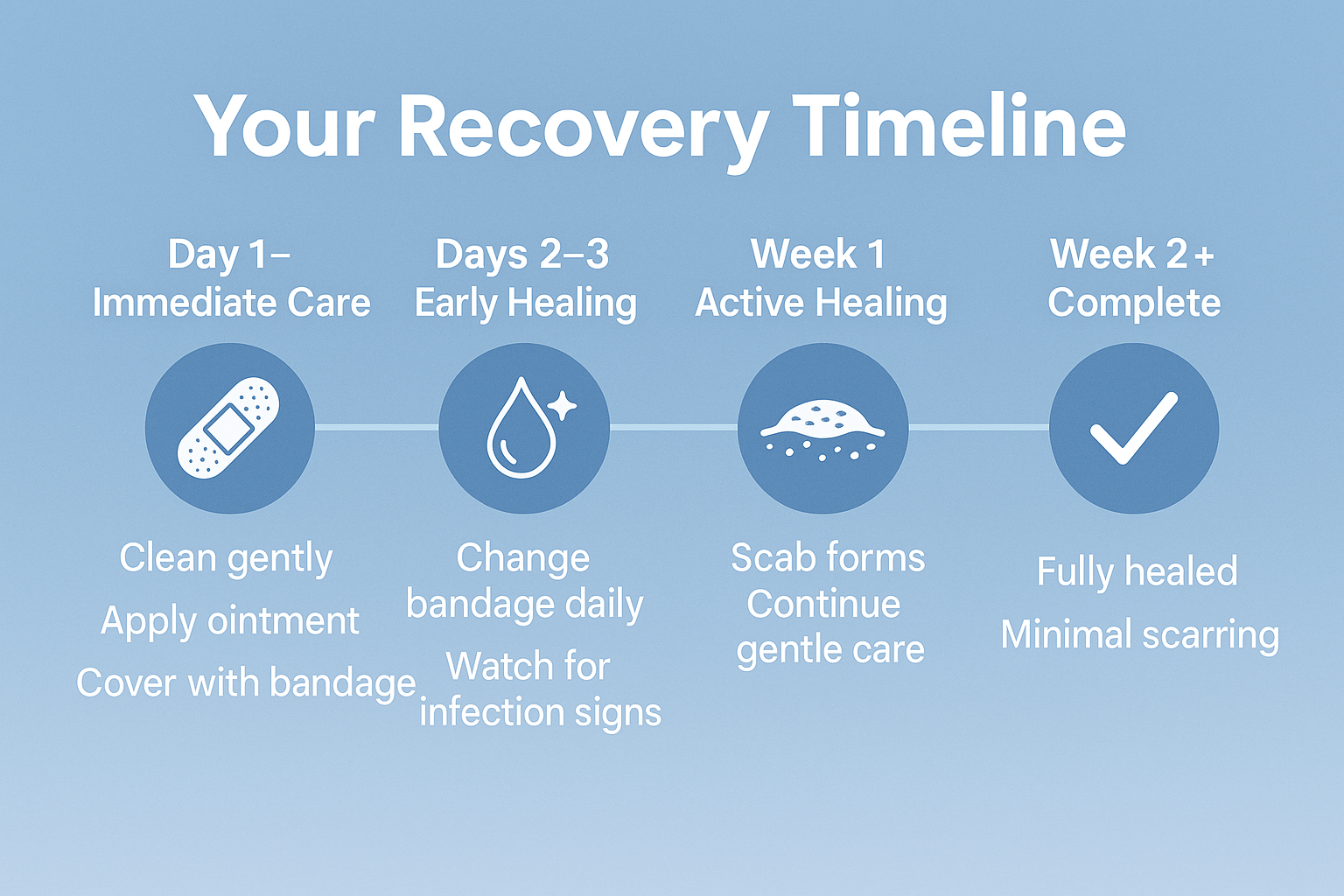
Proper aftercare ensures optimal healing and minimizes scarring, regardless of which Skin Tag Removal Methods you choose. Here's your complete guide to post-removal care.
For professional removal:
Right after your procedure, your surgeon will provide specific instructions. Generally, you'll follow these steps:
Cleaning:
Protection:
What's normal:
What's NOT normal (call your doctor):
During this week, your body works hard to heal the treatment site.
Daily care routine:
Activity guidelines:
Scab formation: A scab is your body's natural bandage. It's completely normal and actually indicates healthy healing. Resist the urge to pick at it—let it fall off naturally.
By week two, most patients are fully healed with minimal evidence of treatment.
What to expect:
Long-term care:
Follow-up: Most patients don't need a follow-up appointment unless complications arise. However, if you have concerns about healing or appearance, our team is always available to assess your progress.
If you used an at-home freeze method, your recovery looks slightly different:
Days 1-3:
Days 4-10:
Days 10-14:
Weeks 2-4:
While infection is rare with proper care, knowing the warning signs is important:
🚨 Contact your healthcare provider if you notice:
At The Minor Surgery Center, we're committed to your complete care—before, during, and after your procedure. Our team is always available to answer questions about your recovery.
With so many Skin Tag Removal Methods available, how do you choose? Consider these key factors.
Small tags (1-3mm):
Medium tags (3-5mm):
Large tags (5mm+):
Location considerations:
Face and eyelids:
Neck and chest:
Underarms and groin:
Busy professionals: Professional removal wins for efficiency. One 15-30 minute appointment versus weeks of daily at-home applications makes the choice clear.
Budget-conscious patients: At-home methods cost less upfront, but consider the value of guaranteed results. Failed at-home attempts can end up costing more than professional removal.
Comfort-focused individuals: Professional removal with local anesthetic ensures a pain-free experience. At-home freezing can be uncomfortable, and you manage any discomfort yourself.
Be honest with yourself:
If you answered "no" to any of these, professional removal is your better choice.
One or two tags: Either professional or at-home methods work
Three to five tags: Professional removal becomes more cost-effective and efficient
Six or more tags: Professional removal is significantly better—one session removes all tags with consistent results
Our clinic locations throughout Toronto make it convenient to receive expert care close to home.
If you're considering professional removal, here's what happens at your consultation.
Your surgeon begins with a thorough examination of your skin tag(s). This isn't just about removal—it's about ensuring what you have is actually a benign skin tag and not something else that requires different treatment.
The examination includes:
This careful assessment is crucial. While skin tags are common, other skin conditions can sometimes look similar. Professional evaluation ensures accurate diagnosis.
After assessment, your surgeon explains which removal methods are best suited for your specific situation.
Factors they consider:
This personalized treatment plan ensures you receive the most appropriate care for your unique needs.
Your surgeon walks you through the chosen method step-by-step:
This transparency is part of our commitment to clear communication. You'll never wonder what's happening or why.
Skin tag removal is typically considered cosmetic, which means insurance often doesn't cover it. However, exceptions exist:
Your consultation includes a clear cost breakdown with no hidden fees. Our pricing information is transparent and straightforward.
Many patients can have their tags removed the same day as their consultation. Others prefer to schedule for a later date.
Same-day removal benefits:
The choice is yours. We work around your schedule and comfort level.
Let's clear up some misconceptions about Skin Tag Removal Methods.
The truth: While this method circulates online, it's not recommended. Tying off a skin tag cuts off blood supply, which can cause:
Professional removal is safer, more comfortable, and provides better results.
The truth: When properly removed, skin tags don't grow back in the exact same spot. However, you can develop new skin tags in other areas.
Think of it like weeds in a garden—removing one doesn't prevent others from growing elsewhere. But the specific tag that's removed is gone for good.
The truth: This is completely false. Removing a skin tag doesn't trigger new growth. If new tags appear, it's due to the same factors that caused the original tag (friction, genetics, age, etc.), not because you removed one.
The truth: FDA-cleared at-home products are safe when used correctly on appropriate tags. The key is:
The truth: Modern Skin Tag Removal Methods performed by skilled surgeons rarely leave visible scars. Techniques like radiofrequency cautery and precise excision minimize scarring significantly.
The expertise of your surgeon matters enormously. Our experienced team has performed thousands of successful removals with excellent cosmetic outcomes.
While you can't prevent skin tags entirely, certain strategies may reduce your likelihood of developing new ones.
Common contributors:
Reduce friction:
Maintain healthy weight: Stable weight reduces skin folds and friction areas where tags commonly develop.
Manage underlying conditions: If you have diabetes or insulin resistance, proper management may reduce skin tag formation.
Skin care:
Regular skin checks: Monitor your skin for new growths. Early detection means easier removal if you choose to have tags removed.
Professional removal involves local anesthetic, so you won't feel pain during the procedure. You might feel slight pressure or tugging, but no pain. After the anesthetic wears off, most patients report minimal discomfort—similar to a small scratch.
At-home freeze methods can cause brief stinging or burning sensations, but these pass quickly.
Professional removal typically takes 15-30 minutes, including prep time. The actual removal often takes just minutes. Multiple tags can usually be removed in a single session.
Yes, but professional removal is strongly recommended during pregnancy. Hormonal changes during pregnancy often cause skin tags, and many women choose to have them removed. Always inform your surgeon that you're pregnant so they can adjust their approach accordingly.
No. Once a skin tag is completely removed, it won't grow back in that exact spot. However, you may develop new tags in other areas.
For facial tags, professional removal using hyfrecation or radiofrequency cautery provides the best cosmetic results. These methods offer precise control and minimal scarring—crucial for visible areas.
Never attempt at-home removal on facial skin tags.
Costs typically range from $100-200 for a single tag to $200-400 for multiple tags in one session. The exact cost depends on the number, size, and location of tags. Use our cost estimator for a personalized quote.
Usually, skin tag removal is considered cosmetic and isn't covered. However, if tags cause pain, bleeding, or interfere with daily activities, insurance may cover removal. Check with your provider and bring documentation from your doctor.
For more detailed answers to common questions, visit our FAQs page.
When you're ready for professional skin tag removal, choosing the right provider matters. Here's what sets us apart.
We specialize exclusively in minor surgical procedures. This focused expertise means:
Our approach prioritizes the least invasive method that delivers the best results. We don't over-treat—we use precisely what's needed for your situation.
This philosophy means:
From the moment you contact us to your final follow-up, your comfort is our priority.
What this looks like:
With clinics throughout the Toronto area, expert care is always close to home:
We also serve patients in Markham, Scarborough, and Brampton.
No surprises. No hidden fees. Just clear, upfront pricing so you can make informed decisions about your care.
We maintain the highest standards of safety while delivering efficient service. You won't spend hours in a waiting room—we value your time as much as you do.
Our safety protocols include:
You've learned about all the available Skin Tag Removal Methods—from professional procedures to at-home options. Now it's time to take action.
If you're ready to get back to your life without worrying about skin tags, professional removal offers the most reliable, efficient solution.
Your next steps:
1. Schedule a consultation Contact us to book your initial assessment. Many patients can have same-day removal.
2. Get personalized recommendations Your surgeon will assess your specific situation and recommend the best removal method for you.
3. Have your procedure Quick, comfortable removal with minimal downtime.
4. Enjoy clear skin Get back to your life, confident and comfortable.
Contact The Minor Surgery Center to schedule your consultation today.
If you choose to try FDA-cleared at-home methods first:
Important reminders:
If at-home treatment doesn't work or you're uncomfortable with self-treatment, professional removal is always available.
We're here to help. Whether you're wondering about specific Skin Tag Removal Methods, costs, recovery, or anything else, our team provides clear, honest answers.
Ways to connect:
If you're uncertain whether you have a skin tag or another type of growth, professional evaluation is essential. What looks like a skin tag might be:
Proper diagnosis ensures appropriate treatment. Learn more about different types of skin conditions we treat.
Skin Tag Removal Methods have evolved significantly, offering safe, effective options for everyone—from quick professional procedures to convenient at-home treatments.
The right choice depends on your unique situation: the size and location of your tags, your comfort level with self-treatment, your schedule, and your cosmetic goals.
Remember these key points:
✅ Professional removal offers the highest success rates, best cosmetic outcomes, and guaranteed results in a single session
✅ At-home FDA-cleared treatments provide convenient alternatives for small, accessible tags when used correctly
✅ Location matters—facial tags should always receive professional care for optimal cosmetic results
✅ Proper aftercare ensures minimal scarring and optimal healing, regardless of removal method
✅ Expert evaluation ensures accurate diagnosis and appropriate treatment
At The Minor Surgery Center, we combine expert outpatient care with a comfort-first approach to help you get back to your life quickly and confidently. Our experienced surgical team has helped thousands of patients achieve clear, healthy skin through safe and efficient surgery.
Skin tags don't have to be a permanent part of your life. With the right removal method and expert care, you can address this common concern and move forward with confidence.
Ready to take the next step? Contact us today to schedule your consultation and discover which skin tag removal method is right for you.
Your journey to clear, comfortable skin starts here. 🌟
[1] Professional dermatological procedures for skin tag removal, including cryotherapy, excision, shaving, hyfrecation, electrodesiccation, and radiofrequency cautery techniques and outcomes.
[2] FDA-cleared at-home skin tag removal products, including Dr. Scholl's Freeze Away, Claritag Advanced, and Alocane Precision Freeze specifications and user results.
[3] Clinical outcomes of professional cryotherapy procedures, including duration, patient comfort levels, and recovery timelines.
[6] Comparative cost analysis of at-home patch treatments versus professional skin tag removal procedures.