
Last updated: June 2, 2026
A keloid after a C-section is a thick, raised scar that grows beyond the original incision line because the body makes too much collagen while healing. The most effective keloid after C-section treatment options combine approaches: silicone gel sheets and pressure therapy for prevention, corticosteroid injections to flatten raised tissue, and laser, cryotherapy, or surgical excision (paired with steroids or radiation) for stubborn cases. Keloids can be reduced significantly, but they rarely disappear forever, so a treatment plan that lowers recurrence is the realistic goal.
A keloid from a C-section is an overgrowth of scar tissue that forms at the incision site and spreads beyond the original wound boundary. Unlike a flat surgical scar, a keloid is raised, firm, and often darker or redder than surrounding skin. It can feel itchy, tender, or tight.
Keloids happen when the body's wound-healing process doesn't shut off properly. During normal healing, fibroblasts produce collagen to close the wound, then stop. In keloid-prone skin, those cells keep producing collagen long after the incision has closed, building thick tissue that bulges outward and outward past the scar line.
A C-section keloid usually sits along the low horizontal "bikini line" incision. It may appear weeks to months after surgery and can keep enlarging for a year or more.
Keloid vs. hypertrophic scar — a key distinction:
FeatureKeloidHypertrophic scarGrows beyond incision lineYesNoTends to shrink on its ownRarelySometimes over timeItching/tendernessCommonPossibleRecurrence after removalHighLower
If your raised scar stays inside the incision border, it's more likely a hypertrophic scar, which often responds faster to treatment. Keloids that bulge past the line need a more aggressive, recurrence-focused plan. For a broader look at raised and abnormal skin growths, see this guide to types of skin lesions.
Keloids after a C-section are relatively uncommon overall but far more frequent in people with keloid-prone skin. Most C-section scars heal flat or as mild hypertrophic scars, not true keloids.
Risk depends heavily on personal and family factors rather than the surgery itself. The procedure is performed millions of times worldwide each year, and the majority of patients never develop a keloid. However, those who have formed keloids before — from ear piercings, acne, or prior surgery — carry a much higher risk on a C-section incision.
Several things raise the odds:
If you've had a keloid before, tell your obstetric and surgical team before delivery. They can plan closure technique and early scar care to reduce the chance of another keloid forming.
People with a personal or family history of keloids and those with darker skin tones are most likely to develop keloids after surgery. Genetics is the strongest predictor.
The clearest risk groups include:
If keloids run in your family or you've grown one before, you are not a candidate for "wait and see." Early prevention from the day the incision is closed gives the best outcome.
A common mistake is assuming a small, neat C-section incision can't keloid. Keloid risk is driven by your biology, not the size of the cut.
Yes, you can lower your keloid risk with early, consistent scar care, though prevention is not guaranteed for high-risk individuals. The most evidence-supported preventive step is silicone gel sheeting started once the incision has fully closed [1][4].
Practical prevention steps after a C-section:
Choose aggressive prevention if: you've had a keloid before, have a family history, or have darker skin. In those cases, ask about starting silicone therapy early and getting a dermatology referral as a precaution.
For more on scar-care products and how they compare, read our breakdown of silicone vs. vitamin E vs. petroleum jelly for scars.
Yes, silicone gel sheets are one of the most effective and well-supported non-invasive options for preventing and flattening C-section keloids. They are safe to use after the incision has closed and are considered a first-line conservative treatment [1][4].
Silicone sheets work by hydrating the scar and creating a protective barrier, which helps regulate collagen production and reduce redness and thickness over time. Studies on post-C-section scars have found silicone products safe and effective at lowering the risk of abnormal scarring [1].
How to use them well:
Silicone gel (a liquid that dries into a thin film) is an alternative for scars in awkward spots or under clothing where a sheet won't stay put. Both forms can flatten existing keloids or prevent their return after other treatments [4].
The most common mistake is stopping too early. Silicone therapy needs weeks of daily use before changes appear.
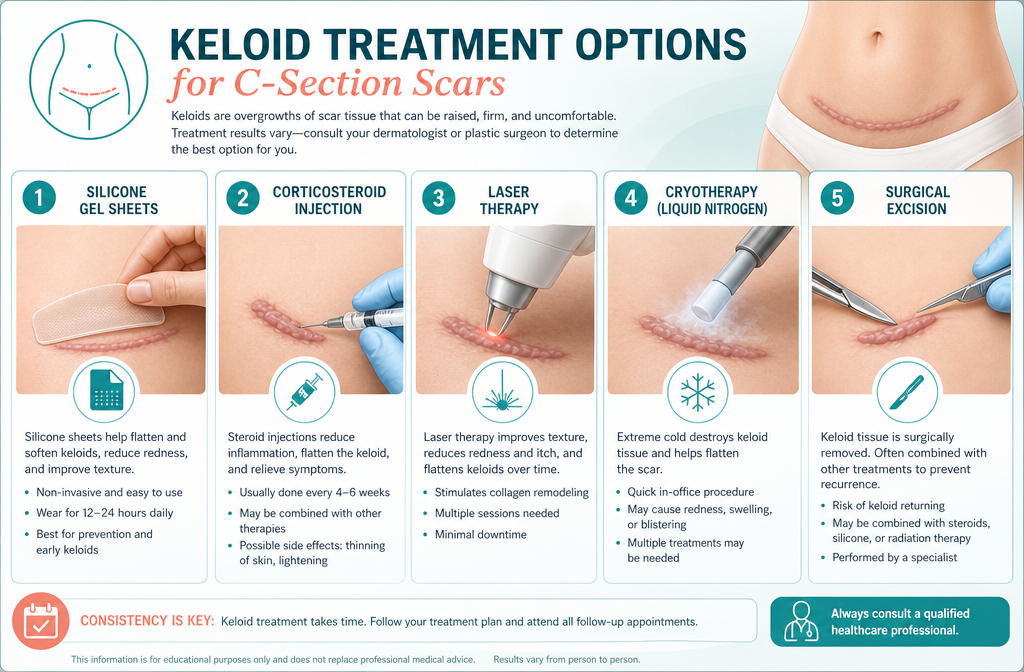
Yes, corticosteroid injections are a standard and effective treatment for reducing raised C-section keloids. Triamcinolone acetonide is injected directly into the keloid to soften it, flatten the raised tissue, and ease itching and tenderness [1][3].
Steroids reduce the inflammation and excess collagen that drive keloid growth. Treatment usually involves a series of injections spaced several weeks apart. Many patients need three to six sessions, sometimes more for large or stubborn keloids.
What to expect:
Steroid injections are also a key partner to surgery. Injecting triamcinolone right after surgical excision of a keloid lowers the chance it grows back [1][3]. This combination is one of the most reliable ways to manage keloids that have already formed.
Choose steroid injections if: your keloid is raised, symptomatic, and you want a non-surgical option, or you need recurrence control after excision.
Yes, laser treatment can reduce the thickness, redness, and overall appearance of a C-section keloid over a series of sessions. Lasers target the blood vessels and excess tissue within the scar, improving both texture and color [2].
Laser therapy is often combined with corticosteroid injections for better results than either alone. Pulsed-dye and fractional lasers are commonly used. Improvement is gradual, and several sessions spaced weeks apart are typically needed.
Laser pros and cons:
Laser is a good fit for keloids that are red, raised, and bothersome but not enormous. For very large or thick keloids, laser usually works best as part of a combined plan rather than a standalone fix.
Keloids can be greatly reduced and flattened, but they cannot reliably be removed permanently because they tend to return — especially after surgery alone. The realistic goal of any keloid after C-section treatment plan is a flatter, softer, stable scar with a low chance of recurrence.
Surgical excision removes the bulk of the keloid, but cutting it out creates a new wound that can keloid again — sometimes larger than before. That's why surgeons rarely use excision by itself. Combining surgery with corticosteroid injections, pressure therapy, or radiation dramatically lowers recurrence [1][3].
A layered, recurrence-focused approach looks like this:
With this combined strategy, many people achieve long-term improvement. Without it, a keloid removed by surgery alone often comes back. Specialized clinics focus on this layered method; learn more about professional keloid scar removal and treatment.
The main risk of keloid removal is recurrence — the keloid growing back, sometimes larger than the original. Other risks depend on the method and include skin changes, infection, and discomfort.
Risks by treatment type:
ProcedureMain risksSurgical excisionHigh recurrence if used alone; new scar; infectionCorticosteroid injectionSkin thinning, lightening, surface vesselsCryotherapyPain, blistering, permanent lightening of skinLaserRedness, pigment changes (esp. darker skin), costRadiationReserved for severe cases; long-term tissue concerns
Cryotherapy, which freezes the keloid with liquid nitrogen to shrink it, can cause lasting skin lightening and usually needs several treatments [3]. Radiation is effective after surgery but is reserved for serious, treatment-resistant keloids because of its risk profile [3].
Edge case: Pregnancy and breastfeeding affect timing and choices. If you're still breastfeeding, discuss which treatments are appropriate before starting, since some procedures and medications may need to wait.
A common mistake is choosing surgery first because it seems like the fastest path. For keloids, surgery without an anti-recurrence add-on often makes the problem worse.
Keloid treatment costs vary widely by method, number of sessions, and clinic, ranging from inexpensive over-the-counter products to several hundred or more per procedure. Because most keloids need multiple sessions, total cost depends on the full plan, not a single visit.
General cost guidance:
Coverage varies. Some keloid treatment may be covered when it's medically necessary (pain, restricted movement, infection), while purely cosmetic treatment is usually out of pocket. Confirm with your provider and clinic before starting. For published pricing on minor surgical procedures, see this treatment pricing page.
Budget tip: Start with consistent silicone therapy and an assessment. A clear diagnosis prevents spending on the wrong treatment.
Natural remedies have limited evidence for keloid reduction and should not replace proven medical treatments, though some may modestly help with comfort or appearance. The strongest "home" option remains silicone gel, which is widely supported [4].
Popular home remedies and the reality:
Harvard Health notes that for keloid-prone people, prevention and proper wound care matter most, and avoiding unnecessary skin trauma reduces risk [5]. Natural products can be a reasonable add-on for mild scars, but a true keloid generally needs silicone, injections, laser, or a combination.
Choose natural-only care if: the scar is mild, flat, and not growing. If it's raised, spreading, or symptomatic, see a professional rather than relying on home remedies.
A keloid can keep growing for months after the incision has healed, sometimes for a year or longer, which is one of its defining features. Unlike a normal scar that fades, a keloid may continue to enlarge, thicken, and spread past the original wound line.
This ongoing growth is why early treatment matters. The sooner a growing keloid is addressed, the easier it is to control. A keloid left untreated can become larger and harder to flatten.
Signs your scar is becoming or remaining an active keloid:
If you notice continued growth weeks or months after surgery, that's the signal to act — start silicone therapy and book an evaluation rather than waiting to see if it settles on its own.
See a dermatologist or surgeon if your C-section scar is growing beyond the incision line, becoming raised, itching, or thickening months after surgery. Early evaluation gives the best chance of controlling a keloid before it enlarges.
Book an appointment when:
A specialist can confirm whether the scar is a keloid or a hypertrophic scar, then build a combined treatment plan. Many keloid patients do best with a clinic experienced in injections, excision, and recurrence control. You can review qualified board-certified surgeons or book a consultation to get a tailored assessment.
Don't wait if: the keloid is rapidly enlarging, very painful, shows signs of infection, or limits your movement. Those warrant prompt care.
Here's a side-by-side summary to help you weigh the main keloid after C-section treatment options.
TreatmentBest forSessions neededRecurrence controlSilicone sheets/gelPrevention, mild keloidsDaily for weeks–monthsGood as add-onCorticosteroid injectionRaised, symptomatic keloids3–6+Strong, esp. after surgeryLaserRed, raised keloidsSeveralBetter when combinedCryotherapySmaller keloidsMultipleModerateSurgical excisionLarge keloids (with adjunct)1 + follow-upHigh recurrence if aloneRadiation after surgerySevere, resistant keloidsAs directedStrong, specialist only
The takeaway: no single method wins for everyone. The best plans combine a procedure that removes or flattens the keloid with a step that prevents it from coming back [1][3][4].
Can a C-section keloid go away on its own?
No. True keloids rarely shrink or disappear without treatment and often keep growing. Early scar care and professional treatment give the best results.
How soon after a C-section can I start treating a keloid?
Begin silicone gel sheeting once the incision has fully closed and your surgeon approves, usually a few weeks after delivery. Procedures like injections come later, after evaluation.
Are steroid injections safe while breastfeeding?
Discuss timing with your doctor. Many treatments can be planned around breastfeeding, but you should confirm what's appropriate for you before starting.
Why do keloids come back after surgery?
Surgery creates a new wound, and keloid-prone skin can over-heal that wound into another keloid. Combining excision with steroid injections or radiation lowers recurrence [1][3].
Is silicone or steroid injection better for a C-section keloid?
Silicone is best for prevention and mild scars; steroid injections are better for flattening raised, established keloids. They are often used together [1][4].
Do natural remedies like vitamin E work on keloids?
Evidence is weak. Silicone gel has stronger support than vitamin E or other home oils for keloid improvement [4][5].
Will laser remove my keloid completely?
No. Laser improves redness, thickness, and texture over several sessions but usually works best combined with other treatments [2].
How many treatments will I need?
Most people need a series — several steroid injections or multiple laser/cryotherapy sessions — spread over weeks to months, plus ongoing silicone care.
Is keloid treatment painful?
Injections and cryotherapy cause brief discomfort; silicone sheets are painless. Numbing options are available for procedures.
Can I prevent a keloid if I've had one before?
You can reduce the risk with early silicone therapy, tension control, and a specialist plan, but high-risk skin can still form keloids despite prevention [5].
A keloid after a C-section is a thick, raised scar that grows past the incision because the skin over-produces collagen during healing. The good news is that effective keloid after C-section treatment options exist — from silicone gel sheets and corticosteroid injections to laser, cryotherapy, and surgery paired with anti-recurrence steps. The realistic goal is a flatter, softer, stable scar, not a guarantee of total, permanent removal.
Your best next steps: start consistent silicone therapy on the closed incision, watch for signs the scar is growing or thickening, and get a professional assessment early — especially if you have a keloid history or darker skin. A combined plan that both treats the keloid and prevents its return offers the strongest, longest-lasting results. If your scar is raised, itchy, or spreading, book a consultation with an experienced provider to build a plan that fits your skin and history.
[1] C Section Scar Keloid - https://www.droracle.ai/articles/5923/c-section-scar-keloid?utm_source=openai
[2] Best Treatment For Keloid C Section Scar - https://csectionuk.com/blog/best-treatment-for-keloid-c-section-scar?utm_source=openai
[3] Drc 20520902 - https://www.mayoclinic.org/diseases-conditions/keloid-scar/diagnosis-treatment/drc-20520902?utm_source=openai
[4] Treatments - https://www.nm.org/conditions-and-care-areas/dermatology/keloids/treatments?utm_source=openai
[5] Keloids A To Z - https://www.health.harvard.edu/a_to_z/keloids-a-to-z?utm_source=openai