
Last updated: September 9, 2026
Yes, ear keloids can be removed, and the ear is one of the best places on the body to treat one. But cutting a keloid out is only half the treatment. Surgery on its own commonly leads to a keloid that grows back larger than the original, which is why ear keloid removal Toronto patients ask about should always mean excision plus a planned course of follow-up therapy, usually a series of steroid injections and sustained pressure with a pressure earring. When that full plan is followed, results on the earlobe are often very good.
Getting the diagnosis right matters more than getting treated quickly. Three different things look similar on a pierced ear, and only one of them needs a scalpel.
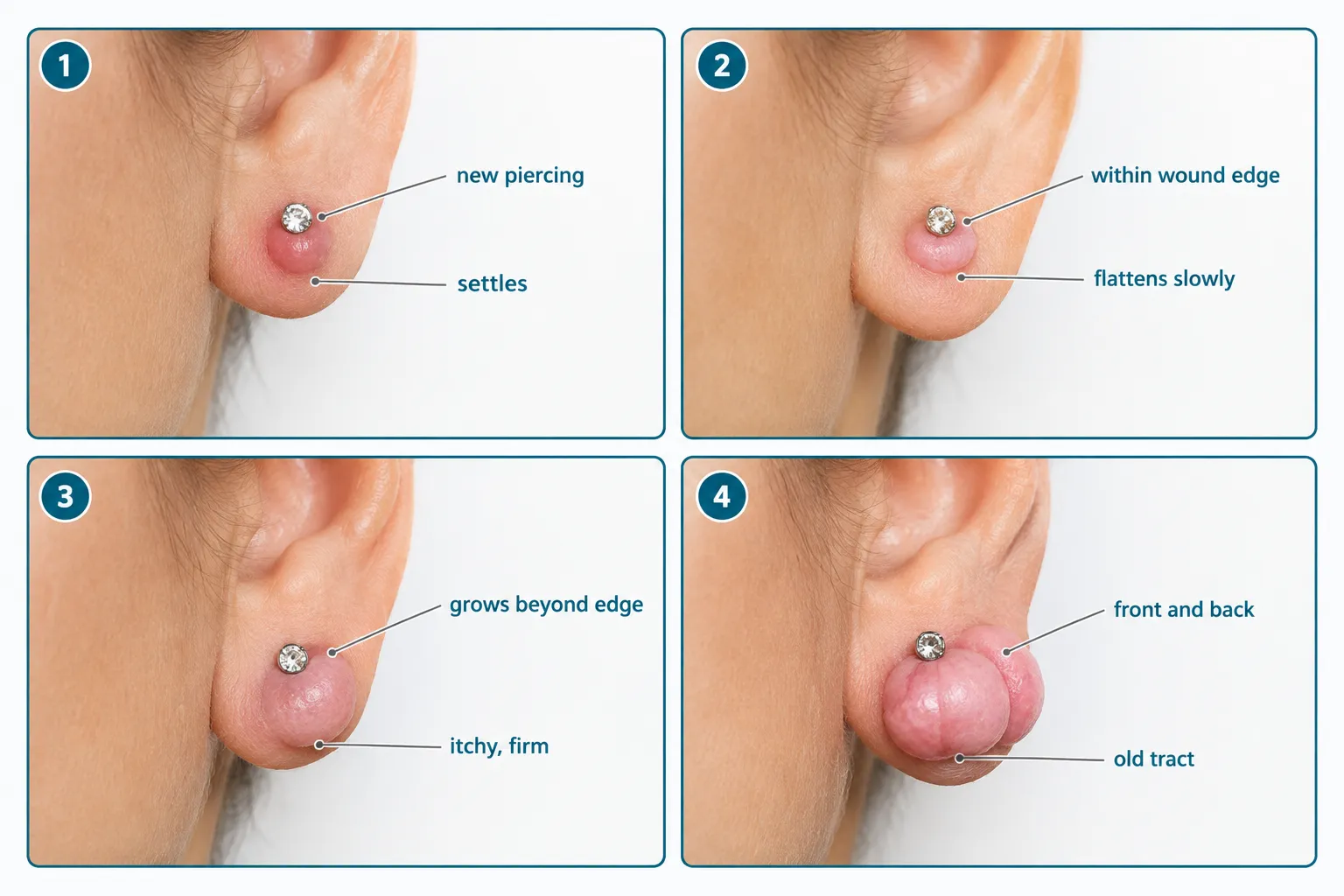
The practical consequence is simple. Operating on an irritation bump is a mistake, it creates a new wound in someone whose ear is already inflamed. If you are unsure which you have, that uncertainty is the reason to be examined rather than treated. Our explainer on telling a keloid apart from an irritation bump walks through the same distinction in more detail.
An ear keloid is an overgrowth of scar tissue at a healed piercing site. A piercing is a wound, and in people whose skin lays down scar aggressively, the repair process does not switch off when the hole has closed.
Who is most at risk:
One detail surprises people: keloids often appear months after a piercing, sometimes a year or more, long after the site seemed fully healed. A lump that starts growing on an old piercing is worth assessing. The same biology explains keloid scars after mole removal and other small skin procedures.
Earlobe keloids are generally the more straightforward of the two, and expectations should be set differently for the upper ear.
The lobe is soft tissue with no cartilage framework. Keloids there typically sit as a firm ball on the front, the back, or both sides at once, connected through the old piercing tract. The lobe also holds a pressure device well, which is the main reason combination treatment works better on the ear than on almost any other site.
Keloids on the upper ear cartilage, helix, conch, flat, industrial piercings, behave differently. The tissue is thin, tightly attached and unforgiving. These keloids respond less predictably, need more careful planning, and carry a higher risk of a change in ear contour or notching after treatment. They are still treatable, but the aim is often meaningful reduction rather than a perfectly smooth ear.
There is no single treatment that reliably clears an ear keloid and prevents its return. That is the honest state of the evidence, and it is why serious plans combine methods.
)
Intralesional steroid injection. Injections placed directly into the keloid can soften, flatten and shrink it over a series of sessions spaced several weeks apart. For small, flat-based keloids this is often the first thing tried, and sometimes it is all that is needed. Possible effects include thinning or lightening of the skin at the injection site, which matters more on darker skin.
Surgical excision. Larger keloids, and stalk-like (pedunculated) ones hanging off the lobe, generally need to be removed. Excision under local anaesthetic is the quickest way to get a bulky keloid off the ear.
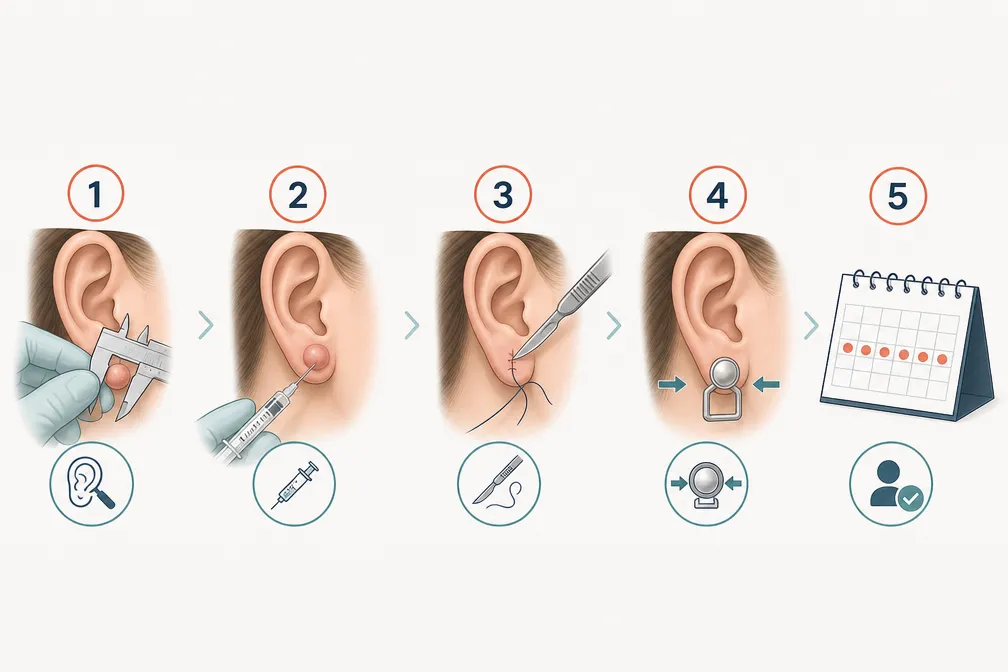
Combination therapy, the part that decides your result. Excision alone commonly produces a keloid that returns bigger than the one removed. This is the single most important thing to understand before booking anything. The standard approach pairs surgery with a planned series of post-operative injections and sustained pressure therapy using pressure earrings or spring clips worn over many months.
Adjuncts. Silicone gel or silicone sheeting is a reasonable, low-risk addition once the wound has closed. Cryotherapy and certain lasers are used by some clinicians, mainly for redness, texture and smaller lesions; evidence for laser as a standalone cure for ear keloids is weak, and laser alone should not be presented as a fix. For very difficult, repeatedly recurrent keloids, adjuvant radiotherapy is sometimes considered by specialists.
Who should think twice about surgery. Someone whose bump is new, still inflamed, or may simply be an irritation bump. Someone with an active infection at the site. Someone unwilling or unable to commit to the follow-up injections and pressure phase, for that person, injections alone are usually the wiser starting point. A broader overview sits in our guide to keloid removal in Toronto.
The procedure day is short. The follow-up schedule is what determines the outcome.
Recovery is usually undramatic. Expect some tenderness and swelling for a few days, and keep the area clean and dry as instructed. Most people return to normal activity immediately. There will always be a scar, the goal is a flat, soft, pale line instead of a growing lump, and the lobe may look slightly thinner or differently shaped than before. You can see the kind of change to expect in our ear keloid removal before and after gallery, and our note on whether minor surgery leaves a scar covers scar behaviour generally.
About the pressure earring: it is inconvenient. It is worn for most of the day, for many months, and it is visible. People abandon it, and abandoning it is a common route back to a second keloid. Wearing it as directed is not optional detail, it is part of the treatment.
No home remedy removes an established keloid. Garlic, apple cider vinegar, toothpaste, tea tree oil and pressure from thread or string have no reliable evidence behind them, and several can injure the skin and make the keloid grow.
Two things are genuinely reasonable at home: keeping the area clean, and using silicone gel or silicone sheeting on a fresh or maturing scar. Silicone is safe, widely recommended and works best early. Everything else is best discussed before you try it.
Re-piercing the same ear after a keloid is generally discouraged. The site has already proven how it heals, and a new wound in the same spot invites the same result.
If you are keloid-prone, apply the same caution to new piercings anywhere, cartilage piercings, navel, nipple and any site that takes a long time to heal. If you decide to proceed anyway, treat any raised scar early rather than waiting years; keloids are far easier to manage when small. Start silicone as soon as a wound has closed, avoid heavy or snagging jewellery, and have a growing bump looked at within weeks rather than after it has doubled.
Assessment and treatment for ear and piercing keloids are done in the office under local anaesthetic at The Minor Surgery Center, with locations serving Toronto and the GTA. A family doctor referral is not required, you can book an assessment directly, the same way patients do for a skin check without a GP referral.
The visit starts with confirming the diagnosis, then discussing whether injections alone, excision with a planned follow-up course, or a staged combination makes most sense for the size, site and treatment history of your keloid. If you are still deciding who to see, our overview of dermatologists and skin specialists in Toronto and our full list of in-office minor surgery procedures may help.
Will my ear keloid come back after removal?
It can. Recurrence after excision alone is genuinely common, and a returning keloid is often larger than the original. Recurrence is much less frequent when excision is followed by a planned series of steroid injections and consistent pressure therapy. No one can promise a keloid will never return.
Can I just get injections instead of surgery?
Sometimes, yes. Smaller, flatter keloids often soften and flatten over a series of injection sessions, avoiding surgery altogether. Bulky or stalk-like keloids rarely respond well enough to injections alone and usually need excision as part of the plan.
Does ear keloid removal hurt?
The area is numbed with local anaesthetic, so the procedure itself is not painful, you may feel pressure or the sting of the freezing going in. Steroid injections into dense scar tissue can be briefly uncomfortable. Afterward, mild tenderness for a few days is typical.
Can I pop or squeeze an ear keloid?
No. A keloid is dense fibrous scar tissue, not a cyst or a pimple, there is nothing inside to express. Squeezing, cutting, tying or picking at it causes trauma, and trauma is exactly what makes keloids grow. Leave it alone and have it assessed.
How long do I have to wear pressure earrings?
Longer than most people expect: months of near-daily wear, not weeks. The exact schedule depends on the size of the keloid, the site, and how the scar is behaving at each follow-up. Stopping early is one of the most common reasons a keloid comes back.
Can I get my ear re-pierced afterward?
It is generally advised against on an ear that has already formed a keloid. If a piercing matters a great deal to you, raise it well after treatment is complete so the risks and any precautions can be discussed honestly, but expect the answer to be cautious.
Are ear keloids dangerous?
Keloids are benign, they are not cancer and they do not spread through the body. They can itch, feel tender, catch on clothing and cause real distress about appearance. Any lump on the ear that bleeds, ulcerates or changes rapidly should be examined rather than assumed to be a keloid.
Ear keloids are among the most treatable keloids there are. The earlobe tolerates surgery well and holds a pressure device better than almost any other site, which is why the combination approach performs so well there. What fails is a lone excision with no plan for the months that follow, and that, not bad luck, is why so many people are on their second or third keloid.
Practical next steps: stop picking at or squeezing the lump, photograph it now so growth can be judged later, start silicone on any fresh raised scar, and book an assessment to confirm whether it is a keloid, an irritation bump or a hypertrophic scar. Then commit to the whole plan, not just the surgery day.
This article is for general information only and is not a substitute for individual medical advice. Diagnosis and treatment of ear keloids depend on examination of your specific case. Speak with a qualified physician about your own symptoms before starting or stopping any treatment.