
When you look in the mirror and notice several moles that concern you—whether for cosmetic reasons or health worries—a natural question arises: "Can I remove multiple moles in one visit?" This common question reflects a growing desire for efficiency in healthcare, particularly when it comes to minor surgical procedures. The short answer is yes, you absolutely can remove multiple moles during a single appointment at a specialized facility like The Minor Surgery Center, though several clinical factors determine exactly how many can be safely addressed at once.
Understanding the possibility of removing multiple moles in one visit positions efficiency as a key benefit for patients seeking comprehensive skin care. Rather than scheduling numerous appointments over weeks or months, many individuals can address their concerns in a single, well-planned session. This approach saves time, reduces overall anxiety about procedures, and often proves more cost-effective than multiple visits.
✅ Multiple moles CAN be removed in one visit at specialized centers, with most dermatologists safely removing up to 3 moles per appointment, though this number varies based on individual circumstances.
✅ Clinical factors determine feasibility, including mole size, location on the body, removal technique required, patient health status, and total procedure time needed.
✅ Cost efficiency matters: Removing multiple moles in one session can reduce overall expenses, with surgical shaving averaging $151 per mole, cryotherapy at $209, surgical excision at $325, and laser removal at $531.
✅ Recovery is straightforward with minimal downtime—most patients drive themselves home immediately after the procedure and return to normal activities the same day.
✅ Professional assessment is essential: Each mole requires individual evaluation by a board-certified dermatologist to ensure safe, appropriate removal and proper pathological examination when needed.
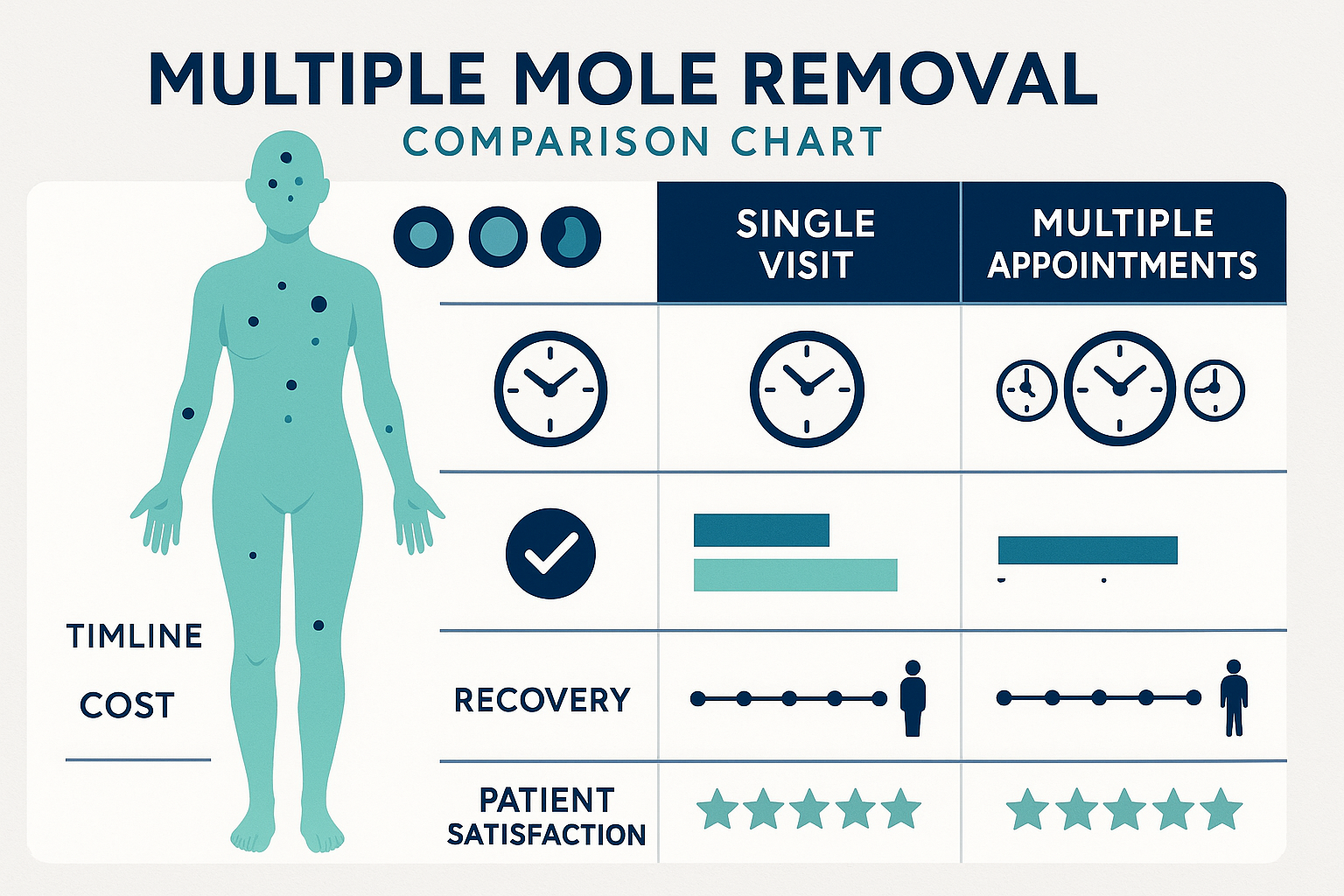
The medical community has made significant advances in dermatological procedures, making it entirely feasible to remove multiple moles during a single office visit. This efficiency stems from improved techniques, better anesthesia options, and streamlined clinical protocols that prioritize patient safety while maximizing convenience.
Most dermatologists typically remove up to three moles in one appointment, though this number isn't a strict limit[1]. The feasibility depends on several interconnected factors that medical professionals carefully evaluate before proceeding. At facilities like The Minor Surgery Center in Ajax and Barrie, specialists assess each patient's unique situation to determine the optimal approach.
The procedures themselves are remarkably quick and relatively painless once the treatment area is numbed with local anesthesia[3][8]. This efficiency means that even when removing multiple moles, the total appointment time remains manageable—typically ranging from 30 minutes to an hour depending on complexity.
Several critical factors influence whether multiple moles can be safely removed during a single visit:
1. Size of the Lesions 📏
Smaller moles require less time and create smaller wounds that heal more quickly. Large moles may require more extensive excision, longer procedure times, and more complex wound closure. The cumulative size of all moles being removed matters significantly—removing five tiny moles is vastly different from removing five large ones.
2. Location on the Body 🗺️
Moles in different body areas present varying levels of complexity. Facial moles require extra precision for cosmetic outcomes, while moles on the back or limbs may be more straightforward. Removing moles from multiple body regions in one session is possible but requires careful planning.
3. Number of Moles 🔢
While there's no absolute maximum, practical limitations exist. The total procedure time, amount of local anesthesia needed, and patient comfort all factor into the equation. Removing 2-3 moles is standard; 4-5 is feasible in many cases; beyond that requires special consideration.
4. Removal Technique Required ⚕️
Different moles may require different removal methods:
Each technique has different time requirements and recovery profiles, affecting how many can be performed in one session.
5. Patient Health Status 💪
Overall health, medications (especially blood thinners), healing capacity, and anxiety levels all influence the decision. Patients with certain medical conditions may need a more conservative approach.
6. Anesthesia Requirements 💉
Local anesthesia has maximum safe dosage limits. Multiple moles require multiple injections, and there's a ceiling to how much anesthetic can be safely administered in one session.
Choosing to remove multiple moles during a single appointment offers numerous advantages that extend beyond simple convenience. Understanding these benefits helps patients make informed decisions about their dermatological care.
In our busy lives, minimizing medical appointments represents a significant quality-of-life improvement. Instead of taking time off work for three separate appointments, patients can address multiple concerns in one visit. This efficiency is particularly valuable for:
Patients can typically drive themselves home and return to work immediately after the procedure[3][8], making same-day multiple mole removal remarkably convenient.
The financial aspect of mole removal deserves careful consideration, especially when dealing with multiple lesions. Understanding the cost structure helps patients plan appropriately:
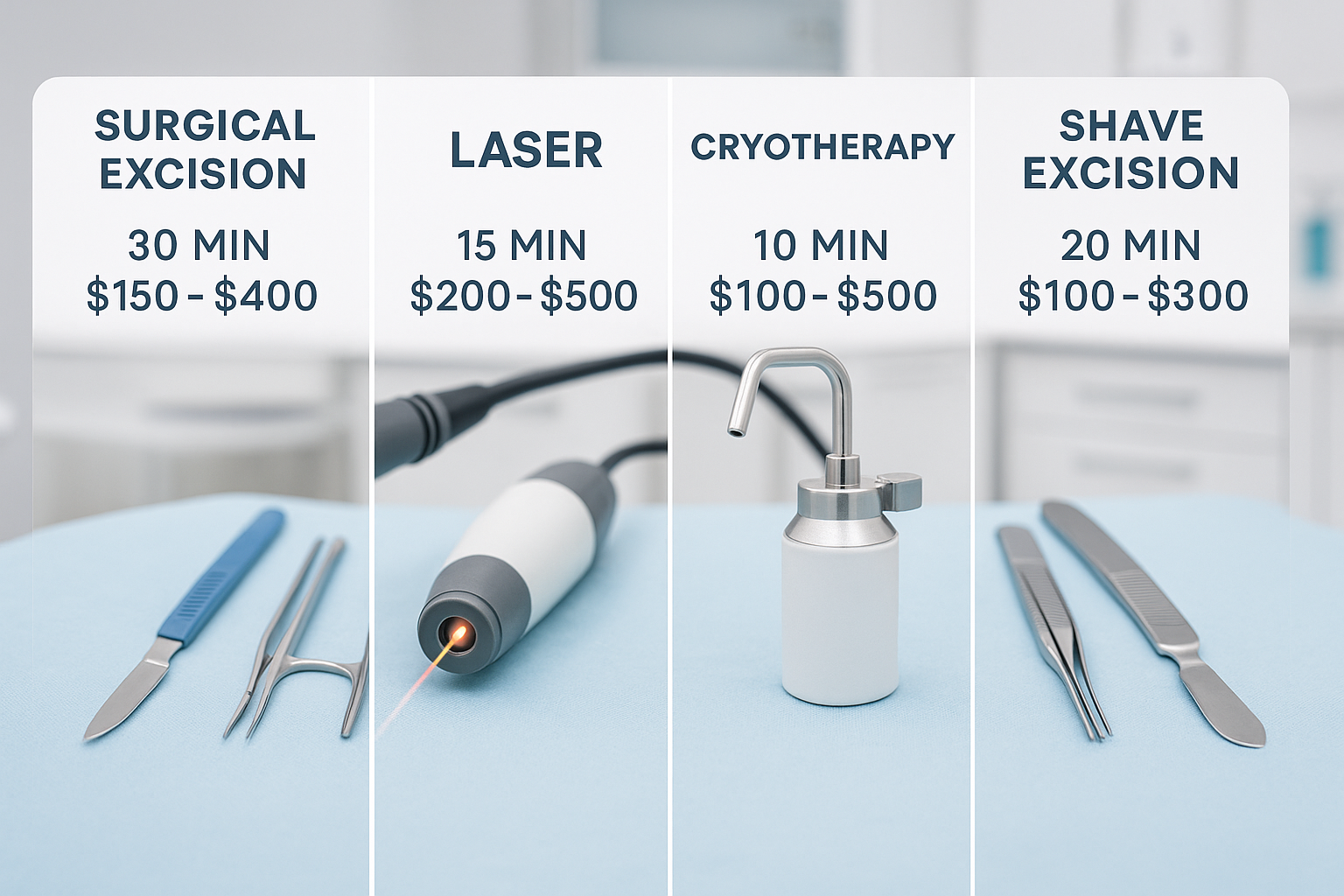
Removal MethodAverage Cost Per MoleCost RangeSurgical Shaving$151$116-$288Cryotherapy (Freezing)$209VariesSurgical Excision$325$251-$583Laser Removal$531$411-$1,033
Source: Industry data compilation[3]
When removing multiple moles in one visit, patients often benefit from:
✨ Reduced facility fees: Paying one office visit fee instead of multiple
✨ Consolidated consultation costs: Single examination covering all lesions
✨ Potential package pricing: Some centers offer discounts for multiple removals
✨ Fewer co-pays: One insurance co-payment instead of several
However, it's important to note that insurance reimbursement challenges may sometimes result in separate appointments being recommended, as insurance companies typically pay less for second and subsequent procedures performed during the same visit[1]. This creates a complex decision-making process where medical appropriateness must be balanced with financial considerations.
The emotional relief of addressing multiple skin concerns simultaneously shouldn't be underestimated. Many patients experience:
For individuals worried about potentially concerning moles, getting comprehensive evaluation and treatment in one visit provides faster peace of mind. This is particularly relevant when visiting a specialized skin cancer clinic where suspicious lesions require prompt attention.
From a medical perspective, removing multiple moles in one session allows dermatologists to:
🔬 Conduct comprehensive skin examinations: Identifying all concerning lesions during one thorough assessment
🔬 Create consistent treatment plans: Applying uniform techniques and follow-up protocols
🔬 Optimize pathology processing: Sending multiple specimens for analysis simultaneously
🔬 Streamline documentation: Creating complete medical records in one encounter
This comprehensive approach often leads to better overall outcomes, as the dermatologist gains a complete picture of the patient's skin health and can make more informed treatment decisions.
Not every situation calls for removing all moles at once. Understanding when same-day multiple removal is appropriate—and when it isn't—helps set realistic expectations and ensures optimal outcomes.
The best candidates for removing multiple moles in one visit typically have:
✅ Small to medium-sized moles: Lesions under 6mm in diameter are ideal
✅ Benign-appearing moles: Lesions without obvious signs of melanoma or other skin cancers
✅ Good overall health: No bleeding disorders, uncontrolled diabetes, or immunosuppression
✅ Realistic expectations: Understanding of the procedure, recovery, and potential scarring
✅ Cosmetic concerns: Multiple moles causing self-consciousness or irritation from clothing
Patients seeking removal of atypical moles or those with concerning features may still qualify for multiple removals, though each lesion requires careful individual assessment.
Certain situations warrant a more cautious, staged approach with multiple appointments:
⚠️ Very large moles: Lesions requiring extensive excision and complex closure
⚠️ Numerous moles: More than 5-6 lesions needing removal
⚠️ Suspicious lesions: Moles with features suggesting possible melanoma or other skin cancers
⚠️ Complex locations: Multiple facial moles requiring meticulous cosmetic technique
⚠️ Patient anxiety: High stress levels that might be better managed with gradual treatment
⚠️ Medical complexity: Health conditions requiring extra caution
In some cases, larger or more numerous moles may require a second appointment if the dermatologist needs to remove remaining cells or if biopsy results reveal abnormal surrounding tissue requiring additional excision[3]. This staged approach ensures thorough treatment while maintaining safety.
Each mole requires individual clinical assessment by a board-certified dermatologist to determine if removal is safe and necessary[5][10]. This personalized evaluation includes:
🔍 Visual examination: Using dermoscopy to examine mole structure
🔍 Medical history review: Understanding risk factors and previous skin issues
🔍 Photography: Documenting lesion appearance for medical records
🔍 Discussion of concerns: Addressing patient worries and expectations
🔍 Treatment planning: Determining optimal removal method for each lesion
This thorough assessment process ensures that the decision to remove multiple moles in one visit is based on sound medical judgment rather than convenience alone. Patients can learn more about various types of skin lesions to better understand what they're dealing with.
Understanding the different mole removal techniques helps explain why some moles can be easily addressed together while others require more consideration. Each method has distinct advantages, limitations, and time requirements.
Surgical excision involves cutting out the entire mole along with a small margin of surrounding healthy tissue[1][5]. This technique is ideal for:
Procedure details:
Time per mole: 15-30 minutes including numbing and closure
Average cost: $325 (range $251-$583)[3]
When removing multiple moles via surgical excision, the cumulative time and number of suture sites become important considerations. Most dermatologists comfortably perform 2-3 surgical excisions in one appointment.
Shave excision uses a small blade to shave the mole flush with or slightly below the surrounding skin[1]. This method works well for:
Procedure details:
Time per mole: 5-15 minutes
Average cost: $151 (range $116-$288)[3]
The speed and simplicity of shave excision make it particularly suitable for removing multiple moles in one visit. Four to five small moles can often be shaved in a single 30-45 minute appointment.
Laser mole removal uses focused light energy to break down mole pigment and tissue[3]. This technique is best for:
Procedure details:
Time per mole: 10-20 minutes per session
Average cost: $531 (range $411-$1,033)[3]
Laser removal's higher cost and potential need for multiple sessions make it less common for removing many moles at once, though 2-3 small flat moles can be treated in one laser session.
Cryotherapy uses liquid nitrogen to freeze and destroy mole tissue[3]. This approach suits:
Procedure details:
Time per mole: 2-5 minutes
Average cost: $209 per mole[3]
Cryotherapy's quick application time makes it excellent for treating multiple moles in one visit—five to ten small moles can be frozen in a single appointment. However, it's not suitable for suspicious lesions requiring pathological examination.
Many patients benefit from combination approaches during a single visit:
This flexibility allows dermatologists to tailor treatment to each lesion's specific characteristics while still achieving the efficiency of same-day multiple removal.
Understanding the typical experience of removing multiple moles in one visit helps reduce anxiety and ensures patients are well-prepared for the process.
Before any removal occurs, a thorough consultation establishes the treatment plan:
Initial Assessment (15-30 minutes):
During this consultation, the dermatologist determines how many moles can realistically be removed in one session based on the factors discussed earlier. Patients should come prepared with questions and a list of specific moles they're concerned about.
On the day of removal, the process typically follows this sequence:
1. Preparation (5-10 minutes):
2. Anesthesia (2-5 minutes per site):
3. Removal (varies by technique and number):
4. Post-Procedure Instructions (5-10 minutes):
Total time for multiple mole removal: 30-90 minutes depending on number and complexity
Throughout the procedure, patients remain fully conscious and comfortable. Many people are surprised by how quick and painless the process is once the area is numbed[3][8].
Recovery from multiple mole removal is generally straightforward with minimal downtime:
Immediate Post-Procedure (Day 1):
First Week:
Weeks 2-3:
Months 1-6:
Pathology results typically return within 1-2 weeks for any moles sent for microscopic examination. If abnormal cells are found, additional treatment may be recommended.
While professional removal significantly minimizes complications compared to home removal methods[6], patients should be aware of possible issues:
Common minor complications:
Rare but serious complications:
Minimizing risk: ✓ Choose a board-certified dermatologist or qualified surgeon
✓ Follow all pre- and post-procedure instructions carefully
✓ Disclose all medications and health conditions
✓ Don't smoke, as it impairs healing
✓ Keep wounds clean and protected
✓ Attend all follow-up appointments
The risk of moles regrowing is minimal with proper surgical technique but can occur if any mole cells remain[6]. This is why complete excision with margin is recommended for suspicious lesions.
Understanding the financial aspects of multiple mole removal helps patients make informed decisions and avoid unexpected expenses.
Insurance coverage hinges on whether removal is deemed medically necessary or purely cosmetic:
Medically Necessary Removal (Often Covered):
Cosmetic Removal (Usually Not Covered):
When removing multiple moles in one visit, some may be covered while others aren't. This creates a mixed billing situation requiring careful documentation and patient understanding.
A significant factor affecting same-day multiple mole removal is the insurance reimbursement structure[1]. Insurance companies typically:
This creates a financial disincentive for dermatologists to remove multiple moles in one visit from a pure business perspective. However, patient-centered practices prioritize medical appropriateness and patient convenience over maximizing reimbursement.
Transparent practices discuss this reality openly with patients and work to find solutions that balance medical needs, patient preferences, and financial realities.
For patients paying out-of-pocket or covering cosmetic removals, understanding total costs is essential:
Sample cost scenarios:
Scenario 1: Three small moles via shave excision
Scenario 2: Two moles via surgical excision
Scenario 3: Mixed approach (1 excision + 3 shaves)
Cost-saving strategies: 💰 Ask about package pricing for multiple removals
💰 Verify insurance coverage before scheduling
💰 Consider timing (using FSA/HSA funds before year-end)
💰 Prioritize medically necessary removals first
💰 Discuss less expensive techniques when appropriate
Some practices offer payment plans for larger procedures, making same-day multiple removal more financially accessible.
The success and safety of removing multiple moles in one visit depends heavily on choosing a qualified, experienced provider.
Essential qualifications: ✓ Board certification in dermatology or plastic surgery
✓ Specific training in skin cancer detection and removal
✓ Years of experience with mole removal procedures
✓ Hospital privileges (indicates peer review and credentialing)
✓ Positive patient reviews and testimonials
✓ Clean disciplinary record with medical board
Specialized centers like The Minor Surgery Center focus specifically on these procedures, often developing exceptional expertise through high procedure volumes.
Before committing to multiple mole removal, ask:
Red flags to watch for: 🚩 Pressure to remove more moles than you're comfortable with
🚩 Dismissive attitude toward your questions or concerns
🚩 Unwillingness to discuss costs transparently
🚩 Lack of clear credentials or experience
🚩 Office that seems unclean or disorganized
🚩 No pathology examination offered for suspicious lesions
Specialized facilities focusing on minor surgical procedures offer several advantages for multiple mole removal:
Expertise and Focus:
Efficiency and Convenience:
Patient-Centered Approach:
Facilities offering mole, cyst, and skin tag removal services in multiple locations provide accessible care for patients across broader geographic areas.
Not all moles are created equal, and some require special consideration:
Benign moles: Small, stable, normal-appearing moles are ideal candidates for same-day multiple removal.
Atypical/dysplastic moles: These atypical moles with unusual features can often be removed together, but each requires complete excision and pathological examination.
Congenital moles: Present since birth, these may be larger and deeper, potentially limiting how many can be addressed at once.
Changing moles: Moles that have recently changed warrant individual attention and careful pathological review.
The key is individualized assessment by a qualified dermatologist who can determine the appropriate approach for your specific situation.
Many patients have multiple types of skin concerns they'd like addressed. Combining different procedures in one visit is often possible:
Common combinations:
The feasibility depends on the same factors: total procedure time, anesthesia requirements, patient comfort, and medical appropriateness. Discussing all your concerns during the initial consultation allows the provider to create a comprehensive treatment plan.
Patients interested in learning about other skin lesions can explore information about different types of cysts or various skin lesion types to better understand their options.
Activity restrictions after multiple mole removal are generally minimal:
Same day:
First week:
After 1-2 weeks:
The more moles removed and the larger the excisions, the more conservative you should be with activity resumption. Always follow your specific provider's instructions.
When multiple moles are removed and sent for pathological examination, there's always a possibility that one or more may show abnormal or concerning cells:
Possible findings:
What happens next:
Finding abnormal cells in one mole doesn't necessarily mean problems with the others. Each lesion is evaluated independently. This is why pathological examination is so important for any suspicious moles, even when removing multiple lesions for primarily cosmetic reasons.
For those concerned about skin cancer, visiting a dedicated skin cancer clinic ensures access to specialized expertise in detection and treatment.
To get the best possible outcome when removing multiple moles in one visit, consider these practical tips:
Preparation steps: 📋 Create a list of all moles you're concerned about
📋 Note any changes you've observed (size, color, shape, symptoms)
📋 Compile your medical history, including previous skin issues
📋 List all medications, supplements, and allergies
📋 Arrange transportation if you're anxious (though usually unnecessary)
📋 Wear comfortable, loose clothing with easy access to treatment areas
📋 Avoid blood thinners like aspirin for one week (if approved by doctor)
📋 Prepare questions you want to ask
Mental preparation:
Maximizing comfort and cooperation:
Most patients are pleasantly surprised by how easy and quick the procedure is once they experience it firsthand.
Optimizing healing and outcomes: 🏥 Follow wound care instructions precisely
🏥 Keep all follow-up appointments
🏥 Watch for warning signs of complications
🏥 Protect healing areas from sun exposure
🏥 Avoid picking at scabs or healing tissue
🏥 Maintain good overall health (nutrition, hydration, sleep)
🏥 Be patient with the healing process
🏥 Document healing with photos for your records
Scar minimization strategies:
Removing multiple moles in one visit is often just one step in a comprehensive skin health strategy:
Ongoing care:
Prevention strategies: ☀️ Use broad-spectrum SPF 30+ sunscreen daily
☀️ Wear protective clothing and hats in sun
☀️ Avoid tanning beds completely
☀️ Seek shade during peak sun hours (10am-4pm)
☀️ Be extra cautious if you have fair skin or family history of skin cancer
By combining efficient treatment of current concerns with preventive strategies, you can maintain optimal skin health for years to come.
Advances in dermatological technology and techniques continue to improve the efficiency and outcomes of mole removal:
Emerging technologies:
Evolving practices:
These advances will likely make it even more feasible and attractive to remove multiple moles in a single, efficient visit while achieving excellent medical and cosmetic outcomes.
The answer to "Can I remove multiple moles in one visit?" is a resounding yes for most patients. Modern dermatological practice has evolved to prioritize both medical excellence and patient convenience, making same-day multiple mole removal a safe, effective, and efficient option for addressing skin concerns.
Key points to remember:
✅ Most patients can safely have 2-4 moles removed in one appointment, with the exact number depending on size, location, technique, and individual factors.
✅ Multiple removal offers significant advantages including time savings, cost efficiency, reduced anxiety, and comprehensive care.
✅ Professional assessment by a board-certified dermatologist is essential to determine the appropriate approach for your specific situation.
✅ Different removal techniques (excision, shaving, laser, cryotherapy) suit different moles, and combinations can be used in one visit.
✅ Recovery is typically straightforward with minimal downtime, allowing most patients to return to normal activities immediately.
✅ Choosing an experienced provider at a specialized facility like The Minor Surgery Center maximizes both safety and efficiency.
If you're considering removing multiple moles, take these actionable steps:
1. Schedule a consultation with a board-certified dermatologist or specialized minor surgery center to discuss your concerns and goals.
2. Prepare thoroughly by documenting your moles, medical history, and questions before your appointment.
3. Discuss all options including the feasibility of same-day multiple removal, costs, techniques, and expected outcomes.
4. Make an informed decision based on medical recommendations, your preferences, and practical considerations.
5. Commit to proper aftercare to ensure optimal healing and cosmetic results.
6. Maintain ongoing skin health through regular self-examinations, professional screenings, and sun protection.
Don't let multiple moles cause ongoing concern or self-consciousness when efficient, safe treatment is available. By working with qualified professionals who understand both the medical and practical aspects of mole removal, you can address your skin concerns comprehensively in a single visit, getting back to your life with confidence and peace of mind.
The combination of medical expertise, modern techniques, and patient-centered care makes removing multiple moles in one visit an excellent option for many people. Whether your concerns are cosmetic, medical, or both, professional evaluation and treatment provide the safest, most effective path forward.
[1] Clinical dermatology practice guidelines on multiple lesion removal in single appointments
[2] American Academy of Dermatology recommendations for mole removal procedures
[3] Healthcare cost analysis data for various mole removal techniques and procedures
[4] Dermatologic surgery outcomes research on same-day multiple lesion removal
[5] Board-certified dermatologist clinical protocols for mole assessment and removal
[6] Comparative studies on professional versus home mole removal outcomes and complications
[7] Patient satisfaction surveys regarding multiple procedure appointments in dermatology
[8] Anesthesia and pain management research in minor dermatological procedures
[9] Pathology processing and turnaround times for multiple skin lesion specimens
[10] Medical necessity criteria and insurance coverage guidelines for mole removal