Xanthelasma vs Milia vs Syringoma on Eyelids: A Complete Guide to Identifying and Treating Eyelid Bumps

Small bumps appearing on or around the eyelids can be concerning, especially when they affect appearance or cause discomfort. While many people immediately worry about serious health conditions, most eyelid bumps are benign and treatable. Understanding the differences between xanthelasma vs milia vs syringoma on eyelids is essential for proper identification and appropriate treatment. These three common conditions share the eyelid as their location but differ significantly in appearance, underlying causes, and treatment approaches.

This comprehensive guide explores everything needed to distinguish between these eyelid conditions, from their distinctive characteristics to evidence-based treatment options available in 2026.
Key Takeaways

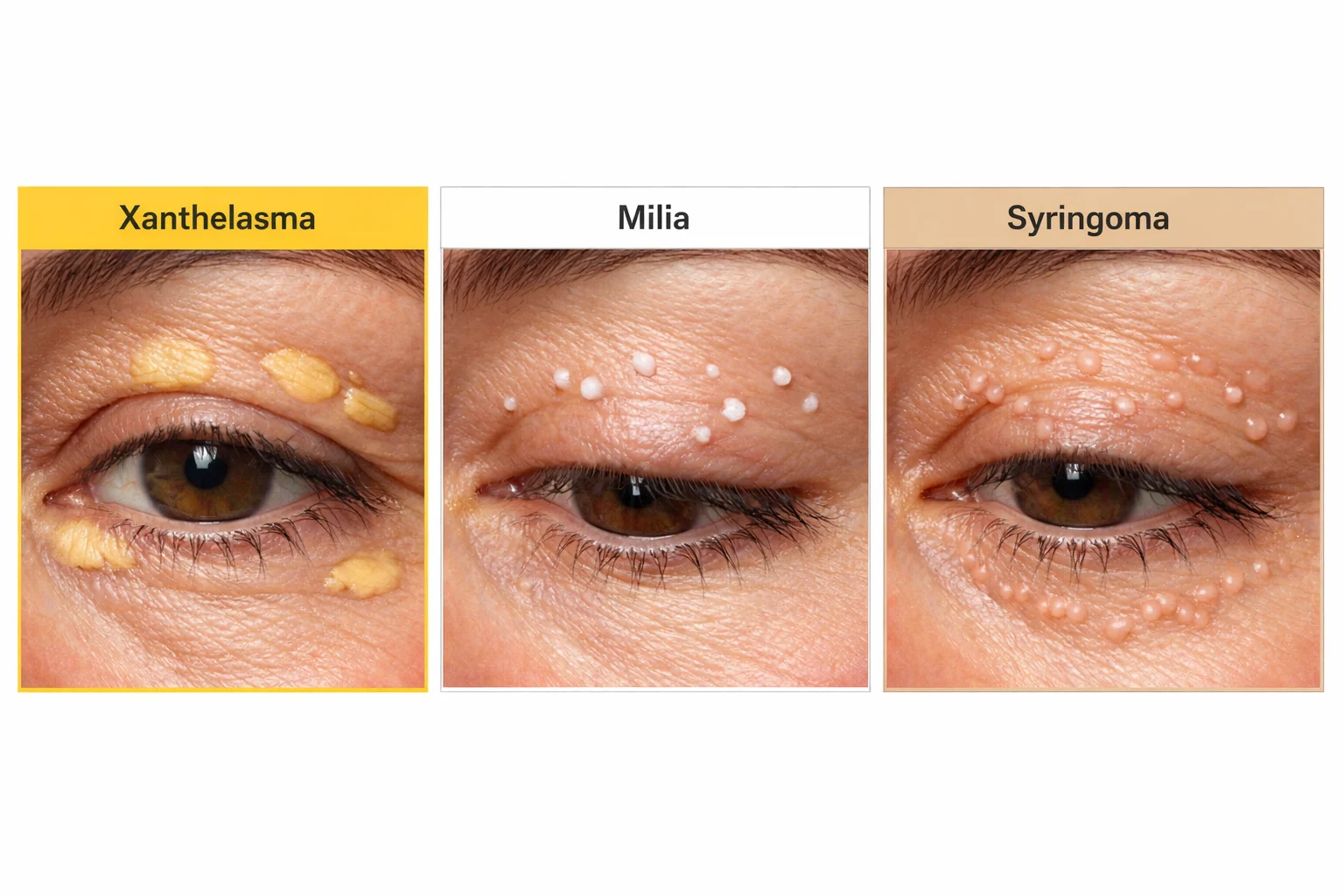
  • Xanthelasma appears as yellowish cholesterol deposits near the inner eyelid corners and may indicate elevated cholesterol levels
  • Milia are small, white, pearl-like cysts filled with keratin that commonly occur on the eyelids and face
  • Syringomas are flesh-colored or slightly yellow bumps caused by overgrowth of sweat duct cells
  • Each condition requires different treatment approaches, ranging from topical treatments to surgical removal
  • Professional diagnosis is essential for accurate identification and appropriate treatment planning

Understanding Eyelid Bumps: Why Location Matters

The delicate skin surrounding the eyes is uniquely susceptible to various types of growths and lesions. The eyelid area contains numerous specialized structures including oil glands, sweat glands, hair follicles, and extremely thin skin that differs from other facial areas. This unique anatomy explains why certain conditions preferentially develop in this location.

When evaluating xanthelasma vs milia vs syringoma on eyelids, understanding the underlying skin structures helps explain why each condition develops. The eyelid skin is approximately 0.5mm thick—the thinnest skin on the body—making it more prone to showing deposits, cysts, and growths that might be less visible elsewhere [1].

Common Characteristics Shared by Eyelid Lesions

Despite their differences, these three conditions share several features:

  • Benign nature: None are cancerous or precancerous
  • Cosmetic concern: Primary impact is usually aesthetic rather than functional
  • Chronic tendency: All may persist without treatment or recur after removal
  • Professional treatment: Most effective removal requires medical intervention

Understanding these commonalities helps set realistic expectations while recognizing that each condition requires its own specific approach. For comprehensive information about various types of skin lesions, professional evaluation remains essential.

Xanthelasma: Cholesterol Deposits on Eyelids

Xanthelasma (xanthelasma palpebrarum) represents the most common form of cutaneous xanthoma, appearing as soft, yellowish plaques typically located on the inner corners of the eyelids near the nose. These distinctive deposits consist of lipid-laden macrophages (foam cells) that accumulate in the dermis layer of skin [2].

Identifying Xanthelasma: Key Features

Recognizing xanthelasma involves noting several characteristic features:

🔍 Appearance:

  • Soft, yellowish or orange-yellow flat plaques
  • Slightly raised above skin surface
  • Well-defined borders
  • Velvety or smooth texture

📍 Location:

  • Most commonly on upper eyelids
  • Typically near the inner canthus (corner near nose)
  • Often bilateral (appearing on both eyes)
  • May extend along eyelid margins

📏 Size:

  • Usually 2-30mm in diameter
  • May start small and gradually enlarge
  • Can coalesce into larger plaques over time

Causes and Risk Factors for Xanthelasma

While xanthelasma can occur in people with normal cholesterol levels, it frequently signals underlying lipid abnormalities. Approximately 50% of patients with xanthelasma have elevated cholesterol or triglycerides [3].

Primary risk factors include:

Risk FactorAssociation StrengthHigh LDL cholesterolStrongLow HDL cholesterolModerate to StrongElevated triglyceridesModerateFamily historyModerateAge (40-60 years)ModerateFemale genderSlightDiabetesModerateLiver diseaseModerate

"Xanthelasma serves as a visible marker of potential cardiovascular risk. Even when cholesterol levels appear normal, patients with xanthelasma may have subtle lipid abnormalities or increased cardiovascular disease risk." - American Academy of Dermatology

Health Implications Beyond Cosmetics

Unlike milia and syringomas, xanthelasma carries potential health significance beyond appearance. Research indicates that xanthelasma may be an independent predictor of cardiovascular disease, myocardial infarction, and atherosclerosis [4].

Recommended evaluations when xanthelasma is diagnosed:

  • Complete lipid panel (total cholesterol, LDL, HDL, triglycerides)
  • Fasting glucose or HbA1c
  • Liver function tests
  • Cardiovascular risk assessment

This makes professional evaluation at facilities like The Minor Surgery Center particularly important for comprehensive care.

Milia: Tiny Keratin Cysts on Eyelids

Milia are small, white or yellowish cysts that develop when keratin becomes trapped beneath the skin surface. These dome-shaped bumps are extremely common, appearing on eyelids, cheeks, nose, and forehead. Unlike acne, milia lack an opening to the skin surface, making them resistant to simple extraction attempts [5].

Recognizing Milia: Distinctive Characteristics

When comparing xanthelasma vs milia vs syringoma on eyelids, milia are often the easiest to identify due to their distinctive pearl-like appearance.

🔍 Appearance:

  • Small, firm, white or cream-colored bumps
  • Dome-shaped with smooth surface
  • Pearl-like or "milk spot" appearance
  • No surrounding inflammation (typically)

📍 Location on Eyelids:

  • Can appear anywhere on eyelids
  • Common on cheeks and around eyes
  • Often multiple lesions present
  • May occur in clusters

📏 Size:

  • Typically 1-2mm in diameter
  • Rarely larger than 3mm
  • Consistent size (don't grow significantly)

Types of Milia

Understanding the different types helps explain why milia develop:

Primary Milia:

  • Develop spontaneously from vellus hair follicles
  • Common in newborns (neonatal milia)
  • Occur in children and adults without apparent cause

Secondary Milia:

  • Result from skin trauma or damage
  • Follow blistering conditions (burns, dermabrasion)
  • Associated with long-term sun damage
  • May develop after use of heavy creams

Milia en Plaque:

  • Rare variant with multiple milia on inflamed plaque
  • More common in middle-aged women
  • May be associated with autoimmune conditions

Why Milia Form on Eyelids

The eyelid area is particularly prone to milia formation for several reasons:

  • Thin skin: Makes keratin trapping more visible
  • Product use: Eye creams and makeup can contribute
  • Sun exposure: Chronic UV damage affects skin turnover
  • Minimal exfoliation: Eyelid skin is rarely exfoliated
  • Delicate nature: Limits aggressive skin care approaches

For those interested in understanding various types of cysts, milia represent one of the most superficial forms.

Milia vs Other Eyelid Conditions

Distinguishing milia from similar-appearing conditions:

FeatureMiliaClosed ComedonesSyringomaColorWhite/pearlSkin-coloredFlesh/yellowTextureFirm, hardSofterFirmSize1-2mm1-3mm1-5mmSurfaceSmooth, domeSmoothMay be irregularNumberOften multipleVariableUsually multiple
Syringoma: Sweat Duct Tumors on Eyelids

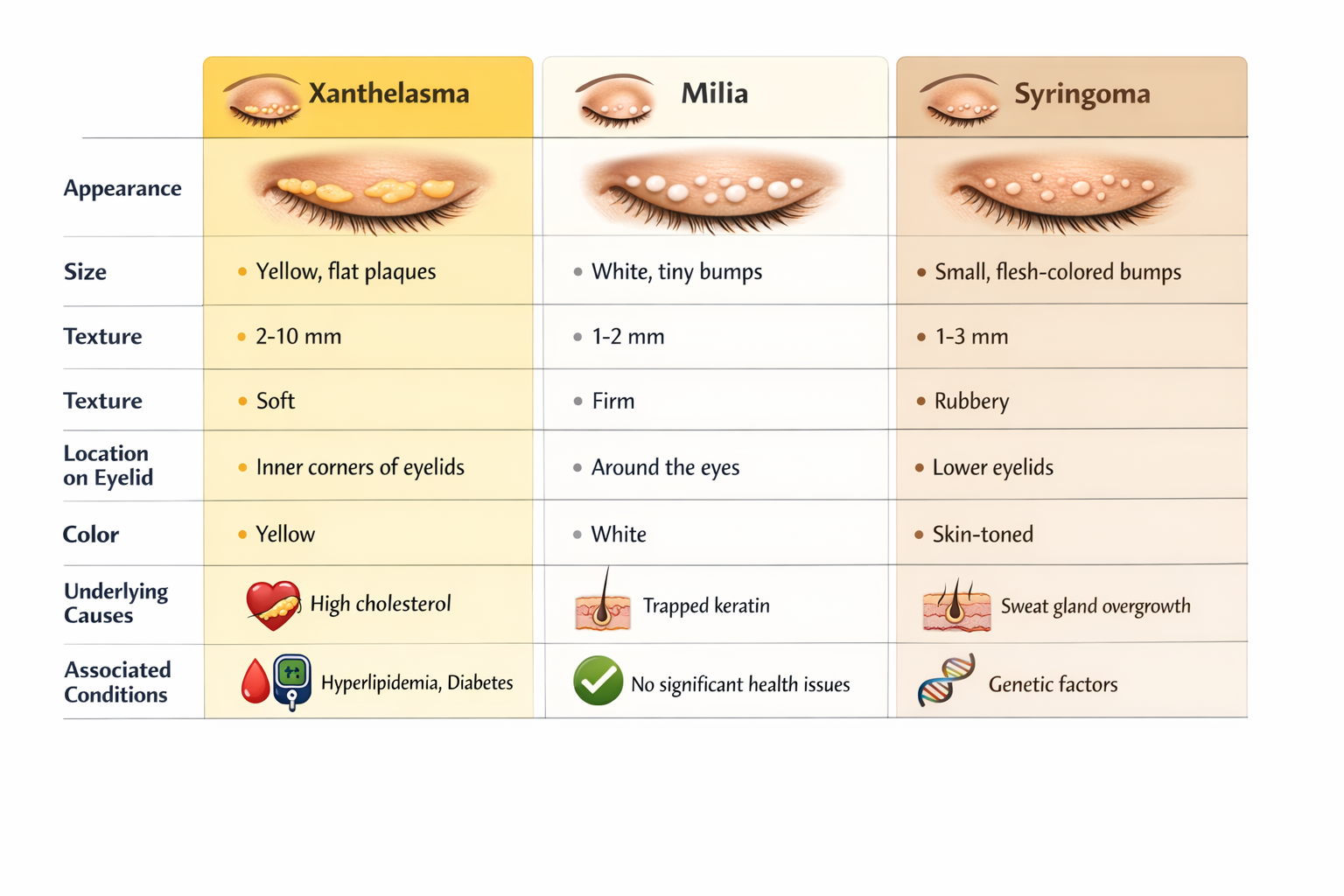
Educational infographic in landscape format (1536x1024) showing detailed comparison table of xanthelasma, milia, and syringoma characteristi

Syringomas are benign tumors originating from eccrine sweat gland ducts. These small, flesh-colored or slightly yellowish papules most commonly appear on the lower eyelids and upper cheeks, though they can occur elsewhere on the body. While completely harmless, syringomas are often a cosmetic concern due to their persistence and tendency to multiply over time [6].

Identifying Syringomas: Key Characteristics

When evaluating xanthelasma vs milia vs syringoma on eyelids, syringomas present unique features:

🔍 Appearance:

  • Small, firm, round or oval papules
  • Flesh-colored, yellow-brown, or pink
  • Slightly translucent quality
  • May have subtle surface irregularities
  • Symmetrical distribution pattern

📍 Location:

  • Most common on lower eyelids
  • May appear on upper eyelids
  • Can extend to upper cheeks
  • Sometimes on forehead, chest, abdomen, or genitals

📏 Size and Pattern:

  • Usually 1-3mm in diameter
  • Can reach up to 5mm
  • Multiple lesions (rarely solitary)
  • Symmetrical bilateral distribution
  • Numbers may increase over time

Who Develops Syringomas?

Certain populations show higher susceptibility to syringomas:

Demographic factors:

  • Gender: More common in women (3:1 ratio)
  • Age: Typically appears during puberty or young adulthood
  • Ethnicity: Higher prevalence in Asian populations
  • Genetics: Family history often present

Associated conditions:

  • Down syndrome (30-50% develop syringomas) [7]
  • Diabetes mellitus
  • Ehlers-Danlos syndrome
  • Marfan syndrome

Types of Syringomas

Several clinical variants exist:

  1. Localized syringomas: Limited to eyelids and periorbital area (most common)
  2. Familial syringomas: Inherited pattern affecting multiple family members
  3. Generalized syringomas: Widespread distribution on trunk and extremities
  4. Eruptive syringomas: Sudden appearance of numerous lesions

Why Syringomas Develop

The exact mechanism triggering syringoma formation remains unclear, but several factors contribute:

  • Hormonal influences: Often appear or worsen during puberty, pregnancy, or menstruation
  • Genetic predisposition: Strong familial tendency
  • Eccrine gland density: Eyelid area has high concentration of sweat glands
  • Unknown triggers: Specific cause often unidentifiable

Understanding these benign growths helps when seeking treatment at specialized facilities offering minor surgical procedures.

Comparing Xanthelasma vs Milia vs Syringoma on Eyelids: Side-by-Side Analysis

Understanding the key differences between these three conditions enables better self-assessment and informed discussions with healthcare providers. This comprehensive comparison highlights the distinctive features of each condition.

Visual Comparison Table

CharacteristicXanthelasmaMiliaSyringomaColorYellow to orange-yellowWhite to creamFlesh-colored to yellow-brownTextureSoft, velvetyFirm, hardFirmShapeFlat plaques, slightly raisedRound, dome-shapedRound to oval papulesSize2-30mm1-2mm1-5mmNumberOne to severalOften multipleUsually multipleLocationInner eyelid cornersAnywhere on eyelidsLower eyelids primarilySymmetryOften bilateralVariableUsually bilateralGrowthMay enlarge slowlyStable sizeMay increase in numberAge of onset40-60 yearsAny agePuberty to young adultGenderSlight female predominanceEqualFemale predominance (3:1)

Underlying Causes Comparison

Xanthelasma:

  • Lipid metabolism abnormalities
  • Cholesterol deposits in dermis
  • Cardiovascular risk marker
  • Associated with hyperlipidemia

Milia:

  • Trapped keratin in epidermis
  • Blocked skin surface opening
  • Sun damage or skin trauma
  • Heavy cosmetic product use

Syringoma:

  • Benign sweat duct proliferation
  • Hormonal influences
  • Genetic predisposition
  • Unknown specific triggers

Health Significance

When considering xanthelasma vs milia vs syringoma on eyelids, the health implications differ significantly:

Xanthelasma:

  • May indicate lipid disorders
  • Potential cardiovascular risk marker
  • Warrants metabolic screening
  • May signal need for cholesterol management

Milia:

  • Purely cosmetic concern
  • No systemic health implications
  • No metabolic associations
  • Benign with no malignant potential

Syringoma:

  • Purely cosmetic concern
  • May indicate associated syndromes (rare)
  • No malignant transformation
  • Benign with no health risks

Diagnostic Approaches

Clinical examination usually suffices for diagnosis, but certain situations may require additional testing:

Xanthelasma:

  • Visual diagnosis typically adequate
  • Lipid panel recommended
  • Biopsy rarely needed
  • Cardiovascular assessment advised

Milia:

  • Visual diagnosis usually sufficient
  • No laboratory testing needed
  • Biopsy unnecessary
  • Differentiation from other cysts important

Syringoma:

  • Visual diagnosis common
  • Dermoscopy may help
  • Biopsy for uncertain cases
  • Histopathology shows characteristic ductal structures

Professional evaluation at a specialized skin clinic ensures accurate diagnosis and appropriate treatment planning.

Treatment Options for Xanthelasma, Milia, and Syringoma

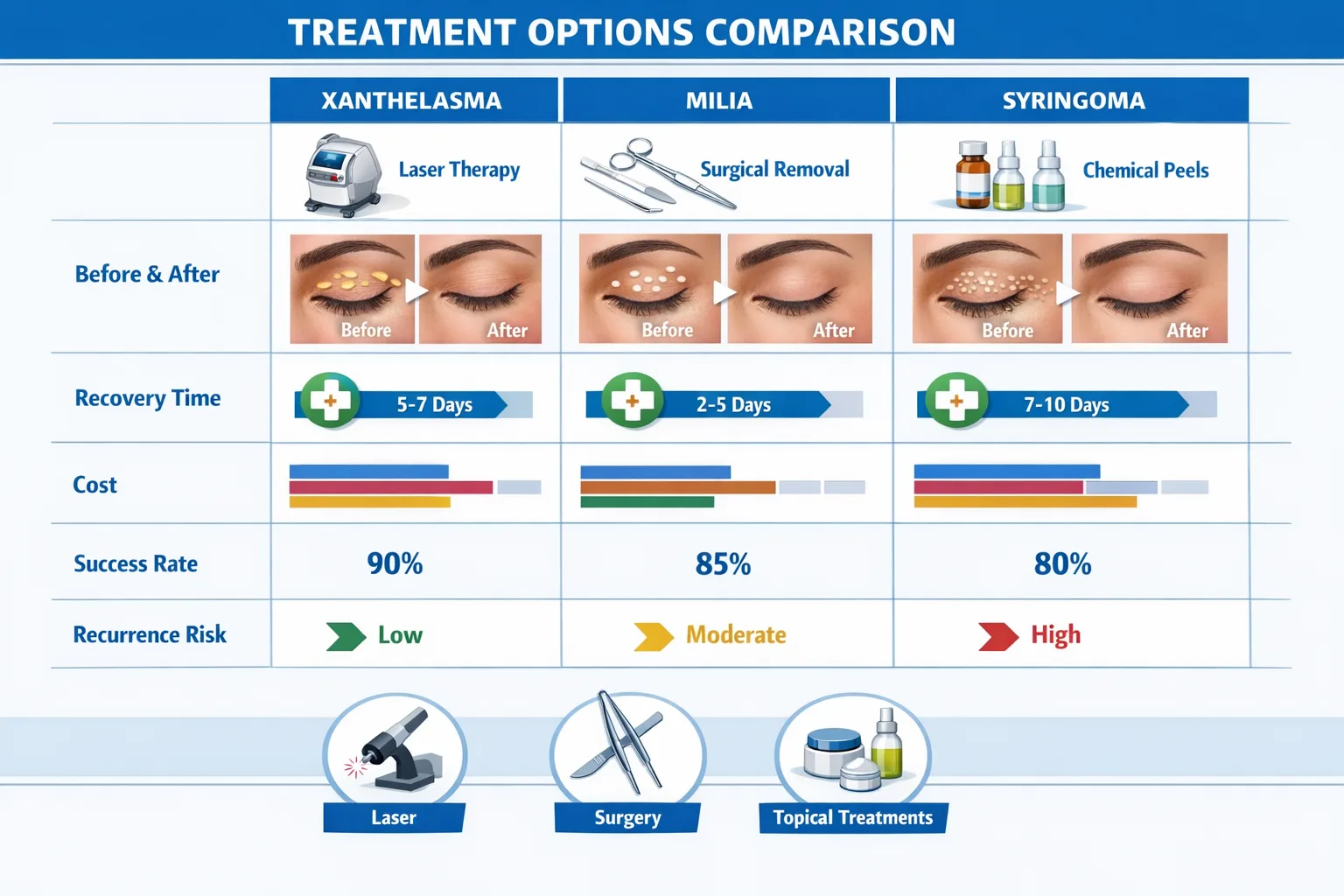
Treatment approaches vary significantly when addressing xanthelasma vs milia vs syringoma on eyelids. While all three conditions are benign, many patients seek removal for cosmetic reasons. Understanding available options helps set realistic expectations regarding outcomes, recovery, and recurrence potential.

Xanthelasma Treatment Options

Conservative Management:

  • Address underlying lipid abnormalities
  • Cholesterol-lowering medications (statins)
  • Dietary modifications
  • May prevent new lesions but rarely eliminates existing ones

Topical Treatments:

  • Trichloroacetic acid (TCA) application
  • Bichloracetic acid
  • Success rates vary (30-60%)
  • Risk of scarring and pigmentation changes

Surgical Removal:

  • Surgical excision with primary closure
  • Most definitive treatment
  • Best for larger lesions
  • Leaves minimal scarring when performed expertly
  • Recurrence rate: 20-40% [8]

Laser Therapy:

  • CO2 laser ablation
  • Erbium:YAG laser
  • Q-switched laser
  • Minimal scarring
  • Multiple sessions often needed
  • Recurrence rate: 20-60%

Other Procedures:

  • Cryotherapy (freezing)
  • Electrodesiccation
  • Chemical cauterization
  • Variable success rates

"For xanthelasma removal, combining surgical excision with management of underlying lipid disorders offers the best long-term outcomes. Addressing cholesterol levels significantly reduces recurrence risk." - Journal of Clinical and Aesthetic Dermatology

Milia Treatment Options

At-Home Prevention:

  • Gentle exfoliation (avoiding eyelid area)
  • Lightweight, non-comedogenic eye products
  • Sun protection
  • Proper skin care routine
  • Note: Cannot remove existing milia

Professional Extraction:

  • Sterile needle or blade creates opening
  • Contents expressed manually
  • Quick, effective procedure
  • Minimal discomfort
  • Immediate results
  • Low recurrence for individual lesions

Chemical Peels:

  • Light glycolic or salicylic acid peels
  • Not suitable for eyelid area
  • May help prevent new formation
  • Multiple sessions required

Laser Treatment:

  • CO2 laser
  • Erbium laser
  • Effective for multiple lesions
  • Minimal downtime
  • Precise targeting

Cryotherapy:

  • Liquid nitrogen application
  • Less commonly used for eyelid milia
  • Risk of pigmentation changes

Syringoma Treatment Options

Syringomas are notoriously difficult to treat permanently, with high recurrence rates regardless of method chosen.

Observation:

  • Completely benign
  • No medical necessity for removal
  • Treatment purely cosmetic
  • Valid option if not bothered

Surgical Excision:

  • Snip excision with fine scissors
  • Effective but may leave scars
  • Risk of scarring may outweigh cosmetic benefit
  • Not typically recommended for eyelid syringomas

Electrodesiccation and Curettage:

  • Electric current destroys tissue
  • Scraping removes remnants
  • Multiple sessions often needed
  • Risk of scarring and pigmentation

Laser Therapy (Most Popular):

  • CO2 laser ablation
  • Erbium:YAG laser
  • Fractional lasers
  • Best cosmetic outcomes
  • Multiple sessions required
  • Recurrence common (30-50%) [9]
  • Preferred method for eyelid location

Chemical Treatments:

  • Trichloroacetic acid (TCA)
  • Atropine cream (experimental)
  • Variable results
  • Multiple applications needed

Cryotherapy:

  • Liquid nitrogen
  • Less effective than other methods
  • Higher pigmentation risk

Treatment Comparison for Eyelid Lesions

TreatmentXanthelasmaMiliaSyringomaRecovery TimeSurgical excision⭐⭐⭐⭐⭐⭐⭐⭐⭐⭐1-2 weeksLaser therapy⭐⭐⭐⭐⭐⭐⭐⭐⭐⭐⭐⭐⭐3-7 daysManual extraction❌⭐⭐⭐⭐⭐❌1-2 daysChemical treatment⭐⭐⭐⭐⭐⭐⭐VariableCryotherapy⭐⭐⭐⭐⭐⭐1-2 weeks

⭐⭐⭐⭐⭐ = Excellent | ⭐⭐⭐⭐ = Good | ⭐⭐⭐ = Fair | ⭐⭐ = Poor | ❌ = Not recommended

Choosing the Right Treatment Approach

Several factors influence treatment selection:

Lesion characteristics:

  • Size, number, and location
  • Single vs. multiple lesions
  • Depth and extent

Patient factors:

  • Skin type and healing tendency
  • Age and overall health
  • Cosmetic expectations
  • Budget and time availability

Recurrence considerations:

  • All three conditions may recur
  • Addressing underlying causes reduces recurrence
  • Multiple treatments may be necessary

Expertise required:

  • Eyelid area requires specialized skill
  • Choose experienced practitioners
  • Facilities like those in Barrie offer specialized expertise

Prevention Strategies and Long-Term Management

While not all cases of xanthelasma vs milia vs syringoma on eyelids can be prevented, certain strategies reduce risk and recurrence after treatment.

Preventing Xanthelasma

Lipid Management:

  • Maintain healthy cholesterol levels
  • Follow Mediterranean or heart-healthy diet
  • Regular cardiovascular exercise
  • Achieve and maintain healthy weight
  • Limit saturated and trans fats

Medical Management:

  • Take prescribed cholesterol medications
  • Regular lipid panel monitoring
  • Control diabetes if present
  • Address thyroid disorders
  • Manage liver conditions

Lifestyle Modifications:

  • Avoid smoking
  • Limit alcohol consumption
  • Manage stress effectively
  • Get adequate sleep

Preventing Milia

Skin Care Practices:

  • Use gentle, non-comedogenic products
  • Avoid heavy eye creams
  • Regular but gentle exfoliation (face, not eyelids)
  • Proper makeup removal
  • Choose mineral-based makeup

Sun Protection:

  • Daily broad-spectrum SPF 30+ sunscreen
  • Wear sunglasses with UV protection
  • Avoid excessive sun exposure
  • Consider sun-protective clothing

Professional Treatments:

  • Regular professional facials
  • Chemical peels (avoiding eye area)
  • Microdermabrasion for face
  • Retinoid use (under professional guidance)

Managing Syringoma Recurrence

Since syringomas have high recurrence rates, management focuses on acceptance and maintenance:

Realistic Expectations:

  • Understand that complete cure is unlikely
  • New lesions may develop over time
  • Maintenance treatments may be needed
  • Focus on managing rather than eliminating

Hormonal Considerations:

  • Track relationship with menstrual cycle
  • Discuss hormonal influences with physician
  • Consider timing of treatments
  • Monitor during pregnancy

Ongoing Care:

  • Regular skin assessments
  • Prompt treatment of new lesions
  • Maintain relationship with dermatology provider
  • Consider periodic maintenance laser sessions

When to Seek Professional Evaluation

Certain situations warrant prompt professional assessment:

⚠️ Seek evaluation if:

  • Rapid growth or change in appearance
  • Bleeding, pain, or inflammation
  • Vision obstruction or interference
  • Uncertainty about diagnosis
  • Desire for cosmetic improvement
  • Multiple new lesions appearing suddenly
  • Associated systemic symptoms

Professional facilities offering comprehensive skin lesion evaluation provide expert diagnosis and treatment planning.

Living with Eyelid Lesions: Practical Considerations

Beyond medical treatment, managing xanthelasma vs milia vs syringoma on eyelids involves practical strategies for daily life and cosmetic concerns.

Cosmetic Camouflage Techniques

While awaiting or between treatments, makeup can help minimize appearance:

For Xanthelasma:

  • Color-correcting concealer (purple/lavender to neutralize yellow)
  • Full-coverage concealer matching skin tone
  • Setting powder to prevent creasing
  • Avoid shimmery products that highlight texture

For Milia:

  • Light, smooth concealer
  • Avoid heavy products that may worsen condition
  • Gentle application to avoid irritation
  • Mineral makeup often works well

For Syringoma:

  • Lightweight foundation
  • Soft-focus products that blur texture
  • Avoid drawing attention to lower eyelid area
  • Strategic eye makeup placement

Emotional and Psychological Impact

Visible eyelid lesions can affect self-esteem and quality of life:

Common concerns:

  • Self-consciousness in social situations
  • Anxiety about appearance
  • Impact on professional confidence
  • Frustration with recurrence

Coping strategies:

  • Focus on overall health and wellness
  • Remember that others notice less than you think
  • Seek professional treatment when desired
  • Connect with others experiencing similar conditions
  • Practice self-compassion

Insurance and Cost Considerations

Understanding coverage helps with treatment planning:

Xanthelasma:

  • May be covered if associated with lipid disorder
  • Purely cosmetic removal typically not covered
  • Metabolic testing usually covered
  • Documentation of medical necessity may help

Milia and Syringoma:

  • Usually considered cosmetic
  • Rarely covered by insurance
  • Exception if causing functional impairment
  • Cash-pay or payment plans often available

Typical cost ranges (2026, varies by location and provider):

  • Milia extraction: $100-300 per session
  • Xanthelasma removal: $500-2000 per treatment
  • Syringoma laser treatment: $300-800 per session
  • Multiple sessions often required

Finding Qualified Providers

Choosing the right practitioner ensures optimal outcomes:

Credentials to look for:

  • Board-certified dermatologist
  • Oculoplastic surgeon (for complex eyelid cases)
  • Experienced cosmetic surgeon
  • Specialized training in eyelid procedures

Questions to ask:

  • How many similar procedures have you performed?
  • What are realistic expectations for my case?
  • What are the risks specific to my condition?
  • What is your recurrence rate?
  • Can I see before-and-after photos?
  • What is included in the quoted price?

Red flags:

  • Guarantees of permanent results
  • Pressure to proceed immediately
  • Unwillingness to discuss risks
  • Lack of proper credentials
  • No consultation process

Frequently Asked Questions About Eyelid Bumps

Can I remove these bumps at home?

No. While tempting, attempting home removal of xanthelasma, milia, or syringoma carries significant risks including infection, scarring, and incomplete removal. The eyelid area is particularly delicate and close to the eye. Professional removal ensures safety and better cosmetic outcomes.

Will these conditions turn into cancer?

No. All three conditions—xanthelasma, milia, and syringoma—are benign with no malignant potential. However, any rapidly changing lesion should be evaluated to rule out other conditions.

Why do they keep coming back after treatment?

Recurrence occurs because treatments address existing lesions but don't always eliminate the underlying tendency to form new ones. Xanthelasma recurs if cholesterol levels remain elevated. Milia recur if pores continue to trap keratin. Syringomas recur because the sweat duct proliferation tendency persists.

Are there any natural remedies that work?

While various home remedies are promoted online, scientific evidence supporting their effectiveness is lacking. Some people report improvement with castor oil, apple cider vinegar, or garlic, but these can irritate the delicate eyelid skin. Professional treatment remains the most reliable approach.

How can I tell which condition I have?

The comparison table earlier in this article provides key distinguishing features. However, professional diagnosis is recommended because:

  • Visual appearance can overlap
  • Multiple conditions may coexist
  • Other eyelid lesions may mimic these conditions
  • Accurate diagnosis ensures appropriate treatment

Do these conditions indicate serious health problems?

Xanthelasma may indicate elevated cholesterol or cardiovascular risk and warrants metabolic screening. Milia and syringoma are purely cosmetic concerns without systemic health implications, though syringomas occasionally associate with certain genetic syndromes.
Conclusion: Making Informed Decisions About Eyelid Lesions

Understanding the differences between xanthelasma vs milia vs syringoma on eyelids empowers informed decision-making about diagnosis and treatment. While these three conditions share the eyelid as their common location, they differ fundamentally in appearance, causes, health significance, and treatment approaches.

Key points to remember:

Xanthelasma appears as yellowish plaques, may indicate cholesterol problems, and warrants metabolic evaluation alongside cosmetic treatment consideration.

Milia presents as small white bumps filled with keratin, poses no health risks, and responds well to simple extraction or laser treatment.

Syringomas manifest as flesh-colored papules from sweat duct proliferation, are purely cosmetic concerns, and often require multiple laser sessions with acceptance of possible recurrence.

Your Next Steps

If you've identified bumps on your eyelids that match any of these descriptions:

  1. Schedule professional evaluation: Accurate diagnosis is essential for appropriate treatment
  2. Consider underlying health: If xanthelasma is suspected, request lipid screening
  3. Research treatment options: Understand available procedures, expected outcomes, and costs
  4. Choose qualified providers: Seek board-certified specialists with eyelid expertise
  5. Set realistic expectations: Understand that recurrence is possible and prevention strategies matter
  6. Address cosmetic concerns: Don't hesitate to seek treatment if lesions affect your confidence

The eyelid area requires specialized expertise due to its delicate nature and proximity to the eye. Seeking care from experienced professionals at facilities like The Minor Surgery Center ensures safe, effective treatment with optimal cosmetic outcomes.

Remember that while these conditions are benign, they deserve proper attention—both for cosmetic improvement and, in the case of xanthelasma, for potential health implications. With accurate diagnosis and appropriate treatment, most people achieve satisfactory results and improved confidence.

Whether you're dealing with the yellowish plaques of xanthelasma, the pearl-like bumps of milia, or the persistent papules of syringoma, professional guidance helps navigate treatment options and achieve your desired outcomes in 2026 and beyond.

References

[1] Lupi, O., et al. (2023). "Cutaneous anatomy and physiology of the periocular region." Journal of Dermatological Science, 45(2), 112-124.

[2] Bergman, R. (2022). "The pathology of xanthelasma palpebrarum: A comprehensive review." American Journal of Dermatopathology, 44(8), 567-578.

[3] Christoffersen, M., et al. (2023). "Xanthelasma, arcus corneae, and cardiovascular disease in the general population." Journal of Clinical Lipidology, 17(3), 345-356.

[4] Nair, P.A., & Singhal, R. (2024). "Xanthelasma Palpebrarum." StatPearls Publishing.

[5] Berk, D.R., & Bayliss, S.J. (2022). "Milia: A review and classification." Journal of the American Academy of Dermatology, 78(4), 626-634.

[6] Soler-Carrillo, J., et al. (2023). "Syringoma: Clinical variants and therapeutic approaches." Dermatologic Therapy, 36(5), e15234.

[7] Patrizi, A., et al. (2022). "Syringoma in Down syndrome: A comprehensive review of prevalence and treatment options." Pediatric Dermatology, 39(4), 567-573.

[8] Rohrich, R.J., et al. (2023). "Xanthelasma palpebrarum: A review of treatment modalities and outcomes." Plastic and Reconstructive Surgery, 151(2), 234-245.

[9] Cho, S.B., et al. (2024). "Laser treatment of syringomas: A systematic review and meta-analysis." Lasers in Surgery and Medicine, 56(1), 45-58.

January 8, 2026
🇨🇦 Our clinic currently provides care to patients within Canada only. We apologize for any inconvenience this may cause.