Solar Keratosis: What You Need to Know About These Sun-Damaged Skin Spot

Solar Keratosis: What You Need to Know About These Sun-Damaged Skin Spot

  • Solar keratosis is a pre-cancerous skin condition caused by cumulative sun damage, appearing as rough, scaly patches on sun-exposed areas
  • Early detection and treatment are crucial because approximately 5-10% of untreated solar keratoses can progress to squamous cell carcinoma
  • Multiple treatment options exist, from topical medications to minimally invasive surgical procedures, tailored to your specific needs
  • Prevention through sun protection is essential to stop new lesions from forming and protect your overall skin health
  • Regular skin checks with qualified professionals help catch changes early and ensure the best outcomes

What Exactly Is Solar Keratosis?

Solar keratosis represents a fundamental change in your skin cells after prolonged ultraviolet (UV) radiation exposure. These aren't just cosmetic concerns—they're actual cellular transformations that deserve your attention.

When UV rays penetrate your skin over months and years, they damage the DNA in keratinocytes (the primary cells in your skin's outer layer). This damage accumulates, eventually causing these cells to grow abnormally. The result? Those rough, scaly patches that feel different from the surrounding skin.

The medical community considers solar keratosis a "precancerous" or "pre-malignant" condition. This doesn't mean you have cancer—it means the affected cells have changed in ways that could potentially lead to cancer if left untreated.[1]

Why "Solar" and "Actinic" Mean the Same Thing

You might hear these lesions called by different names:

  • Solar keratosis (referring to sun exposure)
  • Actinic keratosis (from "actinic," meaning related to radiation)
  • AK (the medical abbreviation)

All three terms describe the same condition. We'll use them interchangeably throughout this article, just as healthcare professionals do in practice.

How Common Is This Condition?

Solar keratosis is remarkably prevalent, especially in certain populations:

  • More than 58 million Americans have at least one actinic keratosis[2]
  • The condition affects 40% of adults over age 40
  • Fair-skinned individuals have the highest risk
  • People living in sunny climates or at high altitudes see higher rates
  • The prevalence increases dramatically with age

If you've discovered a solar keratosis, you're far from alone. This is one of the most frequent reasons people visit dermatologists and skin specialists.

What Does Solar Keratosis Look Like?

Recognizing solar keratosis early gives you the best chance for simple, effective treatment. These lesions have distinctive characteristics that set them apart from other skin conditions.

Visual Characteristics

Solar keratoses typically appear as:

Texture:

  • Rough, dry, or scaly to the touch
  • Crusty or warty surface
  • Sandpaper-like feel when you run your finger over them
  • Sometimes tender or sensitive

Color:

  • Pink or red
  • Tan or brown
  • Skin-colored (flesh-toned)
  • Occasionally white or yellowish
  • May have multiple colors within one lesion

Size:

  • Usually small (2-6 millimeters in diameter)
  • Can range from pinpoint to over an inch across
  • Often start tiny and gradually enlarge
  • May appear as single spots or clusters

Location: The most common sites include:

  • Face (especially nose, cheeks, and forehead)
  • Ears (particularly the tops and rims)
  • Scalp (especially in people with thinning hair)
  • Backs of hands
  • Forearms
  • Shoulders and upper back
  • Chest (particularly in men)
  • Lower legs (especially in women)

The "Feel Before You See" Phenomenon

Many patients notice solar keratoses by touch before they become visually obvious. You might feel a rough patch when washing your face or applying moisturizer, even when it's barely visible. This tactile detection is actually valuable—it means you're catching the lesion early.

How They Differ From Other Skin Spots

Solar keratosis can be confused with several other conditions. Here's how to tell them apart:

ConditionKey DifferencesFeelSolar KeratosisRough, scaly, persistentSandpaper-like, crustyAge SpotsFlat, smooth, purely pigmentedCompletely smoothSeborrheic KeratosisWaxy, "stuck-on" appearanceRaised, softer textureSkin CancerMay bleed, grow rapidly, irregular bordersVariable, often firmDry SkinImproves with moisturizerTemporarily rough

For more detailed information about different skin lesions, visit our comprehensive guide on 25 types of skin lesions.

Warning Signs That Require Immediate Attention

While most solar keratoses remain stable or grow slowly, certain changes warrant prompt evaluation:

⚠️ Seek professional assessment if you notice:

  • Rapid growth or size changes
  • Bleeding without injury
  • Persistent tenderness or pain
  • Inflammation or redness spreading beyond the lesion
  • Thickening or hardening
  • Development of an ulcer or open sore
  • Color changes, especially darkening

These symptoms might indicate progression toward squamous cell carcinoma, requiring more aggressive treatment.

What Causes Solar Keratosis?

Understanding the root causes helps you prevent new lesions and protect your skin going forward. Solar keratosis doesn't appear overnight—it's the culmination of years of sun exposure and cellular damage.

The Primary Culprit: UV Radiation

Ultraviolet radiation is the overwhelming cause of solar keratosis. Both UVA and UVB rays contribute to skin damage:

UVB rays (the "burning" rays):

  • Directly damage DNA in skin cells
  • Cause sunburns
  • More intense during summer months
  • Strongest between 10 AM and 4 PM

UVA rays (the "aging" rays):

  • Penetrate deeper into skin layers
  • Contribute to long-term damage
  • Present year-round, even on cloudy days
  • Can penetrate windows and clouds

Every time UV radiation hits your skin, it creates the potential for cellular damage. Most of this damage gets repaired by your body's natural mechanisms, but some accumulates over time. After years or decades, this cumulative damage manifests as solar keratosis.

Risk Factors: Who Gets Solar Keratosis?

While anyone can develop these lesions, certain factors dramatically increase your risk:

Skin Type and Genetics:

  • Fair skin that burns easily ☀️
  • Light-colored eyes (blue, green, hazel)
  • Blonde or red hair
  • History of freckling
  • Celtic, Scandinavian, or Northern European ancestry
  • Family history of skin cancer

Sun Exposure History:

  • Outdoor occupations (construction, farming, landscaping)
  • Outdoor recreational activities (golf, tennis, sailing)
  • Living in sunny or high-altitude locations
  • History of severe sunburns, especially in childhood
  • Tanning bed use

Age:

  • Risk increases significantly after age 40
  • Most common in people over 50
  • Reflects cumulative lifetime sun exposure

Immune System Status:

  • Organ transplant recipients (immunosuppressive medications)
  • People with HIV/AIDS
  • Those taking certain medications that suppress immunity
  • Chronic lymphocytic leukemia patients

Other Medical Conditions:

  • Previous skin cancer diagnosis
  • Genetic conditions affecting DNA repair (like xeroderma pigmentosum)

The Cumulative Effect: Why Time Matters

Think of sun damage like filling a bucket—each exposure adds a little more. Eventually, the bucket overflows, and that's when solar keratoses appear. This explains why:

  • Lesions typically emerge in middle age or later
  • People with extensive childhood sun exposure develop them earlier
  • They often appear in clusters on frequently exposed areas
  • New lesions can continue developing even after you improve sun protection

The damage that leads to solar keratosis today might have started decades ago. That sunburn you got as a teenager? Those years of outdoor sports without sunscreen? They're all contributing factors.

From Sun Damage to Potential Cancer: Understanding the Risk

The connection between solar keratosis and skin cancer is what makes this condition more than just a cosmetic concern. Let's break down exactly what the risks are—and what they mean for you.

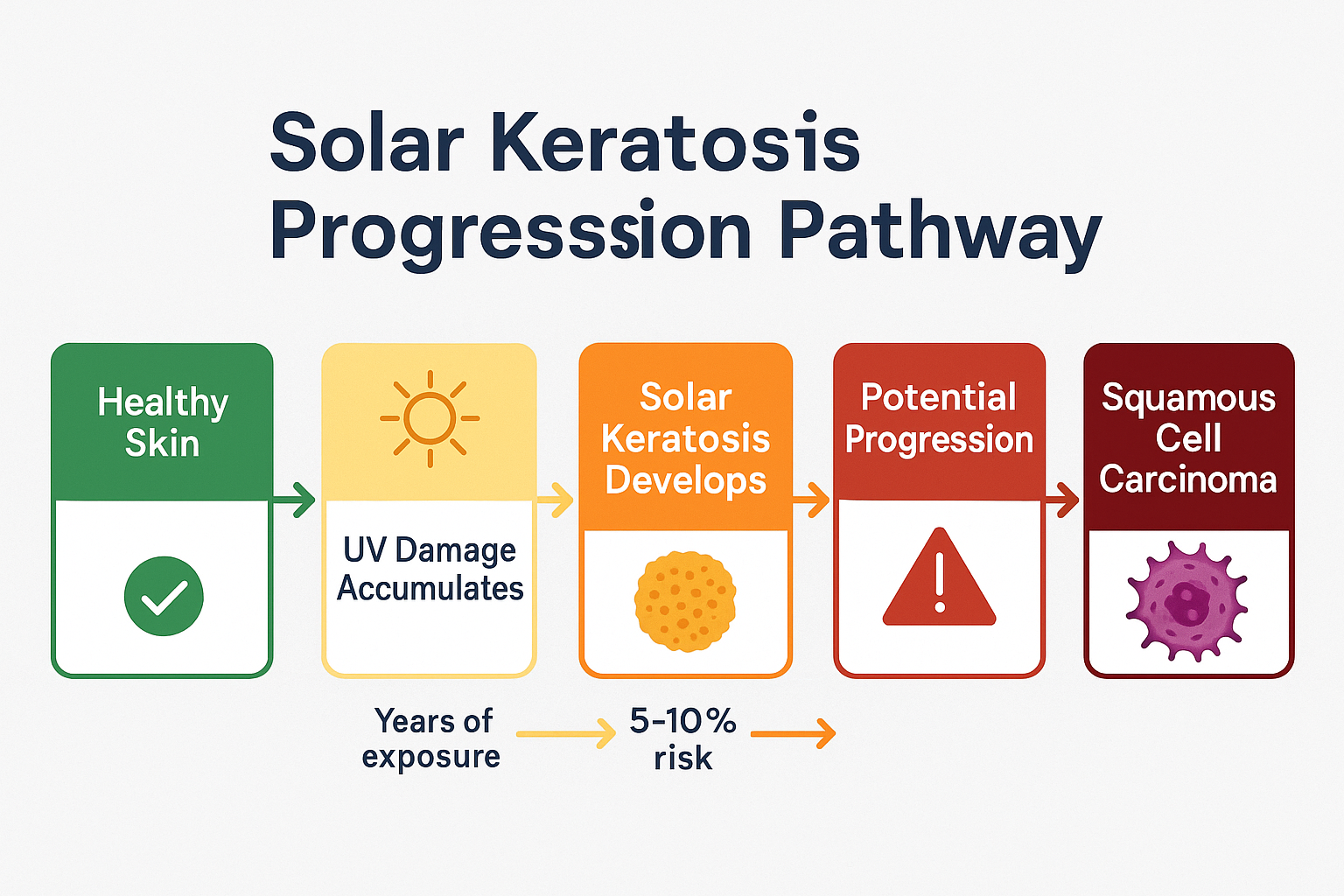
The Progression Pathway

Solar keratosis sits in a unique position on the spectrum between normal skin and cancer:

Normal Skin → Sun Damage → Solar Keratosis → Squamous Cell Carcinoma

Not every solar keratosis progresses to cancer. In fact, most don't. But understanding this pathway helps explain why dermatologists and surgeons take these lesions seriously.

What the Numbers Tell Us

Research on solar keratosis progression reveals important patterns:

  • 5-10% of individual lesions may progress to squamous cell carcinoma (SCC) if left untreated[3]
  • Up to 60% of SCCs arise from pre-existing solar keratoses[4]
  • The more lesions you have, the higher your overall risk of developing skin cancer
  • Regression is possible—some solar keratoses spontaneously disappear (though this is uncommon)

Here's the critical point: while any single lesion has a relatively low chance of becoming cancerous, people with solar keratoses typically have multiple lesions and ongoing sun damage. This creates a cumulative risk that's more significant than the numbers for individual spots suggest.

Squamous Cell Carcinoma: What You Should Know

When solar keratosis does progress, it typically becomes squamous cell carcinoma—the second most common form of skin cancer. Understanding this helps contextualize the importance of treatment:

SCC characteristics:

  • Usually curable when caught early
  • Can become invasive if neglected
  • May spread to lymph nodes or other organs in advanced cases
  • Requires more extensive treatment than solar keratosis
  • Can be disfiguring if allowed to grow large

For comprehensive information about skin cancer types and risks, explore our detailed guide on 4 types of skin cancer.

The "Field Cancerization" Concept

When you have solar keratosis, it's rarely just about that one spot. The surrounding skin has likely experienced similar sun damage—a phenomenon called "field cancerization."

This means:

  • Visible lesions are just the tip of the iceberg
  • Surrounding skin contains damaged cells not yet visible
  • New lesions may continue appearing
  • Treatment often addresses both visible lesions and the surrounding field

Think of it like weeds in a garden. Pulling one weed doesn't mean others won't sprout nearby, because the conditions that created the first weed still exist throughout the garden bed.

Why Early Treatment Makes Sense

Given the progression risk, treating solar keratosis offers several advantages:

Prevention: Stopping progression before it starts ✅ Simplicity: Early lesions require simpler, less invasive treatments ✅ Peace of mind: Eliminating the worry about cancer development ✅ Cosmetic benefit: Removing rough, unsightly patches ✅ Monitoring: Establishing a baseline for future skin checks

Our experienced surgical team at The Minor Surgery Center specializes in identifying and treating solar keratoses before they become more serious concerns. We provide personalized treatment plans that address your specific situation with minimally invasive solutions.
Diagnosing Solar Keratosis: What to Expect

Professional landscape flowchart diagram (1536x1024) for section "From Sun Damage to Potential Cancer". Type: Medical progression flowchart.

Accurate diagnosis is the foundation of effective treatment. Here's what happens when you seek professional evaluation for a suspicious skin lesion.

The Clinical Examination

Most solar keratoses can be diagnosed through visual and tactile examination by a qualified healthcare provider. During your appointment, expect:

Visual Inspection: Your provider will carefully examine the lesion under good lighting, looking at:

  • Size, shape, and borders
  • Color and color variations
  • Surface texture and characteristics
  • Surrounding skin condition

Dermoscopy: Many providers use a dermoscope—a specialized magnifying device with polarized light that reveals structures beneath the skin's surface. This non-invasive tool helps distinguish solar keratosis from other conditions with greater accuracy.

Palpation: Your provider will gently feel the lesion, assessing:

  • Texture and consistency
  • Depth and thickness
  • Tenderness or sensitivity
  • Mobility and attachment to underlying tissue

When Biopsy Is Necessary

While many solar keratoses can be diagnosed clinically, a biopsy may be recommended if:

  • The diagnosis is uncertain
  • The lesion has atypical features
  • There's concern about possible progression to cancer
  • The lesion doesn't respond to initial treatment
  • You have a history of skin cancer

Types of biopsy procedures:

Shave Biopsy:

  • Removes the top layers of the lesion
  • Quick, minimally invasive
  • Usually requires only local anesthesia
  • Leaves minimal scarring

Punch Biopsy:

  • Uses a circular blade to remove a deeper sample
  • Provides full-thickness tissue for analysis
  • Necessary when deeper involvement is suspected

Excisional Biopsy:

  • Removes the entire lesion
  • Both diagnostic and therapeutic
  • Recommended for suspicious lesions

At The Minor Surgery Center, we perform these procedures with a comfort-first approach, ensuring you understand each step and feel at ease throughout the process.

Differential Diagnosis: Ruling Out Other Conditions

Your provider will also consider other conditions that can mimic solar keratosis:

  • Seborrheic keratosis (benign, waxy growths)
  • Squamous cell carcinoma (requires more aggressive treatment)
  • Basal cell carcinoma (another type of skin cancer)
  • Bowen's disease (squamous cell carcinoma in situ)
  • Lichen planus (inflammatory skin condition)
  • Discoid lupus (autoimmune condition)

Accurate differentiation ensures you receive the right treatment for your specific condition. Learn more about actinic keratosis explained in our detailed resource.

The Importance of Full-Body Skin Checks

When you present with solar keratosis, your provider should perform a complete skin examination. Why? Because:

  • You likely have additional lesions you haven't noticed
  • Other areas may show signs of sun damage
  • Early detection of other skin cancers is crucial
  • Establishing a baseline helps monitor changes over time

This comprehensive approach is part of expert outpatient care—looking beyond the immediate concern to protect your overall skin health.

Treatment Options for Solar Keratosis

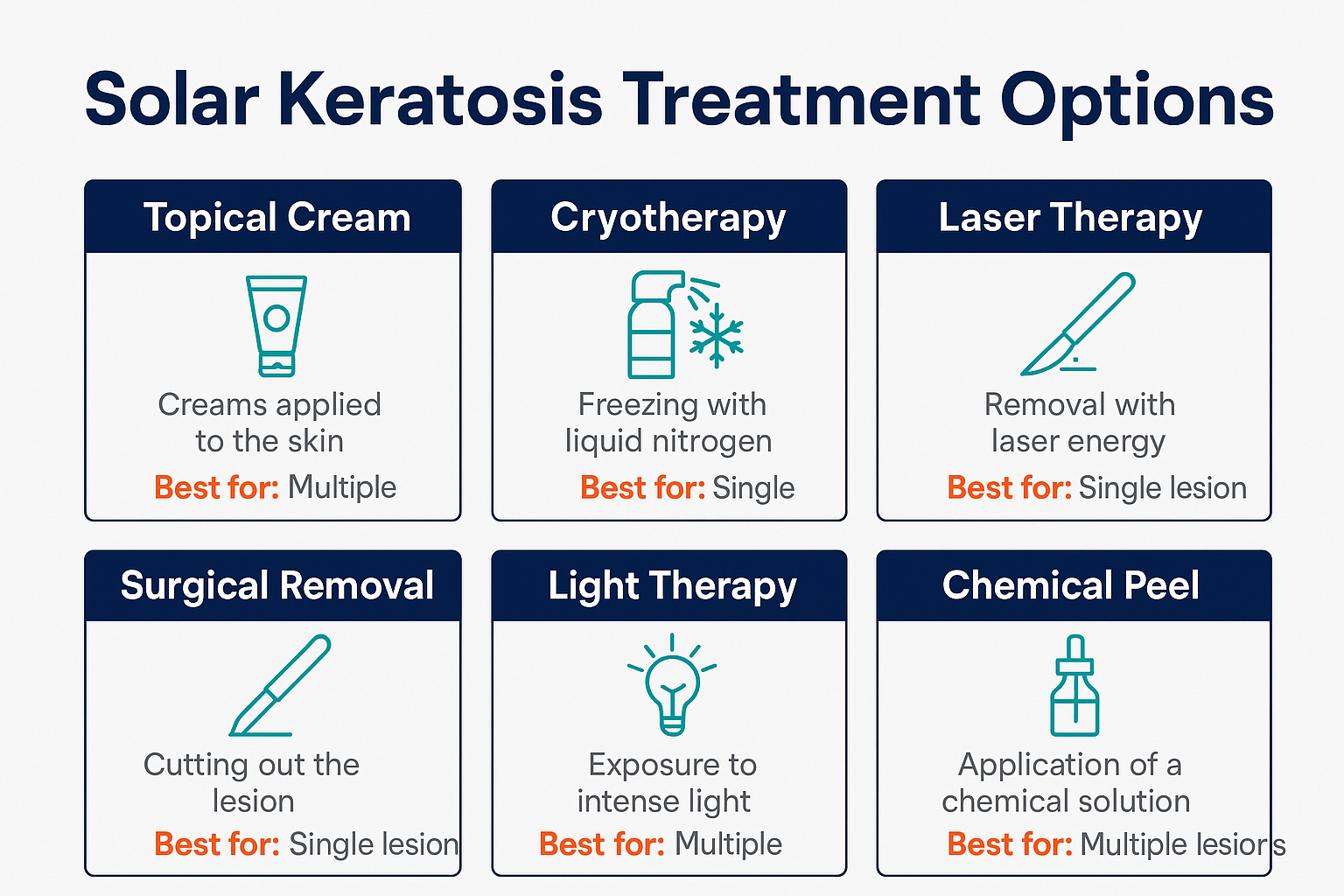
The good news about solar keratosis is that multiple effective treatments exist. Your provider will recommend the best approach based on the number of lesions, their location, your skin type, and your overall health.

Topical Medications

For multiple lesions or field treatment, topical medications offer a non-invasive first-line option.

5-Fluorouracil (5-FU):

  • Applied as a cream or solution
  • Works by destroying rapidly growing abnormal cells
  • Typically used once or twice daily for 2-4 weeks
  • Causes temporary redness, crusting, and peeling
  • Treats both visible and subclinical lesions
  • Excellent for field cancerization

Imiquimod:

  • Immune response modifier
  • Stimulates your immune system to attack abnormal cells
  • Applied 2-3 times per week for several weeks
  • May cause inflammation and flu-like symptoms
  • Effective for both treatment and prevention

Diclofenac Gel:

  • Non-steroidal anti-inflammatory drug (NSAID)
  • Gentler option with fewer side effects
  • Applied twice daily for 2-3 months
  • Slower acting but better tolerated
  • Good for sensitive areas like the face

Ingenol Mebutate:

  • Derived from plant sap
  • Rapid treatment course (2-3 days)
  • Causes significant inflammation
  • Quick results but intense reaction
  • Less commonly used due to side effects

Cryotherapy (Freezing)

Cryotherapy remains one of the most common treatments for individual solar keratoses.

How it works:

  • Liquid nitrogen applied to the lesion
  • Freezes abnormal cells, causing them to die
  • Takes just seconds per lesion
  • No anesthesia needed for most patients

What to expect:

  • Brief stinging or burning sensation during application
  • Blister formation within hours to days
  • Crusting and healing over 1-2 weeks
  • Possible temporary pigment changes
  • May require repeat treatment for thick lesions

Advantages:

  • Quick procedure ✓
  • No cutting or stitches ✓
  • Can treat multiple lesions in one session ✓
  • Minimal downtime ✓

Considerations:

  • May cause temporary discoloration
  • Not ideal for very thick lesions
  • Can be uncomfortable
  • Success rates vary (60-80% clearance)[5]

Curettage and Electrodesiccation

This surgical approach combines scraping and cauterization.

The procedure:

  1. Local anesthesia numbs the area
  2. A curette (sharp, spoon-shaped instrument) scrapes away the lesion
  3. Electrodesiccation (electric current) stops bleeding and destroys remaining abnormal cells
  4. Wound heals over 2-3 weeks

Best for:

  • Thick, hyperkeratotic lesions
  • Cases where biopsy confirmation is desired
  • Lesions resistant to other treatments

Benefits:

  • High cure rates (95%+)
  • Provides tissue for pathology examination
  • Immediate removal

Photodynamic Therapy (PDT)

PDT combines a photosensitizing medication with specific light wavelengths to destroy abnormal cells.

The process:

  1. Photosensitizing agent applied to treatment area
  2. Medication absorbs into abnormal cells (1-3 hours)
  3. Special light activates the medication
  4. Activated medication destroys abnormal cells

Advantages:

  • Excellent cosmetic outcomes
  • Treats large areas simultaneously
  • Addresses field cancerization
  • Minimal scarring

Considerations:

  • Requires multiple steps and office time
  • Can be painful during light exposure
  • Causes significant temporary photosensitivity
  • More expensive than some alternatives

Chemical Peels

Medical-grade chemical peels can treat widespread solar keratoses, particularly on the face.

Common agents:

  • Trichloroacetic acid (TCA)
  • Glycolic acid
  • Jessner's solution

How they work:

  • Controlled injury to skin layers
  • Removes damaged surface cells
  • Stimulates new, healthy skin growth

Best suited for:

  • Multiple facial lesions
  • Field treatment
  • Patients seeking cosmetic improvement alongside treatment

Laser Therapy

Various laser systems can effectively treat solar keratosis:

CO2 Laser:

  • Vaporizes abnormal tissue
  • Precise control
  • Good for localized lesions

Erbium Laser:

  • Gentler than CO2
  • Faster healing
  • Less thermal damage to surrounding tissue

Benefits:

  • Precision targeting
  • Minimal bleeding
  • Controlled depth
  • Excellent cosmetic results

Choosing the Right Treatment: Factors to Consider

Your personalized treatment plan depends on several factors:

Lesion Characteristics:

  • Number of lesions (single vs. multiple)
  • Size and thickness
  • Location on body
  • Grade (mild, moderate, severe)

Patient Factors:

  • Skin type and color
  • Healing capacity
  • Immune status
  • Lifestyle and downtime tolerance
  • Cosmetic concerns

Practical Considerations:

  • Cost and insurance coverage
  • Number of treatments required
  • Recovery time
  • Follow-up requirements

At The Minor Surgery Center, we develop a personalized treatment plan that considers all these factors. Our experienced surgical team explains each option clearly, helping you make informed decisions about your care. We specialize in safe and efficient surgery with minimally invasive solutions that get you back to your life quickly.

For information about our comprehensive skin lesion services, visit our pages on mole, cyst, and skin tag removal in Ajax and Barrie.

What to Expect During and After Treatment

Understanding the treatment process helps you prepare mentally and practically for your procedure. Here's what typically happens from consultation through recovery.

Before Your Procedure

Initial Consultation: During your first visit, your provider will:

  • Examine all concerning lesions
  • Discuss your medical history
  • Review medication and allergy information
  • Explain treatment options and recommendations
  • Answer your questions
  • Provide pre-procedure instructions

Pre-Treatment Preparation: Depending on your chosen treatment, you may need to:

  • Avoid certain medications (blood thinners, aspirin)
  • Discontinue retinoids or other skin products
  • Arrange transportation (if sedation is used)
  • Plan for recovery time
  • Purchase recommended aftercare products

During Treatment

For Office Procedures (Cryotherapy, Curettage):

The actual treatment is typically quick:

  • Check-in and preparation: 10-15 minutes
  • Procedure time: 5-30 minutes (depending on number of lesions)
  • Post-procedure instructions: 5-10 minutes
  • Total visit: Usually under an hour

For Topical Treatments:

You'll receive:

  • Detailed application instructions
  • Expected timeline and milestones
  • Information about normal reactions vs. concerning symptoms
  • Follow-up schedule
  • Contact information for questions

Pain and Discomfort:

Most treatments involve minimal discomfort:

  • Cryotherapy: Brief stinging or burning (seconds)
  • Curettage: Pressure and tugging sensation (local anesthesia prevents pain)
  • Topical treatments: Gradual inflammation over days to weeks
  • PDT: Burning or stinging during light exposure

Our comfort-first approach means we prioritize your experience, using appropriate anesthesia and taking time to ensure you're at ease throughout the procedure.

Recovery and Healing

Immediate Post-Treatment (First 24-48 Hours):

Expect:

  • Redness and swelling at treatment site
  • Possible blister formation (cryotherapy)
  • Oozing or crusting (surgical procedures)
  • Mild discomfort or tenderness

Care instructions typically include:

  • Gentle cleansing with mild soap and water
  • Application of prescribed ointments
  • Keeping the area covered or uncovered (depending on treatment)
  • Avoiding sun exposure
  • Refraining from picking or scratching

Days 3-14:

During this healing phase:

  • Crusts form and gradually fall off
  • New skin emerges beneath
  • Redness begins to fade
  • Discomfort resolves

Important: Let crusts fall off naturally. Picking can cause scarring or infection.

Weeks 2-8:

Final healing occurs:

  • Pink or red skin gradually normalizes
  • Pigment changes may persist temporarily
  • Texture smooths out
  • Final cosmetic result becomes apparent

Potential Side Effects and Complications

While generally safe, solar keratosis treatments can have side effects:

Common (Usually Temporary):

  • Redness and inflammation
  • Crusting and scabbing
  • Temporary pigment changes (lighter or darker)
  • Mild scarring
  • Tenderness

Less Common:

  • Infection (rare with proper care)
  • Significant scarring
  • Permanent pigment changes
  • Incomplete lesion removal
  • Recurrence

When to Contact Your Provider:

Seek medical attention if you experience:

  • Signs of infection (increasing pain, pus, red streaks, fever)
  • Excessive bleeding
  • Severe pain not controlled by recommended medications
  • Allergic reaction to medications
  • Wound not healing after 2-3 weeks

Follow-Up Care

Short-Term Follow-Up:

Most treatments require a follow-up visit:

  • Assess healing progress
  • Evaluate treatment effectiveness
  • Address any concerns or complications
  • Determine if additional treatment is needed

Long-Term Monitoring:

Because solar keratosis indicates sun damage and cancer risk:

  • Regular skin checks (every 3-12 months, depending on risk)
  • Self-examination between professional visits
  • Prompt evaluation of new or changing lesions
  • Ongoing sun protection strategies

Think of solar keratosis treatment as the beginning of a long-term skin health partnership, not a one-time fix.

Prevention: Protecting Your Skin Going Forward

Treatment addresses existing solar keratoses, but prevention stops new ones from forming. Since you can't undo past sun damage, the focus shifts to preventing additional damage.

Sun Protection: Your First Line of Defense

Comprehensive sun protection is non-negotiable if you've had solar keratosis:

Daily Sunscreen Use:

Choose a broad-spectrum sunscreen with these characteristics:

  • SPF 30 or higher (SPF 50+ for high-risk individuals)
  • Broad-spectrum protection (blocks both UVA and UVB)
  • Water-resistant formula (especially for outdoor activities)
  • Mineral or chemical filters (both work; choose what you prefer)

Application guidelines:

  • Apply 15-30 minutes before sun exposure
  • Use approximately 1 ounce (shot glass full) for full body coverage
  • Don't forget ears, scalp (if thinning hair), hands, and neck
  • Reapply every 2 hours, or after swimming/sweating
  • Use even on cloudy days and in winter

Protective Clothing:

Physical barriers offer excellent protection:

☀️ Recommended items:

  • Wide-brimmed hats (3+ inch brim all around)
  • Long-sleeved shirts (UPF-rated fabrics ideal)
  • Long pants or skirts
  • UV-blocking sunglasses
  • Specialized sun-protective clothing for outdoor activities

Shade and Timing:

Strategic sun avoidance reduces exposure:

  • Seek shade, especially between 10 AM and 4 PM
  • Use umbrellas, canopies, or trees when outdoors
  • Plan outdoor activities for early morning or late afternoon
  • Remember: shade reduces but doesn't eliminate UV exposure

Avoiding Tanning Beds:

Tanning beds emit concentrated UV radiation and significantly increase skin cancer risk. If you've had solar keratosis, tanning beds are absolutely off-limits—no exceptions.

For comprehensive sun protection guidance, check out our complete UV index guide.

Regular Skin Self-Examinations

Between professional visits, monthly self-checks help you catch changes early.

How to perform a thorough self-exam:

  1. Choose good lighting and a full-length mirror
  2. Examine all skin surfaces including:
    • Face, ears, neck, chest, and shoulders
    • Arms, hands (including palms and between fingers)
    • Torso (front and back)
    • Legs and feet (including soles and between toes)
    • Scalp (use a comb to part hair; ask partner for help)
    • Back and buttocks (use hand mirror)
  3. Look for the ABCDEs of concerning changes:
    • Asymmetry (one half doesn't match the other)
    • Border irregularity (ragged, notched, or blurred edges)
    • Color variation (multiple colors or uneven distribution)
    • Diameter (larger than 6mm, about the size of a pencil eraser)
    • Evolving (changing in size, shape, color, or symptoms)
  4. Document with photos to track changes over time
  5. Report concerns promptly to your healthcare provider

Nutritional Support for Skin Health

While sun protection is paramount, certain nutritional strategies may support skin health:

Antioxidant-Rich Foods:

  • Colorful fruits and vegetables
  • Green tea
  • Dark chocolate (in moderation)
  • Nuts and seeds

Omega-3 Fatty Acids:

  • Fatty fish (salmon, mackerel, sardines)
  • Walnuts
  • Flaxseeds

Adequate Hydration:

  • Water supports overall skin health
  • Aim for 8+ glasses daily

Note: Nutrition supports but doesn't replace sun protection. No food or supplement can undo UV damage or eliminate skin cancer risk.

Vitamin D Considerations

Sun avoidance raises questions about vitamin D, which your body produces during sun exposure. Here's the balanced approach:

  • Get vitamin D from diet and supplements rather than sun exposure
  • Food sources: Fatty fish, fortified dairy, egg yolks
  • Supplementation: Discuss appropriate dosing with your healthcare provider
  • Testing: Consider checking vitamin D levels if you practice strict sun avoidance

The skin cancer risk from UV exposure far outweighs the benefits of sun-derived vitamin D, especially when dietary sources and supplements are readily available.

Creating a Sun-Safe Lifestyle

Prevention works best when integrated into daily life:

At Home:

  • Apply sunscreen as part of your morning routine
  • Keep sunscreen by the door for easy access
  • Install UV-protective window film in cars and homes
  • Create shaded areas in your yard

At Work:

  • Position desk away from direct sunlight
  • Use window shades or blinds
  • Keep sunscreen in your workspace
  • Wear protective clothing for outdoor work

During Recreation:

  • Choose early morning or evening for outdoor activities
  • Bring portable shade (umbrella, canopy)
  • Set phone reminders for sunscreen reapplication
  • Model good sun protection for children and grandchildren

Living With Solar Keratosis: Long-Term Management

If you've been diagnosed with solar keratosis, you're beginning a journey of ongoing skin health management. Here's how to approach this proactively.

Understanding Your Risk Profile

Solar keratosis indicates you're at higher risk for:

  • Additional solar keratoses (very likely without prevention)
  • Squamous cell carcinoma (5-10% lifetime risk per lesion)
  • Basal cell carcinoma (independent but correlated risk)
  • Melanoma (sun damage is a shared risk factor)

This doesn't mean you'll definitely develop skin cancer—it means vigilance and prevention are especially important for you.

Building Your Healthcare Team

Effective long-term management often involves:

Primary Care Provider:

  • Coordinates overall health care
  • Performs basic skin checks during annual exams
  • Refers to specialists when needed

Dermatologist or Skin Specialist:

  • Provides expert skin examinations
  • Diagnoses and treats skin conditions
  • Monitors high-risk patients

Surgical Specialists:

  • Perform biopsies and excisions when needed
  • Treat confirmed skin cancers
  • Offer advanced treatment options

At The Minor Surgery Center, our experienced surgical team provides comprehensive evaluation and treatment for solar keratosis and related skin concerns. We work collaboratively with your other providers to ensure coordinated, expert outpatient care.

Surveillance Schedule

Your follow-up frequency depends on your risk level:

Lower Risk (1-2 lesions, successfully treated, good sun protection):

  • Professional skin check every 6-12 months
  • Self-examinations monthly

Higher Risk (multiple lesions, history of skin cancer, ongoing sun exposure):

  • Professional skin check every 3-6 months
  • Self-examinations monthly
  • Possibly photographic monitoring

Very High Risk (immunosuppressed, genetic conditions, multiple skin cancers):

  • Professional skin check every 3 months
  • Self-examinations monthly
  • Advanced monitoring techniques

Your provider will recommend the appropriate schedule for your situation.

Emotional and Psychological Aspects

Receiving a diagnosis of a "pre-cancerous" condition can be emotionally challenging. Common reactions include:

  • Anxiety about cancer development
  • Frustration about lifestyle changes
  • Self-blame about past sun exposure
  • Worry about appearance after treatment
  • Stress about ongoing monitoring

Healthy coping strategies:

Educate yourself about the condition and treatments ✓ Focus on what you can control (prevention, treatment adherence) ✓ Reframe the diagnosis as an early warning that allows intervention ✓ Connect with others who have similar experiences ✓ Practice stress-reduction techniques (meditation, exercise, hobbies) ✓ Seek professional support if anxiety becomes overwhelming

Remember: solar keratosis is highly treatable, and your diagnosis gives you the opportunity to take proactive steps to protect your health.

Financial Considerations

Managing solar keratosis involves costs that vary based on treatment and insurance coverage:

Typical Expenses:

  • Professional skin examinations
  • Treatment procedures
  • Topical medications
  • Follow-up visits
  • Sun protection products

Insurance Coverage:

  • Most insurance plans cover medically necessary treatment
  • Cosmetic procedures may not be covered
  • Copays and deductibles apply
  • Prior authorization may be required for certain treatments

Cost-Saving Strategies:

  • Use generic medications when available
  • Ask about cash-pay discounts
  • Compare costs for different treatment options
  • Invest in prevention (often cheaper than treatment)
  • Utilize flexible spending accounts (FSAs) or health savings accounts (HSAs)

Our team at The Minor Surgery Center provides transparent pricing and works with you to develop a personalized treatment plan that fits your budget and insurance situation.

Special Populations and Considerations

Certain groups face unique challenges or considerations regarding solar keratosis.

Immunosuppressed Patients

People with compromised immune systems face dramatically higher risks:

High-Risk Groups:

  • Organ transplant recipients
  • HIV/AIDS patients
  • Those on immunosuppressive medications
  • Chronic lymphocytic leukemia patients

Increased Risks:

  • 100x higher risk of squamous cell carcinoma[6]
  • More aggressive tumor behavior
  • Higher recurrence rates
  • Faster progression from AK to SCC

Management Modifications:

  • More frequent surveillance (every 3 months)
  • Lower threshold for biopsy
  • Earlier, more aggressive treatment
  • Coordination with transplant or oncology teams
  • Possible medication adjustments (when safe)

Older Adults

Solar keratosis prevalence increases dramatically with age, creating specific considerations:

Challenges:

  • Multiple comorbid conditions
  • Medication interactions
  • Healing capacity concerns
  • Mobility limitations affecting sun protection
  • Cognitive issues impacting treatment adherence

Adaptations:

  • Simplified treatment regimens
  • Caregiver involvement in care
  • Consideration of life expectancy in treatment decisions
  • Focus on quality of life
  • Gentle treatment options for fragile skin

Darker Skin Types

While less common in darker-skinned individuals, solar keratosis does occur:

Unique Aspects:

  • Often underdiagnosed due to lower clinical suspicion
  • May present differently (less erythema, different pigmentation)
  • Higher risk of post-inflammatory hyperpigmentation from treatments
  • Sun protection still essential despite higher melanin protection

Treatment Considerations:

  • Careful selection of methods to minimize pigment changes
  • Test treatments on small areas first
  • Longer healing times for pigment normalization
  • Emphasis on sun protection to prevent further damage

Geographic Considerations

Location significantly impacts solar keratosis risk and management:

High-Risk Locations:

  • Areas closer to the equator
  • High altitudes (UV exposure increases ~10% per 1,000 feet)
  • Regions with high sun exposure (southwestern U.S., Australia, etc.)

For Toronto-Area Residents:

While Canada's northern latitude provides some UV protection compared to southern regions, solar keratosis remains common due to:

  • Seasonal sun exposure (intense summer sun)
  • Reflective surfaces (snow, water)
  • Outdoor recreational activities
  • Historical sun exposure (vacations, previous residences)

Year-round sun protection is essential, even in our climate. Winter sun reflecting off snow can be particularly intense.
Frequently Asked Questions About Solar Keratosis

Professional landscape infographic (1536x1024) for section "Treatment Options for Solar Keratosis". Type: Treatment options grid infographic

Can solar keratosis go away on its own?

Occasionally, yes—some solar keratoses spontaneously resolve without treatment. However, this is uncommon (less than 20% of lesions), and you can't predict which ones will disappear. More importantly, spontaneous regression doesn't eliminate your underlying sun damage or cancer risk. Professional evaluation and treatment remain the recommended approach.

Is solar keratosis painful?

Most solar keratoses aren't painful. They're typically asymptomatic or mildly uncomfortable. You might notice:

  • Rough texture when touching
  • Occasional itching
  • Tenderness if irritated
  • Sensitivity to touch

If a lesion becomes significantly painful, it may indicate inflammation, infection, or progression—warranting prompt evaluation.

How quickly does solar keratosis turn into cancer?

There's no predictable timeline. Some lesions remain stable for years or decades, while others progress more quickly. Factors influencing progression include:

  • Immune system status
  • Continued sun exposure
  • Lesion characteristics (size, thickness)
  • Individual genetic factors

This unpredictability is precisely why early treatment makes sense—it eliminates the risk before progression occurs.

Can I prevent solar keratosis if I already have sun damage?

You can't reverse existing sun damage, but you can absolutely prevent new solar keratoses from forming and reduce the risk of progression in existing lesions. Comprehensive sun protection starting today makes a significant difference in your long-term skin health.

Will treatment leave scars?

Scarring potential depends on the treatment method:

  • Topical medications: Minimal to no scarring
  • Cryotherapy: Usually no scarring, possible pigment changes
  • Curettage: Small scars possible, usually heal well
  • Laser therapy: Minimal scarring with proper technique
  • Surgical excision: Linear scar, typically fades over time

Your provider can discuss expected cosmetic outcomes for your specific situation and lesion location.

How much does solar keratosis treatment cost?

Costs vary widely based on:

  • Treatment method
  • Number of lesions
  • Geographic location
  • Insurance coverage

Approximate ranges (without insurance):

  • Topical medications: $50-$300 per prescription
  • Cryotherapy: $100-$500 per session
  • Curettage: $200-$800 per lesion
  • PDT: $500-$2,000 per session
  • Laser therapy: $500-$1,500 per session

Most insurance plans cover medically necessary treatment. Contact our office for specific pricing information.

Should I be worried if I have multiple solar keratoses?

Multiple lesions are common and indicate field cancerization—widespread sun damage to your skin. While this increases your overall skin cancer risk, it's manageable with:

  • Appropriate treatment for existing lesions
  • Rigorous sun protection
  • Regular monitoring
  • Possibly field-directed therapies

Think of it as a wake-up call to take your skin health seriously, not a cause for panic.

The Minor Surgery Center Approach to Solar Keratosis

At The Minor Surgery Center, we understand that discovering a pre-cancerous skin lesion can be concerning. That's why we've built our practice around clear communication, personalized care, and effective treatment that gets you back to your life quickly.

Why Choose Us for Your Solar Keratosis Treatment

Expert Evaluation: Our experienced surgical team has extensive training in identifying and treating solar keratosis and related skin conditions. We use advanced diagnostic tools and techniques to ensure accurate assessment.

Comprehensive Treatment Options: We offer multiple treatment modalities under one roof, allowing us to recommend the best approach for your specific situation—not just the one we happen to offer.

Personalized Treatment Plans: No two patients are identical. We consider your:

  • Lesion characteristics
  • Skin type
  • Medical history
  • Lifestyle and preferences
  • Cosmetic concerns
  • Budget considerations

Comfort-First Philosophy: We know medical procedures can be anxiety-inducing. Our team prioritizes your comfort through:

  • Clear explanations of what to expect
  • Appropriate anesthesia and pain management
  • Gentle technique
  • Supportive, compassionate staff
  • Welcoming, professional environment

Efficient, Convenient Care: As an outpatient surgical center, we provide:

  • Flexible scheduling
  • Minimal wait times
  • Streamlined processes
  • Same-day or next-day appointments for urgent concerns
  • Convenient Toronto-area locations

Ongoing Support: Your relationship with us doesn't end after treatment. We provide:

  • Thorough aftercare instructions
  • Accessible follow-up care
  • Long-term monitoring
  • Education about prevention
  • Coordination with your other healthcare providers

What to Expect at Your Appointment

Initial Consultation:

Your first visit typically includes:

  1. Comprehensive skin examination of the concerning area and full body check
  2. Discussion of findings in clear, understandable terms
  3. Review of treatment options with pros and cons of each
  4. Answering your questions thoroughly
  5. Development of a treatment plan tailored to your needs

Treatment Visit:

If proceeding with in-office treatment:

  1. Preparation and final questions
  2. Procedure performed efficiently with attention to your comfort
  3. Post-treatment care instructions provided in writing
  4. Scheduling follow-up as appropriate
  5. Access to our team for questions during recovery

Follow-Up Care:

We ensure continuity through:

  • Scheduled follow-up appointments
  • Monitoring of treatment effectiveness
  • Adjustment of plans as needed
  • Long-term surveillance recommendations

Our Commitment to You

We're committed to helping you achieve healthy, cancer-free skin through safe and efficient surgery and minimally invasive solutions. Our goal is simple: provide you with expert outpatient care that addresses your concerns and gets you back to your life with confidence.

Whether you have a single concerning spot or multiple lesions requiring treatment, our team is here to help. We combine medical expertise with genuine compassion, treating you as a person—not just a case.

To learn more about our comprehensive skin lesion services, visit our blog for educational resources and updates.

Taking Action: Your Next Steps

If you've discovered a rough, scaly patch on sun-exposed skin, or if you've been diagnosed with solar keratosis, taking action now protects your long-term health.

Step 1: Get Professional Evaluation

Don't wait and hope the lesion disappears. Schedule an appointment with a qualified healthcare provider who can:

  • Accurately diagnose your condition
  • Assess your overall skin cancer risk
  • Recommend appropriate treatment
  • Establish a monitoring plan

Early evaluation means simpler treatment and better outcomes.

Step 2: Follow Through With Treatment

If treatment is recommended:

  • Ask questions until you fully understand the plan
  • Follow pre-treatment instructions carefully
  • Attend all scheduled appointments
  • Adhere to aftercare guidelines
  • Report any concerns promptly

Treatment only works if you complete it properly.

Step 3: Commit to Prevention

Starting today:

  • Apply broad-spectrum sunscreen daily
  • Wear protective clothing and hats
  • Seek shade during peak sun hours
  • Avoid tanning beds completely
  • Perform monthly self-skin checks

Prevention is your most powerful tool for long-term skin health.

Step 4: Stay Vigilant

Solar keratosis requires ongoing attention:

  • Keep scheduled follow-up appointments
  • Monitor your skin for new or changing lesions
  • Report concerns promptly
  • Maintain sun protection habits
  • Encourage family members to practice sun safety

Think of this as a lifelong commitment to your skin health.

Step 5: Educate and Advocate

Share what you've learned:

  • Talk to family members about sun protection
  • Encourage loved ones to get skin checks
  • Model good sun safety behaviors
  • Support skin cancer awareness initiatives

Your experience can help others catch problems early.

Conclusion: Empowering Your Skin Health Journey

Solar keratosis represents a critical junction in your skin health journey—a warning sign that arrives while you still have time to act. These rough, scaly patches are your skin's way of telling you that cumulative sun damage has reached a threshold requiring attention.

The good news? You've caught it. You're informed. You can take action.

Understanding that solar keratosis is a pre-cancerous condition naturally raises concerns, but remember: "pre-cancerous" means you have the opportunity to intervene before cancer develops. With appropriate treatment and ongoing prevention, you can effectively manage these lesions and significantly reduce your skin cancer risk.

The key takeaways to remember:

✓ Solar keratosis is extremely common and highly treatable ✓ Multiple effective treatment options exist, from topical medications to minimally invasive procedures ✓ Early treatment is simpler and more effective than waiting ✓ Comprehensive sun protection prevents new lesions and protects overall skin health ✓ Regular monitoring catches changes early ✓ You're not alone—millions of people successfully manage this condition

At The Minor Surgery Center, we're here to support you through every step of this journey. Our experienced surgical team provides expert outpatient care with a comfort-first approach, offering personalized treatment plans that address your specific needs and concerns.

Whether you're dealing with your first solar keratosis or managing multiple lesions, we combine medical expertise with genuine compassion to help you achieve the best possible outcomes. We understand that these skin concerns can be worrying, and we're committed to providing clear communication, effective treatment, and ongoing support that gets you back to your life with confidence.

Don't let uncertainty or anxiety delay your care. Solar keratosis is most manageable when addressed promptly. Take that first step—schedule an evaluation, ask questions, understand your options, and make informed decisions about your skin health.

Your skin has been protecting you for years. Now it's time to return the favor.

Ready to address your solar keratosis concerns? Contact The Minor Surgery Center today to schedule a consultation with our experienced team. We're here to provide the expert, compassionate care you deserve.

References

[1] Criscione VD, Weinstock MA, Naylor MF, et al. Actinic keratoses: Natural history and risk of malignant transformation in the Veterans Affairs Topical Tretinoin Chemoprevention Trial. Cancer. 2009;115(11):2523-2530.

[2] American Academy of Dermatology. Actinic Keratosis: Overview. AAD.org. Updated 2024.

[3] Werner RN, Sammain A, Erdmann R, et al. The natural history of actinic keratosis: a systematic review. British Journal of Dermatology. 2013;169(3):502-518.

[4] Rossi R, Mori M, Lotti T. Actinic keratosis. International Journal of Dermatology. 2007;46(9):895-904.

[5] Thai KE, Fergin P, Freeman M, et al. A prospective study of the use of cryosurgery for the treatment of actinic keratoses. International Journal of Dermatology. 2004;43(9):687-692.

[6] Euvrard S, Kanitakis J, Claudy A. Skin cancers after organ transplantation. New England Journal of Medicine. 2003;348(17):1681-1691.

November 25, 2025
🇨🇦 Our clinic currently provides care to patients within Canada only. We apologize for any inconvenience this may cause.