Skin Tags, Moles, and Warts on the Neck: A Complete Guide to Those 'Little Bumps'
Have you ever noticed a small bump on your neck and wondered what it could be? You're not alone. The neck is one of the most common areas where skin tags, moles, and warts appear, causing concern for millions of people every year. While these small growths are usually harmless, understanding what they are and when to seek professional help is essential for your peace of mind and skin health.
Skin Tags, Moles, and Warts on the Neck: can look surprisingly similar at first glance, but they're actually very different types of skin growths with distinct causes, characteristics, and treatment options. This comprehensive guide will help you identify these common neck bumps, understand why they appear, and learn about the safest removal methods available in 2025.
Key Takeaways
✅ Skin tags, moles, and warts are three distinct types of growths that commonly appear on the neck, each with different causes and characteristics.
✅ Most neck bumps are benign (non-cancerous), but any changing or unusual growth should be evaluated by a qualified healthcare professional.
✅ Professional removal is safer and more effective than home remedies, especially for growths on the visible neck area where scarring is a concern.
✅ Knowing the differences between these growths helps you make informed decisions about when to seek treatment and what to expect.
✅ Prevention strategies can reduce the likelihood of developing new skin tags and warts, though moles are largely determined by genetics.
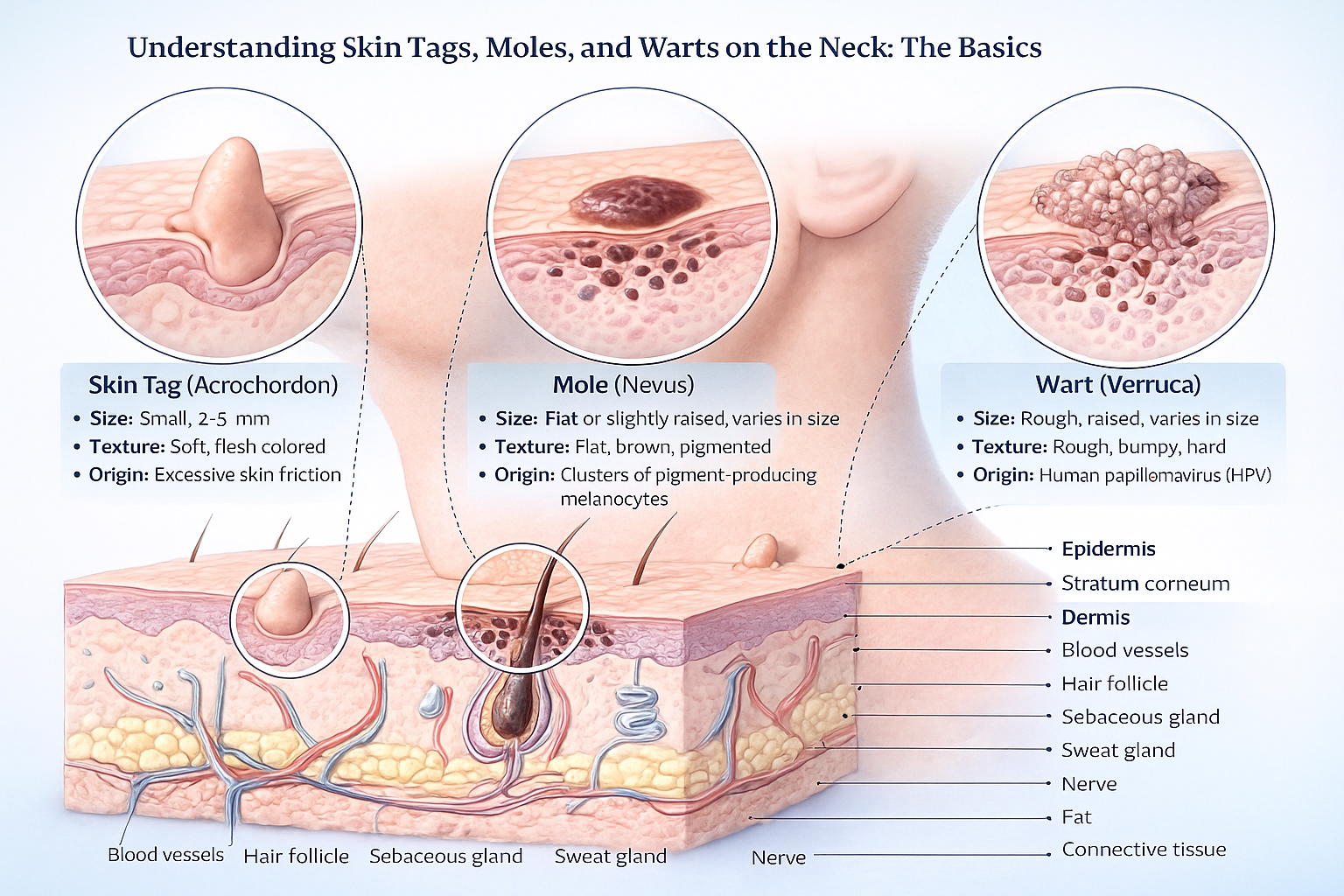
Understanding Skin Tags, Moles, and Warts on the Neck: The Basics
Before diving into the specifics of each type of growth, it's important to understand what makes the neck such a common location for these bumps to appear. The neck's unique characteristics—including skin folds, friction from clothing and jewelry, and constant sun exposure—create the perfect environment for various skin growths to develop.
Why the Neck? 🤔
The neck is particularly susceptible to skin growths for several reasons:
Friction zones: Areas where skin rubs against skin or clothing
Moisture accumulation: Natural creases trap sweat and moisture
Sun exposure: The neck receives significant UV radiation throughout life
Hormone fluctuations: Changes during pregnancy, menopause, or weight gain
Aging: Natural skin changes over time increase growth likelihood
Skin tags (medically known as acrochordons) are among the most common growths people discover on their necks. These small, soft pieces of hanging skin can range from tiny, barely visible bumps to larger, pedunculated (stalk-like) growths.
What Do Skin Tags Look Like?
Skin tags on the neck typically have these characteristics:
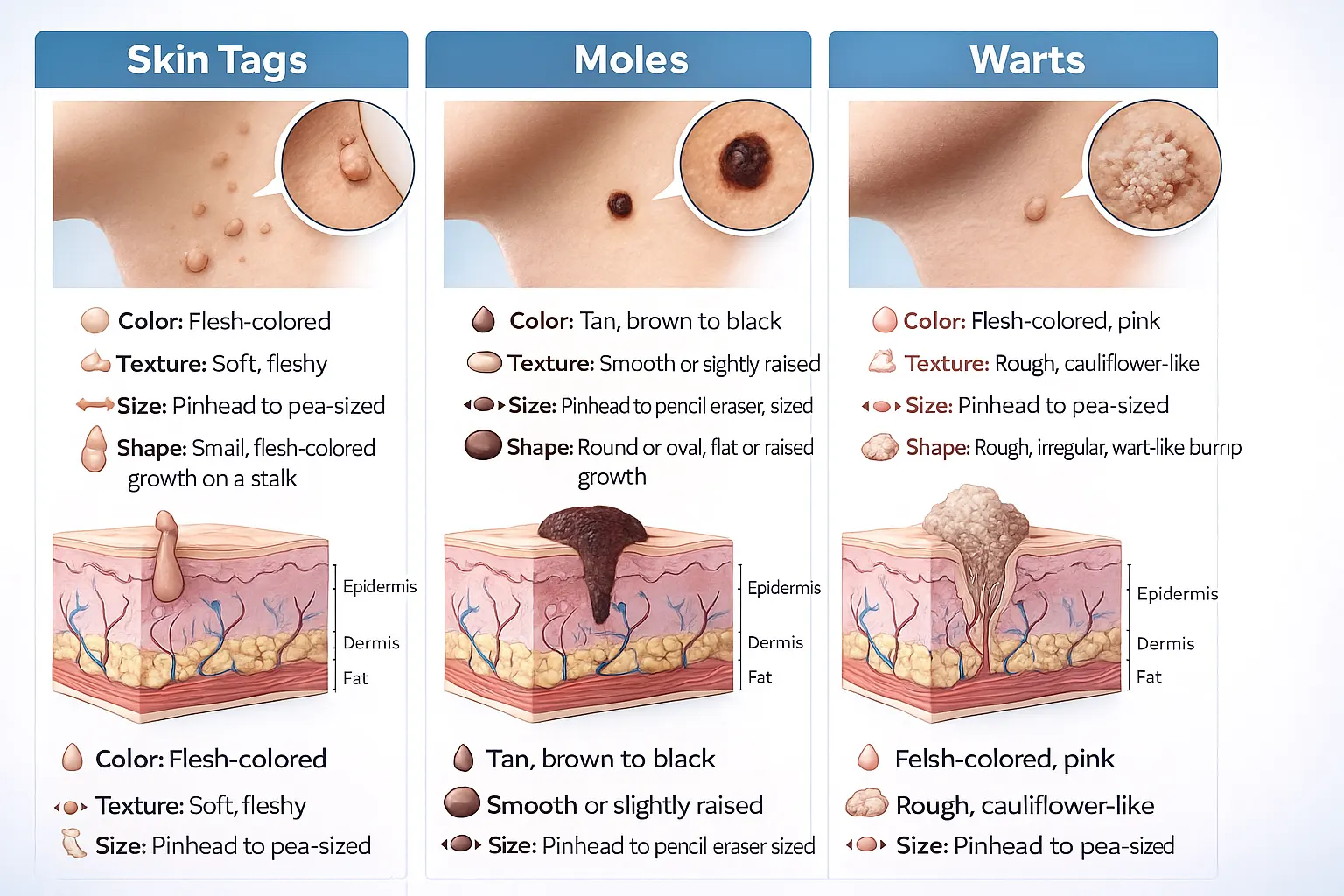
FeatureDescriptionColorFlesh-colored to slightly darker than surrounding skinSize1-5mm (can grow larger, up to 1cm)TextureSoft, movable, often wrinkledShapeRound or oval, attached by a thin stalkLocationNeck creases, under jewelry, collar line
Causes of Neck Skin Tags
Research indicates several factors contribute to skin tag development [1]:
Friction: Constant rubbing from necklaces, collars, or skin folds
Genetics: Family history significantly increases likelihood
Weight: Obesity and excess skin create more friction points
Diabetes: Insulin resistance is associated with skin tag formation
Pregnancy: Hormonal changes trigger growth in many women
Age: More common after age 40
Skin Tags vs. Moles: Key Differences
Many people confuse hanging moles on neck areas with skin tags. Here's how to tell them apart:
Moles on the Neck: Understanding These Pigmented Spots
Moles (nevi) are clusters of pigmented cells that can appear anywhere on the body, including the neck. While most moles are completely harmless, monitoring them for changes is essential for early detection of skin cancer.
Types of Moles Found on the Neck
Not all moles are created equal. Here are the main types you might find on your neck:
1. Common Moles (Acquired Nevi)
Develop after birth, usually in childhood or young adulthood
Uniform color (tan, brown, or pink)
Round or oval shape
Clearly defined borders
Typically less than 6mm in diameter
2. Congenital Moles
Present at birth
Can be any size (some are quite large)
May have hair growing from them
Slightly higher cancer risk if large
3. Atypical Moles (Dysplastic Nevi)
Irregular shape or color
Larger than common moles
May have fuzzy borders
Require closer monitoring [2]
For detailed information about unusual moles, visit our guide on atypical moles.
When to Worry About Moles on Your Neck ⚠️
Most moles are benign, but it's crucial to watch for warning signs. Use the ABCDE rule:
Asymmetry: One half doesn't match the other
Border: Irregular, scalloped, or poorly defined edges
Color: Multiple colors or uneven distribution
Diameter: Larger than 6mm (pencil eraser size)
Evolving: Any change in size, shape, color, or symptoms
"Any mole that changes, bleeds, itches, or develops new symptoms deserves professional evaluation. Early detection of melanoma can be life-saving." - Dermatology experts at The Minor Surgery Center
Moles vs. Skin Tags: A Quick Comparison
Understanding moles vs skin tags helps you communicate effectively with healthcare providers:
Moles:
Pigmented (colored)
Flat or slightly raised
Present from birth or develop early in life
Contain melanocytes (pigment cells)
May require biopsy if suspicious
Skin Tags:
Flesh-colored
Hang from skin surface
Develop in adulthood
Contain normal skin cells
Rarely require biopsy
Warts on the Neck: Viral Skin Growths
Warts are caused by the human papillomavirus (HPV) and represent a completely different category of skin growth. Unlike skin tags and moles, warts are contagious and can spread to other areas of your body or to other people.
Characteristics of Neck Warts
Warts on the neck may appear as:
Rough, grainy texture (like a cauliflower surface)
Small black dots in the center (clotted blood vessels)
Flesh-colored, white, pink, or tan appearance
Raised or flat depending on the type
Clusters or single growths
Types of Warts That Appear on the Neck
Several wart varieties can develop on the neck:
Common Warts (Verruca Vulgaris)
Rough, dome-shaped bumps
Gray-brown color
May have black dots
Flat Warts (Verruca Plana)
Smooth, flat-topped
Slightly raised
Pink, light brown, or yellow
Often appear in clusters
Filiform Warts
Thread-like or finger-like projections
Flesh-colored
Most common around the neck and face
Fast-growing
How Warts Spread 🦠
Understanding transmission helps prevent new warts:
Direct contact: Touching someone else's wart
Indirect contact: Sharing towels, razors, or clothing
Self-inoculation: Spreading from one body part to another
Broken skin: HPV enters through cuts or scratches
Shaving: Can spread warts along the neck area
Warts vs. Skin Tags and Moles
Here's how warts differ from the other common neck growths:
Warts:
Caused by viral infection (HPV)
Contagious
Rough texture with possible black dots
Can spread or multiply
May resolve spontaneously
Skin Tags & Moles:
Not caused by infection
Not contagious
Smooth or soft texture
Don't spread to other areas
Persist unless removed
Diagnosing Skin Tags, Moles, and Warts on the Neck: What to Expect
When you visit a healthcare professional about a neck bump, they'll perform a thorough evaluation to determine exactly what type of growth you have and whether it requires treatment.
The Examination Process
A typical evaluation includes:
Visual Inspection
Examining the growth with the naked eye
Assessing size, shape, color, and texture
Checking for multiple growths
Noting location and distribution pattern
Dermoscopy
Using a specialized magnifying device
Examining skin structure and patterns
Identifying specific features invisible to the naked eye
Particularly useful for evaluating moles [3]
Medical History Review
Duration of the growth
Any changes over time
Family history of skin conditions
Previous skin cancer or precancerous lesions
Symptoms (pain, itching, bleeding)
Biopsy (If Needed)
Removing part or all of the growth
Sending tissue for laboratory analysis
Determining if cells are benign or malignant
Usually reserved for suspicious moles
Professional evaluation at a specialized skin cancer clinic ensures accurate diagnosis and appropriate treatment planning.
When Professional Evaluation Is Essential ⚕️
Seek professional evaluation if you notice:
Rapid growth or sudden appearance
Color changes in existing growths
Bleeding or oozing without injury
Pain or tenderness in the bump
Irregular borders or asymmetry
Multiple new growths appearing quickly
Uncertainty about what the growth is
Treatment Options for Skin Tags, Moles, and Warts on the Neck
Each type of growth requires different treatment approaches. Professional removal is generally recommended for neck growths because this visible area requires careful technique to minimize scarring.
Skin Tag Removal Methods
Professional Options:
Cryotherapy (Freezing)
Liquid nitrogen application
Growth falls off in 1-2 weeks
Minimal discomfort
May cause temporary lightening of skin
Surgical Excision
Cutting with sterile scissors or scalpel
Immediate removal
Local anesthetic for larger tags
Minimal to no scarring when done properly
Electrocautery
Burning with electric current
Seals blood vessels simultaneously
Quick procedure
Slight burning odor during treatment
Ligation
Tying off blood supply with surgical thread
Tag falls off in several days
No cutting required
Best for pedunculated (stalked) tags
Why Avoid Home Removal:
Risk of infection
Potential for significant bleeding
Scarring in visible area
Incomplete removal leading to regrowth
Possibility of removing something that isn't a skin tag
Professional skin tag removal in Mississauga and surrounding areas ensures safe, effective treatment with optimal cosmetic results.
Mole Removal Procedures
When Moles Should Be Removed:
Suspicious appearance requiring biopsy
Cosmetic concerns
Irritation from clothing or jewelry
Bleeding or catching on items
Patient preference
Removal Techniques:
Surgical Excision
Complete removal including roots
Stitches required (typically 5-14 days)
Tissue sent for pathology
Best for suspicious moles
Small scar (usually fades significantly)
Shave Excision
Shaving mole flush with skin
No stitches needed
Quick healing
Appropriate for raised, benign moles
May leave flat scar
Laser Removal
Using focused light energy
Best for small, benign moles
Multiple sessions may be needed
Not suitable for suspicious moles (no tissue for testing)
For comprehensive mole evaluation and removal, consider visiting specialists who offer mole removal services in Barrie and throughout Ontario.
Wart Treatment Options
Warts can be stubborn, often requiring multiple treatments or combination approaches.
Professional Treatments:
Cryotherapy
Most common professional treatment
Freezing with liquid nitrogen
Multiple sessions usually needed (2-4 weeks apart)
While you can't prevent all skin growths, certain strategies can reduce your likelihood of developing new skin tags, moles, and warts on the neck.
Preventing Skin Tags 🛡️
Practical Prevention Tips:
Maintain healthy weight
Reduces skin friction
Decreases insulin resistance
Minimizes skin fold development
Choose appropriate jewelry
Avoid tight necklaces
Remove jewelry before sleep
Clean jewelry regularly
Rotate jewelry to prevent constant friction
Wear breathable fabrics
Cotton collars reduce moisture
Avoid tight, restrictive clothing
Keep neck area dry
Manage underlying conditions
Control diabetes
Address hormonal imbalances
Regular health check-ups
Gentle skin care
Avoid harsh scrubbing
Pat neck dry after washing
Use moisturizer to reduce friction
Preventing New Moles
While most moles are genetically determined, you can reduce the development of new moles and prevent existing ones from becoming problematic:
Sun protection ☀️
Apply SPF 30+ sunscreen daily
Reapply every 2 hours outdoors
Wear high-collar shirts when possible
Seek shade during peak sun hours (10am-4pm)
Avoid tanning beds
UV radiation increases mole development
Significantly raises melanoma risk
No such thing as "safe" tanning
Regular self-examinations
Check neck monthly
Note any changes
Photograph moles for comparison
Use mirrors to see back of neck
Annual skin checks
Professional full-body examination
Dermoscopy of suspicious lesions
Early detection of changes
Preventing Warts
Since warts are caused by a virus, prevention focuses on avoiding HPV exposure:
Avoid direct contact
Don't touch other people's warts
Keep your own warts covered
Wash hands after touching warts
Don't share personal items
Towels, razors, clothing
Particularly important in gyms and pools
Use your own grooming tools
Protect broken skin
Keep cuts and scratches clean
Cover with bandages until healed
HPV enters through skin breaks
Be cautious when shaving
Use clean, sharp razors
Don't shave over warts
Shave in direction of hair growth
Disinfect razors between uses
Boost immune function
Adequate sleep (7-9 hours)
Balanced nutrition
Regular exercise
Stress management
Vitamin D sufficiency
Living with Neck Growths: Practical Considerations
For many people, skin tags, moles, and warts on the neck are more of a cosmetic concern than a medical problem. However, these growths can impact daily life in various ways.
Cosmetic Concerns and Self-Confidence
Visible neck growths can affect self-esteem, particularly:
In professional settings where appearance matters
During social events or photography
When wearing certain clothing (open collars, necklaces)
In intimate relationships due to self-consciousness
Addressing Cosmetic Concerns:
Professional removal offers the best cosmetic outcomes
Makeup can temporarily conceal some growths
Clothing and jewelry choices can minimize visibility
Remember that most people notice these growths far less than you do
Physical Irritation Issues
Beyond appearance, neck growths can cause physical problems:
Common Irritations:
Catching on necklaces or clothing
Rubbing from shirt collars
Snagging during hair washing or styling
Bleeding if accidentally scratched or torn
Itching or tenderness
Managing Irritation:
Keep nails trimmed to avoid scratching
Choose smooth-fabric collars
Be gentle when washing neck area
Apply petroleum jelly to reduce friction
Consider removal if irritation is frequent
Psychological Impact
Research shows that visible skin conditions can have significant psychological effects [5]:
Anxiety about appearance
Social withdrawal
Reduced quality of life
Stress about potential cancer (especially with moles)
Coping Strategies:
Seek professional evaluation for peace of mind
Consider removal if growth causes distress
Join support communities
Focus on overall health and self-care
Remember that these growths are extremely common
Myths and Misconceptions About Neck Growths
Let's address some common myths about skin tags, moles, and warts on the neck:
Myth #1: "Skin tags are contagious"
Truth: Skin tags are not contagious. They result from friction and genetics, not infection. You cannot "catch" skin tags from someone else.
Myth #2: "Cutting off a skin tag will cause more to grow"
Truth: Removing a skin tag doesn't cause more to develop. However, if you're prone to skin tags, new ones may appear in other friction-prone areas regardless of removal.
Myth #3: "All dark moles are cancerous"
Truth: Most dark moles are completely benign. Color alone doesn't determine cancer risk—look for the ABCDE warning signs instead.
Myth #4: "Warts have roots that go deep into the body"
Truth: Warts only grow in the top layer of skin (epidermis). The black dots sometimes visible are clotted blood vessels, not roots.
Myth #5: "You can remove moles safely at home"
Truth: Home mole removal is dangerous. You risk infection, scarring, incomplete removal, and missing potential skin cancer. Always seek professional removal.
Myth #6: "Warts will go away on their own quickly"
Truth: While warts can resolve spontaneously, this often takes months to years. Treatment speeds up the process significantly.
Myth #7: "Skin tags mean you have diabetes"
Truth: While skin tags are more common in people with diabetes, many people with skin tags don't have diabetes. However, multiple skin tags may warrant diabetes screening.
Special Considerations for Different Populations
Certain groups experience unique challenges with neck growths:
Pregnancy and Skin Tags 🤰
Pregnant women often develop multiple skin tags due to:
Hormonal changes
Weight gain
Increased insulin resistance
Skin stretching
Recommendations:
Most skin tags appearing during pregnancy are harmless
Many resolve after delivery
Removal during pregnancy is generally safe but often postponed
Consult your obstetrician before any treatment
Older Adults and Moles
As we age:
New moles rarely develop after age 40
Existing moles may fade
Any new pigmented growth should be evaluated
Age spots (solar lentigines) may be confused with moles
Skin cancer risk increases with cumulative sun exposure
Signs of infection (increasing redness, warmth, pus)
Severe pain not controlled by medication
Ongoing Healing (Days 3-14)
Wound Care:
Continue gentle cleaning
Apply prescribed ointments
Protect from sun exposure
Avoid picking at scabs
Keep area moisturized
Activity Restrictions:
Avoid strenuous exercise (first few days)
No swimming or hot tubs
Limit neck movement if stitches present
Avoid tight collars or necklaces
Suture Removal:
Typically 5-14 days post-procedure
Timing depends on location and technique
Quick, minimally uncomfortable process
Steri-strips may be applied after removal
Long-Term Healing and Scar Management
Optimizing Scar Appearance:
Sun protection (critical)
SPF 30+ on healing area
Scars darken with sun exposure
Continue for at least 6 months
Silicone products
Silicone gel or sheets
Proven to reduce scar appearance
Apply once wound is fully closed
Massage
Gentle circular motions
Helps break down scar tissue
Start once wound is healed
Vitamin E (controversial)
Limited scientific evidence
May help, unlikely to harm
Some people experience irritation
Professional scar treatments
Laser therapy for persistent scars
Steroid injections for raised scars
Microneedling for texture improvement
Timeline for Scar Maturation:
3 months: Scar begins to fade
6 months: Significant improvement
12-18 months: Final appearance
Most neck scars fade to thin, barely visible lines when proper technique and aftercare are followed.
Frequently Asked Questions
Can I remove skin tags at home safely?
While many home remedies exist, professional removal is strongly recommended, especially for neck skin tags. Home removal risks infection, scarring, and incomplete removal. The neck is a visible area where you want the best cosmetic outcome, which professional treatment provides.
Will my skin tags, moles, or warts come back after removal?
Skin tags: Once completely removed, that specific tag won't return, but new tags may develop in other areas if you're prone to them.
Moles: Properly excised moles rarely recur. If regrowth occurs, it should be evaluated.
Warts: Recurrence is possible because the virus may still be present. Recurrence rates vary from 20-50% depending on treatment method [6].
How can I tell if a neck bump is dangerous?
Use the ABCDE rule for moles. For any growth, warning signs include rapid changes, bleeding, pain, irregular borders, or multiple colors. When in doubt, get it checked by a professional. Most neck bumps are benign, but peace of mind is worth a quick evaluation.
Are there any effective home remedies for warts?
Over-the-counter salicylic acid products can work but require weeks of consistent application. Duct tape occlusion shows mixed results in studies. Professional treatment is faster and more effective. Avoid home remedies like apple cider vinegar on the neck due to chemical burn risk.
Does insurance cover removal of skin tags and moles?
Coverage depends on medical necessity. Symptomatic growths (painful, bleeding, or suspicious) are typically covered. Purely cosmetic removal usually isn't. Check with your insurance provider and get pre-authorization when possible.
How long does it take to heal after removal?
Skin tags: 7-10 days for complete healing
Moles (shave excision): 10-14 days
Moles (surgical excision): 14-21 days (sutures removed at 7-14 days)
Warts: 2-4 weeks, depending on treatment method
Scars continue to improve for up to 18 months.
Can skin tags become cancerous?
No. Skin tags are benign growths that don't become cancerous. However, what appears to be a skin tag could potentially be something else, which is why professional evaluation of any concerning growth is important.
Conclusion: Taking Control of Your Neck Health
Skin Tags, Moles, and Warts on the Neck: are incredibly common, affecting millions of people every year. While these small bumps can cause cosmetic concerns and occasional physical irritation, most are completely harmless and easily treatable when necessary.
Key Points to Remember
✅ Know the differences: Understanding whether you have a skin tag, mole, or wart helps you make informed decisions about treatment and know what to expect.
✅ Monitor for changes: Regular self-examination and awareness of warning signs enable early detection of any concerning developments.
✅ Seek professional evaluation: When in doubt, get it checked out. Professional diagnosis ensures accurate identification and appropriate treatment.
✅ Choose professional removal: Especially for visible neck areas, professional treatment provides the safest, most effective results with minimal scarring.
✅ Practice prevention: Sun protection, friction reduction, and good hygiene can minimize the development of new growths.
Your Next Steps 🎯
Examine your neck using a mirror and good lighting
Document any growths with photos for future comparison
Schedule an evaluation if you notice concerning changes or want removal
Research qualified providers in your area who specialize in skin lesion treatment
Ask questions and advocate for your skin health
The neck is one of the most visible parts of your body, and you deserve to feel confident in your appearance. Whether you choose to leave your neck bumps alone or have them professionally removed, the most important thing is understanding what you're dealing with and making informed decisions about your skin health.
For comprehensive evaluation and treatment of skin tags, moles, warts, and other skin growths, visit The Minor Surgery Center, where experienced specialists provide personalized care in a comfortable, professional environment.
Remember: your skin health matters, and taking action—whether that's monitoring, preventing, or treating—puts you in control of your well-being and confidence in 2025 and beyond.
References
[1] Banik, R., & Lubach, D. (1987). Skin tags: localization and frequencies according to sex and age. Dermatology, 174(4), 180-183.
[2] Tucker, M. A., et al. (1997). Clinically recognized dysplastic nevi: a central risk factor for cutaneous melanoma. JAMA, 277(18), 1439-1444.
[3] Argenziano, G., et al. (2003). Dermoscopy of pigmented skin lesions: results of a consensus meeting via the Internet. Journal of the American Academy of Dermatology, 48(5), 679-693.
[4] Kwok, C. S., et al. (2012). Topical treatments for cutaneous warts. Cochrane Database of Systematic Reviews, (9).
[5] Dalgard, F. J., et al. (2015). The psychological burden of skin diseases: a cross-sectional multicenter study among dermatological out-patients in 13 European countries. Journal of Investigative Dermatology, 135(4), 984-991.
[6] Bruggink, S. C., et al. (2013). Cutaneous wart-associated HPV types: prevalence and relation with patient characteristics. Journal of Clinical Virology, 55(3), 250-255.