

Last updated: June 16, 2026
An angiolipoma is a benign, blood vessel-rich fatty tumor that is almost always painful or tender, unlike ordinary lipomas. Angiolipoma painful lipoma treatment typically involves surgical excision under local anesthesia, which is the most reliable way to eliminate pain and prevent recurrence. Non-surgical options such as corticosteroid injections exist but are less effective and rarely used as a first-line approach.
An angiolipoma is a benign soft-tissue tumor made up of mature fat cells and a prominent network of small blood vessels (capillaries). It sits just beneath the skin, enclosed in a fibrous capsule, and is classified as a subtype of lipoma. The vascular component is what makes it clinically distinct from a standard lipoma.
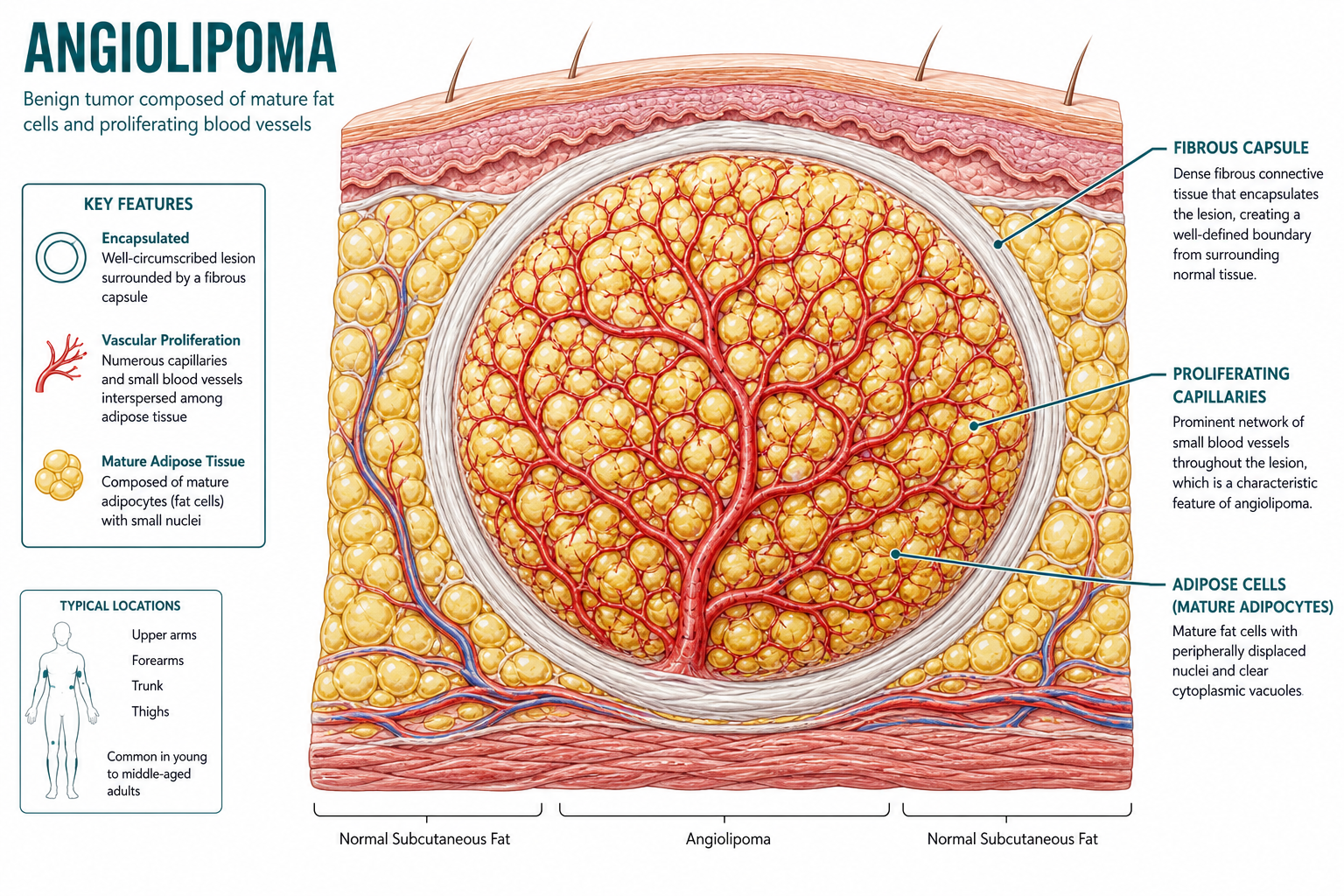
These tumors are almost always small, typically measuring between 1 and 4 centimeters, and they can appear as single or multiple lumps. When multiple angiolipomas develop at once, the condition is called angiolipomatosis. Histologically, the hallmark finding is a proliferation of capillary-sized blood vessels with fibrin thrombi (tiny clots) inside them, which no other lipoma subtype consistently shows [2].
Key structural facts:
The most important practical difference is pain. A standard lipoma is almost always painless, while an angiolipoma is tender or painful to the touch in the majority of cases [1]. This single feature is the primary reason patients seek medical attention.
FeatureRegular LipomaAngiolipomaCompositionFat cells onlyFat cells + blood vesselsPainRarely painfulUsually painful or tenderAge of onsetAny age, peaks 40-60Typically 20-30 yearsSex predominanceSlight male biasMore common in menMultiple lesionsPossibleMore commonMalignant potentialNoneNoneRecurrence after removalRareRareDiagnosis confirmed byClinical examHistology required [2]
Beyond pain, angiolipomas tend to appear earlier in life than ordinary lipomas. They also have a firmer texture because the vascular tissue adds density to the mass. On physical exam alone, distinguishing an angiolipoma from a lipoma, cyst, or other soft-tissue lump can be difficult, which is why a tissue sample examined under a microscope is needed for a definitive diagnosis [2].
For a broader comparison of soft-tissue lumps, the lipoma vs. cyst guide and the lipoma vs. tumor vs. sebaceous cyst overview are useful starting points.
Angiolipomas are benign and do not transform into cancer. After complete surgical removal, recurrence is rare [3]. However, it is critical to distinguish an angiolipoma from a liposarcoma, which is a malignant fatty tumor that can superficially resemble a lipoma.
Red flags that suggest a lump may not be a benign angiolipoma:
Any lump showing these features warrants urgent evaluation. The lipoma vs. liposarcoma symptoms guide explains the key warning signs in more detail.
"Angiolipomas are benign and do not become cancerous. Recurrence after complete surgical removal is rare." — Cleveland Clinic [3]
Because angiolipomas look similar to other soft-tissue masses on physical exam, a histological report (pathology) after removal is the only way to confirm the diagnosis with certainty [2].
Yes. Pain is the defining symptom of an angiolipoma and is often the reason patients seek treatment in the first place. Unlike the dull pressure a large ordinary lipoma might create, angiolipoma pain can be sharp, burning, or throbbing, and it is triggered by even light pressure [1].
The pain arises from the dense capillary network within the tumor. When blood vessels proliferate inside a confined capsule, they can compress nearby nerve endings. In some patients, the pain is constant; in others, it flares only when the area is pressed or bumped.
Factors that affect pain severity:
Pain that disrupts daily activities, interferes with sleep, or is worsening over time is a clear signal that treatment is needed rather than watchful waiting.
See a doctor promptly if a lump is painful, growing, or has any of the red-flag features listed below. Angiolipoma painful lipoma treatment is most straightforward when the tumor is still small and non-infiltrating.
Symptoms that warrant a medical evaluation:
Who is most likely to develop an angiolipoma?
Angiolipomas are most prevalent in men between the ages of 20 and 30, though they can occur in women and at other ages [1]. About 5% of cases are familial, meaning a genetic predisposition runs in some families [2]. There is also an observed association between angiolipomas and diabetes, as well as the use of certain antiretroviral medications [1].
If there is any family history of multiple lipomas or angiolipomas, mention this to the examining physician, as it may affect the diagnostic workup and monitoring plan.
A physician will begin with a physical examination, noting the lump's size, texture, mobility, and tenderness. However, a clinical exam alone cannot definitively confirm an angiolipoma diagnosis. Histological analysis of the removed tissue is required to identify the characteristic proliferating blood vessels and fibrin thrombi under a microscope [2].
Diagnostic pathway:
In straightforward cases with a classic presentation (young adult, tender forearm lump, soft and mobile), many experienced surgeons proceed directly to excision without pre-operative imaging. Imaging is more commonly ordered when the lump is large, deep, fixed, or rapidly growing.
Non-surgical options exist but have significant limitations. For patients who cannot undergo surgery due to medical conditions or personal preference, corticosteroid injections are the most commonly considered alternative [1].
Non-surgical options and their limitations:
Choose non-surgical management if: the patient has serious comorbidities that make anesthesia or surgery high-risk, the angiolipoma is very small and only mildly symptomatic, or the patient declines surgery after being fully informed of the options.
Choose surgical excision if: pain is moderate to severe, the lump is growing, diagnosis is uncertain, or quality of life is affected.
For a detailed comparison of surgical and non-surgical approaches, the lipoma treatments guide covers the full range of options.
Surgical excision is the primary and most effective treatment for symptomatic angiolipomas [3]. The procedure is typically performed under local anesthesia as an outpatient (day surgery) and takes between 20 and 45 minutes depending on the size and location of the tumor.
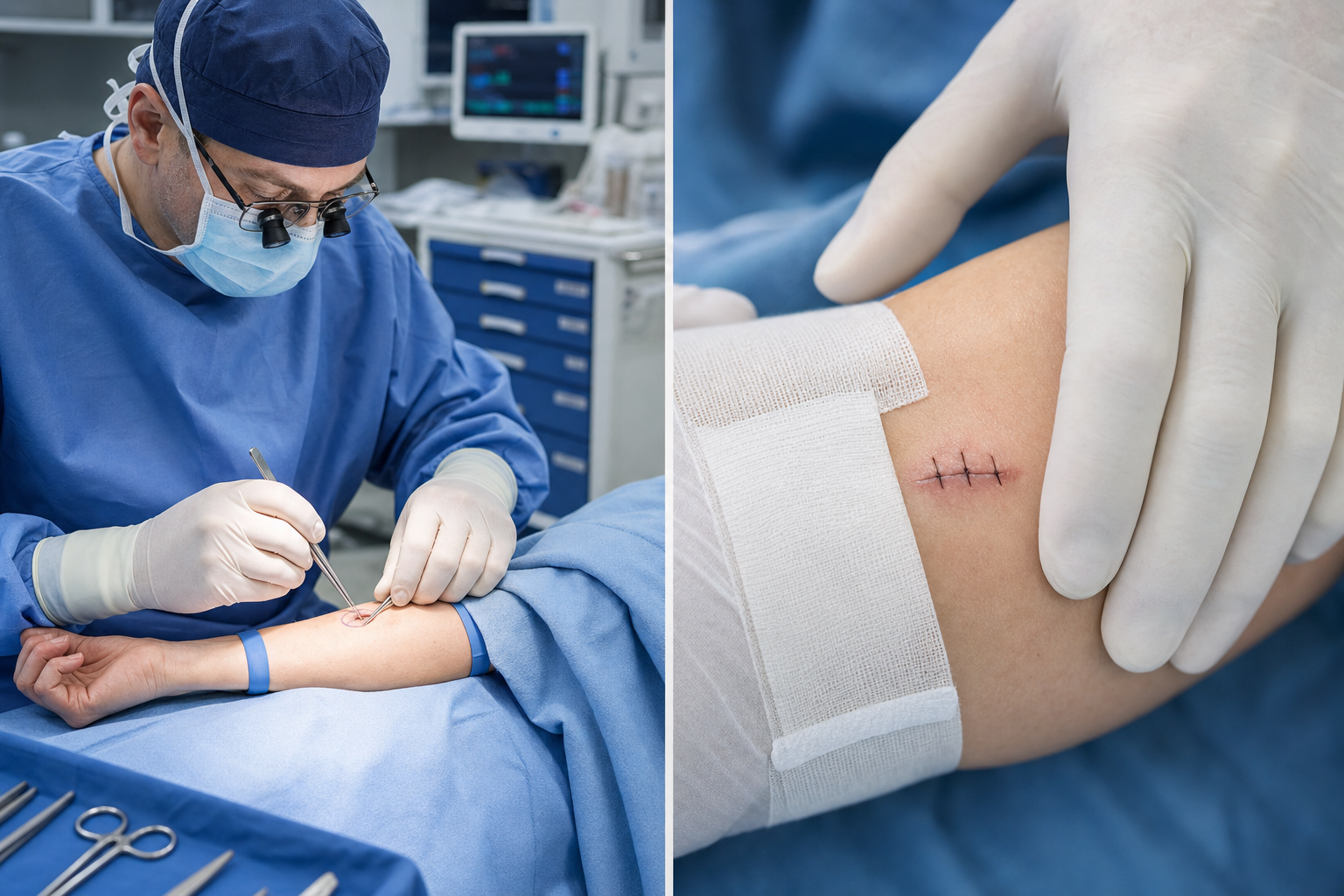
Step-by-step overview of the excision procedure:
Surgical considerations specific to angiolipomas:
For patients wanting to understand what the recovery period involves, the lipoma removal recovery guide provides a detailed timeline.
The cost of angiolipoma removal varies depending on the clinic, the surgeon's experience, the size and location of the tumor, and whether pathology fees are included. In Canada, private clinic fees for lipoma and angiolipoma excision generally range from approximately $400 to $1,500 CAD per lesion, though larger or more complex cases may cost more.
Cost factors to consider:
For current pricing details, the lipoma removal cost guide for 2026 and the OHIP and insurance coverage article are the best references.
Ignoring a painful angiolipoma does not cause it to resolve on its own. Unlike some inflammatory conditions, angiolipomas do not spontaneously disappear. Over time, untreated angiolipomas may:
There is no evidence that an angiolipoma will become malignant if left untreated, but the quality-of-life impact of ongoing pain is a legitimate medical concern. Delaying treatment is a reasonable choice only when symptoms are very mild and the patient is being monitored regularly.
Common mistakes people make when treating lipomas and angiolipomas:
Diet and lifestyle changes cannot eliminate an angiolipoma, but they may have a modest effect on overall soft-tissue health and symptom management. There is no clinical evidence that any specific diet causes angiolipomas to shrink or disappear.
What the evidence does and does not support:
Are there any natural remedies for angiolipoma discomfort?
No natural remedy has been clinically proven to treat or resolve an angiolipoma. Turmeric, castor oil, and herbal supplements are sometimes mentioned in online forums, but there is no peer-reviewed evidence supporting their use for this condition. These approaches should not replace medical evaluation, particularly when pain is significant or a lump is growing.
The most appropriate specialists for angiolipoma evaluation and treatment are dermatologists and general surgeons with experience in minor soft-tissue procedures. Either can perform excision under local anesthesia in an outpatient setting.
Choosing the right specialist:
For guidance on choosing between specialists, the dermatologist vs. general surgeon for lipoma removal guide walks through the decision in practical terms.
When selecting a clinic, look for:
The best lipoma clinics in Toronto comparison is a useful resource for patients in the Greater Toronto Area.
Use this framework to decide on the right next step based on symptoms and circumstances.
Step 1: Assess the lump
Step 2: Evaluate pain level
Step 3: Get a professional diagnosis
Step 4: Discuss treatment options
Step 5: Plan recovery
Q: Is an angiolipoma the same as a lipoma?
An angiolipoma is a subtype of lipoma, but it contains a significant network of blood vessels in addition to fat cells. The vascular component is what causes the pain that distinguishes it from a standard lipoma.
Q: Can an angiolipoma go away on its own?
No. Angiolipomas do not spontaneously resolve. Without treatment, they typically remain stable or grow slowly over time.
Q: Is angiolipoma removal covered by OHIP in Ontario?
Generally, OHIP does not cover lipoma or angiolipoma removal unless there is functional impairment or diagnostic uncertainty. Most patients pay privately. Check with your clinic and insurer for specifics.
Q: How long does recovery take after angiolipoma excision?
Most patients return to light daily activities within two to three days. The incision typically heals within two to four weeks. Strenuous activity involving the surgical area should be avoided for two to four weeks.
Q: Will the angiolipoma come back after surgery?
Recurrence after complete surgical removal is rare [3]. The key is ensuring the entire capsule is removed during excision.
Q: Can I have multiple angiolipomas removed at the same time?
Yes. A surgeon can often remove multiple angiolipomas in a single session, which reduces overall recovery time and may lower the total cost per lesion.
Q: Do angiolipomas hurt more in cold weather?
Some patients report increased tenderness in cold conditions, possibly due to vascular changes in the tumor. This has not been formally studied but is a commonly reported symptom.
Q: What is the difference between an infiltrating and a non-infiltrating angiolipoma?
A non-infiltrating angiolipoma has a clear fibrous capsule and is confined to the subcutaneous fat layer, making it straightforward to remove completely. An infiltrating angiolipoma lacks a clear capsule and extends into surrounding muscle or deeper tissue, requiring wider excision and carrying a slightly higher recurrence risk.
Q: Should I be worried if I have multiple angiolipomas?
Multiple angiolipomas (angiolipomatosis) are not dangerous but can be more painful and may require staged removal. Inform your physician of all lesions so a comprehensive treatment plan can be made.
Q: What happens if an angiolipoma is not removed?
If left untreated, a painful angiolipoma typically remains or grows slowly. It will not become cancerous, but ongoing pain and potential growth are reasons most physicians recommend removal for symptomatic cases.
Q: How do I find a qualified surgeon for angiolipoma removal?
Look for a dermatologist or general surgeon with specific experience in minor soft-tissue excisions. Clinics that specialize in lipoma removal and send all specimens to pathology are the best choice.
Q: Is the procedure painful?
The injection of local anesthetic causes a brief sting. Once the area is numb, the excision itself is painless. Mild soreness at the site is normal for several days after the procedure.
Angiolipoma painful lipoma treatment is a well-defined clinical pathway: accurate diagnosis, followed by surgical excision under local anesthesia for symptomatic cases. The procedure is straightforward for non-infiltrating tumors, carries a low recurrence rate, and provides lasting pain relief.
Actionable next steps:
For patients in the Greater Toronto Area, the Minor Surgery Center lipoma removal service offers experienced surgical care with pathology confirmation and clear pricing. Consulting a qualified surgeon is the single most important step toward resolving the pain and uncertainty that an angiolipoma creates.
[1] Medical News Today - Angiolipoma - https://www.medicalnewstoday.com/articles/321824
[2] DermNet NZ - Angiolipoma - https://dermnetnz.org/topics/angiolipoma
[3] Cleveland Clinic - Angiolipoma - https://my.clevelandclinic.org/health/diseases/21958-angiolipoma
[4] Mayo Clinic - Lipoma Diagnosis and Treatment - https://www.mayoclinic.org/diseases-conditions/lipoma/diagnosis-treatment/drc-20374474
Meta Title: Angiolipoma Painful Lipoma Treatment: Options & Costs 2026
Meta Description: Learn how angiolipoma painful lipoma treatment works, from diagnosis to surgical excision costs, non-surgical options, recovery, and when to see a specialist.
Tags: angiolipoma, painful lipoma, lipoma treatment, angiolipoma removal, lipoma excision, soft tissue tumor, lipoma surgery, benign tumor treatment, lipoma pain, subcutaneous lump, lipoma diagnosis, minor surgery