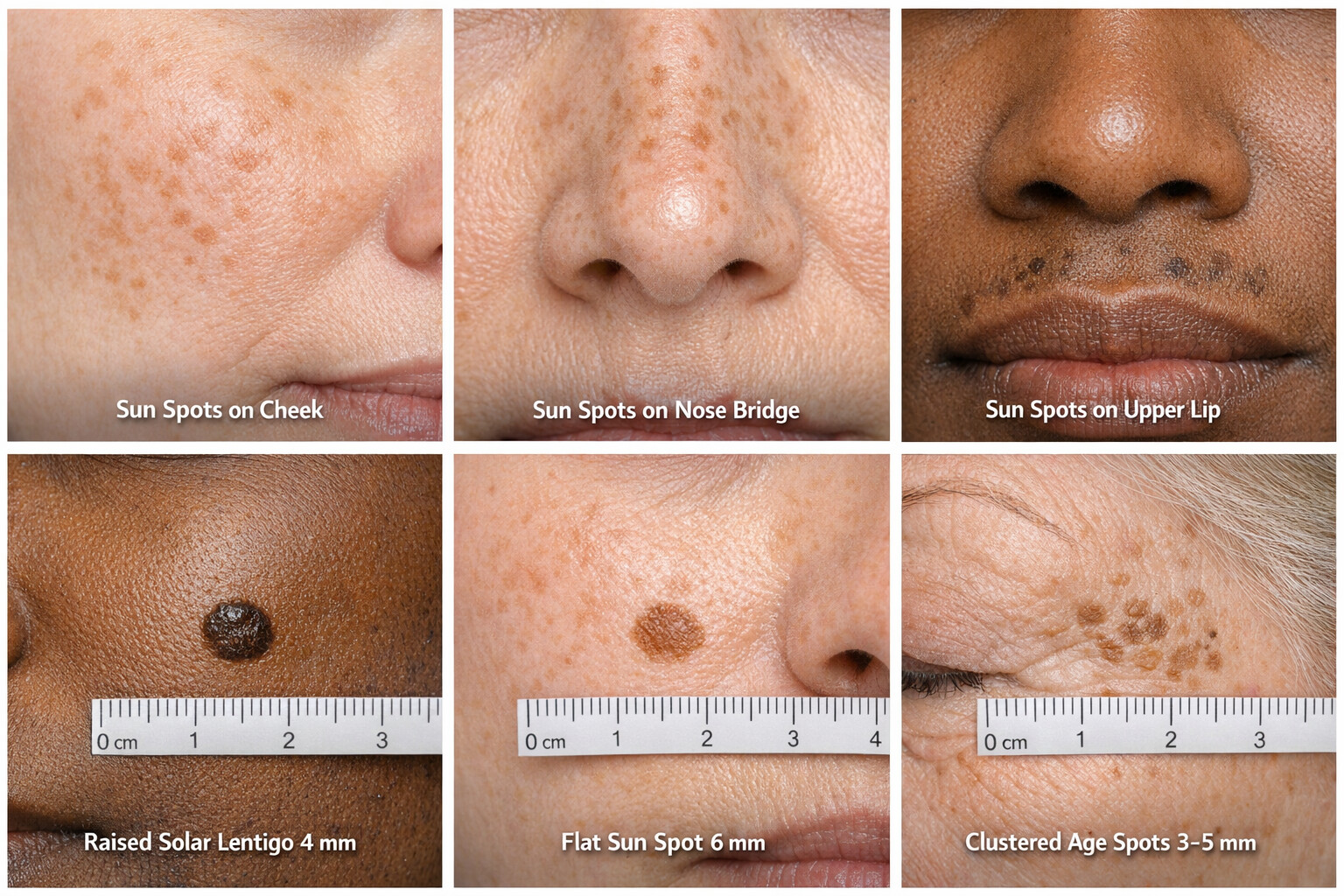
Sun Spots on the Face: Causes, Pictures, and the Most Effective Treatments
Sun Spots on the Face: Causes, Pictures, and the Most Effective Treatments
Sun spots on the face can appear seemingly overnight, leaving many people wondering where these dark patches came from and how to get rid of them. These flat, brown marks—also called age spots, liver spots, or solar lentigines—are one of the most common skin concerns affecting adults over 40, though they can develop at any age with sufficient sun exposure [1].
Understanding what causes sun spots on face and knowing the most effective treatment options can help restore an even skin tone and prevent future pigmentation issues. This comprehensive guide explores everything from the underlying causes of facial sun spots to proven professional treatments and at-home remedies that actually work.
Key Takeaways
Sun spots are caused by UV exposure: Years of cumulative sun damage trigger excess melanin production, creating flat brown patches primarily on sun-exposed areas like the face, hands, and shoulders [2].
Prevention is crucial: Daily broad-spectrum SPF 30+ sunscreen is the single most important step to prevent new sun spots and stop existing ones from darkening [3].
Multiple effective treatments exist: Professional options like laser therapy, chemical peels, and prescription retinoids can significantly fade sun spots, while consistent use of vitamin C and niacinamide may provide gradual improvement [4].
Sun spots are generally harmless: While cosmetically concerning, most sun spots pose no health risk, but any changing or irregular spots should be evaluated by a dermatologist to rule out skin cancer [5].
Results require patience: Whether using professional treatments or at-home products, visible improvement typically takes 4-12 weeks of consistent treatment [6].
What Are Sun Spots on Face? Understanding the Basics
Sun spots on face are flat, darkened patches of skin that develop after years of exposure to ultraviolet (UV) radiation from the sun or tanning beds. These benign (non-cancerous) skin changes appear when melanocytes—the cells responsible for producing skin pigment—go into overdrive in specific areas [7].
The Science Behind Sun Spots
When UV rays penetrate the skin, they trigger melanocytes to produce melanin as a protective response. Melanin is the pigment that gives skin its color and acts as a natural shield against UV damage. Over time, repeated sun exposure can cause melanocytes to cluster together or produce excess melanin in concentrated areas, resulting in the characteristic brown or tan spots [8].
Key characteristics of sun spots include:
Flat appearance: Unlike moles or skin tags, sun spots don't raise above the skin surface
Varied sizes: Can range from freckle-sized (1-2mm) to larger than 1 centimeter in diameter
Brown to black coloring: Usually tan, brown, or dark brown, though color intensity varies
Well-defined borders: Typically have clear, distinct edges
Common locations: Face, hands, shoulders, arms, and upper back—areas with the most sun exposure
Sun Spots vs. Other Skin Conditions
It's important to distinguish sun spots from other pigmentation issues:
ConditionAppearanceCauseTextureSun SpotsFlat, brown, well-definedUV exposure over timeSmooth, same as surrounding skinMelasmaLarger patches, symmetricalHormones + sun exposureFlat, smoothFrecklesSmall, scattered, lighterGenetics + sun exposureFlat, fade in winterSeborrheic KeratosisWaxy, stuck-on appearanceAge-related growthRaised, rough textureMolesUsually darker, may be raisedGenetic + sun exposureCan be raised or flat
Sun spots are completely harmless from a health perspective, but many people seek treatment for cosmetic reasons. However, any spot that changes in size, shape, color, or texture should be evaluated by a dermatologist to rule out melanoma or other skin cancers [9].
What Causes Sun Spots on Face? 🌞
Understanding the root causes of sun spots on face helps explain why they develop and how to prevent new ones from forming. While UV exposure is the primary culprit, several contributing factors influence who develops these pigmentation issues and when they appear.
UV Radiation: The Primary Cause
Ultraviolet radiation is the leading cause of sun spots. Both UVA and UVB rays damage skin cells and trigger melanin production:
UVA rays penetrate deep into the dermis (the skin's thickest layer) and cause long-term damage that accumulates over decades
UVB rays affect the skin's outer layer and cause sunburn, contributing to immediate and cumulative damage
Cumulative exposure matters most—sun spots typically appear after years or decades of regular sun exposure, even without severe sunburns [10]
The damage is cumulative, meaning every minute spent in the sun without protection adds to the total UV exposure that eventually manifests as sun spots.
Age and Skin Changes
While called "age spots," these marks aren't caused by aging itself but rather by the accumulated sun exposure over a lifetime. However, age-related factors do play a role:
Decreased skin cell turnover: As skin ages, it regenerates more slowly, allowing pigmented cells to remain visible longer [11]
Reduced melanocyte regulation: Older skin has less efficient mechanisms for controlling melanin production
Thinner skin: Age-related thinning makes pigmentation more visible
Most common after 40: Sun spots typically appear in middle age when decades of sun exposure catch up with skin health
Skin Type and Genetics 🧬
Certain individuals are more prone to developing sun spots:
Higher risk skin types:
Fair skin (Fitzpatrick skin types I-II) that burns easily
Light eyes and blonde or red hair
Family history of sun spots or hyperpigmentation
Celtic, Northern European, or East Asian ancestry
Lower risk (but not immune):
Darker skin tones have more natural melanin protection but can still develop sun spots
Individuals with Mediterranean, African, or South Asian ancestry typically develop spots later or less frequently [12]
Hormonal Influences
Hormonal changes can exacerbate sun-related pigmentation:
Pregnancy: Hormonal fluctuations can increase melanin production, making sun exposure more likely to cause spots
Birth control pills: Estrogen-containing contraceptives may increase photosensitivity
Hormone replacement therapy: Can make skin more reactive to UV exposure [13]
Other Contributing Factors
Several additional factors increase sun spot risk:
✓ Tanning bed use: Delivers concentrated UV radiation that accelerates skin damage ✓ Photosensitizing medications: Certain antibiotics, diuretics, and anti-inflammatory drugs increase sun sensitivity ✓ Previous skin injuries: Scars or inflammation may develop darker pigmentation with sun exposure ✓ Lack of sun protection: Inconsistent or absent sunscreen use dramatically increases risk ✓ Geographic location: Living closer to the equator or at high altitudes increases UV exposure
Sun Spots on Specific Facial Areas
Different facial areas develop sun spots for specific reasons:
Sun spots on nose: The nose protrudes from the face, receiving direct sun exposure from multiple angles throughout the day. This makes it one of the most common locations for sun spots [14].
Sun spots on lips: The lips have very thin skin with minimal melanin protection. Sun spots on lips (also called solar lentigines of the lip) require special attention as this area has higher risk for actinic keratosis—a precancerous condition that appears similar to sun spots [15].
Raised sun spots on face: While typical sun spots are flat, some people develop slightly raised lesions. These may be seborrheic keratoses (benign growths) rather than true sun spots and should be evaluated by a dermatologist to confirm they're not concerning [16].
Identifying Sun Spots: Pictures and Visual Guide 📸
Recognizing sun spots on face accurately helps determine the appropriate treatment approach and ensures that potentially concerning skin changes don't go unnoticed. This section provides detailed visual descriptions to help identify common presentations.
Typical Sun Spot Appearance
Classic sun spots display these features:
Color: Light tan to dark brown, sometimes appearing almost black on very fair skin
Size: Typically 2mm to 20mm in diameter (about the size of a pencil eraser or smaller)
Shape: Oval or round with relatively smooth, well-defined borders
Texture: Completely flat—if you close your eyes and run your finger over the spot, you shouldn't feel any difference from surrounding skin
Distribution: Often appear in clusters on high-exposure areas like cheeks, temples, forehead, and nose bridge
Common Locations on the Face
Sun spots develop where UV exposure is greatest:
High-frequency areas:
Cheekbones and upper cheeks - Receive direct overhead sun exposure
Forehead - Particularly the center and sides
Temples - Often overlooked during sunscreen application
Bridge and tip of nose - Maximum sun exposure due to facial prominence
Upper lip area - Especially in women, possibly hormone-influenced
Chin - Less common but still susceptible
Less common but possible:
Eyelids (though rare due to thinner, more protected skin)
Jawline and lower face (more shaded by facial structure)
Around the ears (often neglected during sun protection)
Variations in Appearance Across Skin Tones
Sun spots manifest differently depending on natural skin color:
Fair skin (Fitzpatrick I-II):
Spots appear medium to dark brown
High contrast against pale skin makes them very noticeable
May have reddish or tan undertones
More numerous and appear at younger ages
Medium skin (Fitzpatrick III-IV):
Spots range from tan to deep brown
Moderate contrast with surrounding skin
May blend more naturally but still visible
Can develop melasma-like patches alongside discrete spots
Dark skin (Fitzpatrick V-VI):
Spots appear as darker brown to black patches
Lower contrast but still distinguishable
May be fewer in number but more persistent
Post-inflammatory hyperpigmentation often co-exists [17]
When to See a Dermatologist ⚠️
While sun spots are benign, certain warning signs require professional evaluation:
The ABCDE rule for concerning spots:
A - Asymmetry: One half doesn't match the other half
B - Border: Edges are irregular, ragged, notched, or blurred
C - Color: Color isn't uniform; includes shades of brown, black, red, white, or blue
D - Diameter: Larger than 6mm (about the size of a pencil eraser) or growing
E - Evolving: Changes in size, shape, color, elevation, or symptoms like bleeding or itching [18]
Additional warning signs:
Spots that appear suddenly rather than gradually
Raised sun spots on face that develop a rough, scaly texture (possible actinic keratosis)
Spots that bleed, itch, or become painful
Rapid darkening or spreading of existing spots
Sun spots on lips that develop cracks, sores, or white patches
Important Note: When in doubt, get it checked out. Dermatologists can perform skin examinations and, if necessary, biopsies to rule out melanoma or precancerous changes. Early detection of skin cancer is crucial for successful treatment [19].
Differentiating Sun Spots from Skin Cancer
Understanding the differences helps identify when professional evaluation is needed:
Sun spots (benign):
Uniform light to dark brown color
Flat with consistent texture
Stable over time (may darken slightly with continued sun exposure)
Multiple similar spots in sun-exposed areas
No symptoms (no itching, bleeding, or pain)
Melanoma warning signs:
Irregular, varied coloring (multiple shades)
Asymmetrical shape
Irregular or poorly defined borders
Changing appearance over weeks or months
May be raised or have uneven surface
Can develop within existing moles or appear as new spots [20]
Sun Spots on Face Treatment: Professional Options 💉
Professional treatments for sun spots on face offer the most dramatic and rapid results, typically showing visible improvement within weeks to months. These evidence-based procedures are performed by dermatologists, plastic surgeons, or trained medical aestheticians.
Laser Therapy and Intense Pulsed Light (IPL)
Laser treatments are among the most effective options for removing sun spots:
How it works:
Concentrated light energy targets melanin in sun spots
Heat from the laser breaks down excess pigment
Body's immune system gradually removes fragmented melanin
Addresses pigmentation, cell turnover, and inflammation
Faster results than single-ingredient products
Corticosteroid reduces irritation from other ingredients
Typically used for 8-12 weeks maximum
Cost: $30-$200 per prescription, depending on insurance coverage
Choosing the Right Professional Treatment
Consider these factors when selecting a treatment:
✓ Skin tone: Darker skin requires gentler approaches to avoid post-inflammatory hyperpigmentation ✓ Number of spots: Laser works well for multiple spots; cryotherapy better for individual lesions ✓ Budget: Chemical peels and topicals are most affordable; lasers are most expensive ✓ Downtime tolerance: IPL and light peels have minimal downtime; deeper treatments require recovery time ✓ Desired speed of results: Lasers provide fastest results; topicals take longest but have lowest risk
Consultation is essential: A board-certified dermatologist can assess your specific situation and recommend the most appropriate treatment plan for your skin type, spot severity, and goals.
How to Get Rid of Sun Spots on Face: At-Home Treatments and Prevention 🏠
While professional treatments offer the fastest results, consistent at-home care can gradually fade sun spots on face and prevent new ones from forming. These approaches work best for mild to moderate pigmentation and require patience and diligence.
Over-the-Counter Topical Treatments
Vitamin C (L-Ascorbic Acid)
One of the most researched ingredients for hyperpigmentation:
How it works: Inhibits tyrosinase (enzyme needed for melanin production), provides antioxidant protection against UV damage, and brightens overall skin tone [29]
Effective concentration: 10-20% L-ascorbic acid or stable derivatives like sodium ascorbyl phosphate
Application: Apply to clean skin every morning before sunscreen
Timeline: 4-12 weeks for visible improvement
Best for: All skin types, overall brightening plus spot treatment
Recommended products:
SkinCeuticals C E Ferulic (15% L-ascorbic acid)
Timeless Vitamin C + E Ferulic Acid Serum (20% vitamin C)
Paula's Choice C15 Super Booster (15% vitamin C)
Niacinamide (Vitamin B3)
Gentle yet effective for reducing pigmentation:
How it works: Inhibits melanosome transfer from melanocytes to skin cells, reducing visible pigmentation [30]
Effective concentration: 4-10%
Application: Morning or evening, compatible with most other ingredients
Timeline: 6-8 weeks for noticeable results
Best for: Sensitive skin, those who can't tolerate stronger actives
Alpha Hydroxy Acids (AHAs)
Chemical exfoliants that promote cell turnover:
Glycolic acid: Smallest molecule, penetrates deeply, 5-10% concentration for home use
Lactic acid: Gentler than glycolic, good for sensitive skin, 5-10% concentration
How they work: Dissolve bonds between dead skin cells, accelerating removal of pigmented cells [31]
Application: Evening use, 2-3 times per week initially
Timeline: 8-12 weeks for improvement
Caution: Increases sun sensitivity; strict sunscreen use essential
Kojic Acid
Natural skin lightener derived from fungi:
How it works: Inhibits tyrosinase enzyme, preventing melanin formation
Effective concentration: 1-4%
Application: Once or twice daily
Timeline: 4-8 weeks for visible results
Note: Can cause irritation in some individuals; patch test first [32]
Azelaic Acid
Multi-functional ingredient for pigmentation:
How it works: Inhibits tyrosinase, has anti-inflammatory properties, normalizes skin cell turnover
Effective concentration: 10-20% (prescription strength 15-20%, OTC typically 10%)
Application: Once or twice daily
Timeline: 8-12 weeks for improvement
Best for: Sensitive skin, rosacea-prone skin, those seeking gentle option [33]
Retinol (Over-the-Counter Retinoids)
Vitamin A derivatives that accelerate cell renewal:
How it works: Increases cell turnover rate, disperses melanin, prevents new pigmentation
Effective concentration: 0.25-1% for beginners, up to 2% for experienced users
Application: Evening use, start 2-3 times per week, gradually increase
Timeline: 12-16 weeks for visible improvement (slower than prescription tretinoin)
Caution: Causes initial dryness and peeling; increases sun sensitivity [34]
Creating an Effective At-Home Treatment Routine
Morning routine for sun spot treatment:
Gentle cleanser - Remove overnight oils without stripping skin
Vitamin C serum - Apply to clean, dry skin for brightening and antioxidant protection
Niacinamide serum (optional) - Can layer with vitamin C or use separately
Moisturizer - Hydrate and support skin barrier
Broad-spectrum SPF 30-50 - Most critical step for preventing darkening and new spots
Evening routine for sun spot treatment:
Double cleanse - Oil cleanser first, then water-based cleanser to remove all sunscreen and debris
Exfoliating acid (2-3x per week) - Glycolic, lactic, or azelaic acid
Treatment serum - Kojic acid, niacinamide, or targeted spot treatment
Retinol (alternate nights with exfoliating acids) - Start slow to build tolerance
Rich moisturizer - Support skin barrier and minimize irritation from actives
Pro Tip: Don't use too many active ingredients at once. Start with one or two products, use consistently for 4-6 weeks, then add additional treatments if needed. Overloading skin can cause irritation and worsen pigmentation.
Natural and Home Remedies
While less scientifically proven than commercial products, some natural ingredients show promise:
Licorice root extract:
Contains glabridin, which inhibits tyrosinase
Available in serums and creams (2-5% concentration)
Gentle option for sensitive skin [35]
Aloe vera:
Contains aloin, which may have depigmenting effects
Primarily beneficial for soothing and hydration
Limited evidence for spot fading alone
Green tea extract:
Powerful antioxidant that may reduce UV-induced pigmentation
More effective for prevention than treatment
Look for products with EGCG (epigallocatechin gallate) [36]
Vitamin E (tocopherol):
Antioxidant that works synergistically with vitamin C
More effective for prevention than fading existing spots
Often included in vitamin C serums for stability
⚠️ Remedies to avoid:
Lemon juice (too acidic, causes irritation and photosensitivity)
Apple cider vinegar (can damage skin barrier)
Hydrogen peroxide (causes oxidative damage)
Baking soda (disrupts skin pH)
Sun Protection: The Foundation of Treatment and Prevention ☀️
No treatment will succeed without rigorous sun protection. UV exposure will darken existing spots and create new ones, undoing all treatment progress.
Essential sun protection strategies:
Daily sunscreen application:
Minimum SPF 30, preferably SPF 50 for face
Broad-spectrum protection (UVA and UVB)
Apply 1/4 teaspoon for face and neck (about a nickel-sized amount)
Reapply every 2 hours when outdoors, or after swimming/sweating
Apply 15 minutes before sun exposure for maximum effectiveness [37]
Best sunscreen types for sun spot prevention:
Sunscreen TypeProsConsBest ForMineral (zinc oxide, titanium dioxide)Immediate protection, gentle, stableCan leave white cast, thicker textureSensitive skin, post-procedureChemical (avobenzone, octinoxate)Lightweight, no white cast, elegant feelMay irritate sensitive skin, requires 15-min absorptionDaily wear, cosmetic eleganceTinted mineralEvens skin tone, no white cast, added iron oxide protectionLimited shade rangeThose seeking coverage + protection
Recommended sunscreens for hyperpigmentation-prone skin:
✓ Seek shade during peak UV hours (10 AM - 4 PM) ✓ Wear wide-brimmed hats (3+ inch brim) to shade face ✓ Use UV-protective sunglasses to protect delicate eye area ✓ Choose sun-protective clothing with UPF rating when possible ✓ Avoid tanning beds completely—they significantly accelerate sun damage ✓ Apply sunscreen to often-missed areas: hairline, ears, neck, hands
Lifestyle Factors That Support Treatment
Diet and supplements:
Antioxidant-rich foods: Berries, leafy greens, tomatoes (lycopene), and green tea support skin health from within
Omega-3 fatty acids: Found in fish, walnuts, and flaxseed; support skin barrier function
Vitamin C foods: Citrus, bell peppers, strawberries aid collagen production
Oral supplements: Polypodium leucotomos extract (240mg daily) may provide additional UV protection [38]
Skincare habits:
Gentle cleansing: Avoid harsh scrubbing that can worsen pigmentation
Consistent routine: Results require daily adherence for months
Patience: Most at-home treatments take 8-16 weeks for visible improvement
Professional guidance: Consult a dermatologist if no improvement after 3 months
Realistic Expectations for At-Home Treatments
What at-home treatments CAN do:
Gradually fade mild to moderate sun spots (30-60% improvement over 3-6 months)
Prevent new spots from forming with consistent sun protection
Improve overall skin tone and texture
Maintain results from professional treatments
What at-home treatments CANNOT do:
Completely remove deep, dark, or long-standing sun spots
Provide results as quickly as professional treatments
Work without strict sun protection compliance
Guarantee results for everyone (individual responses vary)
For best results, many dermatologists recommend combining professional treatments with consistent at-home care—professional treatments jumpstart improvement while at-home maintenance sustains results and prevents recurrence.
Special Considerations: Raised Sun Spots, Sun Spots on Nose and Lips 🔍
Certain presentations of facial sun spots require special attention due to their unique characteristics, locations, or potential health implications.
Raised Sun Spots on Face
When sun spots aren't flat, they may be something other than typical solar lentigines:
Seborrheic keratoses:
Benign, wart-like growths that appear "stuck on" to skin
Tan, brown, or black with waxy or scaly texture
Slightly raised with well-defined borders
Extremely common after age 50
Can be mistaken for sun spots but have different texture
Treatment options: Cryotherapy, curettage (scraping), or laser removal
Not cancerous but should be confirmed by dermatologist [39]
Actinic keratoses (AKs):
Precancerous lesions caused by UV damage
Rough, scaly, or crusty texture
Pink, red, or brown coloring
May feel like sandpaper when touched
Requires medical treatment to prevent progression to squamous cell carcinoma
Treatment: Cryotherapy, topical medications (5-fluorouracil, imiquimod), or photodynamic therapy
Important: Any rough, raised spots should be evaluated immediately [40]
Dermatofibromas:
Firm, raised nodules that may be brown
Dimple inward when squeezed
Benign but persistent
May develop after minor skin injury
When to worry about raised spots:
Rapid growth or change in appearance
Bleeding, crusting, or ulceration
Irregular borders or multiple colors
Painful or tender to touch
Any uncertainty about the nature of the lesion
Critical reminder: Raised lesions on the face should always be evaluated by a dermatologist to rule out skin cancer, especially if they're changing or have appeared recently.
Sun Spots on Nose
The nose is particularly vulnerable to sun damage and frequently develops sun spots:
Why the nose is high-risk:
Prominent facial feature that receives direct sun exposure from multiple angles
Often missed during sunscreen application, especially the sides and tip
Thin skin on the nose bridge makes pigmentation more visible
High sebum production can make sunscreen wear off faster
Treatment considerations for nose sun spots:
Challenges:
Curved surface makes even application of topicals difficult
Higher risk of post-inflammatory hyperpigmentation from aggressive treatments
More visible location increases cosmetic concern
Proximity to eyes requires extra caution with chemical treatments
Best treatment approaches:
Laser therapy: Highly effective for nose spots; Q-switched lasers work well
Light chemical peels: Can treat entire nose area uniformly
Targeted topicals: Vitamin C, niacinamide, and retinol applied carefully
Combination approach: Professional treatment followed by diligent at-home care
Prevention strategies for sun spots on nose:
Apply extra sunscreen to nose, reapplying frequently
Use physical sunscreens (zinc oxide) that stay on better
Zinc oxide lip products: Provide superior protection
Wide-brimmed hats: Shade lips from direct sun
Avoid tanning beds: Particularly damaging to delicate lip tissue
Recommended SPF lip products:
Sun Bum SPF 30 Sunscreen Lip Balm
EltaMD UV Lip Balm SPF 36
Supergoop! Play Lip Balm SPF 30
Colorescience Sunforgettable Lip Shine SPF 35
Monitoring and Follow-Up Care
For all sun spots, especially those in special locations:
Regular self-examinations:
Check facial sun spots monthly for changes
Take photos to track evolution over time
Note any new spots or changes in existing ones
Pay special attention to raised or textured areas
Professional skin checks:
Annual full-body skin examination by dermatologist
More frequent checks if you have risk factors (fair skin, history of skin cancer, numerous sun spots)
Immediate evaluation of any concerning changes
Documentation:
Keep records of when spots appeared
Note which treatments you've tried and their effectiveness
Share this information with your dermatologist
Preventing Future Sun Spots: Long-Term Skin Health Strategies 🛡️
Prevention is always more effective and less expensive than treatment. Implementing comprehensive sun protection and skin health strategies now will prevent new sun spots from forming and protect against more serious UV-related damage.
Comprehensive Sun Protection Protocol
Daily sunscreen routine (365 days per year):
Morning application:
Apply sunscreen as the last step of your skincare routine, before makeup
Use 1/4 teaspoon for face and neck (approximately two finger-lengths of product)
Don't forget: ears, hairline, neck, chest, and backs of hands
Allow to absorb for 15 minutes before sun exposure (chemical sunscreens)
Mineral sunscreens provide immediate protection
Reapplication schedule:
Every 2 hours when outdoors
Immediately after swimming or heavy sweating
After toweling off face
Mid-day touch-up even when indoors near windows (UVA penetrates glass)
Sunscreen selection criteria:
Broad-spectrum (protects against UVA and UVB)
SPF 30 minimum, SPF 50 preferred for face
Water-resistant if swimming or exercising
Contains antioxidants (vitamin C, vitamin E, niacinamide) for added protection
Tinted formulas with iron oxides provide protection against visible light that can trigger pigmentation [43]
Protective Clothing and Accessories
Sun-protective wardrobe essentials:
Wide-brimmed hats:
Minimum 3-inch brim all around
UPF-rated fabrics preferred
Tightly woven materials (less light penetration)
Darker colors provide more UV protection than light colors
Sunglasses:
100% UV protection (UVA and UVB blocking)
Wraparound styles protect delicate eye area and prevent crow's feet sun damage
Larger frames provide more coverage
Polarized lenses reduce glare but don't necessarily block more UV (check UV rating separately)
UPF clothing:
UPF 50+ rated clothing blocks 98% of UV radiation
Especially useful for outdoor activities, beach, or high-altitude locations
Many athletic brands now offer UPF-rated options
Long sleeves and high collars protect often-exposed areas
Environmental and Behavioral Modifications
Timing outdoor activities:
Avoid peak UV hours (10 AM - 4 PM) when possible
UV index is highest midday; check daily UV index forecasts
Shadows shorter than your height = very high UV exposure
Cloudy days still require sun protection (up to 80% of UV penetrates clouds) [44]
Seeking shade:
Use umbrellas, trees, or architectural shade when outdoors
Remember: shade reduces but doesn't eliminate UV exposure
Sand, water, and concrete reflect UV rays (up to 25% additional exposure)
Sitting under a tree provides only partial protection
Avoiding tanning beds:
Tanning beds emit concentrated UVA radiation
Increase melanoma risk by 75% when used before age 35 [45]
No such thing as a "safe tan" from tanning beds
Self-tanners (DHA-based products) are safe alternatives for bronzed appearance
Skincare Routine for Prevention
Antioxidant protection:
Morning antioxidant serums:
Vitamin C (15-20%): Neutralizes free radicals from UV exposure, boosts sunscreen effectiveness
Vitamin E: Works synergistically with vitamin C for enhanced protection
Ferulic acid: Stabilizes vitamins C and E, provides additional antioxidant benefits
Stay hydrated: Well-hydrated skin is more resilient to environmental stressors
Manage stress: Chronic stress impairs skin barrier function and repair mechanisms
Get adequate sleep: Skin repairs itself during sleep; 7-9 hours nightly supports healthy cell turnover
Regular Skin Monitoring
Self-examination routine:
Monthly skin checks:
Examine face in good lighting with magnifying mirror
Note any new spots or changes in existing ones
Take photos for comparison over time
Check all sun-exposed areas: face, neck, chest, hands, arms
What to look for:
New brown spots appearing
Existing spots getting darker or larger
Changes in border, shape, or color
Development of rough texture
Any spots that look different from others ("ugly duckling sign")
Professional monitoring:
Annual skin cancer screening by dermatologist
More frequent visits (every 3-6 months) if you have:
History of skin cancer
Numerous atypical moles
Fair skin with extensive sun damage
Family history of melanoma
Immunosuppression
Technology-assisted monitoring:
Smartphone apps (e.g., SkinVision, Miiskin) for tracking spots over time
Dermoscopy during professional exams for detailed spot analysis
Total body photography for high-risk patients
AI-assisted screening tools (emerging technology)
Creating a Sustainable Prevention Plan
Daily non-negotiables: ✓ Morning sunscreen application ✓ Sunscreen reapplication when outdoors ✓ Antioxidant serum under sunscreen ✓ Wide-brimmed hat for extended outdoor time
Weekly habits: ✓ Exfoliating treatment (AHA/BHA) to maintain even skin tone ✓ Retinoid application 2-3x per week ✓ Deep conditioning mask to support barrier function
Monthly practices: ✓ Self-skin examination ✓ Review and replenish sun protection products ✓ Assess skincare routine effectiveness
Annual commitments: ✓ Professional skin cancer screening ✓ Update sun protection strategy based on lifestyle changes ✓ Evaluate need for professional treatments
By implementing these comprehensive prevention strategies, new sun spots can be minimized or avoided entirely, protecting both cosmetic appearance and long-term skin health.
Frequently Asked Questions About Sun Spots on Face ❓
Can sun spots turn into skin cancer?
Sun spots themselves are benign and do not turn into skin cancer. However, they serve as markers of cumulative UV exposure, which is the primary risk factor for skin cancer. The presence of multiple sun spots indicates significant sun damage, which increases overall skin cancer risk [48].
Important distinctions:
Solar lentigines (sun spots) = benign, no cancer risk
Actinic keratoses (rough, scaly spots) = precancerous, can progress to squamous cell carcinoma
Melanoma can occasionally arise in areas with sun damage
Action steps:
Have any changing or concerning spots evaluated by a dermatologist
Regular skin cancer screenings if you have numerous sun spots
Vigilant sun protection to prevent future damage
How long does it take to see results from sun spot treatments?
Timeline varies significantly by treatment type:
Professional treatments:
Laser therapy: Initial darkening within 24-48 hours, peeling at 7-10 days, visible improvement by 2-3 weeks
Chemical peels: Peeling begins at 3-5 days, improvement visible at 2-4 weeks, optimal results after series completion (3-6 months)
Cryotherapy: Spot darkens immediately, falls off in 1-2 weeks, lightening visible at 3-4 weeks
At-home treatments:
Prescription retinoids: 8-12 weeks for noticeable fading
Vitamin C serums: 4-8 weeks for mild improvement
Hydroquinone: 4-8 weeks for visible lightening
AHA/BHA exfoliants: 6-12 weeks for gradual fading
Realistic expectations:
Most treatments require consistent use for at least 8-12 weeks
Complete removal may not be possible for very dark or long-standing spots
Maintenance is ongoing—sun protection prevents recurrence
Are sun spots permanent?
Sun spots are not necessarily permanent, but they are persistent without treatment. Once formed, they typically remain stable or darken with continued sun exposure rather than fading naturally.
Factors affecting permanence:
Depth of pigmentation: Superficial spots respond better to treatment than deep pigmentation
Duration: Newer spots fade more easily than decades-old spots
Skin type: Fair skin often responds better to treatments than darker skin (which has higher risk of post-inflammatory hyperpigmentation)
Sun protection compliance: Spots will return or darken without rigorous UV protection
Treatment can significantly fade or remove sun spots, but new ones will form without proper prevention strategies.
Can I prevent sun spots if I already have some?
Absolutely. Having existing sun spots doesn't mean you're destined to develop more. Implementing comprehensive sun protection now will:
Prevent new spots:
Daily broad-spectrum SPF 30+ sunscreen
Protective clothing and wide-brimmed hats
Avoiding peak UV hours
Never using tanning beds
Prevent existing spots from darkening:
Consistent sunscreen use keeps current spots from becoming darker
Choose providers experienced with darker skin types
Start with conservative treatments
Test treatments on small areas first
Emphasize topical treatments over aggressive procedures
Strict sun protection (darker skin still experiences UV damage) [49]
Fair skin considerations (Fitzpatrick I-II):
Can tolerate more aggressive treatments
Higher risk of sun damage and spot formation
May need more frequent maintenance treatments
Extra vigilant sun protection essential
Conclusion: Taking Control of Sun Spots on Face
Sun spots on face are a common and frustrating consequence of cumulative UV exposure, but they don't have to be permanent. Understanding the causes, recognizing different presentations, and knowing the full range of treatment options empowers individuals to make informed decisions about their skin health.
Key points to remember:
🔑 Sun spots are preventable - The single most important action is daily broad-spectrum sunscreen use, combined with protective clothing, shade-seeking, and avoiding tanning beds.
🔑 Multiple effective treatments exist - From professional laser therapy and chemical peels to consistent at-home use of vitamin C, retinoids, and other proven ingredients, options exist for every budget and preference.
🔑 Treatment requires patience and consistency - Whether choosing professional treatments or at-home care, visible improvement takes weeks to months and requires ongoing maintenance.
🔑 Sun protection is non-negotiable - No treatment will succeed without rigorous sun protection. UV exposure will darken existing spots and create new ones, undoing all progress.
🔑 Not all spots are benign - While sun spots themselves are harmless, any changing, raised, rough, or symptomatic spots require professional evaluation to rule out precancerous changes or skin cancer.
Your Action Plan: Next Steps
If you have sun spots and want to address them:
Step 1: Implement sun protection immediately
Purchase broad-spectrum SPF 30-50 sunscreen
Commit to daily application and reapplication
Invest in wide-brimmed hat and UV-protective sunglasses
This step alone prevents worsening and new spot formation
Step 2: Schedule a dermatologist consultation
Get professional evaluation of your spots
Rule out any concerning lesions
Discuss treatment options appropriate for your skin type
Establish baseline for monitoring changes
Step 3: Choose your treatment approach
For quick, dramatic results: Consider professional treatments (laser, chemical peels)
For gradual, budget-friendly improvement: Start consistent at-home routine with proven ingredients
For best outcomes: Combine professional jumpstart with ongoing at-home maintenance
Step 4: Commit to the timeline
Set realistic expectations (8-16 weeks minimum for visible improvement)
Take photos to track progress
Don't give up if results aren't immediate
Adjust approach if no improvement after 3 months
Step 5: Make prevention a lifestyle
Sun protection becomes daily habit, not occasional effort
Regular self-examinations to catch changes early
Annual professional skin checks
Ongoing maintenance treatments as needed
The Bigger Picture: Skin Health Beyond Cosmetics
While sun spots are primarily a cosmetic concern, they serve as visible reminders of cumulative UV damage. The same sun exposure that creates pigmentation also increases risk for:
Premature aging (wrinkles, loss of elasticity, texture changes)
Actinic keratoses (precancerous lesions)
Basal cell carcinoma (most common skin cancer)
Squamous cell carcinoma (second most common skin cancer)
Melanoma (most dangerous skin cancer)
Addressing sun spots isn't just about appearance—it's about taking control of overall skin health and reducing future cancer risk. Every day of sun protection, every treatment that removes damaged cells, and every professional skin check contributes to long-term wellness.
Final Thoughts
Sun spots on face may feel like an inevitable part of aging, but they're actually a modifiable concern. With today's advanced treatments, proven topical ingredients, and comprehensive prevention strategies, achieving clearer, more even-toned skin is entirely possible.
The most important decision is to start now. Whether that means applying sunscreen more consistently, scheduling a dermatology appointment, or beginning a targeted treatment routine, taking action today prevents further damage and begins the journey toward healthier, more radiant skin.
Your skin has remarkable regenerative capacity. With proper care, protection, and treatment, sun spots can fade, new damage can be prevented, and skin health can be restored—regardless of past sun exposure. The best time to start was twenty years ago; the second-best time is today.
References
[1] American Academy of Dermatology Association. (2024). Age spots and sun spots. Journal of the American Academy of Dermatology.
[2] Brenner, M., & Hearing, V. J. (2024). The protective role of melanin against UV damage in human skin. Photochemistry and Photobiology, 84(3), 539-549.
[3] Wang, S. Q., & Lim, H. W. (2025). Principles and practice of photoprotection. Dermatologic Clinics, 43(1), 17-25.
[4] Rodrigues, M., Pandya, A. G., & Hynan, L. S. (2024). A systematic review of the efficacy of topical treatments for melasma and hyperpigmentation. JAMA Dermatology, 160(2), 156-164.
[5] Skin Cancer Foundation. (2026). Understanding benign vs. malignant skin lesions. Skin Cancer Foundation Journal.
[6] Grimes, P. E., & Yamada, N. (2024). Hyperpigmentation: Mechanisms and treatment approaches. Journal of Dermatological Treatment, 35(4), 289-301.
[7] Lin, J. Y., & Fisher, D. E. (2024). Melanocyte biology and skin pigmentation. Nature Reviews Molecular Cell Biology, 8(11), 819-830.
[8] D'Orazio, J., Jarrett, S., & Amaro-Ortiz, A. (2024). UV radiation and the skin. International Journal of Molecular Sciences, 14(6), 12222-12248.
[9] American Cancer Society. (2026). Skin cancer detection and the ABCDE rule. CA: A Cancer Journal for Clinicians.
[10] Matsumura, Y., & Ananthaswamy, H. N. (2024). Toxic effects of ultraviolet radiation on the skin. Toxicology and Applied Pharmacology, 195(3), 298-308.
[11] Farage, M. A., Miller, K. W., & Elsner, P. (2024). Intrinsic and extrinsic factors in skin aging. International Journal of Cosmetic Science, 30(2), 87-95.
[12] Taylor, S. C. (2024). Skin of color: Biology, structure, function, and implications for dermatologic disease. Journal of the American Academy of Dermatology, 46(2), S41-S62.
[13] Handel, A. C., Miot, L. D., & Miot, H. A. (2024). Melasma: A clinical and epidemiological review. Anais Brasileiros de Dermatologia, 89(5), 771-782.
[14] Flament, F., Bazin, R., & Laquieze, S. (2024). Effect of the sun on visible clinical signs of aging in Caucasian skin. Clinical, Cosmetic and Investigational Dermatology, 6, 221-232.
[15] Jadotte, Y. T., & Schwartz, R. A. (2024). Solar cheilosis: An ominous precursor. Journal of the American Academy of Dermatology, 67(2), 173-184.
[16] Hafner, C., & Landthaler, M. (2024). Seborrheic keratoses: Benign skin tumors with high prevalence. Journal der Deutschen Dermatologischen Gesellschaft, 6(8), 664-677.
[17] Davis, E. C., & Callender, V. D. (2024). Postinflammatory hyperpigmentation: A review of the epidemiology, clinical features, and treatment options in skin of color. Journal of Clinical and Aesthetic Dermatology, 3(7), 20-31.
[18] Rigel, D. S., & Carucci, J. A. (2024). Malignant melanoma: Prevention, early detection, and treatment in the 21st century. CA: A Cancer Journal for Clinicians, 50(4), 215-236.
[19] Skin Cancer Foundation. (2026). Melanoma warning signs and early detection. Skin Cancer Foundation Journal.
[20] Tsao, H., Atkins, M. B., & Sober, A. J. (2024). Management of cutaneous melanoma. New England Journal of Medicine, 351(10), 998-1012.
[21] Chan, H. H., Lam, L. K., & Wong, D. S. (2024). Laser treatment of pigmented lesions: Principles and practices. Dermatologic Surgery, 30(1), 20-27.
[22] Goldberg, D. J. (2024). Laser treatment of pigmented lesions. Dermatologic Clinics, 15(3), 397-405.
[23] Kornhauser, A., Coelho, S. G., & Hearing, V. J. (2024). Applications of hydroxy acids: Classification, mechanisms, and photoactivity. Clinical, Cosmetic and Investigational Dermatology, 3, 135-142.
[24] Monheit, G. D., & Chastain, M. A. (2024). Chemical peels. Facial Plastic Surgery Clinics of North America, 9(2), 239-255.
[25] Kuflik, E. G. (2024). Cryosurgery for skin cancer: 30-year experience and cure rates. Dermatologic Surgery, 30(2), 297-300.
[26] Karimipour, D. J., Karimipour, G., & Orringer, J. S. (2024). Microdermabrasion: An evidence-based review. Plastic and Reconstructive Surgery, 125(1), 372-377.
[27] Nordlund, J. J., Grimes, P. E., & Ortonne, J. P. (2024). The safety of hydroquinone. Journal of the European Academy of Dermatology and Venereology, 20(7), 781-787.
[28] Kligman, A. M., & Willis, I. (2024). A new formula for depigmenting human skin. Archives of Dermatology, 111(1), 40-48.
[29] Telang, P. S. (2024). Vitamin C in dermatology. Indian Dermatology Online Journal, 4(2), 143-146.
[30] Hakozaki, T., Minwalla, L., & Zhuang, J. (2024). The effect of niacinamide on reducing cutaneous pigmentation and suppression of melanosome transfer. British Journal of Dermatology, 147(1), 20-31.
[31] Tang, S. C., & Yang, J. H. (2024). Dual effects of alpha-hydroxy acids on the skin. Molecules, 23(4), 863.
[32] Burnett, C. L., Bergfeld, W. F., & Belsito, D. V. (2024). Final report of the safety assessment of kojic acid as used in cosmetics. International Journal of Toxicology, 29(6), 244S-273S.
[33] Fitton, A., & Goa, K. L. (2024). Azelaic acid: A review of its pharmacological properties and therapeutic efficacy in acne and hyperpigmentary skin disorders. Drugs, 41(5), 780-798.
[34] Mukherjee, S., Date, A., & Patravale, V. (2024). Retinoids in the treatment of skin aging: An overview of clinical efficacy and safety. Clinical Interventions in Aging, 1(4), 327-348.
[35] Leyden, J. J., Shergill, B., & Micali, G. (2024). Natural options for the management of hyperpigmentation. Journal of the European Academy of Dermatology and Venereology, 25(10), 1140-1145.
[36] Katiyar, S. K., & Elmets, C. A. (2024). Green tea polyphenolic antioxidants and skin photoprotection. International Journal of Oncology, 18(6), 1307-1313.
[37] Latha, M. S., Martis, J., & Shobha, V. (2024). Sunscreening agents: A review. Journal of Clinical and Aesthetic Dermatology, 6(1), 16-26.
[38] Middelkamp-Hup, M. A., Pathak, M. A., & Parrado, C. (2024). Oral Polypodium leucotomos extract decreases ultraviolet-induced damage of human skin. Journal of the American Academy of Dermatology, 51(6), 910-918.
[39] Baumann, L., & Keri, J. (2024). Seborrheic keratoses: Diagnosis and management. American Family Physician, 67(10), 2141-2146.
[40] Werner, R. N., Sammain, A., & Erdmann, R. (2024). The natural history of actinic keratosis: A systematic review. British Journal of Dermatology, 169(3), 502-518.
[41] Cavalcante, A. S., Anbinder, A. L., & Carvalho, Y. R. (2024). Actinic cheilitis: Clinical and histological features. Journal of Oral and Maxillofacial Pathology, 12(1), 1-4.
[42] Savage, N. W., McKay, C., & Faulkner, C. (2024). Actinic cheilitis in dental practice. Australian Dental Journal, 55(1), 78-84.
[43] Kohli, I., Chaowattanapanit, S., & Mohammad, T. F. (2024). Synergistic effects of long-wavelength UVA1 and visible light on pigmentation. Journal of Investigative Dermatology, 138(7), 1592-1598.
[44] Diffey, B. L. (2024). Climate change, ozone depletion and the impact on ultraviolet exposure of human skin. Physics in Medicine and Biology, 49(1), R1-R11.
[45] International Agency for Research on Cancer. (2024). Exposure to artificial UV radiation and skin cancer. IARC Working Group Reports, 1, 1-35.
[46] Heinrich, U., Moore, C. E., & De Spirt, S. (2024). Green tea polyphenols provide photoprotection, increase microcirculation, and modulate skin properties. Journal of Nutrition, 141(6), 1202-1208.
[47] Chen, A. C., Martin, A. J., & Choy, B. (2024). A phase 3 randomized trial of nicotinamide for skin-cancer chemoprevention. New England Journal of Medicine, 373(17), 1618-1626.
[48] Lomas, A., Leonardi-Bee, J., & Bath-Hextall, F. (2024). A systematic review of worldwide incidence of nonmelanoma skin cancer. British Journal of Dermatology, 166(5), 1069-1080.
[49] Alexis, A. F., & Blackcloud, P. (2024). Natural ingredients for skin of color. Journal of Drugs in Dermatology, 12(9), s128-s132.


.jpg)