Skin Tag Removal Costs in Ontario: OHIP Coverage, Private Pay, and When It Counts as 'Medical'
Staring at a small, flesh-colored growth on your neck and wondering whether removing it will cost you hundreds of dollars—or nothing at all? You're not alone. Thousands of Ontarians face this exact dilemma every year when dealing with skin tags. Understanding Skin Tag Removal Costs in Ontario: OHIP Coverage, Private Pay, and When It Counts as 'Medical' can save you significant money and frustration in 2025. The difference between a free, medically necessary procedure and a $350 out-of-pocket cosmetic treatment often comes down to a few critical factors that most people don't understand until they're sitting in a clinic.
This comprehensive guide breaks down everything you need to know about navigating the complex landscape of skin tag removal in Ontario, from OHIP eligibility criteria to private pay options, real-world pricing scenarios, and the exact circumstances that transform a cosmetic annoyance into a medical necessity.
Key Takeaways
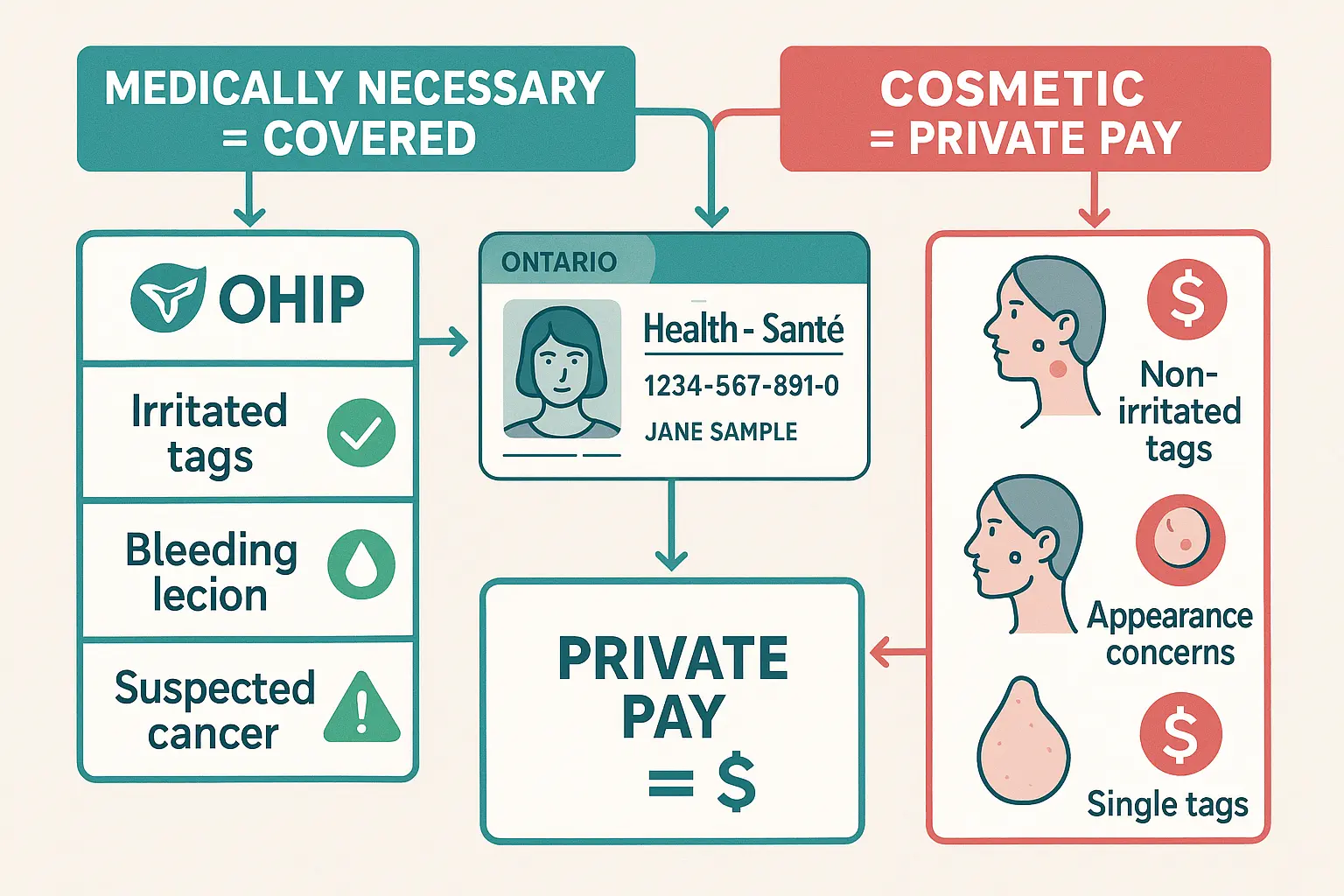
✅ OHIP covers skin tag removal only when medically necessary—such as when tags are irritated, bleeding, infected, or suspected to be cancerous. Cosmetic removal requires private payment.
💰 Private skin tag removal costs in Ontario range from $75 to $350+ depending on the removal method, number of tags, location on the body, and provider credentials.
🏥 Cryotherapy (freezing) is the most affordable option at $75-$150 per treatment, while surgical excision and cauterization cost $100-$350+ per session.
📋 Documentation is crucial for OHIP coverage—your physician must document medical symptoms like pain, bleeding, or infection to justify coverage under Ontario health insurance.
⏰ Multiple sessions may be required for numerous skin tags, with healing time between treatments potentially extending the total timeline and cost of removal.
Understanding Skin Tags: What They Are and Why They Matter
Skin tags are small, benign growths that hang off the skin by a thin stalk called a peduncle. Medically known as acrochordons, these soft, flesh-colored bumps typically appear in areas where skin rubs against skin or clothing—such as the neck, armpits, groin, eyelids, and under the breasts.
While skin tags are harmless in most cases, they can become problematic when they:
Get caught on jewelry, clothing, or razors 🪒
Become irritated or inflamed from friction
Bleed or develop infection
Cause pain or discomfort
Change in appearance (color, size, or texture)
Occur in cosmetically sensitive areas affecting self-confidence
Most people develop skin tags as they age, with approximately 50-60% of adults experiencing at least one skin tag by age 60. Factors like genetics, obesity, diabetes, pregnancy, and hormonal changes increase the likelihood of developing these growths.
For a deeper understanding of various skin growths, explore our guide on 25 types of skin lesions to help distinguish skin tags from other conditions.
The OHIP Coverage Framework: Medical Necessity vs. Cosmetic Preference
Understanding Skin Tag Removal Costs in Ontario: OHIP Coverage, Private Pay, and When It Counts as 'Medical' requires grasping the fundamental distinction that drives all coverage decisions: medical necessity versus cosmetic preference.
What OHIP Considers Medically Necessary
The Ontario Health Insurance Plan (OHIP) covers skin tag removal when a physician determines the procedure is medically necessary. This designation typically applies when:
Covered ScenarioWhy It's CoveredSymptomatic irritationTag causes persistent pain, bleeding, or discomfort from frictionInfection or inflammationTag has become infected, swollen, or shows signs of tissue damageFunctional impairmentTag interferes with vision (eyelid), movement, or daily activitiesSuspected malignancyTag shows concerning changes requiring biopsy or removal for pathologyTrauma or injuryTag has been partially torn or damaged, requiring medical intervention
"The key distinction is whether the skin tag is causing a medical problem or is simply an aesthetic concern. If it's bleeding, painful, or interfering with function, OHIP typically covers removal. If it's just there and you don't like how it looks, that's cosmetic." — Ontario Dermatology Guidelines, 2025
What OHIP Does NOT Cover
OHIP explicitly excludes coverage for procedures deemed cosmetic, including:
❌ Removal of asymptomatic skin tags for appearance only
❌ Preventive removal of tags that might become irritated in the future
❌ Removal of multiple small tags for aesthetic improvement
❌ Elective procedures without documented medical symptoms
This distinction means that two patients with identical-looking skin tags might have completely different payment experiences—one walking out with no bill, the other paying $200+ out of pocket.
Private Pay Options: What You'll Actually Spend in Ontario
When OHIP coverage doesn't apply, Ontarians turn to private pay options for skin tag removal. Understanding the cost landscape helps you budget appropriately and choose the right provider for your needs.
Treatment Methods and Associated Costs
Different removal techniques carry different price points in Ontario's private market:
Cryotherapy (Freezing) 🧊
Cost Range: $75-$150 per session
Method: Controlled application of liquid nitrogen or nitrous oxide
Best For: Small to medium skin tags on the body
Sessions Needed: Usually 1-2 treatments
Healing Time: 1-2 weeks
Cauterization (Burning) 🔥
Cost Range: $100-$250 per treatment
Method: Heat application to burn off the tag
Best For: Pedunculated (stalked) tags
Sessions Needed: Typically 1 session
Healing Time: 1-3 weeks
Surgical Excision (Cutting) ✂️
Cost Range: $150-$350+ per procedure
Method: Sterile scissors or scalpel removal with local anesthetic
Best For: Large tags, eyelid tags, or multiple tags in one session
Sessions Needed: Usually 1 session for multiple tags
Healing Time: 2-4 weeks
Quantity-Based Pricing Models
Many Ontario clinics structure pricing based on the number of skin tags being removed:
1-5 tags: $100-$150 (often 10-minute session)
6-15 tags: $150-$300 (15-20 minute session)
16-25 tags: $300-$500 (30-minute session)
26+ tags: $500-$600+ (extended session or multiple appointments)
Some clinics offer time-based packages rather than per-tag pricing:
10-minute session: $100-$125 (remove as many as possible)
15-minute session: $150-$200 (remove as many as possible)
30-minute session: $300-$350 (remove as many as possible)
Location-Specific Cost Factors
The location of skin tags on your body significantly impacts removal costs:
Standard Body Locations (neck, torso, arms, legs)
Lower complexity
Standard pricing applies
Minimal scarring concerns
Delicate Areas (eyelids, face, genitals)
Higher precision required
Specialized training needed
Costs increase 25-50%
Greater scarring considerations
Example: Removing a skin tag from your neck might cost $100, while removing an identical tag from your eyelid could cost $150-$200 due to the increased complexity and risk.
For professional skin tag removal services in the Greater Toronto Area, The Minor Surgery Center offers comprehensive assessment and treatment options.
Provider Types and Cost Differences
Not all skin tag removal providers charge the same rates. Understanding the provider landscape helps you make informed decisions about where to seek treatment.
Medical Professionals and Their Fee Structures
Dermatologists 🩺
Typical Cost: $200-$350 per session
Credentials: Medical doctors specializing in skin conditions
Advantages: Highest level of training, can diagnose concerning lesions, perform biopsies
Best For: Complex cases, facial/eyelid tags, suspicious lesions
Plastic Surgeons
Typical Cost: $250-$400 per session
Credentials: Surgical specialists focused on aesthetic outcomes
Advantages: Superior cosmetic results, minimal scarring techniques
Best For: Cosmetically sensitive areas, large or complex removals
Family Physicians
Typical Cost: $100-$200 per session (if private)
Credentials: General medical practitioners
Advantages: Familiar with your medical history, may bill OHIP if medically necessary
Best For: Simple cases with medical necessity documentation
Medical Aestheticians/Nurse Practitioners
Typical Cost: $75-$150 per session
Credentials: Specialized training in cosmetic procedures
Advantages: Lower costs, experienced in cosmetic removal
Best For: Straightforward cosmetic removals, multiple small tags
Clinics like those offering skin tag removal in Ajax and Barrie typically provide transparent pricing structures for various provider levels.
Additional Fees to Consider
Beyond the base removal cost, budget for these potential additional charges:
Consultation Fees 💬
Range: $50-$100
Purpose: Initial assessment and treatment planning
May be applied: Some clinics credit this toward treatment cost
Pathology Examination 🔬
Range: $50-$200+
When Required: Large tags, suspicious appearance, or patient/physician preference
Coverage: Sometimes covered by OHIP if medical necessity documented
Follow-Up Visits
Range: $0-$75
Purpose: Wound check, additional treatment if needed
Often included: Many clinics include one follow-up in the initial price
Anesthetic (if needed)
Range: Usually included, but may add $25-$50 for extensive numbing
When Used: Surgical excision, sensitive areas, patient preference
Real-World Scenarios: When It's Medical vs. When It's Cosmetic
Understanding Skin Tag Removal Costs in Ontario: OHIP Coverage, Private Pay, and When It Counts as 'Medical' becomes clearer through real-world examples that illustrate the coverage decision-making process.
Scenario 1: The Irritated Neck Tag ✅ OHIP COVERED
Patient: Sarah, 45, with a 1cm skin tag on her neck
Symptoms:
Tag catches on necklaces daily
Bleeds occasionally when irritated
Causes pain and discomfort
Has become inflamed twice in the past month
Physician Documentation:
"Patient presents with symptomatic acrochordon on lateral neck"
"Reports frequent bleeding and pain from jewelry friction"
"Visible inflammation and irritation noted on examination"
"Removal medically necessary to prevent infection and ongoing symptoms"
Outcome: OHIP covers the removal. Sarah pays $0 out of pocket. Her family doctor performs the excision during a regular appointment.
Scenario 2: The Cosmetic Armpit Tags ❌ NOT COVERED
Patient: Michael, 52, with 8 small skin tags in both armpits
Symptoms:
No pain or discomfort
No bleeding or irritation
Tags are small (2-4mm each)
Patient simply dislikes their appearance
Physician Assessment:
Tags are asymptomatic
No medical indication for removal
Purely cosmetic concern
Outcome: Michael pays $200 privately at a medical aesthetics clinic for cryotherapy removal of all 8 tags in a 15-minute session.
Scenario 3: The Suspicious Changing Lesion ✅ OHIP COVERED
Patient: Jennifer, 60, with a "skin tag" on her shoulder that has changed
Symptoms:
Originally appeared as typical skin tag
Has grown larger over 6 months
Changed color from flesh-tone to darker brown
Irregular borders developing
Physician Documentation:
"Lesion initially presumed to be acrochordon now showing atypical features"
"Change in size, color, and morphology concerning for possible malignancy"
"Excisional biopsy recommended for definitive diagnosis"
Outcome: OHIP covers the removal and pathology examination. The lesion is sent for analysis to rule out skin cancer. Jennifer pays nothing. The pathology reveals a benign seborrheic keratosis, but the coverage was appropriate due to the concerning changes.
For more information on identifying concerning skin changes, visit our best skin cancer clinic resource page.
Scenario 4: The Eyelid Tag Impairing Vision ✅ OHIP COVERED
Patient: Robert, 68, with a large skin tag on his upper eyelid
"Removal medically indicated to restore normal vision"
Outcome: OHIP covers the removal. Robert is referred to an ophthalmologist who performs the delicate eyelid procedure at no cost to the patient.
Scenario 5: Multiple Cosmetic Tags for Aesthetic Improvement ❌ NOT COVERED
Patient: Lisa, 38, with 15 small skin tags on her neck and chest
Symptoms:
No pain, bleeding, or irritation
Tags are small and asymptomatic
Patient feels self-conscious wearing certain clothing
Purely aesthetic concern
Physician Assessment:
All tags are benign and asymptomatic
No medical indication for removal
Cosmetic procedure
Outcome: Lisa chooses a time-based package at a private clinic: $275 for a 20-minute session where all 15 tags are removed using cryotherapy. She pays out of pocket but is satisfied with the cosmetic improvement.
Navigating the OHIP Billing Process: Documentation That Matters
For cases where medical necessity exists, proper documentation is crucial to ensure OHIP coverage. Here's what physicians typically need to document:
Essential Documentation Elements
Symptom Description 📝
Specific symptoms (pain, bleeding, irritation)
Frequency and severity
Impact on daily activities
Previous treatment attempts
Physical Examination Findings
Size, location, and appearance of the tag
Signs of inflammation, infection, or trauma
Functional impairment assessment
Photographic documentation (if applicable)
Medical Justification
Clear statement of medical necessity
Explanation of why removal is required
Differential diagnosis considerations
Treatment plan rationale
Billing Codes
Appropriate OHIP billing codes for the procedure
Documentation supporting the code selection
Any additional services (anesthesia, pathology)
What Patients Should Communicate
To help your physician document medical necessity, clearly communicate:
Specific symptoms: "The tag bleeds when I shave" is more useful than "It bothers me"
Frequency: "It catches on my necklace daily" versus "It sometimes gets irritated"
Impact: "I can't wear certain clothes" or "It interferes with my vision"
Duration: "This has been a problem for 6 months" helps establish chronicity
Previous issues: "It's been infected twice" demonstrates medical complications
Pro Tip: Keep a symptom diary for 2-4 weeks before your appointment, noting each time the skin tag causes problems. This documentation strengthens the case for medical necessity.
Alternative and At-Home Removal: Why Professional Care Matters
Faced with potential out-of-pocket costs, some Ontarians consider at-home removal methods or over-the-counter products. While these options exist, they carry significant risks.
Common At-Home Methods (NOT RECOMMENDED)
String/Dental Floss Tying ⚠️
Method: Tying thread tightly around the tag to cut off blood supply
Risks: Infection, incomplete removal, severe pain, bleeding
Success Rate: Variable, often incomplete
Over-the-Counter Freezing Kits
Method: Consumer-grade freezing products
Risks: Skin damage, incomplete removal, scarring
Limitation: Less effective than professional-grade cryotherapy
Cutting with Scissors 🚫
Method: Self-removal with household scissors
Risks: Severe bleeding, infection, scarring, incomplete removal
Danger: Extremely high risk of complications
Topical Removal Products
Method: Creams or solutions claiming to dissolve tags
Effectiveness: Limited evidence, variable results
Risks: Skin irritation, incomplete removal
Why Professional Removal Is Worth the Investment
Safety 🛡️
Sterile environment and instruments
Proper infection control
Appropriate anesthesia when needed
Emergency equipment available
Effectiveness
Complete removal in one session
Lower recurrence rates
Proper technique for different tag types
Better cosmetic outcomes
Diagnostic Value
Professional assessment of the lesion
Identification of suspicious features
Pathology examination when warranted
Early detection of skin cancer
Cost-Effectiveness
Avoiding complications saves money long-term
No need for multiple attempts
Reduced scarring means no corrective procedures
Professional results the first time
For those concerned about costs, many clinics offer payment plans or package pricing that makes professional removal more accessible than multiple failed at-home attempts.
Insurance Beyond OHIP: Private Coverage and Extended Benefits
While OHIP coverage depends on medical necessity, some Ontarians have additional insurance options that may cover cosmetic skin tag removal.
Extended Health Benefits
Many employer-sponsored health plans include coverage for:
Dermatology Services
Annual limits: $500-$2,000
May cover cosmetic dermatology
Requires receipts and documentation
Check specific plan details
Specialist Consultations
Coverage for dermatologist visits
May include procedures performed during consultation
Typical coverage: 80-100% of reasonable costs
Medical Aesthetics
Some plans include cosmetic procedures
Usually with annual maximums
Requires pre-authorization in some cases
Health Spending Accounts (HSA)
Flexible Spending
Use pre-tax dollars for skin tag removal
No medical necessity required
Employer-funded or personal contribution
Tax advantages for eligible expenses
What to Ask Your Insurance Provider
Before proceeding with private pay removal, contact your insurance provider and ask:
✅ "Does my plan cover skin tag removal?"
✅ "Is there a difference in coverage for medical vs. cosmetic removal?"
✅ "What documentation do I need to submit a claim?"
✅ "Is there an annual maximum for dermatology services?"
✅ "Do I need pre-authorization before the procedure?"
✅ "What percentage of costs are covered?"
✅ "Are there preferred providers I should use?"
Many patients are surprised to discover their extended benefits cover procedures they assumed would be entirely out-of-pocket.
Cost-Saving Strategies for Private Pay Removal
If you're facing out-of-pocket costs for skin tag removal in Ontario, these strategies can help minimize expenses:
Timing and Bundling
Remove Multiple Tags at Once 📦
Time-based pricing often makes this cost-effective
One consultation fee instead of multiple
One healing period instead of several
Bulk discounts at some clinics
End-of-Year Timing
Use remaining HSA or insurance benefits before they reset
Take advantage of any unused dermatology coverage
Coordinate with other planned medical expenses
Provider Selection
Compare Provider Types
Medical aestheticians: $75-$150
Family physicians: $100-$200
Dermatologists: $200-$350
Choose based on complexity and location of tags
Geographic Pricing Differences
Downtown Toronto clinics often charge more
Suburban and smaller city clinics may offer lower rates
Consider traveling to nearby cities for significant savings
Payment Plans and Packages
Ask About:
Payment plans for extensive removal
Package pricing for multiple tags
New patient discounts
Seasonal promotions (less common but available)
Tax Deductions
Medical Expense Tax Credit
Skin tag removal may qualify if medically necessary
Keep all receipts and documentation
Consult with a tax professional
Claim on your annual tax return
Prioritize Based on Medical Need
Strategic Approach:
Address symptomatic tags first (may qualify for OHIP)
Remove problematic tags in high-friction areas
Consider leaving asymptomatic tags if budget is tight
Save purely cosmetic removals for when finances allow
The 2025 Policy Landscape: What's Changed and What to Watch
As of 2025, several factors are influencing Skin Tag Removal Costs in Ontario: OHIP Coverage, Private Pay, and When It Counts as 'Medical':
Current Policy Environment
OHIP Coverage Criteria 📋
No significant changes to medical necessity requirements in 2025
Documentation standards remain consistent
Emphasis on functional impairment and symptomatic relief
Continued exclusion of purely cosmetic procedures
Private Market Trends
Slight price increases (3-5%) due to inflation
More clinics offering transparent online pricing
Increased availability of medical aesthetician services
Advanced cryotherapy devices with better precision
Radiofrequency ablation gaining popularity
Laser removal options expanding
Less downtime and improved cosmetic outcomes
Telemedicine Consultations
Virtual assessments for straightforward cases
Reduced consultation costs
Better accessibility for rural Ontarians
In-person visit still required for actual removal
What to Watch in Coming Years
Potential Policy Changes 🔮
Ongoing discussions about expanding cosmetic coverage
Possible changes to billing codes
Integration of new technologies into OHIP coverage
Patient advocacy for broader access
Market Developments
More walk-in clinics offering skin tag removal
Increased price transparency requirements
Growth of medical aesthetics industry
Potential for new insurance products covering cosmetic procedures
Stay informed about changes by regularly checking The Minor Surgery Center blog for updates on policies and pricing.
Choosing the Right Provider: Questions to Ask
Selecting the appropriate provider for your skin tag removal ensures optimal outcomes and value. Here are essential questions to ask during your consultation:
About Credentials and Experience
"What are your qualifications and training in skin tag removal?"
Look for: Medical degree, dermatology training, or certified medical aesthetician credentials
"How many skin tag removals do you perform annually?"
Experience matters, especially for delicate areas
"Do you have before-and-after photos of previous patients?"
Visual evidence of cosmetic outcomes
About the Procedure
"Which removal method do you recommend for my specific case, and why?"
Should be based on tag size, location, and your preferences
"What type of anesthesia will be used?"
Local numbing cream, injectable anesthetic, or none
"How long will the procedure take?"
Helps with scheduling and understanding complexity
"What is the expected healing time?"
Important for planning work and social activities
About Costs and Coverage
"What is the total cost, including all fees?"
Ensure consultation, procedure, follow-up, and any additional costs are included
"Do you bill OHIP directly, or do I need to pay and seek reimbursement?"
Important for medically necessary removals
"What payment methods do you accept?"
Credit cards, payment plans, insurance direct billing
"Will you provide documentation for insurance claims?"
Wound care instructions, activity restrictions, follow-up schedule
"What happens if the tag doesn't fully resolve or returns?"
Retreatment policies and costs
"When should I be concerned and contact you after the procedure?"
Warning signs of complications
Aftercare and Long-Term Considerations
Proper aftercare following skin tag removal ensures optimal healing and minimizes complications, regardless of whether you paid privately or had OHIP coverage.
Immediate Post-Procedure Care (First 48 Hours)
Wound Management 🩹
Keep the area clean and dry
Apply antibiotic ointment as directed
Cover with a bandage if recommended
Avoid touching or picking at the site
Activity Restrictions
Avoid strenuous exercise for 24-48 hours
Limit activities that cause friction in the treated area
Avoid swimming or soaking in water
Be gentle when bathing
Pain Management
Over-the-counter pain relievers as needed
Ice packs for swelling (10 minutes at a time)
Expect mild discomfort, not severe pain
Ongoing Care (First 2-4 Weeks)
Healing Process
Scab formation is normal (don't pick!)
Mild redness and swelling expected
Gradual fading of any discoloration
Complete healing typically takes 2-4 weeks
Sun Protection ☀️
Protect treated area from sun exposure
Use SPF 30+ sunscreen once healed
Minimize sun exposure for 4-6 weeks
Prevents hyperpigmentation and scarring
Monitoring for Complications
Watch for signs of infection (increased redness, warmth, pus)
Report excessive bleeding or pain
Contact provider if healing seems abnormal
Long-Term Considerations
Recurrence
Skin tags can develop in the same area
New tags may appear elsewhere
Genetic and metabolic factors influence recurrence
Preventive measures are limited
Scarring
Most removals heal with minimal scarring
Proper aftercare reduces scar formation
Scar treatment options available if needed
Delicate areas (face, eyelids) require extra care
Follow-Up Care
Attend scheduled follow-up appointments
Report any new concerning growths
Annual skin checks recommended
Document changes in existing skin lesions
When to Seek Immediate Medical Attention
While skin tag removal is generally safe, certain symptoms require prompt medical evaluation:
🚨 Seek immediate care if you experience:
Excessive bleeding that doesn't stop with pressure
Signs of infection: increasing redness, warmth, swelling, pus, fever
Severe pain not controlled by over-the-counter medication
Most complications are rare when procedures are performed by qualified professionals in sterile environments, but awareness of warning signs ensures prompt treatment if issues arise.
Conclusion: Making Informed Decisions About Skin Tag Removal in Ontario
Understanding Skin Tag Removal Costs in Ontario: OHIP Coverage, Private Pay, and When It Counts as 'Medical' empowers you to make informed decisions about your skin health and budget. The key takeaways for 2025 are:
Coverage depends on medical necessity. OHIP covers removal when skin tags cause symptoms, functional impairment, or require diagnostic evaluation. Purely cosmetic removals require private payment.
Costs vary significantly. Private removal ranges from $75 for simple cryotherapy to $350+ for complex surgical excision, with multiple factors influencing the final price.
Documentation matters. For medically necessary removals, clear physician documentation of symptoms and functional impact is essential for OHIP billing.
Professional removal is worth the investment. While at-home methods may seem appealing, professional care offers safety, effectiveness, and diagnostic value that far outweigh the cost savings of DIY approaches.
Options exist for managing costs. Extended health benefits, payment plans, strategic timing, and provider selection can all help minimize out-of-pocket expenses.
Your Next Steps
Assess your skin tags: Are they causing symptoms or purely cosmetic concerns?
Consult a qualified professional: Get an expert evaluation of your specific situation. The Minor Surgery Center offers comprehensive assessments and transparent pricing.
Document symptoms: If you have symptomatic tags, keep a record of pain, bleeding, or functional impairment to support medical necessity.
Check your insurance: Review both OHIP eligibility and any extended health benefits you may have.
Compare providers: Get quotes from multiple qualified providers and ask about all associated costs.
Schedule your procedure: Once you've made an informed decision, book your removal at a time that works with your schedule and budget.
Follow aftercare instructions: Proper post-procedure care ensures optimal healing and results.
Remember, skin tag removal is a common, safe procedure when performed by qualified professionals. Whether your removal is covered by OHIP or requires private payment, understanding your options ensures you receive appropriate care at a fair price. Don't let uncertainty or cost concerns prevent you from addressing problematic skin tags—informed patients make better decisions and achieve better outcomes.
For more information about skin lesions, removal procedures, and finding qualified providers in Ontario, explore additional resources at The Minor Surgery Center blog, where you'll find evidence-based information to support your skin health decisions.